You are currently browsing Tara Lazar’s articles.
 In early March, several literary agents, organized by Colleen Lindsay and Lauren E. MacLeod, participated in QueryFail on Twitter. They sat at their desks, inboxes open, a pile of envelopes at their side, and then read queries one-by-one, Tweeting examples from undesirable letters: “I know that I have attached a file, but please have a read even though it’s against your policy.”
Lesson #1: follow submission guidelines.
Lesson #2? Even though many writers felt QueryFail was interesting and helpful, there was a considerable backlash from those who felt it was unfair to share query letters meant only for the agents’ eyes. But listen, if you’re an aspiring author, that means you want your words to go into print someday. You have to be ready for the criticism. If you’re not confident about sharing your query letter, perhaps you should try writing another one.
QueryFail2 was all set for yesterday, but it didn’t happen. Instead, we got QueryDay. The guidelines were supposedly the same, but the tone was decidedly different. Agents opened the floor to questions from writers, making QueryDay an interactive event. And because writers became participators, I doubt that anyone who witnessed QueryDay had anything negative to say about it.
Several positive spins emerged. Elana Roth of Caren Johnson Literary Agency announced her first QueryWin of the day early on. She requested “a YA light sci-fi novel. Strong query. Good voice in sample pages.” She was also impressed with a “Smart cookie author/illustrator: did not attach art to email, but pointed me to link of her art online. Win.”
Later on Ms. Roth passed on “a 3,000 word picture book” and a “YA novel set in college. Still on the fence about that. And only 39,000 words.” Writers, you need to know the proper word counts for your genre.
Agents also provided tips. Rachelle Gardner offered, “This may be hard to hear, but I suggest you avoid being in a rush to get published. Take TIME to develop your craft.” Later she confessed, “A query that makes me laugh is a great thing! Whether or not the book is for me, it definitely gets my attention.”
Agent Lauren MacLeod shared information on her preferences: “For the record, I prefer not published to self-published. For me, self-published has to try harder. Others feel differently.” She then explained, “Why my self-pubbed position? 1) I assume it has already been widely rejected by agents, 2) might have already exhausted the market.”
Some themes and suggestions emerged repeatedly, like submitting polished work. Lauren MacLeod announced, “I assume you have edited your work, have a writers group and have shown this to someone who likes it.” Later on, Colleen Lindsay said, “A writer needs to get the manuscript into the best shape possible before querying. An agent’s job is not to handhold or coddle or boost a writer’s self-esteem. An agent’s job is to sell the manuscript.” Editor Kate Sullivan presented this caveat, “Remain open-minded and be ready to revise. You need to be open to changes every step of the way.” Even a polished manuscript can be improved.
The most important thing learned from QueryDay is really quite basic: write a sharp query and follow guidelines.
And just how much time does an agent devote to your query? Lauren MacLeod answered, “A query that is to our guidelines, within normal word count range and my genre? About 5 minutes. These are rare.”
She then summed it up: “More important than anything: WRITE A GOOD BOOK. Good writing, good plot & good voice trump all.” Rachel Gardner agreed, “Fiction writers…it’s ALL about the writing. Nothing’s as important as what’s on the page. If it rocks, nothing else matters.”
Got that? Now if only the word “good” weren’t so subjective…
I collected a number of questions and answers from QueryDay that other writers may find useful. I’ll post separately…coming very soon.
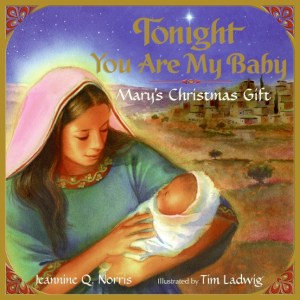 I had the pleasure of meeting author Jeannine Norris at a recent NJ-SCBWI mentoring workshop. One of the organizers, Kathy Temean, held up a copy of Tonight You Are My Baby and pointed to Jeannine, the author, sitting right behind me. Kathy told us that Jeannine had met her editor at a previous NJ-SCBWI event. Amazing! I immediately knew I had to talk to Jeannine about her path to publication.
Jeannine, how long have you been writing?
I have been writing for about four years. I dabbled in writing when our children were babies, as I missed the creative stimulation of my former job. I really started to write when our youngest went to pre-K.
Where did the inspiration for Tonight You Are My Baby come from?
The inspiration came when our daughter, Quinn, who was four years old at the time, was diagnosed with a brain tumor. As a mother, I needed the strength to help our daughter get through this difficult journey. I started to think about Mary, as the mother of Jesus, and her incredible strength. I decided to write about the Nativity, from a mother’s perspective, and, if the book was published, donate part of the proceeds to helping kids with brain tumors. Quinn’s tumor was benign, and next year will be her five-year celebration! We started a foundation, At Least Kids, that contributes to pediatric brain tumor research at Children’s Hospital of Philadelphia and supports families struggling financially. A portion of each book sold is donated directly to At Least Kids.
What a scary time for you as a parent, but what a blessed outcome—a healthy child, a beautiful book and a charitable foundation.
You met your editor at a writer’s event here in New Jersey. Can you tell us how the deal transpired?
I met my lovely editor, Catherine Onder, at a NJ-SCBWI mentoring workshop. Catherine heard Tonight You Are My Baby during the first page session. Another editor asked to see the rest of the manuscript, but it was eventually declined. Several months later, I met Catherine at another NJ-SCBWI workshop (with another manuscript) and she remembered the first page of Tonight You Are My Baby. She asked to see the rest of the manuscript and several months later it was acquired. I couldn’t have been happier! The right time, the right place, a great editor. I’m a huge cheerleader for SCBWI events. Opportunities abound!
I love NJ-SCBWI, too!
After your book was acquired, what was the editing process like?
The editing process was fascinating! I needed to add a few stanzas, when Tim Ladwig, the illustrator, started working on the book. Catherine helped me with the revisions as well. I have to say, I love revising, as my book became so much better! Revisions and rhyme are always a challenge—often it means changing the entire line, instead of just a word. Catherine pointed out that I had used the word “quiet” several times in my manuscript. Not a good idea when you are only dealing with 400-500 words! I hadn’t even noticed. When I do my school visits, I always tell the students about my revisions. A good editor is like a good teacher—encouraging, has a vision, and wants your work to be its best. Kids are always surprised that even authors make many revisions.
Interesting–how many times had you repeated “quiet”?
I think I had repeated “quiet” three times!
I suspect that many writers have a “crutch” word or phrase in a manuscript that we just don’t notice. Yours was “quiet.” Mine is “just.” (See?) It takes a good editor to point that out!
Why the need to add the stanzas? Was it because of the illustration spread count? Or did Tim add a drawing you hadn’t envisioned?
We added three stanzas because when Tim started to draw the story arc, we wanted Mary first traveling to Bethlehem and meeting Jesus several pages in. Naturally, the book is about a mother and her baby, but we needed additional stanzas to add other images: the angels trumpeting, the sheep/cows/donkey in the stable, the wise men bringing gifts. All those stanzas were added during revisions. As it happens, the angels trumpeting is my favorite illustration! It’s not what I imagined, and I love it! Tim was so creative. The rest of the illustrations are what I saw in my mind’s eye when I was writing. Tim really “got it”—Mary is very young, completely accessible and a joyous mother.
What has surprised you most about being a published author?
 My big surprise was—I didn’t really have any big suprises! The tremendous benefit of using the SCBWI and Verla Kay discussion boards is using the experiences of other authors to make the path easier. I am hugely indebted to those who have traveled this literary path before me! Through the discussion boards and workshops, I felt really well-prepared. Any of my questions were answered: simple questions such as “How do I make postcards?” to more complicated questions dealing with contracts. One pleasant surprise was that all of my school visits were wonderful. Each one was gracious, organized, prepared AND I sold a lot of books! Again, I learned how to prepare pre-order forms, write school contracts and even develop a PowerPoint presentation through the experiences of others. There is much to be learned, but a wealth of information is readily available.
What other advice do you have for aspiring children’s authors?
I would urge writers to join a critique group—or start one of their own! I belong to an online group and a local group. I met both of these groups through SCBWI conferences. Critique groups have so much to add! My groups provide me with valuable, honest comments and help prepare my manuscript for an editor’s eyes. I would also suggest aspiring authors gain writing credits through magazine articles, local publications and online sites. The extra income is nice, too! Attend every SCBWI workshop/conference you can afford. I’ve had an SCBWI workshop on my birthday list for the past several years! If your manuscript is acquired, be prepared to market yourself–heavily. The debut author MUST knock on doors, visit schools, call the bookstores, have a website, ask for interviews. This is your opportunity! Finally, have fun. Write what will bring you to your desk each day with a smile on your face.
That’s excellent advice, thank you, Jeannine.
Although Tonight You Are My Baby is about the birth of baby Jesus, a celebration of Christmas, what makes it a relevant read throughout the entire year?
Tonight You Are My Baby is really a celebration of a mother’s love. It’s about the boundless joy that every new mom experiences. The knowledge that a baby’s birth is truly a miracle—a gift unto itself. Tonight You Are My Baby is a celebration of Christmas, but it’s also a celebration of a mother’s heart. The book is certainly most popular at Christmas, but I find many people buying it for other occasions: new baby presents, baby showers, birthdays, etc. Mothers and little ones snuggle as they read of the love story that took place long ago.
Extra cuddle time: a wonderful reason for everyone to pick up this glorious book. Congratulations and thank you for sharing your journey to publication with us!
 Tonight You Are My Baby
Story by Jeannine Norris
Illustrations by Tim Ladwig
HarperCollins, September 2008
Check it out!
 Publishing a book can be an adventure, and that’s especially true for Christine and Ethan Rose. Authors of Rowan of the Wood, the husband-and-wife team take to the road in their “Geekalicious Gypsy Caravan” to promote their book.
Released with Austin-based Dalton Publishing last November, Rowan of the Wood became a finalist in USA Book News’ National Book Award for Young Adult Fiction. Even with this recognition, Christine and Ethan knew they would have to take on much of the promotion responsibilites for the book to get noticed.
“We knew that promoting both on and offline was essential in getting our book ‘out there.’ First time authors, especially with a small, independent publisher, have a difficult time getting into bookstores. By visiting bookstores for signings, it forces books onto the shelves and creates an interesting event. We get to go out and talk to our readers face-to-face, so it establishes a connection that we hope will last throughout the series.”
Their first tour lasted three weeks as they visited Louisiana, Texas and Florida, appearing at Renaissance Faires and Celtic Festivals on weekends and at bookstores during the week. Their next planned tour, May to July, will feature stops from Mississippi to Missouri with eight weekend events and 20 bookstores on the schedule. They’re also adding libraries to the intinerary and will tell tales in the ancient Bardic Tradition, with a lyre that Ethan crafted. Ambitious? You bet. These folks are passionate about their book–and promoting it.
I asked Christine about the best part of being on tour.
“The best experience is just being on the road! I guess the highlight is when a guy stopped us in a Safeway parking lot (because of the Gypsy Caravan) and bought a book. Another highlight was when we totally sold out of books!”
I was curious about their travels, so Christine offered a tour of the Geekalicious Gypsy Caravan:
Here’s the video on How to Make a Geekalicious Gypsy Caravan with cover artist Ia Layadi. The first coat of green paint peeled right off, and one of the signs printed too short, so lessons were learned along the way.
Indeed, publishing a book can be an adventure. Never were it more true for the Roses. They are a small publisher’s dream come true–artists who are as creative with promotion as they are with their stories.
You can find the Rowan of the Wood intinerary at BookTour.com. Follow Christine on Twitter, or check out her videos from the road by subscribing to her YouTube channel.
 A few weeks ago, YA author Mitali Perkins put together a list of young adult authors on Twitter.
In the same spirit of connecting children’s authors with fans and other publishing professionals, here’s a list of published picture book authors and illustrators who maintain a Twitter presence. Also included are debut authors with books due for release in the coming year or two.
UPDATE AUGUST 2013: It’s been eons since I’ve updated this list, but I see it’s been referenced online in several places and has become a popular resource. Unfortunately, I can no longer take the time to update this list–there are just too many changes to keep up with. But if you want to be included, simply add a comment with your Twitter handle and you’ll be seen there. Thank you!
Enjoy! Make new connections; discover talented people!
- Bonnie Adamson @BonnieAdamson
- Laurie Halse Anderson @HalseAnderson
- Boni Ashburn @BoniAshburn
- Carin Berger @CarinBerger
- Phil Bildner @PhilBildner
- Deborah Blumenthal @DeborahBlu
- Susan Taylor Brown @Susanwrites
- James Burks @JamesBurksArt
- Heather Ayris Burnell @HeatherAyris
- Clay Carmichael @ClayCarmichael
- Tara Larsen Chang @TLCillustration
- Susan Chodakiewitz @SusanChodak
- Rob Christianson @RobChristianson
- Peggy Collins @PeggysBooks
- Susan Crites @SusanCrites
- Kristy Dempsey @KristyDempsey
- Sarah Dillard @SWDillard
- Brandi Dougherty @BrandiDougherty
- Elizabeth Dulemba @Dulemba
- Ame Dyckman @AmeDyckman
- Wendy Edelson @WendyEdelson
- Carol Gordon Ekster @CEkster
- Claudia Golden @Claudiamm37 (Account deleted)
- Gus Gordon @IllustratorGus
- Jean Fischer @JeanFischer1
- Kakie Fitzsimmons @KakieF
- Alison Ashley Formento @AFormento
- Roz Fulcher @Rozzieland
- Neil Gaiman @NeilHimself
- K.L. Going @KLGoing
- Lorie Ann Grover @LorieAnnGrover
- Diane Dawson Hearn @DDHearn
- Anette Heiberg @AnetteHeiberg
- Leeza Hernandez @leezaworks
- Ryan Hipp @HippHop
- Lisa Horstman @LisaHorstman
- Oliver Jeffers @OliverJeffers
- Ward Jenkins @wardomatic
- Dani Jones @danidraws
- Cathy June @CathyJuneArt
- Michelle Knudsen @MichelleKnudsen
- Kara LaReau @KaraLaReau
- Tara Lazar (me!) @taralazar
- John Lechner @JohnLechner
- Kelly Light @KellyLight
- Grace Lin @pacylin
- Wendy Martin @wendymartinart
- Anne Mazer @AnneMazer
- Rich McCoy @McCoyDigital
- Kate Messner @KateMessner
- Jennifer L. Meyer @JenniferLMeyer
- Jamie Michalak @JamieMichalak
- Amy Moreno @EarthenVessel
- Cyn Narsisi @CynDraws
- Jeannine Norris @JeannineNorris
- Neil Numberman @NeilNumberman
- Dianne Ochiltree @WriterDi
- Eric Orchard @EricOrchard
- Alicia Padrón @AliciaPadrón
- Todd Parr @ToddParr
- The Pigeon @The_Pigeon
- Jamie Pogue @JamiePogue
- Jean Reidy @JeanReidy
- Peter H. Reynolds @PeterHReynolds
- Jacqui Robbins @JacquiRobbins
- Shelly L. Rogers @KidsIllustrator
- Candace Ryan @CandaceRyan
- Tammi Sauer @SauerTammi
- Niki Schoenfeldt @NikiofWare
- Corey Rosen Schwartz @CoreyPBNinja
- Jon Scieszka @GuysRead
- Diana Scimone @DianaScimone
- Cynthia Leitich Smith @CynLeitichSmith
- Kim Sponaugle @PictureKitchen
- Laurel Snyder @LaurelSnyder
- Ruth Spiro @RuthSpiro
- Patricia Storms @stormsy
- Susan Marie Swanson @Susan_Marie
- Don Tate @Devas_T
- Nikki Tate @WriterGrrrl
- Jennifer Therms @JenThermes
- Holly Thompson @HatBooks
- Renee Ting @ReneeAtShens
- Joyce Wan @wanart
- Kathy Weller @wellerwishes
- Leah Wiedemer @RoamingArtist
- Karma Wilson @KarmaWilson
- Paula Yoo @PaulaYoo
- Laura Zarrin @CreativeGirl
- Paul O. Zelinsky @PaulOZelinsky
Every SCBWI first-page session I’ve attended has had one thing in common: picture book manuscripts about new babies in the family. At least two or three are submitted each time. Editors and agents respond by warning new writers: “The market is saturated with mom-is-having-a-baby books. If you’re going to write about a new sibling, the idea must be unique to stand out.”
I remember a harsh moment. After reading the first page of a new baby tale, an editor said, “This isn’t special enough to continue.”
Daunting, isn’t it? Makes you want to toss your baby—erm, your manuscript—out the window!
So when they say the idea has to be unique, what do they mean?
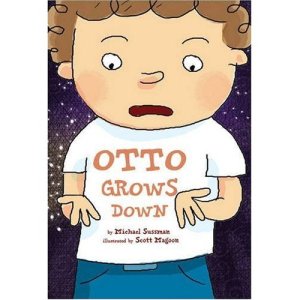 In a perfect world, they’d whip out Michael Sussman’s Otto Grows Down. Illustrated by Scott Magoon, it’s a tale of a boy who wishes his baby sister Anna was never born. “Be careful what you wish for” might be a cliché, but trust me, Otto Grows Down is an uncommon cautionary tale.
Otto makes his Anna-be-gone wish on his 6th birthday as he blows out the candles. Immediately, life begins to travel in reverse. Otto wraps up his gifts and hands them back to his friends. The second hand on his new watch ticks backward.
The next day at school, they start with mess-up time. Otto can’t get used to sliding UP the slide, and he’s so tired at the end of the day, he just wants to eat breakfast and get to bed. And going to the bathroom? Nasty business. (Nasty, hysterical business to my kids.)
Otto’s parents soon return Anna to the hospital and she disappears. Otto rejoices. But strangely, time doesn’t move forward again, it just keeps unraveling. Otto celebrates his fifth birthday, his fourth, his third…and he realizes that he may disappear, too! He’s slowly losing the words he needs to make his new wish come true: OTTO BIG!
Call it a dark comedy for kids. Scott Magoon’s film noir feel strikes the right balance between humor and horror. Dark shadows and warm colors mimic Otto’s flip-flopping emotions. (And hey, did you notice all the character names are palindromes? Another cool touch, huh?)
I won’t tell you where it ends—or where it begins—but let me just say: every editor who sent Mr. Sussman a rejection probably wishes they could make time go in reverse, too.
 Otto Grows Down
Story by Michael Sussman
Illustrated by Scott Magoon
Sterling, February 2009
Want it? Get it!
P.S. Author Heather Ayris Burnell interviewed Michael Sussman on her blog–plus she’s giving away a copy of the book!
 I love picture books with a touch of magic, so I was thrilled to speak with Patricia Storms, illustrator of the whimsical Edward and the Eureka Lucky Wish Company by Barbara Todd. Edward wishes he could fly, and by chance he gets three wishes–but he doesn’t use them wisely.
What a fun challenge to illustrate the Skyhopper 2000, a flying bike! Patricia, how did you land the contract to work on this book?
I’ve been very fortunate when it comes to getting book illustration jobs. Most of the time, publishers have approached me. If memory serves me correctly with the Eureka book, I had sent off a pamphlet of my recent work to various publishers in North America, and as luck would have it, Kids Can Press just happened to be looking for a humorous illustrator for this project. I believe they had been considering my work, since they were already familiar with my art (it’s a small world in Canadian publishing). My portfolio pamphlet just helped to seal the deal.
How did you get started illustrating children’s books?
Well, it was a very slow process for me. I always enjoyed drawing (especially cartoons) and took art all through high school, but for various reason (fear of failure being the big one) I initially took a different path, and studied to work in libraries instead (being a bibliophile and all, and settling for more ‘secure’ work).
But I continued to draw when I could, and slowly started selling art on the side, while working full-time in libraries. I ended up working for the Toronto Public Library cataloguing of all things–children’s books! That’s when I started dreaming about how it would be so much more enjoyable to illustrate the books, rather than catalogue them. Eventually in my mid-30s I went back to school and became a graphic designer, still selling the cartoon/humor work on the side.
About 6 years ago my freelance work really started to increase, mainly because I began putting my work online. My first few picture book illustration jobs were work-for-hire jobs, doing illustrations for the educational kid’s book market. In all those cases, I was approached by the publishers. I enjoyed doing the educational illustration but I really wanted to get into trade book illustration, because I knew I would have a much wider audience.
My first trade illustrated book was 13 Ghosts of Halloween, published by Scholastic Canada. Once again, they approached me. My upcoming illustrated picture book, The Pirate and the Penguin, which is completely my creation, will be my third trade picture book, and I hope I can do more in the future.
This job, more than anything else I have ever done, feels so right for me. Because for me, it’s not just a job. It is who I am. I view myself as a bit of a ‘late bloomer’ in this field. I still feel like a newbie in the kid’s book industry – there are many people my age (45) who have been doing it for 20 years or more. I have so much to learn. I hope I can continue to learn and grow in this industry, if the gods will allow it.
 What is the biggest challenge when translating someone else’s words into pictures? How much input does the editor have? Do you ever speak directly with the author?
I guess finding that perfect balance in which the editor and author are happy, but also where I get to add my own personal flavor without completely taking over the story…yet at the same time, where I’m not just being a “hired hand” doing grunt work.
How much input the editor has in developing the art for the story really depends upon the publisher and editor with whom you are working. Some editors will give some basic guidelines and then just let you fly, while others are much more hands-on, giving lots of direction and feedback. It’s never been the exact same experience for me.
The only time I’ve spoken directly with the author is when I have been illustrating the story written by me. It’s actually kind of hard to get away from myself. 😉
Generally, editors prefer to keep the author and the illustrator apart until the project is done. I’m not entirely sure of the reasons for doing this, but I suspect it is because they fear a) the author and illustrator will conspire together to give the editor and publisher grief or b) the author and illustrator will hate each other with a passion and disagree on everything and kill each other thus giving the editor and publisher grief.
It’s a tough, time-consuming (and expensive!) job creating a picture book so the last thing anyone working on the project needs is any added emotional stress.
The way I understand the process is that once the story has been accepted, the editor will work with the author to fine-tune the words, and then when the story is pretty much polished, that’s when the artist comes in to illustrate said words. By this point, the editor and art director work together to communicate with the illustrator concepts for the vision of the story, and of course the illustrator provides feedback, too. The script may still get edited a bit at this point, because once the pictures come into the equation, one discovers that very often the images can take the place of any extraneous words.
Once rough sketches are satisfactory for the editor and art director, they are shown to the author, just to make sure that the author doesn’t totally hate the artist’s vision. I’m pretty sure that if the author really were upset with the art, that something would have to be done, but once again, it all depends upon the publisher working on the project.
I only met the authors of my first two trade picture books AFTER the books were complete. Thankfully, both authors were happy with the final product. I do find it a stressful, worrisome experience, wondering whether or not the author is happy with my art. But I am a bit of a neurotic worry-wart, so I tend to let these things eat away at me.
 How and when did you make the decision to morph from illustrator to author-illustrator? Can you tell us about The Pirate and the Penguin, your first book as both author and artist?
Well, I’ve always enjoyed writing as well as drawing. As a kid I wrote and illustrated many comic strips, some of which were quite detailed, chock full of numerous characters. English and Art were my two favorite subjects all through school, and well, they still are! I think as soon as I realized that it was possible for me to get work in children’s book illustration, I knew in the back of my mind that I would eventually want to write my own stories. A lot of this stuff has been bouncing around in my head for a long time, and I really needed to let it out! That’s one of the reasons I started a blog a little over 4 years ago.
I became more determined about becoming an author/illustrator about two years ago. I began reading a lot online and in books about writing picture books, and of course, I read lots and lots of picture books that I brought home from the library. Around this time I joined an online critique group which was very helpful. Then about a year ago I took a “writing for children” course, which was also very helpful in teaching me about what worked in my writing, and what didn’t. During this time I would meet up with a wonderful writer friend of mine, Liam O’Donnell, from time to time. He writes pictures books and graphic novels and he’s just a really cool guy.
I was in one of my crabby moods, and I was kvetching to Liam about how tough it is to get published in the kid’s book biz. I made a flippant comment to him, something to the effect of, “If someone really wanted to cash in on two popular icons in kid’s books, they would write a story about a pirate and a penguin!”
Liam, being much smarter than me, actually thought it was a cool idea for a story, and urged me to write this crazy idea. I didn’t follow up on his suggestion right away, but every now and then he’d ask me “how’s that Pirate and Penguin story going?” So I figured I’d better do something.
When I finally thought of the story idea, I thought it was just too silly, but I mentioned it to Liam, and he loved it, and encouraged me to pursue it. So I did. And that’s how my upcoming picture book The Pirate and the Penguin came to be.
Of course it’s a fun story, because pretty much everything I write and draw is somehow touched by my wacky sense of humor. It’s a silly version of the classic The Prince and the Pauper, except that it involved a Penguin who hates the South Pole and a Pirate who can’t stand life on a pirate ship in the Caribbean. When they meet, lots of interesting stuff happens! And that’s all I’m going to say about the story for now, other than to say that I owe so much to Liam O’Donnell, and I’m eternally grateful to him for his guidance and encouragement.
There are many factors that come to play in getting published–knowledge, talent, perseverance, luck and patience. But it sure doesn’t hurt to have friends who are right there behind you, pushing you, rooting for you, and guiding you towards your dream.
That’s terrific advice! Thanks, Stormsy! (You don’t mind if I call you Stormsy, do you? No? Thanks.)
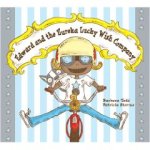 Patricia is generously giving away an autographed copy of Edward and the Eureka Lucky Wish Company!
Please leave a comment to be entered into the drawing.
Blog or Tweet about the interview and get another two entries–just let me know here or on Twitter. Winner will be picked by Random.org one week from today! Good luck!
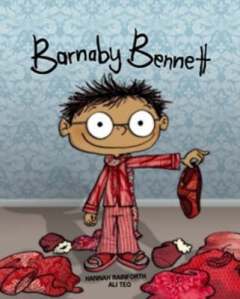 “Pooh-pooh on the blue,” Barnaby said.
“I’m Barnaby Bennett and I only wear red.”
Young children declare their emerging independence in many ways. They don’t cling to Mom and Dad so tightly. They insist on doing simple tasks by themselves. And they choose their favorite things—a huggable stuffed toy, a cherished blanket, or a bright, cheery color.
Come on, what kid doesn’t have a favorite color? Every morning my toddler asks to wear “pretty purple.” My Kindergartener’s closet is filled with “Shrek green.” So when we read Barnaby Bennett for the first time, we instantly understood Barnaby’s passion for pigment.
With a jaunty rhyme, author Hannah Rainforth dresses Barnaby Bennett in toe-to-head red. But there’s a problem: Barnaby wears the same red clothes every day. He loves them so much he won’t take them off. His shirt, shorts and socks get stinky. (Let’s just say we’re happy this isn’t a scratch-n-sniff book!)
Barnaby’s family tries to convince him to change colors. Dad thinks navy is nice. Sissy’s keen on green. And Bro? He’s mellow for yellow. But Barnaby is no chameleon!
Then Barnaby’s clever Aunt finds a creative way to break Barnaby of his crimson obsession. Does he become partial to pink? Go ga-ga over gold? Get smitten with silver? You’ll just have to read it to find out!
Ali Teo’s mixed-media illustrations combine quirky cartoon characters and photographed elements—blue jeans, fabric patterns, toys—resulting in something “real” to discover on every spread. The pages seem textured; alive. Even the words jump out with clever use of funky fonts. “Yanked” stretches across the page and “sludge” squirms.
Originally published in New Zealand, Star Bright Books recently brought this colorful Kiwi to the US. (Thanks, Star Bright!) This vibrant tale will knock your socks off, even if they aren’t red. Now if you’ll excuse me, I have to jump into my cherry jammies and read Barnaby with the kids.
 Barnaby Bennett
Story by Hannah Rainforth
Illustrated by Ali Teo
Star Bright Books, November 2008
Want it? Get it!

- “What did you do in school today?” elicits complete silence or the popular refrains, “I don’t know” and “I don’t remember.”
- You are the “only mommy” who did not pack a lunch dessert for your child. Apparently, strawberries don’t qualify as dessert, especially not if your child cannot open the Ziplock baggie in which they were stored.
- Your child must have a backpack even though they don’t have books or papers to carry back and forth on a daily basis. Carrying an empty backpack is completely normal and necessary.
- The details you do learn of your child’s day are superfluous: “My teacher wears high heels!”
- Smiling while looking at the camera is an endeavor more difficult than the decathalon.
- Stopping to chat with other mothers for only a minute or two turns into over an hour and you wonder if you will soon be referred to as a yenta.
- Even though your child concedes that the Dora the Explorer pillow you provided for naptime is not actually alive, Dora still managed to grab and pull your child’s hair with malicious intent.
- Your child whines of hunger the second you pick them up. Refer to #2 above.
- Once greeted by six hours of free time (even though that free time is spent with a 10 month-old baby) you should not start promising owners of Gymboree franchises that you will teach infant classes three days a week.
- Do not provide your child with the coolest new underwear from the most popular new Disney movie if you do not want her lifting her dress every five minutes to show her classmates.
- You can get up at 6:30am without being a zombie—just go to bed at 6:30pm.
- If you send your child to school in sandals, they will return home with black feet.
- Never before have six hours gone by so slowly…and yet so quickly.
Rarely do I stray into my mommy life on this blog, but if I’m writing for kids while raising them, then a little parenting humor has its place. Enjoy, mommies! (P.S. This article may or may not be based on actual events!)
 This is for all the stay-at-home mothers who are exhausted at the end of the day only to be greeted by the words:
“What did you do all day long?”
I realize our husbands work hard so that we may stay home and care for our families, and I appreciate their sacrifices. They sit in traffic jams, discuss process and procedure at redundant meetings, and stress over outsourcing and layoffs. They eat lunches of bland, bark-dry chicken and imagine the blissful hours we spend in the safe, comfortable confines of our own home, children playing happily at our feet while we page through the latest romance novel.
Umm…no.
To dispell the soap-opera-and-bon-bon-eating-couch-dweller myth of stay-at-home mothers I present to you an average day in husband perceived time (herein referred to as HPT, not to be confused with home pregnancy test) versus actual time.*
Task: Wake children and get them bathed
HPT: 30 minutes
Actual Time: 60 minutes
First child wishes to remain in the bed she so desperately tried to avoid the night before. While removing second child’s diaper, she pees all over herself, your pajamas, and the floor. Throw pajamas in the wash, scrub floor with antibacterial yet environmentally-friendly cleanser, and place children in bath. Second child makes poop-ready face, so she immediately must come out of bath water with shampoo still in hair. Wrestle new diaper on, rinse hair, clothe her, bathe first child. Slip on floor, ice sore ankle, let first child run around wet and naked.
Task: Feed children breakfast (and yourself if you have the chance)
HPT: 15 minutes
Actual Time: 45 minutes
First child refuses to eat and throws food on floor. Sit child in time-out. Clean floor. Second child spits food out like a machine gun. Clean floor. First child returns to table, lifts cereal bowl to drink like cat, spills milk. Calm tears. Clean floor. Remove second child from highchair, half the breakfast you thought was eaten falls to the ground. Slip on floor, ice sore ankle, let baby lick crumbs off ceramic tile.
Task: Take preschooler to school
HPT: 10 minutes (even though school is 15 minutes away)
Actual Time: 70 minutes
Spend 15 minutes getting shoes and jackets on children and buckling into Houdini-quality childseats. Drive to school. Wrestle stroller out of car, get baby into stroller, carry backpack, lunchbox, stuffed animal du jour and walk (limp) child to classroom. Get stopped by parent #1 requesting an RSVP to their child’s birthday party. Get stopped by parent #2 requesting a playdate. Get stopped by parent #3 requesting you chair a PTA fundraiser. Preschool director says you did not sign a precious piece of paperwork. File into her office and wait 10 minutes while she finds crucial document: a pledge to provide a peanut-free lunch.
Task: Put baby down to nap
HPT: 5 minutes
Actual time: 30 minutes
Baby fights sleep. A cough appears out of nowhere, causing her to awaken just as she is about to fall asleep. Get in car and drive around neighborhood.
Task: Free time while baby naps
HPT: All day long
Actual time: 37.2 seconds
Chores done in beat to William Tell Overture: sort clothes for laundry, run a wash, put this morning’s soiled jammies in dryer, empty the dishwasher and reload, make yourself a sandwich, go through mail, schedule a doctor’s appointment, return phone calls to your mother-in-law, your babysitter and the YMCA for swim lessons that have been cancelled and rescheduled for a day and time that is most inconvenient for you. Sit and eat lunch. Thirty seconds of bliss. Bite into sandwich as baby wakes from carseat flashnap.
Task: Pick-up preschooler from school
HPT: 0 minutes (you mean she doesn’t take a bus?)
Actual Time: 45 minutes
Preschooler is starving when you arrive. Examine lunchbox. Entire lunch remains. Sit at school while child eats lunch that should have been consumed three hours ago.
Task: Play with kids
HPT: 60 minutes
Actual Time: 60 minutes
Draw with chalk on driveway. Skip. Roll on grass. Blow bubbles. Have tickle contest. Giggle and make goofy faces. Collect acorns; plant them.
Task: Make dinner
HPT: 30 minutes
Actual Time: 60 minutes
“Hey honey, how come Rachael Ray can do it in 30 minutes?” Like Jane Jetson, you press a button on a little silver box and dinner magically appears in a cloud of steam, hot and ready, on a table already set with placemats, forks, knives, spoons, napkins, plates, glasses and everyone’s favorite beverage.
Task: Prepare for tomorrow
HPT: 0 minutes (what, can’t you do that tomorrow?)
Actual Time: 60 minutes
Make lunch and pack it. Check weather report and take out clothes for tomorrow, jackets, gloves, hats, boots, gloves. Throw out junk mail, sort bills, tack invitations on the fridge and check calendar. Make grocery list. Fold laundry. While helping first child go to the potty, baby grabs pile of laundry. Refold laundry. Put laundry away.
I’ll skip bedtime and instead point you to this poignant little ditty on YouTube. This husband’s inner HPT clock is working perfectly.
So, let’s add it all up for the day…drumroll please…
Husband Perceived Time of All Tasks: 1 hour (only playing with the kids counts)
Actual Time of All Tasks (including 30 minutes potty time): 7.7 hours
Hmmm, out of an eight-hour day, that gives us exactly 18 minutes to blog.
*Please note that HPT exists in households where mothers work outside the home as well. In this case, the HPT may be even more distorted.
 Last week I interviewed author-illustrator Steve Ouch about his indie picture book, SteamPotVille. I had discovered Steve on Twitter in January with 5,000 followers, 19 five-star reviews on Amazon, and a passion for promoting his book.
Today he may have made Twistory by selling 200 copies of SteamPotVille, enough to reach #208 in Amazon’s ranking system, just behind one of Rick Steves’ travel books. What inspired the push? Steve’s banker had promised him a book tour loan if he could sell 200 copies today. So that’s just what he did.
Steve remained on Twitter for 15 hours and made hundreds of posts pushing his book. With over 10,000 followers now, he only needed 2% of them to buy. And they did. He Tweeted when someone made a purchase and promoted that person. He excerpted lines from the book. Suggested adults would love it as much as kids. Offered it as a St. Patrick’s Day gift idea. There wasn’t a sales angle he missed.
If you want to learn something about marketing and self-promotion, follow Steve Ouch on Twitter.





 Writing for Kids (While Raising Them)