You are currently browsing the category archive for the ‘YA Fiction’ category.

Check ya later, kidlit fans. There’s sand castles, seafood and South Carolina in my forecast.
I’ll be posting again in July. Y’all come back now, ya hear? ‘Cause you won’t want to miss an interview with the stupendous Sudipta Bardhan-Quallen. Or the artistic antics of up-and-coming author/illustrator Ryan Hipp (who contributed the robot fish above). Or the courageous story of YA debut author Albert Borris. Illustrator Kristi Valiant will talk about her latest book, Cora Cooks Pancit. I’ll also share some tips for making your own book trailer before you sell the book. And perhaps my talented friend Michael Sussman will make an appearance…
It’s all coming next month. And August. It may be summer, but I don’t plan on slowing down.
Well, maybe just a little bit, for now.
 Before I take off, let me remind you to Take the Dare at Cynthea Liu’s website. There’s fabulous critiques up for auction from kidlit agents, editors and authors. All proceeds benefit Tulakes Elementary, a Title I school in Cynthea’s home state of Oklahoma. So show you care, take the dare!
This week also marks the YA Book Carnival, hosted by Shooting Stars Mag. Nearly 100 giveaways are listed, so go enter and grab a great read!
Want to be a fly on the wall in an agent’s office? If you were at the NJ-SCBWI conference last week, you got that kind of insider buzz. Some top agents in children’s publishing revealed what’s been sitting on their desks, and more importantly, what hasn’t been submitted.
The agent panel featured:
- Jill Corcoran, Herman Agency Inc.
- Jenni Ferrari-Adler, Brick House Literary Agents
- Rachel Orr, Prospect Agency
- Scott Treimel, S©ott Treimel NY
- Emily van Beek, Pippin Properties
- Marietta Zacker, Nancy Gallt Literary Agency
After brief introductions, the agents welcomed questions. The first attendee (OK, me) wanted to know: “What trends are you seeing in your submissions? Specifically, what are you seeing too often? And what aren’t you seeing?”
The agents were quick to say that vampires were overdone. They’re seeing a lot of fantasy, especially with werewolves and zombies–on their own but also vampire/werewolf/zombie hybrids.
Jill Corcoran added, “I’m seeing a lot of plot-driven manuscripts, but where the character isn’t fully developed.”
The agents thought that paranormal hadn’t yet peaked, while historicals were down. That’s not to say a fantastic historical couldn’t come along and raise the whole genre, but as of now, they weren’t selling well.
They also added, “please don’t send anything about bullies. We’re sick of bullies.” Seems there was a bully article in a prominent parenting magazine (or perhaps it was an Oprah episode?) which began an unwelcomed trend.
Turning their attention to what wasn’t being submitted, Marietta Zacker said, “We’re not seeing a true depiction and representation of our diverse population. Kids aren’t seeing themselves in books and that’s a problem.”
Rachel Orr said, “And please realize there should be other Chinese stories than those about Chinese New Year. And stories featuring African-Americans that are about something other than slavery.”
Scott Treimel added, “Don’t send a story about three characters from three different races that have adventures.” He said such stories tended to be stereotypical and poorly conceived.
Ms. Zacker emphasized, “Certainly, be true to your voice. But write outside of yourself. Look beyond yourself to the world around you.”
Rachel Orr commented that she sees stories about a kid who moves to a new house far too often.
Scott Treimel wondered, “Where are the stories about the boys who feel weird about their sexuality? What if the girl is aggressive for a change?”
The agents agreed that in regards to sex in YA novels, the sky’s the limit, but it must be organic to the story. Don’t be shocking just for shock’s sake.
An attendee asked if she had been rejected by an agent, but spent several months polishing the manuscript, is it acceptable to submit again?
The agents said that the writer should first look to the agent for a response. Typically, they’ll note if they want to see a revision. And a writer must put the work in before coming back a second time. Marietta Zacker said, “This sounds like common sense, but don’t forget that we remember you. We really do read submissions. Don’t make us feel like we don’t know you. Please say, ‘I sent this to you six months ago but I’ve revised it…'”
Emily van Beek chimed in with: “Remember that the world owes you nothing. You owe the world your best work.”
In regards to working with an agent, the agents said that their business is all about relationships and trust. “We’re partners in your career. We’re architects for your career. We have a design for you.”
Also remember that an agent has their favorite editors so they’re tuned to the tastes of a few dozen editors, but not all of them. It pays to shop your work around to find the best match.
And one of the agents commented that if something isn’t selling, move on. “I wonder about those people who try to sell the same story year after year. You’re a writer! Write something else.”
When the agents were asked what they’re currently working on, books they’re excited about, Marietta Zacker said they are asked this question frequently, “but we always shoot ourselves in the foot when we answer. We don’t want to pigeonhole ourselves. You shouldn’t necessarily send to us just because we liked something in particular. And we don’t want you to write to that preference, either.” Agents have a wide range of tastes. “We don’t know we want it until we read it.”
Emily van Beek talked about the importance of falling in love with a manuscript in order to represent it because they do all work on spec. “We don’t get paid until we sell it.” So her mantra tends to be, “If you can resist it, do. I know that sounds [harsh], but it’s true.” She finds projects she can’t live without. Then she has the passion to sell it.
Interestingly, she told us that Kathi Appelt’s Newbery honor The Underneath took two years and underwent eight major revisions.
Scott Treimel added, “Writing and revising are equally important skills.”
Some agents will help edit your manuscript for submission, others may not be that involved. It depends upon the agent. But remember that your agent is not a critique group. Be sure that you have reliable crit partners and that your manuscript is “polished to within an inch of its life” prior to submission.
So when does an agent know that the manuscript is ready to be submitted to editors? When do they let go? Jill Corcoran said, “When I think it’s phenomenal.”
And to end the panel, Jill Corcoran talked about endings. “I love endings that are expected, but unexpected; surprising but logical.”
And I suppose this is a logical place to end this post. Be sure to check back for more from the conference throughout this week!
Thirty-eight agents, editors, art directors and acclaimed authors. Two days. Twenty workshop sessions. The NJ-SCBWI is one little conference that packs a writing wallop.
Over the next few days, I’ll share notes from the event, from my own journal and that of writer Natisha LaPierre. So even if you weren’t there, it will feel like you were. (Just surround yourself with friendly folks passionate about children’s books while you read.)
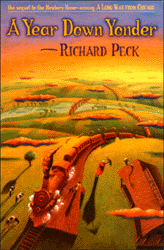
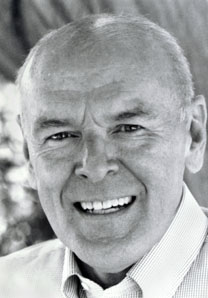 The first keynote presentation by Richard Peck, Newbery award-winning author of The Year Down Yonder, set a serious yet exciting tone for the conference. His unique voice extends beyond his books–when he speaks, he feels as big as a Shakesperean actor, filling the room, enunciating, using his entire body. (It was no surprise to learn that he belongs to a group of authors known as the “Authors Readers Theatre” who travel the country performing each other’s works.) Charming, witty, it is impossible not to be drawn in by Mr. Peck’s dynamic presence.
“I am a writer because of two boys on a raft,” he began, noting his love of Mark Twain. “Writers are readers first. Nobody but a reader ever became a writer. Read 1,000 books before you can write one.”
Mr. Peck encouraged attendees to look at other voices in order to find their own. And what does he think about “write what you know?” Rubbish. “A story is something that never happened to the author,” he said. “I assure you that J.K. Rowling never attended Hogwarts. Beatrix Potter was never a rabbit.”
A writer’s job is to add hope to reality. A story is always about change, and change is animated by epiphany. In his master class on Saturday, Mr. Peck explained epiphany further. When he asked middle school students to define ephiphany, an 8th grade boy said, “Epiphany is when everything changes and you can’t go back.” Mr. Peck thought that was the finest definition he had ever heard. The teacher informed Mr. Peck that the boy had lost his father, and his mother before that. That boy has been overdosed on reality. Now he needs hope.
 “A lot of fiction is about remembering better days.” The elder characters in Mr. Peck’s books are often patterned after the old men who frequented his father’s filling station in the 1930’s and 40’s. He recalls their conversations and makes “rough music out of real speech.” You can write in the voice of a young character, but have that young person know old people. Children want adults to be strong, but they often can’t find them.
Years ago, the books in his school library were kept under glass and you had to find the teacher for a key. “Consider that metaphor,” he said. “The teacher has the key.” Book are still as precious, but it is up to the writer to make them so. “You can teach children or fear the parent, but you can’t do both. We are the last literature teachers left because we can’t be fired. We’re unemployed!”
Every week Mr. Peck visits the book store and spends an hour perusing first lines. “We live in the age of the sound byte, so you have to ‘byte’ them out front.” He recited the first line of Charlotte’s Web to remind us of its power: “Where’s Papa going with that axe?” Six words on one line ignite the imagination. And then he gave a fine example of voice with M.T. Anderson’s Feed: “We went to the moon to have fun but the moon turned out to completely suck.”
He always travels with a book from the past and a new book. The book from the past reminds him that we’re all links in a chain, while the new title keeps him tuned to what’s coming next. “If we don’t know what publishers are releasing this year, how will we get on next year’s list?” He’s reading Laurie Halse Anderson’s Wintergirls, “the greatest argument for writing in first person. It skates too near to the truth.”
Mr. Peck concluded by reminding us that “a story is always a question, never an answer. We can ask the questions that no one else will ask.” Story is the most important gift we can give our youth. Think about that 8th grade boy. “Story might be the companion that a child needs.”
 If you love children’s books, please participate in a new weekly blog meme:
Write a Review Wednesday!
Parents, teachers and librarians are relying on online reviews more than ever to help them decide upon book purchases. Your opinion counts! Praise a picture book. Marvel over a middle grade novel. Tell everyone that young adult isn’t just for young adults!
On Wednesdays, write an online book review for a book that you love. The review could be posted on your blog, Amazon, B&N, GoodReads, or you could tweet your book bravos on Twitter. It doesn’t matter WHERE you do it. The goal is to get more people who are passionate about kidlit talking about their recent, fabulous reads.
(The extraordinary podcast Just One More Book encourages you to phone your book review into their hotline. They will include your review in one of their shows!)
Don’t forget to link to information on where the book can be purchased–the publisher’s site, the author/illustrator’s site, Indiebound.org or a retailer.
If you’re participating via Twitter, link to your online review and use the hashtag #warw, which I’ve defined on Tagalus.
And if you don’t have the time to write a review, simply link to a review that you appreciated. There are many prolific book bloggers (like Maw Books and Write for a Reader), so let’s give them our thanks.
Ideas for “Write a Review Wednesday”? Please leave a comment!
Now let the reviewing begin!

Five months ago, Valerie Leftman’s boyfriend, Nick, opened fire on their school cafeteria. Shot trying to stop him, Valerie inadvertently saves the life of a classmate, but is implicated in the shootings because of the list she helped create. A list of people and things they hated. The list her boyfriend used to pick his targets.
Now, after a summer of seclusion, Val is forced to confront her guilt as she returns to school to complete her senior year. Haunted by the memory of the boyfriend she still loves and navigating rocky relationships with her family, former friends and the girl whose life she saved, Val must come to grips with the tragedy that took place and her role in it, in order to make amends and move on with her life.
THE REVIEW
Before I picked up Hate List, Jennifer Brown’s stunning YA debut, I thought about the tough task Brown had—making Val likeable. A girl involved in a school shooting? I was convinced I would find Val despicable and weak at times, considering the role she played in such a horrifying event. I would probably pity Val and her plight, caught between her high school tormenters and the ultimate bully, her boyfriend Nick.
But I was surprised by Val’s strength. Pity Val? The idea seems completely laughable to me now. Ms. Brown immersed me so deep into Val’s head, she pulled me back to my own high school years when I was teased yet also befriended. Val is real, alive. I know her. Part of me was her. Val exhibits that contradictory mixture of confidence and insecurity inherent to the teen experience. She’s tough and vulnerable, but never a subject of pity.
The story opens in the fall, as Val awakens for her first day back at school, her mother frantically calling Val’s name, hand grasping the telephone, ready to dial 9-1-1 if Val doesn’t answer. The reader immediately understands Val’s fragile state and the strained relationship between mother and daughter.
Brown weaves back and forth in time, between Val’s first day at school and the morning of the shooting on May 2. Newspaper snippets give a subjective and somewhat sanitized view of the violence and victims, juxtaposed with Val’s real-time perspective. There’s what everyone thinks and what actually occurred. Val believes her boyfriend Nick has very different intentions on May 2—standing up for his girlfriend, not bringing the school down—and the reader feels as helpless and shocked as she does when the violence begins.
Brown paints a vivid, complex portrait of Nick that never succumbs to stereotypes. We see Nick through Val’s eyes—the Nick who understood how Val suffered through her parents’ troubled marriage, the Nick who made her feel safe and beautiful, the Nick who could recite Shakespeare. We also realize how Val missed the warning signs of Nick’s tragic actions. The hate list they created united them; hating people who hated them deepened their bond. It was a joke to Val, but a manifesto to Nick.
Val’s innocence is so well documented that when she is questioned by detectives, presented with incriminating evidence—the hate list, the surveillance video, the emails—you want to shout, “Leave Val alone! That’s not how it happened! Tell them, Val!”
Rich with layers, Hate List explores Val’s deep emotions as she moves through her grief, loses friends and gains unlikely ones. Her family unravels and she learns dark secrets about how her parents feel about her and each other. At its core, Hate List examines the complexity of relationships. How we can misinterpret those we love the most. How we often see only what we want to see, not what’s really there.
What’s really there in Hate List is an expertly crafted tale, an ordinary girl coming to terms with an extraordinary event—and becoming an extraordinary young woman.

HATE LIST
Coming September 2009 from Little, Brown BFYR
Contest announcement!
I’m giving away an ARC of Jennifer Brown’s Hate List.
Just leave a comment below to be entered. Blog or Tweet about the giveaway and you’ll receive an additional two entries.
Contest ends May 31 at midnight EST. Winner will be drawn on June 1. Good luck!
Three things happened to young adult writer and teen librarian Bridget Zinn in February:
- She got an agent for her novel.
- She got married.
- She found out she had Stage Four colon cancer.
It’s unbelievable that a young, vibrant woman with absolutely ZERO of the risk factors has been struck with this form of cancer. But it is pretty incredible that the kidlit community has come to her aid with The Bridget Zinn Auction.
Authors have donated signed copies of their books, editors have offered critiques. All to benefit Bridget’s treatment and recovery.
There’s lots of fabulous goodies to be had. Just take a look:
- Manuscript critique by Nancy Mercado of Roaring Brook Press.
- “Focus” Radio Show Interview with Irene Rawlings.
- Picture book critique by Dori Chaconas, author of more than 20 books for children, followed by a special reading of your final revised draft by Andrea Tompa, associate editor of Candlewick Press.
- Signed first edition of Stephenie Meyer’s Eclipse.
- Babymouse author Jennifer Holm will put your name in her next book.
There’s lots more marvelousness to be had. Jewelry, crafts, books, journals and custom items. (I’ve got my eye on that custom cookbook.)
So what are you waiting for? Start bidding! The auctions will close on May 30 at 11pm EST.
 Children’s book writers were treated to another fun and informative first page session this week in Princeton, hosted by the NJ-SCBWI. Editors Michelle Burke and Allison Wortche of Knopf & Crown Books For Young Readers listened to 30 first pages read aloud as they followed along with each manuscript page. Then they gave their immediate first impressions of the work.
If you’ve never attended a first page critique, it’s a quick way to get a handle on what your peers are writing. A first page session shows you what it’s like for an editor to spend two hours in the slush pile. Common themes emerge. Mistakes reveal themselves. If you listen carefully, you’ll learn how to avoid first page problems and encourage an editor to read on.
So what did the editors say? I encourage you to read on…
Picture Books:
Use varying imagery in picture books. One manuscript conveyed a lot of emotion and the editors didn’t see where the illustrator would take inspiration for art. The same scene through several page turns may lose a child’s attention.
Dialogue needs to match the age of your character. A picture book character shouldn’t sound older than a five- or six-year-old child. Their actions should also match their age.
Cut excess detail in picture books. The first page of the manuscript should reveal a clear story arc. If the manuscript is bogged down with details, it slows the story down. For example, writing that a mother is carrying a napkin to the table and setting it down next to the plate is unecessary (unless that specific action is crucial to the story, and even so, it could probably be illustrated).
Premise and conflict should be apparent on the first page of a picture book manuscript. For example, dialogue between two characters should reveal a story, not just serve as adorable banter.
Every line in a picture book should move the story forward. There’s no room for chatting or extraneous stuff.
Picture books should have a linear approach. Moving back and forth in time can confuse a young child.
With holiday stories, you automatically have to work harder. Stories about specific times of year are a tough sell. There’s a lot of competition and a small sales window.
Some picture book stories are told better without rhyme. If the phrasing is unnatural in rhyme–things you wouldn’t ordinarily say–it can be jarring to the story. One bad line can ruin the manuscript’s chances.
Middle Grade/YA:
The narrator/main character should be the highlight of the first page. One manuscript began by describing a minor character as a way to compare/contrast the narrator. However, when that minor character disappeared from the rest of the page, the editors were confused. Was that comparison necessary to introduce the narrator?
Historial fiction should tell a story. The reader should get a sense of the main character first–how he/she is affected by historial details. Too much fact will bog the story down and lose the character.
Don’t be too reptitive in a novel–get on with the story. If a main character reveals the same thing over and over again on the first page, it feels overdone. Introduce a concept and then move on with the story; don’t circle back paragraph after paragraph.
A first person narrative should have more narrative than dialogue on the first page to take advantage of this device. Plus, the narrative voice and the dialogue voice should match (unless the disconnect is for a specific purpose).
Avoid the stereotypical whiny, displaced, unhappy middle-grade voice. More than one middle-grade manuscript began with a character learning that he/she had to move. The result was a whiny narrator who wasn’t necessarily likeable. Editors warned that they see a lot of the parents-uprooting-child theme, so to rise above the slush, consider a different approach.
Be cautious in stories with several important characters. It’s difficult to write a story with multiple characters because introducing them can sound like a laundry list. Reveal their personalities in a way that’s organic to the story. It also asks a lot of the reader, to keep track of several characters.
Watch tense. The switch from dialogue to narrative in one story felt very abrupt because the dialogue was in past tense and the narrative was in present.
The difference between MG and YA is edgy, gritty. If the main character’s personality feels innocent, the genre might be middle grade, not young adult.
Balance description and dialogue. Dialogue moves a story along fast. Description slows it down. Long stretches of each create a choppy storytelling rhythm.
Make descriptions specific, not generic. One story began with vague details that could be applied to almost any story setting. It wasn’t until further down on the page that the reader learned the unique time and place, something that attracted attention. The editors suggested moving that info higher up.
YA characters should be teenagers. College YA characters and those over the age of 19 can be a tricky sell. That moves the story into adult territory. YA readers need to relate to the characters, and 20+ seems like a lifetime away to a 15 year-old.
Finally, stories should be kid-friendly, not sprinkled with adult sensibilities. One of the editors warned, “this feels like it’s about kids rather than for them.” Don’t let a parental point of view creep into your writing–kids find that creepy.
I’ve pulled together some questions and answers from yesterday’s QueryDay on Twitter. I’ve edited this slightly to make it more readable (there’s more room than 140 characters here). The questions are in no particular order and may not include every response. In fact, I’ve removed answers by writing peers to concentrate on agent advice.
I hope this helps you with your query process. Thanks to all the agents and writers who participated!
Will an agent overlook a title she doesn’t like to request proposal/chapters for a query that otherwise caught her eye?
Rachelle Gardner: It’s all about the writing. The story. Yeah, a title can help or hurt your chances, but not make or break.
What are the rules for resubmitting after lots of revision? (We’re talking years since the original sub.)
Rachelle Gardner: Most important rule on resubmitting after revision: Be honest, say it up front.
Is it best to send a query to a few agents at once or just send them one by one?
Rachelle Gardner: I don’t know of any agents who expect or even want exclusivity on queries. On requested partials, yes.
Scenario: Big publisher has full manuscript. They offer contract. How can one query an agent to represent you in this situation? Is it proper?
Colleen Lindsay: It will depend on the offer. Agents are in it for $$$ too, so if the offer isn’t big enough, we won’t care. It takes as much time to work on a $2000 deal as a $20,000 deal. Not every deal created equally. But you should always have a publishing lawyer look over the contract even if an agent won’t rep you.
Greg Daniel: If I were a writer trying to find the right agent, I’d pay for access to Publishers Marketplace.com.
Regarding requested material: What is it that ultimately kills the YES when you read a partial or full that had potential?
Lauren MacLeod: Actually, it goes the other way. I start with probably no & you can move to yes with great voice & writing.
Rachelle Gardner: TOP reason I say “no” to queries is the story doesn’t sound unique, fresh, exciting. The problem isn’t the query, it’s the book. What kills the YES? That’s where it gets difficult and subjective. Does the story grab me and not let go, or not? What about being told “your writing is good” but still no? Remember–dozens of queries in the pile. Can only say yes to a few.
I’d think it’s better not to compare your book to other books and just let it stand on it’s own, meself.
Rachelle Gardner: Listing comparable books is important, it puts yours in context, shows you know your market, helps agent “get” your book.
Would this put you off – if someone spends years perfecting one novel? Would output be a concern?
Lauren MacLeod: No need to tell me in the first place (nothing to gain), but I expect first novels to have had more polish than 2nd.
Greg Daniel: No, wouldn’t concern me.
Why do publishers/agents even bother with email partials? Why not just take the whole manuscript and stop reading if it’s a dud?
Lauren MacLeod: I ask for email partials to manage expectations. I try and write longer & more involved rejections for fulls.
Having a hard time deciding what genre my novel is, should I leave that part out of query or can you suggest a way to help decide?
Rachelle Gardner: You must include the genre. Publisher, bookstore, consumer all need to know! Find books/websites that discuss genre.
How much of it is really who you know? How much of the process relies on you receiving recommendations?
Rachelle Gardner: Referrals definitely help. That’s why you go to conferences and network like crazy. I appreciate referrals from my current clients, editors I trust, and other friends in the industry.
Elana Roth: Connections help. Half my list is from referral, but the other half is from queries.
Greg Daniel: The only recommendations that make much difference to me are writers who are referred to me by my current clients.
Are most agents from NY or CA? Is it okay to query agents in other places? Are they for real?
Lauren MacLeod: With email and phones agents anywhere can get in contact with editors. First and foremost, pick someone you connect with.
Rachelle Gardner: It’s a good point about agent location. The Internet has made it easier for publishing folks to live anywhere.
Should a fiction writer ever mention their education or academic publications?
Lauren MacLeod: It should be mentioned in your bio, certainly, esp. if you are planning on doing more, but it should be a CV.
I’m worried about being relevant to the market…will the super hero novel I’m writing now still be relevant six months from now?
Lauren MacLeod: A great story with dynamic writing will always be relevant. Write good books, don’t worry about trends.
Do I need an agent to get a great book published?
Lauren MacLeod: Not necessarily, but probably to get it in the hands of the editors at the big houses & to negotiate a fair contract.
What are you looking for when it comes to voice?
Colleen Lindsay: Authenticity.
In my YA query, would you want to know if I’ve been mentored by famous YA author?
Kate Sullivan (editor): YES, I would LOVE to know if you were mentored by a famous, accomplished or great YA author in a query/pitch.
 In early March, several literary agents, organized by Colleen Lindsay and Lauren E. MacLeod, participated in QueryFail on Twitter. They sat at their desks, inboxes open, a pile of envelopes at their side, and then read queries one-by-one, Tweeting examples from undesirable letters: “I know that I have attached a file, but please have a read even though it’s against your policy.”
Lesson #1: follow submission guidelines.
Lesson #2? Even though many writers felt QueryFail was interesting and helpful, there was a considerable backlash from those who felt it was unfair to share query letters meant only for the agents’ eyes. But listen, if you’re an aspiring author, that means you want your words to go into print someday. You have to be ready for the criticism. If you’re not confident about sharing your query letter, perhaps you should try writing another one.
QueryFail2 was all set for yesterday, but it didn’t happen. Instead, we got QueryDay. The guidelines were supposedly the same, but the tone was decidedly different. Agents opened the floor to questions from writers, making QueryDay an interactive event. And because writers became participators, I doubt that anyone who witnessed QueryDay had anything negative to say about it.
Several positive spins emerged. Elana Roth of Caren Johnson Literary Agency announced her first QueryWin of the day early on. She requested “a YA light sci-fi novel. Strong query. Good voice in sample pages.” She was also impressed with a “Smart cookie author/illustrator: did not attach art to email, but pointed me to link of her art online. Win.”
Later on Ms. Roth passed on “a 3,000 word picture book” and a “YA novel set in college. Still on the fence about that. And only 39,000 words.” Writers, you need to know the proper word counts for your genre.
Agents also provided tips. Rachelle Gardner offered, “This may be hard to hear, but I suggest you avoid being in a rush to get published. Take TIME to develop your craft.” Later she confessed, “A query that makes me laugh is a great thing! Whether or not the book is for me, it definitely gets my attention.”
Agent Lauren MacLeod shared information on her preferences: “For the record, I prefer not published to self-published. For me, self-published has to try harder. Others feel differently.” She then explained, “Why my self-pubbed position? 1) I assume it has already been widely rejected by agents, 2) might have already exhausted the market.”
Some themes and suggestions emerged repeatedly, like submitting polished work. Lauren MacLeod announced, “I assume you have edited your work, have a writers group and have shown this to someone who likes it.” Later on, Colleen Lindsay said, “A writer needs to get the manuscript into the best shape possible before querying. An agent’s job is not to handhold or coddle or boost a writer’s self-esteem. An agent’s job is to sell the manuscript.” Editor Kate Sullivan presented this caveat, “Remain open-minded and be ready to revise. You need to be open to changes every step of the way.” Even a polished manuscript can be improved.
The most important thing learned from QueryDay is really quite basic: write a sharp query and follow guidelines.
And just how much time does an agent devote to your query? Lauren MacLeod answered, “A query that is to our guidelines, within normal word count range and my genre? About 5 minutes. These are rare.”
She then summed it up: “More important than anything: WRITE A GOOD BOOK. Good writing, good plot & good voice trump all.” Rachel Gardner agreed, “Fiction writers…it’s ALL about the writing. Nothing’s as important as what’s on the page. If it rocks, nothing else matters.”
Got that? Now if only the word “good” weren’t so subjective…
I collected a number of questions and answers from QueryDay that other writers may find useful. I’ll post separately…coming very soon.
 Publishing a book can be an adventure, and that’s especially true for Christine and Ethan Rose. Authors of Rowan of the Wood, the husband-and-wife team take to the road in their “Geekalicious Gypsy Caravan” to promote their book.
Released with Austin-based Dalton Publishing last November, Rowan of the Wood became a finalist in USA Book News’ National Book Award for Young Adult Fiction. Even with this recognition, Christine and Ethan knew they would have to take on much of the promotion responsibilites for the book to get noticed.
“We knew that promoting both on and offline was essential in getting our book ‘out there.’ First time authors, especially with a small, independent publisher, have a difficult time getting into bookstores. By visiting bookstores for signings, it forces books onto the shelves and creates an interesting event. We get to go out and talk to our readers face-to-face, so it establishes a connection that we hope will last throughout the series.”
Their first tour lasted three weeks as they visited Louisiana, Texas and Florida, appearing at Renaissance Faires and Celtic Festivals on weekends and at bookstores during the week. Their next planned tour, May to July, will feature stops from Mississippi to Missouri with eight weekend events and 20 bookstores on the schedule. They’re also adding libraries to the intinerary and will tell tales in the ancient Bardic Tradition, with a lyre that Ethan crafted. Ambitious? You bet. These folks are passionate about their book–and promoting it.
I asked Christine about the best part of being on tour.
“The best experience is just being on the road! I guess the highlight is when a guy stopped us in a Safeway parking lot (because of the Gypsy Caravan) and bought a book. Another highlight was when we totally sold out of books!”
I was curious about their travels, so Christine offered a tour of the Geekalicious Gypsy Caravan:
Here’s the video on How to Make a Geekalicious Gypsy Caravan with cover artist Ia Layadi. The first coat of green paint peeled right off, and one of the signs printed too short, so lessons were learned along the way.
Indeed, publishing a book can be an adventure. Never were it more true for the Roses. They are a small publisher’s dream come true–artists who are as creative with promotion as they are with their stories.
You can find the Rowan of the Wood intinerary at BookTour.com. Follow Christine on Twitter, or check out her videos from the road by subscribing to her YouTube channel.





 Writing for Kids (While Raising Them)