You are currently browsing the category archive for the ‘Picture Books’ category.
 Ever have one of those light-bulb moments when your manuscript finally gels? Your plot falls into place and you wonder why you didn’t think of something so simple and perfect before.
Sitting in on Sudipta Bardhan Quallen’s picture book workshop last month, I had a dozen lightbulb moments. She dissected picture book structure like a biology teacher dissecting a frog–she split it wide open and showed us its heart. (OK, maybe that analogy wasn’t good for the squeamish, but she has a science background, so I think it works.)
For example, she suggested inserting a “ticking clock” into our manuscript. A deadline makes the story urgent and exciting. (Eureka!) If you’ve never heard her speak, you’re missing out on one of the finest picture book tutorials anywhere.
Besides being wicked sharp, Sudipta has a nervous energy that’s endearing. Get her engaged in conversation, and she’ll talk non-stop about her love of children’s literature. (And high heels and shopping on Bluefly. Yes, she’s a girly-girl like me.)
Surprisingly, she never dreamed of becoming a kidlit writer. She’d thought of being a doctor (but she’s afraid of blood), a model (but she likes to eat), and the President (but she had a dissolute youth). So much for childhood dreams.
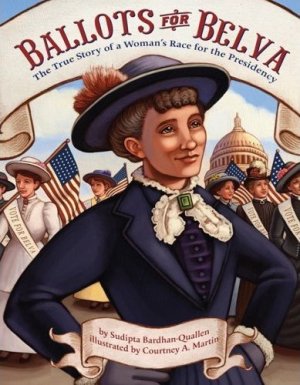 But now she’s the author of 11 picture books and 16 non-fiction books for children including The Hog Prince (Dutton), Ballots for Belva (Abrams) and Tightrope Poppy the High-Wire Pig (Sterling).
So Sudipta, if you didn’t want to be a writer, how did you get into the kidlit business?
I got pregnant twice in the span of 15 months and had to move from California (where I’d been going to grad school) to New Jersey (where a little piece of me dies every day). Like every other new mom in the world, I decided I had stories that I just had to tell my kids and so I started writing. I also had this idea that writing was totally a job I could do with two babies in the house, which was just stupid because you can’t do anything with two babies in the house.
Amen to that! I can’t do anything with two babies out of the house, either. (And by the way, I’ll let that NJ crack slide.)
When I started writing, everything was really bad. Some day, when I am super-famous, I will pull out my Alphabet book, and my going-to-the-zoo book, and all the other requisite bad stories we all write when we start. But eventually, I figured out to go to conferences and read up on the craft of writing, and I started to get things published.
How did you get your first big break?
About two months after I started writing, I wrote up a short story for Highlights. It was something that had actually happened to a friend of mine, with a bit of fictional dramatization. Highlights bought it and it was the first $200 I made writing.
 I also randomly got a foot in the door of children’s publishing by mentioning my science background in a cover letter. I’d sent a picture book manuscript to Sterling, which they rejected, but in the rejection the editor asked if I’d consider writing a science experiment book for them. That became Championship Science Fair Projects, which still sells really well for me, and a few years later, my first picture book, Tightrope Poppy, was published by the same editor.
New writers are often told not to mention irrelevant information in queries, but your science background landed you a contract. What exactly is your science background?
I graduated Caltech in 1998 with a BS in Biology (by the way, with the passage of years and my gradual failure to remember even the most basic biology concepts, BS is becoming more and more appropriate). I spent a year at Harvard, but it really wasn’t for me, and then headed back to Caltech as a PhD candidate in developmental neurobiology. But those plans went off the rails when I had two babies. I had this crazy idea that I could write with two kids in the house—which you totally cannot do—but that’s how I got into the writing-for-kids business.
Normally, I recommend that you don’t mention anything other than kidlit in your cover/query letters, but if you keep it short and sweet, you can throw some things in there. I think the line I wrote was something like: “I have a Master’s degree in Biology from the California Institute of Technology and have published several scientific articles.” That doesn’t take up so much space that it is annoying.
What has surprised you most about being a published author?
So many things have surprised me about being a published author. Hard to pick just one. So I wrote a Top Ten list. I love Top Ten Lists. Except after I start writing and realize that I only have six interesting things to say. But who’s ever heard of a Top Six list?
Top Ten surprising things about being a published author:
- That the advances are so small that after everyone has had their cut and you’ve paid all your expenses (whether it’s permissions, or research costs, or just the cost of babysitting that allowed you to write the book) you have just enough money left over to take your family out to dinner. But only if they agree to go Dutch.
- That you can’t just show up at a book store and expect them to have your book. Or believe that you are a real author.
- That there’s a 50-50 chance that the number of kids that are biologically related to you who show up for a book signing will outnumber the number of kids that are NOT biologically related to you.
- That no matter how much market research you’ve done, there’s a good possibility that there is a really similar book out there that no one has ever heard of – except the person writing the review.
- That even though the publisher picks up the tab for producing the book, all of the marketing responsibility is on you. So if you want anyone beyond your mother and your best friend to know about it, you need to get your butt in gear.
- That you know no more about writing or publishing after the contract than you did before. Even though everyone expects that you do.
- That the more successful you get and the more books you publish, the less of your writing time will actually be devoted to writing.
- That when you and a group of writing colleagues meet certain editors (who may now be agents…), no matter how many books you’ve done, the first comment he will make is, “So… you all are *moms*, huh?”
- That it is a long time before you move “real author” into the list of things you consider yourself. I still haven’t really gotten there.
- That going to a school for an author visit is as close to being Angelina Jolie as you will ever get. And it’s a pretty cool feeling.
How did you begin to bill yourself as a speaker?
I started to volunteer to speak at conferences because I wanted to teach what I had learned about the craft of writing picture books to other aspiring writers. I got a lot out of SCBWI events in New Jersey, and I wanted to give back. Also, teaching helps you learn in ways that doing does not. For example, at this year’s NJ-SCBWI annual conference, I gave a workshop about rhythm, rhyme, and repetition. I talked about using a refrain in your picture book manuscript to give it narrative structure—and it was the first time I had consciously realized that that was something I do a lot in my own writing. Having to teach it, however, was what made me conscious of it.
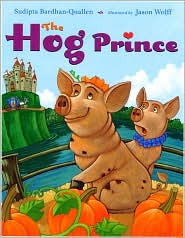 Some authors say they learn something about themselves with each new book. What did writing The Hog Prince teach you?
In my workshops, I emphasize the importance of the market over and over again. I’m constantly saying that I only write what I know I can sell. But as I review my own body of work, which has finally grown large enough that I feel comfortable calling it a body of work, I notice that, within the confines of what I feel the market can bear, there are themes that I subconsciously explore time and again. And these are the themes that resonate most strongly for me.
In The Hog Prince, Eldon dreams of being something he is not. He believes that if he were to change by magic, his life would be better, that everything would be shiny and pretty and luxurious and grand. And while I run the risk of coming off as having no self-esteem at all (which is not true, I have an itty-bitty bit), I can say that there have been plenty of times in my life that I have felt this way. In fact, I don’t think it is just a childhood thing–I’m not sure that we ever completely grow out of feeling like everything about our lives would be improved if only we could change ONE little thing. Except that it is never a little thing, nor is it one thing, nor will your life actually get better.
What’s nice about the story is that Eldon figures out that he is worthy and precious just the way he is, and that the folks who really matter (in his case, Petunia) don’t want him to change one muddy little thing. I struggle with this lesson, and I think a lot of kids do, too. Hopefully, that’s what makes the story timeless.
So, here is what I learned about myself:
- I sometimes wish I could change into royalty;
- I use my books to sort out emotional issues;
- I think that every story is better is you replace the main character with a pig.
You may be right there. Who doesn’t love pigs? I mean pigs in literature. Real pigs, not so much.
Thanks for the interview, Sudipta! I think I know what the blog market can bear, and although I’d love to talk to you for another thousand words, something’s telling me to wrap it up here.
More of Sudipta’s serious-yet-sassy picture book philosophies can be found on her new blog, including a picture book writer’s Ten Commandments. Thou shalt not submit a manuscript before its time…
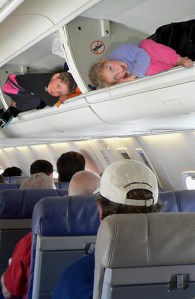
Image courtesy of Ma1974
I hate air travel with children. I mean with my own children. My goal for the flight is to ensure that my toddler and Kindergartener don’t disturb the other passengers. I don’t want them whining, crying, screaming, running through the aisles or otherwise causing mayhem. I remember being a stressed-out businesswoman and being seated near a miserable child. I have empathy for the childless travelers, honestly I do.
I spend a ridiculous amount of time preparing for the trip and devising solutions for worst-case scenarios. Flight delays. Missed naps. Sudden fever. Soiled clothes. Motion sickness. I’ve got it all covered, people.
My foolproof plan involves a bag of books. I read to my children on the flight. (Oh yeah, I can’t forget the lollipops…great for easing the pressure on take-off and landing.)
However, I found out that my efforts to entertain and enlighten my children aren’t necessarily appreciated.
The older woman in front of me turned around in the middle of a story and asked, “How long do you plan on reading aloud?”
So continued a rudeness I’ve never experienced before, someone complaining about a happy, content family. She mistakenly said I had been reading for an hour when the flight had been in the air only 25 minutes, and she told me that if I was going to “read for another hour” she “wouldn’t be able to take it.”
Did you ever have one of those conversations where you wish you could say something different than what leaves your mouth?
I could let my children play bongos on the tray tables if you prefer.
A crying jag can be arranged.
We’re going to peek over the seats and force you into an endless game of peek-a-boo later.
Instead, I apologized like the polite person I am. I was sitting in the last row with a terrible jet engine din and could barely hear what I was reading. Was I a little loud? Maybe. Could she have approached the subject differently? Sure. So could the cowardly husband who decided to give a rude stare and play with his seat, knowing that we in the last row had nowhere to recline ourselves.
She finished by not making eye contact. “Well, just lower your voice.”
Hmmm. I didn’t hear “please.”

Check ya later, kidlit fans. There’s sand castles, seafood and South Carolina in my forecast.
I’ll be posting again in July. Y’all come back now, ya hear? ‘Cause you won’t want to miss an interview with the stupendous Sudipta Bardhan-Quallen. Or the artistic antics of up-and-coming author/illustrator Ryan Hipp (who contributed the robot fish above). Or the courageous story of YA debut author Albert Borris. Illustrator Kristi Valiant will talk about her latest book, Cora Cooks Pancit. I’ll also share some tips for making your own book trailer before you sell the book. And perhaps my talented friend Michael Sussman will make an appearance…
It’s all coming next month. And August. It may be summer, but I don’t plan on slowing down.
Well, maybe just a little bit, for now.
 Before I take off, let me remind you to Take the Dare at Cynthea Liu’s website. There’s fabulous critiques up for auction from kidlit agents, editors and authors. All proceeds benefit Tulakes Elementary, a Title I school in Cynthea’s home state of Oklahoma. So show you care, take the dare!
This week also marks the YA Book Carnival, hosted by Shooting Stars Mag. Nearly 100 giveaways are listed, so go enter and grab a great read!
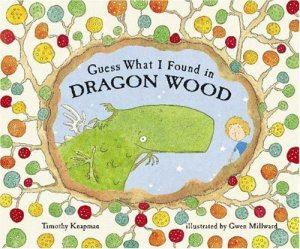
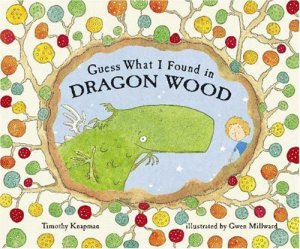 Benjamin wanders too far from home one day and stumbles into Dragon Wood. In this tale of boy meets dragon, the unexpected happens–dragon meets boy.
The cover art by Gwen Millward drew me into Timothy Knapman’s quirky little tale. Her forest reminded me of the Truffula Trees in The Lorax, albeit on a smaller scale (and perhaps not as poofy). They frame Benjamin and the Dragon on a clever, die-cut cover.
I admit that I goofed while reading the story for the first time. I got confused. I had to flip back to the beginning to understand Knapman’s brilliant twist on a familiar theme. When editors tell aspiring authors they want to see fresh ideas in picture books, Guess What I Found serves as a perfect example.
“What kind of review is this?” I hear you asking. “She’s not telling me anything about the book!” Oh yeah, sorry ’bout that. If I tell you too much about the Benjamin’s quest, I’ll ruin the surprise.
“Wait a second, did she just call him ‘the Benjamin?’ Must be a typo. What a sorry excuse for a blogger.” Um, I must inform you, that was no typo.
So okay, calm down. I’ll tell you that I loved the striped boots, the whirly wee-woo boxes and the soccer goalposts. And I can’t forget the volcano-sitting lessons! If you want to know more than that, you’ll have to stumble into Dragon Wood yourself.
Don’t get lost!
 Guess What I Found in Dragon Wood
Story by Timothy Knapman
Illustrations by Gwen Millward
Bloomsbury USA Children’s Books, December 2007
Got a favorite children’s book? Write a review! Today is “Write a Review Wednesday.” Help support kidlit!
Remember #QueryFail? If you want to land a book contract, don’t send a letter like this to an editor or agent. Sung to the tune of “Paperback Writer” by The Beatles, here’s a pop parody with a cautionary theme.
♫ Picture book writer (picture book writer) ♫
To whom it concerns, will you buy my tale?
I’m a stay-home Mom with degrees from Yale.
It’s an alphabet book based on Mother Goose,
And I’ve much to teach so I want to be a picture book writer,
Picture book writer.
It’s a didactic yarn of a wise old sow
Chased by vampire ducks and a zombie cow.
I’ll outsell Mo Willems and Dr. Seuss,
I was in movies but I want to be a picture book writer,
Picture book writer.
♫ Picture book writer (picture book writer) ♫
It’s six thousand words, give or take a few,
My cousin’s friend can illustrate it, too.
I have a twelve-book series that’s told in rhyme,
My three kids love it and I want to be a picture book writer,
Picture book writer.
If you sign me right now, you can be the first,
It’s been e-mailed to hundreds, including Hearst.
If you must reject it, please don’t send a form,
I need your critique and I want to be a picture book writer,
Picture book writer.
 Ruth Spiro is my hero. She’s the only children’s book author I know who invented her own holiday. And what could be more fun than Bubble Gum Day? Celebrations are “popping up” all over the place!
Bubble Gum Day participants raise money to support schools by blowing bubbles. And, of course, they read Ruth’s hilarious picture book Lester Fizz, Bubble-Gum Artist.
Never heard of a bubble gum artist? Lester comes from a long line of artsy ancestors, but he hasn’t inherited traditional talent. One day Lester visits his Uncle Edgar, whose inspiration has waned. When Lester’s bubble bursts, Edgar’s statue gets covered in pink, donning her with a lovely tutu. Hmmm, where have I seen that ballerina before? Sure, Lester helps his uncle out, but he still hasn’t found his fine art calling.
Lester might create drab doodles and pitiful paintings, but he soon discovers his unique talent for blowing beautiful bubble art. Spiro’s clever tale offers tons of fun for kids, but it also winks at parents with spoofs of Picasso, Seurat and other masters sprinkled on its pages. Lester‘s theme is about finding your place in the world, despite what others think. In fact, it serves as a wonderful lesson for aspiring authors.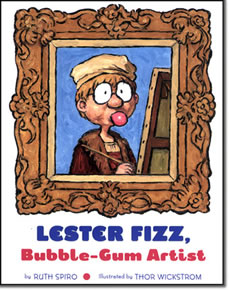 Write from the heart. Find your voice. Keep writing no matter what anyone else says.
Ruth Spiro’s journey to publication was a pretty sweet ride. Lester was her first picture book manuscript and her first sale. The story was also a winner in the 72nd Annual Writer’s Digest competition. But how did she start writing?
Ahh, glad you asked. I knew I liked Ruth’s work for a reason. In 2000, she took a class from one of my favorite picture book authors, Carolyn Crimi (The Louds Move In, Henry and the Buccaneer Bunnies). She gained a firm writing foundation and then found inspiration from her family.
One day her daughter said, “What if I could blow bubbles like that guy at the birthday party who made animals out of balloons? Wouldn’t it be cool if I could blow a bubble shaped like a dog?” With that, Lester’s story was born. And Ruth’s career took another turn.
“Once I sold my book and started selling articles to magazines, I also started receiving calls and emails from ‘friends of friends’ who were looking for advice on breaking into print. It seemed everyone had a drawer full of poems or a children’s book manuscript, but they didn’t know what steps to take next.
“I realized I was spending a lot of time putting together resources and reading other peoples’ work, so why not make it official and get paid for it?”
Ruth created the Writing for Moms program to help other women develop their craft and sell their work. Several of her students are now published authors, too.
And now the burning question: what kind of bubble gum does Ruth prefer?
“I was actually a Bazooka gal until Bubble Yum came out–so soft and sweet! While I don’t like to state a preference for a particular brand, I find Dubble Bubble is a good all-around bubblegum, and I usually have a big pink bowl filled with it at my events and signings!”
As if I needed another reason to attend her signing! Oh Ruth, you had me at “Bazooka.”
 Lester Fizz, Bubble-gum Artist
Story by Ruth Spiro
Illustrations by Thor Wickstrom
Dutton Juvenile, August 2008
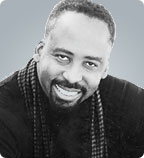 “For all those who thought E.B. White was coming. Sorry, I’m the black one. As you can see, I’m not white and I’m not dead.”
Talented artist and illustrator E.B. Lewis discussed process versus product for his NJ-SCBWI keynote. He opened with some humor but then got to serious business.
He has a strong work ethic and told the audience that a person was only an artist if they spent each day producing art. It takes no less than 10,000 hours to become an expert in your craft. If you’re counting, that’s nearly 5 years straight of 40-hour work weeks, no breaks, no vacation.
Work is just that–work. It shouldn’t be easy. But you should love the work. If you don’t, then maybe you’re just fooling yourself into believing you’re something you’re not. Some people say they don’t have the inspiration. “I don’t understand that. I can’t step out of my bed without falling over a juicy piece of inspiration.” (Note to Mr. Lewis: I’m the one who tripped over your portfolio case. How’s that for falling over juicy inspiration?)
Mr. Lewis claims that once he finishes a painting, he admires it. He loves it–for about two hours. Then he hates it. For him, it’s all about the process of creating. He isn’t happy until he is creating once again, improving upon his last accomplishment, trying something new. “As soon as an artist knows their style, they’re dead in the water,” he said. Because your style is something that should be evolving. You’ve got to work hard, you’ve got to better yourself. If you’re satisfied, perhaps you aren’t a true artist.
 He gave us some background on his childhood. “When I visit schools, I tell the kids that I failed 3rd grade. It levels the playing field. ‘Wow, E.B. Lewis failed!’ the kids say.” The children immediately understand that if Mr. Lewis was able to become an artist, they, too, can reach their goals.
Mr. Lewis attended a small, old school with fireplaces in every classroom. One day during math class, he crawled up the fireplace. Remember how the girl in A Christmas Story pointed shyly toward Flick, outside, tongue frozen to the flagpole? Well, the whole class pointed shyly up the fireplace when the teacher asked where Earl had gone.
Then on career day, a classmate said he wanted to become a doctor. That boy received a lot of attention. E.B. wanted that same kind of attention, so he raised his hand. His teacher pushed it down. He raised it again. Finally, he was able to answer. “I want to be a lawyer,” he said, not because he really wanted to, but because he thought everyone would admire his aspirations. Instead, they all laughed, including the teachers. No one thought E.B. Lewis would amount to anything.
So E.B.’s uncle decided to take a special interest in his nephew. Every Saturday afternoon for years, his uncle drove him to art class because he knew E.B. loved to draw. His uncle told him that artists were the critical thinkers of society, and very well read, so he gave E.B. a new book to read every week. This man connected E.B. Lewis to his passion.
E.B. began his career as a fine artist. He would take photographs of his subjects, but from far away, hidden, with a telephoto lens, because as soon as someone knows their picture is being taken, they no longer act naturally. They’re no longer in the moment.
His work appeared on the cover of a magazine and a few days later he got a call from someone in the children’s book industry, asking if he’d like to illustrate a book. He said no. Why not? “Because I’m a fine artist, not an illustrator.”
What’s the difference? A fine artist solves their own philosophical problem. An illustrator solves someone else’s problem.
However, that art director was persistent and encouraged E.B. to go to the children’s section of the library. Mr. Lewis soon realized that some of the most ground-breaking artistic work was being published in children’s books. He called back and agreed to illustrate.
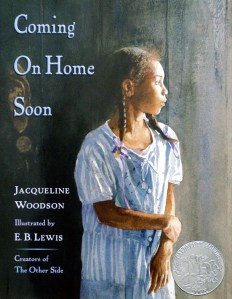
 Over the past 14 years, Mr. Lewis has illustrated 47 books at the rate of about 3/4 books a year. He has won the Coretta Scott King illustrator award four times. He won a Caldecott honor for Coming on Home Soon. He works with 14 different publishers and is currently booked through 2014. (That’s right, five years in advance. But I’m taking special note of the lucky number 14.)
He is one of the few illustrators who travels to meet with his editor and art department to discuss a book at the early stages. He likes to create a brain trust in the beginning. He starts with thumbnail sketches and this begins the dialogue. Then he enlarges the sketches to a dummy and adds the words. He researches photos in the library and uses a model, often combining both photographic guides to create the end result.
“I have a love of the process, the doing. For me, that’s all there is.”
How lucky for us. We get to enjoy the fruits of his labor.
 If you love children’s books, please participate in a new weekly blog meme:
Write a Review Wednesday!
Parents, teachers and librarians are relying on online reviews more than ever to help them decide upon book purchases. Your opinion counts! Praise a picture book. Marvel over a middle grade novel. Tell everyone that young adult isn’t just for young adults!
On Wednesdays, write an online book review for a book that you love. The review could be posted on your blog, Amazon, B&N, GoodReads, or you could tweet your book bravos on Twitter. It doesn’t matter WHERE you do it. The goal is to get more people who are passionate about kidlit talking about their recent, fabulous reads.
(The extraordinary podcast Just One More Book encourages you to phone your book review into their hotline. They will include your review in one of their shows!)
Don’t forget to link to information on where the book can be purchased–the publisher’s site, the author/illustrator’s site, Indiebound.org or a retailer.
If you’re participating via Twitter, link to your online review and use the hashtag #warw, which I’ve defined on Tagalus.
And if you don’t have the time to write a review, simply link to a review that you appreciated. There are many prolific book bloggers (like Maw Books and Write for a Reader), so let’s give them our thanks.
Ideas for “Write a Review Wednesday”? Please leave a comment!
Now let the reviewing begin!
 Jonathan Woodward’s an artist, a nomad and a soon-to-be father. The man behind Zero2Illo.com, a blog for aspiring children’s book illustrators, Jon shares his passion for creativity and his good business sense.
Woodward grew up in Nottingham, the home of Robin Hood. (Hmm, no wonder he was drawn to children’s literature.) He was known as the “arty one” in school, the kid who would always be asked to draw the posters for school plays.
After studying Graphic Design in college, Woodward worked as an in-house designer before going freelance in 2006.
To Woodward, freelance means freedom to explore. He and his wife rented out their UK home in 2007 and have been on the road since, living in Panama, Buenos Aires, Grenada, Toronto, South Africa, Thailand, Hong Kong and Dubai. The internet makes running their marketing and design business from anywhere possible.
Jon, how do your travels influence your illustration style?
I wouldn’t say that they have directly influenced it from color or style perspective based on the different cultures that we have seen (although that is an aspect I really love about the travel), but having seen so much beautiful wildlife and nature around the world, it has definitely influenced the subject matter that I illustrate.
Tell us about some of your most recent illustrations.
One for Sorrow, Two for Joy is the piece that led to my current collage style of working. I’d been flicking through magazines and noticed how much the hair on a particular advert looked like tree bark–it was one of those light bulb moments!
The idea for the final illustration came from a song I was listening to at the time that coincidentally tied in with my idea for the tree (and my love of crows!).

The Phoenix is from a recent set of four illustrations based on mythical beasts. Here I was trying to pare down the collage to a bare minimum–to create a bolder, simpler illustration style that might be more suitable for a children’s book.
I enjoy finding textures of a particular surface that are perfect for conveying a totally different texture in the illustration. This happened with the feet of the Phoenix. I found a picture of a model wearing a sparkly bejeweled top and instantly knew that I had to use it for the feet.
This piece was done mostly in traditional collage, with just a bit of detailing, adding the white eye and pumping up the colours a little in Photoshop.
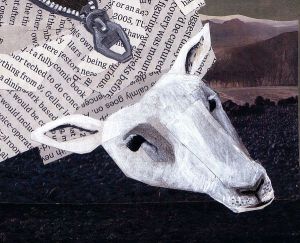

A Wolf In Sheep’s Clothing is where I first started using acrylic paint alongside the collage medium. It’s a technique born out of necessity, as I was struggling to find a magazine clipping to represent the wolf fur, so I started working into the collage with paint. I got a bit carried away in the end and ended up painting the sheep’s head and zipper on top of the collage, too.
This was an interesting piece personally, as I had previously been creating collages digitally using scanned magazine clippings, but I realized that my choice of texture ended up being a lot more interesting if I did the collage traditionally using whatever I could find within the magazines and materials I had. I don’t think I would have chosen the printed text to represent the sheep wool had I been doing the piece digitally.
Who are some of your favorite illustrators?
My illustration inspirations and interests are quite diverse, ranging from artists like Jon Foster, Dave McKean and James Jean all the way to Shaun Tan and J. Otto Seibold.
What is your ultimate goal as a children’s book illustrator?
I initially thought I wanted to go into comics or sci-fi and fantasy illustration for book covers, but the theme and content of my illustrations always seemed to gravitate back to one of my other passions: wildlife and nature. If I was only ever allowed to illustrate creatures great and small for the rest of my illustration career, I’d be a very happy man.
Thanks for sharing your wonderful artwork, Jon!
If you’re interested in learning more about the ilustration and design work of Jonathan Woodward, visit his blog Zero2Illo.com and follow him on Twitter at @jonwoodward.
Thank you to everyone who celebrated the release of Carin Berger’s newest picture book OK Go! by participating in her green-themed collage contest.
Carin thought the entries were so fabulous, she has posted all of them on her website!
We selected three winners at random.
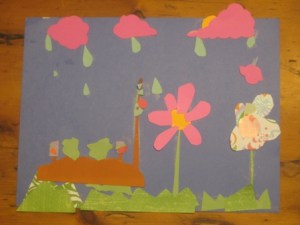
Verity, age 7, wins the signed copy of OK, Go!
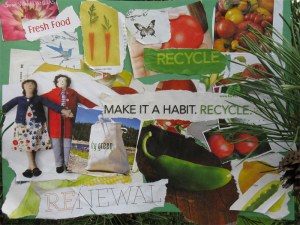
Ellie, age 4, wins a signed bookplate and an All Mixed Up mini-book.
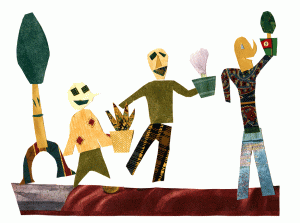
Isaac, age 10, wins a signed bookplate and an All Mixed Up mini-book.
The rest of our artists receive an All Mixed Up mini-book. Everyone wins!
Visit Carin Berger’s website to see all the terrific collages and read the children’s inspiration for their art!
Thank you, green parents and kids! 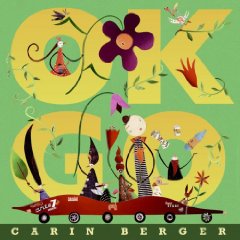
<– And don’t forget to pick up a copy of OK, GO!
OK?
Go!





 Writing for Kids (While Raising Them)