You are currently browsing the category archive for the ‘Children’s Books’ category.
 Benjamin wanders too far from home one day and stumbles into Dragon Wood. In this tale of boy meets dragon, the unexpected happens–dragon meets boy.
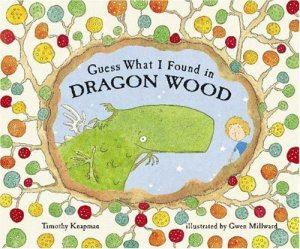
The cover art by Gwen Millward drew me into Timothy Knapman’s quirky little tale. Her forest reminded me of the Truffula Trees in The Lorax, albeit on a smaller scale (and perhaps not as poofy). They frame Benjamin and the Dragon on a clever, die-cut cover.
I admit that I goofed while reading the story for the first time. I got confused. I had to flip back to the beginning to understand Knapman’s brilliant twist on a familiar theme. When editors tell aspiring authors they want to see fresh ideas in picture books, Guess What I Found serves as a perfect example.
“What kind of review is this?” I hear you asking. “She’s not telling me anything about the book!” Oh yeah, sorry ’bout that. If I tell you too much about the Benjamin’s quest, I’ll ruin the surprise.
“Wait a second, did she just call him ‘the Benjamin?’ Must be a typo. What a sorry excuse for a blogger.” Um, I must inform you, that was no typo.
So okay, calm down. I’ll tell you that I loved the striped boots, the whirly wee-woo boxes and the soccer goalposts. And I can’t forget the volcano-sitting lessons! If you want to know more than that, you’ll have to stumble into Dragon Wood yourself.
Don’t get lost!
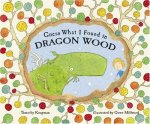 Guess What I Found in Dragon Wood
Story by Timothy Knapman
Illustrations by Gwen Millward
Bloomsbury USA Children’s Books, December 2007
Got a favorite children’s book? Write a review! Today is “Write a Review Wednesday.” Help support kidlit!
Remember #QueryFail? If you want to land a book contract, don’t send a letter like this to an editor or agent. Sung to the tune of “Paperback Writer” by The Beatles, here’s a pop parody with a cautionary theme.
♫ Picture book writer (picture book writer) ♫
To whom it concerns, will you buy my tale?
I’m a stay-home Mom with degrees from Yale.
It’s an alphabet book based on Mother Goose,
And I’ve much to teach so I want to be a picture book writer,
Picture book writer.
It’s a didactic yarn of a wise old sow
Chased by vampire ducks and a zombie cow.
I’ll outsell Mo Willems and Dr. Seuss,
I was in movies but I want to be a picture book writer,
Picture book writer.
♫ Picture book writer (picture book writer) ♫
It’s six thousand words, give or take a few,
My cousin’s friend can illustrate it, too.
I have a twelve-book series that’s told in rhyme,
My three kids love it and I want to be a picture book writer,
Picture book writer.
If you sign me right now, you can be the first,
It’s been e-mailed to hundreds, including Hearst.
If you must reject it, please don’t send a form,
I need your critique and I want to be a picture book writer,
Picture book writer.
 Ruth Spiro is my hero. She’s the only children’s book author I know who invented her own holiday. And what could be more fun than Bubble Gum Day? Celebrations are “popping up” all over the place!
Bubble Gum Day participants raise money to support schools by blowing bubbles. And, of course, they read Ruth’s hilarious picture book Lester Fizz, Bubble-Gum Artist.
Never heard of a bubble gum artist? Lester comes from a long line of artsy ancestors, but he hasn’t inherited traditional talent. One day Lester visits his Uncle Edgar, whose inspiration has waned. When Lester’s bubble bursts, Edgar’s statue gets covered in pink, donning her with a lovely tutu. Hmmm, where have I seen that ballerina before? Sure, Lester helps his uncle out, but he still hasn’t found his fine art calling.
Lester might create drab doodles and pitiful paintings, but he soon discovers his unique talent for blowing beautiful bubble art. Spiro’s clever tale offers tons of fun for kids, but it also winks at parents with spoofs of Picasso, Seurat and other masters sprinkled on its pages. Lester‘s theme is about finding your place in the world, despite what others think. In fact, it serves as a wonderful lesson for aspiring authors.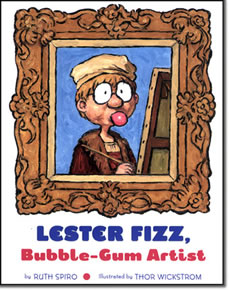 Write from the heart. Find your voice. Keep writing no matter what anyone else says.
Ruth Spiro’s journey to publication was a pretty sweet ride. Lester was her first picture book manuscript and her first sale. The story was also a winner in the 72nd Annual Writer’s Digest competition. But how did she start writing?
Ahh, glad you asked. I knew I liked Ruth’s work for a reason. In 2000, she took a class from one of my favorite picture book authors, Carolyn Crimi (The Louds Move In, Henry and the Buccaneer Bunnies). She gained a firm writing foundation and then found inspiration from her family.
One day her daughter said, “What if I could blow bubbles like that guy at the birthday party who made animals out of balloons? Wouldn’t it be cool if I could blow a bubble shaped like a dog?” With that, Lester’s story was born. And Ruth’s career took another turn.
“Once I sold my book and started selling articles to magazines, I also started receiving calls and emails from ‘friends of friends’ who were looking for advice on breaking into print. It seemed everyone had a drawer full of poems or a children’s book manuscript, but they didn’t know what steps to take next.
“I realized I was spending a lot of time putting together resources and reading other peoples’ work, so why not make it official and get paid for it?”
Ruth created the Writing for Moms program to help other women develop their craft and sell their work. Several of her students are now published authors, too.
And now the burning question: what kind of bubble gum does Ruth prefer?
“I was actually a Bazooka gal until Bubble Yum came out–so soft and sweet! While I don’t like to state a preference for a particular brand, I find Dubble Bubble is a good all-around bubblegum, and I usually have a big pink bowl filled with it at my events and signings!”
As if I needed another reason to attend her signing! Oh Ruth, you had me at “Bazooka.”
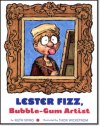 Lester Fizz, Bubble-gum Artist
Story by Ruth Spiro
Illustrations by Thor Wickstrom
Dutton Juvenile, August 2008
Want to be a fly on the wall in an agent’s office? If you were at the NJ-SCBWI conference last week, you got that kind of insider buzz. Some top agents in children’s publishing revealed what’s been sitting on their desks, and more importantly, what hasn’t been submitted.
The agent panel featured:
- Jill Corcoran, Herman Agency Inc.
- Jenni Ferrari-Adler, Brick House Literary Agents
- Rachel Orr, Prospect Agency
- Scott Treimel, S©ott Treimel NY
- Emily van Beek, Pippin Properties
- Marietta Zacker, Nancy Gallt Literary Agency
After brief introductions, the agents welcomed questions. The first attendee (OK, me) wanted to know: “What trends are you seeing in your submissions? Specifically, what are you seeing too often? And what aren’t you seeing?”
The agents were quick to say that vampires were overdone. They’re seeing a lot of fantasy, especially with werewolves and zombies–on their own but also vampire/werewolf/zombie hybrids.
Jill Corcoran added, “I’m seeing a lot of plot-driven manuscripts, but where the character isn’t fully developed.”
The agents thought that paranormal hadn’t yet peaked, while historicals were down. That’s not to say a fantastic historical couldn’t come along and raise the whole genre, but as of now, they weren’t selling well.
They also added, “please don’t send anything about bullies. We’re sick of bullies.” Seems there was a bully article in a prominent parenting magazine (or perhaps it was an Oprah episode?) which began an unwelcomed trend.
Turning their attention to what wasn’t being submitted, Marietta Zacker said, “We’re not seeing a true depiction and representation of our diverse population. Kids aren’t seeing themselves in books and that’s a problem.”
Rachel Orr said, “And please realize there should be other Chinese stories than those about Chinese New Year. And stories featuring African-Americans that are about something other than slavery.”
Scott Treimel added, “Don’t send a story about three characters from three different races that have adventures.” He said such stories tended to be stereotypical and poorly conceived.
Ms. Zacker emphasized, “Certainly, be true to your voice. But write outside of yourself. Look beyond yourself to the world around you.”
Rachel Orr commented that she sees stories about a kid who moves to a new house far too often.
Scott Treimel wondered, “Where are the stories about the boys who feel weird about their sexuality? What if the girl is aggressive for a change?”
The agents agreed that in regards to sex in YA novels, the sky’s the limit, but it must be organic to the story. Don’t be shocking just for shock’s sake.
An attendee asked if she had been rejected by an agent, but spent several months polishing the manuscript, is it acceptable to submit again?
The agents said that the writer should first look to the agent for a response. Typically, they’ll note if they want to see a revision. And a writer must put the work in before coming back a second time. Marietta Zacker said, “This sounds like common sense, but don’t forget that we remember you. We really do read submissions. Don’t make us feel like we don’t know you. Please say, ‘I sent this to you six months ago but I’ve revised it…'”
Emily van Beek chimed in with: “Remember that the world owes you nothing. You owe the world your best work.”
In regards to working with an agent, the agents said that their business is all about relationships and trust. “We’re partners in your career. We’re architects for your career. We have a design for you.”
Also remember that an agent has their favorite editors so they’re tuned to the tastes of a few dozen editors, but not all of them. It pays to shop your work around to find the best match.
And one of the agents commented that if something isn’t selling, move on. “I wonder about those people who try to sell the same story year after year. You’re a writer! Write something else.”
When the agents were asked what they’re currently working on, books they’re excited about, Marietta Zacker said they are asked this question frequently, “but we always shoot ourselves in the foot when we answer. We don’t want to pigeonhole ourselves. You shouldn’t necessarily send to us just because we liked something in particular. And we don’t want you to write to that preference, either.” Agents have a wide range of tastes. “We don’t know we want it until we read it.”
Emily van Beek talked about the importance of falling in love with a manuscript in order to represent it because they do all work on spec. “We don’t get paid until we sell it.” So her mantra tends to be, “If you can resist it, do. I know that sounds [harsh], but it’s true.” She finds projects she can’t live without. Then she has the passion to sell it.
Interestingly, she told us that Kathi Appelt’s Newbery honor The Underneath took two years and underwent eight major revisions.
Scott Treimel added, “Writing and revising are equally important skills.”
Some agents will help edit your manuscript for submission, others may not be that involved. It depends upon the agent. But remember that your agent is not a critique group. Be sure that you have reliable crit partners and that your manuscript is “polished to within an inch of its life” prior to submission.
So when does an agent know that the manuscript is ready to be submitted to editors? When do they let go? Jill Corcoran said, “When I think it’s phenomenal.”
And to end the panel, Jill Corcoran talked about endings. “I love endings that are expected, but unexpected; surprising but logical.”
And I suppose this is a logical place to end this post. Be sure to check back for more from the conference throughout this week!
 “For all those who thought E.B. White was coming. Sorry, I’m the black one. As you can see, I’m not white and I’m not dead.”
Talented artist and illustrator E.B. Lewis discussed process versus product for his NJ-SCBWI keynote. He opened with some humor but then got to serious business.
He has a strong work ethic and told the audience that a person was only an artist if they spent each day producing art. It takes no less than 10,000 hours to become an expert in your craft. If you’re counting, that’s nearly 5 years straight of 40-hour work weeks, no breaks, no vacation.
Work is just that–work. It shouldn’t be easy. But you should love the work. If you don’t, then maybe you’re just fooling yourself into believing you’re something you’re not. Some people say they don’t have the inspiration. “I don’t understand that. I can’t step out of my bed without falling over a juicy piece of inspiration.” (Note to Mr. Lewis: I’m the one who tripped over your portfolio case. How’s that for falling over juicy inspiration?)
Mr. Lewis claims that once he finishes a painting, he admires it. He loves it–for about two hours. Then he hates it. For him, it’s all about the process of creating. He isn’t happy until he is creating once again, improving upon his last accomplishment, trying something new. “As soon as an artist knows their style, they’re dead in the water,” he said. Because your style is something that should be evolving. You’ve got to work hard, you’ve got to better yourself. If you’re satisfied, perhaps you aren’t a true artist.
 He gave us some background on his childhood. “When I visit schools, I tell the kids that I failed 3rd grade. It levels the playing field. ‘Wow, E.B. Lewis failed!’ the kids say.” The children immediately understand that if Mr. Lewis was able to become an artist, they, too, can reach their goals.
Mr. Lewis attended a small, old school with fireplaces in every classroom. One day during math class, he crawled up the fireplace. Remember how the girl in A Christmas Story pointed shyly toward Flick, outside, tongue frozen to the flagpole? Well, the whole class pointed shyly up the fireplace when the teacher asked where Earl had gone.
Then on career day, a classmate said he wanted to become a doctor. That boy received a lot of attention. E.B. wanted that same kind of attention, so he raised his hand. His teacher pushed it down. He raised it again. Finally, he was able to answer. “I want to be a lawyer,” he said, not because he really wanted to, but because he thought everyone would admire his aspirations. Instead, they all laughed, including the teachers. No one thought E.B. Lewis would amount to anything.
So E.B.’s uncle decided to take a special interest in his nephew. Every Saturday afternoon for years, his uncle drove him to art class because he knew E.B. loved to draw. His uncle told him that artists were the critical thinkers of society, and very well read, so he gave E.B. a new book to read every week. This man connected E.B. Lewis to his passion.
E.B. began his career as a fine artist. He would take photographs of his subjects, but from far away, hidden, with a telephoto lens, because as soon as someone knows their picture is being taken, they no longer act naturally. They’re no longer in the moment.
His work appeared on the cover of a magazine and a few days later he got a call from someone in the children’s book industry, asking if he’d like to illustrate a book. He said no. Why not? “Because I’m a fine artist, not an illustrator.”
What’s the difference? A fine artist solves their own philosophical problem. An illustrator solves someone else’s problem.
However, that art director was persistent and encouraged E.B. to go to the children’s section of the library. Mr. Lewis soon realized that some of the most ground-breaking artistic work was being published in children’s books. He called back and agreed to illustrate.
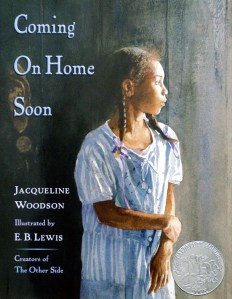
 Over the past 14 years, Mr. Lewis has illustrated 47 books at the rate of about 3/4 books a year. He has won the Coretta Scott King illustrator award four times. He won a Caldecott honor for Coming on Home Soon. He works with 14 different publishers and is currently booked through 2014. (That’s right, five years in advance. But I’m taking special note of the lucky number 14.)
He is one of the few illustrators who travels to meet with his editor and art department to discuss a book at the early stages. He likes to create a brain trust in the beginning. He starts with thumbnail sketches and this begins the dialogue. Then he enlarges the sketches to a dummy and adds the words. He researches photos in the library and uses a model, often combining both photographic guides to create the end result.
“I have a love of the process, the doing. For me, that’s all there is.”
How lucky for us. We get to enjoy the fruits of his labor.
Thirty-eight agents, editors, art directors and acclaimed authors. Two days. Twenty workshop sessions. The NJ-SCBWI is one little conference that packs a writing wallop.
Over the next few days, I’ll share notes from the event, from my own journal and that of writer Natisha LaPierre. So even if you weren’t there, it will feel like you were. (Just surround yourself with friendly folks passionate about children’s books while you read.)
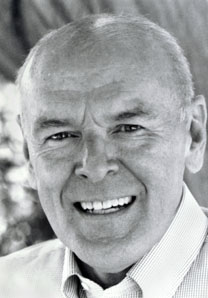 The first keynote presentation by Richard Peck, Newbery award-winning author of The Year Down Yonder, set a serious yet exciting tone for the conference. His unique voice extends beyond his books–when he speaks, he feels as big as a Shakesperean actor, filling the room, enunciating, using his entire body. (It was no surprise to learn that he belongs to a group of authors known as the “Authors Readers Theatre” who travel the country performing each other’s works.) Charming, witty, it is impossible not to be drawn in by Mr. Peck’s dynamic presence.
“I am a writer because of two boys on a raft,” he began, noting his love of Mark Twain. “Writers are readers first. Nobody but a reader ever became a writer. Read 1,000 books before you can write one.”
Mr. Peck encouraged attendees to look at other voices in order to find their own. And what does he think about “write what you know?” Rubbish. “A story is something that never happened to the author,” he said. “I assure you that J.K. Rowling never attended Hogwarts. Beatrix Potter was never a rabbit.”
A writer’s job is to add hope to reality. A story is always about change, and change is animated by epiphany. In his master class on Saturday, Mr. Peck explained epiphany further. When he asked middle school students to define ephiphany, an 8th grade boy said, “Epiphany is when everything changes and you can’t go back.” Mr. Peck thought that was the finest definition he had ever heard. The teacher informed Mr. Peck that the boy had lost his father, and his mother before that. That boy has been overdosed on reality. Now he needs hope.
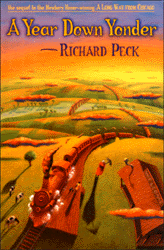 “A lot of fiction is about remembering better days.” The elder characters in Mr. Peck’s books are often patterned after the old men who frequented his father’s filling station in the 1930’s and 40’s. He recalls their conversations and makes “rough music out of real speech.” You can write in the voice of a young character, but have that young person know old people. Children want adults to be strong, but they often can’t find them.
Years ago, the books in his school library were kept under glass and you had to find the teacher for a key. “Consider that metaphor,” he said. “The teacher has the key.” Book are still as precious, but it is up to the writer to make them so. “You can teach children or fear the parent, but you can’t do both. We are the last literature teachers left because we can’t be fired. We’re unemployed!”
Every week Mr. Peck visits the book store and spends an hour perusing first lines. “We live in the age of the sound byte, so you have to ‘byte’ them out front.” He recited the first line of Charlotte’s Web to remind us of its power: “Where’s Papa going with that axe?” Six words on one line ignite the imagination. And then he gave a fine example of voice with M.T. Anderson’s Feed: “We went to the moon to have fun but the moon turned out to completely suck.”
He always travels with a book from the past and a new book. The book from the past reminds him that we’re all links in a chain, while the new title keeps him tuned to what’s coming next. “If we don’t know what publishers are releasing this year, how will we get on next year’s list?” He’s reading Laurie Halse Anderson’s Wintergirls, “the greatest argument for writing in first person. It skates too near to the truth.”
Mr. Peck concluded by reminding us that “a story is always a question, never an answer. We can ask the questions that no one else will ask.” Story is the most important gift we can give our youth. Think about that 8th grade boy. “Story might be the companion that a child needs.”
 If you love children’s books, please participate in a new weekly blog meme:
Write a Review Wednesday!
Parents, teachers and librarians are relying on online reviews more than ever to help them decide upon book purchases. Your opinion counts! Praise a picture book. Marvel over a middle grade novel. Tell everyone that young adult isn’t just for young adults!
On Wednesdays, write an online book review for a book that you love. The review could be posted on your blog, Amazon, B&N, GoodReads, or you could tweet your book bravos on Twitter. It doesn’t matter WHERE you do it. The goal is to get more people who are passionate about kidlit talking about their recent, fabulous reads.
(The extraordinary podcast Just One More Book encourages you to phone your book review into their hotline. They will include your review in one of their shows!)
Don’t forget to link to information on where the book can be purchased–the publisher’s site, the author/illustrator’s site, Indiebound.org or a retailer.
If you’re participating via Twitter, link to your online review and use the hashtag #warw, which I’ve defined on Tagalus.
And if you don’t have the time to write a review, simply link to a review that you appreciated. There are many prolific book bloggers (like Maw Books and Write for a Reader), so let’s give them our thanks.
Ideas for “Write a Review Wednesday”? Please leave a comment!
Now let the reviewing begin!
 Jonathan Woodward’s an artist, a nomad and a soon-to-be father. The man behind Zero2Illo.com, a blog for aspiring children’s book illustrators, Jon shares his passion for creativity and his good business sense.
Woodward grew up in Nottingham, the home of Robin Hood. (Hmm, no wonder he was drawn to children’s literature.) He was known as the “arty one” in school, the kid who would always be asked to draw the posters for school plays.
After studying Graphic Design in college, Woodward worked as an in-house designer before going freelance in 2006.
To Woodward, freelance means freedom to explore. He and his wife rented out their UK home in 2007 and have been on the road since, living in Panama, Buenos Aires, Grenada, Toronto, South Africa, Thailand, Hong Kong and Dubai. The internet makes running their marketing and design business from anywhere possible.
Jon, how do your travels influence your illustration style?
I wouldn’t say that they have directly influenced it from color or style perspective based on the different cultures that we have seen (although that is an aspect I really love about the travel), but having seen so much beautiful wildlife and nature around the world, it has definitely influenced the subject matter that I illustrate.
Tell us about some of your most recent illustrations.
One for Sorrow, Two for Joy is the piece that led to my current collage style of working. I’d been flicking through magazines and noticed how much the hair on a particular advert looked like tree bark–it was one of those light bulb moments!
The idea for the final illustration came from a song I was listening to at the time that coincidentally tied in with my idea for the tree (and my love of crows!).

The Phoenix is from a recent set of four illustrations based on mythical beasts. Here I was trying to pare down the collage to a bare minimum–to create a bolder, simpler illustration style that might be more suitable for a children’s book.
I enjoy finding textures of a particular surface that are perfect for conveying a totally different texture in the illustration. This happened with the feet of the Phoenix. I found a picture of a model wearing a sparkly bejeweled top and instantly knew that I had to use it for the feet.
This piece was done mostly in traditional collage, with just a bit of detailing, adding the white eye and pumping up the colours a little in Photoshop.
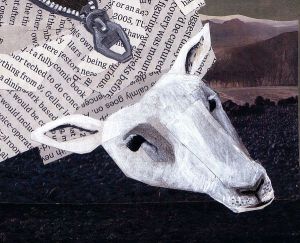

A Wolf In Sheep’s Clothing is where I first started using acrylic paint alongside the collage medium. It’s a technique born out of necessity, as I was struggling to find a magazine clipping to represent the wolf fur, so I started working into the collage with paint. I got a bit carried away in the end and ended up painting the sheep’s head and zipper on top of the collage, too.
This was an interesting piece personally, as I had previously been creating collages digitally using scanned magazine clippings, but I realized that my choice of texture ended up being a lot more interesting if I did the collage traditionally using whatever I could find within the magazines and materials I had. I don’t think I would have chosen the printed text to represent the sheep wool had I been doing the piece digitally.
Who are some of your favorite illustrators?
My illustration inspirations and interests are quite diverse, ranging from artists like Jon Foster, Dave McKean and James Jean all the way to Shaun Tan and J. Otto Seibold.
What is your ultimate goal as a children’s book illustrator?
I initially thought I wanted to go into comics or sci-fi and fantasy illustration for book covers, but the theme and content of my illustrations always seemed to gravitate back to one of my other passions: wildlife and nature. If I was only ever allowed to illustrate creatures great and small for the rest of my illustration career, I’d be a very happy man.
Thanks for sharing your wonderful artwork, Jon!
If you’re interested in learning more about the ilustration and design work of Jonathan Woodward, visit his blog Zero2Illo.com and follow him on Twitter at @jonwoodward.

Five months ago, Valerie Leftman’s boyfriend, Nick, opened fire on their school cafeteria. Shot trying to stop him, Valerie inadvertently saves the life of a classmate, but is implicated in the shootings because of the list she helped create. A list of people and things they hated. The list her boyfriend used to pick his targets.
Now, after a summer of seclusion, Val is forced to confront her guilt as she returns to school to complete her senior year. Haunted by the memory of the boyfriend she still loves and navigating rocky relationships with her family, former friends and the girl whose life she saved, Val must come to grips with the tragedy that took place and her role in it, in order to make amends and move on with her life.
THE REVIEW
Before I picked up Hate List, Jennifer Brown’s stunning YA debut, I thought about the tough task Brown had—making Val likeable. A girl involved in a school shooting? I was convinced I would find Val despicable and weak at times, considering the role she played in such a horrifying event. I would probably pity Val and her plight, caught between her high school tormenters and the ultimate bully, her boyfriend Nick.
But I was surprised by Val’s strength. Pity Val? The idea seems completely laughable to me now. Ms. Brown immersed me so deep into Val’s head, she pulled me back to my own high school years when I was teased yet also befriended. Val is real, alive. I know her. Part of me was her. Val exhibits that contradictory mixture of confidence and insecurity inherent to the teen experience. She’s tough and vulnerable, but never a subject of pity.
The story opens in the fall, as Val awakens for her first day back at school, her mother frantically calling Val’s name, hand grasping the telephone, ready to dial 9-1-1 if Val doesn’t answer. The reader immediately understands Val’s fragile state and the strained relationship between mother and daughter.
Brown weaves back and forth in time, between Val’s first day at school and the morning of the shooting on May 2. Newspaper snippets give a subjective and somewhat sanitized view of the violence and victims, juxtaposed with Val’s real-time perspective. There’s what everyone thinks and what actually occurred. Val believes her boyfriend Nick has very different intentions on May 2—standing up for his girlfriend, not bringing the school down—and the reader feels as helpless and shocked as she does when the violence begins.
Brown paints a vivid, complex portrait of Nick that never succumbs to stereotypes. We see Nick through Val’s eyes—the Nick who understood how Val suffered through her parents’ troubled marriage, the Nick who made her feel safe and beautiful, the Nick who could recite Shakespeare. We also realize how Val missed the warning signs of Nick’s tragic actions. The hate list they created united them; hating people who hated them deepened their bond. It was a joke to Val, but a manifesto to Nick.
Val’s innocence is so well documented that when she is questioned by detectives, presented with incriminating evidence—the hate list, the surveillance video, the emails—you want to shout, “Leave Val alone! That’s not how it happened! Tell them, Val!”
Rich with layers, Hate List explores Val’s deep emotions as she moves through her grief, loses friends and gains unlikely ones. Her family unravels and she learns dark secrets about how her parents feel about her and each other. At its core, Hate List examines the complexity of relationships. How we can misinterpret those we love the most. How we often see only what we want to see, not what’s really there.
What’s really there in Hate List is an expertly crafted tale, an ordinary girl coming to terms with an extraordinary event—and becoming an extraordinary young woman.

HATE LIST
Coming September 2009 from Little, Brown BFYR
Contest announcement!
I’m giving away an ARC of Jennifer Brown’s Hate List.
Just leave a comment below to be entered. Blog or Tweet about the giveaway and you’ll receive an additional two entries.
Contest ends May 31 at midnight EST. Winner will be drawn on June 1. Good luck!
Did you know that words on a page make a sound in your head? Reading expository stretches is like someone whispering in your ear. Too much and it makes you doze off. Page upon page of dialogue can be tiring as well, like listening to a loud, non-stop talker. Blah blah blah. And awkward arrangements will make a reader dizzy and confused. The ears hear what the eyes see.
Words on the page should have a pleasing rhythm or euphony. Words should mix and mingle in our minds to elicit rich imagery. Sure, you might want some words to clash for effect, but overall, clunky language is junky language.
I enjoy writing in first person because I can become my character. I sometimes speak a scene aloud before committing to paper, to test the sound of the words. (And I’ve even been known to speak with an accent, since my current manuscript is set in the south.)
Reading your manuscript aloud differs from scanning it on the page. Your ears will immediately find awkward passages and stilted dialogue. While reading aloud, you’ll be able to examine:
- Repetitive phrases. Many writers have crutch words or phrases that they use repeatedly without noticing. Reading aloud can make those redundancies obvious. Even a word used twice on the same page can sound faulty to the ear, especially if it’s an uncommon word.
- Authenticity of dialogue. While reading, ask yourself, do people talk like this? You might find yourself adding words or skipping some to fit a more natural speech pattern.
- Wordy descriptions and run-on sentences. Too many adjectives can bog a sentence down. And don’t even get me started on adverbs. That requires a separate post!
- Pacing. Do you have long passages of description or introspection? Too much dialogue? Is the piece too slow or too fast?
Your body will also give you cues. Do you need to catch your breath? Are you thirsty? That may sound funny, but it was true with one of my early stories. I stuffed my sentences so full of curlicue words that I needed a big glass of water afterwards.
But be forewarned, like any technique, reading aloud does have its cons. A writer may inject a tone or inflection while reading their own work that doesn’t come across on the page. I learned this recently at a first page session when someone else read my story. The humor and liveliness that I intended fell flat. Was the reader’s performance or my words at fault?
So you might want to consider having a critique partner read your manuscript aloud instead. Even if it’s read in monotone, the meaning should shine through. Are the words doing what you want them to do?
Have a listen; make a revision.





 Writing for Kids (While Raising Them)