You are currently browsing Tara Lazar’s articles.
When I was but a wee thing, our family would often drive past a restaurant sign in town: “Good Food and Grog”. So I pestered my parents, “What is GROG?” My father replied, “Grilled frog.”

HORRIFYING! Cooked Kermit!? Envisioning swaths of crisped, green skin beside a sobbing Miss Piggy, I vowed never to eat there.
Well, today I have put that childhood nightmare to bed. I have learned that GROG actually means GROUP BLOG. And, I’ve got a new kidlit grog to share with you.
Welcome author Todd Burleson, GROG spokesperson (who assures me he’s never roasted an amphibian over the coals).
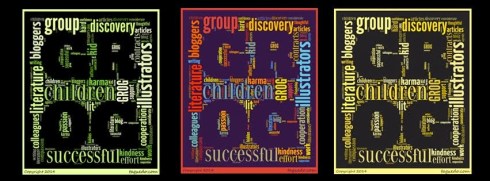
The term GROG evolved out of a desire to gather a group of writers and form a new blog about children’s literature. There are several phenomenal group blogs in the literature world. Many gave us inspiration, but none of them met the specific needs of our group. And, in the spirit of all things creative, we came together to form this GROG.
Our aim with this blog is to provide:
G: Guidance and support
R: Resources on the craft of writing
O: Opportunities to expand our skills
G: Great folks who support readers and writers of all ages!
Each weekday we will be focusing on a specific topic. Here are the daily foci:
Mondays: Mentor Texts
We will look at how mentor texts and other approaches can help teachers and writers of all ages to develop writing skills. We envision doing book reviews here too.
Tuesdays: Tools & Technology
We’ll look at tools, often technological, that can help us as writers.
Wednesdays: Craft
We’ll focus on the craft of writing. Sometimes it will be a writing lesson, other times it might be a review of a book on writing.
Thursdays: Submissions
On Thursday’s we’ll focus our thoughts on submissions, contests, query letters and more.
Fridays: Finds
These will be a smattering of awesome discoveries that we want to share with you.
Now why start a group blog instead of just an individual one?
- Being practical, we knew that sharing the load would help us remain faithful to posting while also maintaining our writing, teaching, family lives.
- We believe that the power of the group is to harness our connections.
- We know that each of us has a specific passion. By harnessing the power of the group, we get to share many more ideas and hopefully will reach and benefit many others.
- We enjoy being together. When we chat or meet via Google Hangouts, the ideas and passions flow.
- Finally, its a way to make the world ‘smaller.’ We have group members all over North American and even one in Seoul, South Korea. We may not be in the same time zone, but we all are dedicated to supporting one another as GROGgers and reaching a larger audience.
We have some phenomenal contributors at all stages of publication, but all eager to share. They are: Jan Godown Annino, Marcie Flinchum Atkins, Todd Burleson,
Tina Wheatcraft Cho, Kathy Halsey, Suzy Leopold, Christy Mihaly, Janie Reinart, Sherri Jones Rivers, Patricia Toht, Leslie Colin Tribble, Pam Vaughan and
Jackie Wellington.
Thanks, Todd! And good luck to you all!
So please go visit these fine folks at Groggorg.blogspot.com.
They will be giving away a boatload of prizes in the beginning of April, including a signed copy of THE MONSTORE by yours truly. You can also like their Facebook page and follow them on Twitter.
Kermit will thank you.

 by author Chieu Urban
Thank you Tara, for inviting me to spread awareness of Books and Smiles for Haiti to this talented group of authors, illustrators, agents, editors, and children’s book enthusiasts.
For the past few summers, I have shared my books with the children of Haiti, and the pictures and smiles and thankful notes I’ve received remind me of why I enjoy creating books for kids. I think that it would be fantastic if they were to receive even more books from our community.
Please join me in sharing your wonderful books for the sweet children of Haiti. Although their needs are much bigger, these gifts will bring smiles to their faces and joy to their day.
I am thankful to President Steven Mooser of The Society of Children’s Book Writers and Illustrators for kindly donating two boxes of books and jump starting the campaign! The amazing people of Life Connection Mission are dedicated to getting the books to the children. They are a non-profit organization serving the poorest children in the Western Hemisphere. A special thank you to the generous authors, illustrators, and children’s book community who have already contributed to this project.
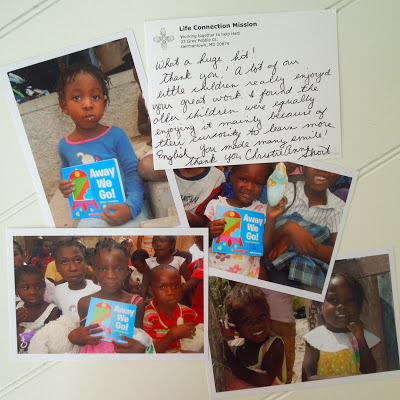
Photo courtesy of Life Connection Mission
We are collecting board books, picture books, beginning readers, and information books with pictures of animals, science, space, and more.
Our goal is to have a really great collection of books by the end of the school year, when they will be crated up and transported to Haiti. I am very excited about this project and look forward to partnering with our talented children’s book community.
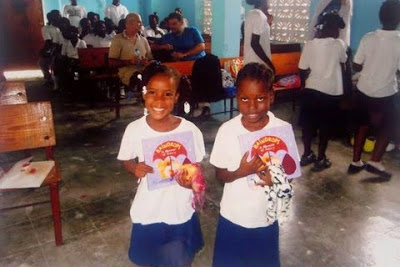
Photo courtesy of Life Connection Mission
If you would like to participate in Books and Smiles for Haiti, please email me at chieuurbanstudio (at) gmail (dot) com for the mailing address. Together, we will see our efforts grow. Please join our Facebook group page for updates.
Thank you, Chieu!
And now for the giveaway…
If you pledge to donate to Books and Smiles for Haiti, I will enter you into a drawing for a picture book critique from me, Tara Lazar. I will keep the comment thread open through the month of March. Just leave a comment stating you’ve donated in order to be eligible for the critique. And thank you for supporting this wonderful cause!
Today we’re lucky to have Peggy Robbins Janousky visiting to share highlights from SCBWI FL’s Picture Book Intensive. Take it away, Peggy!
 I have attended many picture book intensives over the years, but this one topped them all. Participants were treated to an all-star panel that included: agent Deborah Warren of East West Literary, editor Laura Whitaker of Bloomsbury, author and editor Andrea Davis Pinkney and author Toni Buzzeo.
The presentations were practical, but powerful:
- Always bring your “A” game.
- Rhyme is not taboo, but bad rhyme is.
- Picture books are getting shorter and are being targeted for younger audiences.
- Show, don’t tell.
- Hook me and keep me hooked.
- Be passionate about your book and be able to pitch in just a few sentences.
One of the best things that was presented was the HOT list. These are the topics that editors and Barnes and Noble want now:
- Moments of the day
- School stories
- Learning concepts
- Holidays (MLK, Valentine’s Day, 4th of July, St. Patrick’s Day)
- Friends and family
- Biographies
- Character-driven stories
- Original stories that every kid will love
- Interactive picture books
- Finding the new in the old
If you haven’t taken an intensive before, I strongly urge you to consider it. Intensives are exactly that, intense. They give you the opportunity to delve in deeper and they also give you the opportunity to get to know the presenters on a more intimate level. I came away from this intensive with a new sense of purpose and drive. I also came away with a few good friends. All in all, it was money worth spending.
I have to admit, I almost did not attend the Miami conference. I was having a pity party and I wasn’t really up for the company. I had broken my leg in three places. Needless to say, getting around was a wee bit difficult. I was ready to bail. I am glad I didn’t. The first page of my manuscript was read during “first page reads”. Much to my surprise, the panel loved it. One editor wanted to know who wrote it, an agent wanted to read more, and another editor wanted to acquire it. I have to admit, I was in shock. By the end of the weekend, thanks to the help of a good friend, I had signed with that agent. Just one month later… My bio and picture are up on the East West Literary website. The editor that I mentioned is considering three of my manuscripts. And I am still pinching myself.
I will tell you that this was not an overnight success. I have attended many conferences and taken copious notes. I have revised, cut, and revised some more. I have also had moments where I was so rejected that I thought I would never put myself through another critique again. So what’s the moral of the story? Never give up. Never let pity or self-doubt get the upper hand. Believe with all your heart that your day will come. Then get off your butt and get to that conference. Your happily ever after is waiting for you to show up!
Peggy Robbins Janousky uses her offbeat sense of humor to write offbeat picture books. When she is not writing, Peggy uses her time to rescue stray animals. Much to her family’s dismay, she keeps them all.
 And thanks to Kristen Fulton for adding this summary of Andrea Pinkney’s workshop: The Write Stuff.
- Writers write every day, whether it be a holiday or vacation.
- Find your “twinkle”—what makes you sparkle around others?
- Establish immediacy—using voice, characterization, mystery and drama.
- Ask yourself, “Why does the reader want to come on this journey and what makes the reader stay on this journey?”
- Writing is fun—and hard work.
- Writing is re-writing at least 10 times.
- Just get started and keep going.
- Read every day, whether it be a holiday or vacation.
Kristen Fulton writes non-fiction picture books and is running an amazing non-fiction picture book retreat with loads of agents, editors, and authors on July 7-12. Check out her website for details!
Let’s welcome Mindy Alyse Weiss back…she’s got the scoop from the recent SCBWI FL Conference. And boy, what a scoop it is! It’s chocolate fudge with rainbow sprinkles!
Ever wonder about an editor’s wish list? Wonder no longer! In the Editor Panel, Stacy Abrams, Kat Brzozowski, Aubrey Poole, Laura Whitaker and Andrea Pinkney discussed what kind of projects they’re seeking—and not seeking. There seems to be a trend away from dystopian and paranormal novels in YA.

Stacy Abrams, Executive Editorial Director of Bliss and Entangled Teen
Contemporary (no paranormal or dystopian). Can have an issue in it, but the book can’t be about the issue.
Kat Brzozowski, Associate Editor, Thomas Dunne Books, MacMillan
Dystopian is hard. Would love a good YA mystery. Comes across as loving dark but does love girl meets boy and they kiss, light romantic contemporary stuff for girls.
With social media, if you do one thing well but don’t like another, don’t force it.
Aubrey Poole, Associate Editor, Sourcebooks Jabberwocky and Fire
Loves sci fi, YA, not looking at genre really—it’s the stories that stand out within a genre. More experimenting with format. Read more about her wish list here.
Laura Whitaker, Associate Editor, Bloomsbury Children’s Books
She’s tired of dystopian and paranormal YA. She wants to be immersed in a story so much that she’s physically removed from her own issues. She wants to read about real people. Contemporary, original voice. With MG and YA, networking is important. Do a lot of digital marketing initiatives. You can get a huge impact from doing a blog tour. “Help me help you.”
Andrea Pinkney, Vice-President and Executive Editor, Scholastic
More diversity, African American boys, adventure, mystery, fun. Contemporary stories. *You need to normalize and not make it about the problem, even with something like bi-polar.” She’s interested in a novel with a character who has piercing or a lot of tattoos.
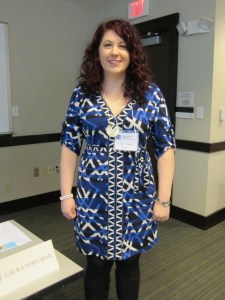
Laura Whitaker, Associate Editor, Bloomsbury
Besides writing a well-crafted story, how do you catch an editor’s attention? Laura Whitaker presented “Dating 101: What Makes YOU Desirable to an Editor”.
Tell her something interesting about your writing journey. What drew you to telling this story? Let her know any cool things you can share about yourself—show what makes you vibrant and unique.
Title—come up with something original that represents your work. If the title is the same when you’re published and there’s a story behind how you arrived at the title, marketing will want it later for a blog/Tumblr piece.
She’ll look at a query for 30 seconds to a minute. First thing should be the hook, then a two sentence synopsis (three if you have to), then info about yourself.
Your website is your calling card—especially for picture books.
Do you tweet out interesting, dynamic tweets? It’s the best way to build connections with other authors, agents, and editors. Twitter is more important for MG and YA.
Interact! Do you write about the process or what you’re working on? Marketing and publicity want to see your social media platform. The more social media, the better—but it is not a substitute for the craft.
Thanks again, Mindy!
Come back on Friday for the rest of the scoop from SCBWI FL. We’ll have vanilla and strawberry for those who don’t like chocolate. (Don’t like CHOCOLATE? Who are you people???)
 This week I’m doing something special–bringing you a boatload of notes from Florida’s recent SCBWI conference in Miami, courtesy of author Mindy Alyse Weiss. Why a boatload? Well, it’s freezing here in NJ, so I imagined Mindy on a catamaran, sipping a piña colada with the captain as she wrote this. (We all have dreams, and my dream is to attend a WARM conference! Or maybe that should be a HOT conference?)
I was thrilled when Tara asked me to blog about the 2014 SCBWI FL Regional Conference in Miami. She always gives so much to the kidlit community through her yearly PiBoIdMo challenge and thoughtful blog posts, and I hope this will help all of you, too. Since workshops are often repeated, I can’t share all the secrets…but I definitely have some juicy info, plus insight into what some agents and editors are hoping to find…
I attended the Agent Panel with Jen Rofé of Andrea Brown Literary Agency, Deborah Warren of East*West Literary Agency and Ammi-Joan Paquette of Erin Murphy Literary Agency, where they shared wish lists and do’s/don’ts with aspiring authors.
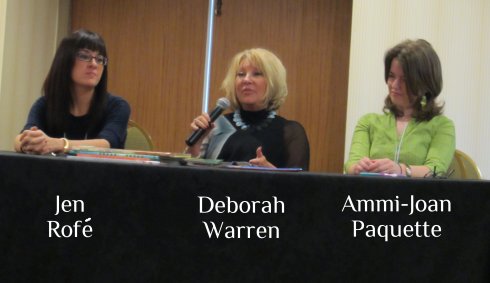
Jen Rofé
- When sending a query, make it clear you’re personalizing it to that agent.
- When asked how many editors she sends a manuscript to at a time and when she considers giving up, she said she won’t stop until she’s exhausted every opportunity.
- The fastest she sold a manuscript—three hours! The longest it took was four years.
- Wish list: commercial character-based picture books. A country song book for YA. Books based on childhood, like a girl who is getting into stuff she isn’t supposed to do, but nobody would expect that.
- If you write picture books, she would want at least four she could try to sell right away.
- Write the thing that scares you. It usually comes from some raw, painful place and that’s where the good stuff comes out.
- So many people say that it only takes one yes. But it’s not just one yes—you typically need lots of yeses, including the editor, publisher, marketing, etc.
- Don’t EVER write to the market!
- A personal note from an agent is a good sign! They don’t have time to send that to everyone. It might be the project/first page/query letter that isn’t quite right at the moment.
Deborah Warren
- Specializes in picture books. She’s known for building brands and loves finding new talent!
- She loves working with author/illustrators—it’s her sweet spot. She’s having trouble with chapter books (they’re usually franchises). Realistic fiction is really coming back and she’s excited about that.
- The client/agent relationship is like a marriage. She’ll never give up on a client—once you’re on the team, you’re there!
- Wish list: Author/illustrators, multicultural, books based on childhood, a book about singing, or kids overcoming their obstacles.
Ammi-Joan Paquette
- She looks for a strong opening in the sample pages and is especially drawn to precise pitches in a query that are snappy and compelling.
- She usually takes three to four weeks to respond to queries. For longer requested manuscripts it was two months, but she’s backlogged right now.
- When working on promotion, authenticity and what feels natural to you is important. An awkward presence is actually worse than no presence. In the pre-published stage, the focus should be on craft.
- Wish list: books that do something really different, a different narrative structure, different POV. She loves unusual projects, books based on childhood—travel, unusual vacations, anything to do with food or baking or French food.
Thanks for the agent tips, Mindy. See you back here on Wednesday with more from the SCBWI FL Conference!
Mindy Alyse Weiss writes humorous middle-grade novels with heart and quirky picture books. She’s constantly inspired by her two daughters, an adventurous Bullmasador adopted from The Humane Society, and an adorable Beagle/Pointer mix who was rescued from the Everglades. Visit Mindy’s Twitter, Facebook, or blog to read more about her writing life, conference experiences, and writing tips.
Not every book is meant for every reader, but try telling that to an author. We cringe at bad customer reviews of our titles. After years of hard work, it’s difficult to hear that someone dislikes your story. It’s even harder to swallow when your book gets a one-star review for glacier-speed delivery and schmutz on the cover. Yep, these days the old adage is truer than ever: “Everyone’s a critic.”
No one’s immune to the anonymous online rant. Not even Pappi’s Pizza Parlor.

(They had no problem swallowing that review.)
If you’ve spied Jimmy Kimmel’s “Mean Tweets”, where celebrities read devastating Twitter exchanges about them, you know that these criticisms can be hilarious and even, I dare say, cathartic to read aloud.
.
So in the same spirit of poking fun at ourselves and our detractors, author Marc Tyler Nobleman collected videos of children’s authors reading bad reviews of their books. The first installment included three deliciously derogatory episodes. And now the next three episodes have been released, with a mightily attractive screen shot of yours truly gracing the “cover” of Episode 5.
.
Enjoy, and feel free to share your worst review below!
It’s as healthy for ya as a meatball sandwich.
Let me take you back to the first year of PiBoIdMo—2009. (For those unindoctrinated, that’s Picture Book Idea Month. Wait, can a picture book writer even use a highfalutin word like unindoctrinated? Or highfalutin?)
Well, it’s 2009 and my good friend Corey Rosen Schwartz is having trouble meeting the 30-ideas-in-30-days challenge. She despises her ideas. Corey takes her frustration out on Facebook, where all passive-aggressive complaints go to get their wings. She shares several titles on her idea list which feature the precocious blondie:
- Goldifox and the Three Hares
- Tawnylocks, Goldi’s Little Known Twin
- Goldi-Rocks and The Three Bear Band
She posts these same titles on her blog under the caption “Goldi on the Brain” (a serious affliction for fractured fairytale writers). And you know what? Everyone on Facebook and the blog LOVES the third idea. (Remember the Rule of Threes?) One person, Beth Coulton, even offers to collaborate. They write it together and it gets bought by Putnam in 2010.
And so, a book is born. Isn’t it adorable? Don’t you just wanna pinch its cheeks?
 ‘
‘
The concept is clever—the Three Bears form a band but they can’t find a lead singer who can hit the high notes.
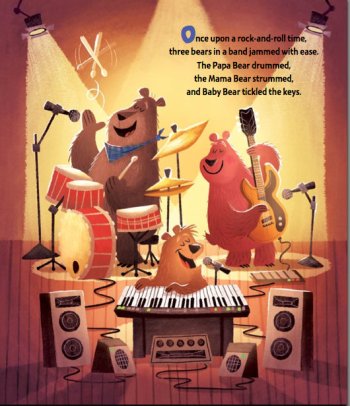
They hold Idol-like auditions and the fairytale characters just don’t cut it. Sorry, Little Red, you’re not going to Hollywood. No golden ticket for you.

(I wonder if Papa Bear is supposed to be Simon? But Simon wouldn’t dare don a bandana, right? V-neck tees are much more his style. Maybe Papa is Keith Urban.)
Meanwhile, Goldi wreaks havoc in their studio.

She even drools on their keyboard!
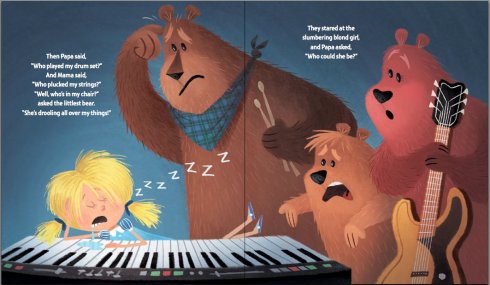
What are the Bears to do? They have to get rid of the golden-haired menace!
Or do they?
Well, you can find out right here. Because I’m giving away a signed copy of GOLDI ROCKS AND THE THREE BEARS to one lucky winner! Just leave a comment below and a winner will be randomly selected in one week. Good luck, music fans!
And congratulations to Corey, Beth and Nate on the release of their new book!
 Wanna know how I got published? The NJ chapter of SCBWI is to thank. I began attending their events years ago, soaking up all the craft knowledge and publishing tips I could like a piece of garlic bread hungrily sops up the last bits of gravy (yes, my Italian grandmother called it gravy, not sauce).
This year the conference will be held June 28 & 29 in Plainsboro, NJ at the Crowne Plaza/Holiday Inn Conference Center. (Hmm, I wonder if they’ll be serving pasta with gravy?)
More details to come, but for those of you who want to propose a workshop or presentation, submissions are now open!


Hope to see you there!
You know, picture book authors and teachers have oodles in common. We all love kids, we’re often underpaid, and we deal with constant parent criticism. Really, we could be twins. Except teachers must get groomed and dressed every morning while we authors get to lounge around in jammies all day. (Sorry, it’s one of the professional perks.)
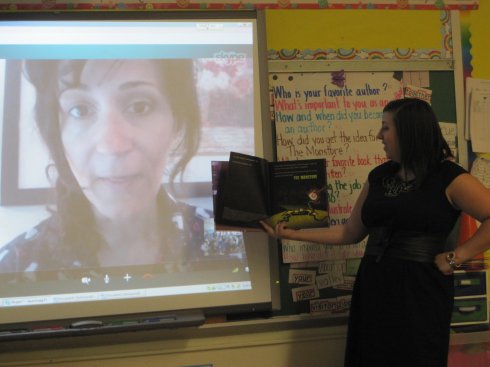
I do Skype visits in my jammies–whichever kind the kids pick. This time it was ice skate jammies!
.
That’s why I was surprised when I spoke to a group of 50 teachers last week and not a single one had ever used Skype in the classroom. We’re not so twinsy after all?
I connect with a lot of teachers online, so I mistakenly assumed that a majority already took advantage of this technology. But I learned that lack of time and resources—plus occasional lack of the internet—means Skype doesn’t get utilized. Some schools even have privacy concerns and other rules preventing its use.
But that’s too bad! Why should it be? If schools can’t afford to bring an author in to speak, Skype provides a free next-best-thing alternative. Author Kate Messner maintains a list of authors who offer free 15-minute Skypes, and a searchable database of Skype-able authors is available at skypeanauthor.wikifoundry.com. With World Read Aloud Day approaching on March 5, think of how excited students will be to hear an author read their own book. It’s magical. Kids consider authors the “rock stars” of the written word.
 Just ask Shannon McClintock Miller’s students. She’s District Teacher Librarian at Van Meter Community School in Van Meter, Iowa and has invited authors/illustrators into her library via Skype for the last six years!
I asked Shannon a few questions to help other teachers get started with their own Skype program…
Shannon, what can a teacher do if their administration is skeptical about Skype?
If the administration is resistant, teachers need to show examples, show the importance, show the impact it can have on the students. They also need to reassure them that the kids are safe, that they know what they are doing…that they understand the “digital citizenship” impact.
When we started out, we practiced Skyping into each others’ rooms. I would read from my library office to the kids down the hall over Skype. We were then able to teach them about Skype, how to behave, that it was just an “extension” of their classroom. All those silly behaviors that we see at first when kids are put in front of a camera can be talked about and addressed. Make sure your administraion knows this.
The impact of bringing in not just authors, but other experts and professionals, takes the library or classroom outside of the four walls and into the world. It brings the children experiences that they might not have otherwise.
 What is your Skype set-up like?
We have a computer with a camera and that is what I use. I have it connected to a projector so the kids can see the author or visitor. You don’t have to have a fancy set up to make this work. It can be simple. And kids can also gather around the laptop on the table, which is what we usually do because they like to be close to the author. Also, it’s very important to have speakers set up. Have the kids be able to come up easily and ask questions, too.
I love how mobile my set-up makes me. I can go anywhere with my laptop…and make connections happen naturally. I also use my phone and iPad with Skype, too. Last year took my phone to our pasture for a class of Kindergarteners to see our horse. It works—the connection, the relationships are what is important.
Also, it’s important to have the author’s book available. We have even read the book along on our iPad if the book is an eBook, too. Or I have printed off papers from the Skype visitors to have for the kids.
We are renovating our library and this is a very important part of the new design. But I want people to know—you can have it be very simple, too.
What have been some of your most memorable Skype author/illustrator experiences?
We have had so many wonderful Skype visits.
- Mercer Mayer was very special because being one of the favorite of all kids (and teachers)… And my cousin (with whom I teach) asked me for her kindergarteners.
- Michael Buckley led an hour-long discussion as a culminating event with our 5th graders and also had fun with us on the last day of school last year.
- Tom Angelberger has Skyped with us several times to create Origami Yodas.
- Robert Forbes and Mrs. P read poetry together for our Poetry Summit with five other schools around the world.
- Peter Reynolds Skyped from his home studio. Being an artist and friend of Peter’s, this was very special.
- Loren Long Skyped for Read Across America Day
- This fall we have been Skyping with Capstone Publishing Art Studio. And LOVED this one…
- I know I am leaving out so many of my favorite friends and visits…I could go on and on.
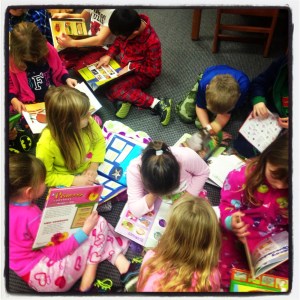 How do you feel these visits have impacted your students?
I feel that these visits bring great experiences and connections to our students. By Skyping with authors, they can discuss writing, publishing, reading, brainstorming, etc. By Skyping with illustrators, they can discuss being an artist for books, for authors, how they got involved and the process.
A lot of times the authors talk about writing when they were younger—how they went to school, where they trained and how they got better at writing.
We have Skyped with publishers to understand the process of writing and publishing a book.
We get to bring the world to our children through these virtual visits.
Thank you, Shannon! It’s interesting to hear from a school system that has been utilizing Skype to its full advantage!
So, how about YOU?
Are you a teacher, educator or librarian eager to try Skype? I’m offering free 15-minute Skype sessions for World Read Aloud Day on March 5th!

I will read my book THE MONSTORE, tell students a SECRET about the book and then answer their questions. (I also perform a magic trick made possible only by this amazing technology and the warping of the space-time continuum.)
Just email me at tarawrites (at) yahoo (dot you-know-what-else) and we can set up a time slot!
Happy Skyping to all!
 by guest blogger Dr. Mira Reisberg
You’ve been pounding the keys for months or years, you’ve finally finished your manuscript and you’re ready to submit. You go to a publisher and they are only accepting agented submissions. You go to some agents and they are closed to submissions. You start pulling out the hair now that you didn’t pull out while writing your manuscript in utter frustration!! I want to explain a little about how this came to pass and what you can do about it.
A Little Publishing History
Back when I first started working in this industry, in the good old days of early 1988, first as an illustrator and then as just about everything else, it was a very different world. There were many publishing houses with many editors and art directors and many smaller independent publishers as well. It was fascinating to visit and editors had assistants and support staff that are rarely found these days. Publishing was wide-open and thriving.
But then over time, the corporatization of America started taking hold and larger publishing houses started buying smaller publishers, becoming larger corporations. Using economies of scale, they needed fewer editors, fewer art directors, and fewer assistants. Things started automating more with newer technologies stretching editors and ADs to do more. Many editors, ADs, and their assistants were let go, increasing the workload tremendously for those who remained or those who were newly hired. Big corporations started taking over or merging with other big companies increasing this economy of scale.
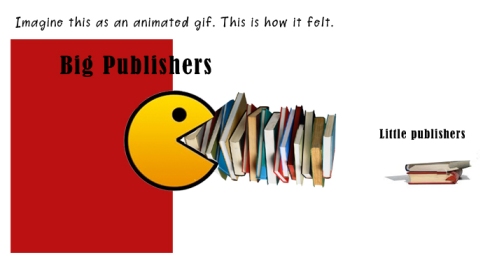
Enter September 11th and the Anthrax Scare
Following the 2001 September 11th attacks, there were numerous anthrax scares, as one NBC employee tested positive and a New York Times reporter received a suspicious envelope with white powder. An increase in submissions, partly enabled by changes in attitudes to self-expression, creativity, and access to education—plus access to improved writing technologies, fewer resources of staff to deal with the increase, combined with the anthrax scare—caused many New York children’s book publishers to close their doors to submissions and only accept new submissions from agents.
Then came Amazon with its deep discounts and the recession killing off more independent publishers, further narrowing the field. Fortunately, many smaller publishers did keep their doors open to what’s known as unsolicited submissions and quite a few wonderful independent publishers like Chronicle Books and Lee and Low remain.
Today there are 5 major publishers as well as a bunch of independent or semi-independent publishers. This is not to say that the major pubs aren’t producing wonderful work or that big publishers = bad, or small publishers = good (though most smaller publishers do need extra support). That’s overly simplistic and there are truly wonderful people working at all houses and imprints, big and small making equally wonderful children’s books. I’m just talking about the narrowing of the field for submissions. Some of the major publishers’ imprints still accept unsolicited manuscripts, but for many publishers, due to the overwhelming number of submissions and reasons explained earlier, they prefer the system of having an agent act as a kind of quality screener and gatekeeper.
Now It’s the Agents’ Time to Be Overwhelmed
These days we have a big problem with supply and demand where there are many more writers than there are agents, editors, or publishing opportunities. Also, many writers don’t do the work of learning the skills and techniques of being a professional writer, honing their craft over time, taking courses and learning the specific requirements of contemporary publishing and their specific genre. They submit their work and overwhelm agents who then close their submissions except through conferences, referrals and special circumstances.
So Back to You. You Ask Yourself, “What Can I Do Now?”
We understand that this is frustrating. Here’s a little information about what you can do to get past these restrictions. One of the best ways to get access is by making personal connections with agents and editors at conferences or through courses. There is nothing like a personal connection in any aspect of life. But remember that editors and agents are mostly overworked and underpaid. They do this work because they love books and helping others. As society changes with events in the world, we have to change with it. The thing that doesn’t change is that first impressions make lasting impressions. If you meet an editor or agent make a great impression by being warm, helpful, kind, and positive. As the saying goes, “Your attitude determines your altitude.” Of course before you submit, make sure your work is wonderful, brilliant, original, professional and publishable. But this is a given. If you make meaningful connections, chances are they’ll want to help you if they can, and besides the possibility of publishing, you might just make a wonderful friend.
To learn more about Mira Reisberg and her agency, visit HummingbirdLiterary.com. To learn about her upcoming writing course, visit ChildrensBookAcademy.com/writing-childrens-picture-books.html.





 Writing for Kids (While Raising Them)