You are currently browsing the category archive for the ‘Publishing’ category.
Last week I said if someone invented another social media site my head might explode.
Well…KA-BLOOIE!!!!

Yes, we bibliophiles have a new social domain:  !
!
Named after the sound book pages make when thumbed, Riffle has been dubbed “the Pinterest of book discovery” by Publisher’s Weekly. Could it potentially change the way we learn about great new reads? Absolutely! Could your head also detonate? Let’s put it this way—if you ever wanted to sport a mushroom cloud, you’re in luck.
The Publisher’s Weekly article didn’t reveal much, featuring jargon-heavy quotes by Riffle founder Neil Baptista, like this beaut: “We’re going to focus on bringing the audience to the table and curating the information. There’s a ton of online expertise, and we want people to push their content through Riffle.”
So what the heck does this all mean? How will Riffle work?
Well, yours truly worked in high-tech market research for a decade (from 1993 to 2003), so I called upon one of my smartest digerati buddies to give it to us straight.
Chris Rechtsteiner is the founder and chief strategist of blueloop concepts, a boutique research and advisory firm focused on the mobile and digital media market. Chris has worked on many publishing projects, so he’s very knowledgeable about the intersection of books and digital applications.
Here’s what Riffle may be:
- The idea is to build a truly Facebook-connected social reading group/platform. How this isn’t GoodReads is a mystery, but apparently the need to build a GoodReads 2.0 is there.
- The company behind Riffle, Odyl, already has templated/socially-integrated foundations for bringing content about books to consumers, so they have a fast and easy starting point.
- The core objective is to really bring forward the content being created/discussed about a book (that’s what the curation reference hits). When Tweets, Facebook posts, blog posts, etc. are posted about a title, they’ll all be “magically” brought together to give you a complete look at the “conversation” and “group” around a book. (Again, GoodReads, but with MORE noise.)
- Odyl isn’t a novice at this stuff as they’ve been able to do a really good job of building publisher relationships, so they’ll have the “blessing” of the publishers to do this right out of the gate. (Translation: they’ll have books featured with deep, rich content day one and it will grow from there.)
And here’s how they may do it:
- Supposedly the “curated” information (e.g. people scanning blogs, reviews, Twitter, etc.) is going to be done by experts, so there won’t be “noise” (per se) but only the best information on a particular title.
- This means you’re going to have to have HUNDREDS of “experts” there to sift through everything in order to have any volume of books at all… which means scale is a serious issue because the books that get the Riffle treatment will be “selected” … and likely tied to the publisher relationships (read: publisher financed through marketing budgets/author marketing dollars). While that last part might not be true, it wouldn’t be surprising, as no one has yet deeply tapped the publishers’ book marketing dollars online like the brick-and-mortar booksellers and traditional media have.
(I applied for more information on Odyl, and I was asked, as an author, how much money I planned to spend on book marketing this year, so Rechtsteiner’s ideas sound spot on.)
If you had to bet your money, right now, on what Riffle ultimately does or becomes, you’re going to see a GoodReads that is a series of lists or collections of books that have a narrative by an expert. This is how the expert would really play. The question is how many people they employ (or allow?) to be experts as to how rapidly these narratives and book lists are created. And who will these “experts” be? How will they be vetted? Will they be Riffle employees, contractors (like About.com guides), or volunteers (like Wikipedia writers/editors)? All this remains to be seen.
So is anyone on Riffle now? Yes. What did we hear about it? “Pinterest for books sounds really interesting, until you realize that people don’t repin books on Pinterest today.” (True dat. The most repins I get are for recipes, home decor and fashion. Did I just say true dat?!)
So…only time will tell. But as Chris Rechtsteiner told me, Riffle is needed and welcomed. “While there are no shortage of book discovery tools and platforms coming to market today (Riffle, Jellybooks, etc.), it’s hard to argue with anyone’s efforts to make reading more prominent. I have some doubts regarding how social book reading really is (in the web’s definition of social), but one thing will remain constant and true for a while: there are simply too many titles to choose from and finding the next, best one to read [online] will remain a challenge for a long time.”
If you’d like a Riffle invitation, this link is your ticket.
Many thanks to Andy J. Smith, illustrator extraordinaire, and Chris Rechsteiner of blueloop concepts for helping me pull this blog post together while I tried to stuff gray matter back into my skull.
The title of this blog post is a misnomer because no one has a crystal iPhone to see into the future. All I can report upon is what I heard at the NJ-SCBWI conference this past weekend. But I can say with certainty there is good news, not portents of doomsday.
 In fact, according to Steven Meltzer, Associate Publisher/ Executive Managing Editor at Penguin Group USA, with every new technology, from the gramophone to the radio to the TV, came a prediction of the book’s demise. But the book continued to thrive and grow despite innovative forms of electronic entertainment. And today, Americans purchase 8 million physical books daily. In the 4th quarter of 2011, Amazon’s sales of physical books rose by double digits. It surprised them, too. But you cannot give an ebook as a holiday gift. Well, you can, but there’s nothing to wrap—and more importantly—unwrap. So physical books won out in the season of giving. Plus e-book sales remain a relatively small percentage of book purchases: 26% of adult fiction and 11% of children’s books.
Moreover, 74% of today’s readers have never even read an e-book, and 14% of those who own an e-reader have never read a book on it. The digital book market, despite what seems to be the e-reader’s ubiquity, is in a nascent stage.
Stacey Williams-Ng, author of the digital book ASTROJAMMIES and founder of Little Bahalia, a book app developer, also demonstrated how poorly imagined some digital books currently are. A swipe of the finger on an iPad screen blew the wind in one book, but the same motion also turned the page. This meant a child playing with the app could be easily frustrated with the next page when they really wanted to manipulate a tornado.
Also problematic, the vertical orientation of most e-readers creates double the page turns of traditional picture books, throwing off the timing of a story. Creating digital horizontal spreads is preferred, but then you’re also dealing with a much smaller version of the original. Sometimes the solution is to make digital books (that do not have a hardcopy counterpart) shorter than the traditional 32-page picture book.
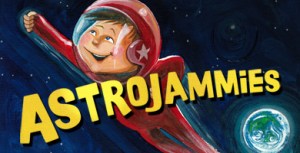 But Williams-Ng learned the hard way it’s difficult to do traditional promotion with a digital book. She has a great relationship with her local bookseller, but when it came time to do an ASTROJAMMIES appearance, she realized she had no physical book for the store to sell. Moreover, there was nothing to sign. Williams-Ng warned, “You need a hardcopy book to sell the digital book.” She self-published the hardcopy version of her digital creation so she didn’t have to wait years to find a traditional publisher.
Right now there are three main forms of e-books: e-pubs, which are similar to PDF files and have re-flowing text (which means you can change text format and size); enhanced e-books, which are e-pub with embedded features like audio and video; and book apps, which can be anything that can be programmed, from a movie to a game and beyond. “The sky’s the limit with book apps,” said Williams-Ng.
However, the Big 6 are picking and choosing which picture books to digitize; one publisher is no longer making e-pubs of their entire list because most e-books do not sell. The ones that are popular now are the classics like Dr. Seuss—books everyone knows. A new picture book has to lend itself to interactivity for a publisher to consider the book app investment, which can run approximately $25,000, according to Williams-Ng. So if you, as an author, WANT to have a digital book, you should think about interactivity at the very start of your creative process.
Digital publishing is about five years behind the music business in terms of figuring out new distribution and pricing models. In 2011, digital music sales surpassed physical music sales for the first time. Album sales were up for the first time since 2004. The industry is adapting. Publishing will adapt as well.
Steven Meltzer believes picture book sales will escalate because parents will buy a hardcopy book for the home, and if their child enjoys it, they’ll purchase the digital version for their mobile device. “Bundling is coming, too,” he said, referring to the practice of selling a hardcopy and digital book together at a discounted price. “It’s good news for picture book authors.” (Insert Snoopy dance.)
 So what’s next for digital books? The future could be digital readers with foldable layers, multi-screened with high definition graphics. The future might even be Xenotext: “encoding textual information into genetic nucleotides, thereby creating ‘messages’ made from DNA—messages that we can then implant, like genes, inside cells, where such messages persist, undamaged and unaltered, through myriad cycles of mitosis, all the while preserved for later recovery and decoding.”
“Remember M.T. Anderson’s FEED?” Meltzer asked. “Wouldn’t it be ironic to be fed FEED?”
No matter what the future holds, “people are still writing and reading…ain’t nothing ever going to change that.”
Thanks, Mr. Meltzer, I needed that reassurance.
Writing is a solitary profession. Sitting on our bed, laptop balanced on a pillow, wearing mismatched jammies all day (well, that’s how I work, anyway), we don’t gab at an office water cooler or take swanky lunches with colleagues. We’re alone with our characters—who can drive us nuts! We’re alone with our ideas, our words, and a vat of java.
Most writers I know are hard on themselves. We are our worst critics. We can spend all day writing and feel as though we’ve accomplished nothing. It’s nice to hear someone say what we’ve written has potential, has vision, has made someone spit all over their keyboard in laughter (the highest compliment, I think).
So today I bring you the story of three kidlit friends who came together with one goal in mind—to take an author’s career to the next step. To provide an encouraging, supportive environment in which she can thrive. Folks, you gotta have friends. Luckily, the kidlit community includes some of the best people around.
Please welcome author Brenda Reeves Sturgis, consulting editor Emma Dryden, and agent Karen Grencik!

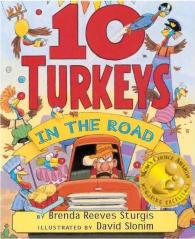 TL: Brenda, your debut picture book TEN TURKEYS IN THE ROAD was released by Marshall Cavendish last year and quickly earned both critical and commercial success. Most people think you publish one book and you’ve got it made. But you felt your career needed a boost. How did you come to this conclusion?
BRS: Thank you for this thoughtful blog post, and for interviewing the three of us.
I sold 10 TURKEYS IN THE ROAD in 2008 and at that time I was represented by another agent, but in 2010 we parted ways and I was left trying to navigate the children’s lit world, alone.
I queried for many months and got personal, kind rejections. After a long period of going it alone, I knew that I needed to find out what was holding me back from finding my perfect-for-me agent. I had heard of Emma Dryden for years, and had great respect for her. She was and is knowledgeable in all aspects of publishing. I was confident that by hiring Emma she would know what needed tweaking, and what I needed to do to progress in my quest. I contacted Emma and she agreed to consult, we set up a phone call, and I sent her my manuscripts.
TL: Emma, what was your reaction when you read Brenda’s work? What did you propose as the next step in her career?
 ED: When Brenda first contacted me, she explained her situation—she was a new writer with one book under contract; she’d been with an agent and was currently seeking a new agent; she was “trying to do everything right,” but it didn’t seem to be paying off and she was starting to question how she could keep her dream of being a children’s book author alive. There’s nothing that concerns and upsets me more than to hear an author or artist is questioning their dream. Coming up with a strategy to find an agent would be the easy part; helping a distressed author regain their confidence and adjust their outlook was something completely different—and that’s what our consultation was really all about.
Brenda’s ideas and writing are strong and smart. Her nervousness about doing everything right was what was holding her back, blurring her vision. We focused not only on figuring out a calm, focused strategy to query agents with her strongest possible manuscript, but we also talked a lot about how best to conduct oneself in a fickle marketplace, the importance of flexibility, the benefits of patience, and the significance of not giving up.
After several hours of email correspondence and phone conversations, I felt confident in encouraging Brenda to query Karen Grencik, an agent whom for various reasons I felt would not only be delighted by Brenda’s work, but who would have a compatible sensibility and outlook to suit Brenda’s own.
TL: Karen, what made you fall in love with Brenda’s work and make an offer of representation?
 KG: First of all, a great big “thank you” to you for taking the time to tell our story. It is a bit unusual, the manner in which we all came together, and I hope your readers will find it to be inspiring!
It is an honor to receive a referral from Emma Dryden, as I know the thought she puts into everything she does. I talked with Emma right away and when she stated that she thought Brenda had an untapped talent similar to two of the best picture book rhymers in today’s children’s book world, I knew I had to look at Brenda’s manuscripts. Brenda and I set up a phone appointment to discuss expectations, as there is always some concern about this when a previously represented author is seeking a new agent. I was worried that I might not be able to meet Brenda’s needs and I knew Brenda was feeling a bit gun-shy to jump back into the fray, but right off the bat we developed a sense of comfort and comraderie that’s made working together quite easy.
Not only did Brenda take proactive steps to jump-start her career again, but she took seriously and applied each and every practice Emma discussed with her, putting aside her considerable worries about what had come before and focusing instead on what she needed to do to accomplish her goals as a picture book author. This laid excellent groundwork for her to secure new representation. Yes, Brenda did need an agent—a strategic partner who shares her goals—but what she needed more was validation and a positive, safe working environment, which I’ve been delighted to be able to help provide. Now it’s my turn to find good homes for her fabulous picture books!
Brenda appeared in my life at just the right time, as Red Fox Literary had recently opened its doors, and I had the kind of time available to service my clients in a way that most agents only dream about. Over the past year that we’ve been working together, Brenda has learned to trust that I will do everything I can as quickly as I can, and that has allowed her to relax during the times that I’m not immediately available. And I’ve learned to trust that Brenda is a very hard worker, a perfectionist about her writing, and will only send me her very best work. Trust is a significant element of the best author/agent relationships, as it is of the best author/editor relationships as well.
For authors out there who feel isolated and alone, we three want to remind you that the universe is preparing for your success. An editor and an agent might be just waiting for you to show up. Be sure to pay attention to the signs. We certainly do!
TL: Karen, thanks! Your story is indeed inspiring!
Now back to Brenda…what are your goals for your career?
BRS: My goal remains the same as it was 8 years ago, and that’s to write the best, most original children’s books that I can. It’s important to me to help and make a difference where doors are opened, I strive to inspire, educate, and work as hard as humanly possible. I feel innately blessed to work with Karen and with Emma, and look forward to all good things coming our way. Thank you for your time with this Tara, I am truly appreciative for this opportunity.
TL: Thank you for sharing your story! I know it will help many writers as they examine their career progress. We should all recognize when it’s time to make a change and be brave enough to take action.
Please visit Brenda Reeves Sturgis, Emma Dryden and Karen Grencik’s websites where you’re sure to receive even more inspiration!
 What a busy April over here! So many creative new picture books to celebrate!
Sarah Frances Hardy certainly has reason to party—even tea party. Her debut picture book releases today!
PUZZLED BY PINK is the story of what happens when Wednesday Addams meets Fancy Nancy, with whimsical watercolor illustrations that will delight little girls on both sides of the fence, whether they LOVE pink or just don’t get what the big fuss is all about.
Please welcome Sarah to the blog today! *throws confetti* *serves tea and orange-cranberry scones*
TD: Sarah, on this blog we like to talk about story ideas. Tell us, where did the inspiration for Izzie and her sister Rose come from?
SFH: The inspiration for Izzie came from my oldest daughter. When she was little, it seems like every book geared toward little girls was pink, pink, pink…and she just wasn’t into it. I wanted to write a book for girls who wanted to be girls, but they wanted to do it without having to wear pink-glittered fairy wings.
Rose, Izzie’s little sister, is inspired by my middle daughter who has always loved everything about being a girly-girl—from ballet to pink to tutus.
TD: So is your youngest daughter represented in the book?
SFH: Ha! She’s asked me that too, and I tell her that she is Jinx, the pet cat, who is actually the most fun character in the book. She’s thrilled.
TD: I’d love to be Jinx, too! Izzie a strong character who does her own thing even though it’s not popular. How do you hope young readers will relate to her?
SFH: Well, I think we’ve all had the experience of being excluded because we’re a little different or we’re not wearing the right thing. I hope kids will take away the message that you can be yourself, dress the way you want to, and still go to the party.
It takes courage to say you’re going to do your own thing and stick to your guns! But it’s always best to be true to yourself .
TD: So tell us a little about your journey to publication as an author-illustrator. We authors say it must be “easier” for an author-illustrator to break into the business, while author-illustrators may say it’s easier to wear just one hat. (I tend to think no matter how many hats you wear, it’s never easy! Especially if they’re sombreros and you can’t fit thru the doorway.) What do you think?
SFH: It is a sombrero! And the door feels like it’s tiny!
But I will say that it’s a little easier to get an agent if you are both an author/illustrator because you don’t have to split royalties, and there are more agents out there who are willing to represent you.
The downside is that you are giving editors TWO reasons to reject you, so I always tell people to be sure that their illustrations and text are equally strong.
My journey is fairly typical in that I spent years going to conferences and learning everything I could about the craft of writing and illustrating for children. I wrote some pretty terrible books, submitted them, and amassed a small mountain of rejection letters,
Finally, I came up with this character and concept, and I started getting a little interest. I signed with my amazing agent and worked on revisions for several months with her. In the summer of 2010, I sold my book to Viking Children’s Books.

TD: PUZZLED BY PINK is a great title many little girls (like my green-and-blue-loving one) can relate to. Was this your title from the start of the project?
SFH: No. It actually had the very boring title TEA PARTY at first. PUZZLED BY PINK actually emerged from a brainstorming session that I had when I was sending my manuscript out to agents. In earlier versions of the manuscript, my main character Izzie was an angry little girl—kind of a curmudgeon. I was talking about the book with a friend and I said “Izzie shouldn’t HATE pink…she just doesn’t get what the big deal is. She’s puzzled by pink.”
That phrase not only became the title but it helped me craft Izzie into a more likable character.
TD: Oh, I love that story! And I love how the title is all glittery pink on the cover, with Izzie giving a cute little smirk.
Your book has been described as “Wednesday Addams meets Fancy Nancy”. Wednesday is one of my all-time favorite TV characters. If she were to endorse your book, what do you think she’d say?
SFH: If she were to blurb my book, she’d probably say something like: “Finally! Someone who knows how to throw a decent party. I’ve found a kindred spirit in Izzie.”
 TD: And we’ve found a kindred spirit in you, Sarah! Thanks for sharing the behind-the-tea-party scenes with us.
And now…someone please pass the cucumber sandwiches!
Whoops, sorry…I mean, please comment to win a copy of PUZZLED BY PINK!
You get one entry for commenting and then one entry for every share on Twitter, Facebook, Pinterest, etc. Just mention it when you comment!
Comments will close at the end of April 25 with a winner announced on April 26.
Good luck!
Sarah Frances Hardy is an author-illustrator and fine artist living in Mississippi with her husband and three daughters (who are not named Izzie, Rose and Jinx). Visit her at sfhardy.com and connect with her “Picture This” blog…which features photos of a cool local window display (well, TWO displays) dedicated to her book!
Yes, I’m from Jersey where “lotsa” is a word.
But enough formalities, let’s get on with the prizes!


The new blog subscriber winner of the three-picture-book prize pack is: ORTHODOXMOM3!
Congratulations! I’ll be sending you an email shortly!
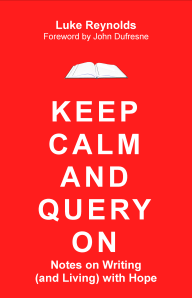 And now onto the KEEP CALM AND QUERY ON goodies from Ryan Gosling (aka Luke Reynolds)!
First, the winner of the signed book is: MARY ZISK!
Next, the winner of the query critique from Luke is: REBECCA COLBY!
Finally, the lucky person who gets a phone call pep publishing talk with Luke is: SUSAN G. CLARK!
Okay, ladies, try to KEEP CALM!
I’ll send you an email later today!
Congratulations to all! And remember…there’s more giveaways coming in April!
It’s Picture Book Palooza month!
(And obviously exclamation mark month, too.)
 When I first began writing for children, my critique group invited an author to speak to us about the publishing process. But we hadn’t realized this author paid to be published with a vanity press. Was she an author? Technically, yes. But after listening to her story, we realized that she might have her name on a book, but she was definitely not an author.
Disclaimer: I am not suggesting everyone who publishes with a vanity press is not an author. Some are excellent authors who are commercially and critically successful. They have taken charge of their career and I applaud them.
But this is the story of the kind of person vanity presses take advantage of—or perhaps the kind of person who takes advantage of vanity presses. At the end, I’ll ask you—do you think she fits the definition of an author?
She began by touting how quickly she wrote her book. She admitted she didn’t think a traditional publisher would acquire it. “Random House? Simon & Schuster? I knew they wouldn’t want it.” So after a few Googles, she found a vanity press that claimed to screen submissions.
The week she submitted, they sent an enthusiastic message offering to publish her book. For a fee, of course. While she wouldn’t tell us exactly how much she paid, she admitted it was between $5,000 and $10,000, although she only had to pay that fee once. Each subsequent book she published would not cost her as much (although it would elicit other fees). More on the sequel later.
She handed out her book, a holiday title, and let us read it. The first few lines were a monologue—single words emphasized with exclamations—but no explanation. She intended those words to be said in disgust, but they were words that conjure excitement in children, so without any other clues, we interpreted them as positive statements. On the third page when the character finally elaborated on his hatred of the holiday, our group was thoroughly confused.
Could the story have benefitted from a critique or two? A revision or two? Certainly. But she didn’t belong to a writing group. She didn’t have the time. Her adult daughter corrected the story for grammar but those were the only changes.
She was very pleased with how “flexible” this publisher was and how much they listened to her illustrative input. (Well, if you’re paying thousands of dollars, you shouldn’t expect anything less.) She made the artist redraw her animal characters several times so they would exactly resemble her real-life pets, the stars of the story.
However, insistence on getting the drawings “just right” delayed the book and severely limited her sales window. The book released just 2-3 weeks prior to the holiday for which it was written. Her vanity press arranged a signing for her at a bookstore and she was thrilled when she heard herself referred to as “the author”.
But is she really an author, with all those missteps and instant gratification? In my opinion, no. One of my dear friends, whom I can hear in my head, is saying, “So if a book is what she wanted, why is that so bad? Be happy for her.”
OK, I can see that the book made this woman very happy. But honestly, her flippant attitude toward our craft irritated me. It’s so very different from what I’ve been taught about working hard for something, being professional, and the satisfaction of a job well done.
In a day when self-esteem is so highly regarded and protected, when we’re giving every kid on the team a trophy just for showing up, when party games like “pin the tail on the donkey” don’t have winners or losers, and “good job” is a common parent refrain even when the job is not good, vanity presses have slipped into the culture quite easily.
But the final part of her story is the most baffling. The vanity press expressed interest in releasing a series of books based upon her characters, and as mentioned previously, she would not have to pay the hefty initial publishing fee. Her response floored us.
“Well, I’m really busy right now, but maybe in a year or two.”
Huh? You mean you have a chance to actually sell more books and make back some of your money but you are “too busy”?
Five years later, a search for her name turns up just one book. No series ever materialized.
So my next question is—was she even a writer? I don’t know writers who are “too busy”—because we must write. It is what we do. We can’t NOT write.
We write for many reasons. Some are writing with the goal of publication. Some are writing for the sheer pleasure of creation. Why do you think this woman wrote? And is she an author?
 Among those represented by the Erin Murphy Literary Agency, Luke Reynolds is known as the *real* Ryan Gosling (you had to be there). Although, I happen to think Luke is cuter, don’t you? Just look at that dimple! And I happen to know he’s a heckuva lot funnier.
He’s also smarter than my Ryan Gosling when it comes to publishing, writing and living.
Luke is the author of KEEP CALM AND QUERY ON: NOTES ON WRITING (AND LIVING) WITH HOPE. And he’s here today to give you that: HOPE. (Plus a copy of his book, plus a query critique, plus a personal “pep talk” phone call!)
Half of Luke’s book includes some reflections for writers on perseverance, hope, humor, gratitude, and work ethic, while the other half includes interviews with writers like Daniel Handler (a.k.a. Lemony Snicket), Katherine Erskine, Jane Smiley, and 11 other authors.
Without further Ryan Gosling references, take it away, Ryan! Erm…I mean Luke!
Making a Life
by Luke Reynolds
There are two places where fast, easy manoeuvres and accomplishments are both warranted and worthwhile: 1) In a snowball fight, when your opponents are slinging well-packed cold stuff at you faster than re-runs of Friends episodes appear on TBS; and 2) In getting the kids to bed when they’re already overtired after a long day of snowball fighting.
Most other pursuits in life don’t lend themselves to easy success. And at the top of a very, very long list of Stuff That Takes Forever comes the pursuit of writing. But that’s a good thing—a terribly hard, but fantastically good thing. Because deep down, none of us who love writing want it to be easy anyway. That’s not why we fall in love with something in the first place.
When we were children, people asked us, “What do you want to be when you grow up?” Very few of us, I’m guessing, responded, “I’d really love to find something easy—something that requires little skill, almost no perseverance, and happens fast.” Instead, most of us said we wanted to fly into outer space wearing massive white suits; or we said we wanted to sing on stage in front of a roaring audience; or we wanted to be pilots or race car drivers or scientists who found cures for every kind of disease or explorers who found distant lands.
Or we wanted to be writers.
Novelist John Dufresne writes in his Foreword to KEEP CALM AND QUERY ON the following: “Writers want to write, not to have written.” Even though the manuscript of Keep Calm had been finished and proofed and was ready for publication, that line from John’s Foreword hit me hard and fast—much like a well-packed snowball or like a child screaming wildly that he isn’t ready for bed. The line speaks so loudly because it captures the essence of this pursuit we’ve chosen: a creative calling that is about making a life, not a living.
We write because we love the small giddy feeling that rises up like regurgitated food after we’ve eaten too much and then laughed too hard. We write because we like the problems (deep down) that our characters encounter, and we like the fact that there is no easy way out—either for our characters themselves or for us as we make plotting decisions. We write because we know that hearing no enough times and going back to our desks, reworking material, forging new work, and venturing back out into the wild, beautiful possibility of publishing makes our hearts beat fast.
So, deep down, we know it’s not easy. Nor do we want it to be. That’s not why we love it in the first place.
 Why do we love films and stories about underdogs? Why—for instance—does Atticus Finch inspire me to no end? It’s not because he took an easy case that guaranteed a sure-fire victory with no obstacles. I love Atticus because he took an impossible case that guaranteed a loss but his conscience demanded it and his soul echoed the call.
You love the books and characters and films you do, I believe, because you know that triumph is only beautiful when the journey is difficult, that getting the story right is profoundly moving only because you’ve known the story has been so stubbornly wrong—however slightly—in its previous lives.
The MG novel that my agent, the lovely Joan Paquette, signed me on was originally entitled ATTICUS AND ME. It was a story that came down my arteries and out through my fingertips. The first draft, though, would have guaranteed a speedy rejection from Joan. So she didn’t see Atticus until his fourth revision. And then Joan continued to revise Atticus into a character who was more authentic, more real—a character whose story meant more. Joan raised the stakes in the novel. And after quite a few rounds, Atticus is still growing, still changing.
And various picture book manuscripts are in their own worlds of revision, each entering a fifth, ninth, and eleventh or more incantation of their possible lives.
We write because we want to write, not because we want to have written. As writers, we start to accept the fact that—much like us—the characters that people our stories are going to need second-chances, harder obstacles, higher walls, deeper pain—and that all of this, eventually, leads to greater love. In the writing, for the writing, and through the writing.
So, then, the question remains: if we don’t want writing and publishing to be easy, what do we really want? I’d venture a humble guess: we want support. We want somebody—anybody, the mailman, Grandma, our children, our students, and maybe one day an agent and editor—to tell us that we have what it takes. We want support. We want to know that our work is worth it. That ninth draft of an MG novel or our twentieth time through a PB manuscript that has changed completely and become almost an entirely new book are both pursuits for which support is not only helpful, but essential.
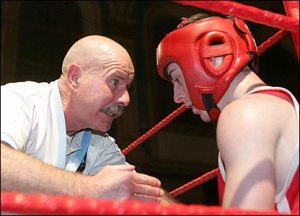 In short, we need someone in our corner, shouting in a voice of accountability, conviction, and faith to keep going. You have what it takes. Get through this draft. Try it from a different POV. Try it from a different character’s perspective. Try the story in present tense. Throw in a cow who believes he is Ryan Gosling. Throw in a turtle who eats books. Throw in a kid who thinks it’s over, until—
Until that voice. Listen it to it clanging inside the damn-near defeated walls of your heart. That voice confirms what you and I already know: we don’t want it to be easy. It’s hard. We know that. What we want is the pluck and the nerve and the faith to keep going—to make a life with our pursuit of writing and the way we embody it, rather than simply a living.
We want more than a contract and some cash. We want to craft the words that get us excited—that get readers excited. Or, as John Dufresne put it, we want to write, not to have written.
So: a toast. (I wish I had wine, but coffee feeds the writer in me more). To the very act of writing—in all its difficulty, stubbornness, painstakingly slow but remarkably beautiful worth. May we all, as writers and as people, keep calm and query on.
Thanks, Luke! Very inspiring. I need a tissue now. *sniff*
And you folks need to comment! Luke is giving away THREE PRIZES!
1. A signed copy of KEEP CALM AND QUERY ON.
2. A query critique.
3. A personal phone call and pep talk to discuss your writing career.
Your comment counts as one entry. You get an extra entry for each mention on social media: Twitter, Facebook, Pinterest, etc. Just mention it in your comment. Comments close the end of April 1 and winners will be randomly selected on April 2.
Now keep calm and comment on!
Luke Reynolds is editor of the forthcoming book for teens and tweens BREAK THESE RULES (Chicago Review Press, 2013). He has also co-edited BURNED IN: FUELING THE FIRE TO TEACH (Teachers College Press 2011) and DEDICATED TO THE PEOPLE OF DARFUR (Rutgers University Press, 2009). His newest books are KEEP CALM AND QUERY ON: NOTES ON WRITING (AND LIVING) WITH HOPE (Divertir Publishing, 2012) and A CALL TO CREATIVITY: WRITING, READING, AND INSPIRING STUDENTS IN AN AGE OF STANDARDIZATION (Teachers College Press, 2012). He loves garlic bread with passion, and loves children just about as much. He has taught grades 7-12 and he’s now a nightschool teacher and home-dad by day. His writing for children is represented by the formidably wise and oft-inspiring Ammi-Joan Paquette of the Erin Murphy Literary Agency. Keep calm and visit on at www.lukewreynolds.com.
One of the most frequently asked questions by new kidlit writers is “why do editors say not to write in rhyme?” There’s plenty of picture books written in rhyme, right? They get published somehow!
Well, the answer is a bit complicated. It’s not that editors don’t necessarily LIKE rhyme. It’s just that it is very difficult to do well. Here’s why:
- Rhyme scheme can dictate story–but shouldn’t. Tales should unfold organically, not be forced into the confines of the rhyme. Often it’s suggested to write in prose first—so you don’t get locked into a plot that doesn’t work—then translate it to rhyme.
- Common rhyme schemes can be stale. Editors see them again and again. Avoid overly simple, one-syllable rhyme schemes like go/show/know, to/you, me/be/she/he/see, run/fun/sun, day/may/way/say. If your reader can guess the word at the end of the line before they get there, your rhyme scheme may be too common. Editors want to read rhyme that surprises them.
- Forced rhyme or near-rhyme can ruin a story. This is when words don’t exactly rhyme unless you mispronounce them. Once in a while this is acceptable, but more than a few times in a manuscript and it distracts.
- The meter (or beat) must be spot-on. That doesn’t just mean the number of syllables in each line, but the emphasis on those syllables. Meter shouldn’t be so sing-songy and constant that it lulls the reader to sleep (unless maybe it’s a bedtime book) or so rough that it tongue-ties the reader and forces them to speak unnaturally. Some good rhyming books offer a break in the rhyme scheme for variety—not unlike a bridge in a song.
- Rhyming books are difficult to translate into other languages. An editor may not want to lose out on foreign book sales, so they’ll pass on a rhyming project.
However, if your heart is set on rhyme and if you have a talent for it, you should go for it. At first, Karma Wilson listened to the “don’t rhyme” advice.
“When I first started submitting some 15 years ago all the guidelines said, ‘No rhyme and no talking animals!’ For THREE years I avoided rhyme and talking animals. But guess what my first book sale was? BEAR SNORES ON! And guess what the guidelines said for McElderry books? NO RHYME AND NO TALKING ANIMALS! My passion is rhyme, and talking animals are great as long as they have something interesting to say.”
Yes, you can break the rules like Karma. But get your rhyme critiqued and know whether or not you can nail it.
Me, I’m terrible at rhyme and I know it. I cannot “hear” meter. I’ve tried and failed. My friends have coached me, but I still don’t get the right beat. I can’t dance to it. (I can’t dance anyway. Think Elaine from Seinfeld. Sweet fancy Moses!)
So what is successful rhyme? I’m glad you asked! I’ve got a few examples for you.
In HUSH, LITTLE DRAGON, Boni Ashburn spoofs the lullaby “Hush, Little Baby”. Instead of buying her baby a mockingbird, the mama dragon in the story brings her darling son various villagers to eat. It’s delightfully tongue-in-cheek. Some of the best lines:

Here she comes with a fresh magician.
Don’t mind the taste—he’s good nutrition.
…and later on…
If Mama finds a mean old queen,
Honey, you are lucky—that’s good cuisine!
Notice how these rhymes are out of the ordinary. They’re surprising and fun, plus the words have multiple syllables. She also rhymes “flee” with “fiery” and “bolt” with “revolt”. I challenge you to find these rhymes in another book! You won’t—and that is what makes this story so special.
Jean Reidy’s LIGHT UP THE NIGHT is an example of rhyme that elicits glorious illustrations. Remember that in picture books the art tells half the tale, and these lines create an expansive view of our world (click on image for larger version)…
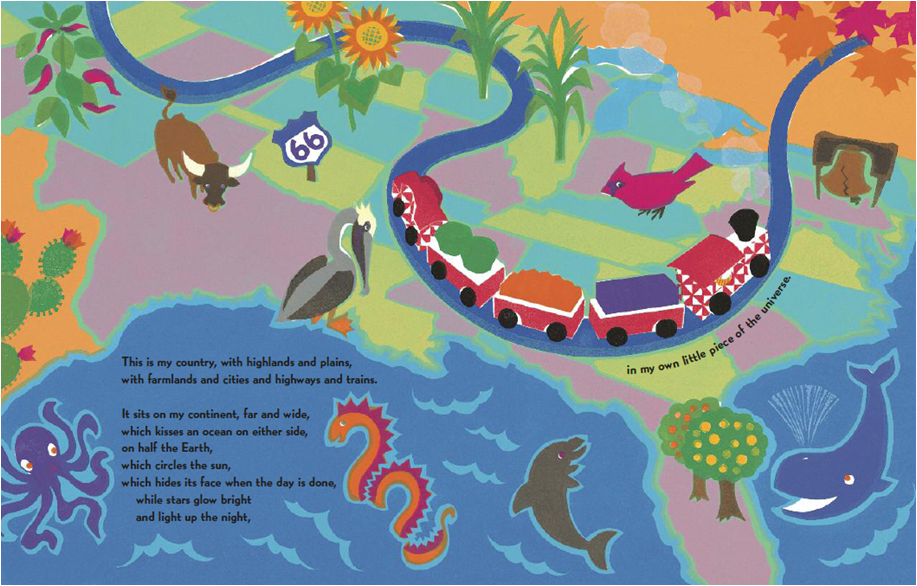
This is my country, with highlands and plains,
with farmlands and cities and highways and trains…
Notice how there is a break in the rhyme scheme at the end of the stanza—and that line is set apart in the illustration for emphasis. Coincidentally, Jean blogged today about her decision to write in rhyme. Go check it out!
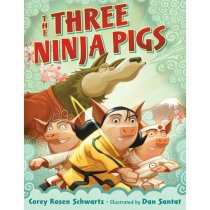 In Corey Rosen Schwartz’s THE THREE NINJA PIGS, the rhyme is infused with porcine puns. Kids and adults alike will appreciate the humor:
She then gave a swift demonstration
With backflips and butterfly kicks
The wolf looked quite shaken
but hollered, “Yo, Bacon!
I’m not at all scared of your tricks.”
There’s more great piggish laughs (like my favorite “pork-chop” line) but you’ll just have to wait until it’s released in September!
So I hope I’ve provided you with some background on why rhyming picture book manuscripts are a hard sell…but that if they’re done well, they can be spectacular.
What are some of your favorite rhyming picture books? Please share in the comments!
If you want to publish a book for children, the first thing you must do is ask yourself why.
Is your motivation to publish a kid’s book one of the following?
- Your kids/grandkids/nieces/nephews/neighbors/students love a story you’ve written.
- It would be fun to see your name in print.
- You want to sign autographs.
- You want to make money, quickly.
- You want your artist cousin/sister/friend to illustrate it.
If you answered “yes” to any of the above, please read this post. I write this to save you a lot of time and frustration. Because it’s not an easy business. NOT. EASY. AT. ALL.
New writers often believe they can pen one story in an hour or two, never revise it, yet somehow land an agent and a publishing deal—-as if the simple act of writing begets publication.
 Hitting one baseball does not mean the Yankees will draft you. Likewise, writing one story does not mean Random House will offer you a contract. Although, keep hitting that ball, make it go higher and farther…learn about fielding and sliding, too…and play seriously for years, and you just might make it.
Everyone believes the first thing they write will be golden and they’ll never receive a single rejection. We are all HOPEFUL. But, everyone is wrong. (Including me!) Trust me, this will NOT happen. It has NOT happened to ANYONE. (Except for Kevin Henkes.)
The motivation to write a children’s book should be:
- You love to write. You were born to write. You can’t NOT write.
- The child inside you is begging to get out and explore.
- You love children’s literature and want to contribute worthy stories to the genre.
- You want to inspire children to read, write, create, imagine and dream.
- You enjoy learning from children. (Yes, your primary goal should not be to teach them. Teachers, parents and guardians teach. Books are meant to be fun.)
- You want to work hard to establish a career as a kidlit author. You’re in it for the long haul.
 Notice fame and fortune have nothing to do with it. That’s something a small percentage of authors achieve. (Yes, authors can have dozens of books in print yet they cannot support themselves through writing alone. Moreover, advance checks can take a long time to arrive, and royalties trail about about 6-9 months behind book sales.)
And even if you become a famous author, most people won’t recognize you by sight or name. It will never get you the window table at The Four Seasons on a busy Saturday night. You’re better off making a reservation as “Doctor Lazar”.
It takes most children’s writers years to land their first book deal. And selling one book does not guarantee future book sales. Selling each subsequent book can get MORE difficult, especially if one (or more) of your titles do not sell as well as the publisher expected.
I don’t mean to be discouraging. I want to be REALISTIC. Children’s literature is a BUSINESS. And this business is like any other—it takes hard work, commitment, talent and a little luck, too. If you’re writing a children’s book on a whim, you might end up being very disappointed when you realize how tough it really is.
In short, I’ve made more money and worked fewer hours in EVERY OTHER JOB I’VE EVER HAD.
BUT…
There’s no job I’VE LOVED MORE. (Besides being a mom, of course.)
Just because you’re writing for children doesn’t mean it’s easy. In fact, it is more difficult to become a published kidlit author than it is to become any other kind of author. (That’s because there’s a tremendous amount of competition. Everyone believes writing for kids is easy because they’re kids. Not so.)
So do it because you LOVE it. You LOVE it like you CAN’T LIVE WITHOUT IT. Because children don’t deserve anything less than YOUR VERY BEST WORK.

Steps you should take:
- Earn a degree in English and/or Creative Writing.
- Read hundreds of books in your chosen kidlit genre (picture books, non-fiction, middle grade novels, graphic novels, YA).
- Write. Write. And write some more.
- Join a critique group specific to the genre in which you wish to publish. YA novelists don’t necessarily know a lot about picture books and vice-versa.
- Join SCBWI.
- Attend professional kidlit conferences, book fairs and other literary events.
- Revise. Revise. And revise some more.
- Research agents and editors online.
- Establish a social media presence. Make writing friends. Gain a support system.
- Consider investing in professional writing books, magazines and services like Publisher’s Marketplace (which will show you what books are selling, which agents are selling them, and to whom), The Horn Book, Publisher’s Weekly and The Children’s Writer’s and Illustrator’s Market Guide.
- After at least two years of writing, try submitting. Don’t send your work out in huge batches. Research who likes the kind of work you produce and target a few. If only rejections come back, try another small set of subs, revise again or write something else.
- Never give up. Keep writing new stories. Those who make it in this business are those who persevere!
Excellent online resources for aspiring children’s authors:
- SCBWI
- The Purple Crayon
- Writing for Children and Teens
- Twitter Chats for Writers
- SCBWI (formerly Verla Kay’s) Blueboards
- Myths and Truths of Writing for Children
- Preditors & Editors
- Literary Rambles: Spotlighting Children’s Book Authors, Agents and Publishing
- Author April Pulley Sayre’s How to Become A Children’s Book Author
EMU’s Debuts is not a flock of oversized flightless birds opening on Broadway. It’s a bunch of new authors represented by the Erin Murphy Literary Agency chatting about their experiences from deal to debut. It’s everything you ever wanted to know about the process of publishing a book from the author’s perspective.

Today on EMU’s I talk about getting “the call”. So pop on over for a quick read and show the debut authors some love by following along. It promises to be a wild ride, not unlike jumping on an emu.


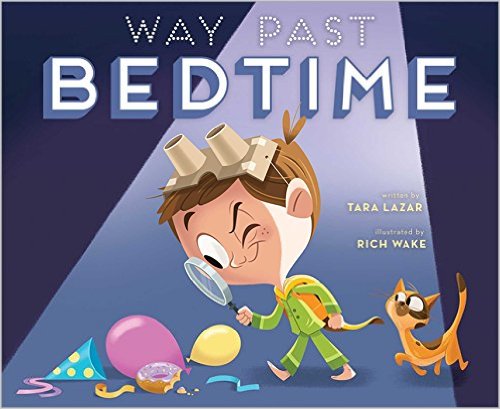



 Writing for Kids (While Raising Them)