You are currently browsing the category archive for the ‘Picture Books’ category.
I was taken aback this week when a girl posted a comment on my blog in regards to the 365+ Things Kids Like post:
what the hell im i kid i dont like most the things on that list [sic]
OK, so we’ve got one unusual and outspoken kid out there. I mean, nearly 365 things is a lot NOT to like. Although I assume that this kid does like #21 Being Independent, #175 Ignoring Adults and #201: Knowing More than Everyone Else. And this kid may not be of picture-book age (less than 8 years old), given the language.
I add to this list periodically, to keep track of subjects that may work in a future picture book manuscript. But one thing I forgot is that kids like to be unique individuals. Not every child loves riding skateboards and roller coasters. Some are scared of clowns or think they’re stupid. And licorice? Blech. I know I hate it.
This leads me to ask–how do you know the subject of your story will appeal to a broad range of children?
Because at its heart, a picture book isn’t about a dragon or a robot. It’s about an emotional truth–friendship, family, fitting in. Carving out your place in the world. Accomplishing your goals.
So I have to add two things to the list of 365+ Things That Kids Like:
- Being loved and appreciated.
- Having their voice heard.
Every Monday at 10pm EST children’s writers and illustrators jump on Twitter to chat about picture books. The brainchild of Aussie authors Karen Collum and Kat Apel, #pblitchat churns away for an hour, with topic schedules and transcripts posted on the Picture Books Only blog. Below are highlights from this week’s chat on writing for the very young–children from birth to age 3.
- Unless you’re an author/illustrator, board books are a difficult sell. The word count is low and the stories are less complicated than picture books for 4-8 year-olds, so illustrations become even more crucial to bring life to the story. For example, the visual cues in Sandra Boynton’s Blue Hat, Green Hat allow non-readers to “read” the story themselves. As a new writer, you want to write a story with the broadest possible appeal to maximize your chances of being published, so writing specific to the board book format may limit you.
- A trend in board books is to republish books that have been popular sellers in hardcover/paperback. Board books are expensive to produce, and at the same time, parents want to pay less for them, so publishers may prefer to go with a proven story rather than a new one. Great example: Snowmen at Night by Caralyn and Mark Buehner was first a successful hardcover title, released in 2002. A few years later, the publisher created board books and sold them with a stuffed snowman during the winter holidays. A jigsaw puzzle board book and a pop-up version (a new story) were also created.
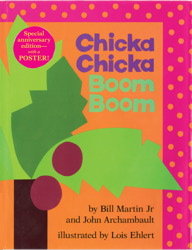 Rhyme (internal and external) and a jaunty meter delights young ears. Great examples: Chicka Chicka Boom Boom by Bill Martin Jr., John Archambault and Lois Ehlert; Hand, Hand, Fingers, Thumb by Al Perkins and Eric Gurney.
- Average word counts for young books are typically less than 500 words and could be fewer than 100 words.
- The market is saturated with ABC concept books, but books with a completely fresh take can be successful, like Shiver Me Letters, A Pirate ABC by June Sobel and Henry Cole.
- Repetition helps young children understand story and recognize words, plus it encourages participation in reading aloud.
- Lift-the-flap books offer peek-a-boo surprises and drive the story forward, but again, they’re a tough sell unless you’re an established author and illustrator.
- Novelty books (pop-ups, foldout pages, liftable flaps, or hidden sound chips) are often published by mass-market publishers and not trade publishers. What does this mean to you? In-house talent or work-for-hires create these books.
- The jury is split on interactive titles for the very young. Do parents want their toddlers drooling on an $800 iPad? Do electronic titles lose the “cuddle factor”? Or does the new interactive medium offer an unprecedented opportunity to unknown author/illustrators? A recent article cited a new 3D book as one of the top 20 ebook apps for the iPad, right up there with Dr. Seuss and Disney titles.
My favorite #pblitchat moment? Board books get gnawed and chewed by babies, so how about an edible board book? (As suggested by @RedStepChild a.k.a. illustrator Lynn Alpert.) I think this is an idea whose time has come, especially if they’re made out of freeze-dried astronaut ice cream. Mama may want to chow down on tasty kidlit, too! (I can see it now–Chicka Chicka Yum Yum.)
What else is important to know about writing and illustrating for the very young?
Don’t worry, I haven’t slid off the children’s book wagon to blog about the policies of Franklin Delano Roosevelt. No, “the new deal” to which I refer is my first picture book deal.
Did you hear what I said? FIRST PICTURE BOOK DEAL!

Tara Lazar’s debut THE MONSTORE, about a shop which sells only the most useful monsters, and has only one rule: no refunds, no exchanges, to Emily Lawrence at Aladdin, for publication in summer 2012, by Ammi-Joan Paquette at Erin Murphy Literary Agency (NA).
I’m thrilled to be working with Emily, who not only loves tacos as much I as do, but also made an appearance on this blog two years ago (unbeknownst to her). Joining Emily in the monsterly hijinx is assistant editor Alyson Heller, who shares my passion for figure skating.
(Note: Please don’t send these editors stories about TACO HARDING AND JEFF GUACAMOLE. Mexican food and figure skating don’t mix! Not even with some good queso!)
Next up, an illustrator will be chosen and then we’ll work on revisions.
And hey, what the heck, I’ll drag you along on the journey. I’ll share as much as I can about the behind-the-scenes process–from getting a book signed to signing books!
The journey thus far:
1. I was born.
2. I wrote my first picture book with my 2nd-grade BFF and told my great-grandparents it would be published soon.
3. I apologized to my 80-something great-grandparents for making them drive an hour to the bookstore.
4. I went to college and wrote awful short stories and lousy poetry.
5. I worked in high-tech and wrote awful press releases, shouldering some of the blame for “irrational exuberance.”
6. I got married and had two kids.
7. I decided to take up my 2nd-grade passion again (without BFF).
8. I wrote.
9. I revised.
10. I conferenced.
11. I rinsed and repeated.
12. I submitted.
13. I wrote this post. (And you commented!)
Want a great piece of writing advice? As a new writer, surround yourself with more experienced professionals. You’ll grow and learn far more quickly than if you remain in a critique group comprised of writers on your level.
Unfortunately, it’s not always easy to find an experienced critique group. However, paid critiques are one way to gain access to knowledgeable professionals and speed-up your learning curve. You can receive paid critiques at SCBWI conferences and through independent editors, and once in a while critiques go up for auction to benefit good causes. But these critiques, while thorough and worth every penny, can sometimes cost a lot of pennies.
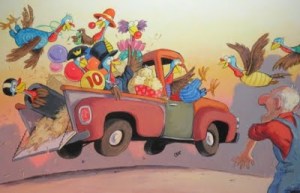 I met award-winning author Brenda Reeves Sturgis at the 2008 Rutgers One-on-One Plus Conference and we had instant chemistry. Easy-going, lovely, and full of fun, Brenda possesses a great personality and a penchant for picture books. Her debut TEN TURKEYS IN THE ROAD releases fall 2011 with Marshall Cavendish, and her poetry appears in the SWEET DREAMS anthology later this year from Blooming Tree Press. And guess what? OK, you’ve guessed it, she has begun a new critique service for picture book writers (and for not that many pennies).
Hey–did you notice–critique service, Reeves Sturgis. That rhymes! Well, kind of. Maybe just a little? Huh?
But believe me, her critiques are far better than my rhymes.
Besides writing for kids, I’m raising them, too. (You may have already figured this out by the blog title. I’m not that full of surprises.)
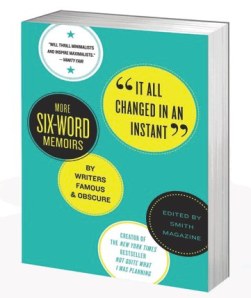 Two years ago I won a Six-Word Momoir contest from Smith Magazine, and now another one of my Momoirs is featured in their new book It All Changed in an Instant: Six Word Memoirs by Writers Famous and Obscure:
Wanted independence but had two dependents.
Probably would have sounded better if I went all Duggar and said nineteen dependents, but I digress…
Sometimes we need a break from our current manuscript, but we still want to write. Well, what better way to be succinctly witty and wittily succinct than by writing six-word memoirs? Picture book writers are expected to write short, so here’s the ultimate exercise. In my case, I’m sticking to momoirs. Here’s a few to get your creative sixes flowing:
Woman with awesome body becomes homebody.
Two words bring joy: “She pooped!”
You really do become your mother.
How many years until Kindergarten begins?!
Naptime: my favorite time of day.
Wake me up when they’re grown.
Stuffed animals must breed at night.
Motherhood should require an entrance exam.
Hug tight. The years move fast.
Say “yes” as often as possible.
Except when muddy nightcrawlers are involved.
Grant wishes. Encourage dreams. Inspire hope.
Give birth. Give lessons. Give freedom.
OK, I apologize for the poop. I have no reason to sink that low. But I do have something to tell new mothers in six words: “Stay far away from rice cereal.”
So, give it a shot. If you’re a parent or not, try a six-word memoir. I expect to see at least six below in the comments!
A few days ago in Think Before You Write, I mentioned that although a picture book is short, it doesn’t take a short time to write:
You whittle down the length so every word packs a punch, while still presenting a compelling page-turner, full of illustrative potential. (Which means you have to leave some things unsaid.)
So what does that mean? Leaving some things unsaid? Well, I’ve found perfect examples from Kathi Appelt. (Yes, Newbery Honoree Kathi Appelt. She knows her stuff.)
 Today my daughter asked me to read Appelt’s Bubba and Beau Meet the Relatives, one of our favorite picture books.
Appelt says a lot with a little, meaning she uses a few words to describe a situation, leaving illustrator Arthur Howard to fill in the blanks.
Bubba and Beau Meet the Relatives is about a baby boy, his bloodhound puppy and the Texan family relatives who come to visit one afternoon. Bubba’s Mama Pearl quickly prepares for the relatives’ arrival.
Appelt says: “First Mama Pearl went on a home improvement spree.”
Howard draws: Mama Pearl shoving clothes into a drawer, pushing an overstuffed closet closed, and sweeping Bubba’s toys underneath the bed.
Notice it took 19 words to describe the illustrations, but Appelt only used 9 words to set the scene.
Appelt says: “Then she handed out orders.”
Howard draws: Mama Pearl pointing to a cobweb which Big Bubba swats with a broom, Mama Pearl holding a bag for the bloodhound to put away his bones and balls, Big Bubba vacuuming with Beau riding the cleaner.
And there it took 36 words to describe the illustrations, but Appelt only used 5. (OK, I could have described the art in a tighter fashion, but I think you see my point.)
Later in the story, Appelt introduces “…Cousin Arlene and her dog, Bitsy.”
Appelt says: “Honey, it was froufrou city.”
Howard draws: Cousin Arlene in a frilly pink dress, with a pink bow to match the one atop Bitsy’s fluffy head.
Once again, Appelt’s petite word count packs a humorous punch, with Howard’s illustrations telling half the story.
In our favorite scene of the story, Bubba, Beau, Arlene and Bitsy have just been discovered in the mud hole. “Only one thing to do,” says Big Bubba.
Page turn. (Which means a surprise is coming!)
Appelt says: “Yeehaw, honey! It was a picture-perfect day in Bubbaville.”
Howard draws: The entire family sitting in the back of Big Bubba’s truck, which has been filled with a hose so it’s a southern-style pick-up truck pool.
At kidlit conferences and events I’ve repeatedly heard that picture book writers must leave room for illustrations. Bubba and Beau provides a superior example of how to write a successful tale that inspires brilliant pictures. The words and images work beautifully together like Bogey & Bacall, Astair & Rogers, and Lady Gaga & Elton John. (OK, maybe that last analogy wasn’t so good. But I needed something current.)
If you have a recommendation of a picture book that says a lot with a little, let’s hear it!
 A typical day as a newbie writer: sit down at the computer, start writing.
At least, that’s what I did two years ago. I got an idea and I didn’t stop to think: is this a good idea? Is it marketable? Has anyone written something like this before? Nope. I just wrote, motivated by my muse.
And perhaps this was good back then. I was honing my skills, finding the right words, crafting sentences, building stories.
But they were looooong stories. At an average 1,500 words my tales were neither picture books nor chapter books. I insisted I was writing picture storybooks, and I used Patricia Polacco’s body of work as an example of how my stories could be published, not realizing, c’mon, she’s PATRICIA POLACCO.
It took me a while to learn to THINK before I write.
An idea begins. I ponder it. I write down the initial concept. What is my topic—what is this story about on its surface? Bulldozers or ballet dancers or dragons? What is at its heart? Is it about friendship or fitting in or family? Who is my character and what does he want? What is my hook? Can I boil the concept down to one line?
Then I research. Is there anything similar already published? If so, I’ve got to change it up a bit. Or let it go.
I ask myself these important questions:
- Is this picture book marketable?
- Will someone pay $16 to buy it?
Granted, these are difficult questions to answer objectively. Of course you want to believe that everyone will buy your book! But as a mother of two picture book age kids, I know this isn’t the case. If we don’t love reading the book over and over again, I won’t buy it. I try to use my motherly instinct to answer these questions and I think of my other parent friends. (And then I stalk parents in the bookstore and ask them what they think. No, just kidding. But I’m tempted.)
If I can’t answer “yes,” the idea gets filed away for the future, when I can perhaps transform it into something more extraordinary.
If I do answer “yes,” (or even “maybe”) then I create a brief outline or I just write. And I keep the proper length in mind: 500 to 700 words.
Some writers may call this process stifling. But I call it smart. Because if you want to be published, you have to examine these elements before you write. Because although picture books are short, they don’t take a short time to write.
Sure, you may pump out a first draft in a few days, or even less, but picture book revisions could go on for weeks, months, even years until you get it right. You whittle down the length so every word packs a punch, while still presenting a compelling page-turner, full of illustrative potential. (Which means you have to leave some things unsaid.) With all that time invested in a product you want to sell, you’re playing Russian roulette if you haven’t researched the story’s potential first.
It took me a while to learn this, to realize this, so I’m just paying it forward. Many of you are probably nodding your head in agreement. And maybe some of you are waving a finger at me for being a creativity killer.
In any case, I’m eager to hear from both sides! Think or write? Or a hybrid of both?
Parents of the previous generation who wanted to bestow all their mushy, gushy love on their kids–in book form–had Robert Munsch’s Love You Forever and Sam McBratney’s Guess How Much I Love You for bedtime reading. Cuddled under the covers, snug and cozy while turning pages, is there any better way to share a deep parent-child bond?
But it’s time for those books to move over and make way for new Valentine’s classics!
I can’t think of a better gift for the holiday than a book. Candy rots their teeth, plus you end up eating most if it yourself, don’t you? (Well, I do.) And where will you store yet another Build-A-Bear that gets forgotten by March?
Valentine’s Day belongs to books. And these three are perfect picks to declare all your mushy, gushy love. And grandparents, take note. These books are just right for you and your grandkids, too.
 I Love You More Than Rainbows
by Susan Crites
Illustrated by Mark & Rosemary Jarman
Published by Thomas Nelson
With whimsical illustrations as bright as rainbows, Susan Crites’s book uses analogies children can easily understand to explain the concept of love. Kids are crazy about ice cream cones with sprinkles on top, puppies, birthday parties, sleigh riding and hot cocoa. But as great as those childhood favorites are, parental love still trumps them all.
Try inserting your child’s favorites while you read this book. With my kids, “I love you more than albino rock pythons, Sun Chips and Daphne from Scooby-Doo” might work well. Don’t ask about the snake, but I could use help finding something to rhyme with Scooby-Doo. Yabba-Dabba Doo? Anyone have a Hanna-Barbera rhyming dictionary?
But I digress…
With a jaunty rhyme that never gets too sing-songy, this book is a joy to read aloud, and the bold colors will delight a young audience.
Published by Thomas Nelson, I Love You More Than Rainbows won a Mom’s Choice Award and is available in hardcover and in board book form—at a great price, too. There’s even a Kindle version.
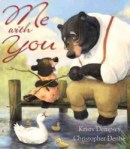 Me with You
by Kristy Dempsey
Illustrated by Christopher Denise
Published by Philomel Books
When Kristy Dempsey wrote this story, she couldn’t imagine that her editor and illustrator Christopher Denise would interpret her characters as granddaughter and grandfather. But after reading this book, you’ll agree, there’s no more perfect a pair.
Me with You celebrates the joys of being yourself around someone you love, the comfort a great relationship brings. Grandpa is always there to support his favorite young cub, even when she’s feeling selfish and gruff. The two allow each other to express themselves, always knowing their love will not waver.
Me With You also highlights the importance of spending time apart from those you love, “to be the kind of you that you can be when you’re alone.” This book is a good choice for children who are apprehensive about separation from a loved one.
This rhyming book offers a smooth, gentle beat, and the light, airy illustrations breathe of spring. Denise has mastered body language and facial expressions to demonstrate the deep bond shared by this “pair beyond compare.” A favorite page features Grandpa in a Babe Ruth pose, pointing to the outfield as his granddaughter cheers him on. (I have to mention the blades of grass, which you may think are insignificant, but I’ve never seen such luscious fields, I want to take off my shoes and run across this book.)
You don’t have to be a grandparent to fall in love with it this Valentine’s Day.
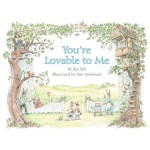
You’re Lovable to Me
by Kat Yeh
Illustrated by Sue Anderson
Published by Random House
The theme of You’re Lovable to Me is unconditional love: parents love their children no matter what they do.
Mama Bunny is having a rough day keeping track of her Bunny Babies and all their hare-y mischief. But no matter what they do, Mama Bunny reminds them that through their joy and sadness, their frolic and frustration, “You are my bunnies. And you’re lovable to me.”
Once her bunny babies are tucked in, Mama bunny crashes on the couch. Oh, how we parents can relate! Mama Bunny’s father arrives and upon seeing his exhausted daughter, he reminds her, “You’re lovable to me.”
If this review had a soundtrack, it would be Elton John’s “Circle of Life!” This book reminds our children that we were once children, too–and that everyone needs to be reminded that they are loved.
Sue Anderson illustrates in a simple, pastel style that takes advantage of white space, complementing the sweet story with a gentle, relaxed mood. The nostalgic feel of this book makes it my top pick for being a New Valentine’s Classic!
What are your New Valentine’s Classics?
Whoa, that’s a long title. But it’s accurate! I asked some of my favorite authors and illustrators to pick three stand-out picture books of 2009. It wasn’t an easy task. I know because I couldn’t decide myself! So I dumped the job on them, just like New Jersey got dumped with snow this weekend. Except they’re a lot warmer than I am, cuddled up with good books instead of buried beneath a foot of the white stuff.
Check out their amazing selections and add a new book to your holiday wish list!
Boni Ashburn
Author of Hush, Little Dragon and Over at the Castle
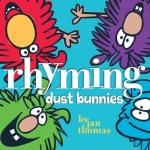 Rhyming Dust Bunnies
by Jan Thomas
Beach Lane Books
January 2009
A simple, hilarious introduction to rhyming that is not only adorable to look at, but also invites audience participation and is a perfect read-aloud. That’s right, perfect.
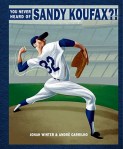 You Never Heard Of Sandy Koufax?!
by Jonah Winter and Andre Carrilho
Schwartz & Wade
February 2009
Striking illustrations coupled with a fantastic voice–this book makes you FEEL baseball. Jonah Winter is a picture-book biography genius–I had a hard time choosing between this one and Gertrude Is Gertrude Is Gertrude Is Gertrude (which has an equally excellent voice!).
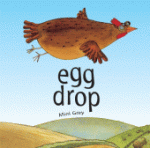 Egg Drop
by Mini Grey
Knopf Books for Young Readers
July 2009
Excellent humor of the dark, dry and deadpan sort, coupled with Grey’s gorgeous art.
This was impossibly hard! Three is too just too few. My “honor books” would be A Penguin Story by Antoinette Portis, Monkey With A Toolbelt And The Noisy Problem by Chris Monroe and Thunder Boomer! by Shutta Crum and Carol Thompson.
Jannie Ho
Illustrator of The Great Reindeer Rebellion and Light the Menorah
 Around the World with Mouk
by Marc Boutavant
Chronicle Books
November 2009
Last year when I was in France, all I could think about was getting my hands on this book (which was originally published in French), but only to find out later that Chronicle books were publishing it in the US this year. Marc Boutavant is one of my favorite illustrators; I’ve read his style described as “the modern day of Richard Scarry,” and I agree! With so many little details to look over, there is always something new to discover each time I open it.
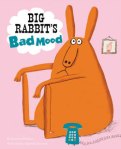 Big Rabbit’s Bad Mood
by Ramona Badescu and Delphine Durand
Chronicle Books
March 2009
Another one from Chronicle! I can’t resist Delphine Durand’s illustrations–so many funny little details to look at. I own many of her books, and am obviously a fan…(even wrote her a fan email!) Even though this story is about a grumpy rabbit, one can’t help but smile when looking at her silly characters.
 The Great Paper Caper
by Oliver Jeffers
HarperCollins Children’s Books
April 2009
I’m a great admirer of those who write AND illustrate their books. Oliver Jeffers’ illustrations are super cozy and serene, I want to live in that forest with the animals! Thumbs up to this quirky, winter mystery story.
Jacqui Robbins
Author of The New Girl…and Me
 A Book
by Mordecai Gerstein
Roaring Brook Press
April 2009
Kirkus called it “Metafiction for the picture-book set.” A young girl who lives in the book with her family struggles to find her story, trying on different genres and marveling at the giant mushy faces (that’s us) looking in on her. It’s funny, it’s smart, and it is truly unique. Plus, we read it five hundred times in the first month we had it and I never tired of it.
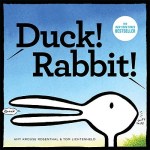 Duck! Rabbit!
by Amy Krouse Rosenthal and Tom Lichtenheld
Chronicle
March 2009
I was smitten with this book from the start. The concept is simple: is it a duck or a rabbit? Two voices argue. Giggling ensues. As I blogged in July, we get extra giggling in our house because my preschool son does not have the cognitive ability to see it both ways and so he thinks the point of the book is that some poor dope thinks that bunny’s a duck.
 Okay, I would be lying if I didn’t pick Two of a Kind, by, um, me (and Matt Phelan).
Atheneum
July 2009
I’d like to be cool enough to pretend I didn’t dance like a four year-old fairy girl whenever I turn to the page with my name on it. But I’m not. And I do. More than that, though, I still love the story and the way it makes kids nod in recognition.
Patricia Storms
Author/Illustrator of The Pirate and the Penguin
It’s really hard to pick just three books! Being a Canadian, you might wonder if my choices are Canuck books. Yup, they are…and they are all very unique and engaging.
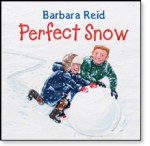 The Perfect Snow
by Barbara Reid
Scholastic
October 2009
Barbara Reid is a treasured Canadian talent who once again creates a visual delight with her plasticine illustrations. Reid creates a delightful story about the joys of creating snowmen and snow forts in the perfect snow of a winter day.
 The Imaginary Garden
by Andrew Larsen and Irene Luxbacher
Kids Can Press
March 2009
Andrew Larsen’s The Imaginary Garden is a beautiful story about the special bond between a grandchild and grandparent, and the power of the creative imagination. Luxbacher’s illustrations are magical and bursting with colour.
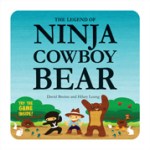 The Legend of Ninja Cowboy Bear
by David Bruins and Hilary Leung
Kids Can Press
September 2009
And finally, The Legend of Ninja Cowboy Bear is charming and fun story about friendship, and celebrating the differences in others. Hilary Leung’s illustrations are bright and utterly adorable!
Michael Sussman
Author of Otto Grows Down
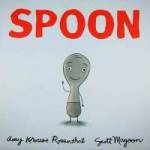 Spoon
Spoon
by Amy Krouse Rosenthal and Scott Magoon
Hyperion
April 2009
Modesty prevents me from mentioning Otto Grows Down (darn, I mentioned it!) But I also loved Spoon, which—like Otto—was illustrated by the supremely talented and charming Scott Magoon. I’m always amazed at Scott’s versatility, and once again he has employed the perfect style for this sweet and quirky story. I also admire Amy, since I’ve tried unsuccessfully for years to come up with a picture book about an inanimate object. Not an easy task, and she makes it look simple.
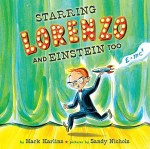 Starring Lorenzo, and Einstein Too
by Mark Karlin and Sandy Nichols
Dial
April 2009
Mark, who is the author/illustrator of many fine picture books, including Mendel’s Ladder and Music Over Manhattan, has produced an endearing story which celebrates the importance of family and the power of the imagination. The cool, retro illustrations are superb.
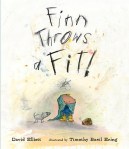 Finn Throws a Fit!
by David Eliot and Timothy Basil Ering
Candlewick
August 2009
Finally, I’m wild about David Eliot’s Finn Throws a Fit! This book is hilarious, and it’s a model for writers striving to tell a compelling story in the fewest words possible. Timothy Basil Ering’s artwork is astounding. I don’t know of a more creative illustrator working today.
So what were your favorite picture books of 2009?
Please leave a comment!
This is the second art gallery by illustrators who participated in November’s 30-picture-book-ideas-in-30-days PiBoIdMo challenge. You can see ideas taking shape–in the form of characters. (If you didn’t already know, editors are keen on character-driven picture books these days.) And just think, once these stories are published, you can say “I knew them when…”
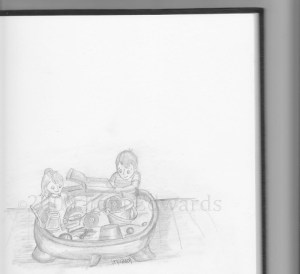
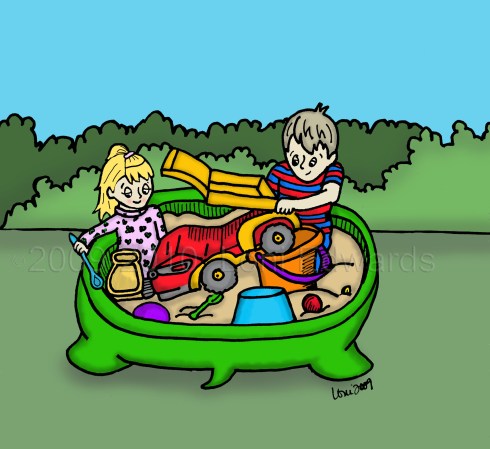
Loni Edwards
“This is a sketch from my story about going to Nana’s house. I’m entitling it ‘Two Kids in a Sandbox’ until I evolve the story more. I sketch, then I ink using a light table. I scan the piece into Photoshop where I color with a Wacom Tablet.”
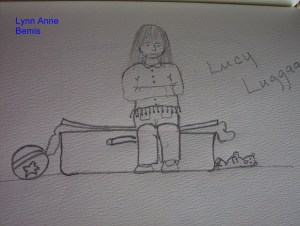
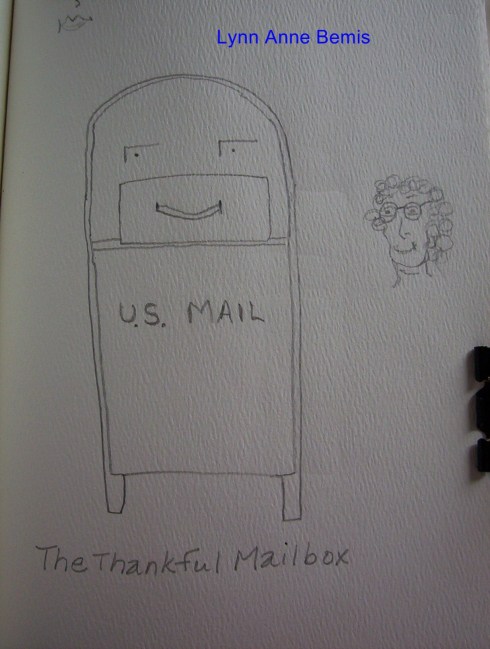
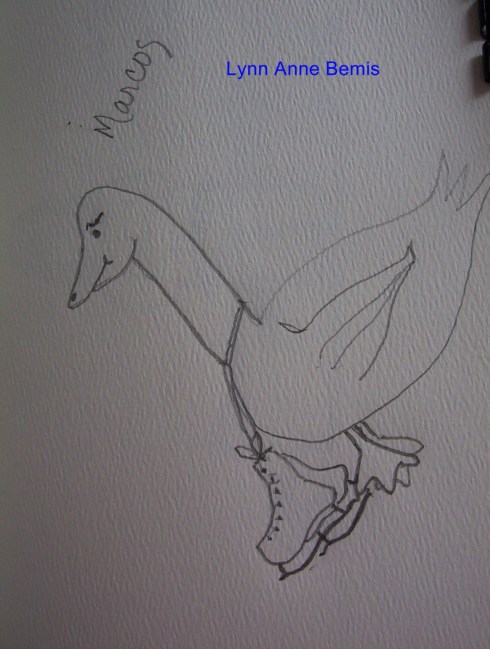
Lynn Anne Bemis
“I have not taken lessons as an illustrator. I am a ‘wannabe’ and this is the first year I started adding drawings to my story ideas. So as simple as they are, I am showing them to you. I am, you could say, ‘A work in progress.'”
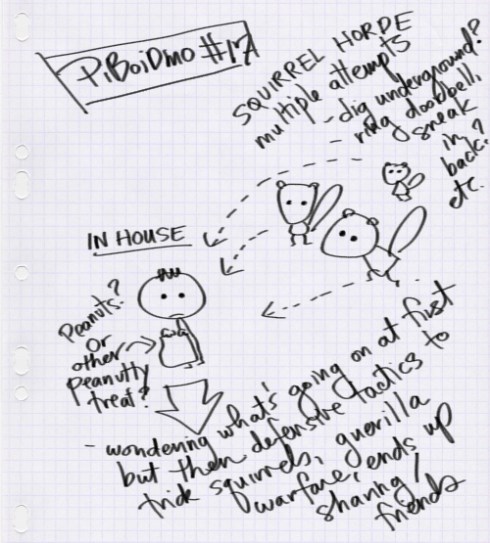
Debbie Ridpath Ohi
“Regarding the first sketch, this is how I brainstorm sometimes and I figured I’d try it for PiBoIdMo. As you can tell, um, my sketches are VERY rough.
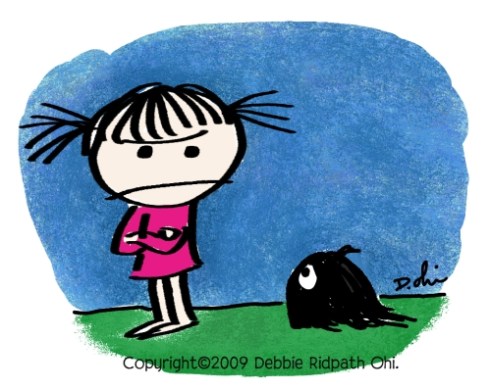
“I’ve always been fascinated by the juxtaposition of cute and scary. The monster guy in the second drawing was inspired by Little Nightmares, which I’d eventually like to include in a picture book. The girl is a character I came up with for my Snarkface cards and she demanded to be included in the drawing as well.
“The third sketch looks drawn on paper, but I actually did it in Corel Painter. I find that experimenting with different virtual media is fun, plus I enjoy trying out different styles. I did this sketch to accompany a text picture book idea. One of the reasons I enjoyed PiBoIdMo so much was because it not only inspired me as a writer but also as an illustrator.”

One more gallery to come, kidlit fans! Stop back soon for more insight into the illustrative process.





 Writing for Kids (While Raising Them)