You are currently browsing the category archive for the ‘Children’s Books’ category.
Thank you to everyone who celebrated the release of Carin Berger’s newest picture book OK Go! by participating in her green-themed collage contest.
Carin thought the entries were so fabulous, she has posted all of them on her website!
We selected three winners at random.
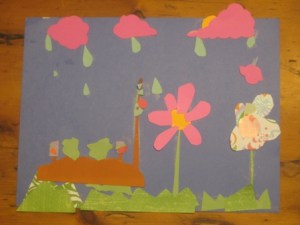
Verity, age 7, wins the signed copy of OK, Go!
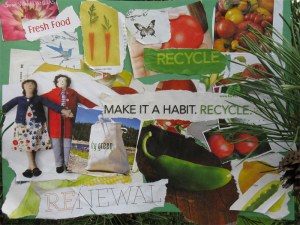
Ellie, age 4, wins a signed bookplate and an All Mixed Up mini-book.
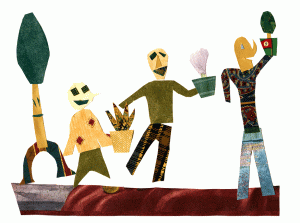
Isaac, age 10, wins a signed bookplate and an All Mixed Up mini-book.
The rest of our artists receive an All Mixed Up mini-book. Everyone wins!
Visit Carin Berger’s website to see all the terrific collages and read the children’s inspiration for their art!
Thank you, green parents and kids! 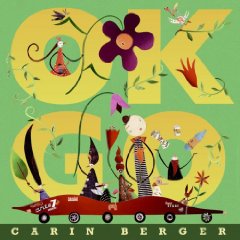
<– And don’t forget to pick up a copy of OK, GO!
OK?
Go!
Three things happened to young adult writer and teen librarian Bridget Zinn in February:
- She got an agent for her novel.
- She got married.
- She found out she had Stage Four colon cancer.
It’s unbelievable that a young, vibrant woman with absolutely ZERO of the risk factors has been struck with this form of cancer. But it is pretty incredible that the kidlit community has come to her aid with The Bridget Zinn Auction.
Authors have donated signed copies of their books, editors have offered critiques. All to benefit Bridget’s treatment and recovery.
There’s lots of fabulous goodies to be had. Just take a look:
- Manuscript critique by Nancy Mercado of Roaring Brook Press.
- “Focus” Radio Show Interview with Irene Rawlings.
- Picture book critique by Dori Chaconas, author of more than 20 books for children, followed by a special reading of your final revised draft by Andrea Tompa, associate editor of Candlewick Press.
- Signed first edition of Stephenie Meyer’s Eclipse.
- Babymouse author Jennifer Holm will put your name in her next book.
There’s lots more marvelousness to be had. Jewelry, crafts, books, journals and custom items. (I’ve got my eye on that custom cookbook.)
So what are you waiting for? Start bidding! The auctions will close on May 30 at 11pm EST.
It’s Children’s Book Week! So what does that mean? It’s time to celebrate children’s books across all genres.
Read to children. Inspire their creativity. Write a story together. Draw pictures. Enter Carin Berger’s Contest. Do whatever you want to make reading a priority in your family’s life! (Although I’m sure it’s already a priority.)
To help you along on this salute to Silverstein, this festival of Fox, this jubilee of Jeffers, here are some links:
- Read story starters by children’s authors and finish what they started.
- Visit the Write For a Reader blog. Shelly will have author interviews and give-aways all week.
- Check out IlluStory and Create Your Own Pop-up Book, fun ways for your child to publish their own book.
- Review the Top 10 Summer Reading Lists from various organizations and the children’s choice reading list from the Children’s Book Council.
- Share your favorite children’s book with us. Comment below so others can discover great books.
And here are some marvelous picture books being released this week! Enjoy!

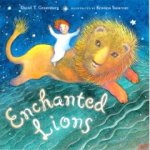
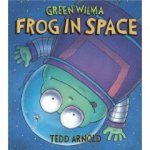
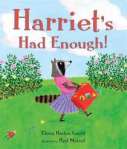

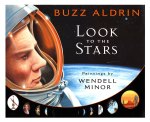
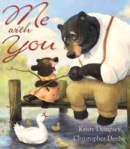


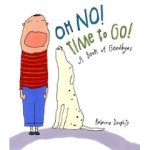
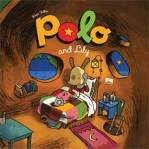
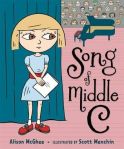

 First there was Mitali Perkins’ list of young adult authors on Twitter. Then came the picture book author and illustrator list.
And now–finally–middle grade authors have a list to call their own.
Below you’ll find authors of published books (or soon-to-be-released titles) for middle grade readers. Chapter book and tween authors have been included as well.
If you know of others who should be on this list, please leave a comment and I’ll update the list periodically.
Enjoy! Discover talented writers; make new connections.
- R.J. Anderson @RJ_Anderson
- Elizabeth Atkinson @tWeenBooks
- Susan Taylor Brown @SusanWrites
- Meg Cabot @MegCabot
- RJ Clarken @LightVerse
- Bonnie Doerr @BonnieDoerr
- Michelle Knudsen @MichelleKnudsen
- Adrienne Kress @AdrienneKress
- Cynthea Liu @Cynthea
- Lauren Baratz Logsted @LaurenBaratzL
- Anne Mazer @AnneMazer
- Kate Messner @KateMessner
- Lauren Myracle @LaurenMyracle
- Nicole O’Dell @Nicole_Odell
- Ellen Potter @EllenPotter
- Sarah Prineas @SPrineas
- Karen Rivers @KarenRivers
- Christine Rose @ChristineRose
- Laurel Snyder @LaurelSnyder
- Cynthia Chapman Willis @CynthiaCWillis
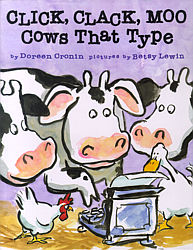 What a lucky duck–I got to meet the moovelous Betsy Lewin this week. The whimsical illustrator of Click, Clack, Moo: Cows that Type and countless other barnyard books visited our local elementary school and entertained the kids with a mix of slide show, drawing lesson and Q&A.
Two Kindergarten classes filed into the library with clipboards and crayons, eager to learn from a master cartooner.
But first, Mrs. Lewin showed photos of her 120 year-old Brooklyn brownstone. Her living room is filled with souvenirs from her world travels–Africa, Australia, the Galapagos–places where she has observed animals and gained inspiration. When she showed her husband’s studio on the fourth floor, she pointed out that it was far bigger than hers, not because he was more important, but because it also housed a photography studio. Ted Lewin paints his realistic watercolors by studying photographs. He pays neighborhood kids to model for him. “Anybody want to move to Brooklyn?” she asked. (My hand went up!)
Mrs. Lewin brought along her cartoon friend, Weirdly, to show the children how to draw expressions: mad, sad, excited, laid back and cool, mischievious, shy. “Weirdly helps me draw ‘sound’ words like BOOM and CRASH because sometimes I can’t imagine what they look like,” she explained.
She also showed her first draft cover for Doreen Cronin’s Duck for President. The original cover depicted a national political convention. The point of view is Duck’s, looking out over the crowd (we see his back and tail, wings outstretched). In the front row there’s Farmer Brown, some cows and chickens, Doreen Cronin and Betsy Lewin. Red, white and blue balloons are falling from the ceiling as the crowd holds signs with slogan spoofs like “The Duck Stops Here,” “I like Duck,” and “A Veggie in Every Pot.”
Then her publisher decided they didn’t want political sayings on the cover, so they asked her to write signs with all 50 states. She soon realized that wouldn’t work. “Which states should go on the front cover? Which states should go on the back? It wouldn’t be fair. What about M-I-S-S-I-S-S-I-P-P-I? That’s too long!”
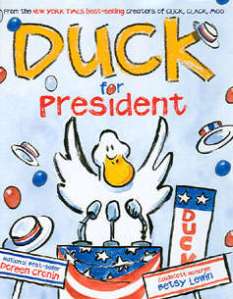 Ultimately they decided to put Duck on the podium with just three signs: DUCK, Doreen Cronin and Betsy Lewin. PERFECT!
The hilarious moment came when Mrs. Lewis showed a photo of someone in a cow costume, typing away. She said the photo was sent to her in an unmarked package. Then she asked, “Does anyone know what Doreen Cronin was before she became a children’s author?” One kid had an answer. “A cow?”
Much to his disappointment, no. Ms. Cronin was a lawyer, just like Mrs. Lewin’s brother, a judge, who had sent the funny cow costume photo. (Yep, lawyers are some of the funniest people I know. My own father included.)
Next, Mrs. Lewin showed the children how to draw a lion with a few easy steps. She broke it down into wiggly lines, circles and half circles and then had the kids decide how they wanted to draw the eyes–happy, sad or angry–with just a slant of the eybrows. She had the first row stand up to show the rest of the audience how different each lion was, as different as they were. “And that’s what makes you so special,” she said. “You’re the only you in the whole world.”
After some questions and answers–her favorite books as a child were Winnie the Pooh and Call of the Wild–she asked the children for suggestions of what to draw. An animal lover and observer all her life, Mrs. Lewin grew up in rural Pennsylvania surrounded by farms. She would watch the animals intently so she could remember how to draw them. She doesn’t need to look at an example as she creates. She can draw anything!
Mrs. Lewin draws with quick strokes, and it’s amazing to watch how these simple lines and squiggles magically come together to form monkeys, elephants, rocket ships and knights in shining armor. Two lucky ducks, I mean kids, even got their portraits drawn.
The most interesting part of the presentation was when Mrs. Lewin showed the difference between her original black and white drawings for her debut 1979 book, Cat Count, and the new full-color edition. In the new release, she gave two dancing felines a blue room lit with the shimmering, sparkling light of a disco ball. The way the dots played on the page gave the scene a magical feel, as if it could lift right out of the book and tango around the room.
I’ll use the saying “lucky duck” one last time: how fortunate children are to have such marvelous books illustrated by a true genius. Thank you, Betsy Lewin!
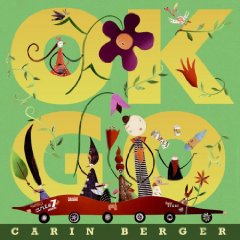 Carin Berger never deliberately set out to become an author/illustrator, but she found her true calling in picture books. She was awarded the Society of Illustrators Founder’s Award in 2006, the NY Times named The Little Yellow Leaf one of the top ten picture books of 2008, and Publishers Weekly called her “one to watch.”
And now’s a great time to watch.
Her latest title OK Go, a playful book about making greener choices, releases in bookstores today.
I had the opportunity to talk with Carin about her journey to publication (somewhat serendipitous) and her plans for the future (deliberately delightful). I shall follow PW’s lead and not only watch her, but predict the Caldecott will soon be calling.
Carin, how did you start on the path to becoming a children’s book illustrator?
I’ve always loved reading, writing, old paper stuff, children’s books, type and making things. I studied graphic design and spent almost 20 years working in the field. I worked my way down the (pay) food chain towards what I really loved: from very high-end annual reports and brochures to eventually designing book jackets for all the major publishers. I did jackets for poetry, fiction and non-fiction. I still do this and love it. I get to read manuscripts and can often use my own illustration or photography.
Anyhow, I had a daughter, and it turned out she was a sleepless wonder. (When she was little. Now she sleeps like a baby!) I spent much of most evenings hanging with her, waiting for her to fall asleep. I wrote the poems for Not So True Stories and Unreasonable Rhymes in those long hours, mostly to amuse myself.
 How did you first get involved in collage?
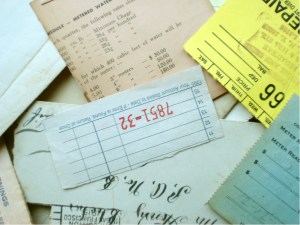
As for collage, that was kind of serendipity. I thought I would do paintings and was experimenting with different painting styles, some which included collage, and then my friend gave me a magic box full of old letters and documents and ephemera that she picked up at a flea market, knowing I had a thing for that kind of stuff. And that was the beginning.
Once I had pulled together some sample illustrations and manuscript, a friend-of-a-friend agreed to rep it; and she, amazingly, ushered it into the world.
And was Not So True Stories and Unreasonable Rhymes your first manuscript?
Yes, it was my first manuscript, though I’d written a bit, for myself, before.
 Wow. That’s a rare accomplishment and speaks volumes about your talent. Where did you go from that first success?
Not So True Stories was a quirky little book that got good reviews but sold…well, like a quirky little book. Chronicle Books graciously published my second book, All Mixed Up, another quirky and very little book. (It can fit in your pocket.)
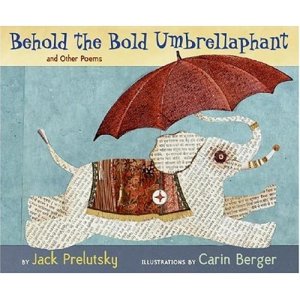
I was then called by Greenwillow Books and asked to illustrate Jack Prelutsky’s book. A real honor. And, because it was the amazing Master Jack’s book, it received lots of nice attention. He was named the first ever Children’s Poet Laureate right when the book came out which meant that there was a shiny golden sticker that went on the front of the book, too. I’ve been working with Greenwillow Books for the last couple of projects.
How has your illustration style evolved from one book to the next?
As for the collage style, it has sort of evolved in a few directions.
 All Mixed Up, a mix and match book where the heads, middles and legs (as well as the alliterative poems) combine in various ways to make new characters, was born out of the idea of collaging the collaged illustration. I had originally conceived it as a game, but Chronicle preferred to do it as a book. The illustrations are similar, yet somewhat simpler than Not so True Stories, so that the mixing worked.
For Behold the Bold Umbrellaphant, I wanted to do a slightly different style than the books that I had authored, and also, because the poems are about a conglomeration of animals and objects (such as Ballpoint Penguins), I thought it would be fun to play that up and make it really obvious.
I collect old dictionaries and army/navy catalogues that have engraved images, and so I used those images and integrated them into the collage. To do this I actually scanned engravings from the book, played with them in Photoshop, printed out pieces and used them to cut and paste with.
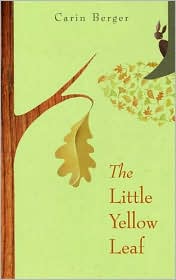 The Little Yellow Leaf felt like a really simple, nostalgic story and I ended up introducing a bit of paint (stenciling) to the collage to add another layer and also, at times, to age the paper.
Ok Go has a zillion funny little characters carousing throughout the book and feels much more like the art in the end papers of Not so True Stories and also in All Mixed Up. It was fun to change things up a bit and to do such playful art.
My next book, due out late next winter, is called Forever Friends and the art is much more similar to the art in The Little Yellow Leaf. I see it as a companion book to The Little Yellow Leaf because the bunny on the front cover and the bird on the back cover of Leaf are the characters in Forever Friends.
Your newest picture book OK Go is a playful book for the wee set, all about making greener choices. How did the concept for this book come together?
As best I can recall, it all sort of came as a whole piece. I liked the idea of introducing taking care of the environment to really young kids. I remember growing up in the 70s when “Give a Hoot, Don’t Pollute” was around and feeling very empowered to help make the world a better place. Here are some early sketches:
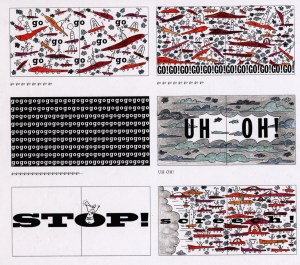
One of the biggest things I needed to figure out was how to emphasize the message in a powerful yet playful way. The gatefold came about because I wanted it to feel like a huge gathering or movement.
How do you choose which paper to cut for certain images? Does the paper speak to you?
 I have files of papers sorted by color—yellows/oranges, reds/pinks, blues/purples—and I also have files for some of my passions: polka dots, plaids, wood grain, buttons…
 I actually cut a vellum stencil of the shape I need and hold it over the paper to find a good section. Something with good gradations for example, that help the piece, say a car, look more dimensional. Clothing catalogs are great for plaids and buttons. And then I use a variety of old stuff, both really old ephemera like letters and receipts with great calligraphy on them and also bits and pieces that I find around: ticket stubs, laundry tags, etc.
Do the words on the paper hold any significance?
I do think about the paper I use, where it comes from and what it says. Not in a huge way, but in a quiet, just-to-amuse-myself sort of way. And in almost every book I make sure to include, somewhere, my daughter’s name, Thea. In The Little Yellow Leaf it appears on the page with the giant sun, and in OK Go I use her name and the names and initials of lots of friends to decorate the cars.
Speaking of the glorious sun in The Little Yellow Leaf, do you have any idea how many pieces of paper you used? Or how long it took to create that page?

I always knew what I wanted to do with that illustration, but it took a little longer (well, w-a-y longer) than I thought it would. I spent probably close to a week on it. Actually, part of the reason it took so long is that I started from the outside and was working my way towards the center and I got pretty far before I realized that, because the sun is asymmetrical, it wasn’t going to work. I had to add another layer working from the center out. Ugh!
I have absolutely no idea how many pieces there are, and I can’t imagine anyone who would be nuts enough to count (though I’d be curious to know that)!
Circling back to your newest book, what kind of impact do you hope OK Go will have on green thinking among parents and young children?
There are some very simple things that kids can do to be more green and they are listed in the back of the book.
I think if you plant the idea early, children will live more careful, aware lives, and remind their parents to do so as well. Plus, what is more motivating than our kids to get us to take care of this planet and the environment?
But mostly I want kids to have fun with the book, and to be introduced these ideas in a playful, engaging way.
One last thought: all of my art is made with found and recycled materials, so maybe this will prove inspiring and enabling, too.
Indeed it is, Carin! So let’s use that inspiration for a contest!
Kids age 10 and under, create a collage with a green theme–reduce, reuse, recycle or whatever you can dream up! Email your illustration to tarawrites at yahoo (you know the rest, dot com) and include child’s first name and age.
With the help of Random.org, we’ll randomly select three winners.
The grand prize winner gets an autographed copy of OK Go. The second and third winners will receive an All Mixed Up promotional mini-book. And all three illustrations will be featured on Carin Berger’s website and/or blog.
In your email, be sure to grant your permission for sharing the illustration and the child’s first name/age online.
One illustration per child. Enter now through midnight E.S.T., Tuesday, May 12.
Carin, thank you for giving us a glimpse into your beautiful world! I bet everyone is going to GO! GO! GO! get your book today!

Take a peek inside OK Go or
Find OK Go at your local bookstore!
OK Go by Carin Berger
April 2009
Greenwillow Books
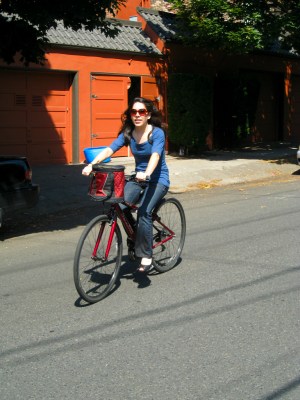 Marsha Riti grew up in Texas where everything is big, including dreams. So I assumed that she had always dreamed of becoming a children’s book illustrator. Truth is, Marsha knew she had a place in the arts, but it took her a while to discover where that place was.
Marsha currently resides in Austin but she was raised in “the sticks.” Living in a sparsely populated town forced Marsha to use her imagination for entertainment. (Good training for a children’s book illustrator, huh?)
When Marsha’s not at her desk, you might find her cleaning, cooking, gardening, creating pottery, doing math homework, and hanging out with her boyfriend and friends.
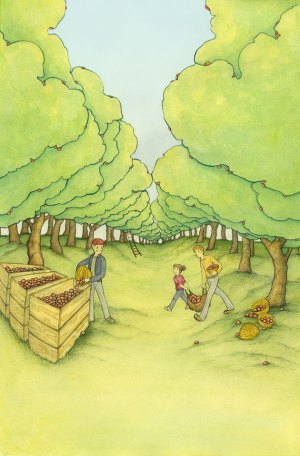 Marsha, how did you evolve from doodler to doer? What got you started in children’s book illustration?
I was always the best at drawing in high school so when I went off to college it was a no-brainer. In college I tried doing a little bit of everything. My only regret would be not taking metal working or lithography. Even though my interests were (and still are) all over the place I have always loved drawing.
After receiving my BFA from the University of Texas at Austin I went to work for a string of locally owned businesses, some of which were related to the arts, others were not. These jobs were great learning experiences: I can now show great professionalism in the face of adversity and I have also found my true love, illustration.
How did you find your true love?
I took a children’s book illustration class at a local art school. My teacher Mark Mitchell did a great job inspiring me to pursue children’s book illustration. He made the idea of being an illustrator accessible. Before I took his class I had no idea about where to start, but he did a really good job outlining ways to get into the field. I also got a better understanding of watercolor form taking Mark’s class.
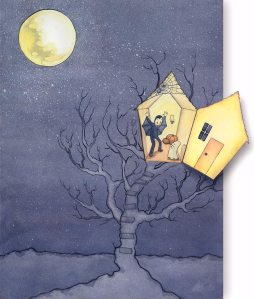

Can you tell us about the inspiration behind your illustrations?
Two of the sample paintings were assignments given to me by my boyfriend, artist and designer Adam Norwood. He just gave me a simple phrase like: “full moon over the treehouse” and “fun in the rain.” Then I thought of an image that would best fit the words.
The other sample painting titled “Treasure Apartments” is for a book dummy titled Treasure Hunt that I have not yet finished. Here is a description of the painting:
 Each apartment has a very specific owner: the top is a fashionable twenty-something who loves the mid-century look. The next apartment houses the main character, the little girl. Her father (behind the paper) has been everywhere and has the trappings to show it. Then there is the pink apartment—she has lived a long life and loves to listen to her vintage record collection. The bottom apartment is a stay-at-home programmer who is also a bike enthusiast.
I really enjoy using my imagination to think up all kinds of interesting scenarios and characters. Then I get to think about the attire and items that would best show their persona. It is like playing with a really elaborate doll house.
 How would you describe your illustration style?
I think my style is illustrative and cartoony with an emphasis on fun.
Some of my favorite children’s book illustrators are: Samuel Ribeyron, Jean-Baptise Monge, Graeme Base, and Lisbeth Zwerger. These illustrators are inspiring to me because their work is visually deep both in the sense of space but also because they have texture and substance.
I am inspired by the composition of Japanese woodblock prints by Katsushika Hokusai.
For figure study and line inspiration I like to look at drawings and etchings by the old masters: Rembrandt, Titian, and Durer.
I have a fondness for minimalist art by Donald Judd, Frank Stella, and Carl Andre. For an artist to be able to break their aesthetics about line, weight, color, composition, and form, down to its base level is very inspiring to me.
I love the color field paintings by Mark Rothko and Barnett Newman. They amaze me–the scale of their paintings envelopes you in color and can really change your mood.
I also find inspiration from installation art by James Turrell. His installations show beauty in nature in a deceptively simple way.
Other influences would be the early cartooning done by Winsor McKay and George Herriman. Their innovation, imagination, and humor are strong influences on me.
I guess I subscribe to the “less is more” school of thought that I am trying to merge with my love of lush illustration.
What are your goals for the future?
Finishing my first book dummy, getting work, and improving as an artist and storyteller.
Marsha, thank you for sharing your amazing art! Good luck to you!
Marsha Riti is a member of Austin SCBWI. To learn more about her work, visit MarshaRiti.com and follow Marsha on Twitter @MarshaRiti. (Besides her daily doodles, I enjoy Marsha’s daily vintage furniture picks from the Austin Craigslist.)
 Children’s book writers were treated to another fun and informative first page session this week in Princeton, hosted by the NJ-SCBWI. Editors Michelle Burke and Allison Wortche of Knopf & Crown Books For Young Readers listened to 30 first pages read aloud as they followed along with each manuscript page. Then they gave their immediate first impressions of the work.
If you’ve never attended a first page critique, it’s a quick way to get a handle on what your peers are writing. A first page session shows you what it’s like for an editor to spend two hours in the slush pile. Common themes emerge. Mistakes reveal themselves. If you listen carefully, you’ll learn how to avoid first page problems and encourage an editor to read on.
So what did the editors say? I encourage you to read on…
Picture Books:
Use varying imagery in picture books. One manuscript conveyed a lot of emotion and the editors didn’t see where the illustrator would take inspiration for art. The same scene through several page turns may lose a child’s attention.
Dialogue needs to match the age of your character. A picture book character shouldn’t sound older than a five- or six-year-old child. Their actions should also match their age.
Cut excess detail in picture books. The first page of the manuscript should reveal a clear story arc. If the manuscript is bogged down with details, it slows the story down. For example, writing that a mother is carrying a napkin to the table and setting it down next to the plate is unecessary (unless that specific action is crucial to the story, and even so, it could probably be illustrated).
Premise and conflict should be apparent on the first page of a picture book manuscript. For example, dialogue between two characters should reveal a story, not just serve as adorable banter.
Every line in a picture book should move the story forward. There’s no room for chatting or extraneous stuff.
Picture books should have a linear approach. Moving back and forth in time can confuse a young child.
With holiday stories, you automatically have to work harder. Stories about specific times of year are a tough sell. There’s a lot of competition and a small sales window.
Some picture book stories are told better without rhyme. If the phrasing is unnatural in rhyme–things you wouldn’t ordinarily say–it can be jarring to the story. One bad line can ruin the manuscript’s chances.
Middle Grade/YA:
The narrator/main character should be the highlight of the first page. One manuscript began by describing a minor character as a way to compare/contrast the narrator. However, when that minor character disappeared from the rest of the page, the editors were confused. Was that comparison necessary to introduce the narrator?
Historial fiction should tell a story. The reader should get a sense of the main character first–how he/she is affected by historial details. Too much fact will bog the story down and lose the character.
Don’t be too reptitive in a novel–get on with the story. If a main character reveals the same thing over and over again on the first page, it feels overdone. Introduce a concept and then move on with the story; don’t circle back paragraph after paragraph.
A first person narrative should have more narrative than dialogue on the first page to take advantage of this device. Plus, the narrative voice and the dialogue voice should match (unless the disconnect is for a specific purpose).
Avoid the stereotypical whiny, displaced, unhappy middle-grade voice. More than one middle-grade manuscript began with a character learning that he/she had to move. The result was a whiny narrator who wasn’t necessarily likeable. Editors warned that they see a lot of the parents-uprooting-child theme, so to rise above the slush, consider a different approach.
Be cautious in stories with several important characters. It’s difficult to write a story with multiple characters because introducing them can sound like a laundry list. Reveal their personalities in a way that’s organic to the story. It also asks a lot of the reader, to keep track of several characters.
Watch tense. The switch from dialogue to narrative in one story felt very abrupt because the dialogue was in past tense and the narrative was in present.
The difference between MG and YA is edgy, gritty. If the main character’s personality feels innocent, the genre might be middle grade, not young adult.
Balance description and dialogue. Dialogue moves a story along fast. Description slows it down. Long stretches of each create a choppy storytelling rhythm.
Make descriptions specific, not generic. One story began with vague details that could be applied to almost any story setting. It wasn’t until further down on the page that the reader learned the unique time and place, something that attracted attention. The editors suggested moving that info higher up.
YA characters should be teenagers. College YA characters and those over the age of 19 can be a tricky sell. That moves the story into adult territory. YA readers need to relate to the characters, and 20+ seems like a lifetime away to a 15 year-old.
Finally, stories should be kid-friendly, not sprinkled with adult sensibilities. One of the editors warned, “this feels like it’s about kids rather than for them.” Don’t let a parental point of view creep into your writing–kids find that creepy.
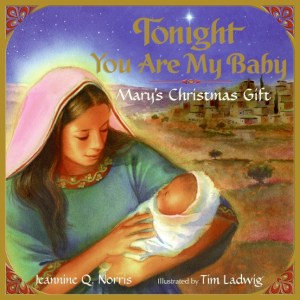 I had the pleasure of meeting author Jeannine Norris at a recent NJ-SCBWI mentoring workshop. One of the organizers, Kathy Temean, held up a copy of Tonight You Are My Baby and pointed to Jeannine, the author, sitting right behind me. Kathy told us that Jeannine had met her editor at a previous NJ-SCBWI event. Amazing! I immediately knew I had to talk to Jeannine about her path to publication.
Jeannine, how long have you been writing?
I have been writing for about four years. I dabbled in writing when our children were babies, as I missed the creative stimulation of my former job. I really started to write when our youngest went to pre-K.
Where did the inspiration for Tonight You Are My Baby come from?
The inspiration came when our daughter, Quinn, who was four years old at the time, was diagnosed with a brain tumor. As a mother, I needed the strength to help our daughter get through this difficult journey. I started to think about Mary, as the mother of Jesus, and her incredible strength. I decided to write about the Nativity, from a mother’s perspective, and, if the book was published, donate part of the proceeds to helping kids with brain tumors. Quinn’s tumor was benign, and next year will be her five-year celebration! We started a foundation, At Least Kids, that contributes to pediatric brain tumor research at Children’s Hospital of Philadelphia and supports families struggling financially. A portion of each book sold is donated directly to At Least Kids.
What a scary time for you as a parent, but what a blessed outcome—a healthy child, a beautiful book and a charitable foundation.
You met your editor at a writer’s event here in New Jersey. Can you tell us how the deal transpired?
I met my lovely editor, Catherine Onder, at a NJ-SCBWI mentoring workshop. Catherine heard Tonight You Are My Baby during the first page session. Another editor asked to see the rest of the manuscript, but it was eventually declined. Several months later, I met Catherine at another NJ-SCBWI workshop (with another manuscript) and she remembered the first page of Tonight You Are My Baby. She asked to see the rest of the manuscript and several months later it was acquired. I couldn’t have been happier! The right time, the right place, a great editor. I’m a huge cheerleader for SCBWI events. Opportunities abound!
I love NJ-SCBWI, too!
After your book was acquired, what was the editing process like?
The editing process was fascinating! I needed to add a few stanzas, when Tim Ladwig, the illustrator, started working on the book. Catherine helped me with the revisions as well. I have to say, I love revising, as my book became so much better! Revisions and rhyme are always a challenge—often it means changing the entire line, instead of just a word. Catherine pointed out that I had used the word “quiet” several times in my manuscript. Not a good idea when you are only dealing with 400-500 words! I hadn’t even noticed. When I do my school visits, I always tell the students about my revisions. A good editor is like a good teacher—encouraging, has a vision, and wants your work to be its best. Kids are always surprised that even authors make many revisions.
Interesting–how many times had you repeated “quiet”?
I think I had repeated “quiet” three times!
I suspect that many writers have a “crutch” word or phrase in a manuscript that we just don’t notice. Yours was “quiet.” Mine is “just.” (See?) It takes a good editor to point that out!
Why the need to add the stanzas? Was it because of the illustration spread count? Or did Tim add a drawing you hadn’t envisioned?
We added three stanzas because when Tim started to draw the story arc, we wanted Mary first traveling to Bethlehem and meeting Jesus several pages in. Naturally, the book is about a mother and her baby, but we needed additional stanzas to add other images: the angels trumpeting, the sheep/cows/donkey in the stable, the wise men bringing gifts. All those stanzas were added during revisions. As it happens, the angels trumpeting is my favorite illustration! It’s not what I imagined, and I love it! Tim was so creative. The rest of the illustrations are what I saw in my mind’s eye when I was writing. Tim really “got it”—Mary is very young, completely accessible and a joyous mother.
What has surprised you most about being a published author?
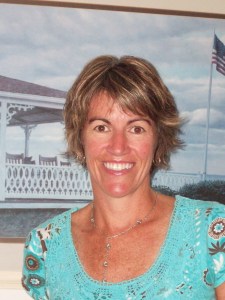 My big surprise was—I didn’t really have any big suprises! The tremendous benefit of using the SCBWI and Verla Kay discussion boards is using the experiences of other authors to make the path easier. I am hugely indebted to those who have traveled this literary path before me! Through the discussion boards and workshops, I felt really well-prepared. Any of my questions were answered: simple questions such as “How do I make postcards?” to more complicated questions dealing with contracts. One pleasant surprise was that all of my school visits were wonderful. Each one was gracious, organized, prepared AND I sold a lot of books! Again, I learned how to prepare pre-order forms, write school contracts and even develop a PowerPoint presentation through the experiences of others. There is much to be learned, but a wealth of information is readily available.
What other advice do you have for aspiring children’s authors?
I would urge writers to join a critique group—or start one of their own! I belong to an online group and a local group. I met both of these groups through SCBWI conferences. Critique groups have so much to add! My groups provide me with valuable, honest comments and help prepare my manuscript for an editor’s eyes. I would also suggest aspiring authors gain writing credits through magazine articles, local publications and online sites. The extra income is nice, too! Attend every SCBWI workshop/conference you can afford. I’ve had an SCBWI workshop on my birthday list for the past several years! If your manuscript is acquired, be prepared to market yourself–heavily. The debut author MUST knock on doors, visit schools, call the bookstores, have a website, ask for interviews. This is your opportunity! Finally, have fun. Write what will bring you to your desk each day with a smile on your face.
That’s excellent advice, thank you, Jeannine.
Although Tonight You Are My Baby is about the birth of baby Jesus, a celebration of Christmas, what makes it a relevant read throughout the entire year?
Tonight You Are My Baby is really a celebration of a mother’s love. It’s about the boundless joy that every new mom experiences. The knowledge that a baby’s birth is truly a miracle—a gift unto itself. Tonight You Are My Baby is a celebration of Christmas, but it’s also a celebration of a mother’s heart. The book is certainly most popular at Christmas, but I find many people buying it for other occasions: new baby presents, baby showers, birthdays, etc. Mothers and little ones snuggle as they read of the love story that took place long ago.
Extra cuddle time: a wonderful reason for everyone to pick up this glorious book. Congratulations and thank you for sharing your journey to publication with us!
 Tonight You Are My Baby
Story by Jeannine Norris
Illustrations by Tim Ladwig
HarperCollins, September 2008
Check it out!
 Publishing a book can be an adventure, and that’s especially true for Christine and Ethan Rose. Authors of Rowan of the Wood, the husband-and-wife team take to the road in their “Geekalicious Gypsy Caravan” to promote their book.
Released with Austin-based Dalton Publishing last November, Rowan of the Wood became a finalist in USA Book News’ National Book Award for Young Adult Fiction. Even with this recognition, Christine and Ethan knew they would have to take on much of the promotion responsibilites for the book to get noticed.
“We knew that promoting both on and offline was essential in getting our book ‘out there.’ First time authors, especially with a small, independent publisher, have a difficult time getting into bookstores. By visiting bookstores for signings, it forces books onto the shelves and creates an interesting event. We get to go out and talk to our readers face-to-face, so it establishes a connection that we hope will last throughout the series.”
Their first tour lasted three weeks as they visited Louisiana, Texas and Florida, appearing at Renaissance Faires and Celtic Festivals on weekends and at bookstores during the week. Their next planned tour, May to July, will feature stops from Mississippi to Missouri with eight weekend events and 20 bookstores on the schedule. They’re also adding libraries to the intinerary and will tell tales in the ancient Bardic Tradition, with a lyre that Ethan crafted. Ambitious? You bet. These folks are passionate about their book–and promoting it.
I asked Christine about the best part of being on tour.
“The best experience is just being on the road! I guess the highlight is when a guy stopped us in a Safeway parking lot (because of the Gypsy Caravan) and bought a book. Another highlight was when we totally sold out of books!”
I was curious about their travels, so Christine offered a tour of the Geekalicious Gypsy Caravan:
Here’s the video on How to Make a Geekalicious Gypsy Caravan with cover artist Ia Layadi. The first coat of green paint peeled right off, and one of the signs printed too short, so lessons were learned along the way.
Indeed, publishing a book can be an adventure. Never were it more true for the Roses. They are a small publisher’s dream come true–artists who are as creative with promotion as they are with their stories.
You can find the Rowan of the Wood intinerary at BookTour.com. Follow Christine on Twitter, or check out her videos from the road by subscribing to her YouTube channel.





 Writing for Kids (While Raising Them)