You are currently browsing Tara Lazar’s articles.

The Katz is out of the bag!! Tomorrow’s the book birthday of my latest picture book, OFFICER KATZ & HOUNDINI: A TALE OF TWO TAILS, illustrated by Danny Chatzikonstantinou. Aladdin gets extra points for fitting two very long surnames on its spine!
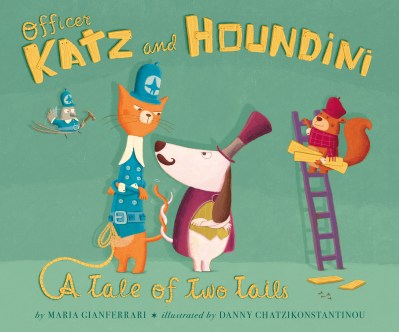
Since the blog tour’s kicking off right here at Writing for Kids (While Raising Them), I thought I’d celebrate its release with a sneak peek at some of my favorite images from the book.
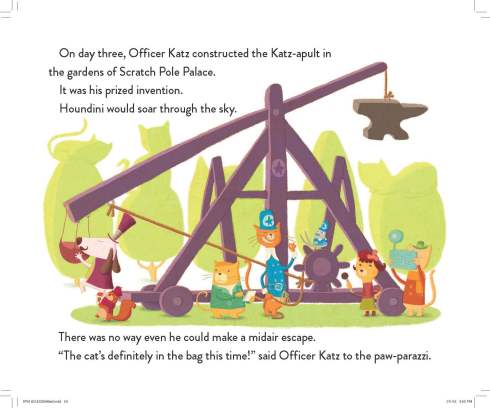
There are two kinds of magic in the book. The first is a kind of practical magic. Officer Katz is an inventor. This is his most prized and pawsome invention, the Katzapult:
Houndini’s magic is more elusive. Like his namesake, Houdini, he’s an escape artiste, practiced in the art of disappearance. I love his exuberance as he bursts out of a box here:

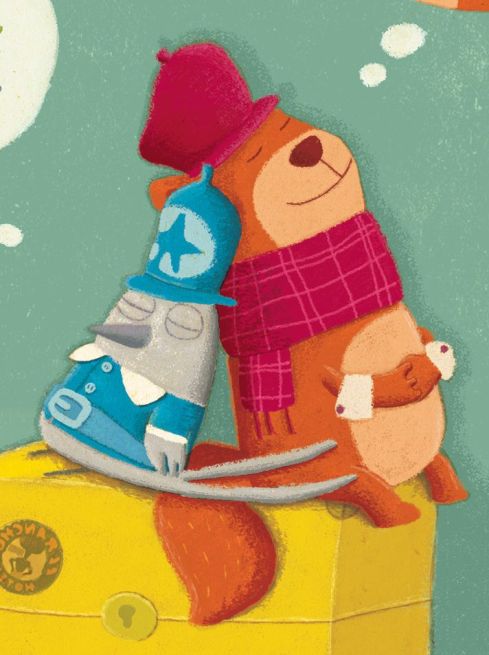
Officer Katz and Houndini have sidekicks, Deputy Catbird and Squirrel.
And I absolutely adore the hilarious endpapers:
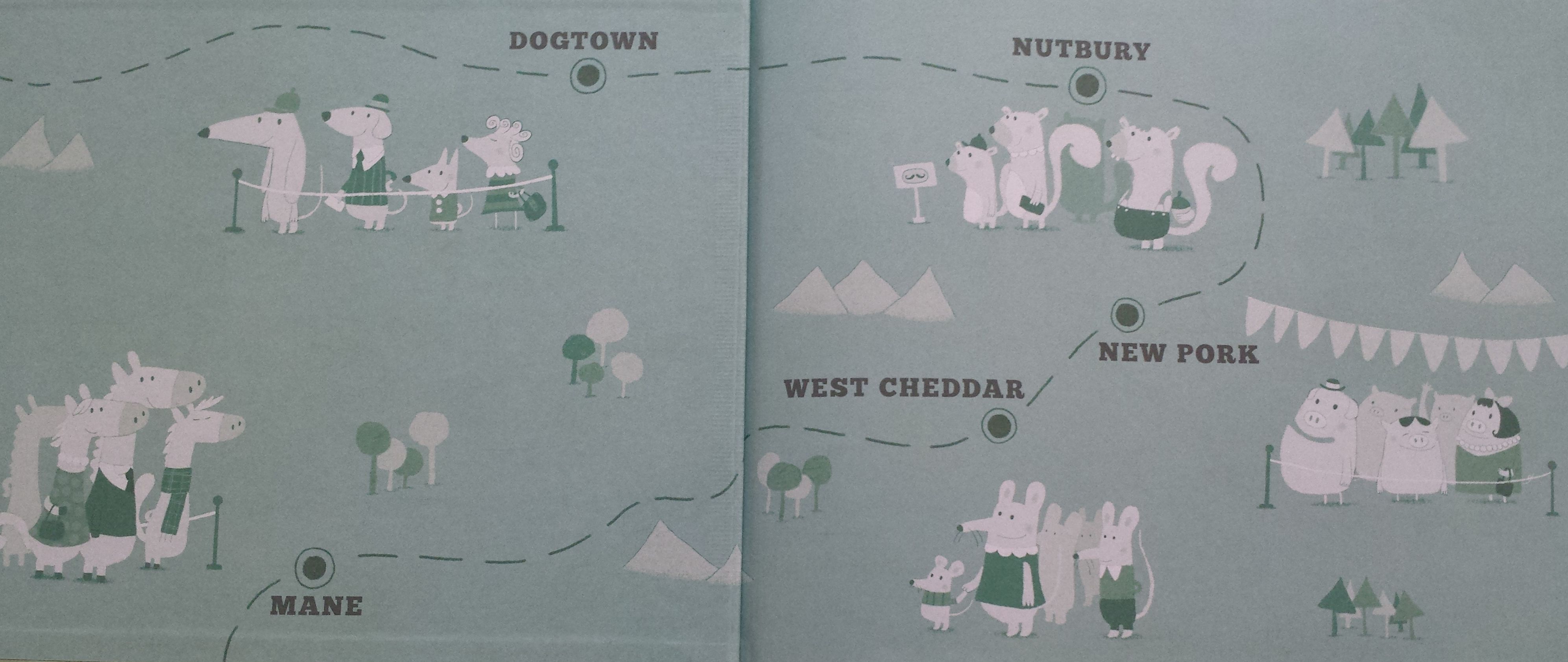
Which place would you like to visit, New Pork, or perhaps Mane?
Leave a comment, and you will be eligible for one of THREE prizes:
- A query pass from agent extraordinaire, Ammi-Joan Paquette of Erin Murphy Literary (either a query plus a whole PB manuscript or a query plus first five novel pages).
- A picture book critique from Maria—either fiction or nonfiction.
- Your own copy of OFFICER KATZ & HOUNDINI (US residents only—sorry!).
Thanks again for having me here, Tara! It was pawsitively purrfect!
The prizes will be given away in early November.
OFFICER KATZ & HOUNDINI BLOG TOUR! BOOK GIVEAWAYS EVERY DAY!
Tuesday, Oct. 18th: Librarian’s Quest
Wednesday, Oct. 19th: Bildebok
Thursday, Oct. 20th: Mamabelly’s Lunches with Love
Friday, Oct. 21st: Pragmaticmom + THREE book giveaway
Monday, Oct. 24th: Homemade City
Tuesday, Oct. 25th: ReFoReMo THINK QUICK Interview with Carrie Charley Brown
 by
by Back in 2014, a picture book idea popped into my head. Luckily I jotted it down in my handy, dandy PiBoIdMo notebook. Gradually, the idea grew into a story about a girl named Chana who was miffed that everyone was mangling her name (“Shayna-China-Shawna-Kahana”). “I’m changing my name to Sue!” Chana cried to her grandmother.
“Sue’s a nice name,” said Grandma. “But did you know there was another Chana who came before you?” Grandma proceeded to tell her granddaughter all about Great Grandma Chana, her voyage to America, and her amazing qualities. Guess which name Chana chooses in the end? I titled the book THAT’S NOT MY NAME, and sent a draft to my critique group.

The critiques I received were lukewarm. My writing partners liked that the book drew on my personal experience. (Not a day goes by without someone bungling my name. The “Ch” is a throat clearing kh sound, like Challah bread or Chanukah, + Ah +Nah.) I had a feeling that all the Sibhoans, Seans, Xaviers, and Chiaras, of the world could relate. The book also emphasized the meanings of names and the importance of maintaining family traditions. Some of my critique partners found the story relatable, BUT . . . they didn’t like that Grandma solved Chana’s problem for her, which made the story fall flat as a pancake run over by a Zamboni.
How could Chana solve her own problem? I made about 10 different attempts at revision. In one draft, Chana scrutinized old photographs. In another she studied a family quilt. She even tried on Grandma Chana’s name necklace. But all of these ideas were BORING! I was stuck.
Then, in the summer of 2015, I read a guest post by my agent, John Cusick, on the Kidlit Summer School blog. John offered “Three Ways to Jumpstart Your Draft When the Plot Starts to Sag.” Tip #1 was a field trip. “In life, if you’re in a funk, you might need a change of scenery,” John wrote. “Chances are your characters feel the same way. Try switching up the setting.”
I love field trips. (Anything to get away from my desk.) Around that time, I went hiking on vacation with my husband in the Canadian Rockies. We were trudging two miles up a mountain in the rain to get to the Lake Agnes Tea House when BAM! It hit me.

What if I drop my character into a whole new setting and a whole new era? Inspired by the rocks around me I thought: What if Chana is a cave girl named…
WAKAWAKALOCH!
(See how I kept the Ch?) And what if she’s really steamed that her friends Oog, Boog, and Goog keep bungling her name? And what if she can’t find a T-shirt with her name on it? And what if she’s inspired to solve her own problem after looking at cave paintings of her great, great, great grandmother, the Mighty Wakawakaloch?
By placing my character in a whole new time and place, I had a fresh, new story with more action, more layers, and lots of humor. My critique partners gave it a thumbs up. I shared it at last year’s NJ-SCBWI Fall Craft Weekend and got rave reviews. When John read it, he tweeted:
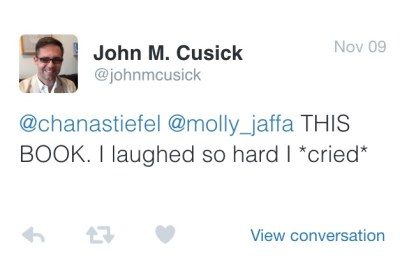
Making your agent cry is a good thing (sometimes). We submitted the book to publishers at the start of 2016 and got the obligatory pile of rejections. And then, sometime during Round 2, the wonderful Kate O’Sullivan at Houghton Mifflin Harcourt said yes! She signed with the hilarious illustrator Mary Sullivan (author/illustrator of BALL, TREAT, and more!).
I’m forever grateful to Tara Lazar & the soon-to-be-renamed PiBoIdMo for giving me the spark to get this story started. Without my handy, dandy PiBoIdMo notebook—and the lessons I’ve learned over the years about freely jotting down ideas & then fine-tuning them—none of this would ever have happened. Stay tuned for WAKAWAKALOCH’s debut in 2019!
Chana Stiefel (back of the throat Ch-ah-nah STEE-ful) is the author of more than 20 non-fiction books for kids on topics like exploding volcanoes and stinky castles. Her debut picture book, DADDY DEPOT, will be published by Feiwel & Friends in May 2017. WAKAWAKALOCH will be published by Houghton Mifflin Harcourt in 2019. Chana is represented by John M. Cusick at Folio Literary. Check out Chana’s work at chanastiefel.com and on her authors’ blog, which she co-writes with her writing partner Donna Cangelosi, at kidlittakeaways.com.
 by
by Any good film director uses a storyboard. So why not every picture book writer? After all, a picture book is a full story experience almost like a movie, just a little shorter.
A storyboard can help you pace your story, even if you are an author only. It can help you think about what you can leave out of the text and show in the illustrations. It can help you think of where to pause in the words and let the pictures do their magic…
A storyboard is different from a dummy book in that you can see the whole story at once. The dummy book simulates the real book with page turns. A storyboard will help you visualize your entire manuscript all at once.
Here are some ideas to help you start thinking visually!
Pacing Book:
Start by making a pacing book. To make a pacing book, fold 8 pieces of 8 1/2 x 11 copy paper in half. and staple them down the folded side. Now you have 32 pages! The front page will be your title page. Either the second page or the back page will be your copyright page.
Now cut up your manuscript. Tape your story in your book. Move sentences and paragraphs around. Imagine what could be in the pictures. Figure out where your page turns could be. You will soon find out if your story is long enough.
Note that the illustrator will figure out the final pacing of the book, so if you are only the author, you won’t have a say in how the book will be laid out. But this will help you have a good idea if the pacing is working. I will help you see if there are too many words in a certain section of the book.
Storyboard:
Here is the storyboard I made for my new book, BRUNHILDA’S BACKWARDS DAY…plus the final images from the book.
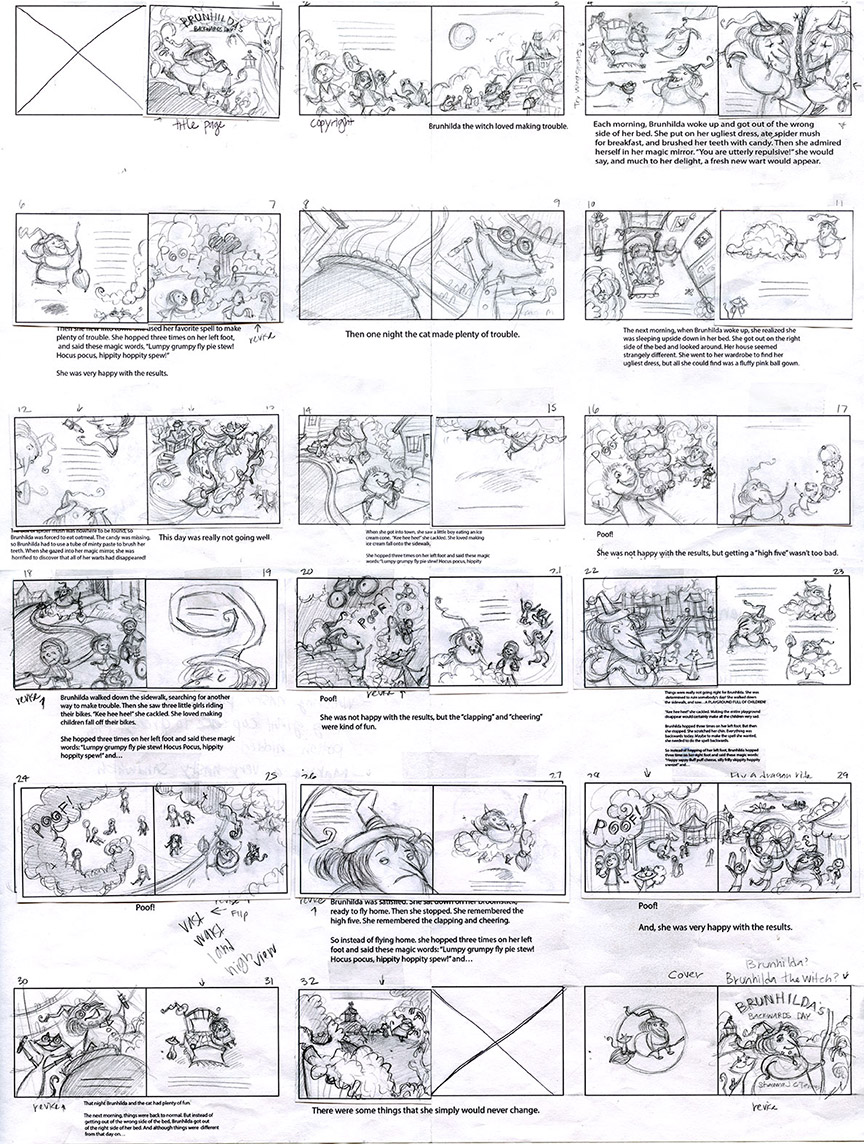
(Click for larger version)
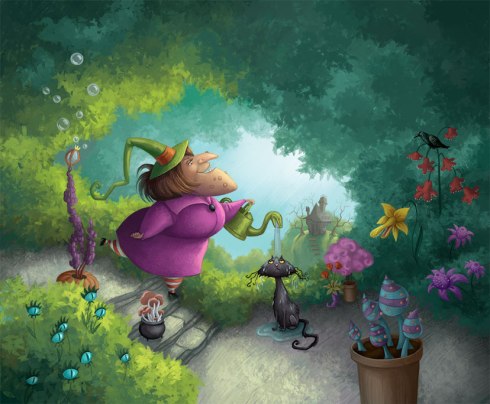
Final Title Page
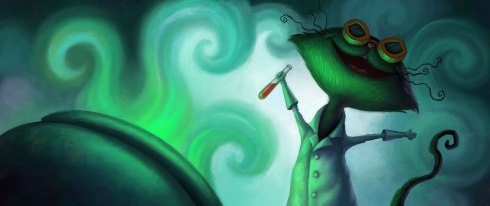
Final Page 8-9 Spread
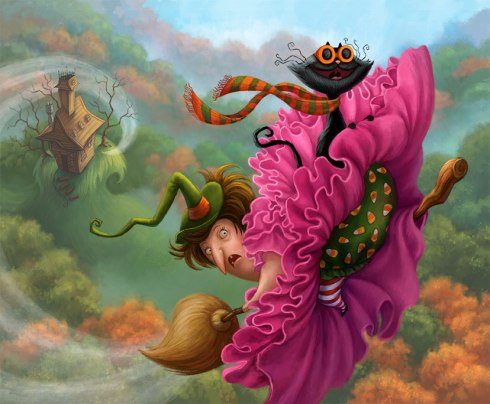
Final Page 13
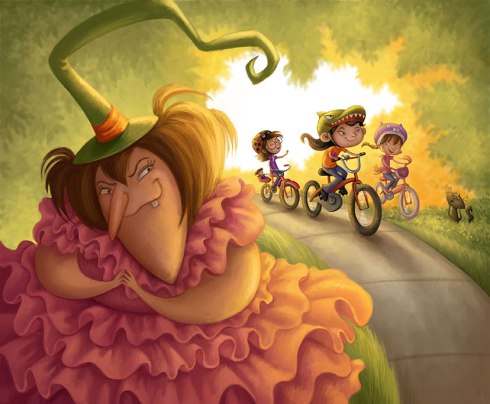
Final Page 18
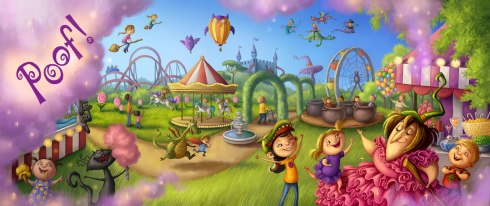
Final Page 28-29 Spread
Now, it’s time for you to make a storyboard! Here are some ideas to make your own storyboard:
You can use my template below (also refer to Tara’s picture book layout post). Remember the first empty square will be the title page, and the next square will be the copyright page- unless you want to put it on the last page.

(Click for larger version)
Some other ways to make your story board are to use sticky notes, index cards pinned up on a board, or even dry erase board. Remember, most picture books have 32 pages.
Now start drawing your action! Don’t worry if you don’t think you can draw. Just draw stick figures. If you aren’t the illustrator, you don’t need to be worried about the composition. This storyboard is for you only.
Ask these questions once you’ve drawn out your storyboard:
- Is there enough action and visual interest happening in the story?
- Is there a change of a scenery, or does everything happen in one location?
- Is each part of the storyboard moving the story forward?
Remember to leave room in the text for illustrations. Take out visual descriptions that can be shown in the pictures. See where the pictures can carry the story!
If you are the author and not the illustration and there is something you want to show in the illustrations, you can write illustration notes. Illustration notes should only have the basics in them. Don’t include descriptions unless they are absolutely necessary to move the story along. Give the illustrator room to use his/her imagination and creative genius!
Drawing your picture book out in storyboard form can help you think of more ideas for a truly delightful picture book. Drawing out your story can even help you think of a subplot or unspoken characters that can only be shown in the pictures. Think of all the possibilities for your story when you start thinking visually!
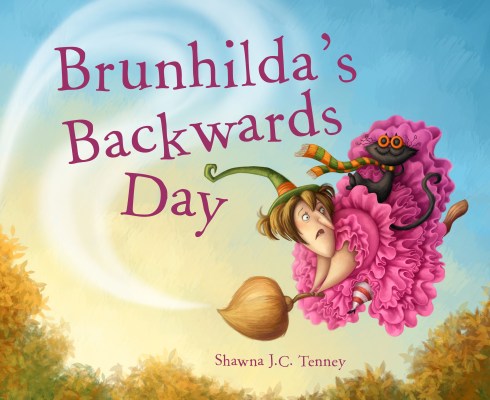
Thank you, Shawna! Your debut picture book as both author and illustrator is chock-full of visual candy, even the cover with its reflective background—which is SO COOL. (I like shiny things. I played with the cover for at least a half hour, LOL.)
And blog readers, you can win a copy of BRUNHILDA’S BACKWARDS DAY just by commenting below. One comment per person, US addresses only, please. A winner will be randomly selected in a few weeks. Good luck!
Shawna J.C. Tenney is an author and illustrator with a passion for picture books. Her work can be found in many children’s books, magazines and games. BRUNHILDA’S BACKWARDS DAY, Shawna’s first book as both author and illustrator, was published by Sky Pony Press. Shawna is also the host of the Stories Unbound Podcast, where she loves helping other authors and illustrators. Shawna lives in the beautiful state of Utah with her husband and two kids. Visit her online at ShawnaJCTenney.com or on Twitter at @shawnajctenney. Find more fun with Brunhilda and The Cat at ShawnaJCTenney.com/brunhilda.
Tonight the Eric Carle Museum will present four winners of its prestigious Carle Honors. I will be there to capture it all and report back to you, picture book devotees. In the meantime, I asked the honorees to answer one important question about the state of our craft and business:
Six years ago, The New York Times published an article about the demise of the picture book. Fast forward to this past January, and a picture book won the Newbery Medal. Plus, the current market has been heralded as “the golden age of picture books.”
Why have picture books defied the Times’ portent of doom–and why do they continue to remain a strong and important art form? Why are picture books more loved now than ever?
 “Is there any better medium for bringing together such varied artists and writers and stories and styles? The book has not died after 500 years and the picture book continues to be the most accessible of media. It’s not a fad. It’s not obsolete technology. It is an intimate tactile entity for making ideas come alive. As long as there is paper, what better way to use it?”
~Steven Heller, Bridge Honoree
 “A lot of American mothers today have become what the Japanese call “Education Mamas.” They want their offspring to start college at 12 and retire at 30, and book merchants are hell-bent on accommodating them. They have forgotten the Alice who asked for all children: “What is the use of a book without pictures or conversation?” Thanks to the conversation of Lewis Carroll and pictures by Sir John Tenniel, Alice is very much alive today. Would anybody remember Alice without Sir John?”
~Allen Say, Artist Honoree
 “The demise of picture books is connected to other mistaken predictions like the death of the print book when e-books came on the scene years ago. There is a general backlash against electronic books because of the amount of time people are spending on their phones, online, and binge-watching TV. People need a break from screen time. Also, the e-book experience, when compared to the tactile experience of a print picture book is not significantly better. The time spent reading an actual book is still a great past time that relies on the power of imagination, and the close relationship of words and pictures.”
~Jason Low, Angel Honoree
 “I never believed in the demise of the picture book! Picture books will always remain a vibrant art form. They are constantly evolving, constantly being reinvented as new authors and illustrator enter the field. Styles change; a new style surprises and delights, then there are imitators, and eventually something different will turn it all around again. I’ve seen a style dismissed as outdated, then a few years go by and it is fashionable again, maybe even considered classic.
“The rise of e-books have, ironically, made publishers and the public more aware of the importance of the book as a physical object, an object that should be beautiful. I notice more and more care being lavished on paper and binding and innovative jacket treatments.
“I don’t think children should ever be urged to give up picture books when they are ready for chapter books. In my experience, children constantly go back and forth. They return to old favorite picture books even when they reach double digits, perhaps because the books provide a feeling of security, of coming home, perhaps recapturing the warmth and closeness of being read to by a beloved adult. And for that, a real book is essential!”
~Regina Hayes, Mentor Honoree
.
Thank you for sharing your wisdom, Honorees, and congratulations on being recognized.
To learn more about the Carle Honors and this year’s Honorees, please visit The Carle Honors website where you can also bid on the charity art auction.
Follow me on Twitter @taralazar, as I will try to live tweet from the event. A recap of the evening will be published here later this week.
 by Anika Denise
Tis the Season!
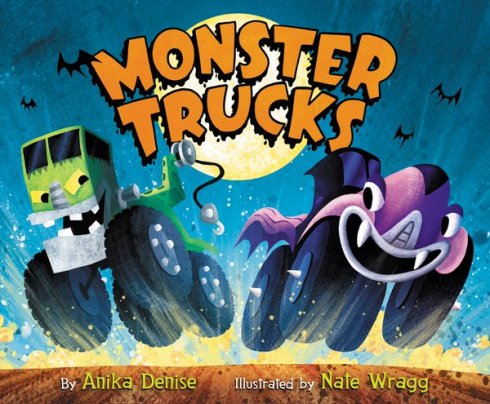
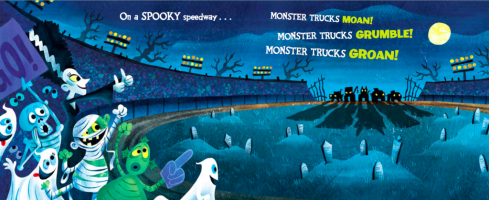
What’s in the secret sauce of a successful seasonal title? Anika Denise, author of Monster Trucks, a high-octane Halloween tale of vroom and doom, divulges tips on crafting seasonal stories that SELL!
First, what’s a seasonal title? (It may seem obvious, but indulge me a moment, kidlit peeps.) A seasonal title is any book that relates to a season or holiday, be it Halloween, Hanukah, Easter, Earth Day, Back-to-School or Black History Month. (Think table displays in bookstores and libraries.)
So, why am I singling them out? I mean, shouldn’t we all just write good stories, and if they happen to have a holiday hook, all the better?
Yes! But this might get your attention: At a recent SCBWI retreat, Christian Trimmer, Executive Editor at Simon & Schuster, revealed seven factors that help get a picture book acquired. Number one was: “Be a Celebrity!” (Unless you’re Kelly Clarkson, read on.) Number two: “Get that Promotion!” In other words, books with potential for holiday placement are more likely to catch an editor’s eye.
Excellent! So how do you write a seasonal story that sells?
BE SEASONAL, BUT NOT OVERLY SPECIFIC
My editor on MONSTER TRUCKS, Nancy Inteli, pointed out that while she frequently acquires seasonal titles, she especially seeks books that aren’t so narrowly holiday focused that their shelf life is limited. “Monster Trucks has a clear Halloween hook,” she explained. “But it also appeals to the truck-loving crowd, which makes it a perennial.”
That’s not to say you should abandon that Arbor Day book you’re writing, just keep in mind that a broader seasonal story might have a better shot at finding a home.
Another great example of a not-so-specific seasonal book: Creepy Carrots by Aaron Reynolds and Peter Brown. Although Creepy Carrots is quite likely on every Halloween book display table in America, it’s not strictly a Halloween book. Quirky and funny, it and can be read and shared all year round.
And speaking of quirky and funny…
ORIGINALITY IS KEY!
It’s always key. But when traversing well-trodden territory like “Back to School,” you better come packing a twist. Take School’s First Day of School by Adam Rex and Christian Robinson, for example. It explores first day jitters from the SCHOOL BUILDING’s perspective. Genius! And delightfully original.
RAMP UP THE READ-ALOUD APPEAL
One happy outcome of writing a seasonal title is, booksellers, librarians, teachers and parents are going to want to incorporate your book into story times. It helps to keep this in mind as you polish your manuscript. Humor, action, poetic techniques, evocative language and relatable characters will ramp up your read aloud appeal.

In BAKING DAY AT GRANDMA’S, bouncy rhymes, rhythmic refrains, and descriptions of sweet scents filling the air (hopefully) engage and entertain the read-aloud crowd. And although the new board book edition is being marketed for Christmas—at its heart—BAKING DAY AT GRANDMA’S is a cozy wintertime tale about spending time with family.
So if you’ve got an idea for a seasonal story simmering on the back burner, fire it up and submit! Tis the season!
Thank you for the useful information on selling a seasonal book, Anika. As the first stop in Anika’s MONSTER TRUCKS blog tour, we are giving away a copy to a random commenter. One comment per person, US addresses only, please. Good luck!
Anika Denise is the author of several critically acclaimed books for young readers including three illustrated by her husband Christopher Denise: Baking Day at Grandma’s, Bella and Stella Come Home, and Pigs Love Potatoes. Publishers Weekly hailed her latest picture book Monster Trucks, illustrated by Nate Wragg, “a mash-up made in heaven” in a recent starred review. When not writing tales of vroom and doom, Anika can be found zipping around her hometown of Barrington, Rhode Island in her monster minivan, or reading not-so-scary stories with her husband and three kids. Visit her online at AnikaDenise.com, or on Twitter @AnikaDenise.
Ch-ch-ch-ch-ch-ch-CHANGES!

You heard right, PiBoIdMo, your beloved Picture Book Idea Month, is growing up and making some moves.
First–it will take place in JANUARY 2017 instead of NOVEMBER 2016.
Next–it will have a NEW NAME.
Finally–the focus will become broader, welcoming all kinds of writers and creative folk, from students to professionals.
MORE INFO SOON!!!


Three years ago I visited RIF Headquarters in Washington D.C. to deliver a donation from Picture Book Idea Month. I was told an incredible story of how a RIF executive had just returned from one of the poorest areas of Appalachia. She visited a school with children who lived in run-down homes of five families each. Many more lived in tents patched together. These children had no books of their own. The books RIF provided would help give them a chance to succeed.
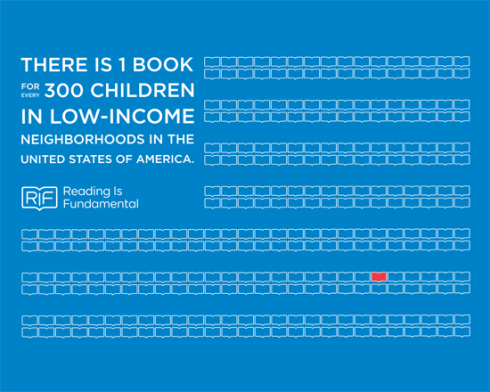
I wish I could recall the story in full. I was riveted listening about the sheer joy of the children. Many couldn’t believe the books were theirs to keep.
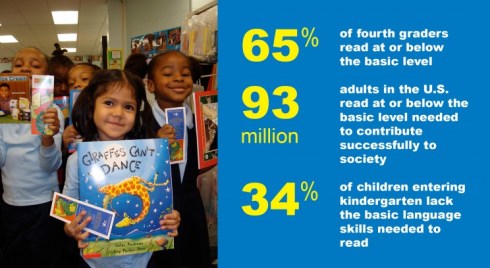
Every year I have taken the proceeds from the PiBoIdMo Cafe Press shop and given it to RIF. Every year I wish it were more. RIF is a charity I believe in so deeply. I believe in the power of books and reading to transform lives.
So I am very honored to be spending the day with RIF tomorrow for their 50th Birthday Bash. In those 50 years, RIF has given more than 412 MILLION BOOKS to 40 MILLION CHILDREN. That is EXTRAORDINARY.

If you’d like to join in the festivities, we will be live streaming on the web at rif.org/50 at 9:15am EST.
There is also a RIF 50th Toolkit with classroom activities and ways to celebrate.
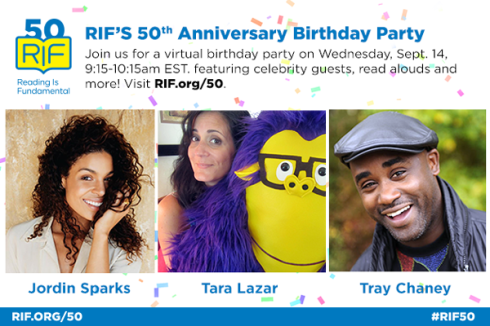
And remember, for just a small donation, RIF is able to provide a child in need with much-loved BOOKS.

Thank you for reading…and for giving the gift of reading!
.
I am thrilled to be writing this blog post.
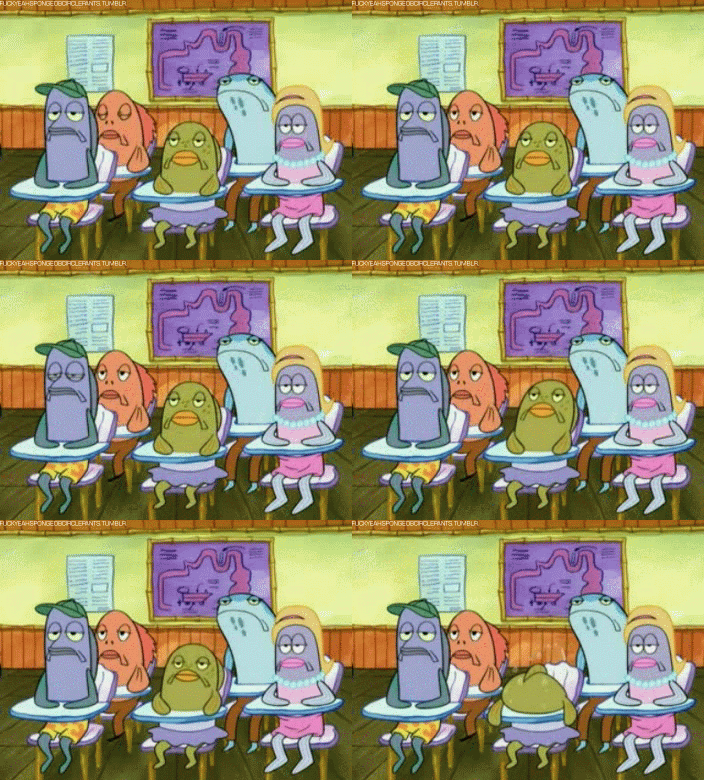
Wait a second…
That’s the worst opening, isn’t it?
Let me explain.
 Back when I wrote marketing copy, sales letters and press releases for a living, I bought POWER SALES WRITING by Sue Hershkowitz-Coore, an eye-opening guide and the most useful business book I’ve ever read. Good business requires sharp writing.
In the book, Hershkowitz-Coore tells marketing writers to stop being thrilled all the time. Sure, you are thrilled to announce a deal, launch a product or publish a book. But why should your audience be thrilled? What’s in it for them? No one is going to be thrilled simply because you are (except for your mother).
The point? Stop writing sales pitches from your point of view and write from the target audience’s POV. Make your audience thrilled. Give them something to get excited about.
I receive dozens of unsolicited book review pitches a week. There are too many, so I take a simple approach to weeding them out. Those that use “I am thrilled” to open the pitch get deleted. (Sorry.) With that introduction, I know they haven’t considered my blog readers’ point of view.
I never forgot that thrilling lesson. Yes, I’m sometimes still too thrilled for my own good. I want friends to be happy for me, so I will occasionally toot my own flugelhorn. But then I remember what my Nana used to say: “Well, your arms are long enough to pat yourself on the back.” (Yeah, Nana could be harsh.) In a way, Nan was trying to teach me the same lesson as Hershkowitz-Coore. No one is going to be as thrilled as you are, so you’d better make your news worthwhile to others.
I am thrilled to be finished writing this blog post…because I hope it has helped you.
Hey, do you know what time it is?

That’s right, it’s yay o’clock!
And you know what that means, don’t you?
It’s time to meet the SUPER HAPPY PARTY BEARS!

Welcome to the Grumpy Woods!
Just kidding. No one is welcome here.
No, I’m just kidding again. That’s how these brand-spanking new chapter books begin. See, you’re already laughing three sentences in.
So let me present a more welcoming welcome.
The SUPER HAPPY PARTY BEARS are unlike anything you’ve seen in a chapter book series. Firstly, they are not some formula regurgitated in rainbow, written by an illusive nom-de-plume. No! These are the first books by up-and-coming author Marcie Colleen. In addition to this series, Marcie has the picture book LOVE, TRIANGLE releasing next year with Bob Shea (BOB SHEA, PEOPLE!!!) and THE ADVENTURE OF THE PENGUINAUT is blasting off soon, too.
Next, these books feature adorable, full color illustrations by Steve James. OMG, you do not know how SUPER HAPPY that makes me!
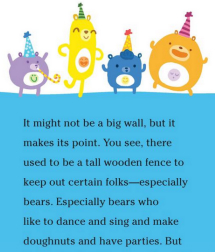
I have a reluctant reader at home (I know, can you believe it?!) and the thing she dislikes about chapter books are the black-and-white line drawings. She clings to picture books and their boundless art. With SUPER HAPPY PARTY BEARS, which she has SWIPED FROM ME to take to the first day of school, she doesn’t even realize she’s reading a chapter book because every page features a color illustration. Not only that, but there’s a flip-book animation in the corner of every title. In KNOCK KNOCK ON WOOD, Bubs shimmies with a hula hoop.
So let’s get back to the story. Every morning in the Grumpy Woods, where the SUPER HAPPY PARTY BEARS live, the other residents don their cranky pants (really, a whole outfit).

Mayor Quill and his devoted subjects relish their grumpiness. They thrive on it. And the SUPER HAPPY PARTY BEARS? They are ecstatic, dancing, blissful bears no matter what the forest folk throw at them. Nothing can dampen their desire to party. They just wanna bear hug everyone. They see the positive in everything. And you know, what a great attitude to share.
Now, even though the Mayor, Humphrey Hedgehog, Dawn Fawn and the others make their harumphs for the bears loud and clear, the whole party crew, from Littlest Bear to Big Puff, fail to notice. In fact, they worship Mayor Quill. This, of course, annoys the prickly politician to no pointy end.
Therein lies the humor. But that’s not ALL the humor! For parents reading along, there are clever asides and pop-culture nods.
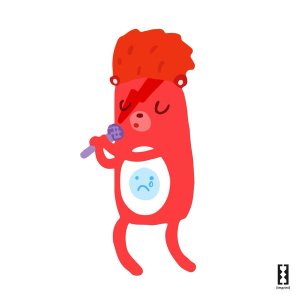
Meet Ziggy. Ziggy plays guitar. ‘Nuff said.
Then there’s the famous SUPER HAPPY PARTY BEARS dance.


You wanna dance with me? Well, grab yourself a copy and shimmy, shimmy, shake!
Actually, you can grab TWO copies right here, one GNAWING AROUND and one KNOCK KNOCK ON WOOD, the first two books in the series from Macmillan’s new imprint, imprint. (So nice I said it twice.)
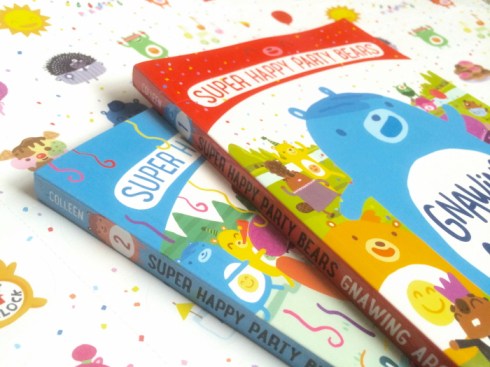
Just leave a comment to enter. PLUS, if you TWEET, FACEBOOK, REBLOG or otherwise share this review, you gain an extra entry, WOO-HOO! Just leave one comment per each method so I can tally your extra entries.
This will be a PARTY TO REMEMBER! GOOD LUCK!
Not long ago I had the book launch for my debut picture book, LILLA’S SUNFLOWERS. It was an exciting, invigorating, and tiring day.
Now I am deep into the marketing phase—not a hat I was prepared to wear. My degree is in visual art, not marketing, but with the help of my husband we are making some progress.

Here is a synopsis of my story: Lilla and Papa enjoy spending magical times in Lilla’s sunflower patch. Before Papa leaves for a trip that will take him far away from home for a long time, Lilla gives him a sunflower seed. “To remember me, Papa,” Lilla whispers.
Seasons pass, and Lilla’s mood falls like autumn leaves.
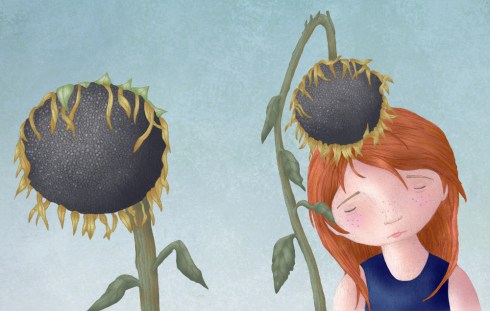
Finally, news comes that her papa is coming home! The following summer, to her surprise, she receives letters from families with photos of their loved ones pictured with sunflowers. She learns that her gift to her father brightened the dark days for many people, and that her one small seed continued spreading sunshine across the country.

Through the illustrations, the reader learns Lilla’s father has left for military deployment. The story was inspired by videos of children and pets being reunited with their loved ones who’d been deployed to serve our country.
As I wrote my story I knew I wanted it to be heartwarming. Funny stories are great, but not really me. Even as a small child my favorite book was a touching book called THE SHEEP OF THE LAL BAGH. It was about a sheep that was replaced by a lawnmower and is brought back when the townspeople realize what a unique contribution he made to their town.
So I wrote in my quiet style and hoped it would sell. And it did—within months. But I was not prepared for the impact the words and images that once only existed in my mind would have on others.
It didn’t hit me until after the book launch when I received a touching email from a reader who said my book was just what her family needed—her husband was being deployed in 2017 for a year.
Another surprise I received was from a veteran who read my book and bought it to read to his grandchildren. He planned to read to them as a way to open a discussion about how their mom handled his deployment during the Korean War.
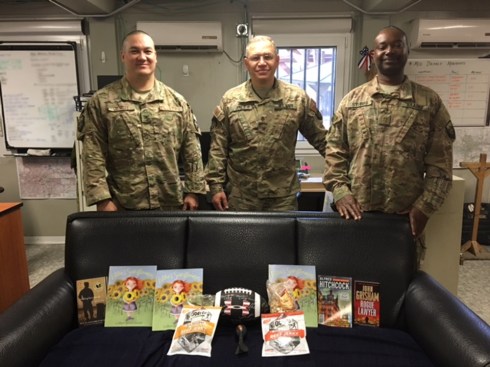
Like the flowers in Lilla’s garden, I hope my little book of hope can continue to reach many readers and bring a little sunshine far and wide.
Colleen Rowan Kosinski is an author-illustrator of children’s books. As a lover of nature and animals, in the spring you can usually find her nursing a sick rabbit or robin back to health. Colleen resides in Cherry Hill, NJ with her husband, three sons, Doberman Pinscher, Rottweiler, and Miniature Dachshund. Follow her journey @writergirlrowan.
Thank you, Colleen, for such a touching story behind the story. Colleen is giving away a copy of LILLA’S SUNFLOWERS to a random commenter. Leave a comment below, one comment per person, US addresses only, please. A winner will be randomly selected in two weeks.
GOOD LUCK!





 Writing for Kids (While Raising Them)