 by
by Recently, while discussing poetry with a bunch of 5th graders, I discovered a word that’s pretty much left our daily vernacular: loafe.
Whitman used it in SONG OF MYSELF…
I loafe and invite my soul
I lean and loafe at my ease observing a spear of summer grass
…but not a single student knew what the word meant. There were jokes about loaves of bread, and one girl thought she had it, but it turns out she’d gotten it mixed up with loathe. Which, you’ll agree, is another thing entirely.

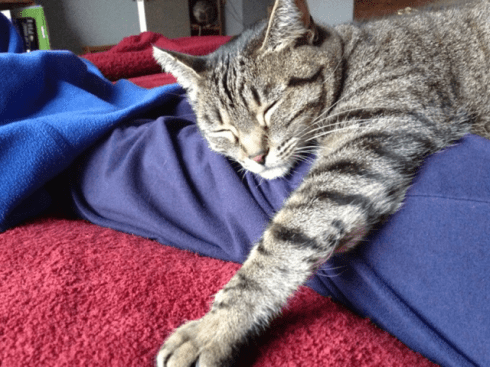
Image via becuo.com
Once I defined the word for them, they loved it. I said, “Pretty great, right? To be given permission–even encouragement–to loafe about?!” and everybody laughed with relief. (Except for one boy who said, “I try to loafe about a LOT, but my mom won’t let me.” 🙂 )
So I stepped away from the session with kind of a two-part reminder to myself, and since it’s fresh on my mind, I’ll remind you, too:
- Loafe about. Seriously. Creativity can’t be rushed. You need to absorb before you can express. You need to walk and garden and bathe and dream and breathe. These things are the stuff that art is made of, the places ideas come from, the source of a sustained head and heart. Really, loafing about isn’t just important when making picture books–it’s important when living life. Professor Omid Safi asked, in a recent column called The Disease of Being Busy, “When did we forget that we are human beings, not human doings?” We know this, right? Right. This is just a reminder.
. - And here’s the other one. Let’s not let really great words like loafe go by the by. Let’s use them. I snuck the word kin into my book ALL THE WORLD, and strut into NOODLE & LOU. I used crimp in THE GOOD-PIE PARTY and hue in THINK BIG. These words are evocative and specific and rich and onomatopoeic–they’re too good to let go! And, as writers, it’s our duty to make sure that we’re not just left with a bunch of OMGs and LOLs on judgment day.
How about you make a list of words you used to hear and use, but never do anymore? What if you wrote down all the phrases your granddad used to say? And what if one of them gave you an idea? Picture books aren’t designed to dumb down; they’re meant to open up and out.  They’re meant to expand the words and the world that a child has at hand. Lucky us to be a part of all that.
So go ahead, make that list.
And then, what the heck, loafe about for a bit.
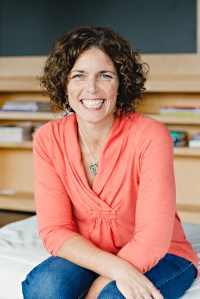
Liz Garton Scanlon is the author of the highly-acclaimed Caldecott-honored children’s book All the World, illustrated by Marla Frazee, as well as this year’s The Good-Pie Party, illustrated by Kady McDonald Denton. Other books include Happy Birthday, Bunny; Think Big, A Sock is a Pocket for Your Toes, and more. Her next picture book (called In The Canyon) and her first novel for young readers, The Great Good Summer, are both due in 2015. Ms. Scanlon is also a poet, teacher and a frequent and popular presenter at schools, libraries and conferences. To learn more, visit her web site at LizGartonScanlon.com.
Liz is giving away two copies of her latest picture book, THE GOOD-PIE PARTY! (YUMMY!)

These prizes will be given away at the conclusion of PiBoIdMo. You are eligible for these prizes if:
- You have registered for PiBoIdMo.
- You have commented ONCE ONLY on today’s post.
- You have completed the PiBoIdMo challenge. (You will have to sign the PiBoIdMo Pledge at the end of the event.)
Good luck, everyone!
 by
by 

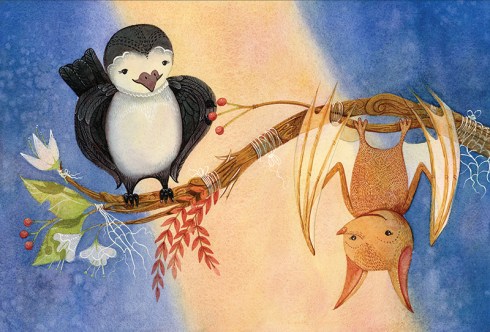
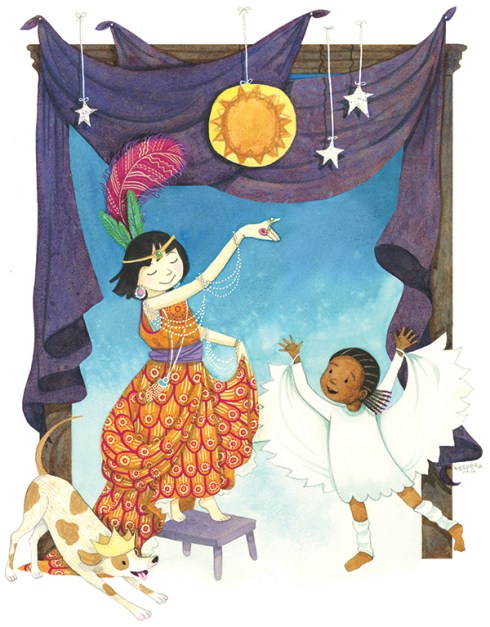
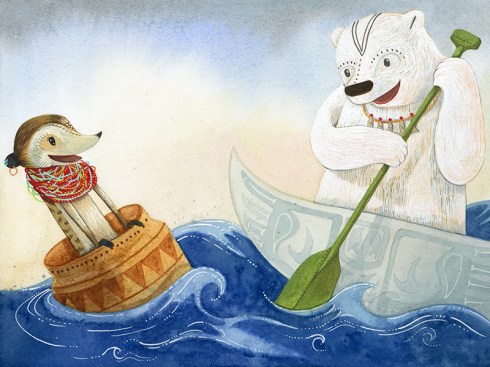


 Picture books are easy to love because they are tiny little windows that offer beautiful glimpses out into the whole, wide, wonderful world, and into hearts like and unlike our own.
 I do love picture books! There is nothing more satisfying than to find a picture book manuscript which has been carefully crafted to share a story with the youngest readers. The Impressionist painter Pierre Auguste Renoir said that painting is “making love visible” and I can’t help thinking that is why some picture books are so endearing and everlasting. They make the love we feel for our children, our grandchildren, and the children within us very visible. It is a true craft which needs to be learned and practiced. And I honor those who learn this craft and honor children.
 Picture books pretty much have me wrapped around their finger. I’m obsessed by the story-telling opportunities offered by this highly-visual genre! Picture books (as a format) seem simple at first blush, but they are often in fact quite layered and even poetic, displaying an elegant interplay between text and art. Best of all, picture books are accessible to everyone. You don’t have to be able to read in order to love them. They can be savored for what they offer visually, and when read aloud, until a reader has command over the written word. Simply, what format is better than the first one that takes children by the hand and turns them into book-lovers?
 The best part of picture books, for me, is way words and illustration marry together to create a sum greater than its parts. I love the way art builds meaning in the story, and how the simplest of texts can be full of emotion and heart. I remember so well the picture books that I poured over as a child — mystified and delighted to be invited into the world of reading and books. For me, it’s an honor to represent picture books!
 I love picture books because they celebrate a time in our life we all look back on so fondly. I love being a part of helping to create them because we’re creating books for kids who will look back on them for the rest of their lives.
 I became a reader because of picture books, and I became an agent because of picture books. They are one of the richest and most influential forms of literature. So much feeling, so many laughs, in so few pages, meant to be read over and over again!
 I love picture books because they speak to the quintessential child in each of us. They reach across the gaps of age and culture and language and bring us under their spell. A perfectly-crafted picture book is a full-senses experience that can last a lifetime.
 I love the breadth of story and emotion—from clever and comical, to poetic and pondering—that can be found within the framework of a 32-page picture book. I love the right prose, the visual subplots, the rhythm and rhyme and repetition (and repetition, and repetition). But, most of all, I love them because they’re short.
 I love working with picture books because they remind me that the earliest literature we read in life can be some of the most memorable (and the most fun!).
 I love picture books because they’re fun to read aloud, and they’re meant to be read with someone else.They can’t not be shared! Even now, I don’t have kids, but when I read a good picturebook, my husband gets to be the audience. He’s very understanding. 🙂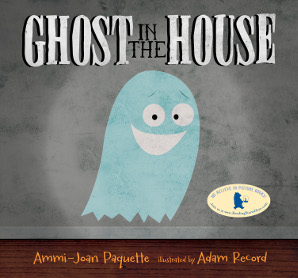

 by
by 












 Henry Herz has masters degrees in engineering and political science, neither of which help him write children’s books. He enjoys moderating sci-fi/fantasy literature panels at conventions, eating Boston Creme Pie, and writing children’s books with his sons Josh and Harrison. Their indie-published Nimpentoad was featured in Young Entrepreneur, Wired GeekDad, and CNN. Their picture book, Monster Goose Nursery Rhymes, will be published by Pelican in January 2015. Henry edited the YA dark fantasy anthology, Beyond the Pale, with stories from Peter S. Beagle, Heather Brewer, Jim Butcher, Rachel Caine, Kami Garcia, Nancy Holder, Jane Yolen and others. He interviews KidLit authors and illustrators at
 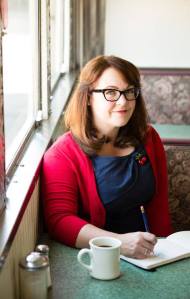 by Kelly Light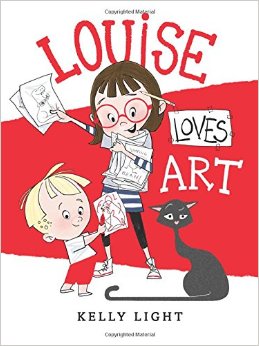
 by
by 

 by
by