 by
by Creating a digital version of your picture book can be exciting. Or daunting. Or both. The learning curve in creating apps and eBooks was once so steep that most picture book authors and illustrators had no choice but to leave the process of creating apps and eBooks to the publisher. And depending on resources, budget, marketing allocations, and the like, a digital version might not have been an endeavor the publisher was willing—or able—to take on.
In the past few years, however, children’s books have exploded digitally, and new, inexpensive, and intuitive platforms have emerged to allow for easy(ish) creation of enhanced eBooks and apps. The playing field has leveled; it is now possible for authors and illustrators to create digital adaptations of their picture books with only a small initial investment and very little technical know-how. It has also become easier to distribute content on the iPad, Android, Nook, Kindle, and other platforms. So, since a great story deserves to be told and retold, it makes sense for authors and illustrators to consider adapting their picture books to be enjoyed on various devices across all types of media.

Image via purplecarrotbooks.com
But what makes a good digital version? It’s not enough to simply add tappable animal sounds to a picture book about a farm and call it a day. The best interactivity moves the story along; it does not distract the reader, or in any other way detract from it. Taking the reader’s attention out of the moment to play a mindless game isn’t exactly the best way to engage with a story, much less to promote literacy and encourage reluctant readers to get into the habit of reading.
So where should you start? To make the digital experience as satisfying as the physical one, you need to think about how the reader will be engaging with the story on a device. Therefore, the interactivity you choose to include should enhance the world you’ve built and the journeys of your characters. In fact, if done well, the interactivity should be experienced as a natural extension of the story. This means that each key moment, each plot point, should be examined for ways in which the user can participate in the story.
You should also devote some time to thinking about the specific ways in which your readers will relate to the telling of the story itself. If your picture book is plot-oriented, then an app made up of quick, adventure-based activities set at specific story beats might be the way to go. If you have a rhyming story, an eBook with a “read-along” feature might make more sense. Basically, as the content creator, you need to decide the specific what and why of the interactivity to ensure that the experience you’re providing digitally is organic to the world of your book.
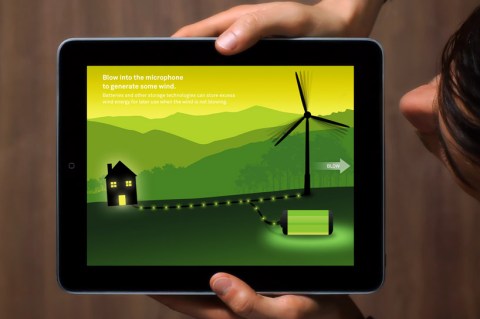
Image via designboom.com
Here are some things to keep in mind when creating a digital version of your picture book:
- Look for moments of interactivity that naturally present themselves within the story. Let’s say there is moment in which your protagonist is crossing a river. In this case, it might make sense to invite the user to participate in an activity that helps guide the protagonist to safety.
- Since picture books appeal to both parents and children, consider including activities that resonate with both demographics. The best interactive features are collaborative, with engaging interactivity for adults and kids.
- Think about what types of content would be a true value-add from a digital perspective. It might make sense to include a video, or a tappable resource that allows readers to learn more about your subject than is possible in book form.
We all know that interactive stories are a great way to improve literacy, as children who are reluctant to sit still for traditional books are sometimes drawn into the “gamified” experience of interacting with a picture book on a device. But it’s our responsibility as content creators to ensure that the digital experience provides a rich, fully realized experience rather than just flashy, “keep ‘em busy” activities to allow readers to truly participate in the world you’ve created, and keep them coming back for more.

Michele R. Wells is an editor and writer with two decades of experience in multimedia and print publishing. An expert in conceptualizing and developing content, she has edited illustrated books for DK Publishing, lifestyle nonfiction for Penguin, and business self-help for McGraw-Hill, as well as educational content for Pearson, The Princeton Review, and others. She currently manages the digital editorial department at one of the world’s largest entertainment companies, where she has written scripts for award-winning apps and interactive products. The author of several books for children and young adults, she volunteers for literacy organizations, and was the founding chairperson of First Book-Brooklyn. She now lives in Los Angeles. Follow her on Twitter at @michelewells.
 by
by 

 by
by 

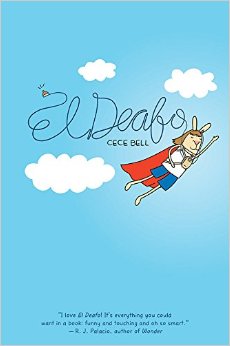 Cece Bell lives in an old church with her husband, author Tom Angleberger, and she works right next door in a new-ish barn. El Deafo, her first graphic novel, is a slightly fictionalized memoir about her childhood, her hearing loss, her first crush, and her quest for a true friend. She has written and illustrated other books for children, including the Geisel Honor book Rabbit & Robot: The Sleepover; Itty Bitty; Bee-Wigged; and the Sock Monkey series. You can read more about her at
 ***To everyone who completed the PiBoIdMo Challenge, the Pledge for you to sign is coming later today. In the meantime, enjoy our first Post-PiBo guest blog with a very talented illustrator!***

 by Tara Lazar

 by
by 

 by
by 

 Mylisa Larsen has been telling stories for a long time. This has caused her to get gimlet-eyed looks from her parents, her siblings and, later, her own children when they felt that certain stories had been embellished beyond acceptable limits. She now writes children’s books where her talents for hyperbole are actually rewarded.

 Ruth McNally Barshaw grew up in the Detroit area. When she was little she wanted to be an artist. She thought books were written by companies, not real people, so she didn’t want to write books. She changed her mind in 2002, and three years later connected with a fabulous agent who sold the first Ellie McDoodle book to Bloomsbury Children’s Books. Then it became a series.