You read that correctly: revisolutions. It’s an amalgam of resolution, revision and revolution! Yes! It’s a revolution, do you hear me? This year I am going to work harder than ever to earn that first book contract. Polish up my manuscripts until they shine like a spanking new pair of black patent-leathers! (Hopefully they won’t be as stiff.)

I’ll kick off 2009 by reflecting upon the successes of 2008. It was an amazing year. I finally decided to take my writing seriously and work towards making it my career. Some milestones (be careful, horn tooting to follow):

  • My adult flash fiction was published in four venues.
  • I won a contest from Smith Magazine and received a “Dishonorable Mention” from the annual Bulwer-Lytton fiction parody contest.
  • An agent requested one of my manuscripts after reading my first page. (Alas, it isn’t finished.)
  • A writing friend offered a referral to her agent. (Alas, for the same unfinished manuscript.)
  • I became the coordinator for my critique group.
  • I applied to the Rutgers One-on-One Mentoring Conference for the first time and got in!
  • I attended four NJ-SCBWI first-page events and received encouraging feedback at all four sessions.
  • I joined Verla Kay’s blueboard and learned an incredible amount of industry info from its members.
  • I received personal rejections! Ha!

And most importantly, I made a lot of new writing friends. If you’re reading this, you’re one of them!

What were your successes of 2008? And what are your New Year’s Revisolutions? Do you have an abandoned manuscript you want to complete? A daily word count to meet? Whatever it is, share it. So shall it be written, so shall it be done!

A big storm’s a-comin’, says the weatherman, pointing to a white map.

Here in New Jersey, we’re expecting at least six inches of the fluffy stuff by tomorrow. My eleven-year-old neighbor began dancing in front of my fridge and told me about her snow day superstitions: silly but important steps she must take to ensure a snow day tomorrow.

She wears her pajamas inside-out.

Sleeps with a big spoon under her pillow.

Flushes one ice cube down the toilet for each inch of snow she wants.

Eats ice cream.

And dances beside the Frigidaire.

She swears “everyone” does this. At first I wasn’t sure if “everyone” referred to her sixth-grade friends or the rest of the school-age country. Have these snow day superstitions made their way across America, much like the Mikey-of-Life-Cereal Pop Rocks and Diet Coke rumor of my youth?

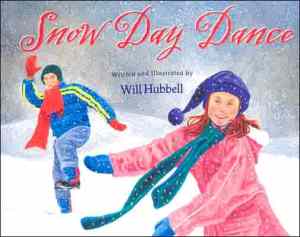
snowdaydance1Yes, they have! Darn it, because I thought this was a charming idea for a picture book. Alas, it’s already been written. Check out “Snow Day Dance” by author/illustrator Will Hubbell.

According to my young friend, the final snow day superstition is to say a prayer before bed, so I wrote one for her…and for the rest of the kids in America who are wishing hard for a day off.

Now I lay me down to sleep,
I pray for snow twelve inches deep.
Should it melt before I wake,
I pray school’s canceled by mistake!

Christy Evers of Christy’s Creative Space nominated me for an Honest Scrap award. This meme requires me to reveal 10 honest things about myself and then tag 7 friends.

I want to stick to this blog’s theme, so I’ll list 10 honest things about me that have to do with writing:

1) I never finished a story in college, but I still earned a Creative Writing degree.

2) I thought there was some magic formula for story endings that no one ever taught me.

3) I was surprised when my professors didn’t share this literary secret.

4) I learned how to end a story by ending it. Amazing how that worked.

5) I lied to my great-grandparents by telling them I had published a book. Poor folks left their house for the first time in 20 years to buy my title at the bookstore. (In my defense, I was only 7 years old. I have no defense for them, believing a second-grader.)

6) I illustrate, too. But I think someone else could illustrate my stories better.

7) I cannot work on adult short stories and my children’s stories during the same day or even the same week. My brain has to completely shift its way of thinking.

8 ) I write most of my stories in my dining room.

9) I like writing long-hand because it frees me from my internal editor, but I rarely do it.

10) I only tagged one friend for this meme. Corey, you’re it.

Tonight I attended a chat with Sean McCarthy, assistant agent with the Sheldon Fogelman Agency. Sean talked to aspiring authors about the children’s book market and how to find the right agent for your work.

It’s late and I’m tired, but you all know my obsession with taking notes! Here are just a few of the major points Mr. McCarthy touched upon during this informative session:

What’s the ideal picture book length?
Sean suggested that 500-word manuscripts tend to be a bit slim. They’re seeing the most success with stories above 500 but under 800. The 900 to 1000-word length is a difficult sell right now and he doesn’t see that changing anytime soon.

How many PB manuscripts should a new author have before querying?
His agency prefers to see at least two completed PB manuscripts. The ideal number would be five viable manuscripts. Sean said the market is difficult and there are so many variables for new authors–editor preferences vary and timing is another crucial element that’s out of an author’s hands. The one thing you can control is how many projects you have ready to go—so the more, the better. (Jack be nimble!) In other words, if you only have one completed PB manuscript, keep writing. Don’t submit yet. Sean urged “prolific-ness” as an ideal author quality.

What’s a hot niche in children’s publishing?
Sean thinks that middle grade is wide-open, with fewer and fewer boundaries, making this area particularly exciting. Sci-fi and dystopian books are a blossoming market, and he’d personally like to see more boy-friendly middle grade novels and hybrid prose/graphic projects. There’s room for mixing genres in middle grade. The biggest development in picture books is the character-driven movement. He wants to see clever and funny stories that have a clear beginning, middle and end, wherein the central conflict is resolved by the main character.

What’s cooling off?
YA has been hot for the past several years, so with the exception of Stephenie Meyer, he sees this area slowing down, since the industry tends to be cyclical.

Is it better for YA novelists to query with a series or just one book?
Mr. McCarthy said that series are tricky for a first-time author. Nine times out of ten, the 1st book in a trilogy will be the most successful. A series is not necessarily more attractive than a stand-alone novel.

Should new authors secure magazine credits before querying an agent?
Only if they are applicable to the genre you’re writing for. Publishing a literary adult short story won’t be helpful if you’re writing a juvenile novel. But he does like to see that you have been actively writing and publishing recently, even if it’s in small places.

Should new authors wait until they have an offer in hand before querying an agent?
While an offer is great and it can grab an agent’s attention, it can unfortunately lead to a “knocked up” scenario, where the author-agent relationship is borne out of convenience and necessity, not because it’s a great match. So he tends to be wary of these situations.

How is the economy affecting the children’s book market?
In the short term, it will be more difficult to place projects, since there are fewer editors. But the good news is that for the most part, children’s books have been one of the few bright spots for many publishers. He definitely thinks things will improve, although the time frame for that is uncertain–6 weeks, 6 months or 6 years…?

One last thought: Mr. McCarthy mentioned that the #1 method of obtaining new clients is by referral–either by meeting someone at a conference or by receiving a recommendation from a current client.

Writing may seem like a solitary occupation, spending hours on your own with a pen or keyboard, but like any other business, making contacts is vital to your success.

So get out there! Attend conferences. Meet editors, agents and other writers. It’s a small world…and, to borrow a phrase from the NY Lottery…”you’ve got to be in it to win it!”
How many of you know your grandparents? I mean, really know their stories? Their favorite childhood friend, how they met their spouse, the hardships they endured in their marriages, the passions they pursued, the loves they left behind, the joys that comprised their lives?

I don’t know my grandmother beyond the surface. She collects owl and cardinal knick-knacks. Her eyesight is fading. She enjoys making hooked rugs and solving word puzzles. She sleeps beneath a golden crucifix.

I know she married a man 10 years her senior at just 17 years old and had two children before she turned 20. I know she was a young girl during the Depression. I know her brother lived with her almost his entire life. I know she watched her husband die of Lou Gehrig’s disease. But I don’t know any of the stories associated with these things. I know one sentence each, and I’ve told you all I know.

I’m eager for more about her life. I want to understand what she went through to ensure I could have the happy, secure life I have today. She is a part of me, but it is all mystery.

As I fell asleep last night, I thought about this blog and how it may remain online for many years into the future. Ten, twenty, maybe even 100 years or more. Then there’s my Shutterfly albums. And YouTube. A permanent record of my life in words, photographs and movies exists out there. Future archeologists need no shovels.

So if you are my grandchild reading this after I have passed, I don’t know you, but I love you. I would like to tell you all my stories. Please sit in a comfortable chair and read about how I wanted to be an author. I hope I inspire you.

Tell me, was I successful? Do you have my books at your bedside?

Please don’t forget to comment. Who knows, maybe in 100 years they’ll figure out a way for me to read it. I’m sure the spammers will lead the way with that technology.

obamaHow many of you have a budding young author in your home? Now’s little Johnny’s chance to see his words in print. Random House will be releasing Kids’ Letters to President Obama in 2009.

Editor Bill Adler wants your letters…err, I mean your children’s letters. The funnier, the better. But get them in soon. Deadline is December 31!

Click here for the announcement.

I’m the Library Mom! Yes, that’s me behind the desk, collecting the picture books. You forgot yours, Jacob? That’s okay. You can still check out another. (Oh the joy on his face!)

I’m the Library Mom! I’m not allowed to kiss or hug my own daughter, so we sign “I Love You” across the room. I suggested tugging on my ear like Carol Burnett, but my five year-old didn’t appreciate the nostalgia.

I’m the Library Mom! It’s taking me twice as long to put the books back on the shelves because I’m busy reading them. Ooh, I love Bark, George! And I never saw this Mo Willems before!

I’m the Library Mom! “You’re good for a rookie,” the library aide says. “Have you done this before?” No, ma’am. I just know my alphabet.

I’m the Library Mom! It feels like 10 minutes ago I was skipping into Mount Pleasant’s library, excited to see my mother behind the desk. Aren’t I the coolest kid in Kindergarten, having Mom in charge of so many books? You can’t take one home until she stamps it. That’s my mom, you know.

In another two weeks, I’ll be there again, Miss G’s class. And I’ll be skipping through the doors just like I did 30 years ago, but this time…I’m the Library Mom!

purpleIs there such a thing as too many critiques?

A writing friend and I debated this issue earlier this week. She told me that if one critique partner doesn’t like something, she changes it, even if no one else agrees. Her opinion is that a critique group represents a microcosm of editors. She knows she can’t please everyone, but she tries to incorporate everyone’s suggestions.

My reaction was: yikes! With the wide range of opinions I sometimes receive, it would be impossible to address every critcism. I might wind up with a muddled mess of a manuscript.

My story cannot be all things to all people. We all have our own tastes, which dictates the books we choose to read, the titles we recommend to friends, and the stories we stop reading after Chapter I. If not all people agree on published books, you don’t have to wait for a concensus vote on a manuscript before considering it finished.

I only revise based on solo suggestions if the comment resonates with me. If someone points out something I was already doubting, then that’s the confirmation I need to fix it. A writing peer can highlight something I never thought of, but I immediately see the validity of their argument and make the change.

If a comment doesn’t make sense to me, I ask questions. I have to understand the reasons behind the criticism. And if it still doesn’t feel right, I leave it behind. If six people love something and only one hates it, I’m not going to strive to please that person, especially if I just don’t agree. Ultimately, I’m the author.

Don’t get me wrong, I appreciate all peer opinions and I do my best to incorporate suggestions that I think will work, especially when at least three people wave a caution flag. But just one person? I don’t feel bad about leaving it.
So how do you feel about this issue? Do you try to address every criticism in a revision? And at what point do critiques become counter-productive? How long do you go on seeking opinions, changing and revising? I want your feedback about feedback!

Who doesn’t love first page sessions? Where else can you get two non-stop hours of professional, editorial feedback? They pack quite a picture book pow. (And a middle grade wallop. And a YA smack.)

But how do you get the most out of these sessions? Take care in what you submit and how you submit it. Let the editors focus on your story rather than procedure.

These suggestions are based upon the November 19 NJ-SCBWI first page session with Kendra Levin of Viking and Lauren Hodge of Little, Brown.

1. Format properly. Some submissions didn’t use standard paragraph breaks and indents. While the editors understood that these writers were eager to submit as much story as possible, the manuscripts were confusing to read.  Everything ran together. Format your first page just as you would a professional submission. Honestly, you will get more out of less.

2. Use Times New Roman font. A serif font reads well. Courier, the traditional typewriter font, is a monospaced font, meaning each letter is the same width. This wastes space. If you submit with Courier, you’ll have 50% less story on your first page.

3. Research your genre. Some manuscripts felt inappropriate for the genre the author indicated. The topic, word choice and level of sophistication need to match your audience’s age. If you submit with the correct genre, the editors will spend more time assessing your writing than genre counseling.

4. Don’t limit yourself to one gender. One manuscript indicated it was for girls. If you write this on a submission, an editor will immediately think your work doesn’t have broad appeal. Let the editor decide if both boys and girls will love your story.

5. Skip the prologue. Go right to the story. Submit page one of the first chapter, not the backstory.

6. Don’t include an explanation. One picture book began with an intro about why the author had written the story, based upon an experience with her children. And here is where editor Kendra Levin was gracious and tactful. She thought the children in this author’s life were incredibly lucky to have such a playful, creative parent. But stating how children you know enjoy your work doesn’t help sell it. The story does. The intro only left room for five lines of the tale, so the editors could not comment fully. They also emphasized that if the story is written well enough, an explanation becomes unneccesary.

7. Take notes. Don’t just wait for what the editors/agents have to say about your manuscript. Listen to the comments about every page. There’s something to learn from everyone’s manuscript.

There’s more to come from this dynamic first page session. Watch for another post this weekend. And please add your own first page tips!

mehndiThis week my India-born critique partner submitted an engaging group of multicultural poems.

“Summer Paintings” featured three young girls decorating their palms in the mehndi tradition, embedding secrets in the scrolled henna designs—initials of boys and dreams and all the hushed longings of adolescence. Toward the end of the poem, the girls washed away the paste to reveal the designs. The next line, Finally freed from our impatience, caused debate among our group.

The girls in the poem had a wonderful time waiting for the henna to dry, for the patterns to stain their skin. They laughed and talked, giggled and blushed. Why were they impatient if they enjoyed the journey?

The answer? This is what childhood is about: impatient eagerness.

While children take pleasure in their activities, they are always rushing forward to the next thing. As a child, every experience is new. There is little time to let events soak in when there is something else to explore. They are motivated by an insatiable curiosity.

Moreover, children wish to repeat favorite experiences over and over again, and not soon enough. I’m reminded of this when my family leaves Chuck E. Cheese. Two seconds into the parking lot and my daughter pops like a balloon: “Mommy, when are we going to Chuck E. Cheese again?”

When writing, I will try to remember the impatient eagerness that my critique partner so eloquently showed.

Does your character display an impatient eagerness? What is next big thing for them?

Like this site? Please order one of my books! It supports me & my work.

FLAT CAT is the winner of multiple state book awards, selected by kids!

Enter your address to receive this blog via email.

Join 14.3K other subscribers

My Books

Blog Topics

Archives