You are currently browsing the category archive for the ‘Writing for Children’ category.
 by
by PENGUIN CHA-CHA is my first book as both author and illustrator, so my process was very different than when I’ve illustrated manuscripts written by other authors.
 Usually I receive a manuscript from a publisher, I read it over—that first read tickles the first glimpses of images into my head—and then I decide if that manuscript is one that I want to spend months illustrating.
Illustrating stories by other authors gives me a chance to illustrate ideas that I wouldn’t have had otherwise and brings variety to my work.
For example, in THE GOODBYE CANCER GARDEN, the author Janna Matthies wrote about a family growing a healthy vegetable garden as Mom recovered from cancer. It’s a powerful story of healing. Since I’ve never gone through something like that, I wouldn’t have thought to write that story, but Janna experienced a very similar cancer battle in her own life before writing this hope-filled story. As soon as I read that manuscript, I knew it would be an important book for many families. It was an honor to be able to illustrate it.


Another part of illustrating someone else’s manuscript is to add my own voice to the book through the illustrations. I need to figure out what to add to the story they’re telling, and that may mean showing things in the illustrations that the author never thought of. (That’s why publishers like to keep the authors and illustrators away from each other.)
 In the picture book CORA COOKS PANCIT by Dorina K. Lazo Gilmore, Cora feels ignored at first by her family. To echo her feelings, I drew a little dog that follows Cora around wanting to play, so he brings her more and more toys on each page. Cora ignores him.
Just as Cora gets her happy ending, the dog gets his own happy ending when Cora finally plays with him. The dog wasn’t part of the text by the author. The dog is my own contribution to rounding out the story with the illustrations. Since parents are usually busy reading the words, they may not even notice the dog, but be assured that the kids who are hearing the story and studying the illustrations definitely notice that dog! Kids are master picture readers, so that’s always something I think about as I decide how to draw my half of the story in books written by someone else.
My process for PENGUIN CHA-CHA was different from the start because the illustration came first instead of the manuscript. Way back in 2007, I drew an illustration of penguins dancing. I used to be in a swing and Latin dance group and I liked penguins, so I decided to combine two things I liked to create a fun portfolio piece.

Around the same time I had tried my hand at writing my first picture book manuscripts about other subjects. I had a meeting with an editor and showed her my picture book manuscripts and also my portfolio. She remarked about how much more my face lit up when we got to the dancing penguin illustration than when I talked about my manuscripts!

So I realized I really needed to write about the things that make my face light up. Makes sense, right? So I wrote story after story about dancing penguins. It was much harder to write a wonderfully marketable picture book than I thought it would be! What remained constant were the dancing penguins, but the plots of the stories were all over the place. Those penguins danced for years as I figured out my story. I even licensed them out as wrapping paper at some point. I finally sorted out my story as it played as images in my head. I only wrote down the words that I felt were necessary and not shown in the illustrations. In the end, my editor at Random House asked me to add in a bit more text. I may be the only picture book author that’s happened to—usually they want to cut words!
.
Writing my own books allows me the freedom to draw my favorite subject matter and favorite kinds of characters and things that make my face light up like dancing penguins. And the story usually starts with an image for me. Illustrating someone else’s manuscript brings more variety to my work and new experiences. So I love both!
Speaking of new experiences, I’m currently illustrating a picture book written by Danielle Steel called PRETTY MINNIE IN PARIS. For research, I visited Paris—what a lovely city to experience! The story combines Paris, a fashion runway show, a long-haired teacup Chihuahua, and a stylish little girl. Oh la la! Watch for PRETTY MINNIE in the fall of 2014.
 Thanks, Kristi, for giving us a glimpse into your process!
PENGUIN CHA-CHA releases today! Happy Book Birthday, Kristi!
And lucky readers, Kristi is giving away a PENGUIN CHA-CHA prize pack! You’ll receive a signed book, magnet, bookmark and sticker! Just leave a comment below by September 5th to enter, and if you’d like to ask Kristi a question, you can do so there, too.
You can learn more about the book at PenguinChaCha.com and download a Storytime Activities Kit.
Also follow Kristi’s blog at KristiValiant.blogspot.com.
I enjoy discovering new social media tools, and today I stumbled across Padlet!
Padlet gives you a wall. You can post anything you’d like, plus invite others to participate. “Simple yet powerful” is their motto. Dude. Right on.
Excited to try it out, I began a “Picture Book Writing” wall. Ask me any question about writing picture books. Plus, read other Q&A’s.
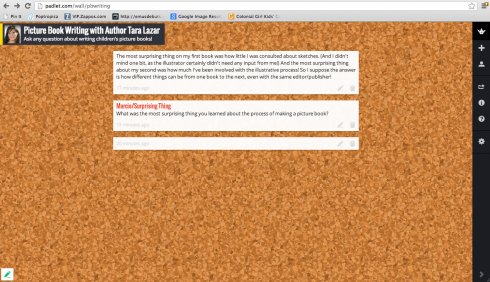
OK, it looks a little plain right now. Don’t worry, I’ll jazz it up soon like a tween girl’s locker, full of sparkly doo-dads, baby animal posters and I heart this, I heart that.
Join me there: http://padlet.com/wall/pbwriting.
I’ve set up this wall in “stream” format, meaning the most recent post will appear at the top. Padlet also offers “freeform” format so you can pin stuff all willy-nilly like you would on a real corkboard.
To post a question on this Padlet, click the green pencil icon on the lower left of the screen. Please be sure to include your name at the top of the text box (it will appear in red) before typing your question.
Padlet was previously named “Wallwisher” but that wasn’t catchy enough. If they’re riding on the coattails of the iPad, I won’t blame ’em.
Enjoy, and let me know if you create your own Padlet!
The possibilities are endless! Classroom notices, brainstorming with friends, artwork in progress, travel itineraries, family menus, reunion planning…

Flash on over to Flash Fiction Chronicles today and I’ll tell you all about writing micro fiction for children! It’s how I got my start.
http://www.everydayfiction.com/flashfictionblog/flash-fiction-for-ya-y-not
 “I think what this fella Psy is tapping into…is the fact that people don’t want any meaning right now. The most popular music apparently is that without intelligible words…not reality, not feeling, not meaning.”
 Darn straight, readers want a good beat. What they don’t want is to be beat over the head with a lesson you think they need to learn, sly Mr. Fox.
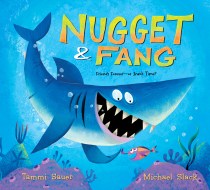 Dudes, it’s new Tammi Sauer! YES!!!! *Jersey fist pump*
Ya know Tammi, right? She’s the most prolific picture book author this side of the Atlantic! (And that side, too.)
An annual contributor to Picture Book Idea Month, Tammi has dispensed invaluable picture book pointers about story structure, celebrating the weird stuff in life, and putting a twist on the familiar. She’s also a regular PiBoIdMo participant, and NUGGET AND FANG is her success story from the November 2009 event!
So the unlikely underwater duo are here today to chomp away! (Don’t worry, Tammi’s here, too. Fang didn’t gobble her up.)
Tammi, what about unlikely friendship stories makes them so fun to write?
If two characters are at odds in some big way, that immediately builds in tension and offers real deal conflict. This can provide great opportunities for humor, too. That’s fun stuff! Some unlikely friendships deal with issues such as neatness versus messiness or quiet versus loud. The quandary that my characters face is clear–sharks and minnows aren’t supposed to be friends because everybody knows sharks EAT minnows.
Sharks are popular characters these days! What makes FANG stand out in the world of storybook selachimorpha? (Yes, that is a real word. I looked it up. Honest.)
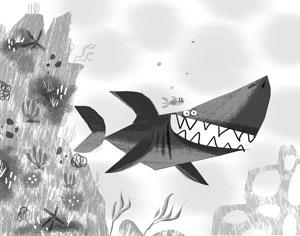
Michael Slack’s first sketch of the carnivorous chums.
I love that I have a contender in storybook selachimorpha. It sounds super sophisticated. As for Fang, he stands out among regular sharks because he has a huge heart. Yes, he’s toothy, but, holy mackerel, my guy is irresistible. If I were a minnow, I’d be honored to be his friend.
What are some of your favorite unlikely friendship stories/books?
My Favorite Unlikely Friendship Story of 2012 was BOY + BOT by Ame Dyckman, illustrated by Dan Yaccarino. That book is brilliant in 2,465 different ways. Plus, Ame has blue hair. (Tara’s note: sometimes it’s pink or purple, or even rainbow leopard.)
A fun and endearing unlikely friendship story that just came out this past February is WOOBY AND PEEP written by my oh-so-fabulous critique partner Cynthea Liu, illustrated by Mary Peterson. (Hey, WOOBY AND PEEP are coming soon to a blog near you. Umm, this one.)
If NUGGET and FANG could endorse their book personally, what do you think they would say?
Nugget: Holy mackerel! Get your fins on this book. It’s FANG-tastic!
Fang: Sink your teeth into our book. It’s a total NUGGET of awesomeness!
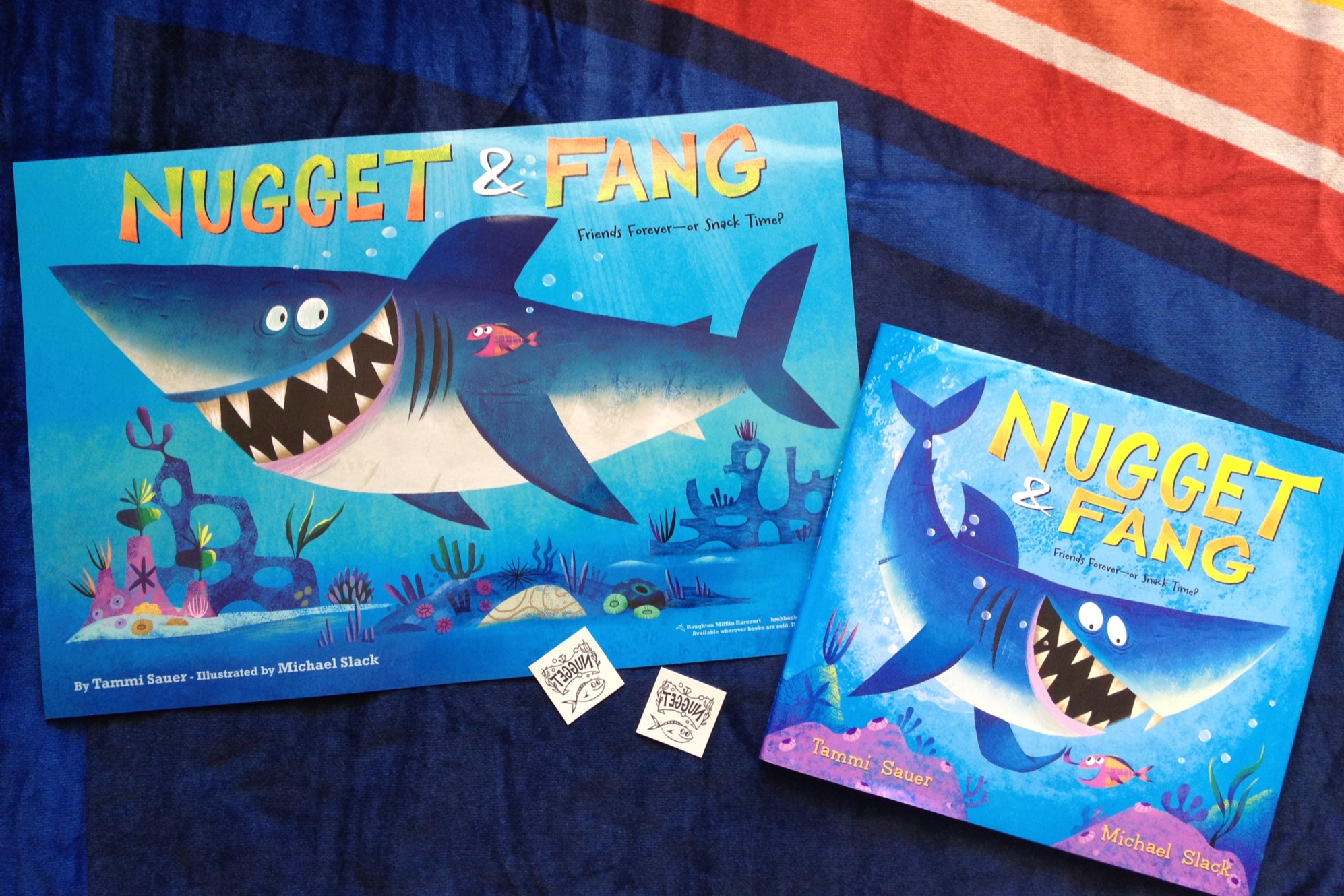
Well, I’ve got a nugget of awesomeness for you, dear blog readers: a “NUGGET AND FAN” (not a typo–you’re a fan already, right?) prize pack, including a signed first edition, a teacher’s poster, and adorable tattoos you can slap on any fin (or bicep). Just leave a comment or question for Tammi to enter and a winner will be chomped up later this month! In the meantime, go visit these seaworthy sidekicks!
Wake up, kidlit campers! Rise and shine! It’s time to register for Picture Book Idea Month!

I hope you’re ready to take the 30-picture-book-ideas-in-30-days challenge!
Need to know more before you sign up? Read this.
Those who sign-up for Picture Book Idea Month will be eligible for prizes—like feedback from one of four literary agents and critiques from picture book editors! Plus more to come!
To register for PiBoIdMo 2012, you must do three things:
1. Subscribe to this blog via email. (Click “Follow Tara’s Blog” button in left column.)
2. Leave your full name in the comments of this post. The form will ask for your email address. Please enter it so I can contact you if need be. (Your address won’t be published and I won’t use it for any other purpose.) PLEASE LEAVE ONLY ONE COMMENT. DO NOT REPLY TO COMMENTS.
3. Display the official PiBoIdMo participant badge on your blog, website, or social network. (Right click to save to your computer.) Please include a link back to taralazar.com so folks know where to join the challenge. And if you’re game, mention what an awesome job illustrator Ward Jenkins did on the logos. (If you don’t have anywhere to display the badge, then skip this one.)
Optional Other Stuff:
4. Purchase PiBoIdMo merchandise, like the official journal. [Note: more items to come over the next week.] All proceeds ($3 per item) benefit RIF, helping to put books into the hands of underprivileged children.
4. Add a Twibbon to your Twitter avatar and use the #PiBoIdMo hashtag when tweeting about the event.
5. Join the PiBoIdMo Facebook discussion group. (Note: the name says “2011” but it is the current group.)
6. Repeat after me:
I do solemnly swear
that I will faithfully execute
the PiBoIdMo 30-ideas-in-30-days challenge,
and will, to the best of my ability,
parlay my ideas into
picture book manuscripts
throughout the year.
That’s it. You’re golden!
REGISTRATION REMAINS OPEN THROUGH NOVEMBER 7th. You can still follow along if you’re not registered, but remember, those who register and complete the challenge are eligible for agent and editor prizes like picture book critiques.
PiBoIdMo will kick-off with the first guest post October 25th for Pre-PiBo, a week designed to help you prepare for the event. There will also be a Post-PiBo the first week in December to help you organize all those ideas.
Visit this blog for daily inspiration from the guest bloggers, then keep a journal or computer file of your ideas. There’s no need to post your ideas online or send them to me. KEEP YOUR IDEAS TO YOURSELF! As Sheena Easton croons, they’re “for your eyes only.”
If you’d like, comment on the daily posts. You don’t have to say anything profound, a simple “Keeno Yaccarino!” will do.
At the end of the month, I’ll ask you to sign the PiBo-Pledge confirming you did create 30 ideas, and then I’ll pick prize winners from those who have registered and pledged.
Thanks for joining! I hope you enjoy this year’s PiBoIdMo! As always, if you have any suggestions for this event, please contact me at tarawrites (at) yahoo (dot) com or post on the PiBoIdMo Facebook group.
I will leave you with a quote that serves as PiBoIdMo’s motto…from Roald Dahl’s THE MINPINS…
And above all,
watch with glittering eyes
the whole world around you
because the greatest secrets
are always hidden
in the most unlikely places.
Those who don’t believe in magic
will never find it.
I was stunned, honored and thrilled when renowned author/illustrator Trinka Hakes Noble asked if I would be the Rutgers University Council on Children’s Literature “Success Story” speaker this year. She asked me to tell the RUCCL attendees about my path to publication, to inspire them, to make them realize that they are the stars of the day. So I tried to be funny and touching and inspirational, and I hope I succeeded with the success story. For those of you who couldn’t be there, and for those who heard it and want a recap, here’s my speech.
Please note: I begin in costume, speaking with a deep English accent like a terrible, stereotypically stuffy author.
 Good morning, ladies and gentleman.
Allow myself to introduce…myself.
I am a published author.
I have a luxuriant beard.
I smoke pipes.
I wear tweed jackets with elbow patches.
I take afternoon tea with Joan Didion. Ahh, dear, dear, Joan. Occasionally Joyce Carol Oates pops in with Michael Chabon. Oh, those two are a bloody riot! One time JC snuck a whoopee cushion on Michael’s chair and…well, that’s not a story for mixed company.
Ever since I signed my first contract, I have never received another rejection. Publishers fall at my feet and kiss my freshly polished Oxfords!
I use words like “verisimilitude” in everyday conversation. See, I just used it. “Verisimilitude, verisimilitude, verisimilitude.”
My toilet scrubs itself under the rim.
I have not a care in the world. Ahh, yes, the life of a published author is so very glamorous and elegant, don’t you agree?
[Remove costume. Shake hair loose.]
Yeah, right.
OK, this is really me.
Just an ordinary housewife and mother from Jersey. No, I didn’t say Jersey Shore. Snooki and I, we’re not author buddies.
But listen, just four years ago, I was you.
Sitting out there.
 RUCCL 2008 was my first big conference. Heck, it was my first conference, period. I looked across the room to Kay Winters speaking and thought there was this enormous divide between me, the great unwashed, and Kay, the successful, multi-published author.
Turns out the divide was only five tables wide. Because that’s how far away I was sitting!
Once I approached Ms. Winters to thank her for the inspiring speech, we shook hands and suddenly there was no divide. And I’m here to tell you just that—there is no divide.
You’re here today because you’ve earned it. You’ve written something exceptional that has gotten noticed. Out of—how many applications were there this year, Trinka?—62.8 million applications, 88 of you are here! Amazing! You have great potential. You are on your way. You are so close to becoming published and you don’t even realize it!
 If you think, like I did, that there is some great divide and you are going to be a transformed person once you sign a publishing contract, then, I’m sorry, but you are mistaken.
You’ll be just like Samantha Baker waking up on her 16th birthday, staring at her boobies in the mirror and realizing they’re the same size they were yesterday. (Sorry, fellas.)
Listen—we writers are one. We all share a common goal—to tell the best story we possibly can. I strive to do that every day, and so do you. There is no divide.
Of course, you will be jubilant when you receive an offer, but you will still be you. Unfortunately, your toilet will not clean itself. I should know. I’ve been staring at that damn toilet for three years!
So let me tell you a little about how I got here. I took 287 South, got off at Exit 9, merged right and…no sorry…
It began in second grade when I read CHARLIE AND THE CHOCOLATE FACTORY. (And let me tell you, Gene Wilder will always be my Willy Wonka, not Johnny Depp.)
 That book was so outrageously delicious, I knew immediately that I wanted to create fantastical stories like that. So my best friend Francine and I collaborated on our own book, a series of fractured fairy tales. I wrote and she illustrated. It was a beautiful little thing, and I still remember the jaunty little cap she drew on the main character. We were so proud of this thing, we called all our relatives and told them it was published.
After all, we were sure it would get published. It was perfection. Who would turn it down? They’d be crazy. If Ally Sheedy was only 12 when she wrote SHE WAS NICE TO MICE, we could beat her record and get published at age 8!
So we made our announcement prematurely and my two 80-yr-old great-grandparents fired up the ’67 Chrysler for the first time in months and creaked their bones to the local bookstore…but of course, our masterpiece could not be found.
So OK, it was my first newbie mistake!
I loved writing as a child and I did not understand why everyone else did not love it. When it was time for creative writing I jumped out of my seat and cheered. Everyone else groaned. Especially when the teacher gave the word count. I always asked, “Please sir, may I have some more?” Yes, Tara, you can write as many words as you want.
 So flash forward to college…right here on the banks of the Old Raritan, I studied English and Creative Writing. I had every intention to land a job in children’s publishing so I could learn the business inside-out. But it was 1992, and our country was in a recession. There were no kidlit openings. But I did get a job in publishing. COMPUTER PROGRAMMING BOOKS. Blech.
Bored out of my mind, I didn’t stick around long. I then rode the wave of irrational exuberance of the “Information Superhighway” age and was too busy in high-tech marketing to write for children. Besides working insane hours, I was figure skating four times a week. Who had time to write?
I got married. I had my first daughter. I stayed home. We read together. And then those old feelings bubbled up to the surface. (And this analogy has nothing to do with nursing. Sorry again, fellas.) But I had a colicky baby and even less time. (Well, I really had more time than I wanted—I had 2am, 3am, 4am…)
When I was pregnant with my second daughter, in 2006, I saw an ad in my local paper for an organization called Women Who Write. They were organized into critique groups by genre, and they had an opening in their Writing for Children group. I told my husband I wanted to join. He agreed to put our toddler to bed (no easy feat, she didn’t sleep for four years and now I can’t get her out of bed) and I waddled off to evening meetings twice a month. I was only in the group two months when they went on summer hiatus. Then I took time off to have my daughter, but vowed to return in six months.
 Well, six months turned into 12 months and I was more impatient than ever to get published. After all, I had postponed it most of my life. I was like Veruca Salt—“But Daddy, I want to publish a book NOW!”
But my early picture books were dreadful. Didactic. Adult protagonists. 1500 words. I didn’t know a thing about writing them.
So I joined SCBWI. I attended every NJ event I could, beginning with first page sessions. I took copious notes about every manuscript the professionals critiqued. I put those notes on a blog. And some knowledge started seeping in.
And then a mutual friend introduced me to author Corey Rosen Schwartz. Again, I imagined this great divide between us. I thought there was no way this woman, a published author, would want to be friends with me, a nobody, a wannabe. But remember, there is no divide. It only exists in our heads. Corey and I became fast friends. And we started critiquing each other’s work. And my stories began getting better.
Things were going pretty well for me. The Rutgers acceptance in 2008 gave me the confidence to know that I was on the right track.
And then, in 2009, I veered off track. Or rather, my body did. (OK, this is the sad part now. So everybody get your hankies out.)
On Halloween, I slipped on some wet leaves while trick-or-treating with my daughters and sprained my ankle. It was no big deal for me because I always sprain my ankle. I was a figure skater and my ankles had suffered a lot of damage over the years.
So I went home and put my feet up.
But the next day I woke up and half my foot was numb.
It was odd, but I thought maybe I had exacerbated an old injury. I had ankle surgery years ago and I remember my toe going numb at that time. So I just ignored it.
Until my entire left foot lost feeling.
And then my right foot joined the numb party.
Something was terribly wrong.
I went around like this until Thanksgiving, when the pressure of cooking a five-course meal collided with the distinct lack of pressure in my feet. I exploded at my family. I was sick and I needed help.
Three months worth of doctor’s visits and I had a diagnosis: Multiple Sclerosis.
I was devastated. And if there is a word that means beyond devastated, that’s what I really should insert here.
And the timing was really bad. I got the diagnosis a mere week before I was to attend an NJ-SCBWI Mentoring Conference. I had already sent in a manuscript called THE MONSTORE and I was supposed to be meeting with an editor from Sterling to discuss it.

There was no way I could attend.
The organizer was a friend so I called her and bawled, explaining that I was too sick to make it. She said she’d have the editor write up my critique and mail it out.
But I was in a deep depression. Not only was my walking impaired for the rest of my life, I thought my dream of becoming a kidlit author was kaput. Now, you don’t have to WALK to be able to TYPE so I don’t know why I thought this way, but I was not in a rational state of mind.
So when that envelope from the editor at Sterling arrived, I ignored it. I stayed in bed for days on end. My life was over.
Then I received an email from my friend at NJ-SCBWI. She said the editor was upset that I couldn’t make the workshop; she had wanted to meet me in person.
Meet me? WHY on earth would she want to do that? Remember the great divide?
 This manuscript had been rejected from Rutgers (GASP! SHOCK! HORROR! I know, you weren’t expecting that, right?) and I had met with a picture book consultant who had gently pushed it back across the table like it was pea soup with a fly in it and she dubbed it “a practice manuscript”.
So I sneered at that envelope, skeptical of what lay concealed inside. It was thick. I assumed she hated it and she wanted to meet me in person to scold me about all the things I did wrong.
Instead I opened the envelope to read, “What a fun title and a unique premise. I was hooked on page one.”
She liked me! She really, really liked me!
I mean, she liked the STORY. (Don’t make that mistake of equating your work with YOU.) She asked to see a revision.
But I had always known I wanted an agent. Holy bacci balls, it was time!
Things then started happening fast. Corey had won a critique with author Jean Reidy and sent THE MONSTORE instead because she had nothing ready. Jean read THE MONSTORE and then Tweeted about how awesome it was. Then Ammi-Joan Paquette saw the Tweet and asked what she was reading. All of a sudden, I had a referral to Joan.
I got busy sending out queries to four other agents I had targeted.
Now you must realize at this time, I was still so sick and filled with anxiety and dread that I couldn’t get out of bed most of the day. In fact, I could barely speak until noon because I was on the wrong medication.
So when an agent called me two hours earlier than he said he would, I don’t know how I did it, but I managed to talk. Thank goodness I had an acting background because it was the best performance of my life.
But ultimately, I signed with Joan. I would like to say that signing with her finally lifted me out of my MS funk, but it didn’t. I knew I was doing something big, something I had dreamed of all my life, but I couldn’t even walk the contract to the post office. And I focused on what I couldn’t do instead of what I had accomplished.
Even when the offer from Aladdin came in a month later, I was only pretending to be happy. I had about two seconds worth of “I DID IT!” and then I went back to bed.
 But, I went back to bed with a purpose…and a laptop. If I was now published, I certainly wasn’t going to stop with one book. I needed more. I could not be a one-hit wonder. The name KajaGooGoo Lazar does not look good on the cover of a picture book. (C’mon, who knows KajaGooGoo, the one-hit wonder from the 80’s? “Too shy shy, hush hush, eye to eye.”)
Writing slowly lifted me out of my funk. And once I was brave enough to tell my friends and family what was happening with my health, they began to lift me up, too.
And so, two years after I signed my first contract for THE MONSTORE, I now have two more books under contract…and I’m waiting to hear on a few more. There’s a few editors here I need to speak to…
But again, because I am up here and you are sitting down there does not mean there is a divide. As Kay Winters spoke in 2008, I said to myself, that’s going to be me someday. And look! Here I am! There is a space for you up here, too.
You should be proud of yourselves for making it here. When I attended in 2008, I really had only an inkling of how important this day was. And I had no idea that everyone was here for ME.
That’s right.
We’re all here for YOU.
This is YOUR special day. Like Katy Perry says, “Baby, you’re a firework. C’mon let your colors burst!” (Singing is not one of my talents.)
Remember that everyone assembled is here to help you take the next step in your career. This day was planned with you in mind. This fact was a little difficult for me to grasp back in 2008, so I put together something to help you remember this.
And because our chair informed me it was a fire hazard to set off Grucci fireworks in this room, I have something else that sparkles and glows all day long, just like you. (Will Sheri, Anita, Marcy and Andrew please come help me.)
 These glow bracelets are for you to wear today, to remind you of how special you are. Of how you are the star of today. Every time you look down at your wrist, remember that we’re all supporting you. Any question you have, ask it. Anyone you want to approach, step right up, don’t be “too shy shy”. This is YOUR day. Make the most of it. And be a little kid at the same time.
So I leave you with these words:
There is no divide.
But there are glow bracelets!
Enjoy and have fun today!
“Don’t use art notes,” is what you may hear as a new writer.
It’s not that editors don’t like art notes. It’s just that many new writers want to dictate illustrations that do not require direction.
 For instance, you shouldn’t pick what your character looks like. Red hair, blue shirt, green sneakers, pigtails, etc. are not for you to decide. The editor of Mary Ann Hoberman’s THE SEVEN SILLY EATERS thought the characters should be animals, like crocodiles. Marla Frazee, the illustrator, thought they should be people, and she was right. She even made the mother a cello player, which was not in the text, but it added a delightful layer to the mother’s personality. The options were wide open—the author never described the characters’ appearance.
 The exception to this rule is when your character’s appearance is crucial to the story, like FRECKLEFACE STRAWBERRY. Although the title pretty much says it all, right?
You must trust that your editor and illustrator have ideas for what your scenes should look like. Better ideas than you. Leave the art direction to them (and the art director). Writing that the house has a front porch, or that the cat is calico, or that the car is yellow is all unnecessary. Again, unless that car needs to be yellow for your story to work.
But you will no doubt read picture books with subversive text—where the character is doing completely opposite what the words say. Or books with text so spare, the action comes thru only in illustration. These are times when your text requires art notes. SCREAMS for them.

But if you have an art-heavy manuscript, where much of the story relies upon the illustrations, how do you submit it? Putting the art notes in [brackets and italics] is typically the way to go. However, too many art notes can interrupt the flow of the story. It gets difficult to read and comprehend.
So what do you do?
Maybe…submit your manuscript in grid format.
What?! But Tara, I’ve NEVER heard of this before.
I know, me neither. But my agent just submitted a manuscript like this. I was skeptical at first, but then I realized the grid was the best no-nonsense way to present the text with the illustrative mayhem. Yes, this book has MAYHEM. And FRACAS and PANDEMONIUM, too.
Here’s what the grid looks like in manuscript format:

The header includes your name, contact details and a word count.
Then the title (in caps) and your byline.
There is a general art note at top which introduces the story idea. Moreover, it states the art notes are “intended as a guideline.” Again, as an author, you cannot rule over all that is picture in picture books.
Next comes the grid. On the left is the story text, on the right appears “rough art direction.” Notice we said “rough” because they are only suggestions for the editor to understand the story. Remember that the illustrator may create something even better, funnier, more poignant. Remember the CELLO.
The grid continues for as long as it takes to tell your story. Typically one or two more manuscript pages.
Please note this isn’t a standard way to submit, it only serves as an example of what one author and her agent did. It’s like the photos on the front of frozen food boxes that say “serving suggestion”.

Now if you’ll excuse me, I suddenly became very hungry.
When I teach a picture book writing class or speak to new writers, I tell them I don’t subscribe to the “write every day” philosophy. That just doesn’t work for me as a picture book author. Sorry, wise writing sages.
However, I do give out this suggestion: “stare every day”.
Yes, I spend the bulk of my time staring (a.k.a. thinking) when writing a picture book. In fact, it’s about 50% of my effort. And thanks to my friend Carter Higgins from Design of the Picture Book, I can now share this secret with you in a deliciously accurate chart.
Can I get you a slice?
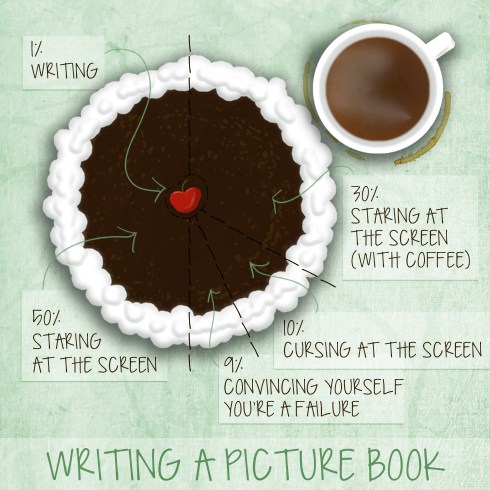
(Please note: “Writing” is the cherry on top!)
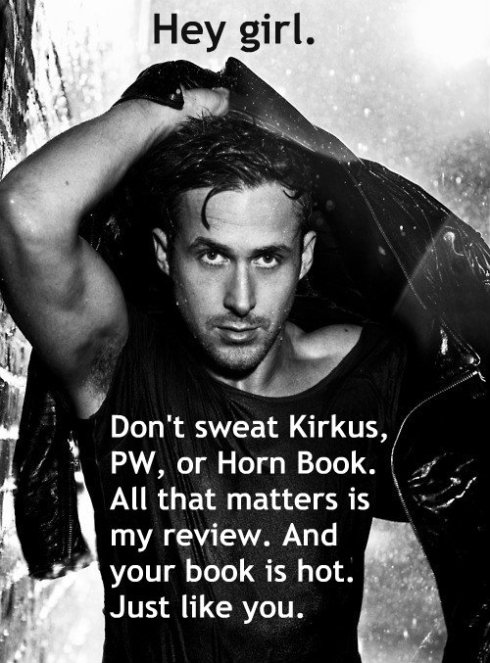
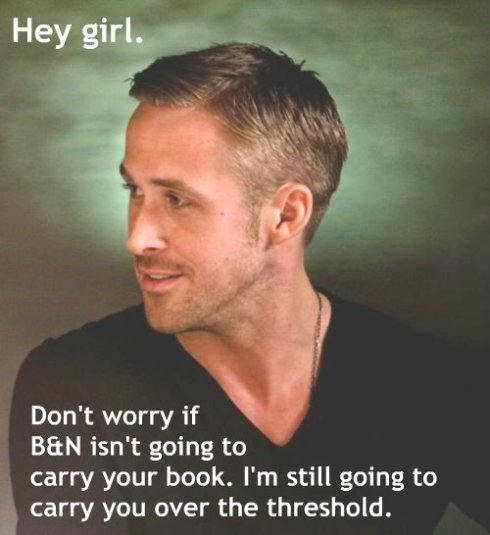
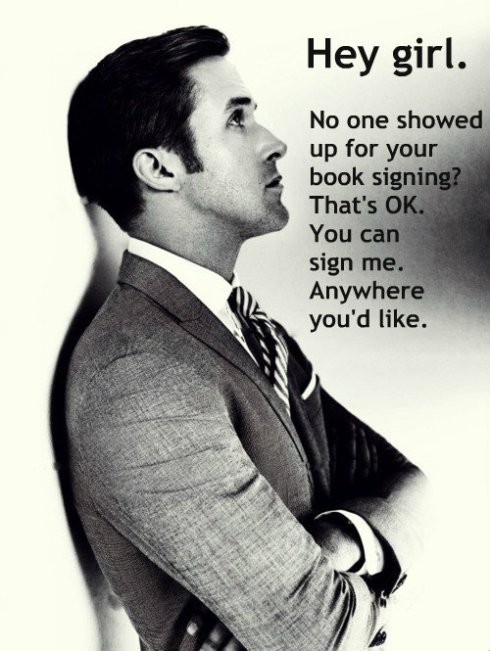
My debut book is still 9 months away, but what I’m hearing from friends is that the promotion process is fraught with dilemmas and doubts. Yes, we managed to write a book, submit it and get it accepted for publication, BUT WILL ANYONE BUY IT? And what if some bookstores don’t even carry it?
Well, don’t worry. Ryan Gosling is here again today to calm your fears.






 Writing for Kids (While Raising Them)