You are currently browsing the category archive for the ‘Picture Books’ category.
by Winsome Bingham
“Abrams sets the table for SOUL FOOD SUNDAY by Winsome Bingham,
illus. by Charles G. Esperanza, which finds a boy helping Granny
prepare the dishes for a family feast.”
~ Publishers Weekly
You are all invited. To sit with us. And share with us. And eat with us. And CHEER with us. We will be in the same place, at the same time—sitting, sharing, eating, cheering. Every SUNDAY, Our virtual table welcomes you for SOUL FOOD.
I grew up in a family where on Sundays, everyone gathers at my aunt’s house for dinner and dominoes, wrestling and conversations, and fun. It was like a weekly family reunion where you get to see everybody you didn’t see through the week. Those were my childhood summer Sundays. My Brooklyn Sundays. My Bed-Stuy Sundays.
SOUL FOOD SUNDAY was written in 2013 and sold in 2018. This book went to auction and I’m so grateful to all the wonderful editors who saw the importance of showcasing #BlackBoyJoy. My attempt to show families getting together celebrating every day. Black folks living and passing on traditions and recipes. Cooking. Talking. Playing. FUNNING!
Here you have a beautiful Granny teaching her grandson what she knows. She knows how to cook. My Granny always said, “Everybody—boy or girl—should know how to cook. ‘Cause everybody have to eat. Learning to cook and wash your own clothes is independence.” I couldn’t agree more.
On September 14, 2021, this book will be ready to be on your book table. It will be paired with other side-dished booky meals. RIBS! CHICKEN! MAC-N-CHEESE! COLLARD GREENS! TURNIP GREENS! MUSTARD GREENS! HOT & SPICY SAUSAGE LINKS! They are all part of the main course and a delicious delight on this SOUL FOOD SUNDAY.
You can place a pre-order today to reserve your seat at the table.
Without further ado, THE. COVER. REVEAL:
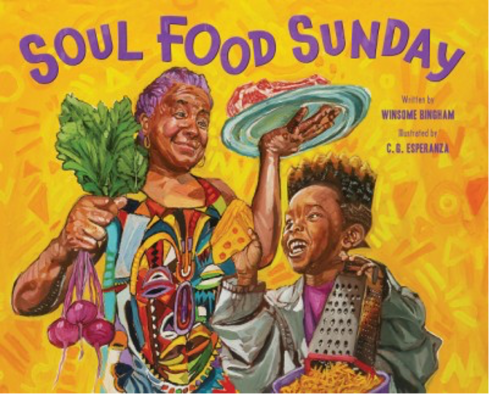
Granny teaches her grandson to cook the family meal in this loving celebration of food, traditions, and gathering together at the table.
On Sundays, everyone gathers at Granny’s for Soul Food.
But today, I don’t go to the backyard or the great room.
I follow Granny instead.
“You’re a big boy now,” Granny says.
“Time for you to learn.”
At Granny’s, Sunday isn’t Sunday without a big family gathering over a lovingly prepared meal. Old enough now, our narrator is finally invited to help cook the dishes for the first time: He joins Granny in grating the cheese, cleaning the greens, and priming the meat for Roscoe Ray’s grill. But just when Granny says they’re finished, her grandson makes his own contribution, sweetening this Sunday gathering—and the many more to come.
Evocatively written and vividly illustrated, this mouthwatering story is a warm celebration of tradition and coming together at a table filled with love and delicious food.
Thank you, Winsome! This is a gorgeous book!
Blog readers, you can win a signed copy of SOUL FOOD SUNDAY! Winsome has three copies to give away!
Leave one comment below to enter.
Winners will be randomly selected later this month.
Good luck!
Winsome Bingham is a soul food connoisseur, master cook, and a US Army war and disabled veteran. She received both bachelor’s and master’s degrees in education and has more than 15 years of teaching experience. You can find her writing on a deck while waiting patiently with a camera to capture a submarine shooting out of the water. She lives in Groton, Connecticut.
Charles G. Esperanza is the second of six cool kids. The South Bronx is where he first opened his eyelids. A dope land shrouded in bright-colored decay, the home of graffiti and hip-hop DJs! He paints funky elephants! Bodegas, too! Mixed with this wonder is some whimsical truth. Esperanza has a voice that is seldom heard. A fusion of jazz, distorted guitars, and chirping birds. Esperanza is also the author-illustrator of Red, Yellow, Blue (and a Dash of White, Too!). He lives in the Bronx.
STEM and STEAM—whichever term you prefer to call Science, Technology, Engineering, Art & Math—is a hot area for picture books that can be incorporated into classroom learning. (Well, of course “steam” is hot!) Author Karla Valenti joins us today to talk about her unique path to publication with her “My Super Science Heroes” series.
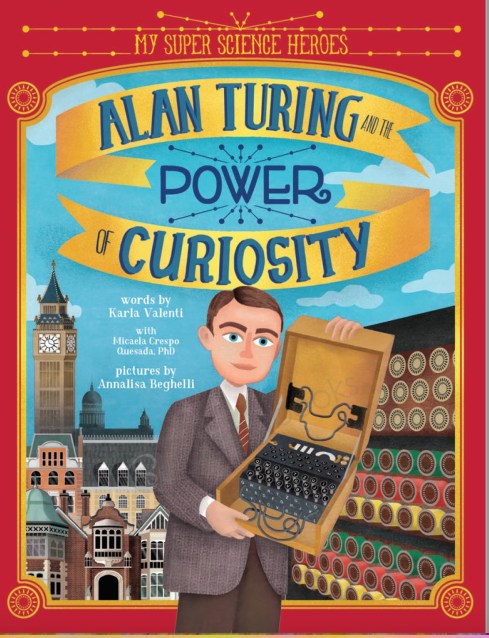
Karla, I love learning about how authors form their story ideas. How did this book come to be?
This book is part of the “My Super Science Heroes” series. It actually came about in a really unique way.
Back in 2016, a friend alerted me to a call for proposals from the Marie Curie Alumni Association (MCAA), a global research group with over 4,000 scientists worldwide. They wanted to partner with an author to write a picture book about Marie Curie. The profits would go to support their various research projects. The MCAA group was looking for books that would portray science in a unique and engaging way for young readers.
I am not a non-fiction or historical writer (I do fiction and mostly magical realism); however, I saw this as a way to flex my creative writing skills so I decided to give a try. I began doing research on Marie Curie and the more I read, I realized that she had led a very challenging life, constantly faced with opposition (both personally and professionally). It astounded me that she had achieved what she did in light of all that opposition. It was almost as if her persistence were a super power.
Ding!
A light went off and I began to explore the idea of writing a book where Marie Curie was a super science hero whose super power was persistence. Leveraging super hero tropes, I knew I needed a bad guy and of course, she had one—Mr. Opposition. And so the story came together—a book designed as a super hero concept, focusing on the person more than their accomplishment, focusing on how difficult it actually is to follow our dreams and celebrating the persistence that made it possible for her to reach them.
I submitted the proposal and, to my delight, won! I began working with MCAA to identify an illustrator who could bring a unique angle to this story – something different and unconventional. Annalisa Beghelli is the talented Italian illustrator who was brought in for the project, and she has been a wonderful collaborator.
We launched the Indiegogo campaign in 2017 and before the month was even over we had exceeded our fundraising goal and Sourcebooks had found out about the project. They made us an offer for world rights to the series, and so we began working with them directly.
 MARIE CURIE AND THE POWER OF PERSISTENCE was published in April 2020, and we’re so excited for ALAN TURING AND THE POWER OF CURIOSITY, which includes all sorts of visual riddles and easter eggs in the artwork but also has loads of back-matter featuring various codes and ciphers.
MCAA, Annalisa, and I continue to collaborate on the series and a portion of all sales go to support the science initiatives of the MCAA folks.
Wow, going from a crowd-sourced book to a Sourcebooks-published one is a rare path to publication. How did you attract Sourcebooks’ attention?
It was a very rare opportunity and a very fortuitous one. Basically, the month we launched the crowd-funding campaign, someone forwarded a tweet about our project to Kelly Barrales-Saylor at Sourcebooks. Kelly immediately reached out to us and, after learning more about the project, expressed an interest in taking the project in-house. Of course, we were delighted and happily joined efforts with Sourcebooks to bring this project to life. I never found out who sent Kelly the tweet, but they will forever have a special place in my heart.
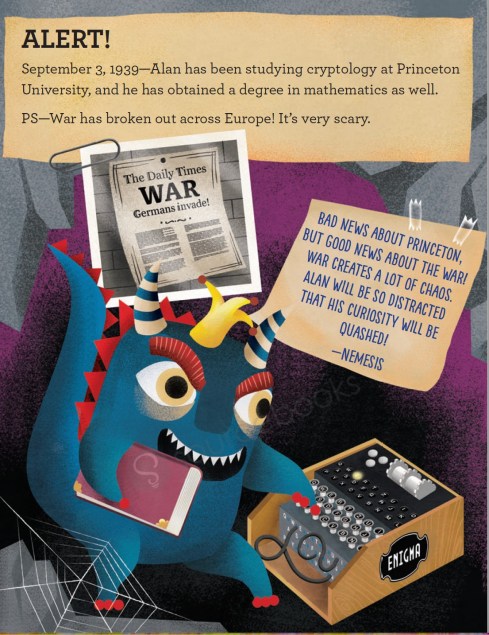
I love the concept behind these books—that there are forces like the “Nemesis” trying to thwart the scientists, but their super powers win out in the end! It shows kids that real traits like tenacity and wonder can lead to amazing things!
How were you able to step outside your usual writing comfort zone—you said you’re typically a fiction writer…?
To be fair, this really wasn’t outside of my comfort zone (the series is actually fiction inspired by real-life heroines and heroes). That said, I did embrace the MCAA call as a challenge, a way to flex my creative muscles in a different way, almost like solving a riddle (which by the way, is what ALAN TURING AND THE POWER OF CURIOSITY is all about!).
As for what inspired me to do that—it was something my critique partner Tara Luebbe once said. To paraphrase: you never know what the next opportunity will bring, so take all the opportunities you can. And wow, was she ever right!
I love that advice and I often share that, too. There are many opportunities for writers online. Social media, like Twitter, is a great place for pitch parties and making connections with others in publishing.
When you write picture book biographies, you have to choose the parts of the person’s life that support the story you’re telling. There’s not room for everything. What facts about your science hero did you learn that did not make it into the book?
This is a good question and especially relevant in a series like ours that is not intended to be a comprehensive biography of the science super heroes, since we are only looking at certain events in their lives that pertain to the specific super power we are studying.
In the case of Alan’s story, I think everyone should be aware of one of the defining facts of his life; namely, the tragic criminalization of his homosexuality, which led to a horrendous punishment. Acknowledging their error, in 2009 UK Prime Minister Gordon Brown issued a public apology to Alan Turing, announcing, “on behalf of the British government, and all those who live freely thanks to Alan’s work I am very proud to say: we’re sorry, you deserved so much better.” He did.
It is our hope that people will read Alan’s story and be inspired by him and his unfailing curiosity, honoring his achievements as a real life super hero.
What are you working on next?
My debut novel, LOTERIA, comes out in September with Knopf. Set in Oaxaca Mexico, the book is a magical realist adventure that features a high-stakes game of Loteria played by Life and Death in which an 11 year-old girl (Clara) is the pawn. Every card reveals a new twist in Clara’s fate: a tree, a scorpion, a treacherous rose. But Clara knows none of this. All she knows is that her cousin Esteban has vanished, and she’ll do whatever it takes to save him, traveling to the mythical Kingdom of Las Pozas in her search. And although it seems her fate was sealed as soon as the cards were dealt, Clara just might have what it takes to shatter the game and choose a new path
I also have a picture book coming out with Chronicle in 2023 (MARIA MARIPOSA), and I recently sold two new picture books at auction (details to be revealed soon!)
Wow, Karla, this all sounds like a rip-roaring start to your writing career. Congratulations!
Blog readers, Karla is giving away a copy of ALAN TURING AND THE POWER OF CURIOSITY.
Leave one comment below to enter.
A random winner will be selected in a couple weeks.
Good luck!
 Karla Valenti writes stories for and about kids, taking readers on journeys seeped in magical realism and deep philosophical questions. Her storytelling is heavily influenced by her Mexican heritage and layered with ideas and concepts she’s picked up in her many travels around the world. She currently resides in the Chicagoland area with her husband and three kids, two cats, and thousands of books. Connect with Karla at her website karlavalenti.com, on Facebook and Twitter @KV_Writes.
Welcome to the book world, BIRDS OF A FEATHER!

This gorgeous debut brought along its author, Sita Singh, to talk about its journey to publication. Congratulations, Sita!
Thank you, Tara, for having me here to celebrate the Book Birthday of BIRDS OF A FEATHER!
Sita, you know I’m fascinated by book origin stories. How did the idea for BIRDS OF A FEATHER come about?
BIRDS OF A FEATHER is a story of a colorless peacock who learns to love himself in a jungle full of color. Several things sparked this story idea. First, I wanted to write a story with peacocks at the front and center as they are a part of my childhood memories, and also because I’d realized early on that while there are many picture books featuring variety of birds and animals, there are next to none featuring peacocks. Second, I was inspired to tell this story from my daughter’s experience of being the only child of color in her classroom for almost four years of elementary school. Having watched firsthand how important self-acceptance is, in order for children to know and love themselves for who they are, is what inspired me to write BIRDS OF A FEATHER!
Could you share your fondest childhood memory of peacocks?
Although I often saw peacocks on our farm in India, my earliest and fondest memory is from a visit to the zoo. As kids, my brother and I had gone to the zoo and I remember feeding a peacock and getting my palm tickled. Later, that peacock went on to flaunt his feathers and for the longest time the child in me thought he’d not only put on the show for me, but there was magic in the seeds I’d fed him. I think that fascination probably stayed with me.
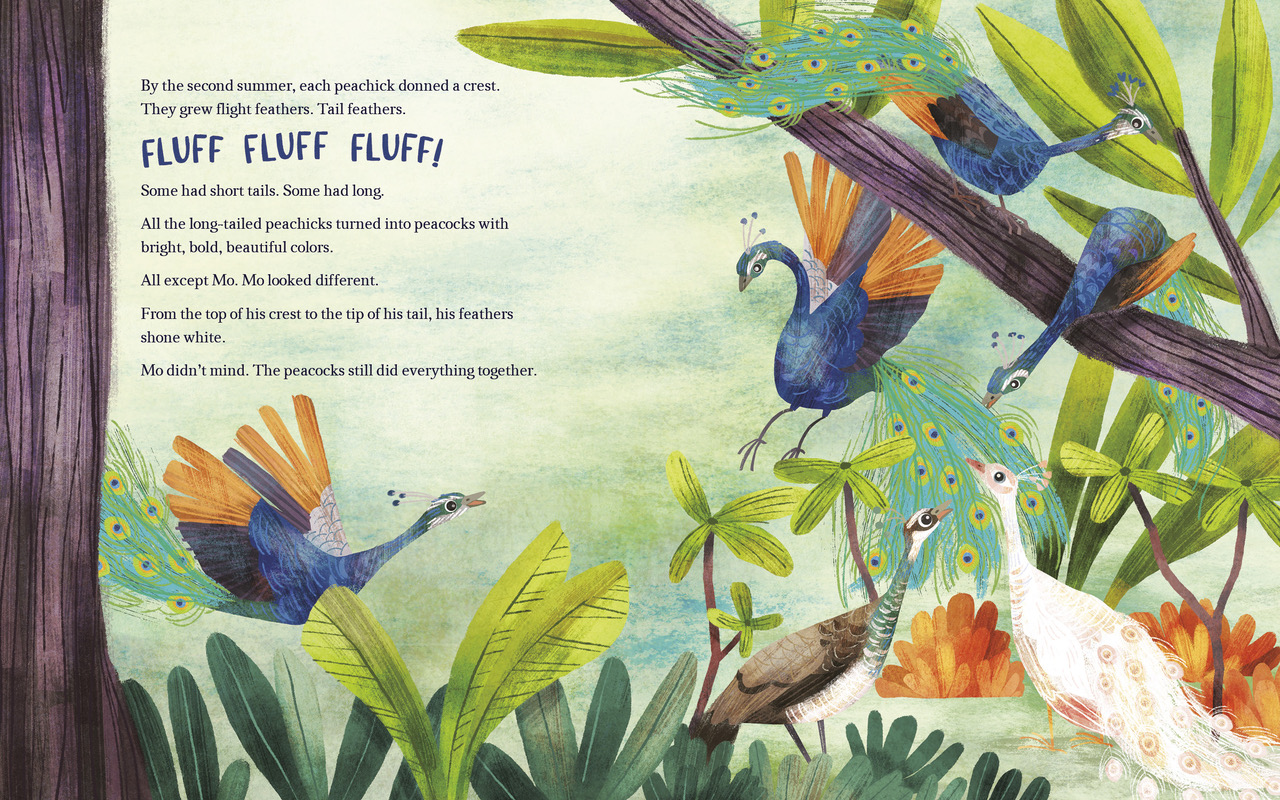
In the story, Mo is a leucistic (colorless) peacock who is well-loved, but he still thinks he is not as beautiful as his brothers and sisters. How did this internal conflict come to be the focus of your tale?
Sometimes children struggle with self-acceptance issues arising from identity, or fitting in, or self-doubts, maybe not due to external biases or bullying but just because of feeling different, like Mo. As an immigrant and a mother to three first-generation Indian-American children, I wanted to write a story that would empower children to know their strengths and understand their uniqueness, and become confident individuals. Through the colorless peacock’s journey to self-discovery, and finally to self-acceptance, my hope is to help every child realize that there is no one else like them, and that it’s great to be unique.
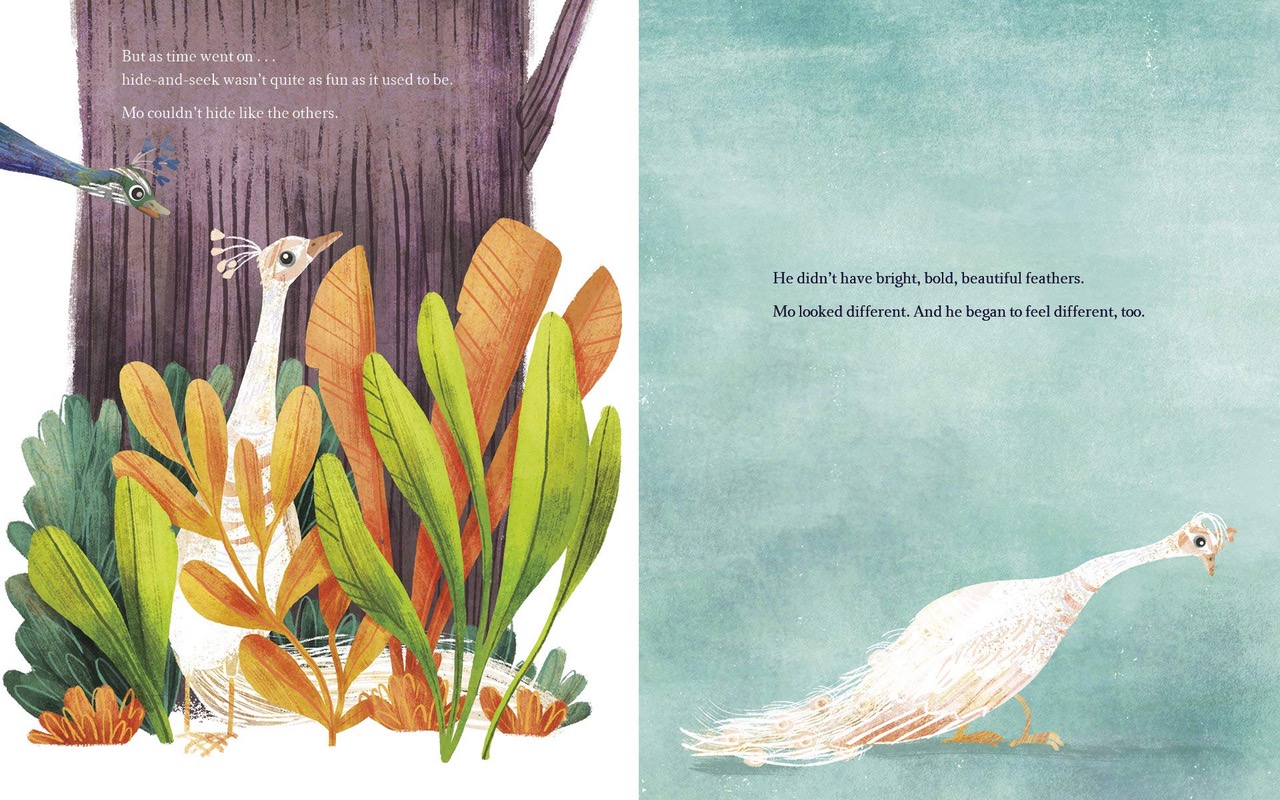
What was your initial reaction to seeing Mo brought to life in illustration?
My heart skipped a beat when I first saw the colorless peacock that only lived in my head come alive, and dance and celebrate on the pages. I was blown away by the vibrancy of colors and textures Stephanie had used all around Mo to make him stand out. At the same time, I was moved by how she let the white peacock glow and shine bright through his entire journey to self-discovery! The way Mo was brought to life was beyond my imagination!
With this being your debut picture book, what about the publishing process was surprising to you?
After my manuscript was acquired by Liza Kaplan at Philomel Books and Stephanie Fizer Coleman came on board to make the art, I kept wondering on how everyone’s vision would come together. I had no clue at all! Every stage of the book making process came to me as a pleasant surprise. But what surprised me the most was how the collective vision of so many people involved in the publishing process not only came together to match mine, but it went above and beyond that. I’m still in awe of the trust, creativity, and teamwork that goes into publishing of a picture book.
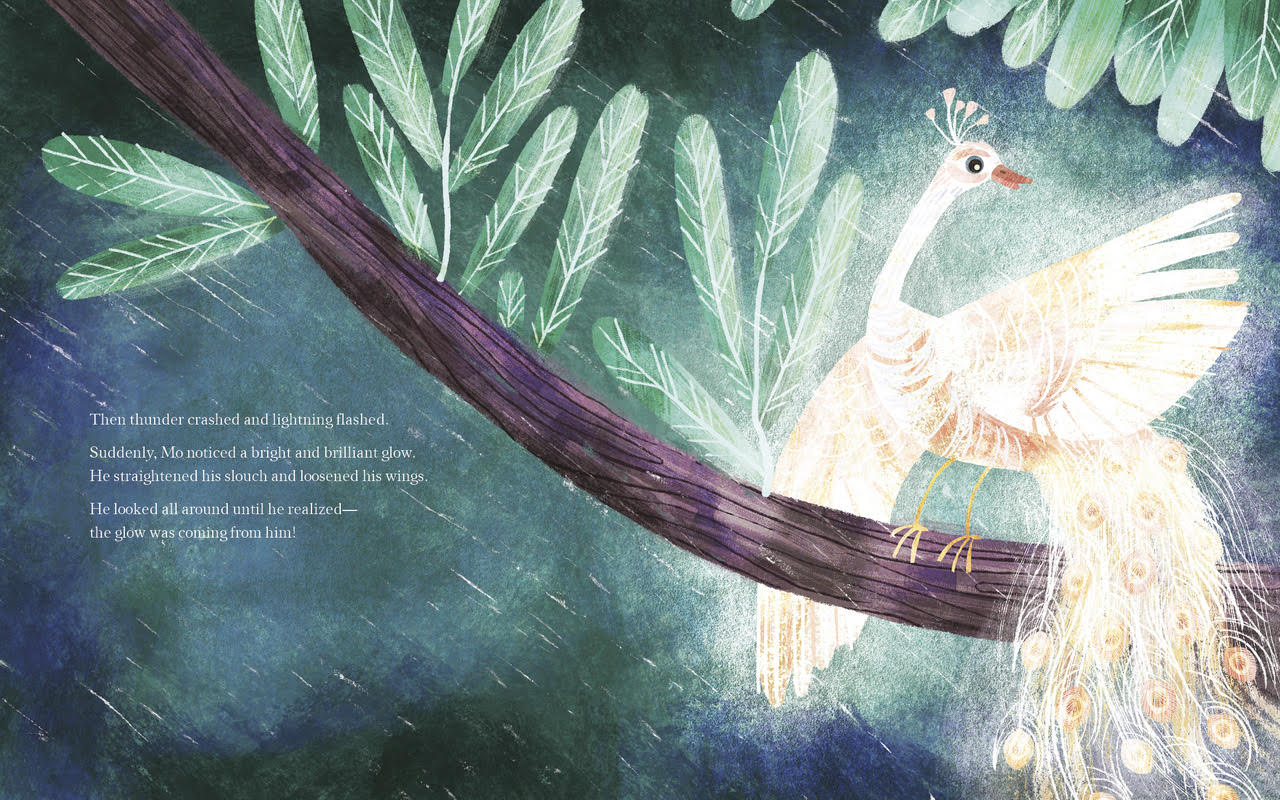
If you were to imagine Mo today, what do you think he’s doing?
Well, that’s a fun question, Tara! I think Mo must be enjoying playing hide-and-seek with his friends. And every now and then, I’m sure he must be standing tall, screeching aloud, and flaunting his feathers to attract the peahens.
Thank you for visiting, Sita and Mo, and congratulations on your picture book debut!
Blog readers, Sita is giving away a copy of BIRDS OF A FEATHER.
Leave one comment to enter the giveaway.
A random winner will be selected later this month.
Good luck!
 Sita Singh was born and raised in India, and moved to the United States in 1999. She currently lives in South Florida with her husband, three children, and an immensely cute and curious dog. An architect in the past, Sita now enjoys writing heartwarming picture books with a South Asian backdrop. When Sita isn’t reading or writing, she can be found trying new recipes in the kitchen, experimenting with food photography, walking with the dog, or movie marathoning with the family. Find out more about Sita on singhsita.com and connect with her on Instagram and Twitter @sitawrites.
♫ ♬ You’re a code breaker, spy hunter, heartbreaker don’t you mess around with me… ♫ ♬
Today I have a very special guest on the blog. No, not Pat Benatar…it’s the queen of picture book STEM biographies, Laurie Wallmark! Cool tidbit—I have known Laurie longer than anyone else in kidlit because we were in our first critique group together…aaaaand, we’re in the same critique group (albeit a different on) once again.
Laurie’s here today to celebrate the release of her newest book: CODE BREAKER, SPY HUNTER: How Elizabeth Friedman Changed the Course of Two World Wars, releasing March 2 from Abrams, with illustrator Brooke Smart.
This is a special book, as Laurie discovered new ways to enhance the story with fun approaches not typically seen in picture book biographies.

Laurie, kids love secret codes and messages. Is that why you decided to make this your next STEM biography?
What do you mean kids love secret codes and messages? How about me? I love secret codes and messages, too, and have ever since I was a kid. Remember, I was a computer programmer for many years. And what are programs, but coded messages to communicate to and from computers? They can also be like secret messages for those who don’t understand the computer language.
I enjoyed having the opportunity to both delve into Elizebeth Friedman’s life and learn more about codes and ciphers. In fact, writing the section in the back matter about “Cryptography Today,” gave me an excuse to further research the subject. I have the best job.
Oh, will you be writing your next book in codes and ciphers, then?
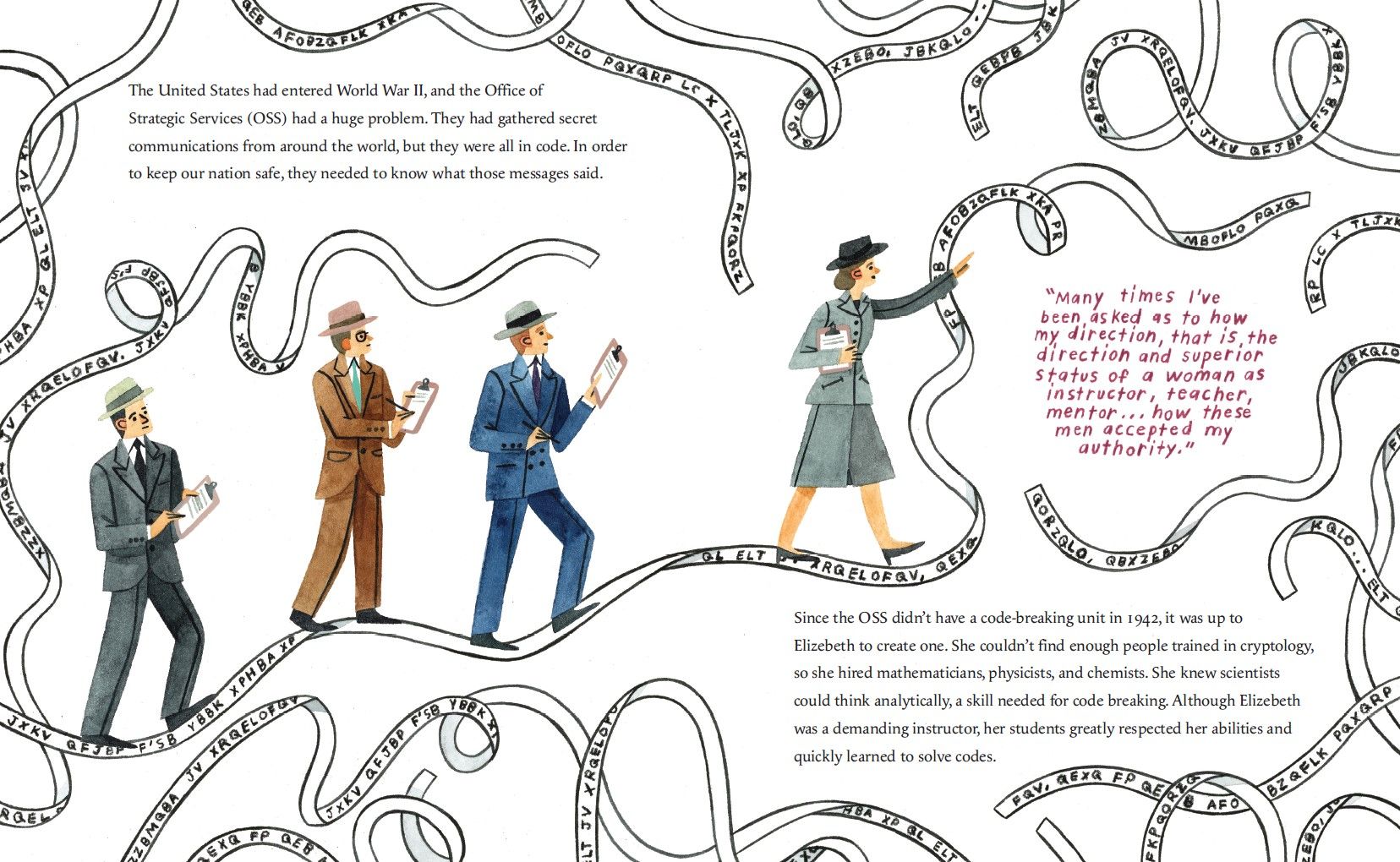
Ooh, wouldn’t that be fun? But I did something close to that in this book. If you look at the cover and some of the interior pages, you’ll see ribbons with letters on them. Originally, the illustrator was going to fill these ribbons with random letters. I made her and my life more difficult by suggesting that these ribbons actually contain real coded messages. I had to figure out the codes, then Brooke had to carefully hand-write each letter. (I can’t imagine how much work that was for her.) Even though we double- and triple-checked the ribbons, I’m convinced some eagle-eyed ten-year-old out there will find a mistake I made.
I hope the secret message isn’t “be sure to drink your Ovaltine” like in “A Christmas Story”!

When you’re working on a PB biography, how do you distill a person’s life into just the most salient points? How do you decide what’s most important in a life full of importance?
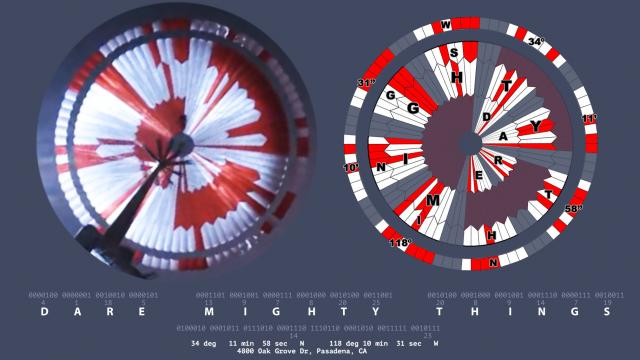
Before I answer your question, I want to mention a secret message that has nothing to do with books. This was hidden in the parachute of the Mars Perseverance. The white and red triangles represented binary code for the secret message, “Dare mighty things,” which is the motto of the Jet Propulsion Laboratory. In addition, the outside ring of the parachute holds the code for the GPS coordinates of JPL.
Anyway, on to your question. Finding a focus for a picture book biography isn’t easy. This is not only because of the limited word count, but also because I’m writing a story. And just like when I write fiction, sometimes I have to “kill my darlings.”
Because I write about people who are not well known, I tend to write what are called cradle-to-grave stories. I cover from the person’s childhood until after she has made her major accomplishment(s). Obviously, I can’t touch on every event in her life.
It’s hard, though. I try to make sure I cover the basics of the person’s life and accomplishments. After all, I want children to know why my subject is important. Once I do that, it’s all about writing a story that flows—a story that will draw a child in.
I noticed in the book illustrator Brooke Smart wrote some of Elizabeth’s quotes in handwriting instead of leaving them within the book’s text. Was there a significant reason for this treatment?

Unlike “nonfiction” biographies from years gone by, these days everything in biographies must be completely factual. Some authors get around this by including a note in the back matter that explains what is true and what isn’t. I personally don’t like this method, because a child might not read the note and be mislead by the text.
I chose a different approach. I identified a series of Elizebeth’s quotations I thought would help illustrate her thoughts and personality. Unfortunately, there wasn’t an easy way to include them within the text without making up the surrounding dialogue. Or, as discussed above, interrupting the narrative flow. Instead, I matched the quotations to events happening in a specific spread. Then, Brooke was able to artistically include the quotations in her illustration.
That method works beautifully!
Is there anything about Elizabeth you wanted to share but you couldn’t fit into the book?
There are always aspects of a person’s life that you need to leave out because, as mentioned above, word count limitations or story flow. I would have liked to include the fact that her father didn’t want her to go to college. In spite of that, she sent applications to multiple schools, determined to figure out a way to pay the tuition herself. Her father ended up loaning, not giving, her the money for school. The anecdote says so much about her determination, but it just wouldn’t fit. As it is, the book is jam-packed with scenes, so this is one that had to be left behind.
Speaking of scenes from the book, which is your favorite?
I love the scene with Velvalee Dickson, the “Doll Lady.” First, Velvalee is such an unusual name that it seems fake, even though it was her real name. Second, I can’t imagine how she cracked this code. How could she possibly realize that in a letter about dolls, “little boy” referred to warships or that “fisherman with net” meant minesweeper?

I can understand how decoding ciphers, where one letter or symbol is substituted for another, works. I might not be able to do it myself, but it makes sense to me that other people have the knowledge of math and the tools to do so.
But what an amazing brain Elizebeth must have had. She read letters that were supposed to be about dolls and not only realized they contained secret messages but figured out the code. There’s a reason Elizebeth Friedman is known as one of the world’s greatest cryptanalysts.
And you’re one of the world’s greatest picture book biography authors! Congratulations on CODE BREAKER, SPY HUNTER!
Blog readers, Laurie is giving away a copy of her book.
Leave one comment below to enter.
A random winner will be selected in early March.
Good luck!
 Award-winning author Laurie Wallmark writes picture book biographies of women in STEM (science, technology, engineering, and math) as well as fiction. Her books have earned multiple starred trade reviews, been chosen as Junior Library Guild Selections, and received awards such as Outstanding Science Trade Book, Best STEM Book, Crystal Kite Award, Cook Prize Honor, and Parents’ Choice Gold Medal. Her titles include ADA BYRON LOVELACE AND THE THINKING MACHINE, GRACE HOPPER: QUEEN OF COMPUTER CODE, HEDY LAMARR’S DOUBLE LIFE, NUMBERS IN MOTION, and CODE BREAKER, SPY HUNTER. Laurie has an MFA in Writing from VCFA and frequently presents at schools as well as national professional conferences (NSTA, NCTE, ALA, TLA, etc.). She is a former software engineer and computer science professor. You can find Laurie on the Web at lauriewallmark.com and Twitter @lauriewallmark.
by Hoity-Toity Otter (and not Abi Cushman)
A little birdie told me something recently that was otterly preposterous. Apparently there are women who… get this… make funny books for kids.
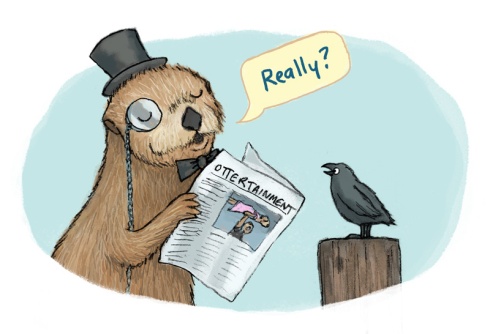
“Really?” I said. “Well this is the first I’ve heard of this and I’ve read many articles about funny kids’ books in major newspapers and magazines, and I don’t recall mention of female authors and illustrators in any of them.”
I continued about my day, chuckling at the very notion. A funny woman?? Who writes for KIDS?? Ho! Ho! Now THAT’S a funny idea for a picture book. For a man to write, of course.
But then something happened. I couldn’t shake this feeling. What if that little birdie was right?? I had to know for sure, so I decided to throw myself into deep research.
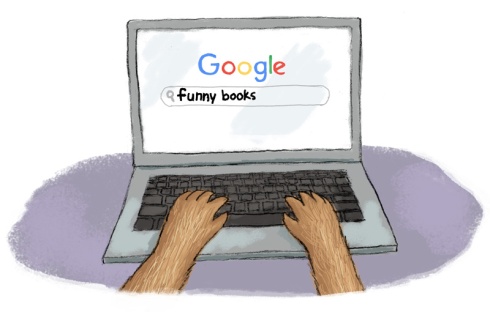
Well wouldn’t you know, there ARE funny female authors and illustrators! Quite a few actually. Dare I say, LOTS. I decided to reach out to some of these creators and gain more insight into this phenomenon. Interestingly, for my first question I got the exact same answer from every single person I asked.
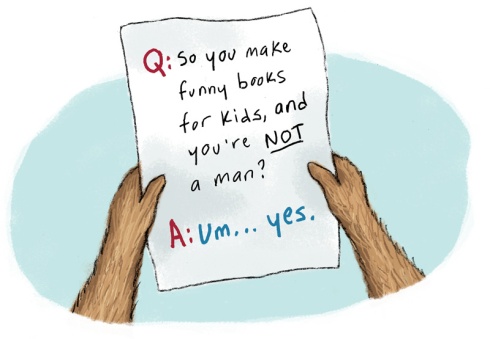
So I felt compelled to dive deeper and learn more about their process for creating really funny books. Here are the results.
- From where do you draw your humor?
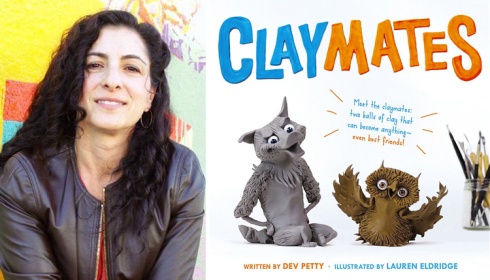
From Dev Petty, author of CLAYMATES:
“Life is funny and occasionally (if not often) somewhat absurd. I draw humor from those uncomfortable and weird bits of absurdity around us and how we humans cope with them. Sometimes I crack jokes when I’m nervous or uncomfortable and that friction, that discomfort, can create a lot of room for humor. I also grew up around a lot of funny, creative people and learned how humor connects people. Basically, if I was entertaining, my family let me stay up late.”
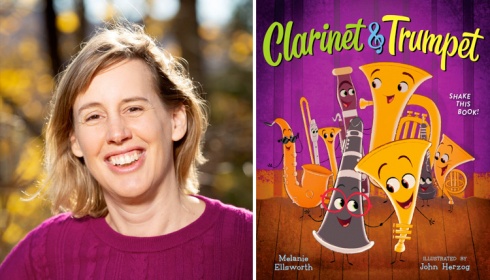
From Melanie Ellsworth, author of CLARINET AND TRUMPET:
“For me, individual words and the way we string certain words together can be very funny. So I’m always on the lookout for a silly turn of phrase – sometimes stolen from my daughter and occasionally something I have misheard. I love playing around with puns and idioms and common expressions and seeing if there’s a story there!”
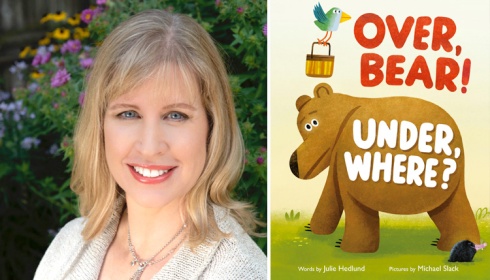
From Julie Hedlund, author of OVER, BEAR! UNDER, WHERE?:
“I get a lot of ideas from movies, comedy shows, books, and even signs and advertisements. When something makes me laugh out loud, I ruminate on WHY it’s funny and brainstorm on how I could make that concept work for kids. I also often get a funny/punny title first and build a story from there.”
- How do you know if your joke will be funny to kids?
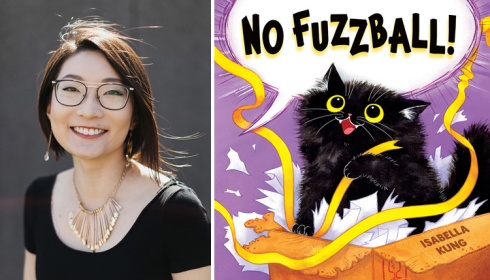
From Isabella Kung, author-illustrator of NO FUZZBALL!:
“First, I would like to acknowledge I am very fortunate that my main character—a cat—is already beloved by many adults and kids. (The internet is obsessed with cat pictures and videos for a reason!) So just getting the character design, attitude, and body language right made a lot of adults and kids laugh. NO FUZZBALL! is very much inspired by my own furbabies, Bubo and Bella. Honestly, I just wrote and illustrated what I found funny and what made me laugh about them. I also drew a lot of inspiration from books and cartoons I loved as a kid. I enjoyed when characters made a mess, and found it hilarious when characters had grand personalities while being completely unaware or misunderstand their surroundings like PINKY AND THE BRAIN. I found that embracing my inner child is the key to writing humor for children.”
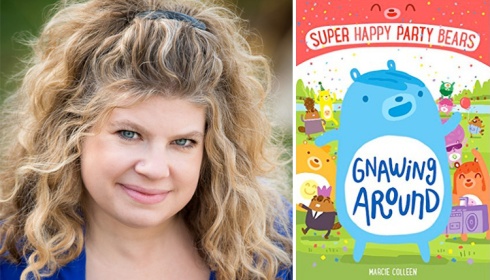
From Marcie Colleen, author of the SUPER HAPPY PARTY BEARS series:
“For me, being attuned to what kids are currently watching in cartoons helps a lot to know what they are laughing at today. When I was writing The Super Happy Party Bears chapter book series my editor asked me to infuse my storytelling with random, absurd humor like in Adventure Time, a popular Cartoon Network show at the time. I sat down and watched several episodes (cool job, right?) and took notes on how jokes were set up, the rhythm of the jokes, and basically the essence of what was considered funny. I was then able to recreate that type of humor when writing my books. Truth is, I’ve never grown up and I LOVE watching kids television. It’s a quick and easy way to see what’s funny to today’s kids. And it’s hella fun.”
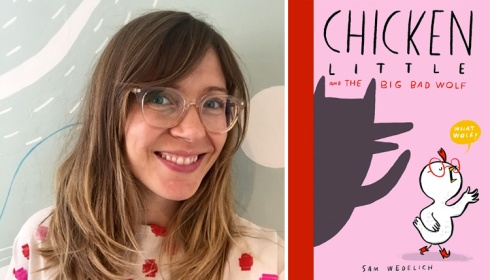
From Sam Wedelich, author-illustrator of CHICKEN LITTLE AND THE BIG BAD WOLF:
“When I’m writing, I try and make myself laugh. That’s the first test. The second test is to read it to kids… I have two kids, so I don’t have to go far, but I also send early drafts or jokes to other friends with kids and get their feedback. Did they laugh? Did they want to hear it again? To me, the highest praise I could ever get on my work is that a kid wants to read it ‘again.’”
- What’s your trick to creating a really funny scene or moment?
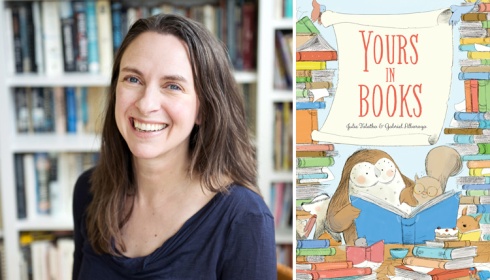
From Julie Falatko, author of YOURS IN BOOKS:
“Once I have the story down, I work to shoehorn in as many jokes as I can. I do a revision where all I’m doing is adding as much specific hilarious weirdness as possible. I look at every line and think of how it can either set up a joke or be a joke, and then I make it as silly and weird as I can. Always make it weirder. I have a book with a discarded shoe who likes to sing, one where the main characters wear pizzas on their heads, and one where a dog gives a dramatic speech about a sponge. All those things were added in the “make it weirder” revision.”
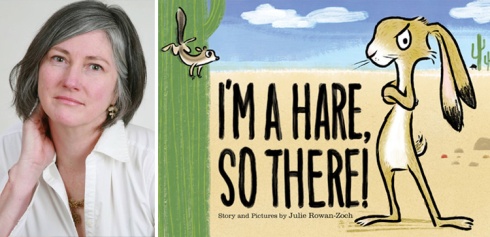
From Julie Rowan-Zoch, author-illustrator of I’M A HARE, SO THERE!:
“More often after I get a drawing or sketch to a point where I am satisfied I take a step back (or hold my iPad further away!) and ask, what can I do that would lift the story – or character look? Especially something that happens to everyone, so viewers can relate, or to evoke an emotion – but something that is not in the text! Add a few lines, move them, or REmove them? A shoe on the wrong foot, perhaps? Gum stuck to it? An eye roll? Maybe with juxtaposition: over-sized ears, a tiny stuffie for a bristly character, an exaggerated mouth wide open on a quiet personality! Would the situation, like a haircut, be more interesting in a kitchen or in a classroom? Unexpected color: purple clouds, mis-matched socks, or green eggs! Even something dark, like a random grimace in a crowd, or a pothole in the character’s path. Or just plain silly, like baby ants in diapers? I suppose it helps having a mind that is always looking for a bit of trouble!”
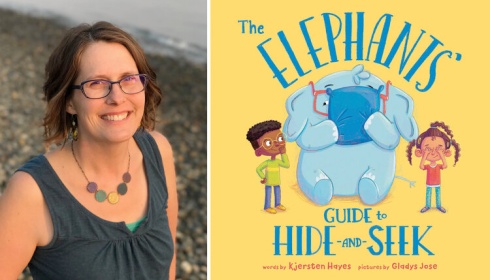
From Kjersten Hayes, author of THE ELEPHANTS’ GUIDE TO HIDE-AND-SEEK:
“My favorite way to create funny scenes is through brainstorming and not stopping with my first idea but pushing myself until I’ve come up with quite a few possibilities. I often set a goal, like I’ll say I need ten different options for how a part will play out and then I’ll brainstorm until I make it to ten. I usually have to get pretty silly to make it that far, which makes things funny. I especially like to use this method to brainstorm how the words and the pictures could show two different points of view or two different parts of the story. Like maybe the character thinks one thing is happening, but reality is a bit different. I also always ask myself after writing a part if this is really the best and funniest possibility I can come up with. I often realize the answer for early drafts is no. Even if I like it, I realize it could be even better. So I try again, and things get funnier. Another small tip—when in doubt, go for drama and exaggeration. Drama and exaggeration are often funny in picture books.”
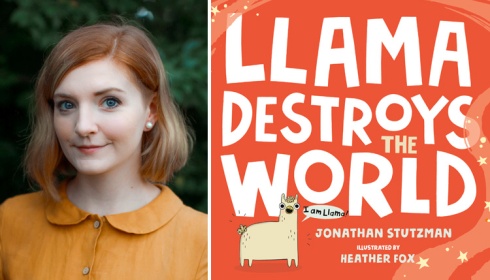
From Heather Fox, illustrator of LLAMA DESTROYS THE WORLD:
“For me, it’s all about facial expressions and body language- specifically the eyes! That being said, you might notice that a lot of my silly book characters have really big eyeballs.This proves useful in scenes that don’t have dialog (and even ones that do!) with conveying a character’s expressions, emotions, and thoughts. Humor often comes from not just a situation, but the reaction of the character in that situation.”
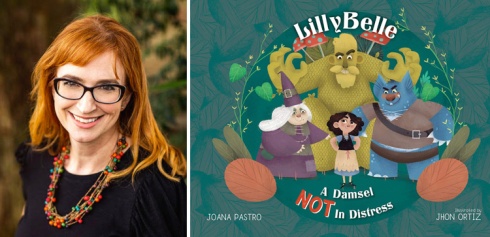
From Joana Pastro, author of LILLYBELLE, A DAMSEL NOT IN DISTRESS:
“My favorite line in LILLYBELLE, A DAMSEL NOT IN DISTRESS belongs to the witch. When she says: “It’s a monstrosity! I love it!” It’s a simple line, but I find it hilarious—especially when read aloud—because she uses the word monstrosity in an unpredictable way, as a compliment. So, when I’m working on a funny story, I always aim for the unexpected by searching for out-of-the-box situations or the unfiltered honesty that young children have. If I want to amp the humor, I will make a list of predictable outcomes and then a list for absurd ones. I love a good twist, a great surprise. That’s what I always aim for.”
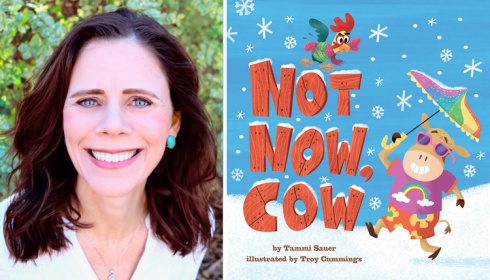
From Tammi Sauer, author of NOT NOW, COW:
“I think every writer has different strengths, and one of mine is humor. Most of what I write just comes out funny. Even so, I don’t settle. When I’m working on a manuscript, I keep toying with each word, each line, and each scene until I get that YESSS feeling. The YESSS feeling usually involves me laughing and crying alone in my office but whatever. It’s the best.”
- What do you do if your editor/agent/art director doesn’t ‘get it’?
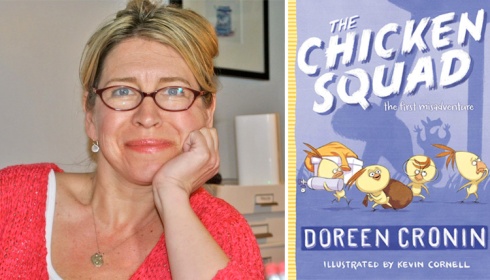
From Doreen Cronin, author of THE CHICKEN SQUAD series:
“Ha! This happens all the time. I can get in a groove where I think everything is funny. When I hear back that I am alone in that — I re-write. It’s like writing any other genre, not everything you think is coming across (humor, emotion, plot) is coming across clearly. Re-write, re-write, re-write. Comedians work out their material in a room with an audience and sharpen it until it really works. Writers do the same. Your audience becomes your agent, editor, art director, etc. (My kids tell me how “not funny” I am all the time!) It’s usually more about sharpening than deleting all together. For every 30 jokes you write, three of them might actually be ready. Rewrite! The punch-line is there, it just might be circling and you haven’t really brought it in for a landing.”
Well to quote Baby’s father in Dirty Dancing, a movie all sea otters love quoting, “When I’m wrong, I say I’m wrong.” I was absolutely bowled over by those responses and give those creators my otter-most respect.
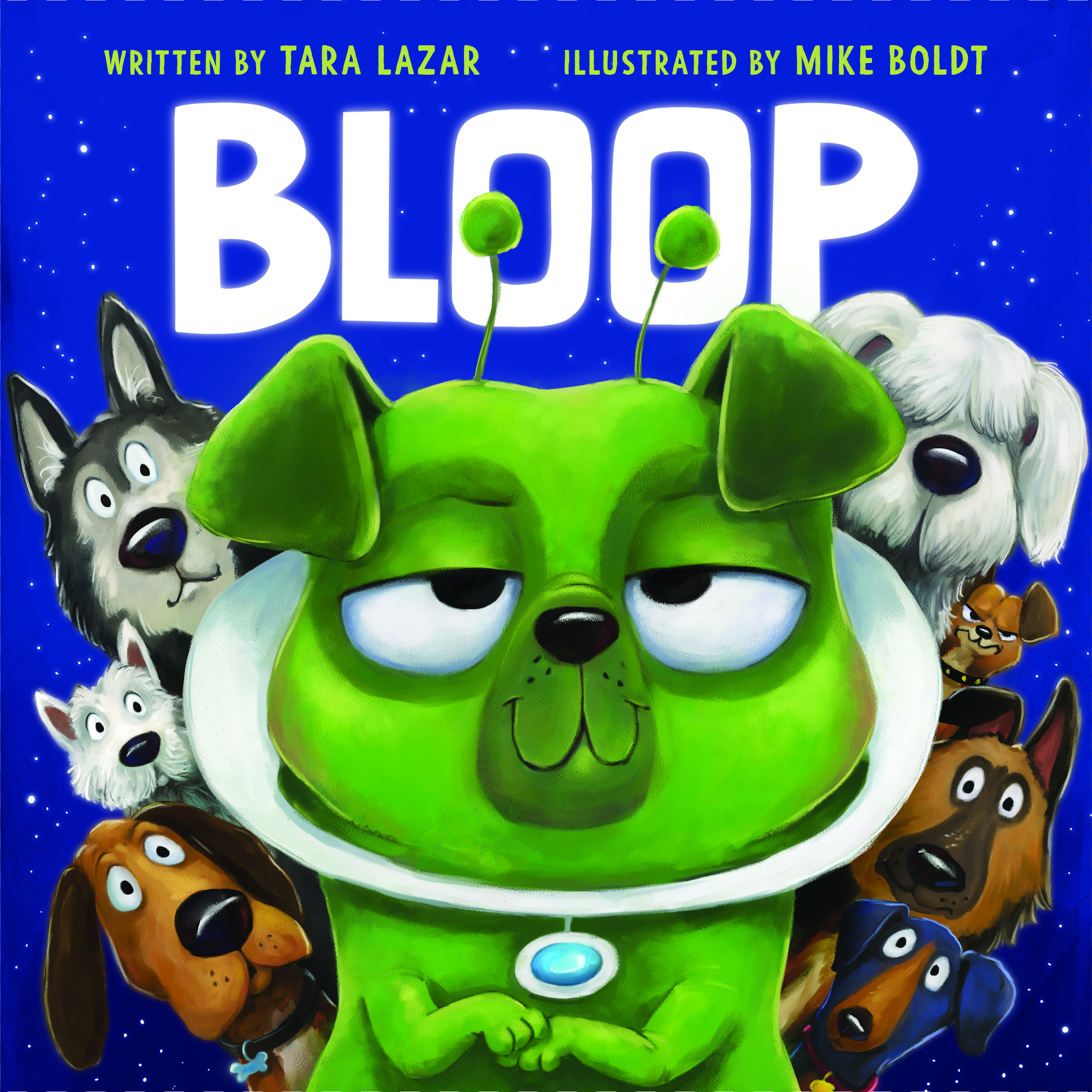
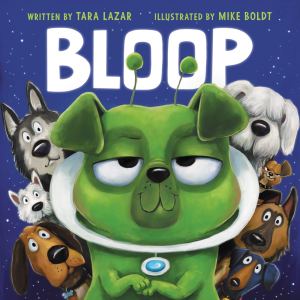 And guess what! It gets even better. I have a special bonus round with the fabulous host of this blog and the author of many funny kids’ books including the upcoming picture book, BLOOP, illustrated by Mike Boldt. It’s the one and only, Tara Lazar! Thank you, Tara, for making my research project extra otterrific.
So Tara, where do YOU draw your humor from?
My father had a dry wit with zingy one-liners. I grew up with his humor, so it was bound to rub off. We watched funny movies together (his favorite was “My Cousin Vinny”) and he let us stay up late to watch Saturday Night Live. What’s especially funny is that he had a very serious, boring job (at least in my opinion) as a chemical patent attorney. I think his humor provided much needed comic relief at work! But he was obsessed with MAD Magazine as a kid—hiding cut-outs of Alfred E. Neuman all over his house to surprise his parents—so I think he was always funny.
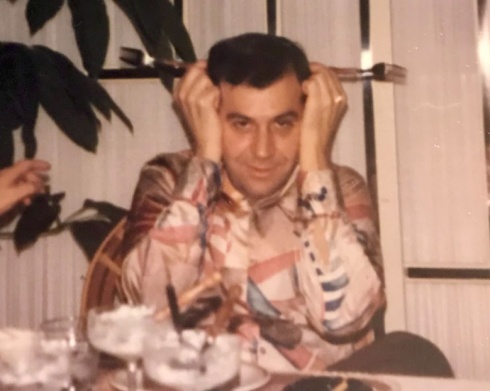
My dad, circa 1979
How do you know if your joke will be funny to kids?
Well, I’m still in second grade, so if I laugh, I’m pretty sure kids will, too. I laugh at silly things my own kids roll their eyes at—but they’re teenagers, so, like, pinch of salt.
What’s your trick to creating a really funny scene or moment?
There’s no trick, really. Humor comes from surprise. Sometimes I’m shocked at what spills out because I wasn’t expecting it, either!
What do you do if your editor/agent/art director doesn’t ‘get it’?
I’m lucky in that my agent does GET IT. But sometimes an editor doesn’t. If they provide comments that resonate and ask for a rewrite, I’ll do it. But those that don’t GET IT just don’t and there’s nothing I can do but move on to the next editor. Humor is subjective.
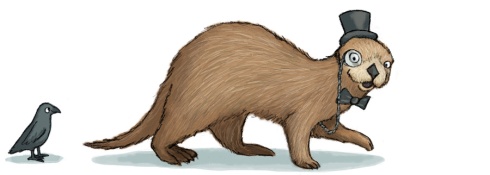
Well, I don’t know about you, but this hoity-toity otter sure learned a lot! And you know what? I just got a wild idea! Maybe someone should tell those newspapers and magazines they’re missing out and should include funny women in their articles! Why hasn’t anyone else thought of this?? I’m going to go do that right now. Ta-ta!
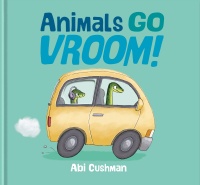 Hoity-Toity Otter is not only the author of this article, he also plays the small but pivotal role of “Taxi Cab Passenger Who Eats a Three-Course Meal While Sitting in Traffic” in the upcoming picture book, ANIMALS GO VROOM!, which rolls onto shelves on July 13, 2021 from Viking Children’s Books.
 Abi Cushman is the author-illustrator of ANIMALS GO VROOM! and SOAKED!, which was a Kids’ Indie Next Top Ten Pick for Summer 2020. She has also worked as a web designer for over 15 years, and runs two popular websites of her own: MyHouseRabbit.com, a pet rabbit care resource, and AnimalFactGuide.com, which was named a Great Website for Kids by the American Library Association. In her spare time, Abi enjoys running, playing tennis, and eating nachos. (Yes, at the same time.) She lives on the Connecticut shoreline with her husband and two kids.
If you’d like to learn more about Abi and her books, you can visit her website at AbiCushman.com. For special giveaways, sneak peeks, and more hoity-toity otter musings, subscribe to her newsletter.
by Brian Gehrlein
To begin, THE BOOK OF RULES was never supposed to happen. It was just a silly book I wrote in 2017 that was never queried and never shared with my agent because I thought it was dead. However, we wanted to find another project to go on submission with so I took a dive into the dusty corners of my Google drive. And there it was. Lifeless and forgotten…THE BOOK OF RULES. Recalling concepts from The Princess Bride, I wondered if it was all dead or just mostly dead. I decided to find out. Through the magic of revision, several amazing critique buddies, and 10,000 volts of figurative electricity, we brought this “dead” story to life. Ta-da! A once thought dead manuscript Frankensteined to a multi-house offer debut book deal. Moral of the story? Keep an open mind and doubt your conclusions—what if your “worst” story is actually your best?!
So far what I’ve observed about the kidlit industry is that it feels like nothing is happening and then everything is happening. And then nothing is happening. And then EVERYTHING IS HAPPENING! Soon art was happening. Soon a monster was happening. Soon Dennis was happening. Yes, Dennis. Because what’s a good name for a monster that eats children who don’t follow the rules? Obviously Dennis.
Throughout the process, Tom Knight confirmed himself to be the kidlit illustration wizard I knew he was. His stuff is amazing and I couldn’t be more pleased to share this book with him! The first time I saw the cover, I remember shouting, “IT’S DENNIS! HE’S PURPLE! MY NAME IS ON A BOOK!” Crazytown. Bonkersville. A rush of blood to the head with two parts sugar and one part imposter syndrome. Because this book was never supposed to happen…and then it was.
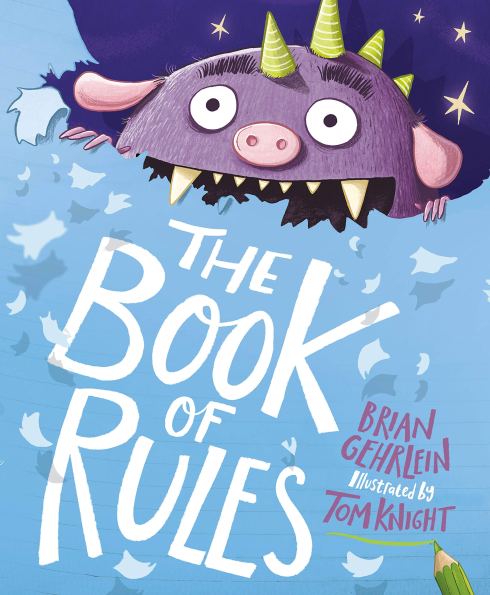
THE BOOK OF RULES is a meta, interactive story that playfully introduces the idea of following rules (lest you be eaten) while weaving in a subtle thread of mindfulness. Due to its meta nature, I love that Dennis is eating the book on the cover—a bit of foreshadowing for one of my favorite parts at the end! I also think Tom really captures the playful tone I was going for with the color scheme and design of Dennis. Look how hungry he is! He’s adorably awful. Marvelously monstrous. I can’t wait for him to break out of this cover and munch his way into your hearts…and also eat your children (unless of course, they follow the rules).
From the publisher:
An interactive picture book with dynamic illustrations, in which readers have to follow the rules or risk a run-in with a monster—with a gentle approach to mindfulness along the way.
Beware! This book has rules. You must follow all the rules. If you break the rules . . . Dennis the monster will eat you. And you don’t want to be Dennis-food—do you?
With a laugh-out-loud, interactive style, The Book of Rules invites you to get your sillies out before it’s time to focus and listen to directions. And you better get started, because Dennis can’t wait to eat—or, um—meet you!
THE BOOK OF RULES (FSG/BYR) comes out October 19th and is available for preorder.
Thanks for stopping by, kidlit fam! And thanks for hosting this cover reveal, Tara!
Brian is giving away a picture book manuscript plus query critique to a lucky commenter!
Leave one comment below.
A winner will be randomly selected in two weeks.
Good luck!
 Brian Gehrlein is the author of dozens of award-winning children’s books that you haven’t read because they don’t exist yet. If only you had a time machine to fact check this absurd claim. Alas, you do not so you’ll just have to take his word for it. Brian enjoys writing snarky pretend-bios at the end of his posts which you can read at pbspotlight.com. Brian thanks you for reading this post. He thanks you for reading this unhelpful non-bio. He especially thanks you for reading this sentence. It was a really good sentence. However, he does not thank you for reading this sentence. You were not supposed to read that one. It was a secret and you’ve gone and compromised the entire mission. What mission you ask? Well, if you even have to ask then you don’t have a high enough security clearance and probably aren’t that cool. For more snark, follow Brian on Twitter @BrianGehrlein.
 Tom Knight grew up on Mersea Island on the Essex coast, where he returned to live after having children of his own. Having grown up on a small farm, Tom spent most of his time using his imagination to create new worlds from the hedgerows and haystacks.
After an enjoyable stint as a graphic designer, Tom is now proud to be using his imagination as a full time career. Drawing on a long and abiding love of imagery from childrens literature, Tom has worked for a diverse range of publishers, including Little Tiger Press, Templar, Simon and Schuster, Scholastic and Macmillan. He has also turned his hand to authoring his own titles and is the author and illustrator for the ‘Good Knight, Bad Knight’ books and ‘Jimmy Finnigan’s Wild Wood Band’.
He does all this from a poorly temperature-controlled studio in the garden, where he is constantly distracted by the greedy birds that hang out by the feeder outside his window.
Learn more at Tom’s website tomknightillustration.co.uk and follow him on Twitter @tombabylon.
by Ashley Franklin
 Remember NOT QUITE SNOW WHITE? Now we finally get to see Tameika in all of her royal glory! My publisher received such a positive response from readers who fell in love with Tameika’s story that it was decided that she deserved more time to shine. She does just that in BETTER TOGETHER, CINDERELLA.
The NOT QUITE SNOW WHITE cover does an amazing job of capturing the gist of the book: Tameika wonders if she can be Snow White. The cover of BETTER TOGETHER, CINDERELLA does an equally amazing job of doing the same. Tameika is Cinderella, but she’s sharing her space with her siblings.

There are so many things that I love about this cover by illustrator Ebony Glenn! Purple and blue were essential to the cover, and I had a lot of fun adding my input. Of course, we wanted blue for the Cinderella vibe, but purple is associated with royalty. Blue cover or purple cover? As you can see, we went with purple. If I had to pick my absolute favorite thing about the cover, it would be the stars. I often sign NOT QUITE SNOW WHITE with some rendition of “Always shine like the star you are.” This sentiment resonates in BETTER TOGETHER, CINDERELLA too; so to me, the stars are perfect.
What makes this book particularly special to me is that this was a completely different experience from my debut. This title was not something that came easily. I really wanted the perfect rhyme like we had with “quite” and “white” again, but it is not much you can do for a Cinderella rhyme. One of my sons suggested that we use mozzarella and be done with it. Clearly, that would have been a different story altogether.
I can’t wait until kids can see how Tameika adjusts to sharing the spotlight.
BETTER TOGETHER, CINDERELLA will release from HarperCollins on September 7, 2021. Pre-order a copy online today or through your local independent bookstore.
Ashley will be giving away a signed copy of the book once it’s released!
Leave one comment below to enter. A random winner will be chosen next month.
Good luck!
 Ashley Franklin is the author of NOT QUITE SNOW WHITE (2019), “Creative Fixes” from the anthology ONCE UPON AN EID (2020), “Situationally Broke” from the anthology WHAT WE DIDN’T EXPECT (2020), BETTER TOGETHER, CINDERELLA (2021) and more. Ashley received her master’s degree in English literature from the University of Delaware. She is an adjunct college instructor, freelance writer, and proud mom. Ashley currently resides in Arkansas with her family.
Ashley is represented by Kathleen Rushall of the Andrea Brown Literary Agency. Visit Ashley’s at ashleyfranklinwrites.com, on Twitter @differentashley, Facebook at Ashley Franklin, or Instagram @ashleyfranklinwrites.
Today we’re revealing the cover of Jocelyn Rish’s debut BATTLE OF THE BUTTS, illustrated by David Creighton-Pester.
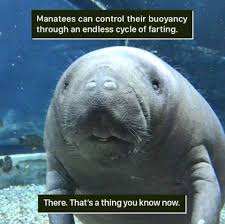
Did you know manatees swim using farts? Or that herrings communicate by passing gas?
Butts are used for breathing, eating, swimming, talking, and even killing in the animal kingdom. Focusing on ten different animals and their derrières, and offering fun facts about their origin, habitat, and “posterior power,” this hilarious book captures the wonder of our ecosystem. Which animal has the coolest butt power? That’s up to you to decide!
Jocelyn, what inspired you to write about animal butts?
I was doom-scrolling Twitter very, very late one night, which is a bad habit I indulge in way too often, but this time it was a good thing! I ran across a tweet with this meme, which says manatees can control their buoyancy through an endless cycle of farting.
I giggled and thought that can’t possibly true. So I Googled it. And it is true! And as a delightful bonus of my search, Google told me about other animals that do weird things with their butts. I don’t think I slept that night as I went down a research rabbit hole of bizarre booties.
I tutor elementary school students who struggle with reading through a program called Reading Partners, so I’ve always wanted to write a book that would appeal to reluctant readers. After hours of reading about these fantastic fannies, I knew this was IT!
Did I ever imaging my debut would be about animal butts, farts, and poop? No.
Am I over-the-moon excited about it? Heck yeah!
And I hope even reluctant readers will be unable to resist a book with animal butts on the cover. Check out these delightful derrières!
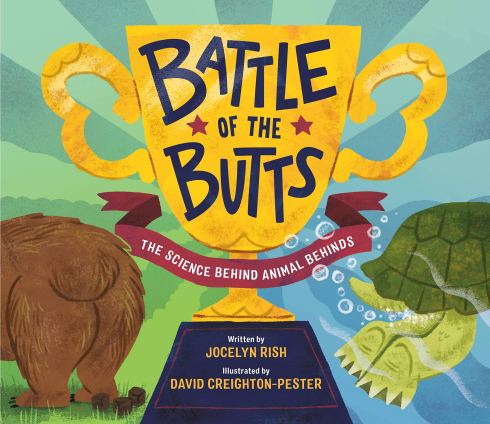
What were your thoughts when you first saw the cover?
First of all, I have to say that David is both clever and hilarious (and of course super talented). I can’t wait for y’all to see all the little funny moments in the illustrations.
Anyway, my editor (Allison Cohen) sent me his sketches of several potential versions of the cover. They were all great—one was even set on a stage like the animals were competing, which is how I first envisioned the butt battle—but we all agreed the trophy version was the winner. I just loved the concept of the title on the trophy with our names on the stand—too perfect!
Once I saw the final version, not going to lie, I cried. I never imagined that a cover featuring animal rear ends would be so pretty! The bright colors. The way the greens and blues blend together (half the animals live on land, the other half in the water). The whole thing makes my eyes and my heart happy.
And I’ve never asked David if this is on purpose or if it’s my posterior preoccupation reading too much into things, but the trophy has butts on it! The top of both handles, the bottom of the cup, and the bottom of the stand have light reflections that are butt silhouettes. And even the handles themselves are booty shaped! Or maybe I’m taking this tushie theme too far.
Regardless, I’m thrilled our cover is now out in the world, and I can’t wait for kids to start reading the book!
BATTLE OF THE BUTTS will release from Running Press Kids on September 28, 2021. Pre-order a copy online today or through your local independent bookstore.
Jocelyn will give away one copy of BATTLE OF THE BUTTS to a lucky commenter (to be sent your way when it releases in September 2021!
Leave on comment to enter.
A winner will be randomly selected at the end of the month.
Good luck!
 Jocelyn Rish is a writer and filmmaker who never imagined her cheeky sense of humor would lead to a book about animal butts. When she’s not researching fanny facts, she tutors kids to help them discover the magic of reading. Jocelyn has won numerous awards for her short stories, screenplays, short films, and novels and lives in South Carolina with her booty-ful dogs. Visit her website jocelynrish.com.
 David Creighton-Pester is an illustrator and designer from Hamilton, New Zealand. Inspired as a child by picture books, animation, and all things arty, he spent endless hours drawing crazy characters and coming up with silly stories. And still does now! David is also the owner of Scorch Design, a graphic design company he started in 2009. You can see more of his illustration work at davidcp.com.
SORRY, THE PLEDGE IS NOW CLOSED!
If you’ve been participating in Storystorm all month, you’ve been generating tons of ideas!
Luckily you don’t need tons to “win” the Storystorm challenge. You just need 30 of them!
When you have 30 ideas, you can qualify to win one of 8 AMAZING Storystorm Grand Prizes—feedback on your best 5 ideas from one of these kidlit agents!
- Ammi-Joan Paquette
- Miranda Paul
- Natascha Morris
- Adria Goetz
- Jennifer March Soloway
- Sean McCarthy
- Susan Hawk
- Liza Fleissig & Ginger Harris-Dontzin
(More on this tomorrow!)
In order to qualify for a Grand Prize, your name must be on the registration post AND the pledge below.
If you have 30 ideas, put your right hand on a picture book and repeat after me:
I do solemnly swear that I have faithfully executed
the Storystorm 30-ideas-in-30-days challenge,
and will, to the best of my ability,
parlay my ideas into picture book manuscripts.
Now I’m not saying all 30 ideas have to be good. Some may just be titles, some may be character quirks. Some may be problems and some may create problems when you sit down to write. Some may be high-concept and some barely a concept. But…they’re yours, all yours!
You have until February 5th at 11:59:59PM EST to sign the pledge by leaving a comment on this post.
PLEASE COMMENT ONLY ONCE.
The name or email you left on the registration post and the name or email you leave on this winner’s pledge SHOULD MATCH. However, when you comment, WordPress also logs information that allows me to recognize you, so don’t worry.
Again, please COMMENT ONLY ONCE. If you make a mistake, contact me instead of leaving a second comment.
Remember, this is an honor system pledge. You don’t have to send in your ideas to prove you’ve got 30 of them. If you say so, I’ll believe you! Honestly, it’s that simple. (Wouldn’t it be nice if real life were that straightforward.)
Are you ready to sign?
Then GO FOR IT! Let’s see your name below!

by Jarrett Lerner
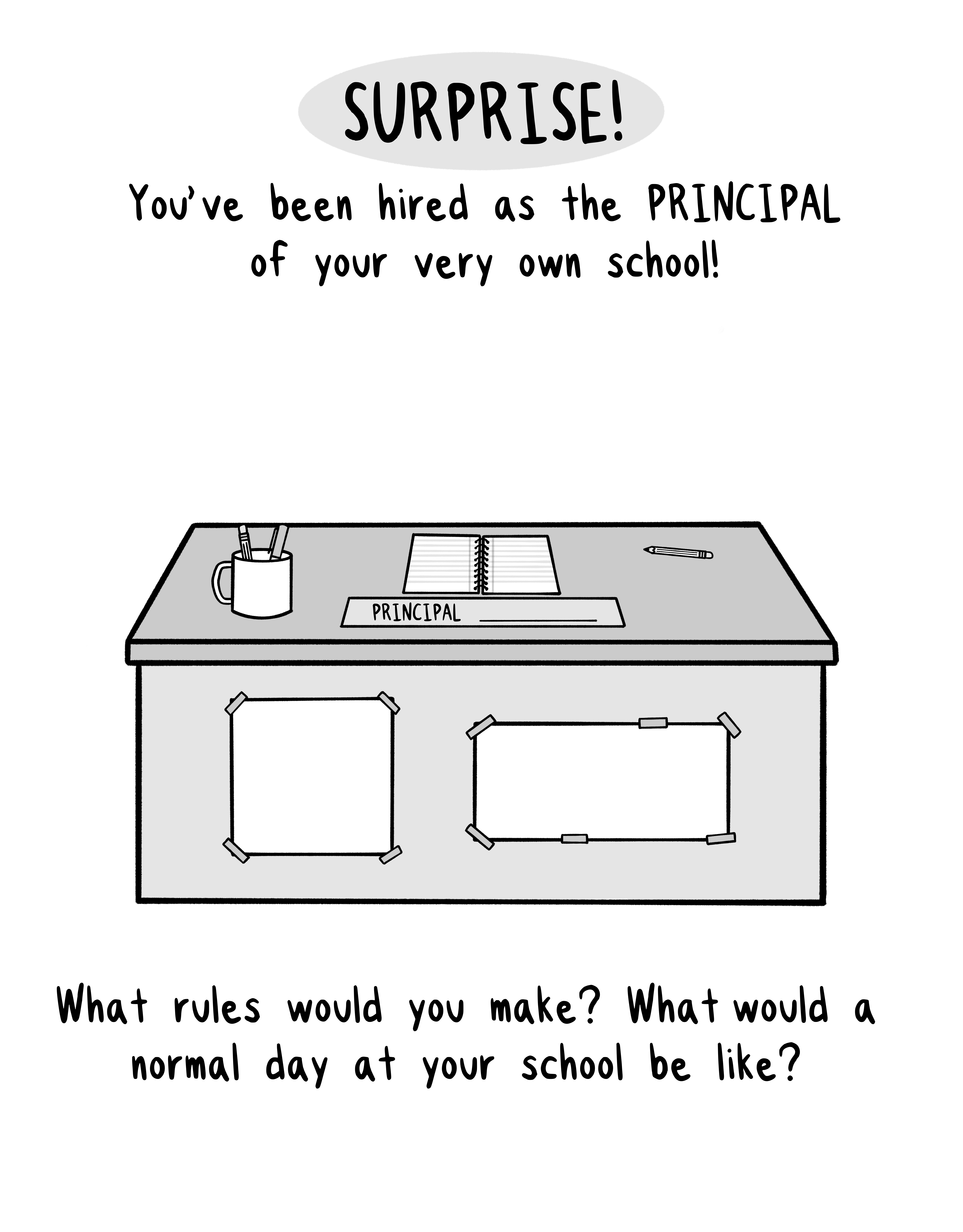
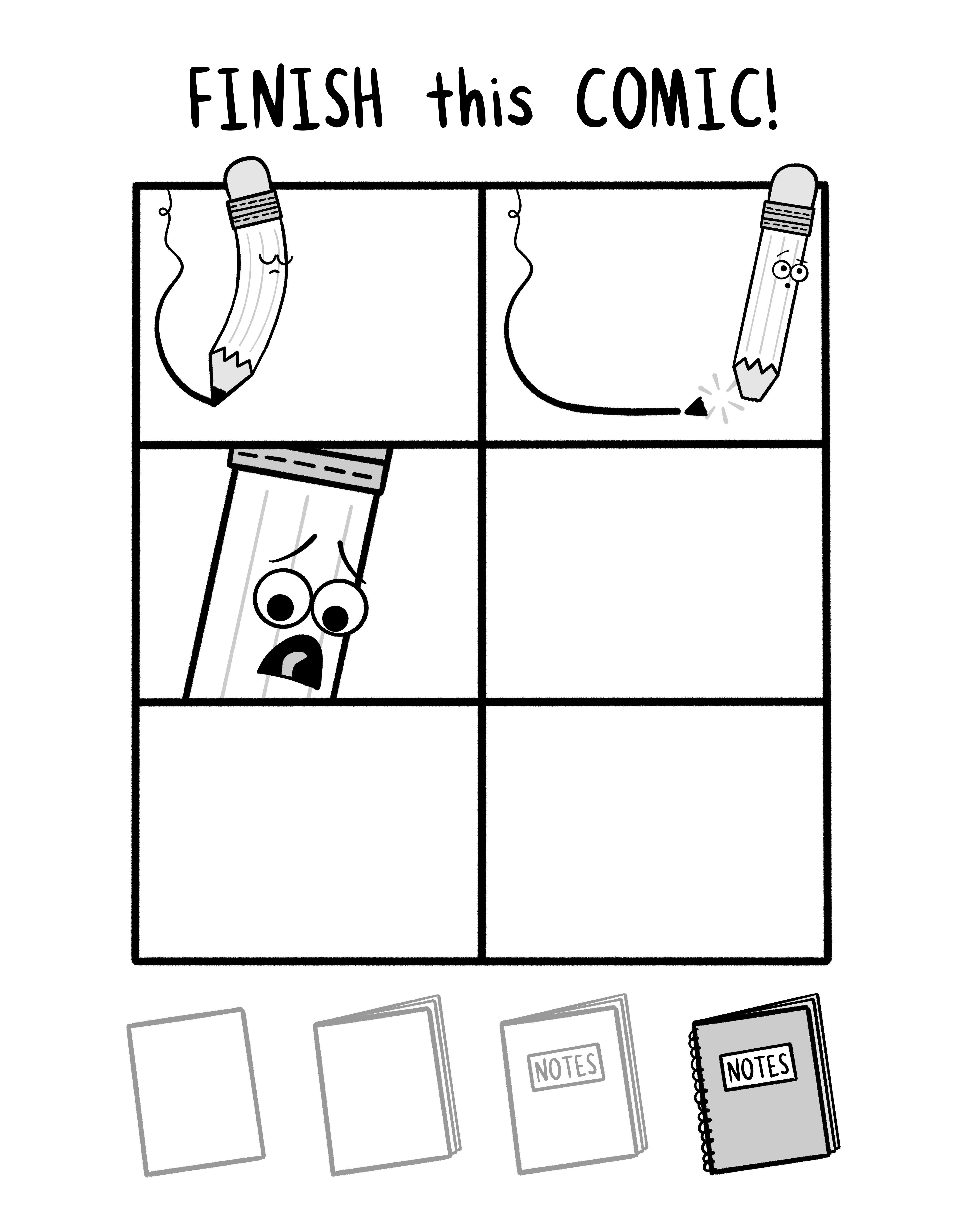
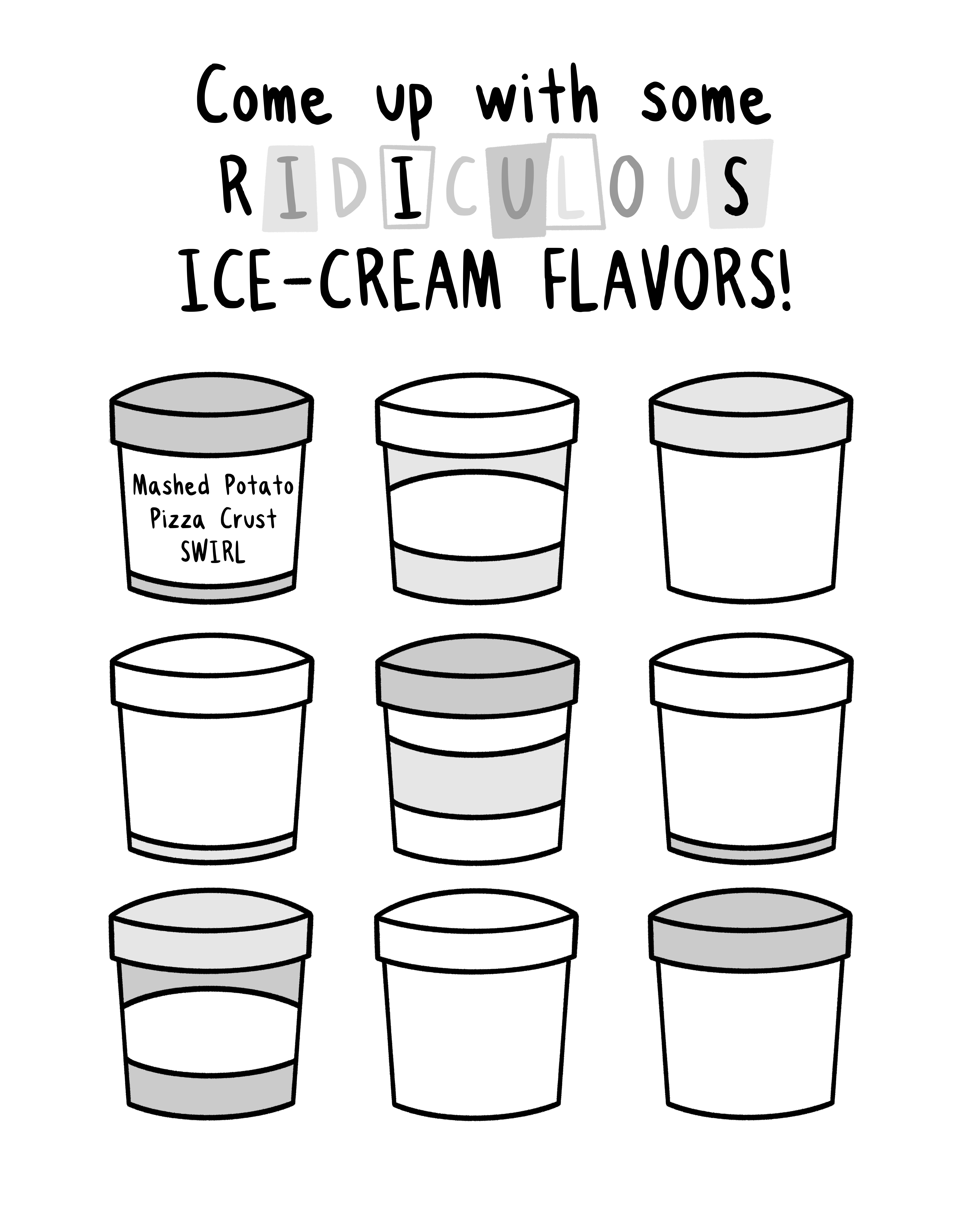
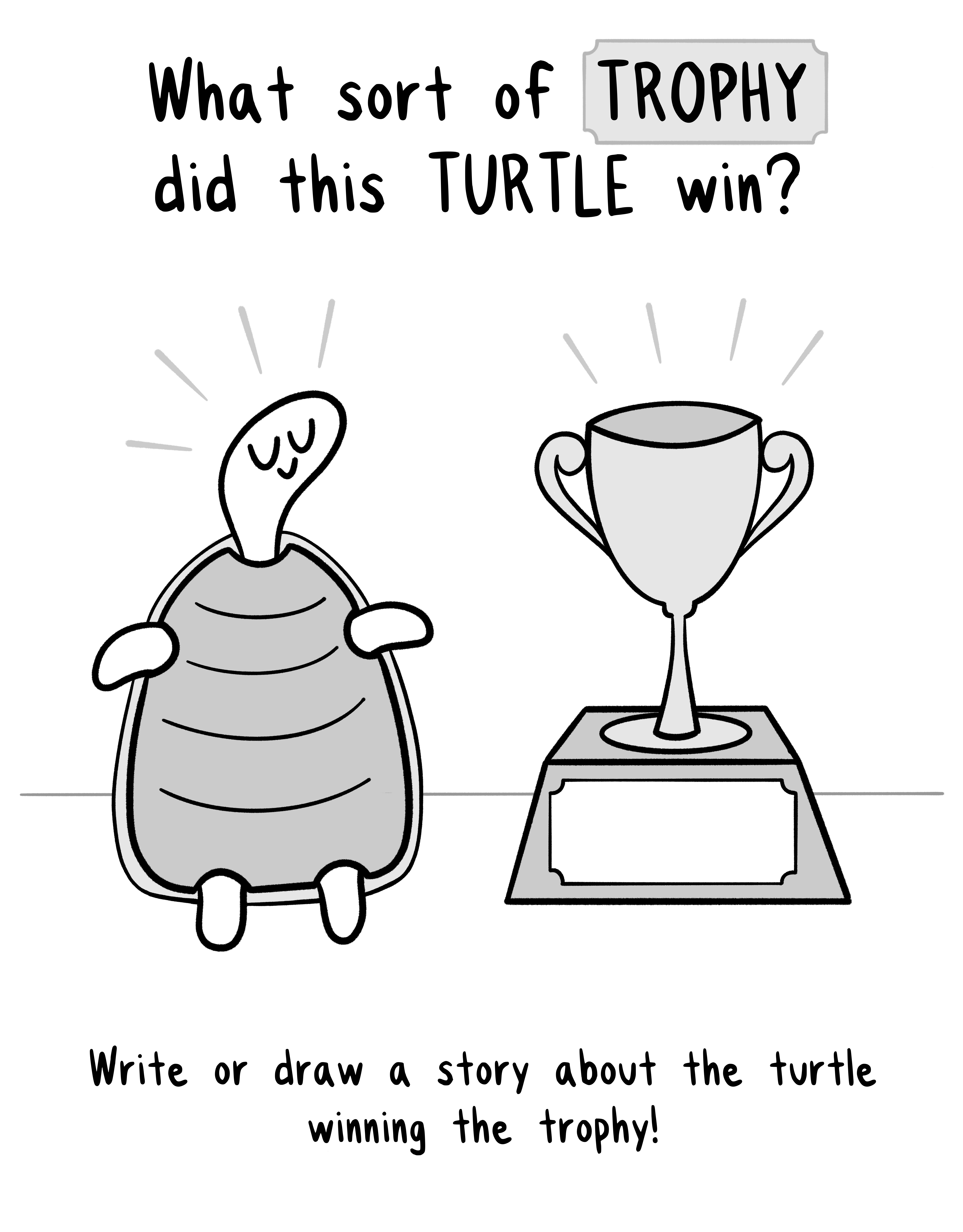
I’ve been wanting to make an activity book for years now. Something that could help kids – and kids-at-heart! – explore and develop their creativity, and turn to as a source for regular and reliable inspiration. In my free time between book projects, I hammered away at the project, making a few activities here or there, slowly building up a stock of them and hoping I’d soon be able to turn to them more fully and put together a book proposal.
Then came COVID. And lockdown. And remote learning.
I was worried that creativity—already not valued and incorporated in curriculums and classrooms as much as it ought to be— would only be further shoved aside. So, rather than sit on all those activities, I started releasing them, and also making more, inspired myself by what kids were doing with the activities already out there, and motivated by the reception they got from kids and their parents and teachers. For the last couple weeks of March, and then for all of April and May, I released a brand-new batch of activities every weekday morning, and then sometimes a few more on the weekend.
Around that time, my agent shared what I was up to with my editor (all of my current book series are with the same one), and she made an offer on a pair of activity books. GIVE THIS BOOK A TITLE came out in December, and the companion volume, GIVE THIS BOOK A COVER, publishes in May. In the books, you’ll find a variety of activities, all of them created with the goal of kickstarting the user’s imagination and inspiring ideas for stories. In addition to the books, you can still find a couple hundred of other, FREE, easily downloadable and printable activities at the activities page of my website. Between the two books and the site, there are approximately 500 activities.
And while all of these activities were made with kids in mind, while GIVE THIS BOOK A TITLE and GIVE THIS BOOK A COVER are both marketed toward kids, I have received messages, reviews, and pictures of completed activities from nearly as many adults as kids. If you decide to check out my activities, I hope they take you down creative avenues you might not have otherwise explored. I hope they leave you feeling like a more confident and capable creator. And I hope they bring you a boatload of joy and an abundance of inspiration.


 Jarrett Lerner is the author of EngiNerds, Revenge of the EngiNerds, The EngiNerds Strike Back, Geeger the Robot Goes to School, and Geeger the Robot: Lost and Found, as well as the author-illustrator of the activity book Give This Book a Title. Jarrett is also the author-illustrator of the forthcoming activity book Give This Book a Cover and the forthcoming Hunger Heroes graphic novel series (all published by Simon & Schuster/Aladdin). He cofounded and helps run the MG Book Village, an online hub for all things Middle Grade, and is the co-organizer of the #KidsNeedBooks and #KidsNeedMentors projects. He can be found at jarrettlerner.com and on Twitter @Jarrett_Lerner and Instagram at @Jarrett_Lerner. He lives with his family in Medford, Massachusetts.
Note from Tara:
OK, Storystormers! Time is almost up! The Storystorm Pledge will be posted tomorrow, so if you have at least 30 ideas, you can sign it.
Signing the pledge is on the honor system. You don’t have to prove that you have 30 ideas. (Please don’t send me your ideas! Don’t post them! They are for your eyes only!)
Just sign the Storystorm Pledge tomorrow…or the next day. Actually, I’ll leave the pledge up for FIVE DAYS, through February 5, so you all have plenty of extra time to get-r-done!
Good luck everyone!





 Writing for Kids (While Raising Them)