You are currently browsing the category archive for the ‘Middle Grade Fiction’ category.
 If you love children’s books, please participate in a new weekly blog meme:
Write a Review Wednesday!
Parents, teachers and librarians are relying on online reviews more than ever to help them decide upon book purchases. Your opinion counts! Praise a picture book. Marvel over a middle grade novel. Tell everyone that young adult isn’t just for young adults!
On Wednesdays, write an online book review for a book that you love. The review could be posted on your blog, Amazon, B&N, GoodReads, or you could tweet your book bravos on Twitter. It doesn’t matter WHERE you do it. The goal is to get more people who are passionate about kidlit talking about their recent, fabulous reads.
(The extraordinary podcast Just One More Book encourages you to phone your book review into their hotline. They will include your review in one of their shows!)
Don’t forget to link to information on where the book can be purchased–the publisher’s site, the author/illustrator’s site, Indiebound.org or a retailer.
If you’re participating via Twitter, link to your online review and use the hashtag #warw, which I’ve defined on Tagalus.
And if you don’t have the time to write a review, simply link to a review that you appreciated. There are many prolific book bloggers (like Maw Books and Write for a Reader), so let’s give them our thanks.
Ideas for “Write a Review Wednesday”? Please leave a comment!
Now let the reviewing begin!
 First there was Mitali Perkins’ list of young adult authors on Twitter. Then came the picture book author and illustrator list.
And now–finally–middle grade authors have a list to call their own.
Below you’ll find authors of published books (or soon-to-be-released titles) for middle grade readers. Chapter book and tween authors have been included as well.
If you know of others who should be on this list, please leave a comment and I’ll update the list periodically.
Enjoy! Discover talented writers; make new connections.
- R.J. Anderson @RJ_Anderson
- Elizabeth Atkinson @tWeenBooks
- Susan Taylor Brown @SusanWrites
- Meg Cabot @MegCabot
- RJ Clarken @LightVerse
- Bonnie Doerr @BonnieDoerr
- Michelle Knudsen @MichelleKnudsen
- Adrienne Kress @AdrienneKress
- Cynthea Liu @Cynthea
- Lauren Baratz Logsted @LaurenBaratzL
- Anne Mazer @AnneMazer
- Kate Messner @KateMessner
- Lauren Myracle @LaurenMyracle
- Nicole O’Dell @Nicole_Odell
- Ellen Potter @EllenPotter
- Sarah Prineas @SPrineas
- Karen Rivers @KarenRivers
- Christine Rose @ChristineRose
- Laurel Snyder @LaurelSnyder
- Cynthia Chapman Willis @CynthiaCWillis
 Children’s book writers were treated to another fun and informative first page session this week in Princeton, hosted by the NJ-SCBWI. Editors Michelle Burke and Allison Wortche of Knopf & Crown Books For Young Readers listened to 30 first pages read aloud as they followed along with each manuscript page. Then they gave their immediate first impressions of the work.
If you’ve never attended a first page critique, it’s a quick way to get a handle on what your peers are writing. A first page session shows you what it’s like for an editor to spend two hours in the slush pile. Common themes emerge. Mistakes reveal themselves. If you listen carefully, you’ll learn how to avoid first page problems and encourage an editor to read on.
So what did the editors say? I encourage you to read on…
Picture Books:
Use varying imagery in picture books. One manuscript conveyed a lot of emotion and the editors didn’t see where the illustrator would take inspiration for art. The same scene through several page turns may lose a child’s attention.
Dialogue needs to match the age of your character. A picture book character shouldn’t sound older than a five- or six-year-old child. Their actions should also match their age.
Cut excess detail in picture books. The first page of the manuscript should reveal a clear story arc. If the manuscript is bogged down with details, it slows the story down. For example, writing that a mother is carrying a napkin to the table and setting it down next to the plate is unecessary (unless that specific action is crucial to the story, and even so, it could probably be illustrated).
Premise and conflict should be apparent on the first page of a picture book manuscript. For example, dialogue between two characters should reveal a story, not just serve as adorable banter.
Every line in a picture book should move the story forward. There’s no room for chatting or extraneous stuff.
Picture books should have a linear approach. Moving back and forth in time can confuse a young child.
With holiday stories, you automatically have to work harder. Stories about specific times of year are a tough sell. There’s a lot of competition and a small sales window.
Some picture book stories are told better without rhyme. If the phrasing is unnatural in rhyme–things you wouldn’t ordinarily say–it can be jarring to the story. One bad line can ruin the manuscript’s chances.
Middle Grade/YA:
The narrator/main character should be the highlight of the first page. One manuscript began by describing a minor character as a way to compare/contrast the narrator. However, when that minor character disappeared from the rest of the page, the editors were confused. Was that comparison necessary to introduce the narrator?
Historial fiction should tell a story. The reader should get a sense of the main character first–how he/she is affected by historial details. Too much fact will bog the story down and lose the character.
Don’t be too reptitive in a novel–get on with the story. If a main character reveals the same thing over and over again on the first page, it feels overdone. Introduce a concept and then move on with the story; don’t circle back paragraph after paragraph.
A first person narrative should have more narrative than dialogue on the first page to take advantage of this device. Plus, the narrative voice and the dialogue voice should match (unless the disconnect is for a specific purpose).
Avoid the stereotypical whiny, displaced, unhappy middle-grade voice. More than one middle-grade manuscript began with a character learning that he/she had to move. The result was a whiny narrator who wasn’t necessarily likeable. Editors warned that they see a lot of the parents-uprooting-child theme, so to rise above the slush, consider a different approach.
Be cautious in stories with several important characters. It’s difficult to write a story with multiple characters because introducing them can sound like a laundry list. Reveal their personalities in a way that’s organic to the story. It also asks a lot of the reader, to keep track of several characters.
Watch tense. The switch from dialogue to narrative in one story felt very abrupt because the dialogue was in past tense and the narrative was in present.
The difference between MG and YA is edgy, gritty. If the main character’s personality feels innocent, the genre might be middle grade, not young adult.
Balance description and dialogue. Dialogue moves a story along fast. Description slows it down. Long stretches of each create a choppy storytelling rhythm.
Make descriptions specific, not generic. One story began with vague details that could be applied to almost any story setting. It wasn’t until further down on the page that the reader learned the unique time and place, something that attracted attention. The editors suggested moving that info higher up.
YA characters should be teenagers. College YA characters and those over the age of 19 can be a tricky sell. That moves the story into adult territory. YA readers need to relate to the characters, and 20+ seems like a lifetime away to a 15 year-old.
Finally, stories should be kid-friendly, not sprinkled with adult sensibilities. One of the editors warned, “this feels like it’s about kids rather than for them.” Don’t let a parental point of view creep into your writing–kids find that creepy.
 Publishing a book can be an adventure, and that’s especially true for Christine and Ethan Rose. Authors of Rowan of the Wood, the husband-and-wife team take to the road in their “Geekalicious Gypsy Caravan” to promote their book.
Released with Austin-based Dalton Publishing last November, Rowan of the Wood became a finalist in USA Book News’ National Book Award for Young Adult Fiction. Even with this recognition, Christine and Ethan knew they would have to take on much of the promotion responsibilites for the book to get noticed.
“We knew that promoting both on and offline was essential in getting our book ‘out there.’ First time authors, especially with a small, independent publisher, have a difficult time getting into bookstores. By visiting bookstores for signings, it forces books onto the shelves and creates an interesting event. We get to go out and talk to our readers face-to-face, so it establishes a connection that we hope will last throughout the series.”
Their first tour lasted three weeks as they visited Louisiana, Texas and Florida, appearing at Renaissance Faires and Celtic Festivals on weekends and at bookstores during the week. Their next planned tour, May to July, will feature stops from Mississippi to Missouri with eight weekend events and 20 bookstores on the schedule. They’re also adding libraries to the intinerary and will tell tales in the ancient Bardic Tradition, with a lyre that Ethan crafted. Ambitious? You bet. These folks are passionate about their book–and promoting it.
I asked Christine about the best part of being on tour.
“The best experience is just being on the road! I guess the highlight is when a guy stopped us in a Safeway parking lot (because of the Gypsy Caravan) and bought a book. Another highlight was when we totally sold out of books!”
I was curious about their travels, so Christine offered a tour of the Geekalicious Gypsy Caravan:
Here’s the video on How to Make a Geekalicious Gypsy Caravan with cover artist Ia Layadi. The first coat of green paint peeled right off, and one of the signs printed too short, so lessons were learned along the way.
Indeed, publishing a book can be an adventure. Never were it more true for the Roses. They are a small publisher’s dream come true–artists who are as creative with promotion as they are with their stories.
You can find the Rowan of the Wood intinerary at BookTour.com. Follow Christine on Twitter, or check out her videos from the road by subscribing to her YouTube channel.
UPDATE! The winner of the autographed copy of The Great Call of China is Karen Kincy! Congratulations, Karen!
Cynthea will be contacting free-tique winners directly.
Thanks to everyone who entered!
Visit CyntheaLiu.com for the AFTER HOURS party!
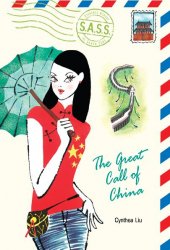
Today’s the day!
The release of Cynthea Liu’s debut novel
The Great Call of China!
And if you’ve come for the release party…
…you’ve made it to
the right place!
the right place!
We’re celebrating all day long with:
- An exclusive interview with Cynthea, answering writer’s questions
- An autographed book giveaway
- Free-Tique, Teeny-Tique & goody bag giveaways
- An extended party invitation to Cynthea’s website where you can view behind-the-scenes videos, play games and win The Great “Haul” of China!
Yeah, yeah, there’s some rules. But they’re fun! (Snoop’s in charge.) And they’re after the interview. So let’s get right to it…
 If you could describe your writing style in one word, which word would it be?
~ Suzanne Young
Verbose.
I wish it weren’t true! Other adjectives might be commercial or funny. But that all depends on what I’m writing.
What’s your juiciest behind-the-scenes story on the making of The Great Call of China?
~ Jennifer Hubbard
The making of THE GREAT CALL was quite uneventful until the very last round of revisions. The publisher requested I shorten the book by about 15K words, and the deadline was 7 days away. Not long after that announcement, I received my editorial letter for the last round of PARIS PAN revisions, asking for a 20K cut and I had ten days to do that. To top it off, I was a new mother, nursing a six-month-old baby about eight times a day. That’s a lot of numbers, folks!
So you can imagine that I subsequently stroked, then regressed into a six-month-old thumb-sucker myself. In the end, I managed to get an extra week, cut down THE GREAT CALL by about 10K words and PARIS PAN by another 10K. It was the toughest three weeks of my writing career.
Moral of the story? Don’t be verbose if you can help it! J
How do you find the time to write, promote your writing, and be so active in the writing community?
~ Karen Kincy, Jennifer Hubbard, Bettina Restrepo
I have the wonderful help of a college student named Julia who comes in each weekday while I go off to work, build my writing career, and interact with all of you. Though, admittedly, the last couple of months, I’ve been working on just about everything, but the writing.
 Also I can run on less sleep than I ever dreamed possible. Baby Liu has trained me well!
Snoop, of course, also helps out by taking on meals and housecleaning.
Do you ever sleep? How did you get to be so awesome?
~ Jennifer Hubbard
Aw, that’s sweet! Yes, I do sleep (sometimes with my eyes open). And thanks to Baby Liu and Starbucks’s Caramel Macchiatto, I only need about about 5-6 hours a night. I do take days off though, which is great for recooperating.
What has been a rock bottom moment for you as a writer, and how did you climb higher?
~ Karen Kincy
The rock bottom moment came about two years after I started writing. It was February, 2006. I had racked up a lot of rejections, and in that time, I felt like I had been close, but not close enough, you know? I wondered if I would ever sell anything. Sure, I know, many writers go through much more rejection. But that’s all relative. When it’s YOUR dream, when it’s YOUR goal, everything is way worse. It doesn’t matter if it’s two months or 10 years. For me, I had been subbing everything from PB to MG. I thought maybe I should try something else. I put together a YA proposal for a series. What came back? A rejection that stated my writing was “generic” and “lacking pizzazz.” GASP!
That rejection really stung even though the editor had been right about the submission. After that, I promptly made an appointment at get my hair done. I was tired of staring at my rejected-self in the mirror. I was going to dye my hair purple (a tasteful deep shade of purple), and I was confident I would walk out of the salon a better writer.
Of course, the new hairstyle didn’t improve my writing, but a group-scream on the Blue Boards helped. I tried to move on, but the rejections continued. Nine months after that, I confessed to my SCBWI regional advisor that I was ON THE VERGE (… of breaking down!) . I even thought about forming a group called ON THE VERGE so we could all drink together. Then the next month, I turned in another revision for PARIS PAN (the fifth major round of revisions), totally unsure of what I was doing. Seriously, I was thinking I should try something else on as a new career – like becoming an agent, or maybe doing Snoop’s laundry…. Then PARIS PAN sold at auction in a two book deal to Putnam. A couple of weeks later, the same editor who had called my writing generic bought a different series book I had pitched with my agent. That book was THE GREAT CALL OF CHINA.
What was your favorite book as a child? As an adult?
~ Nan Marino
I had sooooo many favorites that I can’t possibly pick just one. But as a kid, I was a huge fan of any book that featured animals. Black Beauty, Trumpet of the Swans, The Mouse and the Motorcycle. The first novel I completed, actually (which is in a metaphorical drawer at the moment) is about a talking dog.
As an adult, I haven’t read anything that has touched me as much as the books I read as a child. But … I did read HARRY POTTER in my mid-twenties. I just had to see what the hoopla was about, and that book got me in touch with the left-side of my brain again, a side I hadn’t used much since junior high. So thank you J.K. Rowling for reminding me that I am very much a kid at heart.
Do you dedicate a certain amount of time to marketing each day, or a certain day or week? AuthorsNow! is an incredible resource. What plans do you have for its future?
~ Bettina Restrepo
I SHOULD be dedicating time each day to marketing, but I am easily distracted! In fact, I think I suck at marketing. Seriously, I don’t really like to pitch my own stuff. The whole idea of walking into an indie bookseller and introducing myself and my books freaks me out. I much prefer to just talk to people online about nothing much. I find Facebook and Twitter—my latest time-sucks–wildly entertaining.
As for AuthorsNow!, I just answered that question on Cynsations. In short, my main hope is that the web site continues to grow as a resource, and that more and more book enthusiasts use it to help them find the books they’re looking for!
 How old is your bunny Snoop, and where did he come from?
~ Karen Kincy
Snoop is about 6 years old now. That makes him a middle-aged bunny, maybe nearing retirement. He was adopted from the House Rabbit Society, an organization that does awesome work for bunnies like Snoop who needed homes. Little known fact: Snoop had actually been adopted by someone else before I came along. Apparently, Snoop had not been getting along with other bunny housemates in his new home. (Can you imagine that?) So he had to be adopted out again.
Now he is happily ruling my roost, and he doesn’t even mind Baby Liu all that much. Another little known fact: Snoop used to have a different name, but I didn’t think it fit his personality. He was much too forward and nosy for his old name. Can anyone guess what his old name was?
Snoop is uncommonly wise for a bunny. Are there special scientific experiments involved?
~ Jennifer Hubbard
Ha! Snoop drinks a powerful shake every morning. Packed with all that leafy-green goodness. Maybe that’s what it is.
How did you and Snoop become a critiquing team?
~ Nan Marino
It started in my first blog entries in 2005. I had just come out to the world publicly as a writer, and I felt incredibly naked with only me blogging in my entries. So scary. Snoop stepped in and helped out. His first spoken word on my blog was … “BURPPPPPPPPPPP!!!!!!!!!!!” He still likes to do that now and then.
Does listening to Snoop chomp on the manuscripts he critiques help you improve your own writing?
~ Roxanne Werner
 Great question. In some ways, it has opened my mind to new ways of writing, but I’m not sure it has influenced my own that much. Writing style is your unique fingerprint. It’s like you can’t do anything to change that unless you perform major surgery or something. My crit partner Tammi has her own fingerprint as does my other crit partner Beverly. I’ve seen many, many prints, but that doesn’t really improve the way I write. If I see something really good, I just feel depressed about it. I promptly proclaim, Why can’t I write like that?!
So no, sadly I can’t absorb genius from other people’s writing. I can only HOPE that I learn to become that good.
Does Snoop feel rejected when you get a rejection? Vannie, aka Pooper Dude (our bunny), absorbs the anxiety of the household, and is skittish for days afterward. How do you both deal?
~ Nancy Viau
Yes, Snoop is very tuned in to my emotions. He has offered his furry shoulder to cry on more than once. We find that TV is also great way to take one’s mind of things, as is an uncommonly good veggie buffet.
When are you going to write a story starring Snoop? Does Snoop (or a bunny) appear in either of your upcoming novels?
~ Stephanie Ruble
Awesome question. Snoop has yet to star in his own show in my manuscripts. He quite likes flaunting his stuff on the Internet without worrying about being rejected by someone else.
Also if you didn’t know, Snoop has written a couple of books about himself already. There’s The Life and Times of Snoop Bunny Bun. And Feed Me about a Chinese girl who starves one helpless bunny into rebellion. He sold that one in a five-book meal, to Rupert Bun-doch at auction!
He is rather talented.
Do you have a big book idea inside you that you know you want to write “someday” but its time has not yet come?
~ Jennifer Hubbard
I have this image in my mind – really it’s just a picture in my head, nothing more – I hope I will write about that picture one day. But no, the time has not come. When it does, you will know!
How do you ensure that your writing appeals to your young audience?
~ Julie M. Prince
I guess I won’t know anything for sure until kids and teens have my books in their hands. While writing the manuscripts though, I focused on putting down stuff that entertained Snoop and me. For younger kids, that usually means something humorous. Bonus, if there’s an element of mystery.
For THE GREAT CALL OF CHINA, a young adult book, I tried to write something that reflected what I might have been thinking or feeling when I was a teen.
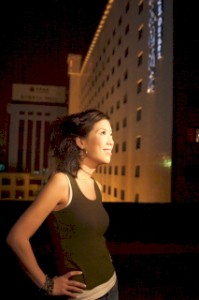 Did you travel to China as part of your writing process for The Great Call of China?
~ Susan Lorene
Yes, I did. I went there twice as a matter of fact. Once during the proposal stage and again before I started writing the rest of the book. My brother lives in Xi’an (where the story is mostly set) and he took me around town. I got to see most of the city’s hotspots. AND I even got to interview a whole class of Chinese teens about relationships, food, school—everything! You should have seen everyone blush when we discussed romance.
Another memorable experience in Xi’an was getting to teach English to a bunch of kindergartners. You should have seen how big the kids’ eyes got when I told them funny stories about Snoop. They couldn’t believe a bunny likes to watch TV!
But it’s true!
When you were a child, what did you want to be when you grew up?
~ Kymberly Pelky
When I was really young, I used to declare to my parents that I wanted to be a movie star or a dancer. Then as I got older, somehow I had ideas like “doctor” and “lawyer” in my head. Could it have been years of lecturing from Mom and Dad? I think so. 😉
I never thought I’d become a writer until I was 28, when I realized I needed to do something wildly different than the job I had. I was a technology consultant who had spent the last six years flying back and forth between cities, 4 days a week. And if I wasn’t flying, I was fighting heavy traffic for hours on end, and I do NOT do well with long commutes.
Now I never have to leave my house unless it’s on fire. YAY!
What are your three top tips on how to succeed in this business?
~ Tammi Sauer
How to SURVIVE? Or how to succeed? Not sure I’ve got “succeed” down yet. Call me when I’ve won the Newbery, and we’ll talk. Okay, it’s not that you have to win a Newbery to succeed, but really, I feel like I’ve only just begun in this biz! There is still a long road ahead.
How to survive though? I think I have that one covered. You need to have plenty of perseverance, a thick skin, and a desire to grow and learn.
What do you want readers to know about The Great Call of China before they delve into Cece’s adventure?
~ Tara Lazar
Nothing actually. Don’t even read the jacket because I think jackets can be terribly misleading. Just read it and enjoy Cece’s story! Oh, and buy more copies for your friends, and their friends, and their dogs, and their bunnies …. (see? That’s me, doing some marketing. YUCK! I feel so sleezy now!)
Cynthea! You’re anything but sleezy!
But hey, I’ll let folks know that The Great Call of China is available online at Amazon, B& N.com, Borders and Indiebound, and in bookstores around the country. Get your copy now before they sell out!
And now…the moment you’ve been waiting for…the prizes!
Here are the rules! Take it away, Snoop!
 To win an autographed copy of The Great Call of China, please leave a comment by 11:59pm (EST) tonight, February 19th. I, Snoop, will draw a winner with the help of Random.org. And if you’d like to guess my original name, and you nail it, you’ll get two extra entries.
To get a Teeny-Tique or win one of three half-page critiques…plus a goody bag…listen to this…
You know how people say you can lose an editor or agent at line one? Well, here’s your chance to test your first line on me, Snoop. I will render a judgment with a special Teeny-Tique round of TRAFFIC COP. This means I will render a judgment of RED (stop!), YELLOW (sketchy, and here’s why) or GREEN (You’re a go!).
So think about your first lines. Don’t think they’re important?
Think again, my friend.
Now, here’s how to enter:
1. Go to CyntheaLiu.com and click on the “Party Favors” tab. You’ll fill out one form to receive the party favor and the Teeny-Tique. Include your name, email and mailing address. (Your contact info will only be used to send your party favor and to reply to your submission.)
2. In the Party Favor Request Form, there is a field labeled “Please leave a comment for the Host!” That is where you will include the book type (PB-picture book, ER-easy reader, CB-chapter book, MG-middle grade, YA-young adult) and the first line of your manuscript. (Example: PB. “This is the first line of my manuscript,” Snoop says.)
3. Click submit and you’re done. Please refrain from saying anything else in that field.
5. Snoop will respond as soon as possible, but it may take a few days or longer. We don’t know how wild this party’s gonna get.
6. To win one of the three half-page tiques, Snoop will close his eyes and chomp at a printed list of people who completed party favor forms. The first three chomped-on names with Snoop’s teethmarks in them win the half-page tiques.
Failure to comply with the rules may result in automatic disqualification by the Snooper! *GASP!*
And that’s a wrap! Before you leave, don’t forget to comment for your chance to win an autographed copy! Guess Snoop’s original name (and get it right) to receive two more entries! Remember, you only have until 11:59 tonight, February 19th!
Thanks to everyone for coming!
Enjoy your party favors!
Enjoy The Great Call of China!
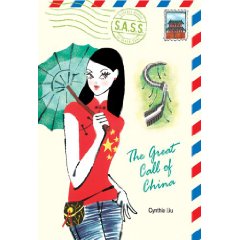 On February 19, Cynthea Liu, one of the most givingest authors in the children’s writing community, releases her debut novel in the S.A.S.S. series, The Great Call of China.
Just look at that cover! Gorgeous! Here’s a taste of the adventure in store for the main character, Cece:
Chinese-born Cece was adopted when she was two years old by her American parents. Living in Texas, she’s bored of her ho-hum high school and dull job. So when she learns about the S.A.S.S. program to Xi’an, China, she jumps at the chance. She’ll be able to learn about her passion—anthropology—and it will give her the opportunity to explore her roots. But when she arrives, she receives quite a culture shock. And the closer she comes to finding out about her birth parents, the more apprehensive she gets. Enter Will, the cute guy she first meets on the plane. He and Cece really connect during the program. But can he help her get accustomed to a culture she should already know about, or will she leave China without the answers she’s been looking for?
Join me on February 19th as we welcome The Great Call of China to the world! Yeah, it’s like a virtual baby shower!
Do you have a question for Cynthea?
She’s the author of the upcoming Paris Pan Takes the Dare and the must-have writing guide Writing for Children and Teens. She’s the brains behind AuthorsNOW, and mom to an adorable toddler and one critique-lovin’ bunny named Snoop.
Email me at tarawrites at yahoo dot com and Cynthea will answer your questions on release day.
And, if you can, please devote your blog to The Great Call of China on February 19th. Let’s give back to this writer who has done so much for aspiring authors. If you’re in, please leave a comment so I can link to you!
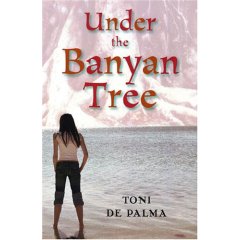
Toni De Palma’s debut YA novel Under the Banyan Tree is a New Voices Pick by the Association of Booksellers for Children. She joins me today to talk about her journey to publication.
First, a little about Banyan:
Irena’s not sure where she’s headed when she runs away—she just wants to leave the trailer she used to share with her mama and daddy far behind. But when she stumbles upon the Banyan Tree motel, something tells her it’s exactly where she’s meant to be. The elderly owner generously welcomes Irena, and the Banyan soon begins to feel like home. But trouble follows Irena wherever she goes, and the Banyan is no different: a mysterious guest, money problems, and secrets from her past soon threaten the stability of her new life. This moving story distills life’s joys and pains, and uncovers just what it really means to be a family.
Toni, your website bio says that you have always dreamed of being a writer, and you’ve accomplished so much with your first book. Can you tell us where Irena’s amazing story began?
The book was a very organic process. I don’t usually work with an outline and even when I jot down notes, I always tend to stray. The idea for Under the Banyan Tree came to me in my first semester of my M.F.A. program at Vermont College. Though I didn’t know it consciously at the time, Irena’s story reflected where I was emotionally in my life. As a young mother, who had given up her job to stay home and be a full time mom, I was feeling a little lost. No job to me meant no identity, no place in the world. I had begun writing, taking classes and submitting, but I didn’t honestly believe I was good enough to be a writer. When my son was five, I read about the Vermont College M.F.A. program in Writing for Children and Young Adults and I knew it was something I just had to do even though it would mean a lot of sacrifice. It might sound weird, but looking back I feel as if the Universe was compelling me to take on the challenge. So like my character, Irena, I sort of ran away (not to Key West, but to Vermont) and I embarked on a personal journey that taught me so much about myself.
After the M.F.A. program, how did you continue on your path to becoming an author? How did you balance motherhood and writing?
Balance? (Laugh, laugh.) What’s that? I’ll be honest. Every day is a struggle. Or come to think of it, maybe it’s not. I’m starting to think that, at least for me, there is a certain amount of normalcy to this ebb and flow, of those periods when I write a lot and those periods when I don’t, times when I rather be cooking or doing laundry and times when all I want to do is sit and write.
First drafts are always killers for me. I circle my computer like a vulture waiting, waiting. I much rather be revising, especially when I’ve had a great meeting with my writer’s group and they’ve given me feedback that’s stirred up my juices. I also seem to have cycles (maybe it has to do with the amount of serotonin in my system). I seem to write more in the Spring and Summer and drift off when it gets cold and all I want to do is snuggle under a blanket (I read a lot more during those times). I recently heard John Grisham say that he writes from April to Thanksgiving — a book a year. When I heard him say that, I felt validated.
I think the really cool thing for writers is that they learn what works best for them and to not judge themselves too harshly.
How long did you work on Under the Banyan Tree? How did you go about submitting it?
I worked on Banyan for two years and revised it about eight times (including the revisions I did with my editor). I was really fortunate with how Banyan played out. I submitted it to a few publishers who declined it and then met Margery Cuyler at the Rutgers One-On-One conference. Margery is the editor at Marshall Cavendish Children’s and she read Banyan, liked it, but didn’t feel it was quite right for her list. Margery suggested I send it to Regina Griffin at Holiday House. Margery knew Holiday House because she had been editor-in-chief there. Regina ended up liking it and offered me a contract.
What was it like to get “the call” from Regina Griffin?
I actually got “the call” from an assistant in her office, a nice girl who seemed genuinely delighted for me. I was happy too, but nervous about what would be expected of me next.
And what was expected of you next?
Well, a lot more waiting for one thing. From the time I received that first phone call to the time my book was published, close to three years had passed. The revision process was worth the wait though. Regina sent me an extensive editorial letter commenting on broader issues and she marked up the manuscript identifying smaller things I might want to consider. Regina did not make specific suggestions, but rather posed wonderful questions that made me see even more possibilities for my characters’ development as well as some plot points that I had never considered. Working with her made the manuscript better, deeper and I hope more satisfying for the reader.
After such a long (and rewarding) revision process, I’m sure you were thrilled once the book hit the shelves. How satisfying was it to hold the finished copy in your hands? What has surprised you most about being a published author? Is it everything you imagined it to be?
While it was wonderful to hold my book in my hand, it didn’t measure up to the very intimate, very personal moment that occurred when I wrote the last line and knew in my heart that I had brought my character to the finish line of her journey. I’m pretty emotional, so I cried, a great cathartic, super satisfying kind of YES! cry.
As for the post-publishing experience, that has been quite interesting and unexpected. I am fortunate that one of the local seventh grade teachers is using my book as part of her curriculum. After the kids read my book, I go in and do a presentation, then give the kids a chance to ask me questions. I’m always amazed at how the kids interpret the book and make it their own. Some kids get pretty incensed and emotional about the story, sometimes taking a character’s side. To elicit that kind of emotion, even though quite unintended is really cool for me because it makes me feel I’ve done my job. That same teacher has also used my book as a springboard to discuss a whole host of other topics such as the ecology of the Everglades (part of the story takes place there), the dangers of hitchhiking, Ernest Hemingway, and of course, banyan trees.
Toni, I sense that you feel it’s important to savor and enjoy each part of the creative process—it’s more about the journey than the destination. Would you agree? What other words of wisdom do you have for aspiring writers? And what can we expect next from you?
When I first started writing I must admit it was all about my ego and wanting to be a “famous” writer (this makes sense because J.K. Rowling had just hit the scene and her rags to riches story really captivated me). But the more I write and the more I see how my writing has helped me to have certain experiences, I view it as a both an intellectual challenge and a tool that is here to grow me both personally and spiritually.
Advice? Of course writing a book involves a great deal of skill that a person becomes better and better at each day with practice. Being part of a writer’s group has also been wonderful and reading, reading, reading. But the practice of writing is not limited to sitting down and hammering away at a keyboard. It involves trying to understand your world, staying curious and asking lots of questions not only with your head, but with your heart. My best writing comes when I’m feeling charged up over something and I just want to understand it.
Since writing Under the Banyan Tree, I’ve written a variety of other things that are now seeking a home: another contemporary YA novel, a historical fiction Middle Grade, as well as a Fantasy Middle Grade. Obviously, I like experimenting and playing with different genres. I’m also looking for an agent.
Toni, this has been a wonderful interview. You’ve helped me realize that I need to have peace and patience with the creative process.
Tara, thanks so much for this opportunity and the great conversation. Writing is sort of like that, a great conversation you have with your reader.
One final question. I promised to slip chocolate into my interviews, so what’s your favorite kind of chocolate candy?
Funny you’re asking about candy. From the age of five to eleven, I lived over a candy store in Brooklyn and I loved each and every sweet piece. Still do!
WOW! You lived above a candy store? That’s every kid’s dream come true! Have you ever written a story based on that experience?
Not yet, but who knows where my mind will wander…
Toni is generously giving away an autographed hardcover copy of Under the Banyan Tree. Leave a comment and you’ll be entered into the drawing.
Blog or Twitter about Toni’s interview, link back here and you’ll get TWO additional entries. Just let me know about the mentions in the comments field.
Good luck! I’ll draw a winner one week from today.
Thank you, Toni!

You might already know that Charlie and the Chocolate Factory is my favorite children’s book. So I went in search of The Golden Ticket today.
But does anyone see something wrong with this Golden Ticket?
While you ponder that question, let me kick off Love a Kidlit Author Month with a few golden words from Dutton Executive Managing Editor Steve Meltzer.
Mr. Meltzer penned an article in the latest edition of Sprouts, the magazine of the NJ-SCBWI. The title says it all: “Market Your Book Without the Book.”
Common sense tells us not to market a book until you actually have a book to publish. I say that is no longer true. When you are selling a book these days you have to sell yourself as well. It is up to you to do the job. Publishers like people who know how to market…
…Web video technology and social networking are the author’s friend. There is so much you can do these days for so very little. So get out and market yourself.
If you don’t subscribe to Sprouts, I highly suggest it! Each issue contains useful industry tips from editors and agents.
Figured out the mistake on the Golden Ticket yet?
Remember, every comment you make this month counts towards an entry for the gift certificate (but only one comment per blog post). If you blog or Twitter about Love a KidLit Author month and link here, it counts as an extra entry, just let me know about it!


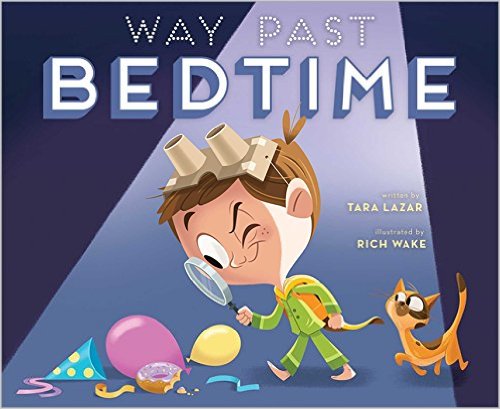



 Writing for Kids (While Raising Them)