You are currently browsing Tara Lazar’s articles.
When I teach a picture book writing class or speak to new writers, I tell them I don’t subscribe to the “write every day” philosophy. That just doesn’t work for me as a picture book author. Sorry, wise writing sages.
However, I do give out this suggestion: “stare every day”.
Yes, I spend the bulk of my time staring (a.k.a. thinking) when writing a picture book. In fact, it’s about 50% of my effort. And thanks to my friend Carter Higgins from Design of the Picture Book, I can now share this secret with you in a deliciously accurate chart.
Can I get you a slice?
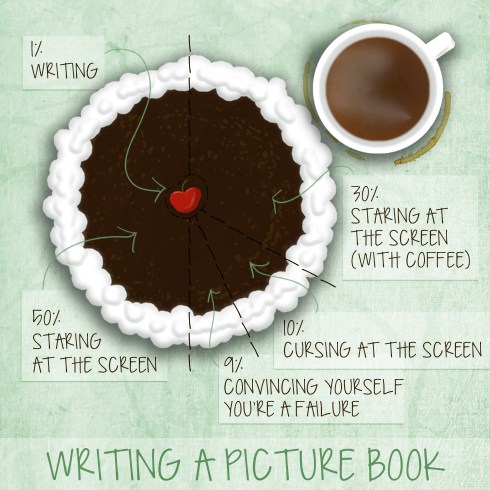
(Please note: “Writing” is the cherry on top!)
My debut book is still 9 months away, but what I’m hearing from friends is that the promotion process is fraught with dilemmas and doubts. Yes, we managed to write a book, submit it and get it accepted for publication, BUT WILL ANYONE BUY IT? And what if some bookstores don’t even carry it?
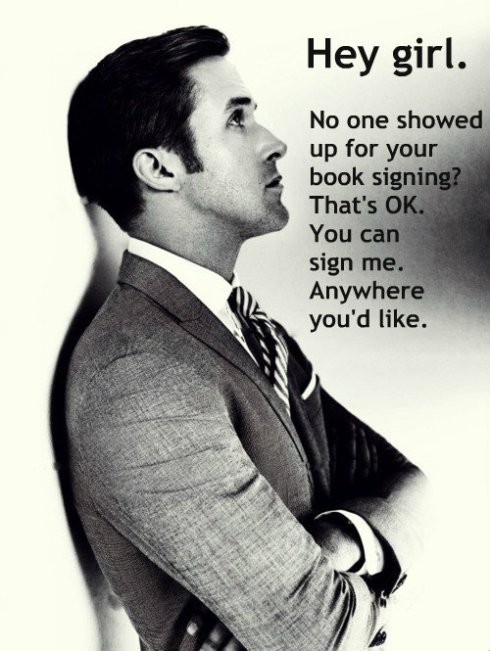
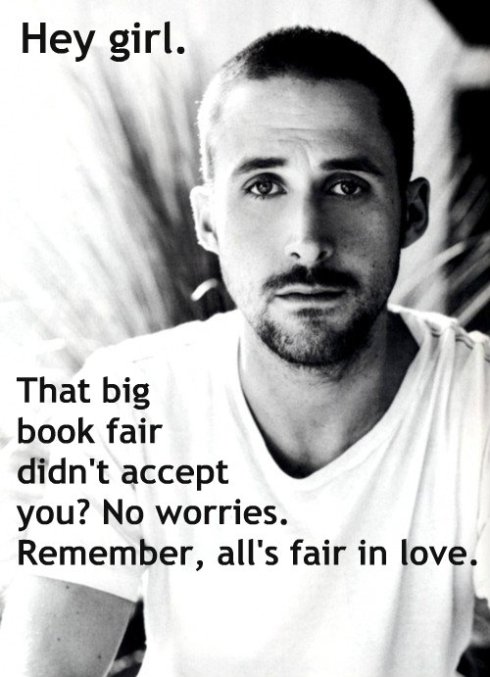
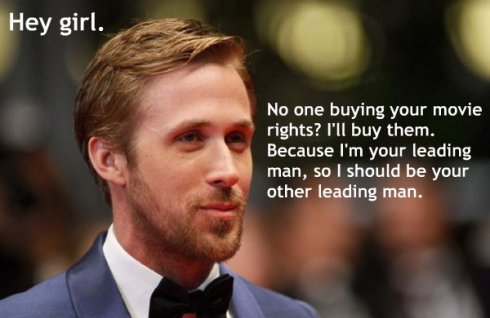
Well, don’t worry. Ryan Gosling is here again today to calm your fears.

The Picture Book Idea Month success stories just keep pouring in!
The latest news is from lucky Penny Klostermann who was named runner-up for the 2012 SCBWI Barbara Karlin grant! This makes THREE YEARS IN A ROW that a PiBoIdMo story either snatched the grant or was named next in line.
Without further ado, I’ll let Penny tell you all about it!
 In the fall of 2011, my wonderful critique group, Picture Bookies, made me aware of Tara’s brilliant concept, PiBoIdMo—30 picture book ideas in 30 days! My very first PiBoIdMo idea was to do a rewrite of THE NIGHT BEFORE CHRISTMAS. I know….holiday stories are hard to sell. I know….rhyme done right is hard to write! But, it was November…and Christmas was just around the corner…and I love the original. By the end of November, I had three different ideas for rewriting THE NIGHT BEFORE CHRISTMAS.
From the time I wrote the first line for my 25th idea, MARS NIGHT BEFORE CHRISTMAS, I knew it was my favorite.
Then, in December, Susanna Leonard Hill hosted a competition on her blog for a rewrite of THE NIGHT BEFORE CHRISTMAS. This brought my idea to the forefront, and I decided to work on it right away. I read every version of the story I could get my hands on. I researched Mars and Space! I got excited as words and phrases from my research enhanced my manuscript.
February 26, 2012, I emailed my manuscript to my critique group. As usual, their comments were incredible. I revised and revised and revised some more. Then on March 12, 2012, I mailed my manuscript to the Barbara Karlin committee…and waited.
I got the call/voicemail at 6:36 p.m. Friday, August 3rd. (Of course I took a picture of my call log!) I didn’t listen to the voicemail until 10:30 p.m. The caller said she was with the Barbara Karlin Grant, and could I give her a call. COULD I GIVE HER A CALL?????? I live in Texas. She was in California. It wasn’t too late! When she told me I was runner up I just couldn’t believe it. Uncontained happiness!!!
I have to say, Tara, that PiBoIdMo is out-of-this-world awesome. As I look through my list of ideas for the next manuscript to tackle, I am amazed. Your organization of the event with inspiring posts and interaction among so many picture book writers took my mind to places it wouldn’t go sitting alone in front of my computer. Thank you.
I just have to brag on my critique group, Picture Bookies. Rebecca Colby was the winner of the 2011 Barbara Karlin Grant. Also, in 2011, Mona Pease received a Letter of Merit. The other members are just as incredible. I am lucky to be a part of this group.
Congratulations, Penny, and thanks so much for sharing your success story! You can visit Penny online at her blog: “A Penny and Her Jots“.
Now folks, you know the old rhyme: “Find a Penny, pick it up, all day long you’ll have good luck!” So let Penny’s story sprinkle some good fortune on you.
PiBoIdMo guest bloggers and badges will be revealed on October 1st, with registration to begin on October 24th right here on this blog. Subscribe via email (← see left column) to make sure you don’t miss PiBoIdMo updates!
If you have suggestions about who you’d like to see guest blogging this year, please leave a name (or two or three) in the comments!
Three is a magic number. Not only because it’s the age when tiny toy parts no longer pose a choking hazard to your toddler, but because the universe is full of threebies.
Three square meals a day.
Three strikes and you’re out.
Three ring circus. And three ring government. (Excellent analogy, Schoolhouse Rock.)
Then there’s the “rule of thirds” design principle for composing visual images with tension and interest.
Ever heard of the FOUR LITTLE PIGS? Of course not. There’s just three, like THREE BLIND MICE and THREE BILLY GOATS GRUFF. Heck, there’s even THREE STOOGES.
In picture books, you’ll often find the protagonist struggling to solve their problem three times before finally succeeding. This technique encourages the reader to become invested in the hero’s journey. If the character were to try once and triumph, what fun is that? There’s no time to root for her!
Likewise, you’ll often see groups of three drawings on one picture book page. Three offers a nice balance because two is too few and four is too many. Like Goldilocks and the THREE Bears know, three is “just right”.
So today I’m going to extend “The Rule of Three” to you, the aspiring author. How so? I encourage you to have THREE polished manuscripts ready before submitting to an agent or editor.
Three manuscripts means that you’ve been writing for a while. Not a month or two, but most likely a year or two…or yes, even three. You’ve taken the time to hone your craft. Three manuscripts also means you’ve got a body of work an agent can review. If they don’t like your first story, but they see potential, they will ask for some more. Wouldn’t it be a missed opportunity if you didn’t have more?
In fact, even if they LOVE your first story, they will ask to see more. Picture books are a difficult sell, so if the first manuscript doesn’t find a home, they’ll want something else to submit. Three stories lets the agent know that your body of work, your style, resonates with them. On the flip side, they may LOVE your first book but not see a market for your other stories, or personally dislike them. Their lack of enthusiasm means they are not the right agent for you. You want to know this BEFORE you sign with someone, not AFTER….’cause breaking up? It’s hard to do.
And listen, if you have three manuscripts ready, I’m going to go a bit further and suggest you get FIVE ready. Because five is shiny, like “five golden rings” or “The Jackson Five”.
Yeah, it’s easy as A B C, 1 2 THREE.
Time to grab your backpack, notebook and Dixon Ticonderoga #2’s—it’s back-to-school time! But hey, let’s make this year a little more interesting, shall we?
How about candy-coated pencils for sucking in class? YES!!! *fist pump* (Remember, I’m from Jersey.)
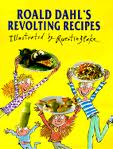 I don’t deserve credit here. Back in 1994, just a few years after Roald Dahl’s passing, his widow Liccy compiled truly inspired recipes for the book ROALD DAHL’S REVOLTING RECIPES, based on his darkly humorous children’s tales.
There’s George’s Marvelous Medicine Chicken Soup from GEORGE’S MARVELOUS MEDICINE, Mr. Twit’s Beard Food from THE TWITS, and Mosquitoes’ Toes and Wampfish Roes Most Delicately Fried from JAMES AND THE GIANT PEACH. And while these treats might not be on your next tea party list, there’s also sweet favorites like Bunce’s Donuts from FANTASTIC MR. FOX and Bruce Bogtrotter’s Chocolate Cake from MATILDA.
But considering the time of year, I thought it would be fun to share a recipe for making daydreaming in class a little sweeter.
CANDY-COATED PENCILS FOR SUCKING IN CLASS
Makes 6
You will need:
- 6 pencils (Dahl’s favorite were Dixon Ticonderoga #2’s)
- Play-Doh or other modeling clay (for standing pencils up)
- candy thermometer (optional)
- buttered 8X10 rimmed baking sheet lined with wax paper
- buttered knife
- 1/2 pound sugar cubes
- 1/2 cup plus 2 TBSP water
- large pinch cream of tartar
- few drops flavoring and food coloring
- Put sugar and water in saucepan over low heat and stir until sugar has dissolved.
- Raise the heat. When syrup is almost boiling, add cream of tartar and a warmed candy thermometer.
- Boil without stirring to 250 degrees F, or until a little bit of the syrup dropped into cold water forms a hard ball (a ball that will hold its shape but still be pliable).
- Remove from heat, add flavoring and coloring. Do not over-stir and be careful, mixture is very hot.
- Pour mixture into rimmed, lined baking sheet. Edges will cool more quickly then the center, so as the mixture cools, turn the edges inward with a buttered knife, but do not stir.
- Working quickly, lay 2/3rds of a pencil (not the pointed end) on top of the mixture. Using the buttered knife, lift up the candy and gently wrap it around the pencil. You can create all sorts of shapes before it hardens. When the candy is almost set, stand the pencil point side down into the clay. Try not to touch the candy now, as you’ll leave fingerprints.
- Repeat step 6 with other pencils.
Note: Do not double the recipe to make more. Make additional batches instead.
That’s it! Now suck away in class, but don’t tell your teacher who gave you the recipe! I don’t want to get in trouble!
While ROALD DAHL’S REVOLTING RECIPES seems to be out of print, it has been resurrected several times. I suspect it will be released again. But if you just can’t wait to devour SNOZZCUMBERS or LICKABLE WALLPAPER, I suggest checking for a local indie seller.
Bon appetite!
Geesh, you’d think I wouldn’t forget about my own book contest. But I plead summer brain. It’s all mushy with Slurpees and Sno-Cones. Maybe I should plead brainfreeze then, too!

So without further ado, the red guy on the front cover is named DUSTER!
While no one guessed the exact name, Wafa Musitief guessed DUSTERS, so she wins an original signed monster sketch by illustrator James Burks!
But wait! We added a second prize for a random winner. And that winner is Jarm Del Boccio!
Congratulations Wafa and Jarm! I’ll be emailing you shortly.
Once again, thanks for subscribing to my blog. Rest assured there will be a lot more prizes coming soon. You’re bound to win one eventually. And if you don’t, I’ll treat you to a Slurpee. Brainfreeze is an awesome way to float through summer.
[Update 10/19/12: There wasn’t enough time to properly plan this retreat for the Nov-Dec timeframe, so I am considering doing it in the spring instead. Please follow this blog (see left column) to get all the updates!]
No, this isn’t a trick. No plastic thumb or fake dove here. Smoke and mirrors? Nah. This is a real treat. Better than chocolate. It’s a PiBoIdMo Retreat!
Yes, I’ve been kicking around this harebrained scheme to host a picture book writing retreat and workshop weekend with a PiBoIdMo theme in late November or early December. Am I nuts? Yes, of course! Only crazy pants people can be children’s authors, silly!

Cozy, no? Don’t you wanna just plop down and write?
The Grand Summit Hotel in Summit, NJ is the proposed venue. Located in downtown Summit, The Grand Summit offers walking access to the NYC train, shops and restaurants, plus this mid-sized hotel provides personalized service and well-appointed rooms with a comfortable, hometown feel. (OK, with that description it’s painfully obvious that I’ve been obsessed with “The Price is Right” game on Facebook.)
Two picture book authors (moi included), one picture book literary agent and one picture book editor from a major house comprise the potential faculty.
And you, the first 24 PiBoIdMo devotees to register, will be the small, intimate group of lucky attendees.
There will be four workshop classes plus smaller break-out sessions. And plenty of time to write and gossip. How about a Friday night dinner soiree with open bar, too? Cranberry Cosmos for all! (Saturday-morning hangover optional.)
I am busy crunching numbers to determine if this is possible. So, if this sounds even remotely intriguing, please speak up in the comments. Tell me how much is a reasonable attendance fee (bear in mind you’d also have costs for hotel accommodations and transportation) and what you’d want out of the weekend.
I need your input, PiBoIdMo’ers! Let the comments commence!
If you’re an un-agented writer, you might be thinking—do I even NEED a blog? What content should it contain? How often should I post? What SHOULDN’T I blog about?
Well, relax. Deep, cleansing breaths. I asked a few agents what they thought of writerly blogs. Their responses may surprise you.
 Erin Murphy, Erin Murphy Literary Agency:
“I don’t have any strict rules or do’s and don’ts. I find blogs are perhaps less useful than they used to be, with the exception of those with large followings. Mostly I go to them, when considering signing someone new, to get a sense of their personality and how they present themselves (whether to fellow kidlit folks, gatekeepers or kids).”
 Ammi-Joan Paquette, Erin Murphy Literary Agency:
“A writer’s blog wouldn’t be a deal-breaker for me unless it was wildly unprofessional. First and foremost, when I’m looking at a potential client, it’s all about the writing. But beyond that, a blog or website gives a sense of who that person is, how our tastes and interests might mesh, etc. So make sure your web presence reflects who you are, and that it looks clean and tight and polished. I don’t think they’re essential, but it is nice to put a face and background to the voice I’m reading on the screen.”
 Jennifer Laughran, Andrea Brown Literary Agency:
“I don’t care if an author has a blog or not. But if they DO have a blog, I hope it is lively, interesting, informative, fun to read, and gives a sense of their “voice” and a glimpse into their lives.
Turnoffs: Lots of word-count posts. Constant self-promotion. Complaining about blogging, complaining about the publishing industry, complaining about specific people (your agent or editor, for example)—or “Humblebragging.” Overly political or “sexy” posts (unless you are a political or sexy writer).
If an author HATES blogging and is struggling to find the time or energy…if it is taking away from their work or making them miserable…then they should absolutely not do it. An unused blog, or a blog that is just complaints or self-PR, is so much worse than no blog at all.”
 Teresa Kietlinski, Prospect Agency:
“Blogs are absolutely important in my decision making. When submissions come in, I tend to visit blogs first because they give me a taste of the writer’s (and illustrator’s) personality, voice and interests. It also lets me see how dedicated they are to the craft of writing or illustrating. Do they post frequently? Do they talk about topics of interest in the children’s book world? Are they honing his/her skills? What books is he/she reading? Would I like to join him/her for lunch or tea? (the last question for me is the most important). If I do not instantly connect with a blog, chances are I will not connect with the blog’s writer.
My goal as an agent is to work with clients who I like working with. Clients who are funny, interesting, and interpret the mundane stuff in a surprising way. Blogs can give me insight on these qualities. And while websites are important, especially for seasoned authors, they are not always personal.
I would suggest not limiting your blog to “kids stuff only.” Talk about what interests you—but keep it professional in tone. Readers are looking to connect with your personality. Who are you?
Do remember that anyone can read your posts so keep them professional in tone. Do update your blog regularly.”
So it’s clear: if an agent is interested in your work, they WILL Google you. So avoid posting:
- Samples of works in progress (they might be considered “published”)
- A tally of submissions/rejections
- Complaints about rejections, the industry or specific professionals
- Long, rambling posts
- Overly political, religious or controversial topics (unless that is the focus of your professional writing)
Before you start a blog, realize there’s millions of them out there already. What are you bringing to the table? Do you have a unique perspective? Just like thinking of the hook before you write the book, you might want to think of the hook for your blog before you launch into it. (Relatively-newish blogs with compelling hooks: Literary Friendships by Audrey Vernick and Design of the Picture Book by Carter Higgins.)
Or, you can just go for it and post whatever you like. After a few dozen posts, you might discover your niche. Check your blog stats and determine which posts bring in the most visitors. Work in that direction.
And remember, the story’s the thing. No blog will snag you a book deal if your submission is sub-par. So get the manuscript right first, then worry about blogging later…
Or, maybe, not at all.
I am ridiculously far behind in picking winners. So without further ado, here they are!
WINNER of CRASHING EDEN by Michael Sussman:
MIKE ALLEGRA! (heylookawriterfellow)
WINNER of THE MONSTER WHO LOST HIS MEAN by Tiffany Strelitz Haber:
LESLIE G!
Congratulations, guys! I’ll be emailing you shortly.
I’m sorry if you didn’t win, but everyone’s leaving with a consolation prize. No, not a lifetime supply of Turtle Wax. (Do they even make Turtle Wax anymore? If you ever won a lifetime supply on Let’s Make a Deal you’d be ripped off.) Instead, it’s a piece of picture book writing advice:
Think BIG and carry a SMALL manuscript.
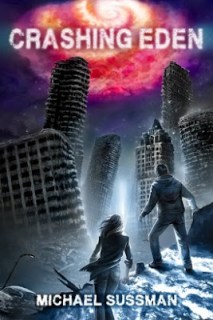 One of my favorite quirky picture books is OTTO GROWS DOWN by Michael Sussman, so you can imagine how thrilled I was to learn that Michael has a new YA novel, CRASHING EDEN. Well, Michael is crashing my blog today and he’s leaving behind a paperback copy just for you.
“Dr. Suss” (as I like to call him) is a prolific, versatile writer who has published books in diverse genres. So I asked him how he shifts gears to different formats and what obstacles he faces in doing so.
TL: Michael, you’ve written medical books, picture books, and now a young adult novel. How did you adjust from writing one genre to another?
MS: The toughest shift was from writing nonfiction professional books on psychotherapy to writing fiction. About 20 years ago I first tried my hand at a novel. Looking back at that manuscript, I cringe at how stiff and wooden my writing was—especially the dialogue. Thanks to practice and critiques from writer’s groups, my next novel was considerably better, although it too went unpublished.
After reading hundreds of picture books to my son, I decided to start writing for children. That transition was a breeze. Writing for kids totally freed my imagination and allowed me to be much more playful and fantasy-based. The result was OTTO GROWS DOWN, a story about a boy who becomes trapped in backwards time.
 In writing for young adults, I benefited from having already spent years honing my novel-writing skills. There were, however, two major differences. It was a stretch to write with the voice of a teenager, and that took a great deal of revising to get right. Secondly, I had to revisit my own adolescence, and that was no picnic!
TL: Which genre is your comfort zone?
MS: When it comes to writing, I’m such a perfectionist that I’m not sure I have a comfort zone.
Writing picture books is probably easiest for me, since the sky’s the limit when it comes to letting your imagination run wild. In terms of novels, I think I feel most comfortable writing thillers and mysteries, especially with a comic edge.
TL: How did you get the idea for CRASHING EDEN? What made you decide to tackle the YA genre?
I started trying my hand at fiction about twenty years ago. I wrote a psychological thriller and a comic mystery novel, neither of which were published. I developed severe writer’s block, which was immediately relieved when I began writing for young children. Looking back, I think I was working out unresolved issues from my own childhood. Next I turned to writing for young adults. Consciously, I chose YA because the market was hot! But unconsciously, I believe I realized that it would give me the chance to work on issues from my mostly miserable adolescence.
The genesis of CRASHING EDEN began with the title, which had floated around in my mind for nearly a decade. I’d been interested in world mythology for many years, and especially intrigued by the widespread myths suggesting that humans have degenerated from an ancient state of grace, symbolized by Paradise or the Golden Age.
I began to wonder what might happen if we were somehow able to recapture the state of mind supposedly experienced by people before the Fall. What if a device could be built that altered our brains in such a way that we felt like we were back in the Garden of Eden?
This led to speculating about how the God of the Old Testament might react to trespassers in his Garden. That’s where the story takes a controversial turn.
TL: What an intriguing premise! So, what YA reads have really stuck with you? To which books would you compare your style?
 MS: My favorite YA novels are Phillip Pullman’s trilogy, FEED by M.T. Anderson, UNWIND by Neal Shusterman, and MARCELO IN THE REAL WORLD by Francis X. Stork.
I’d like to think my style is unique, although I’d say it’s strongly influenced by two of my favorite novelists: Tom Robbins and Christopher Moore.
TL: How do you hope readers will react to your book?
MS: My ideal reader loved OTTO and is curious about the title of my novel. She’s intrigued by the notion that the widespread myths of a Golden Age were based on something real, and by the idea of returning to Edenic consciousness. She feels empathy for my troubled protagonist and gets caught up in his many dilemmas. She enjoys the humor and suspense of the story and finishes the book in one sitting. Then she recommends the novel to all her friends, posts glowing reviews on Amazon and Goodreads, and sends a copy of the book to her uncle, the filmmaker!
TL: Ha, ha! Don’t we all wish! So, with all those genres floating around in your head, do you ever experience writer’s block? If so, how do you overcome it?
Yes, I’ve definitely had periods when I couldn’t write a thing and couldn’t come up with a single idea. It feels awful. With other types of work you can just phone it in, but not with writing.
With mild writer’s block, I can overcome it by exercising, being in nature, taking a hot bath, meditating, or simply taking a break from writing. With more serious cases, it takes some psychological/emotional exploration. The blockage may be due to depression. It may stem from avoiding something that you need to write about. In one case, my writer’s block evaporated when I shifted from writing for adults to writing for children!
TL: I love that. Writing for children definitely frees the imagination and lets you go places adult fiction doesn’t.
Thanks to Dr. Suss for offering a paperback copy for me to give away! Just leave a comment to enter. You get one entry for your comment plus an extra entry for each share on social media, just let me know in a separate comment! A winner will be selected in one week. Good luck!
Want it now? Crashing Eden is available at Amazon, Barnes & Noble and Smashwords.
And visit “Dr. Suss” online because he’s hilarious and talented (and a good friend)!








 Writing for Kids (While Raising Them)