You are currently browsing the monthly archive for September 2008.
 Approximately 2.75 seconds after I tossed a rejection letter into an ever-growing “not right for our needs” pile, I opened this charming Mary Engelbreit card from a friend.
Thank you, Marian.
Thank goodness the hand-written note has not become an extinct sentiment. Marian’s thoughtfulness erased my self-pity. One friend-fan who believes is all I need.
The day got even better when Val Webb emailed sketches of my new blog header. She’s incorporating the main character from one of my middle-grade novels-in-progress. I can’t wait to introduce you to her!
You’ve got less than fifteen seconds to grab a bookstore customer. That’s it. Your cover must lure them to the shelf. The title and design must call to them. Fail this instant judgment test and lose a sale. Yep, they really do judge a book by its cover.
So do kids. My Kindergartener cannot read, but she knows what books she wants. Last week she came home with a list of book fair titles she had selected on her own, solely by the covers. I decided to research the books before deciding whether to buy.
Without exception, every book cover featured a pony or a dog. Yes, she loves both animals. But the one book that she begged for the most? My Chincoteague Pony by Susan Jeffers.
 How could a horse-crazed little girl resist? A black-and-white filly seems to be smiling as waves splash around her. The two-toned pink background and glitter on both the letters and the water seal the deal.
The story inside proves to be just as charming as the cover. Julie works hard on the family farm all year, earning money to buy her own pony at the annual Chincoteague auctions. The cover exudes a certain promise to the reader, and it delivers.
In contrast, another horse-themed picture book attracted my attention, but my daughter passed it by. The brown, muted tones of Twenty Heartbeats by Dennis Haseley reflects this story’s more mature vibe.
 A wealthy man commissions a master artist to paint a portrait of his favorite horse. Years pass without word from the artist and the man grows angry. Yet the artist does not deliver until he feels the painting is the best he can produce. The book’s message is one of hard work, patience and perseverance, but the lesson needed to be explained to my child whereas she immediately grasped Julie’s work ethic in My Chincoteague Pony.
There could be several reasons for this, none having to do with the cover. For instance, the main character in Jeffers’ tale is a young girl from present time, easily relatable. The main characters in Twenty Heartbeats are adult men from ancient China.
In the end, I purchased both books, although I admit, Twenty Heartbeats was more for me than it was for her.
I wonder if publishers design some book covers to appeal more to the adult-gatekeepers than to the direct audience. This would make sense if a book contains mature themes and universal lessons that parents wish to teach their children.
There are some book covers that both my daughter and I agree upon. Here are just a few that we would like to read together. (Please note that Savvy is a middle-grade novel. But what a gorgeous, eye-catching cover.)



The New Jersey Chapter of SCBWI was treated to an afternoon of professional first page critiques yesterday in Princeton. (Heck, we even felt smarter just being on the campus of Princeton University!)
Editors Connie Hsu and Kate Sullivan from Little, Brown shared their literary insights with 30 aspiring authors. Manuscripts ranged from a whimsical picture book about goldfish to a compelling young adult novel set in a foreign village under siege.
After each first page was read aloud, the editors provided their immediate impressions of the manuscript–what worked, what didn’t.
Some helpful advice included:
- Use first person point-of-view to your advantage. It helps the reader get into your character’s head, so if there’s too much dialogue on the first page and not enough introspection, you’re not using that device to its full potential.
- Make sure the voice fits the genre. This is a common critique I’ve heard repeated at every first-page session. Some picture books were wordy, with long sentences and adult sensibilities. If it takes the entire first manuscript page to set up the story, then you need to cut, cut, cut. Little kids beg their parents to turn the page, so you must get to the story quickly. The first manuscript page needs a clear story arc. Regarding books for ‘tweens and teens, a young adult novel should have longer sentences and be more gritty than middle-grade. In general, the editors said an MG voice can sometimes be classified as “whiney,” whereas a YA voice is angrier and angst-ridden. Yes, let that YA voice curse and swear.
- Make room for illustration in a picture book. You don’t have to describe every detail. Instead of saying, “the girl’s hair was red and wavy like her mother’s red, wavy hair,” try instead, “the girl’s hair was just like her mother’s.” This provides the double benefit of cutting words and leaving the family’s appearance to the illustrator’s interpretation. (Read Linda Urban’s interview with illustrator Marla Frazee regarding The Seven Silly Eaters by Mary Ann Hoberman. Great example of how an illustrator fleshes out the story.)
- Don’t try to surprise your reader on the first page. It can lead to confusion instead. Some stories left important details aside (who/what/why/where) and forced the reader to guess what was happening. You don’t want your reader to guess wrong! If they do, then when the correct information is revealed, they will be confused. You want the reader to move forward, not double-back to re-read.
- Set the scene. The setting provides a clear context for your character’s actions and emotions. Again, don’t make the reader guess where your character is. Show the reader. Immerse the reader in your world.
One of the funnier moments occured when the editors cautioned against using the word “puberty” in a middle-grade work. It guarantees giggles of embarassment among that age group. “It’s a word no ‘tween wants to admit exists,” said Kate Sullivan.
While the insights above were specific to the pages submitted, they can be applied to your own manuscript. Keep in mind that rules can be broken, but it typically takes an experienced, talented author to make the unconventional work.
Want to read more about first pages? Check out these previous posts:
When writing a story, the setting plays a role as important as any character–exuding its own personality and affecting its inhabitants.
Put simply, the setting offers sights and objects to discuss, to throw, or to ignore. The manner in which your characters use these objects can reveal each person’s emotions, purpose, and their personality.
Before writing a scene, I like to do visual research. I want to grasp hold of the objects surrounding my characters before I hand things over to them. I’m currently building a fictitious southern town and I have a general idea of what it should look like, but having never lived south of the Mason-Dixon, I need a little nudge. I punch some select words into the search engines to see what images pop up.
An embellished oil pump courtesy of Roadside America:
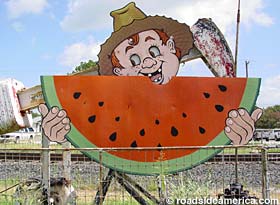
A rolling crop field courtesy of the Randall County Agriculture Department:
A lonely little house courtesy of Homes.com:
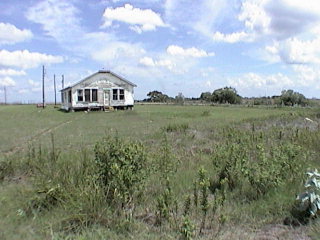
An old service station courtesy of the Fayetteville, TX Chamber of Commerce:

Endless inspiration, y’all!
Soon I’ll be touring a circa 1785 historic house as visual research for another project. A local township’s historical society removed layers of paint during the restoration and revealed a mysterious drawing of a woman. Legend has it that a disgruntled worker drew the image with a spoon in 1837, after an argument with the owner of the home.
Since one of my projects features an 18th-century home undergoing renovations, I thought this would be a worthwhile trip in the name of research. And the woman on the wall may provide additional inspiration. They say everyone sees something different in her face, and perhaps my characters will, too.
 The Etsy addiction continues.
This witty “booklace” conversation piece by Etsy artisan JOYouz, otherwise known as The Quill Chick, features an inspiring Robin Williams quote.
Yep, we’re all mad here.

No, that’s not the title of my latest book. It’s a bonafide neighborhood mystery.
Although we live in the Garden State, our community is not known for its plots of open land. We’re right on top of one another. We therefore get creative when it comes to gardening. I have an herb garden in three containers on my deck–sweet basil, chives, parsley, dill, oregano, mint, and sad, sad cilantro which browned over within two weeks of planting. I never claimed to have a green thumb.
 My Asian neighbor, on the other hand, has a thick, prodigious vine with enormous leaves and bright yellow-orange blooms. At first, I thought it might be pumpkin, not only for its appearance, but for its location, growing along the side of the house amongst a hedge. Some kid might have dumped a rotting jack-o-lantern there last fall.
The vine has consumed the hedge and jumped onto a neighboring cherry tree, wrapping around the branches and soaring ever higher. And there, hanging down for all to admire, a lonely, giant green squash.
It’s shape reminds me of a bowling pin, thinner at the top, heavy at the bottom. It has a dark green color and no discernible pattern.
Just what is it?
And when will they pick it?
The “squash stroll” is our evening entertainment. We hurry along the sidewalk to the tree, to see if the giant vegetable still remains. And each day, it hangs there, fueling our curiousity. The Asian neighbors are not to be found.
Today my toddler and I found a second squash lying across the thickest branches of the hedge, as if it were taking a nap. It has grown quietly while its sibling hangs proudly for all the neighborhood to see.
So, please tell me, what is it? What kind of vegetable? How do you prepare it? What does it taste like?
Perhaps I should ring the doorbell and ask. But sometimes figuring out a mystery is so much more fun.
(Update! Today I met the young Chinese girl who lives at the house. She did call the vegetable a squash, but she could not recall the English word for it. She says it tastes like pumpkin. I would still like to find out the name! And I neglected to ask her when it would be harvested!)
How do I choose which manuscript to submit to the next first page session? I’ve been going back and forth, trying to decide which one showcases my best work. And yet, the two manuscripts I am considering are so very different.
One is a clever tale of a boy with an unusual name–a name that creates a lot of confusion. This picture book is in the boy’s voice, told from his point of view. Yet the illustrations will show something very different happening around him. I have repeatedly heard editors say that a PB must leave enough unsaid for the pictures to comprise half the story, and I think this tale accomplishes that.
Then I have a fractured fairy tale. With pizzas. Glorious, cheesy pies! What kid doesn’t like pizza? A familiar story with a unique new twist might take the cake. Err, I mean, pie.
I admit, I’m getting a little too hopped up for a first page session. I shouldn’t expect anything to come from it other than a lot of good advice. I listen carefully to each page and then when the editor or agent gives his thoughts, I take a lot of notes, hoping to learn from all the manuscripts, not just mine.
Unfortunately, I don’t think everyone has this attitude. Last time a woman in front of me drew doodles on her paper throughout the two-hour session. And when it was over, she complained that the professionals didn’t like her story because they didn’t understand or appreciate rhyme. That may be true, as the editors worked in middle-grade and not picture books, but I had an entire page of notes on her story, while she went home with a lot of squiggles and stick figures.
There’s two ways to approach a first-page session: as a way to grab the attention of an editor or agent, or as an opportunity to receive professional feedback. It’s important to remember that if your work doesn’t impress the editors, all is not lost. Be inspired to work harder. Editors and agents volunteer their time to these events, and we should all be grateful. They don’t owe us anything. But we owe them our very best work.
How do you know when your manuscript is ready for submission? For some, it’s a gut feeling. But just how do you learn to trust your writer’s intuition?
The support and encouragement of my writing group has helped. I run a picture book manuscript by them three or four times until there’s not much more to be gussied up. And then I tuck that story in my back pocket and wait, creating distance. Weeks later, I iron out the creases.
Months pass. I flip sentences around. And then I flip over in bed all night, over-analyzing the story. I consult the thesaurus and exhaust the synonyms. I belt out the story in my best character voice and listen to how it flows (and someone please tell me why I always slip into a southern accent?). I love reading aloud. That’s the best way for me to check the authenticity of the kid voice, y’all (there I go again). And then, when all that’s left to edit is interrobangs, just when I think I can play endlessly with it for lack of anything better to do, I think it’s time to let it fly.
Or is it?
I understand when experienced authors suggest new writers to take an apprenticeship of two years. Writing improves with practice, and the children’s market has its own set of rules. Moreover, it’s an extremely competitive field with many successful, established authors. To break in these days, not only does your writing have to be crisp, the idea has to be unique. So much has already been done—and done well.
Now, you may believe you have extraordinary talent (don’t we all), but don’t skimp on those two years. Immerse yourself in writing. Read books on the craft, attend conferences, join a critique group, take classes, read best-sellers in your genre. That will always be time well spent, creating a solid foundation from which to launch a career. Think of it as a sling shot: the further you pull yourself into the craft, the further you’ll fling yourself forward.
I subbed four manuscripts out this summer and the rejections are trickling in. Did I submit too early? I admit, I didn’t complete the full two-year apprenticeship before letting go of my stories. Thankfully, I didn’t submit far and wee (little nod to e.e. cummings since it’s so puddle-wonderful outside). I kept the list very small so I could gauge response. And the response tells me I have to improve my gut.
I’m working on it.
I’ve already revised two PBs with a new critique partner, one who really pushes me. I believe in her talent, and she believes in mine. Maybe two guts are better than one.
Before you toss that rejection letter into the fire, consider recycling it. But don’t bundle it with the newspaper and set it on the curb.
Lemons beget lemonade. Paper begets paper beads.
They say the more rejections you accumulate, the closer you are to becoming published. So show off all those “not right for our imprint” letters! Cut them up and roll them into jewelry. This tutorial from Paper University will show you how.

Paper Bead Necklace by radrb8vicki
Who knew rejection could be so beautiful?








 Writing for Kids (While Raising Them)