You asked for it, you got it, Toyota.

youaskedforit

Sorry, no car giveaway here. Not sure you’d want a ’77 yellow hatchback anyway.

What you’ve got are your burning kidlit questions with my answers. Please remember that these are my opinions and not necessarily gospel. (I can’t sing, anyway. Except, apparently, for 70’s car commercial jingles.)

If you have follow-up questions, please leave them in the comments!
TaraPostHeader_Final

Graphic by Edna Cabcabin Moran

Writenit asks:
Is there a better place than Amazon to search to see if the fabulous (at least in my head LOL) idea you came up with has already been done a million times?

Besides Amazon, try searching WorldCat.org, the world’s largest database of library holdings. A simple Google search is also a good idea. Try the various types of Google searches, including images and news.

But just remember, even if your title is taken or your idea has been published, there might be room for your manuscript, too. General ideas can be similar, but the execution can result in wildly differing stories. Of course, if there’s an extremely popular book with your idea, odds are that a publisher won’t take a chance on a directly competing book. In other words, if your dragons love tacos or your crayons are going on strike, you probably want to look elsewhere for ideas.

.

Patricianesbitt asks:
Do you have any inside tips as to what themes or topics publishers are looking for?

This information is always changing. Right now, I hear that character-driven picture books are all the rage.

“Looking for” details can often be found at SCBWI conferences and on blogs when a particular agent or editor has been interviewed. You might want to search for conference bios, where professionals often divulge their wish lists.

You’ll also want to visit the bookstore at least once or twice a month. See what’s being displayed face-out (publishers have paid for this promotional opportunity). Are there are a lot of books on one particular subject, like trucks? Well then, the truck ship has probably sailed. (Whoa, that was a mixed metaphor, huh?) Once you see an abundance of one kind of book in the stores, the end of that craze is probably upon us. Remember pirate books during the Johnny Depp “Pirates of the Caribbean” movies? I went to a conference around that time and the editors practically screamed, “No more pirate books!” Sometimes they know more about what they DON’T want than what they DO.

Bottom line: everyone wants a good story. You don’t have to write to the marketplace’s demands. In fact, I suggest that you don’t. Whatever idea stirs up the most passion in you is the manuscript you should be writing. Your enthusiasm will be evident on the page—and that is always appealing.

And always remember Karma Wilson’s example. McElderry’s sub guidelines said “no rhyme and no talking animals” when she sent them BEAR SNORES ON, which turned out to be a huge hit, launching her successful career. It was a great manuscript, so the DON’T guidelines became moot.

bearsnoreson

.

Maria Matthews asks:
Is it better to aim at writing a current popular topic or to write a quirky unusual book?

As I noted above, “currently popular” isn’t your best bet, simply because the books released today got purchased as manuscripts two to four years ago, on average. So you can’t necessarily catch up to what’s hot. And what’s hot is always changing. You never know what the next “big thing” will be.

That’s why I suggest writing from your heart. If quirky and unusual is what you enjoy, then by all means, write quirky and unusual!

.

Josh Funk asks:
How do you get awesome illustrators to do “head shots” for you? (like AJ Smith did  in your previous post)

When I first began my blog seven years ago, I paid illustrators to do graphics for my site, like this watermelon-themed banner by the talented Val Webb.
taralazarwatermelonbanner

Now that my blog has become well-read, I often ask on Facebook or Twitter for a particular graphic and someone volunteers their services, in exchange for a mention and link. I’m usually blown away by the response, and so grateful!

.

Jdewdropsofink asks:
So after reading your previous post, I want to know the super secret story techniques you learned from Sudipta?

I’ve learned a ton from Sudipta. If ever you get a chance to hear her speak or teach a class, grab the opportunity. I’m going to send you to her very pink site instead of spilling her secrets here…

.

Nicole Snitselaar asks:
I would like to know, how much details you must write down when you are planning a PB without words…?

Only as much detail as you need to get the idea across. Be as succinct in your word choices as you are while writing a regular picture book. Paint the overall picture but don’t go into minutiae. You still must leave some things for the illustrator to fill in.

Author Linda Ashman has posted her manuscript for NO DOGS ALLOWED, which is nearly wordless. Check it out here. It’s an excellent example.

.

Tune in for Part II tomorrow, kidlit fans!

I rarely talk about my disability here, because really, who wants to talk about that ugly word? It suggests that we CANNOT. Others have decided to label me “disabled,” not me. From the parking spaces I gladly pull into (who doesn’t want to be right by the front door?), to the forms I fill out, I’m reminded of this label constantly. I accept this label but this label doesn’t define me. It’s the last ingredient in the complex recipe that is me. It’s there, but it’s not important. My cake will rise without it. (Oh boy, that’s corny. But hey, that’s me.)

goodluckcow

Me and my cane with the “Good Luck Cow” in Brandon, Vermont, May 2014.

Multiple Sclerosis hit me in late 2009, just as my career was catching fire (excuse the blatant allusion to Suzanne Collins). In fact, when I was being interviewed by literary agents, I was on an anti-anxiety medication that made my anxiety WORSE, although it took my doctors and me a few weeks to realize this. I took the medication before bed and then couldn’t even speak in the morning until it wore off, around 11am or so. That’s right, I was so full of worry that I could barely force my voice into a whisper. Yet an agent, excited about my submission, called me 90 minutes earlier than our agreed-upon noon conference call. I had to suck it up and somehow appear brilliant and enthusiastic. I don’t know how I made it through that call.

The year 2010 was a blur. I don’t remember most of it. I know I signed with my agent and received my first book deal for THE MONSTORE, but it barely registered. All I could think about was that I would never walk properly again, that I would never figure skate again, never play tennis again, never take family hiking vacations. I couldn’t even drive a car. I couldn’t pick my children up from school, which was only 2/10 of a mile from my home. I focused on the COULDN’Ts. There seemed to be an avalanche of them.

facebookbannermay2014

What finally pulled me out of my funk? Was it reaching the elusive goal of publication?

Sure, that helped. But this lifelong goal realized had little to do with my recovery.

Time did. And so often, this is not what people in crisis want to hear. They think there is some magical solution to get through the hard stuff. And sorry, but I don’t have one. I just had time. And the great thing about time is that EVERYONE has it. It’s available to anyone who’s going through a rough patch.

I had time to process what had happened to me. Time to understand how my body had changed. Time to make adjustments in my daily life. Time to realize that the inner core of ME hadn’t been altered. I was the same goofy, bookish, creative, foodie, writer and loving wife and mother. Albeit with a cane and a mobility scooter. Big freakin’ deal!

Time also made me realize how much time I had missed. I never wanted another “lost year” in my life. All that worrying didn’t solve anything. Worrying rarely does. It makes you miss out on the here and now. The present is so precious. I didn’t want to miss another second of it.

So I got back to being ME. I started writing again. I sold more manuscripts. I began teaching and speaking at conferences. The word “adapt” became my mantra. I learned that I COULD do all that I intended, just with preparation and adjustment.

I’m here to tell you all that you can indeed reach your goals. You’re in charge. If you encounter a roadblock, it is only a temporary one. You will find a way around it. It may take time, but try to see time as a gift rather than a burden. We authors know that it takes years to get published and years to see our books in print. We eventually learn to accept time, as time brings great things.

The only way you won’t reach your goals is by quitting. (Or by excessive worrying.) Envision success, not failure. Focus on the elements within your control, not those beyond it.

Go ahead, make a list. What can you control? What can you NOT control? Then rip the paper in half and throw away the “beyond” section. (There’s a reason I made that section black.)

goals

Today I’m happier than I’ve ever been, even though I can only walk the length of my driveway before needing to sit.

So guess what? I sit.

And then I get up—time and time again.

.

Tara speaks to audiences big and small about overcoming disabilities big and small. Contact her at tarakidlit (at) gmail (dot) com for more information.


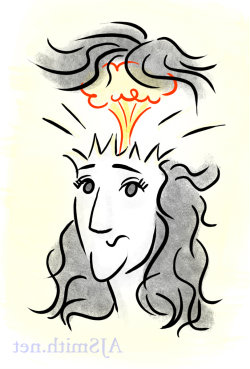
On the Facebook PiBoIdMo group, I’ve been asking picture book writers which topics they want to see on my blog. Then it finally dawned on me (and Dawn is my middle name, so this should have occurred far sooner)—I should ask on the blog. DUH.

taraboom

Tara-ra-BOOM-dee-ay by AJ Smith


See that? It’s my head exploding from the geniusity. (Yes, I made that word up. I’m allowed. I write picture books!)

So here I am, asking you, dear blog readers, what is your most burning, brain-blasting kidlit question?

Leave it below in the comments and later this month, I’ll strive to answer them all.

But just remember, you’ll be getting an answer from someone with half a head.

Today there’s not one guest post, but TWO. On the radio, this would be called a TWO-FER TUESDAY. But it’s Thursday. Yeah, this is why I’m not on the radio.

sudiptateaching

My Favorite Parts of Writing for Kids by Sudipta Bardhan-Quallen

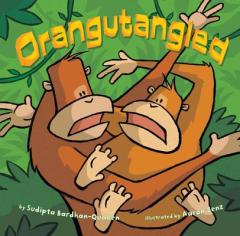
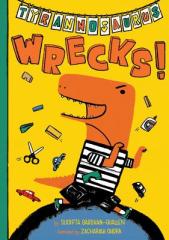
So far, 2014 has been a really big year for me. I’ve had four picture books come out in the first four months of the year—DUCK DUCK MOOSE, ORANGUTANGLED, TYRANNOSAURUS WRECKS, and SNORING BEAUTY. I’ve had books selected for the Junior Library Guild, chosen as Amazon Big Spring Picks, and reviewed in the Wall Street Journal. I also joined the faculty of the Children’s Book Academy and began teaching writing.

Almost 12 years ago, I made the decision to leave graduate school in biology and begin writing books for children. In that time, there have been many highs and lows, though right now is certainly one of those highs. In light of the good fortune I’m experiencing right now, I wanted to share my three favorite parts of being a children’s author.

  1. Nobody tells me what to write about.
    Every project I take up, I do so because it is something that interests me. I get to decide what to write about, and if that means spending one day on a concept book about the bond between a mother and a son, the next day on a picture book biography of Jackie Robinson, and the next on a story of some ducks whose best friend always MOOSES everything up, I can certainly do so (and I have!). It is a wonderful thing to have complete control over what I have to work on.
  2. I can work barefoot in my bed in my pajamas.
    In the spirit of no one telling me what to do, I don’t even have a boss who makes me get dressed before I go to work! Some of my finest writing has come out of the left side of my bed, under the covers with my feet poking out.
  3. I get to create something out of nothing.
    This one’s the key. In so many jobs, people follow instructions, push paper from one end of their desk to the other, execute against a task list. I’m not knocking those jobs at all—without them, our world doesn’t work. I’m just saying that it’s very rare to be able to start with nothing—just me and my imagination (and my laptop!)—and end up with something that is real and good, that didn’t exist before, that is entirely the product of my willing it into existence. Artists are driven to create. To be able to follow that imperative and still be able to support my family—well, that’s what I’m most grateful for. That’s my favorite part.

Happy Writing!

.

mirareisberg

My Favorite Parts of Teaching and Agenting by Mira Reisberg

That part is easy–helping!! This helping boils down to helping make dreams come true, helping people improve their skills, helping to create a more level playing field with Children’s Book Academy scholarships, helping get great books and art out into the world created by great people, and finally helping bring more happiness and joy in the world (oh and having fun playing with people, words, and images).

Being a creative is hard. We live in a culture that generally undervalues and underpays us though this seems to be shifting a bit with new technologies where there is more of an emphasis on storytelling and image-driven messages.

But the payoff, and it’s big, even if it does take a long time for the money to come, is having a meaningful, heart-filled, and very fun life. I was talking with another agent this morning where we were helping each other out and it was just so lovely. That’s what we do in community-oriented organizations like PiBoIdMo, Rate Your Story, the Society of Children’s Book Writers and Illustrators, and the Children’s Book Academy, and this is another thing that I love about what I do.

In the old days, being a writer or illustrator meant slaving away in isolation. Now we have all these fantastic resources that not only help us with our craft, but also with our hearts providing support, resources, companionship, and practical assistance. So if you are feeling isolated or stuck, just reach out and ask for help. How amazing that we can do this. I certainly couldn’t be doing what I do at any other time in history. In some ways I love what I do a little too much and having a slightly addictive personality, tend to do too much. But this is a small price for all the joy and happiness that I get from being creative and helping others. So I guess this is another thing that I love about what I do, getting to live a wildly creative life and do good at the same time.

.

Tara’s Favorite Part of This TWO-FER

Years ago, I attended NJ-SCBWI events to learn about the business and craft of writing for kids. That’s where I met Sudipta. She has taught numerous picture book courses. She’s the most savvy and knowledgable instructor I know. She has taught me story techniques that no one else has ever divulged!

And now everyone has the chance to gain writerly wisdom from Sudipta. Along with Mira, she’s teaching the outrageously interactive online course: “From Storyteller to Exquisite Writer: The Pleasures and Craft of Poetic Techniques” starting May 19th. Mira and Suipta have nicknamed this course “The Missing Link” because it really is what most writers are missing in foundational knowledge. CLICK HERE for details and top secret discounts. This is the only time that Sudipta and Mira will be co-teaching this course together with the wonderful Mandy Yates assisting.

Thanks, Sudipta & Mira!

So now it’s your turn. What are your favorite parts of what you do?

Happy Mother’s Day to my mama-writer friends. What you do every day is amazing! You created kids…and now you create stories!

And what I just did is amazing, too. I gave birth to a new book cover!

(Well, really, Benji Davies did.)

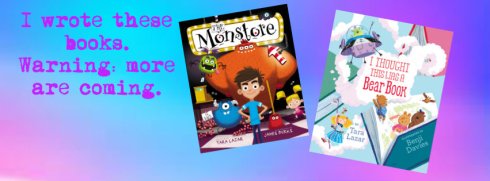
I THOUGHT THIS WAS A BEAR BOOK releases in August 2015 from Aladdin/Simon & Schuster. But you can catch a glimpse of the alien-bear mayhem right here, right now:

Bear Book final cover

Many thanks to my very cool editor, Alyson Heller, and art director, Karin Paprocki, at Aladdin. And of course, none of this would be possible without über-agent Ammi-Joan Paquette.

More sneak peeks to come soon. I promise you a cute bear tushy.

Have a great day, Mama Bears!

Thank you, PiBoIdMo participants, guest bloggers and illustrators. Do you know what you did?

You helped me raise $433.62 to donate to RIF, Reading is Fundamental.

RIFlogo


Your purchases via the PiBoIdMo CafePress Shop made it possible.

rifcheck

With Carol Hampton Rasco, CEO of RIF

For every $10 donated, RIF is able to distribute four books to a child in need.

FOUR BOOKS!

fourbooks

So last month I made my way down to RIF Headquarters in D.C. I toured their offices and talked with RIF staff about the important work they’re doing.

One staff member had just returned from a county in Appalachia, where 28% of the schoolchildren were officially homeless, and where even more lived in crowded trailers with multiple families apiece.

The school Principal told RIF that amazingly, their test scores rose from 9th percentile to the 22nd percentile in just one year. To what did they attribute that growth? RIF! Now that these children have books of their own, they’re able to continue learning at home and over the summer break instead of being left behind. Books are AMAZING. But you already knew that, right?

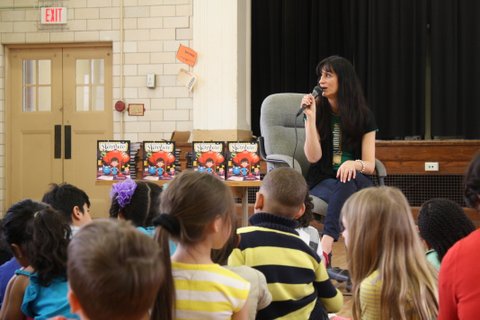
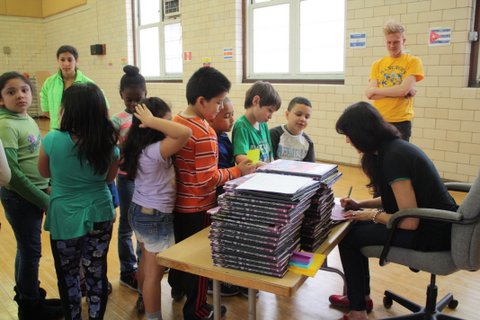
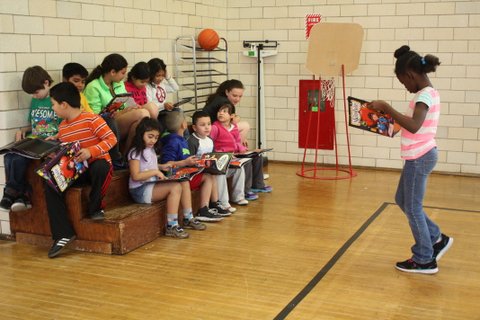
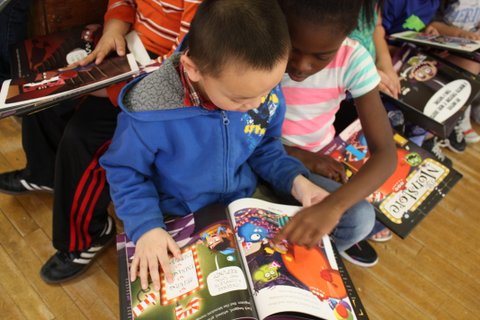
As part of my trip to RIF, my publisher, the Aladdin imprint of Simon & Schuster, donated 100 copies of THE MONSTORE to the children at Bancroft Elementary in Washington, D.C. I was honored to appear at the school to talk to the children about writing and to personally sign every copy.

IMG_1670

IMG_1661

The best moment of the day? When I told the children they’d each be going home with a copy of my book. They cheered and hoorayed, and two besties in the front row hugged each other so tight they tumbled over in joy. Now that’s a great day for any author. Thank you, Aladdin and RIF!

IMG_1688

IMG_1691

IMG_1698

I have something else important to tell you.

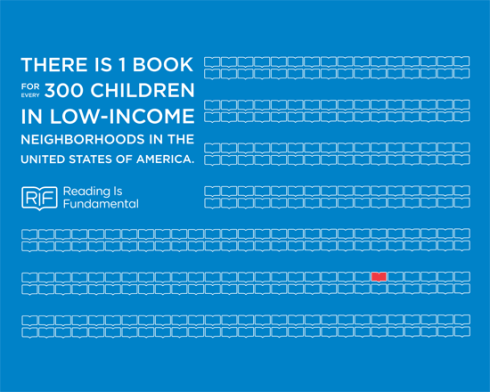
RIF’s donations have taken a plummet in recent times. The economy has hit them hard. So please consider donating directly. Remember $10 = 4 books!

1in300

Donate here. Or here.

And again, thank you for making the PiBoIdMo donation possible!

Every sale from the PiBoIdMo CafePress Shop will continue to benefit RIF!

keepcalmkidstee

Shirt design by Tory Novikova and available in the PiBoIdMo CafePress Shop!

Shirt design by Carter Higgins and available in the PiBoIdMo CafePress Shop!

Shirt design by Carter Higgins and available in the PiBoIdMo CafePress Shop!


You may be wondering–what ever happened to Tara? It’s been almost a month since she blogged. (Or you may not. You may be relieved your inbox has been devoid of my blivel. I made that word up, in case you’re wondering. A portmanteau of blog and drivel.)

Well, I’ve been traveling! I’ve actually changed out of my pajamas several times in the last few weeks!

Not so pristine white board.

Not so pristine whiteboard.

At the end of March I drove down to MD/DE/WV SCBWI’s Annual Conference to present my workshop “From Concept to Dummy for Picture Book Writers”. About 70 writers attended–it was a full house in our little room. The attendees got a taste of my imbalance. Yes, my mental imbalance, but also my MS imbalance. Luckily I didn’t topple the whiteboard. I did, however, have one sinking moment when I thought I used a permanent Sharpie on the pristine white surface. It reminded me of NJ-SCBWI 2008 when I volunteered to hang signs on the aging plaster of the Princeton Theological Seminary, only to take chunks of wall with me when I removed the signs. Be forewarned, I cause mayhem and destruction at SCBWI events.

I think many will agree that the best part of the workshop was when we read the beginnings of successful picture books to discern the WHO, WHAT, WHERE, and WHEN in each opening line. Incorporating these details makes your reader ask WHY and eagerly turn the page to find out.

Many new writers mistakenly begin stories with, “My name is Jamie and I’m six years old.”  This tells a reader nothing about the story to come. And more importantly, an editor who reads this plain first line will most likely stop there. YIKES. Not what you want. You have to break out of that slush pile with a line that captures the editor immediately.

After reading a dozen picture book openings, with me screaming WHY? WHHHHHYYYYY? and bending over in feigned painful anticipation, shaking my fists at the sky, I challenged the participants to rewrite their opening lines. Everyone was quite thrilled to get their own Tara WHHHHHYYYYY? in response to their improved introductions.

Writer Sarah Maynard summarized my workshop with bullet points, to which I’ve added my thoughts from the event:

  • You have 30 seconds to grab their attention. MAKE IT GOOD!
    Like a resume to obtain a job, you have limited time to make an impression with an agent or editor. They can have hundreds of manuscripts to read each week, so they give each one only a few moments to grab them. Punch that opening, make them want to continue reading.
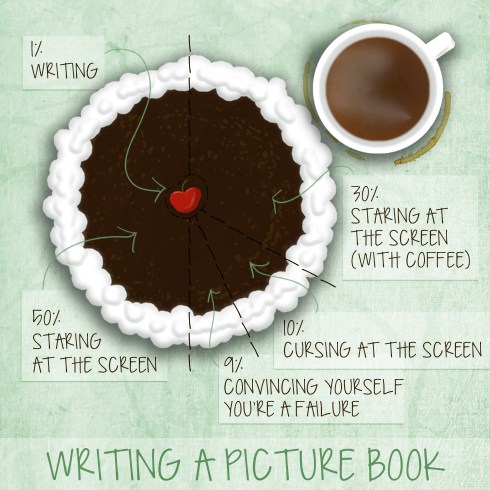
  • “Writing a picture book is 99% staring and 1% writing.”
    There is A LOT of thinking involved in writing a picture book. Don’t worry if you’re not actually putting words on paper every day. Think about how to resolve problems in your story. Stare at your manuscript. Your subconscious will most likely be working on a solution and it will pop out while you’re doing mundane chores, like emptying the dishwasher, folding laundry, or taking a shower.

Tara_PieChart

  • Learn who YOU are as a WRITER.
    A lot of authors, including me, espouse advice that may not work for you. Discover how YOU work best and stick with it. For instance, routine doesn’t jive with me, although it works for a lot of other people. I used to force myself into routine only to get frustrated, losing my creative mojo. Only you know how to thrive in your creative mode. It’s very personal. Don’t take advice that doesn’t serve you well. (It may be useful to note here that I’ve shunned routine my entire life.)
  • If it’s not apparent by words you’ve written, add an art note.
    One attendee told me I was the first person to speak positively about art notes. Yeah, I think they get a bad rap. They’re absolutely ESSENTIAL to use if it’s not apparent what’s happening by your words alone. If the text says your character is smiling but you actually want them to frown, you need an art note to convey that. Of course, you should not use them to direct the entire shabang, but to ensure there are no misunderstandings. Which brings me to the last point…
  • Don’t make an agent or editor guess!
    I find that some new writers like to surprise the reader on the second or third page of a manuscript. This means the beginning is not entirely clear and the reader must guess what is happening. Well, what if your reader guesses wrong? Then they become hopelessly confused at the reveal and probably discard your manuscript. You don’t want an agent or editor to have to guess what is happening in your tale. Make it CRYSTAL either by the text or the addition of art notes. It can be as simple as “[art: the character is a bear]” to make everyone understand.

I thoroughly enjoyed my time in Maryland—the hospitality of the chapter went above and beyond. We had a lovely faculty dinner at the Craftsman-style log cabin home of former RA Edie Hemingway. Is there anything more writerly than that (I mean, c’mon, HEMINGWAY)? Edie has a charming home with a writing hut tucked into the woods.

ediewritinghut

Far better than my writing space—my unmade bed!

unmadebedworkspace

As I crawl back into my pajamas, I’ll be getting another blog post ready. This time, about my trip to Reading is Fundamental and the donation that my publisher and PiBoIdMo participants made possible, enriching the lives of children with BOOKS!

WRITE ON!

***UPDATE 3/28/14: “Fiction Magic” is now fully funded! Thanks to everyone who contributed. You still have 9 more days to get some fabulous pledge packages, too!***

Sometimes writers need a good kick in the pants.

Wouldn’t it be great to have your own personal writing coach by your side every day to get you moving? She could whip the sheets off you each morning, bugle reveille in your ear, even toast  you an Eggo while you shower.

Eh, who am I kidding? Writers don’t shower!

Anyway…

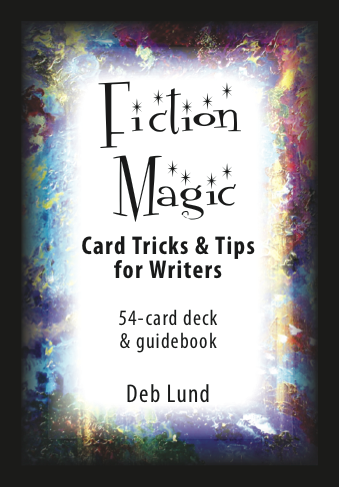
Author Deb Lund brought together her 20+ years of teaching experience in a magical way—with 54 surprising writing prompts, tips and tricks for you to apply to your work-in-progress whenever you’re feeling stuck. It’s like having that writing coach right there with you, only a lot less annoying. It’s “Fiction Magic”!

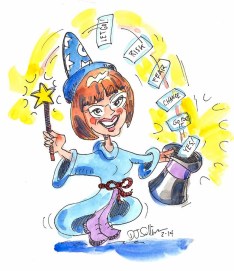
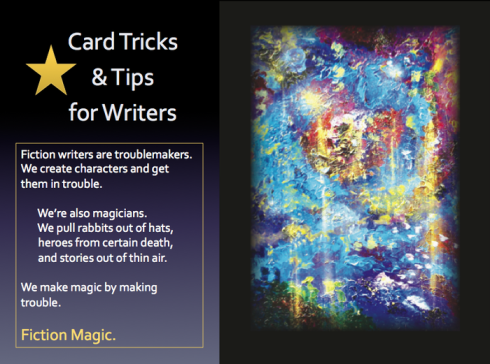
Fiction Magic Title screenshotMagicalDebLund

For years, Deb taught 4th- and 5th-grade students how to write, and she wanted to make it cool for them, so she developed these cards. Her real “aha” moment came when she realized that she could teach adults the same way she taught children, using the same FUN strategies. ABRACADABRA! These “magical” cards act as triggers to pull something out of your head that you wouldn’t ordinarily be able to coax out.

At the Oregon Silver Falls SCBWI Writing Retreat, star agent Jen Rofé of Andrea Brown Literary Agency attended Deb’s session and then exclaimed, “I want all my writers to have your cards!” Yep, she was that impressed. The only problem? Deb’s cards were a prototype that cost her $200 to produce. How could she make them for a dozen writers? A hundred? A THOUSAND?

Enter Kickstarter. Deb’s Fiction Magic campaign is on right now and it’s 94% funded already! But with just 10 days to go, she needs your help. And believe me, you want her help, too!

Let’s do a few tricks right now, shall we? Whip out your WIP and see if these magical remedies help!

.

AGREE TO A BAD DEAL
Your characters must make some bad choices along the way. They may even have to negotiate for something they need or want with people they loathe. Characters may know they’re agreeing to bad deals but feel they have no choice. Or the deals appear good, but fall apart later. Or time factors make the deals even more ominous. Make the stakes of bad deals so high it’s difficult for your characters to back out of them.

When you feel stressed by all that’s on your plate, be gentle with yourself. Let your characters agree to bad deals, but the only agreement you need to make with yourself right now is to write, no matter how bad the writing may seem.

.

REVEAL A SECRET
Secrets can be powerful tools or sources of trouble. Or both. What information could your characters unwittingly slip out to the wrong people? Characters could be in danger because of secrets. Other characters could reveal secrets that affect your lead characters, whether the secrets were theirs or not. In trying to cover up secrets or escaping from those trying to conceal secrets, what could go wrong? Who will be angry? Hurt? Feeling betrayed? Put in life or death situations?

Do you keep your dreams secret? Sometimes they need protection, but when you’re ready and the time is right, reveal them to others who believe in you.

.

THROW IN AN OBSTACLE
If you’re lucky, you’ll pick this card over and over, because this is Key. Your characters are on quests. Delay them. Interrupt their journeys. Who or what could step in to make your characters stop in their tracks? The interruptions may be people, objects, circumstances, thoughts, feelings… Send your characters merrily down the road, and then run them into roadblocks. Keep tossing them unending hardship. Warm up your pitching arm and let it rip. Throw after throw after throw.

As a writer, you have plenty obstacles. For each one you throw at your character, remove one from your writing life! Where will you start?

.

fictionmagic

There are 51 more Fiction Magic tricks for you to try. But only if you help Deb reach her goal.

Check out her Kickstarter and create your own magic! (Even if that includes the bugle call. But that’s not for me. I am NOT a morning person!)

kickstarter


110912_Sudipta Bardhan-Quallen_BB_AB_0136by Sudipta Bardhan-Quallen

As an author, I look forward to my next book release the way parents look forward to the birth of their child. After all, the release date is a birthday of sorts—the day my creation is real to everyone, not just me! If you’ve ever known someone expecting twins, the excitement is even higher—though, the fear associated with the event is also heightened.

This year, I’m having the publishing equivalent of quadruplets:

duckduckmoose orangutangled

snoringbeauty tywrecks

Like I said, I’ve got 99 problems, but a book ain’t one.

I get it. To have her problems, you might be thinking. After all, too many things publishing is a far better problem than too few. Or none at all. But there are problems created by my multiple birthing. Here are a few things you might not consider when praying for a year like this:

  • The whirlwind of marketing becomes a tornado.
    Since January, I’ve done three blog giveaways (the first was a DUCK, DUCK, MOOSE package of a book, a book, and a package of magic erasers, the second was a piece of Aaron Zenz’s original art, and the third is the autographed book we will give away here on this blog) with a fourth one coming up. I’ve done 42 Skype classroom visits—not including the 14 I have scheduled for the TYRANNOSAURUS WRECKS launch. I’ve flown to a conference in California and done a bunch of signings. I’ve revamped my website, I’ve had educator guides created, I’ve read the books so many times I have them memorized. And on the 7th day I rested…except, not really. Remember, all these marketing things are in addition to my regular job of writing, revising, preparing workshops, creating professional development. Oh, and raising all my kids.
  • orangutangsbyaaronToo much of anything is good for nothing.
    As much as we want to see our books in print, publishing is about more than just personal accomplishment—t’s about sales. While my ego might be excited by multiple books out at the same time, the market is another story. Have you ever heard of market saturation? Economic theory says in a given market, only so much growth can be supported. For authors, that means there are only so many new books a consumer will buy at a given time. Having too many books at once can actually reduce the probability that a fan will buy all of them, just because he may not want to buy more than a certain number of books within a short time period. This principle also extends to recognition. It’s highly unlikely that you’d have multiple books nominated for a given award in the same year. So you’ve increased your overcall competition by competing with yourself.
  • The “what have you done for me lately?” problem.
    Let’s face it—people are basically raccoons, distracted by whatever is new and shiny. And if you have a bunch of books come out at once, chances are, that will be followed by a long gap until your next release. But a book only keeps it’s “new car smell” for a finite amount of time. When something else new and shiny comes along, you won’t be able to compete and the raccoons will move on.

So, who still wants to have lots of books published at once? And who doesn’t?

Well, let me tell you a secret—it’s not up to you.

For the most part, publishers work on their schedule. And their concerns aren’t your concerns. So books may come out slowly at regular intervals, or they might appear all at once. As authors, we don’t have much say in this.

So how do you deal with this? How can you turn all these negatives into something positive for you?

I’ve given you the problems, so let me propose some solutions:

  • Find your overarching narrative.
    Whenever I have a book release, I take the details of its inspiration and craft a storyline that matches to a theme. For example, every night at bedtime in my house, my kids go nuts. My son, especially, when he was younger, he refused to sleep—no naps, no bedtime, no nothing. He was absolutely convinced I was going to do something awesome. This became the backstory for CHICKS RUN WILD, and I’ve introduced the book to hundreds if not thousands of readers by telling this story. With each of your books, you should be creating a narrative as well—but when you have multiple books at once, think of an umbrella narrative that talks about all the books. For example, DUCK, DUCK, MOOSE and ORANGUTANGLED are both about having bad days (though they resolve that issue differently). When I talk about them together, I tell my audience about taking bad days, mistakes, blunders and turning them into inspiration. They’re also both about friendship, and the different ways your friends can help you get through a rough patch. When you have one narrative, that message starts to represent you as a brand instead of the individual products/books. And at the end of the day, you want fans of your brand, not just your book.
  • Coordinate efforts.
    When you start marketing one book, leave yourself openings to market the others. For example, when I was booking release day virtual visits for SNORING BEAUTY and I had too many requests, I offered the folks I couldn’t schedule in March a spot on the TYRANNOSAURUS WRECKS release day. So instead of having to start from scratch for the next release, I’ve got some legwork done already.

sudiptabookmarkUse this principle in your marketing materials, too. Having bookmarks printed? Think about designing something that works for all your new releases. Making postcards? Create a “New for 2014” card instead of individual designs.
Just breathe. As I said before, in the grand scheme of things, having too many things published at once is the better dilemma to have. Because if you’ve got to have 99 problems, at least a book ain’t one.

.

Thank you, Sudipta! This is all good to know since I will be having two books released in 2015! Yikes! TWINS! Somebody boil some water!

Do you have any questions or comments for Sudipta? Leave a comment below and you’ll be entered to win a signed copy of one of her 2014 books, YOUR CHOICE! (And a tough choice it is!)

Also be sure to visit Sudipta’s awesomely nerdy blog, Nerdy Chicks Rule.
 

Hey, look at that! I finally got Sara Zarr on my blog! Let me introduce us: Tara Lazar, Sara Zarr. Sara Zarr, Tara Lazar. Woo-wee, that’s fun to say!

OK, enough fooling around. Let’s get serious. Well, maybe that’s not the right word. Let’s get mischievous. Because today we’re breaking rules!

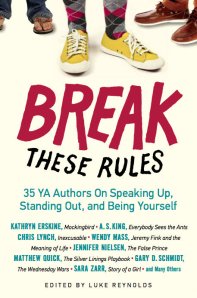
breaktheserulescoverThe YA anthology BREAK THESE RULES explores the flip-side of those nit-picky little rules you’re supposed to follow when growing up. What would happen if you didn’t “grow up” and “be serious”? So what if you daydream, skip college or talk about religion? Must you really pick a side between jocks and geeks?

Well, 35 authors tell you to ignore “the rules”, just go ahead and break ’em. Because they did. And it didn’t kill them. Heck, they even came out on top. Check it out. (Even I’m in the book! I can’t believe they asked me. Maybe they knew I’m a scooter-ridin’ rebel.)

To celebrate BREAK THESE RULES, I thought it would be fun to learn what WRITING RULES some of the authors have broken. You know, we hear the rules all the time—rules about content, length and showing-not-telling. And in picture books: no rhyming, no art notes. We’re bombarded by rules at conferences, in craft books and even on this blog! (Yeah, sorry ’bout that.)

So today we’ll hear from Wendy Mass, Josh Berk, and of course, that author with the awesome name, Sara Zarr!

.

wendymassWendy Mass

When I talk to kids at schools about writing, I always tell them to be sure to keep their eyes and ears open when they’re out in the world and to closely observe what’s going on around them. The thing is, when I am out in the world, say at a busy shopping mall, the people around me may as well have three eyes and two heads for all I notice them. I never study people, I never notice what they wear, how they move, how their voice sounds, all those things you are supposed to do when you are trying to create believable characters. It all just makes me uncomfortable. That said, I do get inspired by things I see in the world, or hear, or read, just not people. So there you have it, my dirty little secret. On the positive side, if we cross paths you’ll never have to worry if you have spinach in your teeth because I’ll never notice .

.

JOSHBERKJosh Berk

I quite possibly owe my entire writing career to the fact that some years ago I decided to break the first rule of writing: write what you know. I had a crazy idea to write a YA mystery novel about a deaf teen solving a murder. I knew nothing about writing mysteries and less about being deaf. But I was curious. And so I learned.

You can write about anything—or anyone—you care to. Curiosity and empathy are your greatest tools as a writer, not the limited scope of your own experience.

.

sarazarrSara Zarr

The rule I break most often is “write a crappy first draft.” I work much better if I revise as I go. Which isn’t to say that my first drafts aren’t crappy. Because they are. As are my second and third, I’m pretty sure. But what I try to avoid is blindly thrashing through and pushing ahead no matter what, just to get the words in. For one thing, I don’t want to write myself into a corner or dead end and then have to throw out all the pages that got me there. For another thing, I get this unpleasant feeling of anxiety if I write forward knowing there are big problems behind me. If I feel my idea of a character changing as I write, I want to go back and at least patch up the previous version of that character before I get too much further. It’s like knowing I left my wallet at the restaurant or something. I have to go back. There’s always more revision to do, but I try to keep the crappy to a minimum along the way.

.

Thanks, daring edict-evaders!

So get out there and start breaking rules. Be different. But most importantly, be WHO YOU ARE. (I’m Tara Lazar, not Sara Zarr. But maybe we could switch for a day?)

What writing rule have you broken?

Leave a comment to be entered to win a copy of BREAK THESE RULES, available now from Chicago Review Press.

Like this site? Please order one of my books! It supports me & my work.

FLAT CAT is the winner of multiple state book awards, selected by kids!

Enter your address to receive this blog via email.

Join 14.3K other subscribers

My Books

Blog Topics

Archives