by Tammi Sauer
I have been doing this Storystorm business since the very beginning. Oh, people. I have loved the experience, and it has served me well.
More than a dozen of my books got their start in Storystorm. These are just a few of them:
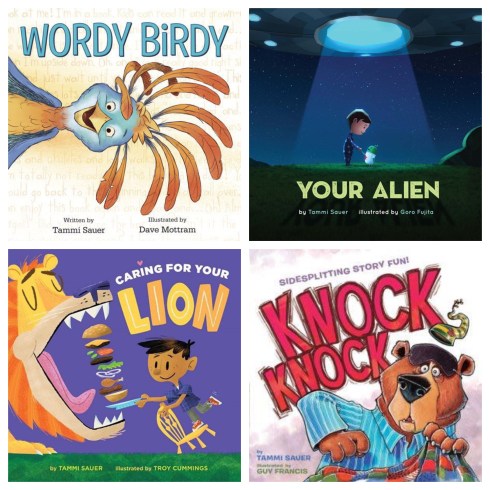
Over the years, I have not only participated in the wonder that is Storystorm, but I have shared all sorts of idea-getting strategies as well. Today, I have a new one to pass along.
It’s simple.
Embrace the opening of a certain soap opera.
But I don’t want you to think about just any days. I’m talking those early days. Let’s go back to childhood.
Mine was spent on a farm.
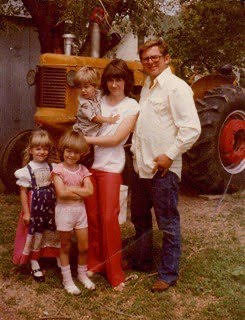
When I was a kid, my family had a horse, cows, chickens, geese, ducks, dogs, cats, and hundreds of pigs. Is it any coincidence that many of my books feature barnyard animals?
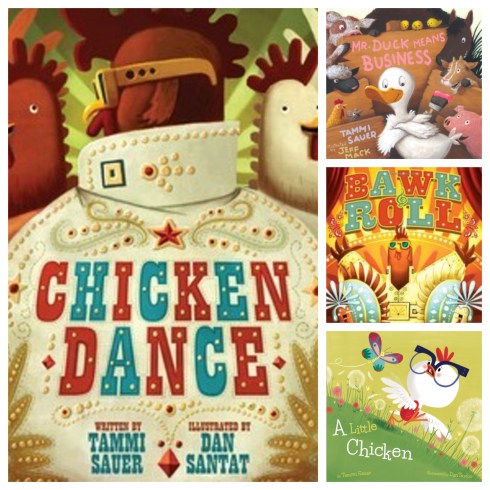
Even my August 2020 release stars my favorite kind of cast. See?
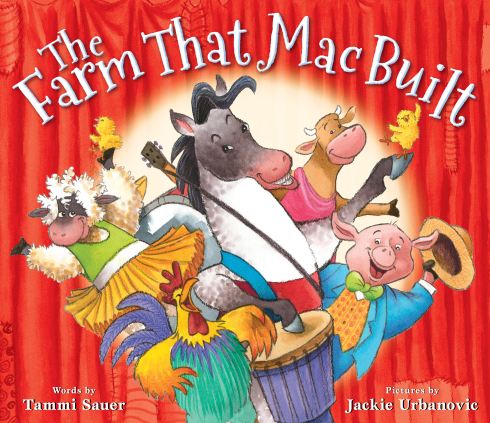
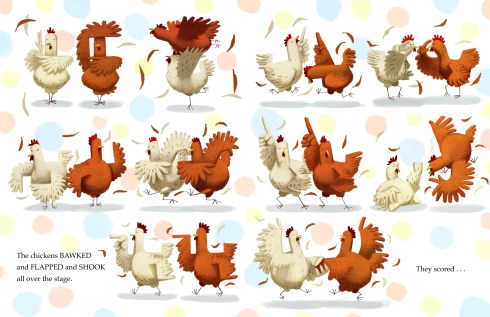
My childhood included more than just animals, though. I also had an assortment of relatives with varied dispositions. Remember Mr. Duck? That bird is actually my great aunt Florence.
I want you to take a moment to think about your childhood. What was it like? Did you live in a bustling city? Did you grow up with siblings? What sorts of things did you do with your free time? Who made an impression? Did you have an imaginary friend? Did you want to name your baby brother PeePee Garbage? My niece Madison sure did. Did you ever run away from home? If so, why, what did you pack, and how far did you get? What sorts of things did you stash under your bed? What was your most embarrassing moment? What did you want more than anything?
Jot down a few of your childhood memories, hopes, and/or snippets of the funny stories your uncle Bob told each Thanksgiving. Remember what it felt like to be a child…the joys, the frustrations, the fact that the world is designed for people twice your size.
Let the days of childhood open you up to some new ideas.
Keep in mind, though, that when you are ready to shape some of those ideas into stories, you shouldn’t lock yourself into making them historically accurate. Nope, nope, nope. Use those memories as a starting point. I mean, I’m pretty sure our barnyard animals never held a talent show after my family had gone to bed, but I’m not going to lie. I sure hope they did.
 Tammi Sauer, a former teacher and library media specialist, is a full-time children’s book author who presents at schools and conferences across the nation. She currently has 29 published books, but many more are on the way. Getting kids excited about reading and writing is Tammi’s passion. Her other passion is mango tea.
To learn more about Tammi and her books, visit her on the web at tammisauer.com and at picturebookbuilders.com. You can also find her on Twitter at @SauerTammi.
Tammi is giving away a picture book critique to one winner AND a copy of A LITTLE CHICKEN to another.
Write one comment below to enter.
You’re eligible to win if you’re a registered Storystorm participant and you have commented once below.
Good luck!
 Ok. You start writing. His path crosses with others who prevent him from hurrying home, and you make him choose between two honorable tasks which undermines his intention of doing that. (You’re using all the good things you’ve learned about plotting.) Then suddenly, you get the urge to have your main character turn onto a path you hadn’t expected him to take. This is good! You should be open to serendipity and surprise while you write. Now, you slowly begin to discover that your main character’s real intention is not just to get home to see his father, but to get home and make sure the father’s will gets changed in your main character’s favor before the old man croaks.
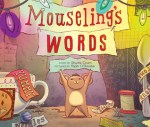 Finally, let me say that all this butt-in-chair work on intention is critical. But it’s also, ultimately, not important. But-but-but you’ve just spent all this time getting to know intention—and now we have an about-face! (Hey there, Janus! Or, “embrace the ambiguity,” as writer Uma Krishnaswami says.)
 Shutta Crum is the author of several middle-grade novels and many picture books, poems and magazine articles, as well as an oft-requested presenter and speaker. THUNDER-BOOMER! was an ALA and a Smithsonian “Notable Book.” MINE! was reviewed by the N.Y. Times as “a delightful example of the drama and emotion that a nearly wordless book can convey.” Her books have made Bank Street College lists as well as state award lists. MOUSELING’S WORDS (2017) and a reprint of the Kentucky-based SPITTING IMAGE (2018) are her latest books. WHEN YOU GET HERE, a collection of poems for adults, will be published in 2020. More info:



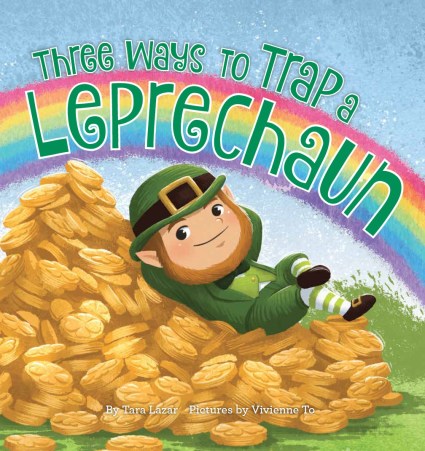
 Tara Lazar is your host for Storystorm 2020. Her next book is



















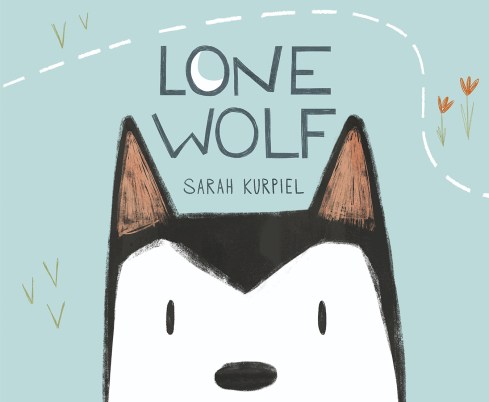
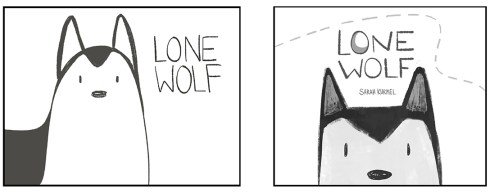
 And first and foremost on the cover is, of course, Maple herself. I never get tired of drawing stylized huskies, which is fortunate since I had to draw Maple so very many times.
  Sarah Kurpiel is a librarian and author/illustrator from the Midwest. Her stories are inspired by animals, nature, and everyday life. Sarah has been doodling in the margins of notebooks for as long as she can remember. She started drawing digitally in 2016 and never stopped. Sarah uses a power wheelchair and considers her disability an important part of her identity. LONE WOLF is her first book. Visit her at





 Writing for Kids (While Raising Them)