You are currently browsing the category archive for the ‘Writing for Children’ category.
Who doesn’t love first page sessions? Where else can you get two non-stop hours of professional, editorial feedback? They pack quite a picture book pow. (And a middle grade wallop. And a YA smack.)
But how do you get the most out of these sessions? Take care in what you submit and how you submit it. Let the editors focus on your story rather than procedure.
These suggestions are based upon the November 19 NJ-SCBWI first page session with Kendra Levin of Viking and Lauren Hodge of Little, Brown.
1. Format properly. Some submissions didn’t use standard paragraph breaks and indents. While the editors understood that these writers were eager to submit as much story as possible, the manuscripts were confusing to read. Everything ran together. Format your first page just as you would a professional submission. Honestly, you will get more out of less.
2. Use Times New Roman font. A serif font reads well. Courier, the traditional typewriter font, is a monospaced font, meaning each letter is the same width. This wastes space. If you submit with Courier, you’ll have 50% less story on your first page.
3. Research your genre. Some manuscripts felt inappropriate for the genre the author indicated. The topic, word choice and level of sophistication need to match your audience’s age. If you submit with the correct genre, the editors will spend more time assessing your writing than genre counseling.
4. Don’t limit yourself to one gender. One manuscript indicated it was for girls. If you write this on a submission, an editor will immediately think your work doesn’t have broad appeal. Let the editor decide if both boys and girls will love your story.
5. Skip the prologue. Go right to the story. Submit page one of the first chapter, not the backstory.
6. Don’t include an explanation. One picture book began with an intro about why the author had written the story, based upon an experience with her children. And here is where editor Kendra Levin was gracious and tactful. She thought the children in this author’s life were incredibly lucky to have such a playful, creative parent. But stating how children you know enjoy your work doesn’t help sell it. The story does. The intro only left room for five lines of the tale, so the editors could not comment fully. They also emphasized that if the story is written well enough, an explanation becomes unneccesary.
7. Take notes. Don’t just wait for what the editors/agents have to say about your manuscript. Listen to the comments about every page. There’s something to learn from everyone’s manuscript.
There’s more to come from this dynamic first page session. Watch for another post this weekend. And please add your own first page tips!
 This week my India-born critique partner submitted an engaging group of multicultural poems.
“Summer Paintings” featured three young girls decorating their palms in the mehndi tradition, embedding secrets in the scrolled henna designs—initials of boys and dreams and all the hushed longings of adolescence. Toward the end of the poem, the girls washed away the paste to reveal the designs. The next line, Finally freed from our impatience, caused debate among our group.
The girls in the poem had a wonderful time waiting for the henna to dry, for the patterns to stain their skin. They laughed and talked, giggled and blushed. Why were they impatient if they enjoyed the journey?
The answer? This is what childhood is about: impatient eagerness.
While children take pleasure in their activities, they are always rushing forward to the next thing. As a child, every experience is new. There is little time to let events soak in when there is something else to explore. They are motivated by an insatiable curiosity.
Moreover, children wish to repeat favorite experiences over and over again, and not soon enough. I’m reminded of this when my family leaves Chuck E. Cheese. Two seconds into the parking lot and my daughter pops like a balloon: “Mommy, when are we going to Chuck E. Cheese again?”
When writing, I will try to remember the impatient eagerness that my critique partner so eloquently showed.
Does your character display an impatient eagerness? What is next big thing for them?
A few weeks ago, the hot topic here was Five Rules for Picture Books. Follow those guidelines and you might just have a winning manuscript. Or you might just have Hop! Plop! by Corey Rosen Schwartz, Tali Klein and Olivier Dunrea.
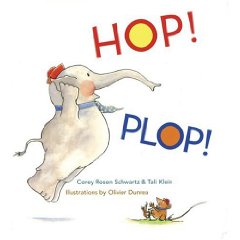 Let’s take a closer look at this story and how it fits beautifully with “the rules.”
Rule #1: Audience Age is 2-6 years old
A picture book should include situations and characters to which children this age can relate. Hop! Plop! is set at a playground. Familiar? Check. Adorable, friendly animals? Check.
Rule #2: 500 Words is the Magic Number
Hop! Plop! comes in at about 300. Check.
Rule #3: Make it Really Sweet or Really Funny
In this case, it’s really sweet and really funny. Elephant and Mouse navigate the playground together and hilarity ensues. Elephant is too heavy on the seesaw and he pushes Mouse a little too hard on the swing. In the end, the two friends discover that their favorite playground diversion is each other. Awwwww.
Rule #4: Use Playful, Unique Language
Elephant and Mouse’s foibles are expressed through onomatopoeia and rhyme. “Skip! Tip! Zoom! Zip! Mouse did a backward flip.” and “Plop! Drop! Crash! Whop! The swings were a total flop.” Totally fun to read aloud. And not too tongue-twisty.
Rule #5: Create Situations that Inspire Cool Illustrations
Picture an elephant and a mouse on a seesaw. And a mouse sliding down an elephant’s trunk. Funny situations, cute pictures. Final check.
Hop! Plop! is a delightful romp. While this book happens to follow “the rules,” that doesn’t mean other manuscripts which color outside the lines are doomed for the rejection pile. Not at all. Remember, “the rules” are merely guidelines for new writers, to help them understand what editors generally seek in a manuscript. (I should really add to the rules: there must be a story.) I can name plenty of picture books that break at least one of these guidelines, with length being the most common one. But Hop! Plop! fits all the criteria–and it’s darn cute to boot. Check it out.
Please share in the discussion by naming your favorite rule-followin’ title! Or maybe you want to point out a rule breaker, a rebel title that deserves praise!
The KidLit Comment Challenge helped me discover some boss new blogs and websites this weekend.
Everyone is talking about Wordle by Jonathan Feinberg. Input text and Wordle creates a word cloud, your very own piece of literary art, which I’m calling “literarti.” The more frequently a word appears in the text, the larger its relative size.
I had fun pasting my picture books into Wordle. Here is The Prince of Pizza:

You can change the font, color palate, direction of the words, and maximum word count. You can even link phrases with the tilde symbol (~) so they appear together. Keep in mind that Wordle’s gallery is uncensored, so it might not be appropriate for lil’ ones.
A site you will want to share with your young readers is author/illustrator Aaron Zenz’s Bookie Woogie: book reviews by kids, for kids (and their parents). Aaron and his three children, Isaac (10), Gracie (8), and Lily (5), review their favorite books from their impressive 2800-book home library. And when the discussion is finished, they share artwork inspired by the story. Aaron’s artistic talent has definitely rubbed off on his brood! Join them every Monday for a new book.
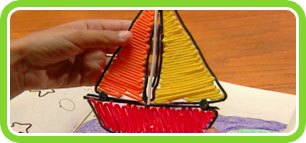 And then there’s Bendaroos. If you have a child with an insatiable artistic soul, then these colorful, bendable wax sticks promise to keep them busy for hours. You can even make your favorite picture book characters come to life by using the illustrations as a template. Your Bendaroo sculpture will lift right off the page when you’re done. As soon as ours arrive, I’ll post our creations.
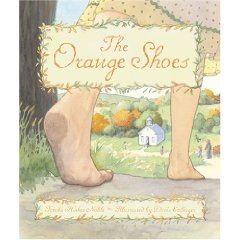 Trinka Hakes Noble once described the joy of being a children’s writer: she can relive her childhood. And not just the fun times, but the difficult ones, too. And why would that be a good thing? As an author, she has the opportunity to rewrite her own history—to take an unfortunate situation from her past and finally make it right.
She does just that in the poignant story The Orange Shoes.
Ms. Noble grew up in rural Michigan as the fifth of seven children. The hand-me-downs that defined her childhood became the inspiration for this tale.
Each child in her family received just one sturdy pair of shoes per year, and since they were to be passed down between boys and girls, they were plain loafers. At school she was teased for her boyish Buster Browns. One afternoon while browsing the sole department store in town, she set her eyes upon a pair of lovely orange Mary Janes and instantly fell in love. She does not know how they afforded it, but the next day her parents presented her with that special pair of shoes.
As a young innocent, she showed them off to the children at school so they would finally admire and compliment her shoes. Instead, the children kicked dirt on her shoes, stomped on her feet and destroyed them, leaving her heartbroken.
In The Orange Shoes, marvelously illustrated by Doris Ettlinger, the main character Delly comes from a poor, rural family who cannot afford shoes until October, when the weather demands them. And yet, Delly’s character does not feel sorry for herself without shoes. Instead, she relishes the feel of the cool earth beneath her bare feet.
Like Ms. Noble, Delly is a talented artist. The inside of unfolded, used envelopes are her canvases. Her teacher, Miss Violet, encourages her students to decorate boxes for a “Shoebox Social” which will raise money for art supplies. When Delly sees a pair of orange Mary Janes in town, she immediately wants them to wear to her school’s social, but she knows they will never be hers.
To Delly’s surprise, her father buys the shoes she so admires. The delighted young girl wears her shoes to school and her jealous classmates ruin them.
This is where Ms. Noble fixes the situation from her childhood. Delly becomes a resourceful artist, painting each crack and crease with vines, transforming bigger scuffs into flowers. She decorates her Shoebox Social box to match perfectly. At the event, her box draws the highest bid, but it comes from an unexpected source.
The Orange Shoes was easily my favorite picture book of 2007 and it deserves a place on your shelf. The illustrations and story marry beautifully, and the message is uplifting and powerful. This being said, it is a more complex tale meant for older children, making it a great snuggle-up-together tale which elicits discussion between parent and child. And those are some of my favorite moments with my kids, when we can talk about books that we love.
The current publishing industry perception is that 500 words is the ideal length for a picture book. As a new writer, I have received this advice repeatedly. The reason behind the word count? Publishers believe that today’s busy parents want short titles to put their children to sleep quickly.
But there are publishers who prefer longer picture books, especially when a popular author is behind the title. Patricia Polacco comes to mind. Trinka Hakes Noble’s The Orange Shoes was my favorite picture book of 2007 and it easily breaks the 500-word barrier. And Flashlight Press wants manuscripts to be as close as possible to 1000 words. So it’s not the entire industry going wild for short.
Since I’m participating in the 21-day comment challenge with nearly 100 kidlit bloggers, I thought I’d ask you. Is length a factor when deciding upon a picture book purchase?
In our house, the story’s the thing. Short or long, as long as the kids love it and ask for it repeatedly, I’ll buy it.
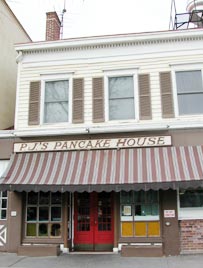
 Despite 40 years in business, changes in ownership, renovations and a fire, the names carved into the tables of PJ’s Pancake House remain a permanent record of all who have dined at the Princeton landmark. PJ’s must be the only restaurant that encourages patrons to slice into the tables and deface the walls with black Sharpies.
This morning my husband, youngest daughter and I sat at the “Table of Awesome.” How do I know the ranking of this booth? It said so right above the salt shaker.
Janine sat at our table the day she got her braces off: September 12, 2008. Katherine and Tate ate there in 2006 and they were in love. (I wonder if they’re still together?) Lena and Jeff traveled all the way from Gibson, GA. Dan drew a picture of the cigarette he wished he was smoking.
If a writer needs inspiration, a few minutes scanning the surfaces of PJ’s Pancake House promises to uncover thousands of stories.
Thankfully, I didn’t have to scold my two year-old when she took a red crayon and scribbled outside the lines. For once we had a peaceful meal out.
If you ever find yourself on Nassau Street in Princeton, definitely stop by. They serve fluffy, generous pancakes all day long, and if there’s a line to get in, don’t worry, it goes quickly. Plus, the griddle faces the window so you can decide upon your pancake order by watching what’s most popular. There’s chocolate chip, banana pecan, blueberry, pigs in blankets and even corn. Yeah, they serve other stuff, too…but when a food is in the restaurant’s name, you must order it! (Do you go to a steakhouse to order chicken?)
You might even dine next to friendly strangers if you’re seated at the long table in front, so say hello. Or, just listen to Groundhog-Day-like tales of Pennsylvania RV travels, like my husband did. One man’s peculiar voice rose above the plate clatter.
And the service goes miles beyond any restaurant I’ve ever seen. Today the hostess took a restless baby from her mother and bounced the little girl in her arms until the infant fell asleep. She held the baby while the mother enjoyed her pancakes. Wow. I hope the mother gave her a good tip!
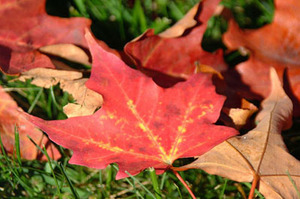 Leaves crackle underfoot and the early-morning air smells like an ice cube. It’s autumn. Time for apple picking and jack-o-lanterns. Time for the annual public library pie contest.
My mother did not bake ordinary pies. Creating a pie was a day’s event, begun with two knives cutting butter and shortening into flour until it resembled sand, a forgotten summer sight resurrected with culinary precision. She floated from cupboard to bowl, bowl to counter with a grace befitting a ballerina. She folded. She whipped. She dolloped. She made the house smell better than Willy Wonka’s factory.
And so, when I was nine years old, I thought my mother finally deserved public acknowledgement of her pie prowess. When I saw a poster announcing our library’s fall pie contest, I entered her name. When I returned home and told her, she was more excited than I was.
Which pie shall it be? The apple-cranberry? No, too predictable. The three-berry pie? No, out of season. Ahh, I know. The chocolate-amaretto chiffon pie.
Children aren’t supposed to have a taste for amaretto. I was the exception. The almond-flavored liquor enhanced the chocolate flavor so well, I thought I might faint. Her creation began with homemade chocolate pudding, then a tall dome of fresh whipped cream, onto which she drizzled an amaretto-chocolate reduction. Slivered almonds and chocolate shavings dotted the top evenly, like she had artfully arranged each piece with tweezers. I do not know how we transported the pie unscathed, but we arrived and unveiled the masterpiece to such gasps of amazement, the librarians had to shush us.
The event boasted eight pies, but zero competition. An apple pie with a rustic crust appeared soggy and deflated. Mom’s hand-fluted crust resembled the delicate ripples of a golden pond. My teeth stuck together at the sight of the gummy shoo-fly pie. The chocolate-amaretto pie melted on the tongue.
A librarian instructed three judges to score the pies on a scale of 1 to 3 according to three criteria: appearance, taste and originality. Yes, yes and yes. She would win all three. I would be so proud. She would remember that it was I, her eldest daughter, who launched her pie celebrity.
Then one judge glanced at another’s appearance score for Mom’s pie. “Wow, you’re a tough cookie!” she said. Translation: Mom probably received a 1 from the Russian Judge instead of a well-deserved 3. There would be a contest after all.
Tasting came next. The judges took one bite of each pie. There was tongue swishing, water gulping, and lip pursing. A gentle scribble, scribble on their note cards.
Finally, originality. With pumpkin, pecan, and plain ol’ lemon meringue, Mom’s fusion of almond and chocolate would take that category for certain.
Our entire family waited nervously for the awards to be announced. The whipped cream on Mom’s pie stood high and tall, proud and confident.
“Third place: the shoo-fly pie!” A tiny, elderly woman shuffled to the front of the room and accepted a ribbon and a cookbook. She posed for the town photographer.
If Mom did not take second, then I knew first prize would be hers.
“Second place: the pumpkin pie!”
Hooray! Victory! A pie for the record books! A pie to launch a career! My mother, the world’s best baker! Or, at least the best baker in this town of 20,000! My face warmed with excitement.
“And the winner is…and we have to say, this was a unanimous decision…the apple pie!”
What?! That sorry-looking blob? It’s just APPLE! Anyone can make an apple pie! It takes a creative genius to pair chocolate with amaretto (especially in 1979, before The Food Network)!
The worst part of the defeat was that the woman who won was not even present. Yep, it was a drive-by pie.
First prize remained on the judging table, unwrapped and unclaimed. I could only imagine what it might be–and it was far grander in my mind than in reality, I’m sure. The big fish that got away, growing ever longer over the years.
Once the winners were announced, the pies were cut and plates distributed. And which pie do you think disappeared first? Mom’s chocolate-amaretto chiffon. Our family snubbed the other pies and dug into our favorite.
In the end, I learned that people prefer the familiar and comfortable. That’s what Mom’s pie was to me, a little piece of her. The extraordinary was ordinary in our home, and that’s a family legacy I’m striving to uphold.
Pie, anyone?





 Writing for Kids (While Raising Them)
The KidLit Comment Challenge
November 12, 2008 in Children's Books, Children's Writing, Picture Books, Publishing, Writing, Writing for Children | Tags: Blog Commenting, Blog Reading, Comment Challenge, KidLit | 2 comments
How embarassing is it that a non-blogging friend turned me onto the 21-day KidLit Comment Challenge? I’m a sorry excuse for a blogger. Bad, bad Tara.
The very cool idea is to build a stronger kidlit community by commenting on at least five children’s literature blogs per day for 21 days.
Here’s the challenge from Mother Reader:
Pretty simple, huh? Ingenious, I say! Who couldn’t use a few new blog friends? And who doesn’t want to be turned onto great new children’s books?
Start zipping from blog link to blog link and you’ll discover talented writers and illustrators, uncover insightful book reviews, and find a new favorite blog topic in Mother Reader’s “WAPB” segment. (No, I’m not gonna tell you what that acronym means. Just click it!)
So please join me. You can start now by commenting below!
And pass it on! Tag, you’re it!