You are currently browsing the category archive for the ‘Picture Books’ category.
 Thanks for everyone’s patience while I reviewed the Picture Book Premise entries. There were some wonderful ideas and I had a difficult time choosing my favorite. In the end, it boiled down to my gut reaction.
And thus, I got a feeling of what it’s like to be an editor, inundated with multiple pitches, trying to decide which stories sounded the most appealing.
Most of my regular blog friends know that I’m a quirky, humorous writer, so it will surprise you to know the winning premise was NOT quirky or funny! (Hey, it surprised me, too!) I now understand why agents and writers don’t typically tell aspiring authors what they’re looking for. Instead they say, “I’ll know it when I see it.” If I advertised that I only wanted laugh-out-loud premises, I would have missed out on some unique ideas.
Before I tell you the winner (I know, I’m like an awards show cutting to commercial), I’d like to give everyone a few tips on how to write their premises.
Your premise is your pitch. If you have to write a query letter, it’s the whiz-bang-pow paragraph that gets the editor begging to see more. It’s also your 60-second elevator pitch. When you meet an editor or agent and they ask, “What do you write?”, it’s your chance to dazzle them and entice them to request the manuscript.
Your premise should read like jacket copy. Here’s the jacket copy from Sudipta Bardhan-Quallen’s THE HOG PRINCE:
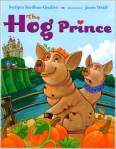 “Eldon Hog is fed up with mud-swallowing and slop-gobbling. He and his friend, Petunia, watch the royal carriage pass by every morning, and Eldon dreams of becoming a princely passenger.
“So it seems that all of Eldon’s dreams have come true when Miranda, a somewhat frazzled fairy, tells him that if he can break the Hog Prince spell put upon him, he will transform into a prince. SMOOOOCHES abound as Eldon searches far and wide for that magical, spell-breaking kiss. He tricks the Cinder girl, Ella (Smoooch! Eek!); Lady Aurora, spinning gold (Smoooch! Yecchhh!); and all the ladies he can find. But is it possible that true love has been sitting under his snout all along?”
Now, that may be a tad big longish for jacket copy, but see how it ends in a question that begs for an answer? You’re left hanging until you open that book and read on.
Not everyone sent a premise that sounded like jacket copy. Some only gave me one sentence, which wasn’t enough to understand what the entire story was about. I couldn’t envision the character or their predicament fully.
Others wrote a little too much detail. Remember you’re pitching a picture book, so if your premise is wordy, an editor may assume that your manuscript is full of unnecessary words. Trim down your pitch; trim down your story’s word count.
Others sent me snippets from their story, but I wanted to see that you could tell me about the story without sending the manuscript. That’s what editors and agents will ask for in a query. If they ask for a query letter but you send the manuscript instead, it may be discarded for not following instructions. (To be fair, I didn’t say DON’T send the manuscript, but you get my gist.)
And now onto the winners!
First, the person who referred the most people to my blog was MONA PEASE! You have won a picture book critique, redeemable at any time, as long as I’m still alive! LOL!
Next, I’ll tell you a little about the premise I choose without giving away the farm. Actually, the two top finalists were what you would call “multicultural” stories. They both struck me as very unique, although the winner’s premise is based on an actual event with a Latin-American folklore feel. Without further ado, the winner of the critique is VALARIE GIOGAS for THE RAIN OF FISH!
Mona and Valarie, please email me at tarawrites dot yahoo dot you-know-the-rest to discuss the details of your prizes.
Thank you to everyone who entered. There were 33 entries, out of which I had “starred” 7 premises, which I think is a pretty darn good percentage of darn good ideas. Y’all are smart and talented writers! Keep writing! Keep dreaming! Keep inspiring! (And keep reading this blog! LOL!)
 It’s summer, so let’s have some fun, shall we?
How about a contest?
Good. I thought you’d like that.
And this one is easy. You don’t have to send a manuscript. All you need to enter is a premise.
That’s right! A picture book premise.
Make it unique, make it funny, make it touching. In less than 100 words tell me your story’s premise. What’s the problem? What crazy situation has got your character all flummoxed? Imagine it’s your book’s jacket copy. What would you say to sell the audience on your book? You’ve only got a few seconds to capture someone’s attention, so make it snappy.
The best premise will win a free critique–and get this, you don’t even have to have the book written yet! Think of a great premise now, claim your critique later. I’ll honor the free critique for as long as you need (although it’s non-transferable and its cash value is 1/100th of a cent.)
There are three steps to enter:
- Subscribe to my blog via email if you haven’t already. (See handy button in the top left column of my blog.)
- Send your premise in the body of an email with the subject line “PB Premise Contest” to tarawrites at yahoo dot you-know-what. All entries must be received by Sunday, August 14th. (One entry per person, please. So make it your best.)
- Tell your friends. The person who refers the most people to my blog will also win a critique! (Just let me know in a comment below who you referred. I’m working on the honor system here.)
That’s all! So easy-peasy! I’ll announce the winners the week of August 15th.
One last thing–if your premise is anything like one of my current projects, I will notify you, just to let you know, I’m not taking anyone’s premise. I’ve got enough of my own begging me to write them!
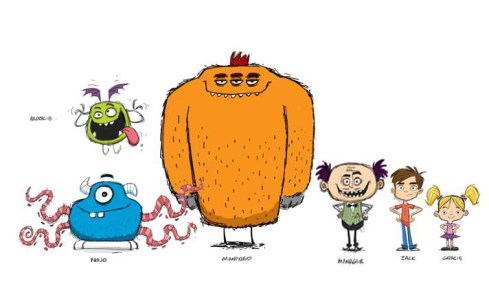
THE MONSTORE is still two years away from release, but today I have the OK to share with you initial character sketches by the brilliant illustrator James Burks!
The main character of the story is Zack, who wants to buy a monster to scare his pesky little sister Gracie. (Isn’t she sweet? How could she possibly be pesky?) Three of the main monsters are Manfred, Mookie and Mojo…and of course, there’s the proprietor of the shop–the Monstore Manager. I wonder if Danny DeVito would like to play him in the movie version? (Yes, one can dream.)
I hope you enjoy these illustrations!
Copyright 2011, James Burks
OK, the cat is out of the bag. I’m not the most organized person in the world. My daughter’s closet looks like Justice for Girls exploded and I store soda bottles and juice boxes on my kitchen floor. There. So now you know, when you visit my house, you must tiptoe around the towers of books because I never get them back on the shelves.
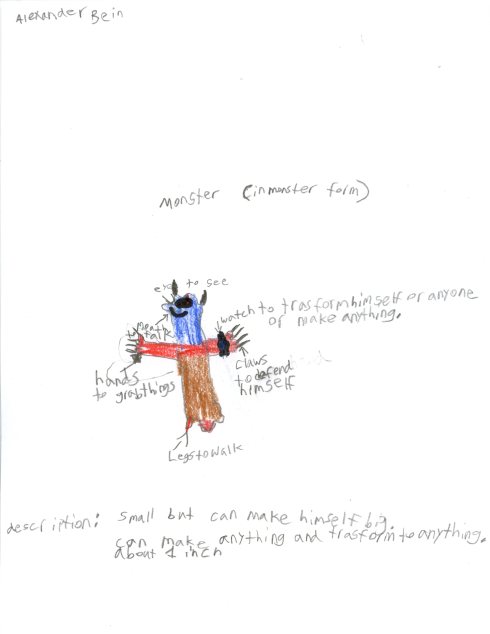
Mrs. Mozer brought to my attention that I featured every single one of her 3rd grade class’s monsters for The Monstore—except one. Alexander’s. I’m sorry, buddy! So without further ado, here is Alexander’s creation!
I’ve got just one question for Alexander—can I borrow your monster’s watch? I really need that thing.
Kids love when they think they’re smarter than adults, don’t they? Try putting your shirt on as pants or wearing your shoe as a hat and they’ll double-over with laughter at your stupidity.
Similarly, in writing, having a clueless narrator produces sure-fire giggles. Knowing more than the protagonist is like being in on a secret joke with the author. It’s one of the keys to writing humor for children.
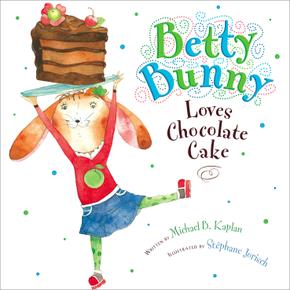 But one of the biggest mistakes in writing humor, according to Executive Editor Steve Meltzer, is random humor—humor that doesn’t serve to drive the story forward but exists merely as a gag. “Even the absurd needs to make sense and be believable,” said Meltzer. He then read BETTY BUNNY LOVES CHOCOLATE CAKE as an example of humor that feels effortless and works within the context of the story. When Betty Bunny’s parents tell her she’s a “handful” so often, she thinks it’s a term of endearment and tells her mommy she’s a “handful” right back. (Of course, I’m rushing out to buy the book right now! I know, I’m a handful!)
Remember when writing picture books for kids, your audience includes parents, too. Some humor should be for their benefit. Think of the old Bugs Bunny cartoons—watch them now and there are jokes that certainly went over your head as a child. Pixar films also have a unique way of delivering entertainment that parents enjoy. (Like in “Finding Nemo” when Nemo is waiting to sabotage the filter. The dentist goes to the bathroom and Peach says, “Potty break! He grabbed the Reader’s Digest! You’ve got 4.2 minutes!”)
Mr. Meltzer also reminded us to take advantage of page turns because “they’re the writer’s rimshot.” Page turns should be surprising and fun. They create suspense: “And then…” [page turn] “BAM!” Hit them with your best [rim]shot.
 Audrey Vernick and Olugbemisola Rhuday-Perkovich also examined humor in picture books and suggested “take something we all know and insert something absurd that doesn’t belong…the unfamiliar in the familiar.” Audrey did just this in her debut IS YOUR BUFFALO READY FOR KINDERGARTEN?. The humor in the book happens when the buffalo goes to school, helping to ease readers’ fears about the first day of Kindergarten.
Other ways to add humor to your stories include having a funny sidekick, inserting a running gag, and taking the joke beyond the typical expectation of three. When the joke happens a fourth time, it’s hilarious because we already thought it was over after the third instance.
Misunderstandings, like those literal translations in Amelia Bedelia are also humor winners. Comic wordplay is another technique to try. Combine words, create new words, use funny sounds (onomatopoeia). My debut picture book is THE MONSTORE—a store where you buy monsters. The mashed-up title signals that this will be a funny book. (At least I hope you’ll think it’s hilarious!)
So, are there other humorous devices you like to use in your writing?
 Laurie Isop is one lucky woman. Then again, luck has nothing to do with it. It’ more like skill, talent and persistence.
Who is Laurie Isop? She’s the first winner of Cheerios’ annual New Author Contest, which she won in 2009. Her book HOW DO YOU HUG A PORCUPINE? will appear in a million Cheerios boxes and the hardcover will be released with Simon & Schuster in July.
So how did Laurie get so lucky? (Err, I mean, how did she win?) Luckily (and this time I mean it), she agreed to an interview! Today she shares her journey with other aspiring children’s authors.
So go grab a bowl of the famous breakfast O’s and read how you, too, could have your name in boxes.
 When did you first hear about the Cheerios contest and what made you decide to enter? How long had you been writing for children?
I’d been trying to crack the children’s market for about 10 years when I heard about the contest. I had drafted the story, “How Do You Hug a Porcupine?” prior to learning about the contest. My sister owns a bookstore in Stoneham, Massachusetts (shout-out to The Book Oasis!) and she sent me a link to the contest and encouraged me to enter.
How did you get the idea for your story HOW DO YOU HUG A PORCUPINE?
We were sitting around the dinner table talking about “warm fuzzy” people vs the “cold prickly” types, and the idea was born from there. I wanted to do something with animals to make it more age-appropriate. We had such a good time, talking about the different animals and envisioning all sorts of ways for the porcupine to win his hug. I probably revised my story eighteen or twenty times before I submitted it.
How did you find out that you won? What was your reaction?
I was having “one of those days” last October 2009. You know, one of those self-fulfilling prophecy-type days your mother warned you about when you were twelve, and again when you were thirty? The sky was ashen, the roads slick with the endless, penetrating drizzle of fall in the Pacific Northwest. Paul and I were several hours behind schedule, and I was eying the front door of a house I knew contained a bathroom in desperate need of cleaning. Lucky me, I sulked, my hand poised to open the door.
And then the phone rang.
I looked at Paul, sighed, and pasted an I-love-my-job smile on my face. “Studio 6 – this is Laurie!” I gushed, expecting a bride-to-be on the other end (our ‘real’ jobs are with the wedding studio).
“Is this…Laurie Isop?” queried the lovely voice on the other end. I rolled my eyes. Darn solicitors, I thought. They aren’t even sure how to pronounce my name!
I couldn’t have been more wrong.
Then I cried a little, and called my mom and sister.
 What was the process like to produce the book? Did you make revisions? Did you have a hand in selecting the illustrator, Gwen Millward (whose illustrations I loved in GUESS WHAT I FOUND IN DRAGOD WOOD)?
My editor at Simon & Schuster worked closely with me to tweak and polish the manuscript. They were in charge of selecting the illustrator, and I was able to communicate my design ideas to her. Once the proofs started coming in it got super exciting!
What has been the best part of your experience with the Cheerios contest?
Actually winning the contest was fantastic and very emotional—it was something I wanted for a long time. It was like a whole new page was turning and I felt like doors were going to open for me, so that’s an exciting feeling. It’s all been very flattering and also validating. And, winning the contest has motivated me to write every day. The best part, though, was receiving a letter from a mother of a two-year-old boy in Illinois. She told me he had never said more than one-word “sentences.” She picked up the story in a box of Cheerios and read to him. Right away he asked for the story to be read again, and again! She wrote in her letter that his first sentence was “how do you hug a porcupine?” Pretty cool.
Wow. Now I’m crying! What a touching story.
What are your upcoming plans? Do you have more books in the works?
I am working on a few different projects and I have several titles in various stages of the submission process. I’m incredibly excited to do some local readings and signings once “How Do You Hug a Porcupine?” is out in hardcover in July, and I’ve been invited to Boston to read/sign in some bookstores. Coast to coast!
What is your best piece of advice for new writer’s hoping to break into the children’s market?
Be persistent – don’t give up! Read your book to anyone that will listen and note their reaction. Are the children wide-eyed and wanting you to turn the pages? I also recommend writing in different settings; I used to write in coffee shops, libraries, karate places – anywhere that provided inspiration. And, of course, edit, edit, edit.
Thanks so much, Laurie! Congratulations and best wishes with your book!
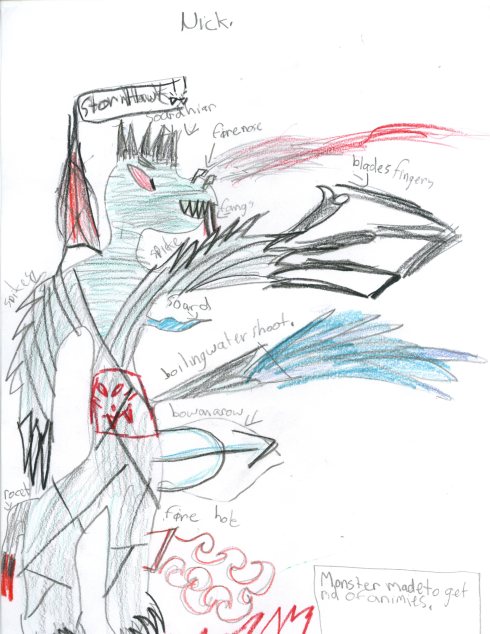
What kind of monsters do Mrs. Mozer’s 3rd graders have for us today? Well, they envision small, furry, cute monsters…except for Nick. I wouldn’t want to mess with Nick’s creature–he’s fierce!
So what do you prefer: a monster you can cuddle, or one who will protect you from evil-doers? I’d like a little of both!
Thanks again to these creative kids for sharing their Monstore merchandise with us. This is the last installment of Monster Monday…until I visit YOUR CLASS NEXT!
Does your class wanna Skype with me? I’ll visit any classroom via Skype in June. All you have to do is ask! I’ll give an advance reading of THE MONSTORE, lead you in a creative writing exercise, and of course, ask you what monster you’d like to buy at the Monstore!
Ethan:
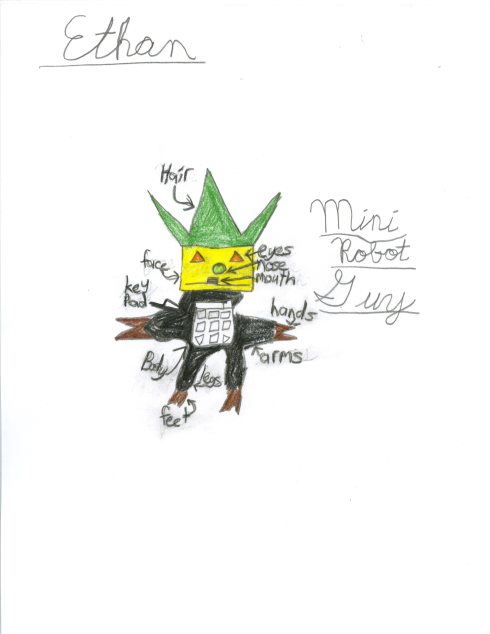
Jenna:
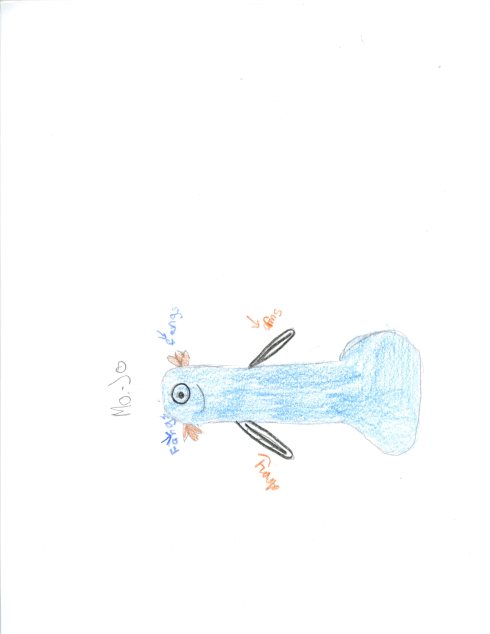
Matthew:

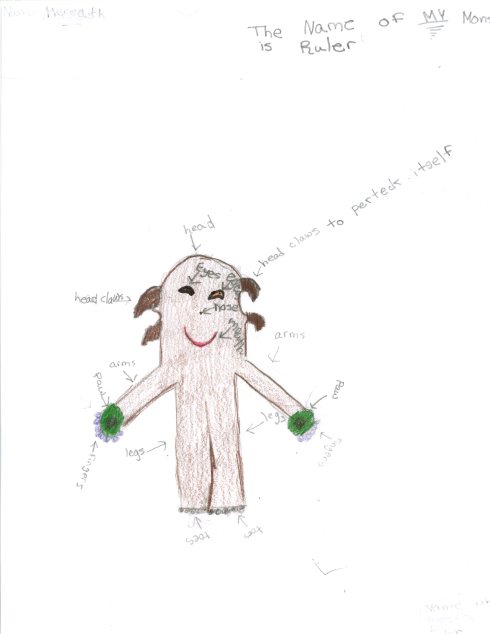
Meredith:
Nick:
Sophie:
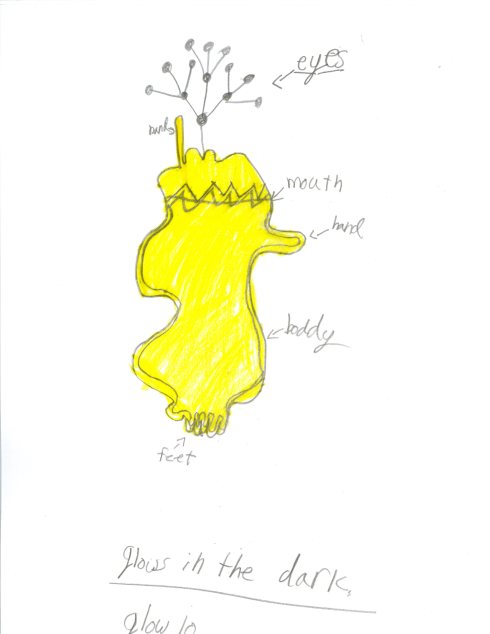
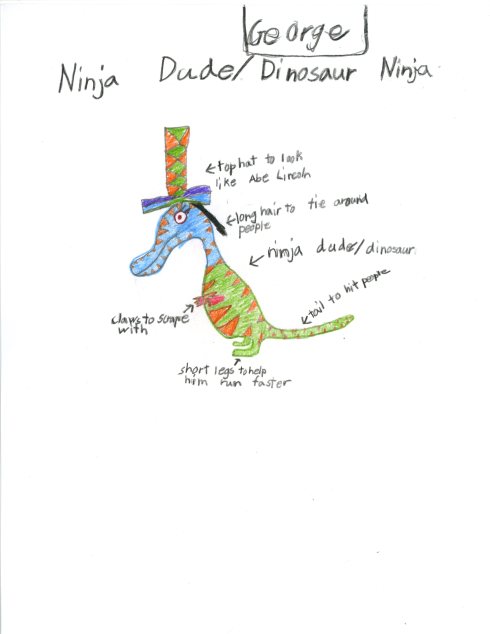
On World Read Aloud Day March 9, I visited Mrs. Mozer’s third grade class via Skype and gave them an advance reading of my debut picture book, THE MONSTORE.
Then I asked the students–if you could buy a monster at The Monstore, what would it look like? What special talents would it have?
The class drew pictures and each Monday for the next few weeks I’ll be sharing them with you.
These kids are very creative! Give them a hand (applause, not an extra monster hand, although that would be very useful).
George:
Henry:

Julia:

Melanie:
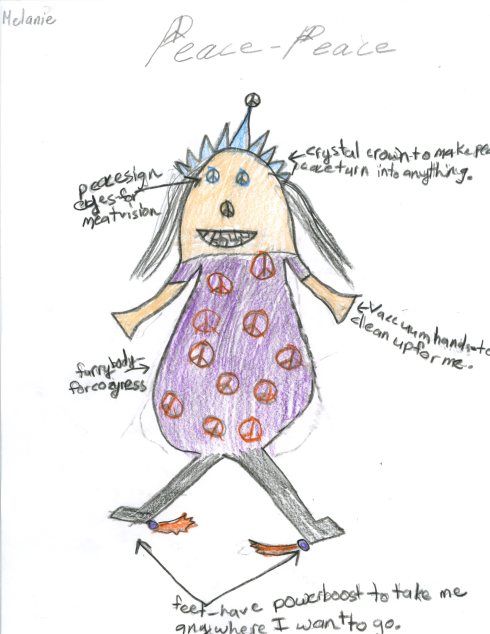
Thanks to Mrs. Mozer’s class for sharing their monsters!
A handy Venn diagram…
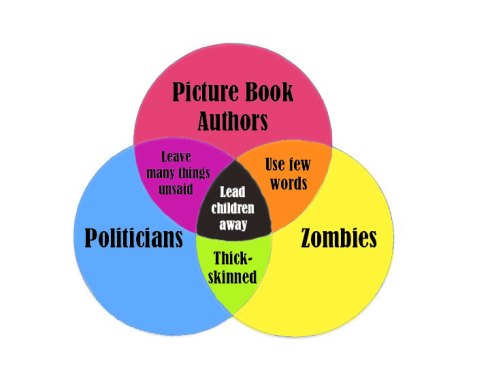 While “lead children away”, in the case of politicians and zombies, is a bad thing (especially if they’re Tea Party Zombies), in the case of picture book authors, it’s a fabulous thing. We give children an escape, a fun story, and help them explore their imagination.
What else do the three have in common? I’d love to hear your punchlines!
An agent once told me that a good way to break into the [tough] picture book market is to write a non-fiction title. Today Sabbithry Persad drops by to tell us about how she not only broke into publishing, but how she’s thriving with a non-fiction series she self-publishes and markets to the education market. Stick around to learn about the process and rewards of non-fiction writing for children! And if you have a question for Sabbithry, please leave a comment for her.
Sabbithry, where was the idea for Garbology born?
The idea for the book came about around 2008 after reading an article on the world’s waste problem. At that time, we were already trying to bring environmental solutions to adults through our online magazine (Green Solutions Magazine) and thought it would be great to do something for children, so I wrote a story for my niece and nephew that evening. It wasn’t until a year or so later when I learned about Dr. William Rathje, an archeologist who formulated the science of Garbology some 38 years before, that the idea came to life. When I read up on Dr. Rathje’s work studying refuse of modern society (versus the study of refuse from past societies), it made sense to call the series “Garbology Kids™,” recognizing and honoring Dr. Rathje and his work.
 How did you research publishers?
At first, I initially wrote the book and sent it out to several publishers, who I found in my locale through publishing associations. Of course, like everyone else, once I sent out the manuscript, it took a very long time (more than six months) to receive the first four or five rejection letters back, which had been somewhat discouraging, too (smiles), but I kept at it and went in an untraditional direction (which, with the changing publishing industry, is proving not so untraditional anymore). I eventually started my own publishing company for the magazine I founded and decided to publish the book under it. I look at it as a curve ball that turned into a rewarding passion (laughs). And after two years, I’m now looking back on all the work I’ve put in and feeling that it was all worth it.
Did you illustrate the book yourself or hire an illustrator?
Although I would have loved to have the time to illustrate the book myself (I’ve been drawing for as long as I can remember), I took the traditional route and found a couple of illustrators to help. I did spend a great deal of time looking around (locally, on the Internet, through agencies, etc), and had to go through several illustrators before finding a look that seemed to fit the book. For the final look two independent illustrators contributed, the first person I came across while doing a simple search on the Internet, and the second person I happened upon accidentally through someone I bumped into at the local public library.
How have you been marketing the series? Did you tie it into school curriculum or do anything else to appeal specifically to teachers and educators?
Before I started editing the book, I knew right away I wanted it to be an educational tool. So during the writing process, I kept in line with several environmental education guidelines for both Canada and the US, which were what schools followed. Once the writing was done and I felt that the book was ready factually, I passed it by several experts in the industry to make sure that the information was accurate and met with varying experiences and perspectives, not just in North America, but also from the UK, Germany and Australia.
What are the specific challenges of selling to the school/education market?
I think the first thing one needs to think about before selling anything is producing a good product. In the case of my book, that meant relevant material for children, parents and teachers (and anyone else interested in the topic). Most of my time and energy was spent writing, editing, rewriting, researching, verifying and fact checking the information to be included. In addition to that, and as I mentioned in the previous question, following educational guidelines was also important. I think once all of these things are done, many of the challenges would be met, but the work does not stop there. There are other things like introducing the book to teachers, parents and children to see if all that you’ve done appeals to them. At the same time, the book also has to appeal to the publishing industry professionals, since they are a big voice that determines whether or not your book is worth introducing to the school/education market via their vehicles. Other challenges include getting approvals from individual school organizations and, of course, marketing to the school/education market in the way they are accustomed. However, all in all, as I mentioned above, if one takes time to produce a good product in the beginning, much of the other challenges become a little less daunting, although they still remain very challenging if it’s not one’s daily role.
What are your future plans for the Garbology Kids™ series?
Currently, I’m focused on taking one book at a time. It’s been about six months since I finished the first book and now I’m concentrating on the second one, which will keep me occupied for the summer months. I’m expecting to create six more books after that.
What do you hope kids will take away from the series?
There are many things that I hope that children would take away from the series. Some things I’d like to see children take away:
- An understanding about recycling as an option for diverting waste from landfills
- An understanding about the process and benefits of the recycling option
- Learning about environmental activities in their local community
- Participating in school and other community activities that keep their community clean
- Respecting and learning from their parents and other role models in the community
- Questioning more about the things they see (or don’t see) in their community
 Sabbithry Persad is the creator of Garbology Kids™ and author of Where Do Recyclable Materials Go? She is the founder and executive managing editor of Green Solutions Magazine and a member of the Society of Children’s Book Writers and Illustrators. She lives in Toronto.
 Want it?
Sure you do!


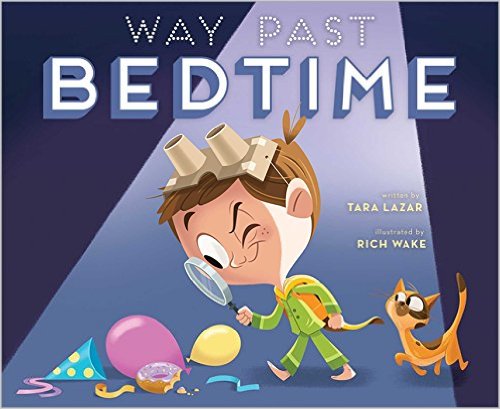



 Writing for Kids (While Raising Them)