You are currently browsing the category archive for the ‘Picture Books’ category.
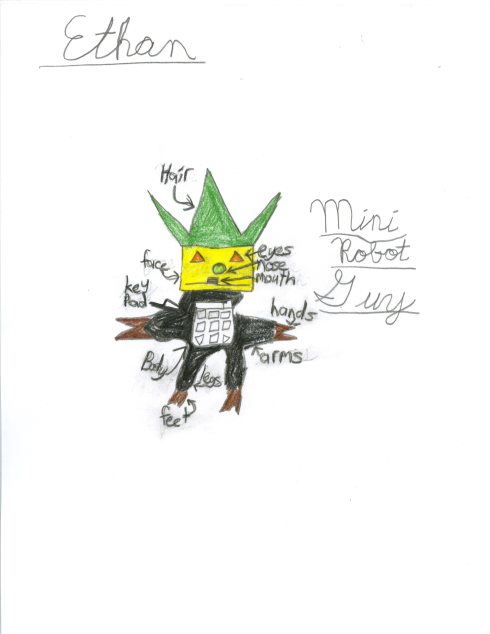
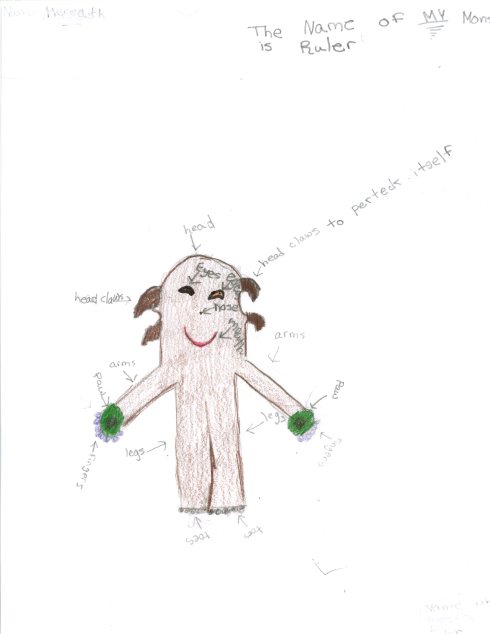
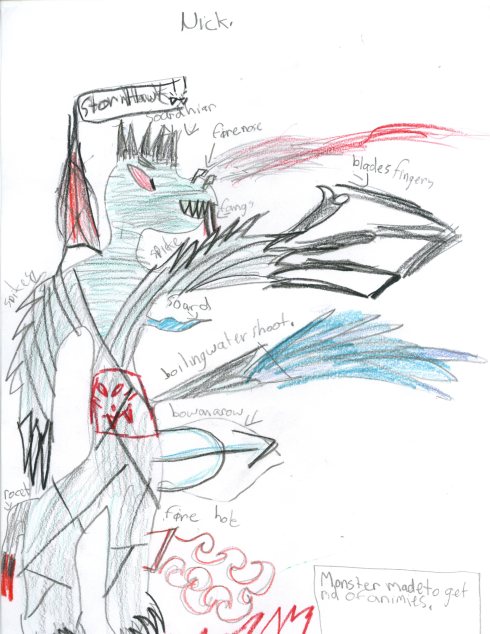
What kind of monsters do Mrs. Mozer’s 3rd graders have for us today? Well, they envision small, furry, cute monsters…except for Nick. I wouldn’t want to mess with Nick’s creature–he’s fierce!
So what do you prefer: a monster you can cuddle, or one who will protect you from evil-doers? I’d like a little of both!
Thanks again to these creative kids for sharing their Monstore merchandise with us. This is the last installment of Monster Monday…until I visit YOUR CLASS NEXT!
Does your class wanna Skype with me? I’ll visit any classroom via Skype in June. All you have to do is ask! I’ll give an advance reading of THE MONSTORE, lead you in a creative writing exercise, and of course, ask you what monster you’d like to buy at the Monstore!
Ethan:
Jenna:
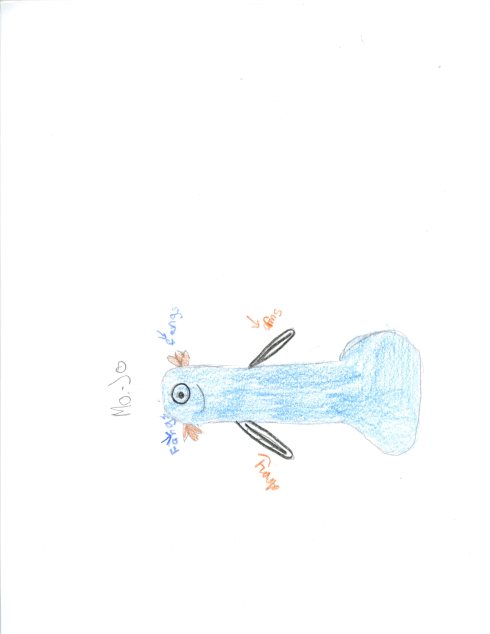
Matthew:

Meredith:
Nick:
Sophie:
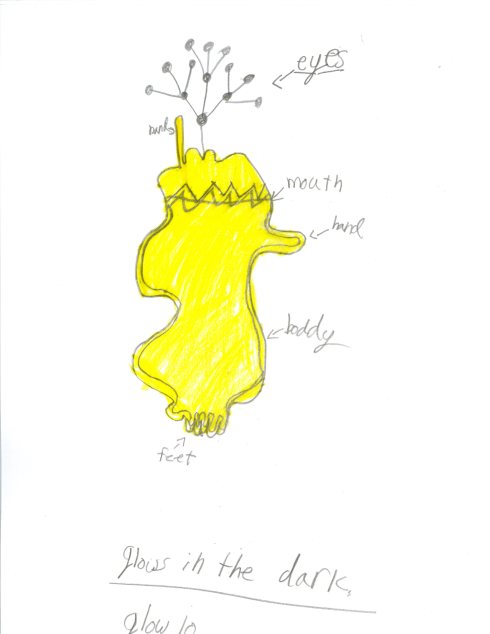
On World Read Aloud Day March 9, I visited Mrs. Mozer’s third grade class via Skype and gave them an advance reading of my debut picture book, THE MONSTORE.
Then I asked the students–if you could buy a monster at The Monstore, what would it look like? What special talents would it have?
The class drew pictures and each Monday for the next few weeks I’ll be sharing them with you.
These kids are very creative! Give them a hand (applause, not an extra monster hand, although that would be very useful).
George:
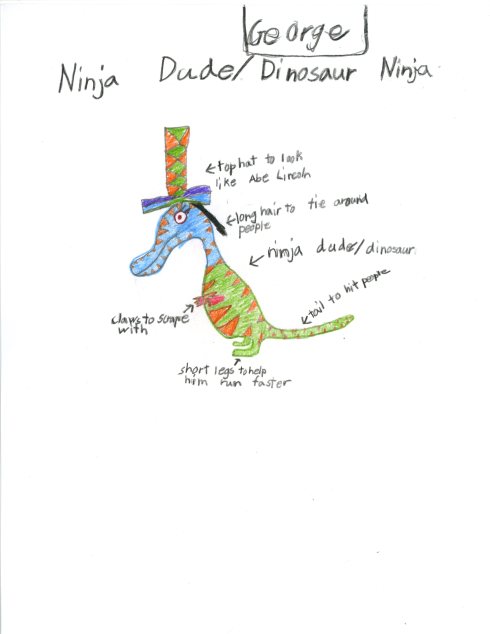
Henry:

Julia:

Melanie:
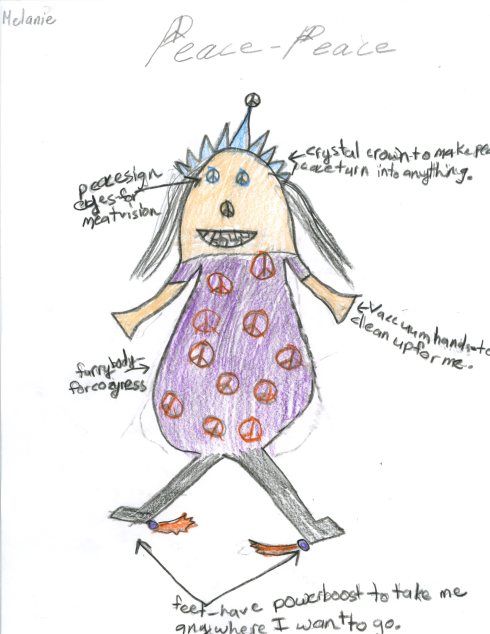
Thanks to Mrs. Mozer’s class for sharing their monsters!
A handy Venn diagram…
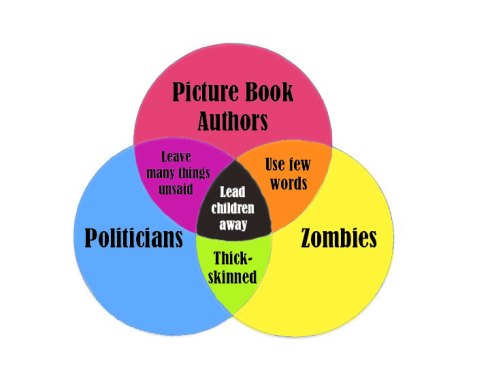 While “lead children away”, in the case of politicians and zombies, is a bad thing (especially if they’re Tea Party Zombies), in the case of picture book authors, it’s a fabulous thing. We give children an escape, a fun story, and help them explore their imagination.
What else do the three have in common? I’d love to hear your punchlines!
An agent once told me that a good way to break into the [tough] picture book market is to write a non-fiction title. Today Sabbithry Persad drops by to tell us about how she not only broke into publishing, but how she’s thriving with a non-fiction series she self-publishes and markets to the education market. Stick around to learn about the process and rewards of non-fiction writing for children! And if you have a question for Sabbithry, please leave a comment for her.
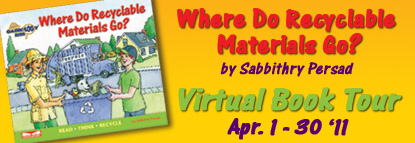
Sabbithry, where was the idea for Garbology born?
The idea for the book came about around 2008 after reading an article on the world’s waste problem. At that time, we were already trying to bring environmental solutions to adults through our online magazine (Green Solutions Magazine) and thought it would be great to do something for children, so I wrote a story for my niece and nephew that evening. It wasn’t until a year or so later when I learned about Dr. William Rathje, an archeologist who formulated the science of Garbology some 38 years before, that the idea came to life. When I read up on Dr. Rathje’s work studying refuse of modern society (versus the study of refuse from past societies), it made sense to call the series “Garbology Kids™,” recognizing and honoring Dr. Rathje and his work.
 How did you research publishers?
At first, I initially wrote the book and sent it out to several publishers, who I found in my locale through publishing associations. Of course, like everyone else, once I sent out the manuscript, it took a very long time (more than six months) to receive the first four or five rejection letters back, which had been somewhat discouraging, too (smiles), but I kept at it and went in an untraditional direction (which, with the changing publishing industry, is proving not so untraditional anymore). I eventually started my own publishing company for the magazine I founded and decided to publish the book under it. I look at it as a curve ball that turned into a rewarding passion (laughs). And after two years, I’m now looking back on all the work I’ve put in and feeling that it was all worth it.
Did you illustrate the book yourself or hire an illustrator?
Although I would have loved to have the time to illustrate the book myself (I’ve been drawing for as long as I can remember), I took the traditional route and found a couple of illustrators to help. I did spend a great deal of time looking around (locally, on the Internet, through agencies, etc), and had to go through several illustrators before finding a look that seemed to fit the book. For the final look two independent illustrators contributed, the first person I came across while doing a simple search on the Internet, and the second person I happened upon accidentally through someone I bumped into at the local public library.
How have you been marketing the series? Did you tie it into school curriculum or do anything else to appeal specifically to teachers and educators?
Before I started editing the book, I knew right away I wanted it to be an educational tool. So during the writing process, I kept in line with several environmental education guidelines for both Canada and the US, which were what schools followed. Once the writing was done and I felt that the book was ready factually, I passed it by several experts in the industry to make sure that the information was accurate and met with varying experiences and perspectives, not just in North America, but also from the UK, Germany and Australia.
What are the specific challenges of selling to the school/education market?
I think the first thing one needs to think about before selling anything is producing a good product. In the case of my book, that meant relevant material for children, parents and teachers (and anyone else interested in the topic). Most of my time and energy was spent writing, editing, rewriting, researching, verifying and fact checking the information to be included. In addition to that, and as I mentioned in the previous question, following educational guidelines was also important. I think once all of these things are done, many of the challenges would be met, but the work does not stop there. There are other things like introducing the book to teachers, parents and children to see if all that you’ve done appeals to them. At the same time, the book also has to appeal to the publishing industry professionals, since they are a big voice that determines whether or not your book is worth introducing to the school/education market via their vehicles. Other challenges include getting approvals from individual school organizations and, of course, marketing to the school/education market in the way they are accustomed. However, all in all, as I mentioned above, if one takes time to produce a good product in the beginning, much of the other challenges become a little less daunting, although they still remain very challenging if it’s not one’s daily role.
What are your future plans for the Garbology Kids™ series?
Currently, I’m focused on taking one book at a time. It’s been about six months since I finished the first book and now I’m concentrating on the second one, which will keep me occupied for the summer months. I’m expecting to create six more books after that.
What do you hope kids will take away from the series?
There are many things that I hope that children would take away from the series. Some things I’d like to see children take away:
- An understanding about recycling as an option for diverting waste from landfills
- An understanding about the process and benefits of the recycling option
- Learning about environmental activities in their local community
- Participating in school and other community activities that keep their community clean
- Respecting and learning from their parents and other role models in the community
- Questioning more about the things they see (or don’t see) in their community
 Sabbithry Persad is the creator of Garbology Kids™ and author of Where Do Recyclable Materials Go? She is the founder and executive managing editor of Green Solutions Magazine and a member of the Society of Children’s Book Writers and Illustrators. She lives in Toronto.
 Want it?
Sure you do!
Every year at Pesach time,
We eat the matzah, we drink the wine.
We ask four questions one by one,
But before the seder’s done…
The moment Afikomen Mambo arrived, my kids fought over it. One look at the bright, happy cover and they knew there was a fun beat inside.
While Christian children have the Easter egg hunt, at Passover our children search for the afikomen, a piece of matzah traditionally broken in half at the beginning of the seder and then hidden for the children to find when the seder is over. The child who finds the afikomen is awarded a prize, and what could be a better prize than Afikomen Mambo?
Now you can hide it in a table,
Hide it in a box,
Underneath the stairway,
Or inside the kitchen clock.
You can put it in your pocket,
Put it under the TV,
But you can’t hide the afikomen from me…
The book by Rabbi Joe Black sports a catchy rhyme and even catchier CD with the mambo song–you can play the music for the kids while they peek under pillows and behind bookcases. The whimsical watercolor illustrations by Linda Prater are bright and cheerful (except for when the characters make faces at the bitter herbs!).
I’m gonna find it, I’m gonna find it,
I’m gonna find it, I’m gonna find,
Gonna find the afikomen!
This is a must-have book for Jewish families with young children. You can begin a Passover tradition with the reading of the book and singing of the Afikomen Mambo song. Kudos to Kar-Ben Publishing for producing delightfully fun books for Jewish holidays.
 Another playful book for Passover is The Matzah Man by Naomi Howland.
Hot from the oven I jumped and ran,
So clever and quick, I’m the Matzah Man!
You guessed it–it’s a take-off on the Gingerbread Man with a whole new rhyme scheme and cast of characters. There’s Grandma Tillie and her tender brisket, Auntie Bertha shopping in high heels, Grandpa Solly chopping onions, Miss Axelrod stirring her soup, and you’ll never guess who swaps roles with the tricky fox, finally outsmarting the Matzah Man.
Now if you’ll excuse me, I have to mambo while I make matzah ball soup.
Happy Passover!
#Kidlit4Japan Auction #49 from Tara Lazar
 Description: Tara Lazar will critique two fiction picture books of 800 words or fewer. Preferably prose, but she will crit rhyming manuscripts, too. The critiques do not have to be submitted together and can be claimed at any time. Bid now, write later!
Estimated Value: $100
Auction Begins: Tuesday 3/29 @ 9:00AM EDT
Auction Ends: Friday 4/1 @ 9:00AM EDT
Bio: Tara Lazar is the author of THE MONSTORE (Aladdin/Simon & Schuster 2013) and the creator of PiBoIdMo, Picture Book Idea Month, the picture book writer’s alternative to NaNoWriMo.

If you’re an aspiring picture book author and you watched Celebrity Apprentice last night, you may have some [gross] misconceptions about what it takes to get a picture book published.
- “I know my ABC’s and my 123’s” is not a “genius” rhyme worthy of victory. Send an unimaginative, unoriginal rhyme like that to an editor and you’ll receive a form rejection…if they even bother sending a rejection.
- What the groups presented were first drafts written in a few hours. Do not send a first draft to be considered for publication.
- If a book is conceived by Dionne Warwick and written by Star Jones, by all means, let them take the credit.
- Donald said he’d publish the men’s book. But it will not be published without a lot of revision and editor input, because again, it’s a first draft that relies on simple, common rhymes.
- A picture book based on LaToya and the Jackson family? Do. Not. Go. There.
- “Just be yourself” is not too sophisticated a theme for a picture book–and both teams exhibited this theme, not just the women. (The men’s story was about standing up to bullies, a variant on the “be yourself” message.) Many successful picture books use this theme: Peggy Rathman’s RUBY THE COPYCAT, Audrey Penn’s SASSAFRAS, Kevin Henke’s CHRYSANTHEMUM, Helen Lester’s TACKY THE PENGUIN, Mo Willems’ NAKED MOLE RAT GETS DRESSED. I could go on and on…
There were many opportunities for snarky comments during the show, but here I’m going to focus on the positive:
- Margery Cuyler looked fabulous.
- I caught a glimpse of Pam Calvert’s PRINCESS PEEPERS!
- In this age of pumped-up puckers, Lisa Rinna had a lip REDUCTION.
Writing can be a solitary profession. That’s why you gotta have good writing friends.
When my oldest daughter was a toddler, I met a woman with a little girl and we arranged regular get-togethers for them—and for us. Like me, the woman was a writer.
I had only recently began writing children’s books, and she told me about a friend who had recently moved to New Jersey from Manhattan. This friend had already published a picture book and she suggested putting us in touch.
I hesitated at first. I didn’t want the author to think I was only interested in her friendship for helping me to achieve publication. I didn’t want to be a nuisance or a bother. And, I thought this author would poo-poo all over pathetic, unpublished me.
Wow, I couldn’t have been more wrong!
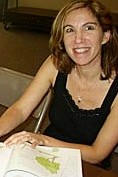 Interestingly, I don’t remember exactly when Corey Rosen Schwartz and I met, but I do remember it was after a few botched attempts on my part–forgotten dates at a local cafe. When we finally did meet, we clicked immediately. Corey was never snobbish. In fact, she’s got a charming self-deprecating personality.
Corey was indeed instrumental in helping me get my agent and my first picture book contract. I’ll let her tell you how–and how I rubbed her back…well, err, back.
The next part of our story will be on her blog later today!

(Click for a larger version.)
 by Ruth Spiro
In 2003, I sold my first picture book manuscript, Lester Fizz, Bubble Gum Artist, as the result of a contact made at the SCBWI Annual Conference. In the five years between the sale and my book’s release in 2008, I had plenty of time to think about innovative ways to promote it. Yes, my marketing plan included the tried-and-true mailings, signings and presentations, but I also wanted to do something a little different. That’s just me.
With a moderate investment of time and money, in 2006 I created my own holiday, “Bubble Gum Day.” Unsure of my publication date at the time, I chose the first Friday in February because aside from Groundhog Day, there’s little else going on. This year, Bubble Gum Day falls on Friday, February 4.
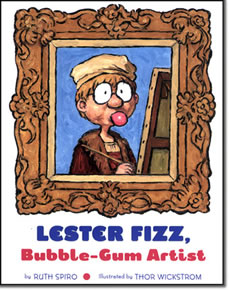 The premise is simple: On Bubble Gum Day, kids pay fifty cents to chew gum at school, with the proceeds used for any project or charity the school chooses. Kids have fun, schools benefit, and my name and book title get valuable publicity.
Six years later, it’s become a fun and effective promotional tool that has increased my visibility as an author and “Bubble Gum Expert.” It has also gained me exposure in both print and broadcast media, including The Washington Post Express, The New York Daily News online and Good Day Sacramento, as well as on radio stations in both large and small markets. This holiday with kid-appeal has been celebrated in countless schools, public libraries, children’s museums and community organizations.
Most importantly, schools and community groups have used Bubble Gum Day to do some wonderful things. One school raised enough money to buy a goat for a village in Africa through Heifer International. Another used their proceeds to purchase snacks, which they sent to soldiers in Iraq. Yet another school collected used books instead of money, and wound up with over one thousand books, which they donated to local women’s shelters.
Frankly, when emails with these stories began appearing in my mailbox, I stopped thinking about the holiday as a promotional tool—it’s become so much bigger than that.
 This year, I’ll spend Bubble Gum Day with a group of second and third graders in Oak Brook, IL. The money they collect will go to Reading is Fundamental. They don’t know this, but I plan to chew lots of bubble gum too, for which I’ll also make the required donation!
Then, as in past years, I’ll eagerly anticipate the emails, photos and packages of letters I’ll receive over the coming weeks, as schools tally up their proceeds and continue to make Bubble Gum Day a sweet success!
Win a signed copy of Lester Fizz and a bubble gum prize pack! Send a photo of your most creative bubble gum bubble—in a group (like your class), individually, or like one of Lester’s unique bubbles. Email photos to bubblegumday@gmail.com with the sujbect line “Tara Lazar contest” by February 7th. Ruth will select a winner and some bubble photos will be featured here. Good luck!
Ruth Spiro is the author of Lester Fizz, Bubble-Gum Artist, published by Dutton. Her essays and articles have appeared in FamilyFun, The Writer and Woman’s World, as well as The Right Words at the Right Time: Your Turn, edited by Marlo Thomas, and several Chicken Soup for the Soul titles. She frequently speaks at schools and conferences. Visit her online at www.ruthspiro.com. Learn more about Bubble Gum Day at www.bubblegumday.com.





 Writing for Kids (While Raising Them)