You are currently browsing the category archive for the ‘PiBoIdMo 2015’ category.
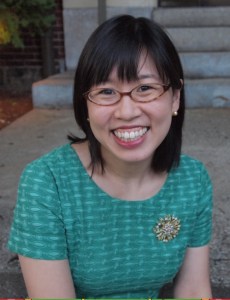 by Grace Lin
I laughed a little when Tara asked me if I’d like to guest blog for PiBoIdMo. My last picture book was published over five years ago, around the time we were all trying to figure out if the report of the death of the picture book was greatly exaggerated. One might wonder that about my picture book career.
However, in the last five years, I have published two novels and three early readers (with a fourth coming out TODAY!). And when I thought about it, I realized that PiBoIdMo is about picture book ideas. And I realized every single one of my books has begun as a picture book idea.
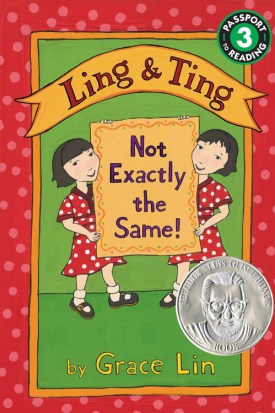
For example, my first Ling and Ting early reader, was once a picture book dummy originally titled Ling, Ting and Ming (sorry, Ming, you got axed). In my youth, I had loved the Flicka, Ricka and Dicka picture books—so much so that I have always harbored a not-so-secret wish that I, myself, was a triplet. And since all writing is a kind of wish fulfillment (which is a blog post for another day) I made Ling, Ting and Ming Asian-American like me.
And I thought I had a good story idea for these characters, too. I’d emphasize their identical appearance until the punchline of a haircut mishap! Funny! Chuckles! Lots of laughs!
So, like I said, I made a book dummy and included it in my portfolio as I made the rounds in NYC (this was in the olden days where you could make appointments with editors). I even received a bit of interest in it. One or two editors actually asked me to send it to them after my visit, even though they worried it might be “a bit slight.”
But I didn’t send it. Because every time I watched an editor leaf through it, something felt wrong. And on the bus ride home, I realized what it was. Not only was it a bit slight, the book was also unintentionally reinforcing the “all Asians look alike” stereotype. And as much as I wanted Ling and Ting (and even Ming) to be born, I knew I didn’t want them to be seen in the world that way.
I attempted to revise, adding, cutting—even making the characters into animals. But nothing felt right. And that was because for this idea, the picture book format wasn’t right.
Picture books are beautiful things. It’s distilled storytelling– refining an idea to its purest. They are the pearls of children’s literature.
But some ideas shouldn’t be distilled. Extracting only the essential story can make it lose it nuances. Some ideas need many facets to shine.
Which was the case with Ling, Ting and Ming. Many years later, I realized it was an early reader. The story of the haircut was too slight for a whole picture book, but as the first story in a series of stories that would fill out the characters—it was perfect.
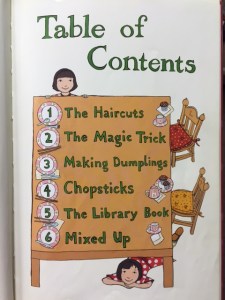
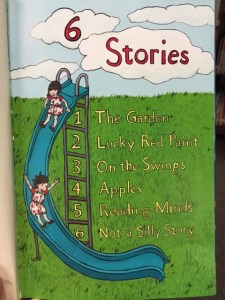
So what I am I trying to say? You’re going to come up with a lot of ideas this month. There might one or two you love but when you write them into manuscripts, they just don’t work. Your critique mates might not be able to tell you what’s wrong, editors might just simply reject it. But before you throw yourself into a pit of despair, consider this: maybe your picture book idea is not for a picture book. Maybe it’s the perfect idea for an early reader, a novel, a board book, or short story.
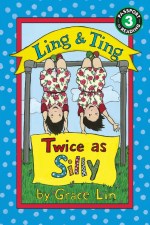

Because picture book ideas have been and continue to be the backbone of my entire career. And they can be the backbone of yours.
Good Luck!
Grace Lin is the author and illustrator of picture books, early readers and middle grade novels. Grace’s 2010 Newbery Honor book WHERE THE MOUNTAIN MEETS THE MOON was chosen for Al Roker’s Today Show Kid’s Book Club and was a NY Times Bestseller. LING & TING: NOT EXACTLY THE SAME, Grace’s first early reader, was presented with the Theodor Geisel Honor in 2011. Both of those books began as picture book ideas.
Sign up for Grace’s newsletter at this link, visit her blog at GraceLinBlog.com and her Facebook page Author Grace Lin.

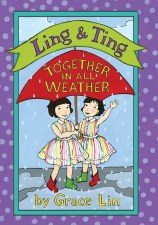
Grace is giving away a copy of her newest LING & TING book, TOGETHER IN ALL WEATHER, released today!
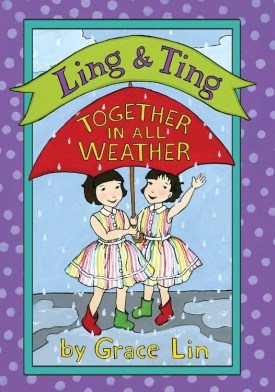
Leave a comment below to enter. One comment per person, please.
This prize will be given away at the conclusion of PiBoIdMo. You are eligible for this prize if:
- You have registered for PiBoIdMo.
- You have commented ONCE ONLY on today’s post.
- You have completed the PiBoIdMo challenge. (You will have to sign the PiBoIdMo Pledge at the end of the event.)
Good luck, everyone!
 by Josh Funk
I know it’s only Day 2, but I want you to get all your BAD ideas out today. I want you to think of THE WORST idea you can.
Right now.
What would NOT make a good children’s book?
Maybe it has a horrible lesson.
It could be something completely unappealing to kids.
Or perhaps something adults will hate to read over and over and over again.
Make sure to think of something seriously flawed.
Okay. Have you got one?
Now let’s find a way to make it work—cause it’s bound to be unique and amazing.
A baby with a mustache? That’s absurd. Who would publish that?
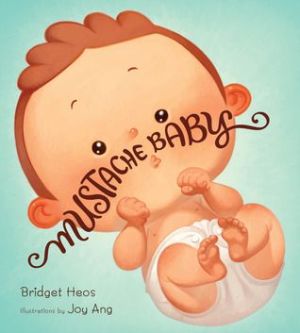
Clarion. That’s who.
A vegetarian vampire? Not a chance!

Or maybe…
A canine with intestinal problems? Potty humor is just for adult novelty books …
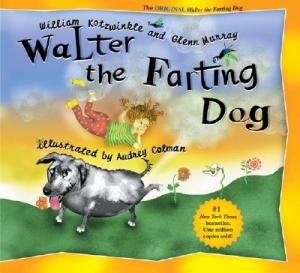
… and children with a sense of humor!
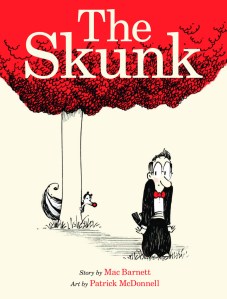
In fact, a book about a paranoid adult afraid of a skunk and a book about an international con man just made The New York Times Best Illustrated Children’s Books of 2015.

In my debut picture book, Lady Pancake & Sir French Toast (available now), the two main characters find out on the first page that there’s only a single drop of syrup left—and they both want it. And that exact conflict has been there since the very first draft. The resolution in print (I won’t spoil it for you) is also the same as that first draft.

But when I brought the first draft of Lady Pancake & Sir French Toast to my critique group, I originally had the two main characters arguing about who deserved the syrup more and why. For the entire story. Just dialogue. (I believe I was inspired by the debates prior to the 2012 U.S. Presidential election.)
Yes, the argument escalated. I tried to heighten tension as it progressed. But one member of my critique group suggested I stop working on this project because there simply wasn’t enough illustratable space in a closed refrigerator to make a picture book work.
Instead of giving up, I took it as a challenge. My critique partner was right. But how could I make it work? I needed to expand the world. I realized I needed more action, not just two static characters and dialogue. So I turned this political race into an actual race. There was my action.
So today, go wild. Think of something crazy. Something that makes absolutely no sense in the picture book world. It’s bound to be unique. So try to make it work.
Maybe you’ll come up with a story about a city-wide power outage,

or a noir-style horror homage with villainous carrots,
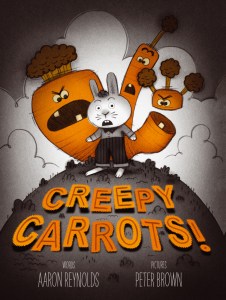
or a story about an elderly zoo worker with a cold.
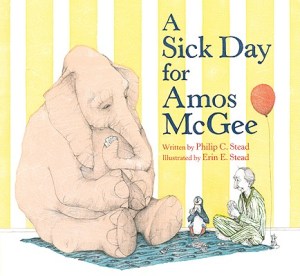
Those ideas are award-winners!
Now it’s your turn.
Josh Funk is the author of LADY PANCAKE & SIR FRENCH TOAST (Sterling), as well as the forthcoming picture books DEAR DRAGON (Viking/Penguin 2016), PIRASAURS! (Scholastic 2017), JACK! [and the beanstalk] (Two Lions, 2017), and more.
Josh grew up in New England and studied Computer Science in school. Today, he still lives in New England and when not writing Java code or Python scripts, he drinks Java coffee and writes picture book manuscripts. Josh is a board member of The Writers’ Loft in Sherborn, MA and the co-coordinator of the 2016 and 2017 New England Regional SCBWI Conferences.
Josh is terrible at writing bios, so please help fill in the blanks. Josh enjoys _______ during ________ and has always loved __________. He has played ____________ since age __ and his biggest fear in life is being eaten by a __________.
Find Josh Funk at joshfunkbooks.com and on Twitter at @joshfunkbooks.
Josh is giving away two Swag Sets, one each for Lady Pancake and Sir French Toast.
Each Swag Set contains:
- 1 Tote Bag
- 1 Magnet
- 1 Pin
- 1 Collectors Card
for the assigned team (either Lady Pancake or Sir French Toast).

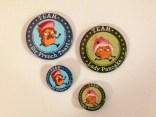

Leave a comment below to enter. One comment per person, please.
These prizes will be given away at the conclusion of PiBoIdMo. You are eligible for these prizes if:
- You have registered for PiBoIdMo.
- You have commented ONCE ONLY on today’s post.
- You have completed the PiBoIdMo challenge. (You will have to sign the PiBoIdMo Pledge at the end of the event.)
Good luck, everyone!
 by Joan Holub
Yay, you guys, for taking part in PiBoIdMo 2015! Below are 3 things that work for me in my writing, and I hope you’ll find something in here that works for you.
1. Need a fresh way of inspiring new book ideas? Start with a title:
- This is what R.L. Stine often does according to his interview with NPR. And about one third of my 130+ books began with a title (Goddess Girls series co-authored with Suzanne Williams; Zero the Hero).
- Sources for titles you could tweak, mix-and-match, or reshape to inspire your next story include TV Guide, movie titles, book titles, idioms, fairy tales, folk tales, and nursery rhymes. Keep a list of intriguing, catchy phrases you dream up or overhear. Think: What could a book with this title be about?
- Joan says to self: Little Red Writing. What could a book with this title be about? First thought: Main character is a red pencil. Second thought: This pencil is a student at Pencil School. With a teacher named Ms. 2 who tells her class to write stories. Next: I looked up positive attributes of the color red. Bravery is one. Aha! Now I knew what my Little Red pencil wanted—to be brave. Result: My Little Red Writing character is so brave that she foils the Wolf 3000, a crazed pencil sharpener pretending to be Principal Granny.

2. How do you decide which of your many ideas to spend your precious creativity and limited time on?
- Try choosing an idea that is “interesting to you as an audience, not what’s fun to do as a writer. [Those two things] can be very different.” That’s a slightly paraphrased tweet I found, attributed to Emma Coats. I don’t think it means you should not have fun writing. I translate it to mean: What unmade movie would you really like to see, or unwritten book would you like to read? Write that idea. Make it the premise for your book. If your audience-self wants to read it, chances are good that there’s a broader audience for your idea as well.
- Joan to self: “Wouldn’t it be funny if 3 silly knights would not let Santa into their castle to deliver gifts on Christmas Eve?”
Result: The Knights Before Christmas. Knights rebuff Santa. Santa catapults gifts over the castle walls. This book unfolded in my brain’s eye, scene after scene like a movie, and I think it reads that way.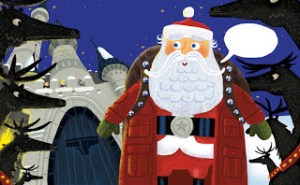

3. Book idea just not working?
- Maybe it’s too thin or needs pizzaz. Try enriching your project by combining two of your non-working ideas into one idea that works. (Don’t hoard ideas. You’re not wasting them by combining them. And you’ll get more ideas.)
- Joan to self: “This dog story of mine desperately needs a twist. And this school-picture-day premise of mine is just lying there on the page, boring me. What if I combined them?” Result: Shampoodle, in which dogs go wild at the groomer’s before dog picture day.

Does every idea have the potential to become an amazing story? I think so. When you’re finished, you may not recognize it as the same idea you began with, but who cares? What matters is that you’ve successfully re-molded that original idea into a finished, great book. Here’s hoping PiBoIdMo 2015 gets your ideas flowing and zooms you all the way to the “finished” line!
Joan Holub is the author and/or illustrator of 130+ books for children including the acclaimed picture books Little Red Writing, The Knights Before Christmas, and Mighty Dads, a New York Times bestseller. Joan co-authors 3 series with Suzanne Williams: Goddess Girls (ages 8-12, Greek mythology with a middle school twist, 22 titles), Grimmtastic Girls (ages 8-12, fairy tale adventure), and Heroes in Training (mythology adventure chapter books). Coming in 2016: This Little President (NF board book) and What Was Woodstock? (NF chapter book).


Where to find Joan online:
http://www.joanholub.com/
Twitter @joanholub
http://www.facebook.com/JoanHolub
http://www.facebook.com/goddessgirlsbooks
https://www.pinterest.com/joanholub/
https://www.goodreads.com/Joan_Holub
Joan is generously giving away this hinged, unpainted wooden castle, ready for the little knights in your castle to decorate and enjoy!
Here’s how Joan transformed her castle into a prop for The Knights Before Christmas events and school visits:

This prize will be given away at the conclusion of PiBoIdMo. You are eligible for this prize if:
- You have registered for PiBoIdMo.
- You have commented ONCE ONLY on today’s post.
- You have completed the PiBoIdMo challenge. (You will have to sign the PiBoIdMo Pledge at the end of the event.)
Good luck, everyone!
 by
by Recently, I taught a picture book workshop to my local SCBWI chapter. One of the exercises I had workshop participants do was to create jacket flap copy (JFC). Normally, the marketing and sales department of your publisher handles writing that short blurb that describes your picture book. So why bother? Here are three compelling reasons why writing jacket flap copy can make you a better author.
1. Know Your Content
Have you ever heard of the elevator pitch? It’s that 30 second “commercial” that allows you to describe your product or service in a concise manner. JFC is exactly that. When people pick up your book, they open it up and read the JFC. That brief description will let them know if the content of the book appeals to them.
Writing your jacket flap copy, even as an exercise, will allow you to truly know the content of your picture book and be able to pitch it to anyone, anywhere, at any time.
2. Know Your Hook
A hook is a literary technique in the opening of a story that “hooks” the reader’s attention so that he/she will keep reading. Ideally, the hook will happen within the first sentence or two of the picture book. Do you know the hook of your story?
Your hook will also translate into copy on the jacket flap. Your JFC should hook readers into reading and/or purchasing the book.
3. Know Your Audience
We obviously know that picture books are aimed for 3 to 8-year-olds. However, the reality is that picture books can appeal to a wide audience. Do you know the audience for your picture book? Are you targeting 1 to 2-year-olds, as with a board book? Or are you targeting 8 to 9-year-olds as with a folktale retelling? Perhaps you are targeting boys with a sports or transportation picture book. Whatever your audience, you need to know whom you’re targeting with your story. Writing jacket flap copy can help you target your audience.
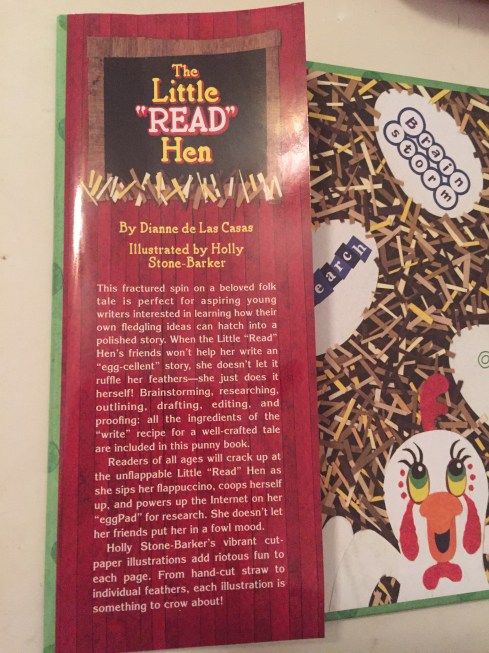
Here is some homework. Pick up any picture book. Read the jacket flap copy. Ask yourself these questions:
- Does the JFC reveal the content of the book?
- Does the JFC reveal a hook of the story?
- Does the JFC specify the target audience?
What else do you notice about the JFC? Practice writing jacket flap copy for your next picture book project. Develop an “elevator speech” so that you can describe your picture book whenever, wherever.
Writing JFC will help you improve yourself not only has an author but as a bookseller. Ultimately, I think all authors are booksellers. After all who knows a book better than its author? So write that JFC with TLC and then treat yourself to KFC. ☺
 Dianne de Las Casas is an award-winning author, storyteller, and founder of Picture Book Month. Her performances, dubbed “revved-up storytelling,” are full of energetic audience participation. The author of 25 books, Dianne was named the first International Reading Association LEADER Poet Laureate. Her children’s titles include The Cajun Cornbread Boy, There’s a Dragon in the Library, The Little “Read” Hen, The House That Santa Built, and Cinderellaphant. She is the Fairy Organizer of Once Upon a Storage and has a YouTube channel dedicated to home organization, home décor, and DIY. Dianne is also the proud mom of 15-year-old Kid Chef Eliana, an award-winning cookbook author, radio show host, and celebrity chef.
Visit Dianne’s website at diannedelascasas.com. Visit Picture Book Month at PictureBookMonth.com. Twitter & Instagram: @AuthorDianneDLC. Facebook: fanofdianne.
 Dianne is generously giving away a copy of THE HOUSE THAT SANTA BUILT! Perfect for the upcoming holiday season!
Leave a comment below to enter. One comment per person, please.
This prize will be given away at the conclusion of PiBoIdMo. You will be eligible for this prize if:
- You have registered for PiBoIdMo.
- You have commented ONCE ONLY on today’s post.
- You have completed the PiBoIdMo challenge.
Good luck, everyone!
Today’s post comes from the mind (and pencil) of illustrator Mike Ciccotello.
Inspiring minds wanna know!
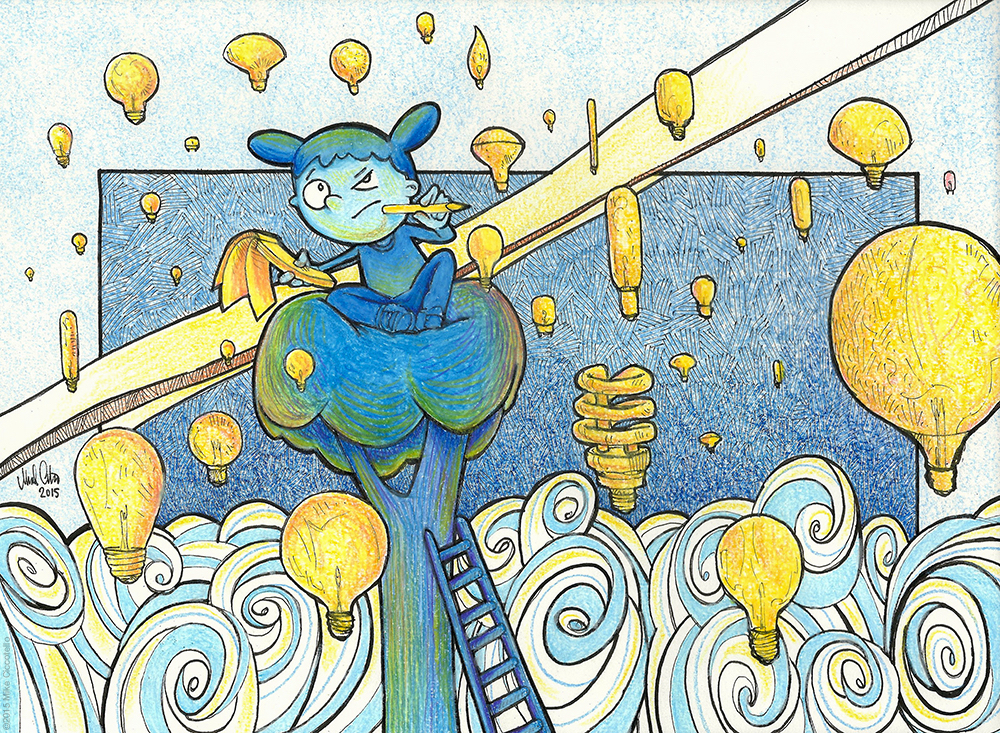
Mike is an aspiring children’s book illustrator. He received a BFA with a concentration in painting from Mason Gross School of the Arts at Rutgers University. He has 13 years experience working as a motion graphic designer at CNN and Fox Business Network. Mike is currently the Art and Design Director at Telos Corporation. He is a contributing member of AllTheWonders.com and a member of SCBWI. You can see more of Mike’s art online at Ciccotello.com.
He’s also on Facebook, Twitter @Ciccotello & Instagram @Ciccotello.
Mike is giving away this original art! YES! THIS!!! (Scroll up!)
Leave a comment below to enter. One comment per person, please.
This prize will be given away at the conclusion of PiBoIdMo. You will be eligible for this prize if:
- You have registered for PiBoIdMo.
- You have commented ONCE ONLY on today’s post.
- You have completed the PiBoIdMo challenge.
Good luck, everyone!
 by
by Thirty days, thirty picture book ideas. At first, that doesn’t sound too hard. And you’ll undoubtedly have terrific ideas in the first few weeks, nuggets that have been waiting to be uncovered for a while that PiBo is forcing you to excavate.
But then, if you’re like me…it’ll start getting harder. Maybe you’ll even hit the wall…and start to think you’ll never have another good idea again…and then maybe never any idea at all ever again…and then you’ll be tempted to quit the PiBo challenge and give up on your writing dreams and move to the Adirondacks and live in a small cabin you hand-make out of fallen branches so you’ll never have to face anyone ever again…
OK, maybe it won’t get that bad. But it is not uncommon to hit the “idea wall,” so to speak – and that is always disheartening. So before you start your official PiBoIdMo journey, I wanted to share three things you can do to re-fill your idea well if it starts to run dry.
(1) Words You Love:
My son and I have a secret password that we plan to use in case either of us suspects the other has been kidnapped by aliens and replaced with a life-like humanoid droid designed to help the aliens get a foothold into Earth society as they plan to take over the planet. That password is “Capuchin Echidna.” (Of course, I think we’ll have to change that now that I am announcing it on the internet!) How did we come up with that? Simple: capuchin and echidna are so much fun to say, and together, they sound HILARIOUS.

Capuchin. (Credit: David M. Jensen)

Echidna
When I wrote a book about the bond between parent and child (which I talked about during last year’s PiBoIdMo), my publisher wanted a super-fun phrase to serve as the call and response between mother and son. The result was RUTABAGA BOO—which, like Capuchin Echidna, is a ton of fun to say or shout or giggle.
Keeping your own list of words you love can serve as a source of inspiration for a full-fledged picture book idea. Often, these words are not just fun to say, but very evocative. Think of kerfuffle, or fidget, or crybaby – don’t they get your wheels turning? Or cantankerous, shenanigan, or fartlek (which is actually a training system for runners, not whatever first popped into your head)? What are you already imagining when you hear those words?
Your word list may never do anything for you but make you smile—but remember, it easier to be inspired when you are smiling than when you a frustrated, frowning, and pulling your hair out.
[Tara’s note: check out this word list!]
(2) Things You Hear:
I’ve long been a fan of stealing from children. Not candy, mind you – just ideas. If you have children of your own who are picture book age, you probably already know that listening to them playing with their friends or telling a joke they found hilarious can be a great source of inspiration. But here’s the thing – if you do have children of your own, at some point you will have bled them dry and you won’t be able to get a fresh idea out of them (also, things you find interesting in your own children can, from time to time, on occasion, be completely uninteresting to people who are not biologically related to you, as most of your audience will be).
So seek out some other children (not in a creepy way! Don’t stalk a school or surveil your neighbor’s toddlers!) and listen and take notes. Some great places for this: library story time, walking around a toy store, the subway, the bus, the aisles of your supermarket, the local ice cream shop. Sometimes it’s not a matter of stalking or pursuing so much as just keeping your eyes and ears open in familiar places. I know some of the most hilarious conversations I’ve ever heard have been while some weary, frazzled parent is trying to buy the groceries while keeping his or her children relatively close and relatively calm. Here’s one from last week:
“Daddy, can I have turtle?”
“No, honey, we can’t get any more pets.”
“No! I mean for dinner.”
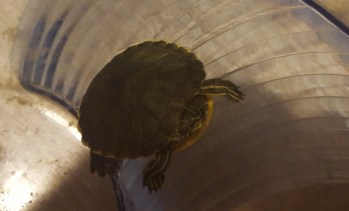
These eavesdropped ideas are free, and they get you out of your own ruts and thinking like someone new.
(3) Memory Mash-up:
Most of us have memories that make us smile. And I’m not just talking about the cute thing your daughter did when she was two or the time when you were five that you did that thing that your mother still talks about. Those memories are great—and you should definitely mine them for story ideas—but push that farther. Think of the stories your family tells every Thanksgiving that still make you laugh or the tale behind that photo your grandmother keeps on the mantle that makes her smile. Think about that story that makes half your family tear up every time—that also makes the other half of your family roll their eyes.
All those memories are a great place to find a story idea, if—and this is important—if you are willing to fictionalize them.
Remember that thing I said about other people not finding your children as interesting as you do? That pretty much applies to your whole family. So don’t be afraid to reimagine Uncle George as a buffalo or Cousin Edna as an ostrich. Grandma’s living room can become a swamp and Dad’s office can be a snowy mountain. Use the memories as a starting point—and then go in the direction your imagination takes you.
Happy PiBoIdMo and have a great month!
Sudipta is an award-winning author of over 40 books and the co-founder of both Kidlit Writing School and Kidlit Summer School. Her books include DUCK DUCK MOOSE, TYRANNOSAURUS WRECKS, ORANGUTANGLED, and over thirty more books that have been acclaimed by the Junior Library Guild, the California Reader’s Collection, the Bank Street Books Reading Committee, the Amelia Bloomer list, and many more. Find out more about her by visiting SUDIPTA.COM or KIDLITWRITINGSCHOOL.COM. She’s on Facebook and Twitter @SudiptaBQ.
 To help you put your PiBo ideas to use, Sudipta is giving away a free online picture book writing course in 2016 through kidlitwritingschool.com.
Leave a comment below to enter. One comment per person, please.
This [amazing] prize will be given away at the conclusion of PiBoIdMo. You will be eligible for this prize if:
- You have registered for PiBoIdMo.
- You have commented ONCE ONLY on today’s post.
- You have completed the PiBoIdMo challenge.
Good luck, everyone!
 by
by Successful Creatives know that in order to succeed, you need structures in place. But wait! Doesn’t that go against everything “creative”? Don’t you need to live within an unorganized, tortured, magical mess in order to hit on the greatest ideas?
Um. No. You don’t need that. You won’t prosper with that.
I really like bow ties. I didn’t know that until I decided to be bold one day, and buy some bow ties, and wear them to work. I tried them. I loved them. I’m wearing one today!
Okay, your ideas and creative success are not like my bow ties. Noted.
But if you believe that your best ideas come during wild bouts of chaos, I dare you to try out some Accountable Creativity. You may end up loving it, like I love my bow ties.
As a firm believer that structures set people up for creative freedom, I want to share with you some Accountable Creativity Strategies that are working for me.
- Write/sketch them (all) down. They all count. Ideas are like avalanches. Once a few appear, you may feel inundated with ideas! SO MANY IDEAS. Great ones, weird ones, awful ones, incomplete ones. Write them down.

- Leave a sketchbook on the kitchen counter. If I don’t, I won’t. If it means going upstairs when my body is still mostly asleep, or sitting at the island and scrolling through social media feeds, I’ll pick the easier, fruitless option.

- Feel productive by being productive. Butt in the chair, and get creating. (Or in my case, feet on the ground at the standing desk. Anyone else with me?)

- Sharpen your pencils. Have your materials ready before you get there. See #5 for more.
- Keep a journal. I call mine an “art journal” even though it’s not for drawing in. Some mornings I have more time before work (“more time” in a parent’s life means: I have 20 unscheduled minutes). The night before, I open my book, write down 2-3 focus-tasks that I know are achievable in 20 minutes, and then I leave the book open on my desk. When I wake up, I know I’ve written a goal, and I don’t have to spend 20 minutes wondering what I should sketch or write. I never leave myself large, intense, or thought-heavy tasks. Attainable and achievable – those are the jobs for the 20 minutes before work. By investing this time, you’ll make room for nooks and crannies of time to appear throughout your day.

This completed illustration is a direct result of the journaling I do, completed in just a week (whereas most take me longer than that). You can see the process work on my blog: thecreativedaddy.com.
- Create a network that you trust. I have a critique partner. We send messages back and forth most days, and push each other to work harder. If I say, “I’m going to complete the girl illustration,” she is going to ask me about it all week, and send me back to the drawing board when I thought I was almost done. My wife also works as a true critique partner – she says what’s working and what isn’t. It’s sometimes painful, and sometimes hard, but in the end I have greater samples for my portfolio and stronger stories. (Hi Stephanie! Hi Jami!)
- Put in the time. You might have 30 ideas at the end of PiBoIdMo. You might have 3. If they sit in your notebook for the next year, then why did you participate? I always encourage people who say, “I have no time! I’ll do it when I retire!” to take FIVE MINUTES a day and spend it creatively. If you are retired and are diving into this world now, put in the time. You owe it to yourself. You might refer back to #5 for prepping for this. In my experience, five minutes often turns into 30 minutes.
- Work through the ugly. The most beautiful creative projects start out ugly, go through long bouts of ugly, and are ugly until just a few moments before completion. Roll up your sleeves and get to work, because those bad, awkward, weird ideas that you create this month? You’re gonna make ‘em beautiful.
- Balance. As a busy teacher-researcher, husband, dad, art teacher, writer and artist, I know that sometimes you stay awake until 4am with a screaming baby. Well, I do. Sometimes it’s Parent-Teacher Night. Sometimes you are just dang tired. So give yourself a break – but not forever. Find a balance. See #7.
- Invest in yourself. You’re a PiBoIdMo-er because you believe in yourself, and the idea that you are going to be a successful writer or illustrator, or both. Give yourself the time to create, improve and grow. Don’t stop believing. Hold onto this feeling.

Patrick Guindon is a writer/illustrator, teacher-researcher, and Creative Daddy. This is his FIFTH round of PiBoIdMo participation and he is shaking in excitement that he won the chance to write a Pre-PiBoIdMo blog. You can find him, and all of his social media links, on his website at www.patrickg.ca. You can also like his pages on Facebook, visit his blog TheCreativeDaddy.com, and follow him on Twitter @123patrickg.
 by Diana Murray
Inspiration is everywhere. It’s just a matter of tuning into it. And in order to do that, you need to switch on that part of your brain that reminds you to evaluate funny or interesting or poignant experiences and ask, “Could this be inspiration for a book?” If you don’t stop to notice it, inspiration can pass you by. Of course it’s also helpful to record things right away so you won’t forget. Official PiBoIdMo journal anyone?
Here are a few ways you can tune into inspiration:
1. Look to Yourself
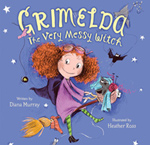
When I wrote GRIMELDA: THE VERY MESSY WITCH, I started with the character trait of being messy.
Unfortunately, that’s a trait I am intimately familiar with, so I know how frustrating it can be. I can’t tell you how many times I’ve walked around the house wearing one flip-flop, desperately trying to find the other one. Once I had my inspiration, I cranked it up by making the main character a witch. That made the potential for messiness even bigger and more interesting. If you think about your own traits, maybe even flaws, you can get a lot of ideas that way. For more on this you can read my post from last year: “Brewing Up a Character-Driven Story.” And by the way, I thought up this story during the first ever PiBoIdMo (I think that was in 2009?). It got me a SCBWI grant, an agent, and a two-book deal. Yeah. Tara, can I just give you a big hug right now??
2. Take a Hike
 CITY SHAPES was inspired by the long “hikes” I used to take around the city, back when I lived in midtown Manhattan. I loved the way the neighborhoods changed and discovering surprises around every corner. If you go out and observe your environment, what will you find? Maybe you’ll see a greedy squirrel trying to claim all the birdseed in the feeder? Or a raccoon riding on an alligator? (Seriously. Google it.) Scan your surroundings and see if anything inspires you. For a more specific challenge, you can also take the idea of a concept book (colors, shapes, numbers, seasons, etc.) and put a unique spin on it, perhaps pulling from your environment.
3. Observe Kids
This is a no-brainer. Kids are funny, full of wonder, and often brilliant. Watch them. Take notes. My own kids’ antics are a constant source of inspiration.
4. Admire Art
When I wrote GROGGLE’S MONSTER VALENTINE, I was inspired by an illustration. I was in-between projects at the time and my agent suggested that I look at a particular illustrator’s portfolio and see if anything caught my eye. Well, it did! And that’s when GROGGLE was born. And now that very same illustrator (the fabulous Bats Langley) is illustrating the book. So, if you ever get stuck, try browsing some portfolios online or head to a museum.
5. Watch TV
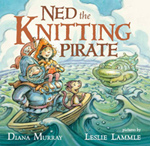 Didn’t expect that one, did ya? Yep, literally watching TV can also lead you to inspiration. However, you need to watch actively, not passively. In other words, keep your inspiration sensor clicked on. You never know what might strike you. In fact, NED THE KNITTING PIRATE was inspired by an episode of Anthony Bourdain: No Reservations–a travel and food show with a smart and amusingly snarky host. The episode I saw was filmed in Sweden. There were these extreme snowboarders who were descended from Vikings, and one of their favorite activities was…you guessed it, knitting. They knit their own hats with pompoms on top and gifted one to the show’s host. Bourdain (kind of a tough, black-leather-clad New Yorker) was clearly not comfortable wearing the fuzzy, woolen hat. It was hilarious.
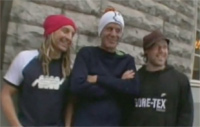
I was immediately inspired. Now, of course I’m not implying that you should COPY what you see on TV. I’m just saying, you can get a seed of inspiration and then make it your own. For more about mashing together opposing ideas, you can read my 2012 post, “Idea Mash-Up.”
I hope this helps you tune into inspiration…and RIP THE KNOB OFF! (Sorry, I just had to get that in there.) Now get ready to be introspective, explore your world, laugh with your kids (or someone else’s), browse illustrations, and binge watch your favorite shows on Netflix. And most of all…have fun!
 Diana grew up in New York City and still lives nearby with her husband, two very messy children, and a goldfish named Pickle. Diana is the author of six forthcoming picture books. Her award-winning children’s poems have appeared in many magazines, including Highlights, HighFive, Hello and Spider.
For more information, please visit: DianaMurray.com or follow Diana on Twitter: @DianaMWrites.
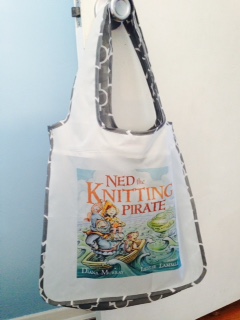 Diana is giving away a NED THE KNITTING PIRATE tote bag with grey/white mosaic trim (product details), and special sneak preview editions (unbound F&G’s) of GRIMELDA: THE VERY MESSY WITCH and CITY SHAPES nearly a year before they appear in stores!
Leave a comment below to enter. One comment per person, please.
These prizes will be given away at the conclusion of PiBoIdMo. You will be eligible for these prizes if:
- You have registered for PiBoIdMo.
- You have commented ONCE ONLY on today’s post.
- You have completed the PiBoIdMo challenge.
Good luck, everyone!

When I teach classes on writing for children, I tell my students there are only three necessary traits for being a writer. They raise their pens, ready to record the insider tricks I’m about to share that will pave their road to publication. Unfortunately, there are no magic incantations or secret handshakes to initiate you into the world of writers. All you need are three things:
- a modicum of talent;
- a willingness to learn and improve your craft;
- and perseverance.
When I say “modicum of talent,” I mean exactly that. You don’t need to be the next Maya Angelou or Ernest Hemingway. You do, though, need a little something. As a child, were you the one who enthralled your classmates on the playground with your stories? Did you write love poems or protest songs? Do you make up fairy tales for your children every night? Are you a journal writer or blogger? Do people turn to you when they need someone to write up an account about an event? Did you answer “yes” to any of these questions? Excellent. You obviously have a “modicum of talent.” You’re a writer.
But that’s only the first step. You need to be willing to learn and improve your craft. I’ve met too many people who, once they’ve gotten an agent or that first book contract, feel that they are now a “Writer,” with a capital W. They think that now they’ve made it up the first rung of success, there’s nothing else for them to learn about writing. They couldn’t be more wrong. No, you don’t need to go out and earn an MFA in Writing for Children or a PhD in Children’s Literature (not that those are bad things), but you can always learn more about writing. Attend conferences and take workshops. Read craft books and blog posts. Have your manuscripts critiqued and return the favor for other writers. But the most important way to improve your craft is to read mindfully in your genre. Read. Read. Read. Analyze the books you read. What works and what doesn’t work? Learn new techniques from the positive and learn what to avoid from the negative. Read!
The last, and most important writerly trait, is perseverance. Becoming a professional writer is not the easiest of career goals. It takes a long time to hone your craft to the needed level. Along the way, you’ll encounter many barriers. I knew most of my published writer friends long before they had their first book contract. They kept writing in spite of the many rejections they received along the way. To state the obvious, if you stop writing, you’ll never be published.
When I was in high school we had to choose a class motto. (Stay with me. This is related.) The administration thought our choice wasn’t appropriate and cleaned it up to “Always Persevere,” translated into Latin as “Semper Perservere.” I prefer our motto in its original form, though. Here it is as my final piece of advice:
Keep on Truckin’!

Laurie Wallmark writes exclusively for children. She can’t imagine having to restrict herself to only one type of book, so she writes picture books, middle-grade novels, poetry, and nonfiction. She is currently pursuing an MFA in Writing for Children and Young Adults at Vermont College of Fine Arts. When not writing or studying, Laurie teaches computer science at a local community college, both on campus and to students in prison. The picture book biography, ADA BYRON LOVELACE AND THE THINKING MACHINE (Creston Books, October 2015), is Laurie’s first book.
- Website: http://www.lauriewallmark.com
- Facebook: https://www.facebook.com/lauriewallmarkauthor
- Twitter: @lauriewallmark
Laurie is giving away a copy of her debut picture book, ADA BYRON LOVELACE AND THE THINKING MACHINE.
Leave a comment below to enter for your chance to win.
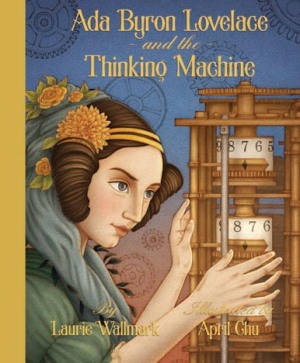
This prize will be given away at the conclusion of PiBoIdMo. You will be eligible for this prize if:
- You have registered for PiBoIdMo.
- You have commented ONCE ONLY on today’s post.
- You have completed the PiBoIdMo challenge.
Good luck, everyone!
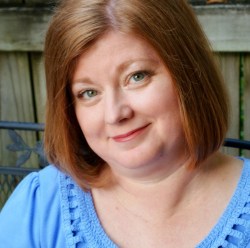 by Mary Uhles
I’m incredibly honored to be included in the run-up to PiBoIdMo 2015. You know how it feels to be in an airplane right before take off? The airplane swings out onto the runway. You look out the window and see the fat white lines of the end zone rotate under the plane. The wings bounce slightly in the turn. The flight attendants tuck the air pressure bags into their armpits and walk away down the aisle. And then, just a for a second, right before the pilot hits the throttle, the entire plane gets very, very still. . . poised to leap into the future. That’s Pre-PiBoIdMo Day 1. For the next 35 days you will be leaping into the future. And, while it may seem suddenly still back in the cabin of the airplane, in the cockpit the pilot is actually going down a very specific checklist for the flight ahead. Let’s look at your checklist for PiBoIdMo:
- Commitment? (You’ll need it on Day 1)
- Imagination? (You’ll need it on Day 15 when you think “geez am I only half way there?”)
- Self Forgiveness? (you’ll need it for day 27 when you think “I’ll never have another good idea ever!”)
- Finger on the pulse of your inner child? (You’ll need it every day, that’s what turns great ideas into books)
When I start making art or writing a story I have an external and internal checklist. The external list is the one that helps me procrastinate:
- Do I have all my other work done? (No? Oh well, I have to finish THAT first)
- Do I have good music or a radio program to listen to? (No? Oh well, I can’t possibly work without proper inspiration)
- Do I have time to work right now? (No? Oh well, I shouldn’t even start if I’m going to be interrupted!)
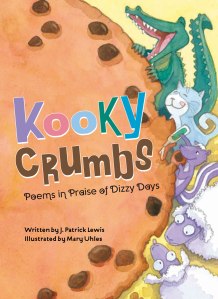
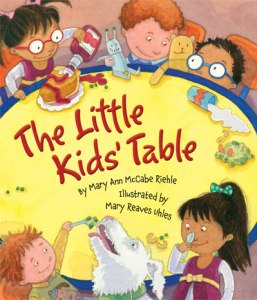
You get the idea. If I let that checklist run things most of my art would never get off the ground. I worked on THE LITTLE KIDS’ TABLE and KOOKY CRUMBS almost simultaneously for a year. Illustrating two books with a huge cast of characters while balancing my other illustrations, writing projects, and life in general was a turbulent journey (I wrote a post about my time management here.) But even with the best time management, I learned that my illustrations would be ho-hum and my effort wasted if I couldn’t get to the beginning of my own runway. Where everything was very, very still. Where it’s just me and the artwork. Me and my characters. Me and the brush and the paper and the color. In that place the funniest, saddest, angriest, happiest, most memorable ideas and images came out onto my drawing table. While working on both books I developed my internal checklist. It’s a little different. It has only one question:
- Can I reach beyond the distractions of now, beyond my brain saying “that’s a stupid idea”, beyond worrying if I’m good enough, beyond worrying if anyone else will like it, all the way to the place where I’m telling the story that only I can tell?
PiBoIdMo-ers, your mission on this flight is to complete that checklist. At your final destination you’ll be greeted by a gaggle of brand new characters.They are your BEST ideas and they are waiting for you. Ready for take-off? Then let’s push that throttle forward.
Mary Reaves Uhles has illustrated THE LITTLE KID’S TABLE by Mary Ann McCabe Riehle (Sleeping Bear 2015); KOOKY CRUMBS by J. Patrick Lewis (Kane Miller 2016); and the adventure series, BEYOND THE GRAVE, by Dottie Enderle (ABDO Magic Wagon Press 2013). Mary has twice been awarded the Grand Prize for Illustration from the SCBWI Midsouth Conference and her piece, EAT was a finalist in the 2014 SCBWI Bologna Book Fair Gallery. Prior to beginning her career as a freelance illustrator, Mary worked as an animator on projects for Warner Brothers and Fisher-Price Interactive. She serves as the Illustrator Coordinator for the Midsouth region of the Society of Children’s Book Writers and Illustrators and lives with her family in Nashville, Tennessee. Since creating characters and stories is her favorite thing in the world (even more than mocha fudge ice cream) she feels mighty lucky to do it every day in her hilltop studio. Find her online at www.maryuhles.com and Twitter @maryuhles and Facebook.com/maryuhles.
Mary Uhles is giving away an illustrator portfolio critique AND a copy of her newest picture book, THE LITTLE KIDS’ TABLE. These are two prizes for two winners!
Leave a comment for a chance to win. One comment per person, please. (In your comment, please note “CRITIQUE” if you would like to be considered for the illustrator prize.)
These prizes will be given away at the conclusion of PiBoIdMo. You will be eligible for these prizes if:
- You have registered for PiBoIdMo.
- You have commented ONCE ONLY on today’s post.
- You have completed the PiBoIdMo challenge.
Good luck, everyone!








 Writing for Kids (While Raising Them)