You are currently browsing the category archive for the ‘KidLit’ category.
 It’s Valentine’s Day! Time to profess your love! (For children’s books, that is.)
If you love kidlit, what are you doing to support it?
 Buying lots of books? Reviewing them? Volunteering at the library? Donating to a literacy program? Writing new stories?
 Last year I began “Write a Review Wednesday” as a way to support children’s literature. I’ve heard that many people won’t buy a book unless they see positive reviews online, and there’s tons of fab books that haven’t been reviewed.
 So if there’s a book you love, shout it from the rooftops! Write about it on your blog, Twitter, Facebook or submit a review to a bookseller’s website.
Let’s hear your ideas for supporting kidlit in 2011. What are you doing to profess your love?
 by Ruth Spiro
In 2003, I sold my first picture book manuscript, Lester Fizz, Bubble Gum Artist, as the result of a contact made at the SCBWI Annual Conference. In the five years between the sale and my book’s release in 2008, I had plenty of time to think about innovative ways to promote it. Yes, my marketing plan included the tried-and-true mailings, signings and presentations, but I also wanted to do something a little different. That’s just me.
With a moderate investment of time and money, in 2006 I created my own holiday, “Bubble Gum Day.” Unsure of my publication date at the time, I chose the first Friday in February because aside from Groundhog Day, there’s little else going on. This year, Bubble Gum Day falls on Friday, February 4.
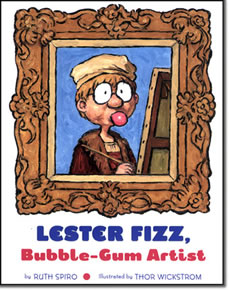 The premise is simple: On Bubble Gum Day, kids pay fifty cents to chew gum at school, with the proceeds used for any project or charity the school chooses. Kids have fun, schools benefit, and my name and book title get valuable publicity.
Six years later, it’s become a fun and effective promotional tool that has increased my visibility as an author and “Bubble Gum Expert.” It has also gained me exposure in both print and broadcast media, including The Washington Post Express, The New York Daily News online and Good Day Sacramento, as well as on radio stations in both large and small markets. This holiday with kid-appeal has been celebrated in countless schools, public libraries, children’s museums and community organizations.
Most importantly, schools and community groups have used Bubble Gum Day to do some wonderful things. One school raised enough money to buy a goat for a village in Africa through Heifer International. Another used their proceeds to purchase snacks, which they sent to soldiers in Iraq. Yet another school collected used books instead of money, and wound up with over one thousand books, which they donated to local women’s shelters.
Frankly, when emails with these stories began appearing in my mailbox, I stopped thinking about the holiday as a promotional tool—it’s become so much bigger than that.
 This year, I’ll spend Bubble Gum Day with a group of second and third graders in Oak Brook, IL. The money they collect will go to Reading is Fundamental. They don’t know this, but I plan to chew lots of bubble gum too, for which I’ll also make the required donation!
Then, as in past years, I’ll eagerly anticipate the emails, photos and packages of letters I’ll receive over the coming weeks, as schools tally up their proceeds and continue to make Bubble Gum Day a sweet success!
Win a signed copy of Lester Fizz and a bubble gum prize pack! Send a photo of your most creative bubble gum bubble—in a group (like your class), individually, or like one of Lester’s unique bubbles. Email photos to bubblegumday@gmail.com with the sujbect line “Tara Lazar contest” by February 7th. Ruth will select a winner and some bubble photos will be featured here. Good luck!
Ruth Spiro is the author of Lester Fizz, Bubble-Gum Artist, published by Dutton. Her essays and articles have appeared in FamilyFun, The Writer and Woman’s World, as well as The Right Words at the Right Time: Your Turn, edited by Marlo Thomas, and several Chicken Soup for the Soul titles. She frequently speaks at schools and conferences. Visit her online at www.ruthspiro.com. Learn more about Bubble Gum Day at www.bubblegumday.com.
 We’ve been watching a lot of Brady Bunch in our house. My four-year-old is obsessed and roams the house singing, “Here’s the story of a LONELY lady…” And yeah, I suppose Carol was a bit lonely before that man named Brady came around with three boys of his HOME (she sings that wrong, too).
So I started thinking about mixing words up. What would happen if the Brady Bunch characters mixed up the words of famous children’s books? Well, we’d have new classics like:
IF YOU GIVE A BROTHER A FOOTBALL by Marcia Brady
A LAVA LAMP IN THE ATTIC by Greg Brady
THROUGH THE GOOFY-LOOKING GLASSES by Jan Brady
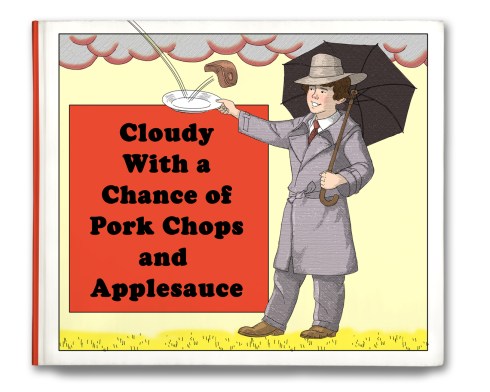 Thanks to illustrator Jed Henry for the fake book cover!
…
CLOUDY WITH A CHANCE OF PORK CHOPS AND APPLESAUCE by Peter Brady
BOBBY, PLAIN AND SHORT by Bobby Brady
FANTHY NANTHY by Cindy Brady
FROM THE MIXED-UP BLUEPRINTS OF MR. MICHAEL P. BRADY by Carol Brady
ALICE NELSON DOES MY SHIRTS by Mike Brady
SURVIVING THE BRADYS by Alice Nelson
All punny stuff aside, the Bradys can teach us about writing for children. Take the episode where Greg gets a groovy new job at Sam’s butcher shop (for a whopping $1.50 an hour!). Bobby strolls in just before closing and orders two pounds of sausage. He follows Greg to the meat locker and the door closes behind him, locking them in. Oh no! How will they get out?
All episode long, Bobby wanted to be taller, bigger. He slapped a line of masking tape on his door to measure his height, then hung on the monkey bars to stretch himself. But now his small stature saves Greg’s life (if we forget it’s Bobby who endangered Greg’s life) because he’s tiny enough to climb through the window in the meat locker door.
Before he climbs out, Bobby can’t help saying, “Sure hope I’m small enough. Gee, I never thought I’d wish I were little.”
Ugh. This ruins the moment!
The character acknowledges the lesson learned, when the audience is perfectly capable of figuring out the significance of Bobby’s great escape.
Now how does this relate to writing?
Your audience is smart. They can figure out the message of your story without being hit over the head with two pounds of sausage.
Now if you’ll excuse me, it’s time to read another Brady classic, THE PHANTOM PAY PHONE. (How did they get that thing installed in the house?)
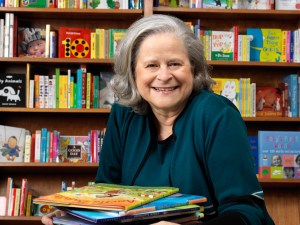 by Carol Rasco, CEO, Reading is Fundamental
At first glance, it seems almost too simple, offering children the opportunity to choose the books they want to read and own. But since 1966, choosing books has been the key feature of RIF programs where children often select multiple books per year. Does it make a difference?
In late September of 2010 results were released from a RIF-commissioned, rigorous meta-analysis conducted by Learning Points, an affiliate of the American Institutes for Research. Those results showed that giving children access to print materials is associated with positive behavioral, educational, and psychological outcomes. I invite you to study the results more fully as these results then move us to the importance of picture books in the early years of the children targeted by RIF. Detailed information about the study and its results can be found on the RIF website: www.rif.org.
How exciting it has been to learn more this year about PiBoIdMo by following carefully the informative guest posts each day as well as looking back over past year’s PiBoIdMo materials. Reading Is Fundamental deals more with picture books than any other genre, and this is all the more reason I appreciate this opportunity to visit with those of you participating in PiBoIdMo this year. I sincerely hope this opens a dialogue between you and RIF as I know you have ideas and information that could be of benefit to RIF.
Our coordinators in the field who might be teachers, reading specialists, PTA parents, Kiwanis Club members—volunteers of all stripes and professions—tell us repeatedly they seek more of three types of picture books: nonfiction that is “eye and mind catching”, bilingual books, and multicultural books. And at RIF, we do not necessarily see these three as mutually exclusive.
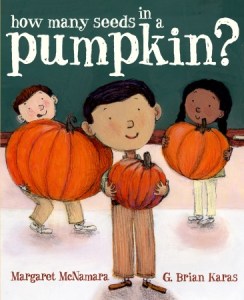 One example I have found of a book that certainly combines the nonfiction and multicultural features is HOW MANY SEEDS IN A PUMPKIN? by Margaret McNamara. I have shared this book numerous times in classrooms across the country and almost without fail, each time I read it some student or even multiple students will talk about the magic in the book. They have no idea they are learning math and science. At the same time the illustrations are clearly multicultural in portraying the world around the students – but would most people label it at first glance a ‘multicultural book’? No. It is a natural portrayal of the real world of mirrors and windows we stress in our Multicultural Literacy Campaign.
As part of our commitment to motivate young readers, RIF has increased efforts through our Multicultural Literacy Campaign to reach more African American, Hispanic, and American Indian children at risk of academic failure. We are deeply concerned about the growing number of quality reports and research studies showing the large gaps in literacy accomplishments too often found between these children and their peers. We know one aspect of promoting improvement is to provide more culturally diverse books so that children nationwide can discover the value of their own heritage while learning about the importance of others. You can learn more about our Multicultural Literacy Campaign at http://www.rif.org/us/about/literacy-issues/multicultural.
Choice is a key reading motivator. Allowing children control over what they read can help them build a lifelong, life-changing love of reading. We also believe choice is power. For underserved children, who have fewer opportunities than more advantaged children to make positive choices in life, offering a choice of books provides a taste of the dignity of personal autonomy. Even such small opportunities and encouragements to choose can inspire children to make greater choices: to choose learning, to choose success in school and life, to choose a brighter future. Quite simply, given the power to choose what they will read, children will chose to read to learn.
In addition to choice of book, RIF has two other key components to our book distribution program: motivational activities during the distribution (and nothing is more exciting than an author or illustrator coming to read!) and parent engagement.
I invite you to visit with us at RIF regarding ideas you have about how we can provide more books like those I reference and other inputs you may have on our various program components. I also encourage you to determine if there is a RIF program in your community where you might give one reading/presentation a year as part of our effort. Use the locator map (www.rif.org/maps) where you can easily access program sites near you; should you need assistance in making contact with a program(s) or you have questions/suggestions of any type for RIF, please contact me at crasco[at]rif.org.
My interest in PiBoIdMo has escalated over recent weeks, and I have started my own beginning short list of books I wish I could write. Who knows, I may figure out how to allocate the time to learn even more about this process over the next year and actually sign up—book one is one I have carried for three years in my head and there are two more beginning to take root. I want to take the excitement I have seen in children at the sea organ in Croatia and the pure awe I witnessed on the faces of students as they watched the making of smoke by an American Indian as he rubbed sticks together at a recent RIF distribution in DC and figure out how I can share those experiences with children who may not the opportunity to visit with an American Indian visit or take a trip to Croatia.
Children’s interests matter at RIF. We strive to develop their freedom to ask and answer questions, to experience adventures and new ways of perceiving the world around them through the books they choose. We are honored to have played a part in offering the millions of choices connected to the more than 366 million books provided to children since our founding…and we look forward to providing millions more.
Happy Reading!
Reading Is Fundamental, Inc. (RIF), founded in 1966, motivates children to read by working with them, their parents, and community members to make reading a fun and beneficial part of everyday life. RIF’s highest priority is reaching underserved children from birth to age 8. Through community volunteers in every state and U.S. territory, RIF last year provided 4.4 million children with 15 million new, free books and literacy resources. For more information and to access reading resources, visit RIF’s website at www.rif.org.
Kids says the darndest things. And who better to give picture book authors great ideas than their readers? I asked Mrs. Lombardo’s 2nd Grade and Mrs. Mozer’s 3rd Grade classes what kind of book they would like to write and why.
“If I could publish a children’s book, it would be about…”
“Dragons because a lot of little boys like dragons.” – Oscar
“Soccer because I could teach others how to play soccer.” – Victor
“Dinosaurs because children like the T. Rex, triceratops and others.” – Aidan M.
“Friendship because children should learn how to be nice to each other.” – Mark
“Presidents because they are important for our country.” – Marshal
“Turkeys because it’s November.” – Dylan
“A girl and a boy walking in the woods and a witch would take them and bring them home. I would write it so some people would get scared a little bit.” – Taylor
“Dragons because I like dragons.” – Chris
“A little funny eraser who has big adventures all around the world because kids always like adventures.” – Gabriela
“Animals because lots of people like animals.” – Eliana
“Vampires and aliens because that is what most kids like.” – Annika
“A kid getting a pet. I would do it because they might like the book.” – Angelina
“Two girls who buy cotton candy. One of the girls eats it and the other one doesn’t. So it makes fun of that cotton candy. I would write this story because it makes me laugh.” – Neda
“Dragons. My book will be about dragons because it’s easy to make the problem and solve the problem.” – Thomas
“Friends because at school we learn about being bullied and good friends have to be nice to each other.” – Kyle
“Snow because children like to play in snow.” – Payoon
“Valentine’s Day because a lot of people like Valentine’s Day.” – Rebecca
“A girl and a boy helping others because other people could help others, too.” – Sophia
“A long time ago so kids can learn about a long time ago.” – Aidan Z.
“Christmas because it’s my favorite holiday.” – Halle
“A scarecrow, pumpkin, witch, house, people, crayons, lunch, snack, class. You could write a school.” – Vikesh
“A boy that could fly because it would be cool to see the world.” – George
“A boy who’s stuck in a haunted house because I like to tell spooky stories and it would be a cool adventure.” – Melanie
“A boy who could create pictures in his mind and make things happen because I think that would be exciting.” – Nick
“A girl who plays soccer because I think it would be interesting to read about a girl like me.” – Leah
“A girl who was teased because she was so good at math because I’m so good at math.” – Sophie
“A girl that has powers because I think that would be interesting.” – Hanna
“Dinosaurs because kids really like dinosaurs.” – Pierson
“A girl in a wheelchair because it would be cool to see how she dealt with school and her differences.” – Alex
“A girl that could fly because I would love to fly.” – Ella
“A girl that could go anywhere because she’d be able to get anything.” – Meredith
“A girl that wanted a dog because I want a dog and can’t get one.” – Denise
“A bear that is lazy and never helps people because it would be funny.” – Christian
“A boy who could fly because it’s my dream to fly and it would be cool to read about.” – Matthew
“People with powers because that would be cool.” – Jenna
“A boy who could fly because I like fantasy.” – Jimmy
“An alien who is friends with a boy because it would be cool.” – Julia
“A boy that could do amazing things because that would be interesting to read.” – Alexander
“A boy with super powers because that would be awesome.” – Henry
“Football because I know a lot about it and I play football.” – Tucker
“A kid who stunk at soccer and then becomes the best player on his team because it would be a good book.” – Lucas
“A boy who could fly because a lot of children want to fly and would like to read a book about it.” – Ethan
“A girl that has a brother and sister that annoys her a lot because I have a brother and sister that annoy me.” – Abby
Those of us you who were children once upon a time will surely remember how frustrating it was suddenly to have been plunked down in a world where everyone knew more than you did—about everything. Children spend a great deal of time trying to figure things out: where does snow come from? Why can’t dogs talk? What happens next? Or, as we say in our family: “Who ordered the veal cutlet?”*
Kids develop their own little GPS-like subroutines, constantly recalculating to keep themselves on track—but sometimes, inevitably, they get it wrong. Misperceptions and missed information lead to misunderstandings . . . and—I won’t sugar-coat this—little misunderstandings often lead to:
Major Disappointment!
 Total Humiliation!
 Nightmares!
 (Yeah, I was grown before I figured that one out.)
Thank goodness for picture books!
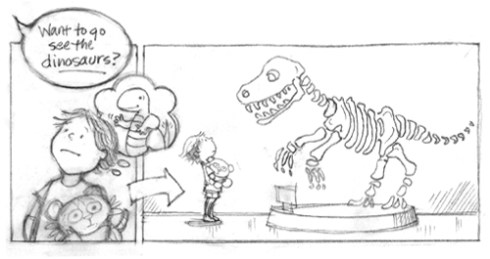
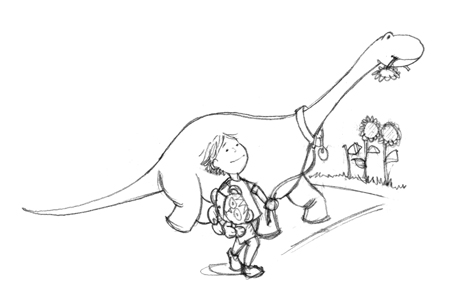
In a picture book, you can check out your own real-live dinosaur any time from the Storybook Lending Zoo.
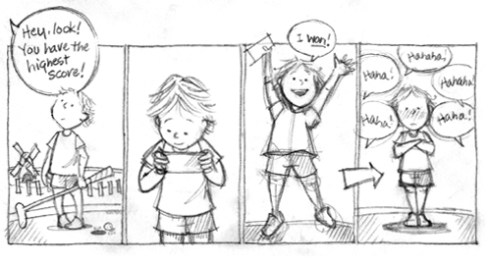
 You can have the queen invite the golfer with the highest score to the palace for tea, and meet the prince, who is even worse at Goony Golf than you are.
 You can become a super-hero in training, and rid the world of evil, baby-eating furniture.
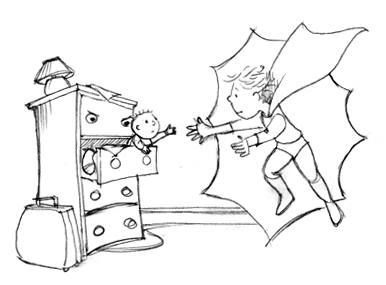 How cool is that? As children’s book writers and illustrators, we get to do this all the time. So, having aired three of my own neuroses . . . er, picture book ideas . . . here is a tip for today: think back to those times in your childhood when things were not quite what you expected them to be—and imagine what it would take to discover a new, old friend . . . or have the last laugh . . . or fly to the rescue.
And then, for the love of heaven, explain to the little person in your life that dinosaurs are really extinct; that, as silly as it sounds, low score wins at Goony Golf; and that, yes, if necessary, a very tiny baby can sleep safely in a dresser drawer . . . but only if you take the drawer OUT of the dresser first!
*A line from Mel Brooks’ Silent Movie . . . um, maybe you had to be there.
 Bonnie Adamson’s latest illustration project is BEDTIME MONSTER (¡A dormir, pequeño monstruo!) by Heather Ayris Burnell, released in September by Raven Tree Press.
Visit Bonnie’s soon-to-be-completely-overhauled website at www.bonnieadamson.net, or hang out with her on Twitter, where she co-hosts #kidlitchat on Tuesday nights and #kidlitart (for children’s book illustrators and friends) every Thursday.
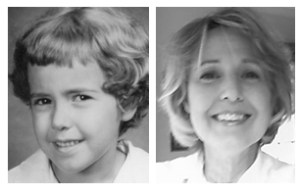 Bonnie then, practicing her skeptical glare; and now—-an older and wiser children’s book illustrator.
Prize Alert! Leave a comment to enter. One randomly-selected winner will choose one of the three picture-book-inspired sketches above for Bonnie to paint in watercolor (Dinosaur, Royalty, Superhero). One entry per person! Winner will be selected one week from today. Good luck!
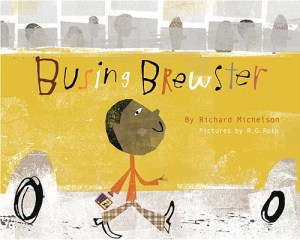
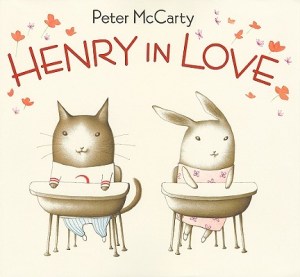
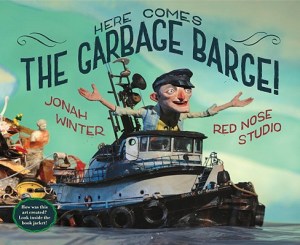
According to three judges appointed by the NY Times—Robert Sabuda (illustrator & pop-up genius), Elizabeth Bird (NYC librarian, author & Fuse #8 blogger) and David Barringer (novelist & designer)—these are the top 10 illustrated picture books of 2010.
After reviewing these titles, there is little doubt that the finest illustrative work in the world appears in children’s literature.
Congratulations to the illustrators! Erin E. Stead, Sophie Blackall, Tony Fucile, R. C. Roth, Peter Brown, Peter McCarty, Red Nose Studio, Blexbolex, Suzy Lee and Christoph Niemann.
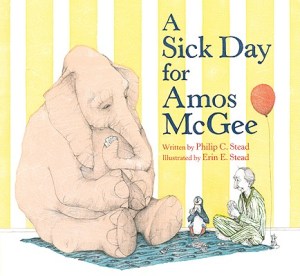

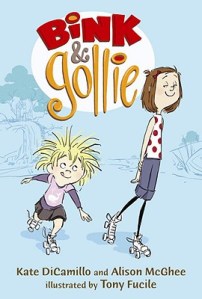



 [UPDATE: The winner is Sheryl Tilley! Congratulations and enjoy!]
My story “The Juggler Triplets” will appear in the November issue of Abe’s Peanut, a micro-magazine for kids ages 6-10. Delivered in four postcard installments, the story appears on one side with full-color illustration by Lichen Frank on the other.
Independently published by editors Anna and Tess Knoebel, Abe’s Peanut launched this year after the success of Abe’s Penny, a micro-magazine for adults: “Off-set printed on double thick matte card stock, each issue dispenses art and literature while becoming a collectible, temporal object.” (In kidspeak: “They look cool tacked to your bedroom door.”)
Recent Abe’s Peanut contributors include Audrey Vernick, author of Is Your Buffalo Ready for Kindergarten?, and Lisa Tharpe, author of P is for Please: A Bestiary of Manners.
Kids love receiving their own mail, so here’s a chance to receive four postcards with your child’s name on the label.
Leave a comment naming your child’s favorite picture book for one contest entry. Mention the giveaway elsewhere for two additional entries. A winner will be chosen on Friday, October 22nd.
And stay-tuned for PiBoIdMo in November, when there will be several itty-bitty (plus some hugantic) giveaways!
 Children’s book illustrator Kelly Light recently launched RIPPLE, a cooperative of illustrators making small sketches in exchange for a donation to a non-profit effort in the gulf.
“A small sketch, a small donation, each small act helps. Together we can cause a ripple in the oil-soaked waters of the gulf.”
Most sketches are just $50 each. You must be the first to email RIPPLE to claim a particular sketch, wait for confirmation that you are the first, then make a donation to a gulf non-profit and provide receipt proof within the hour. The schedule of illustrators is posted so you can be ready to pounce!
Illustrators to come include Dan Santat, Jarrett Krosoczka, Pascal Campion, and later today–Mo Willems.
 Joyce Wan, talented author/illustrator of “Greetings from Kiwi and Pear,” stops by the blog today to recap the recent NJ-SCBWI annual conference. I couldn’t attend this year so Joyce offered to share the juicy details. (Get it? Kiwi and pear…juicy? Ugh, stick to humor in picture books, Tara.)
Take it away, Joyce!
It was my first time attending the New Jersey SCBWI Annual Conference and it was such a blast! There were intensives, workshops, lunches with editors/agents/art directors, a book fair, a juried art show, a raffle, auctions, one-on-one critiques, agent pitch sessions and portfolio reviews galore. A whopping 22 publishing houses/agents were represented. A round of applause to Kathy Temean (NJ-SCBWI RA), Laurie Wallmark (Assistant RA) and all the volunteers for coordinating such an amazing and well-organized event. The conference was informational yet inspiring and I left Princeton feeling excited and energized!
Highlights from two of the workshops I attended which stood out in my mind:
Sure it’s Cute, But Will it Sell?
Steve Meltzer
Associate Publisher/Executive Managing Editor
Dial, Dutton, & Celebra
He provided us with information on the business side of the industry and a snapshot of the current picture book market. The market is made up of four types of buyers:
- Independent Retailers
- Mass Market Retailers
- Institutional (Libraries and Schools)
- Book Clubs/Fairs
You want to write a book that hits ALL markets. Examples of current books that are hitting all markets:
- Skippyjon Jones
- Fancy Nancy
- Ladybug Girl
- Llama Llama Red Pajama
As mentioned in the recent #pblitchat on Twitter, Meltzer is looking for character-driven stories: stories with quirky characters that are unusual and original but realistic. Character stories invite sequels, branding, and licensing opportunities.
Finally, he suggested that writers should be able to pitch their story in one sentence. Compare it to something successful but then tell him how it’s different (ex. Like Skippyjon Jones but with whales).
Picture Books – What Works
Sudipta Bardhan-Quallen
Author of 13 picture books and seven non-fiction books
Picture books should be 650 words or less. Story should consist of a character that has a conflict and makes three failed attempts to solve the problem and then has a successful attempt on the fourth try. The end of the book must surprise the reader (a twist), extending the story beyond the story, which makes the book re-readable. Although she did mention that there are no hard and fast rules to picture book writing–and that these are just what, in her experience, has worked for her–I do think it’s a handy little formula to follow for those of us beginning our journey in the world of picture books! Another little trick that can help add tension to any story is to add a ticking clock of some sort: the character has to reach the goal by a certain time (ex. by bedtime, by sundown, etc.).
In addition to the workshops, there were two really inspiring keynote presentations at the lunches given on the first day by David L. Harrison, author of 80 children’s books, and on the second day by Catherine Gilbert Murdock, author of Dairy Queen and other books. David Harrison reminded us all why we do what we do, which is to create literature for young people. Catherine Gilbert Murdock charmed us all with her self-deprecating humor and shared with us how her journey to becoming a successful author started in a not-so-successful career in screenwriting.
There was also a juried art show organized by Leeza Hernandez, which was a first for the NJ SCBWI conference. You can read about the winners of the art show and view some of their beautiful artwork on Kathy Temean’s blog.
 I submitted this piece for the art show which is a scene from my picture book that came out last year called Greetings from Kiwi and Pear.
I had fun being part of such a visual part of the conference and even had a fellow attendee email me after the show saying how much she loved my work and what a bummer it was that we didn’t get to chat during the conference.
One of the best parts of the conference was the one-on-one critique with the editor/agent. I thought the one-on-ones alone were worth the price of the conference. The editor I had my critique with gave me very insightful feedback and ideas. I showed her the picture book dummy that went with the manuscript I submitted for the critique along with my picture book that came out last year and even my Wanart catalog so that she could get a better sense of my illustration style. She liked my picture book dummy so much she actually asked to keep it along with my catalog–how exciting!
One fun side note is that there was a High School prom at the hotel the first night of the conference. I got quite nostalgic at dinner watching all the kids in their tuxedos and glittering gowns make their grand appearances in the hotel lobby–it was quite a spectacle and felt like dinner theater!
Overall, the conference was fantastic in every way from the top notch venue (there were koi ponds in the atrium!) to the high calibur faculty. I’m already looking forward to next year!





 Writing for Kids (While Raising Them)