You are currently browsing the category archive for the ‘Children’s Writing’ category.
#Kidlit4Japan Auction #49 from Tara Lazar
 Description: Tara Lazar will critique two fiction picture books of 800 words or fewer. Preferably prose, but she will crit rhyming manuscripts, too. The critiques do not have to be submitted together and can be claimed at any time. Bid now, write later!
Estimated Value: $100
Auction Begins: Tuesday 3/29 @ 9:00AM EDT
Auction Ends: Friday 4/1 @ 9:00AM EDT
Bio: Tara Lazar is the author of THE MONSTORE (Aladdin/Simon & Schuster 2013) and the creator of PiBoIdMo, Picture Book Idea Month, the picture book writer’s alternative to NaNoWriMo.

If you’re an aspiring picture book author and you watched Celebrity Apprentice last night, you may have some [gross] misconceptions about what it takes to get a picture book published.
- “I know my ABC’s and my 123’s” is not a “genius” rhyme worthy of victory. Send an unimaginative, unoriginal rhyme like that to an editor and you’ll receive a form rejection…if they even bother sending a rejection.
- What the groups presented were first drafts written in a few hours. Do not send a first draft to be considered for publication.
- If a book is conceived by Dionne Warwick and written by Star Jones, by all means, let them take the credit.
- Donald said he’d publish the men’s book. But it will not be published without a lot of revision and editor input, because again, it’s a first draft that relies on simple, common rhymes.
- A picture book based on LaToya and the Jackson family? Do. Not. Go. There.
- “Just be yourself” is not too sophisticated a theme for a picture book–and both teams exhibited this theme, not just the women. (The men’s story was about standing up to bullies, a variant on the “be yourself” message.) Many successful picture books use this theme: Peggy Rathman’s RUBY THE COPYCAT, Audrey Penn’s SASSAFRAS, Kevin Henke’s CHRYSANTHEMUM, Helen Lester’s TACKY THE PENGUIN, Mo Willems’ NAKED MOLE RAT GETS DRESSED. I could go on and on…
There were many opportunities for snarky comments during the show, but here I’m going to focus on the positive:
- Margery Cuyler looked fabulous.
- I caught a glimpse of Pam Calvert’s PRINCESS PEEPERS!
- In this age of pumped-up puckers, Lisa Rinna had a lip REDUCTION.
Writing can be a solitary profession. That’s why you gotta have good writing friends.
When my oldest daughter was a toddler, I met a woman with a little girl and we arranged regular get-togethers for them—and for us. Like me, the woman was a writer.
I had only recently began writing children’s books, and she told me about a friend who had recently moved to New Jersey from Manhattan. This friend had already published a picture book and she suggested putting us in touch.
I hesitated at first. I didn’t want the author to think I was only interested in her friendship for helping me to achieve publication. I didn’t want to be a nuisance or a bother. And, I thought this author would poo-poo all over pathetic, unpublished me.
Wow, I couldn’t have been more wrong!
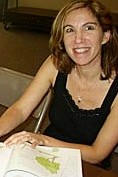 Interestingly, I don’t remember exactly when Corey Rosen Schwartz and I met, but I do remember it was after a few botched attempts on my part–forgotten dates at a local cafe. When we finally did meet, we clicked immediately. Corey was never snobbish. In fact, she’s got a charming self-deprecating personality.
Corey was indeed instrumental in helping me get my agent and my first picture book contract. I’ll let her tell you how–and how I rubbed her back…well, err, back.
The next part of our story will be on her blog later today!
 We’ve been watching a lot of Brady Bunch in our house. My four-year-old is obsessed and roams the house singing, “Here’s the story of a LONELY lady…” And yeah, I suppose Carol was a bit lonely before that man named Brady came around with three boys of his HOME (she sings that wrong, too).
So I started thinking about mixing words up. What would happen if the Brady Bunch characters mixed up the words of famous children’s books? Well, we’d have new classics like:
IF YOU GIVE A BROTHER A FOOTBALL by Marcia Brady
A LAVA LAMP IN THE ATTIC by Greg Brady
THROUGH THE GOOFY-LOOKING GLASSES by Jan Brady
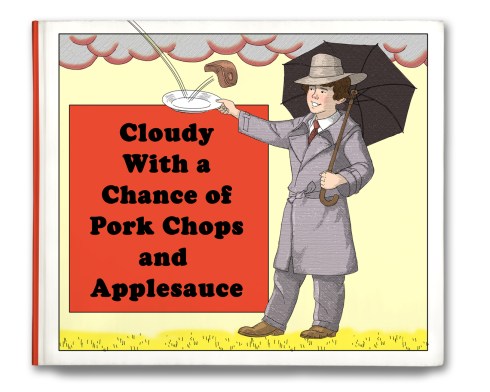 Thanks to illustrator Jed Henry for the fake book cover!
…
CLOUDY WITH A CHANCE OF PORK CHOPS AND APPLESAUCE by Peter Brady
BOBBY, PLAIN AND SHORT by Bobby Brady
FANTHY NANTHY by Cindy Brady
FROM THE MIXED-UP BLUEPRINTS OF MR. MICHAEL P. BRADY by Carol Brady
ALICE NELSON DOES MY SHIRTS by Mike Brady
SURVIVING THE BRADYS by Alice Nelson
All punny stuff aside, the Bradys can teach us about writing for children. Take the episode where Greg gets a groovy new job at Sam’s butcher shop (for a whopping $1.50 an hour!). Bobby strolls in just before closing and orders two pounds of sausage. He follows Greg to the meat locker and the door closes behind him, locking them in. Oh no! How will they get out?
All episode long, Bobby wanted to be taller, bigger. He slapped a line of masking tape on his door to measure his height, then hung on the monkey bars to stretch himself. But now his small stature saves Greg’s life (if we forget it’s Bobby who endangered Greg’s life) because he’s tiny enough to climb through the window in the meat locker door.
Before he climbs out, Bobby can’t help saying, “Sure hope I’m small enough. Gee, I never thought I’d wish I were little.”
Ugh. This ruins the moment!
The character acknowledges the lesson learned, when the audience is perfectly capable of figuring out the significance of Bobby’s great escape.
Now how does this relate to writing?
Your audience is smart. They can figure out the message of your story without being hit over the head with two pounds of sausage.
Now if you’ll excuse me, it’s time to read another Brady classic, THE PHANTOM PAY PHONE. (How did they get that thing installed in the house?)
More winners! Congratulations to the writers who have won a manuscript critique with one of the following published authors: Sudipta Bardan-Quallen, Brenda Reeves Sturgis, Corey Rosen Schwartz, Tiffany Strelitz-Haber, Lori Degman, Lori Calabrese and Linda Bozzo:
 Heather Kephart
Emma (from Australia)
Jessica Stanford
Leslie Zampetti
Peg366
Lisa Rogers
Cari Meister
Be on the lookout for an email from me with further instructions. (Please check your spam filter, as a single email was sent to all of you.)
Next up, the winners of all the glorious picture books!
 by Susan Chodakiewitz
With a background in musical theater I approach writing children’s books very much like I do writing for theater. When I visualize the story I see the pictures unraveling as scenes on the stage. Are there enough possibilities in the words to develop back story and subtext for the characters? How will my words trigger the action in the scene? Do I know my characters motivation and desires? All these issues are key element to triggering my imagination for the story.
In my picture book Too Many Visitors for One Little House there are 20 members in the family including the dog and the fish and in order to get to know the story better I worked on a back story for each character.
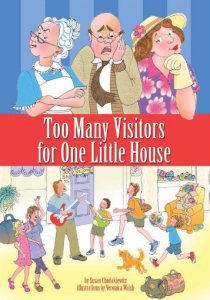 When I worked with illustrator Veronica Walsh on this book we spent hours discussing each family member in depth. What were there likes, dislikes, weaknesses? What did they love to wear? Who had squabbles with whom? Who admired whom? Which kids wanted to emulate which kids? Which kids were best friends? What were the problems between the in-laws, the married couples? Working with Veronica taught me SO much about my characters and introduced me to layers of story lines which I could eventually use for sequels to the book.
Creating the theatrical version of this book also taught me a lot about the writing process, about the characters and about what the story is really about. After finishing the theatrical version of the book I had learned so much about the story and characters that I found myself wanting to re-write the book.
Sometimes thinking about what song a character would sing on a particular page (scene) helps me discover what the character really wants, feels, and thinks. It helps me find direction to the story and makes it come alive to me.
From the get-go, the book Too Many Visitors for One Little House sang to me as a theatrical piece. From the early stages of writing my drafts I imagined the characters dancing and singing and visualized the staging of different scenes. My theatrical viewpoint is a constant guide to me during the writing process and really helps me unravel the story.
Engaging theatrically with a picture book not only benefits me as an author. I believe engaging theatrically with a book encourages a love or reading in children. After one of the performances of the book Too Many Visitors I observed several kids acting out one of the songs. The parents later emailed me that the kids asked the parents to read them the book many times that night. The next day they acted out the show with their siblings and invited guests.
I really believe this kind of theatrical engagement with a book and its characters can really encourage reading. Picture books are particularly engaging in this manner. I think by inspiring a child to act out a book can really deepen a child’s reading experience.
I am thrilled to be a picture book writer and to have the opportunity to encourage the love of reading.
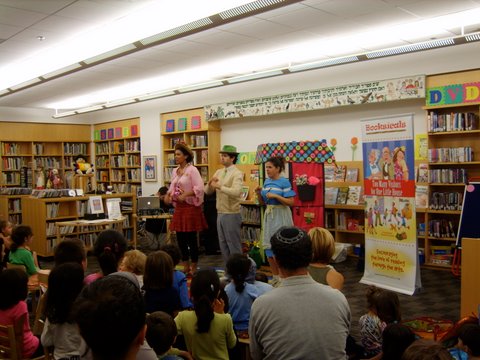
Susan Chodakiewitz is the author of Too Many Visitors for One Little House and the founder of Booksicals, Encouraging Reading Through the Arts.
 by Alyson Heller
As I dodged shoppers last Friday at my local mall, I came to realize that trying to find that next “big thing” in publishing is like to trying to find a great pair of shoes on sale—really hard to do, may cause some panic attacks, but once in a while, you will find the perfect fit.
We editors have a love/hate relationship with that “thrill of the hunt”—with every email from an agent, we hope that once we click open the attachment or email, there will be a pitch or manuscript so amazing, we will have to stop our day to read and convince our powers-to-be to let us acquire it. Most of the time, it isn’t quite what we are looking for—it might not be our taste, or in line with our house publishing strategy—but every once in a while, there is a pitch or idea that makes us pause our day.
For me, I always have that gut feeling—much like that fabulous piece of jewelry that draws your eye, I just know that I absolutely have to try to make sure that particular manuscript gets to stay with me, knowing that I would be so very bummed out if I couldn’t work on the project. There’s usually a unique hook—an idea that hasn’t been done over and over and over again—or a character that I immediately fall in love with that triggers that feeling. I also try to see if there is something timeless about the story; a book that you know readers will think is still relevant to their world 10 years from now—the little black dress of publishing, so to speak.
Of course, love for the idea isn’t enough to propel that manuscript into something that can go directly from my in-box to the local bookstore. Even though this may have caught my eye, I need to make sure that the story ultimately can fit into the overall marketplace and fit in with our list. That means a revision or two (sometimes 3!), making sure that the author shares our vision for their project, and coordinating the best PR possible for the title.
Though writing may seem like a solitary endeavor, the editing process is a team effort, and one of the great joys I have with my job. Even though it can be daunting, that chase, that knowledge that another fantastic story for kids could be sitting with me (or a member of my terrific team), is what keeps me going—and what makes this crazy, wonderful, unpredictable world of publishing so great. There’s nothing like finally seeing that finished product hit the shelves—and knowing that book will hopefully be someone’s perfect fit.
Alyson is an assistant editor with Aladdin Books, a kid-centric imprint featuring titles with strong commercial appeal for readers of all ages up to tween.
Alyson was part of the S&S Associate’s Program before landing her job with the Aladdin imprint and becoming part of a wonderful team. Alyson works on everything from picture books through middle-grade novels. She has had the privilege of working with some fantastic authors (and agents!) during her time with S&S. Some new and upcoming titles that she has edited or co-edited include Just Add Magic by Cindy Callaghan, Odd Girl In by Jo Whittemore, Sprinkles and Secrets by Lisa Schroeder, Cold Case by Julia Platt Leonard, The Monstore by Tara Lazar and I Loathe You by David Slonim.
In addition to her love for reading and writing, Alyson is also a huge fan of traveling, baking, eating things that are bad for you, awful reality t.v., and all things sparkly. She currently lives in Connecticut.
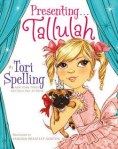
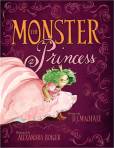
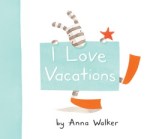
Simon & Schuster has generously donated several picture book prizes for PiBoIdMo. Winners for the titles below will be announced on December 4th, randomly selected from those who completed the 30-ideas-in-30-days challenge. Thanks to Alyson and Simon & Schuster for the prizes!






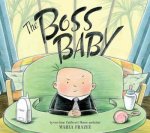
 by Mrs. P
The books we read (or someone reads to us) as children are the books we never forget. They shape us in ways we may not even recognize: how we see the world, what we believe to be true, what we think is just or unjust. We tuck their lessons away for safekeeping and bring them out—for the rest of our lives—whenever we need help understanding a frustrating situation or making a difficult decision.
You’re driving to work in the morning, going the speed limit, when someone roars by, nearly knocking your car over. You get mad, but finally calm yourself by thinking, “It’s okay. Slow and steady wins the race.” You’re probably not also thinking, I believe this because my mother read Aesop’s “The Tortoise and the Hare” to me when I was 4 years old. But I bet that’s where it came from.
The books we read as children become a part of us. Have you ever noticed how many people use characters from children’s books as names for their pets, email addresses, sometime even their own children. These characters become almost like family to us. We first met them when our imaginations made little distinction between fantasy and reality, and we’ve lived with them longer than many of our “real” friends.
When I run into someone with a dog named Scout, for example, I know we have a mutual friend in a little girl from To Kill A Mockingbird. We can talk about her and share our impressions of her just as we could a real, live person we both knew. In that sense, children’s books also give us a comforting sense of community wherever we go.
It is for all these reasons that I started MrsP.com. I could think of nothing more valuable than creating a place where kids, who might not otherwise have the chance, could hear for free and with no advertising, a storyteller read them classic children’s stories.
I’ve just released my first book, Mrs. P’s Four Favorite Fairy Tales and Funny Stories with which kids can read along with me on my website. It’s the first of its kind: a truly interactive book that will help kids improve their reading skills in a fun and easy way.
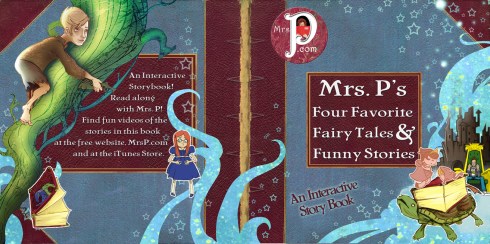
I’m proud of my website and new book, as well as my craft projects and games for kids that champion a love of books and reading. I always put a lot of thought and care into each of them before sending them into the world, because I know you should always look before you leap.
Hmm. I wonder where I learned that?
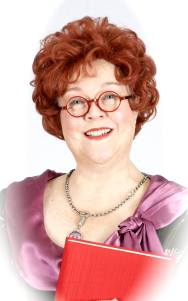
TV star Kathy Kinney (“The Drew Carey Show”), portrays Mrs. P and is also one of the creators of the website. The website endeavors to expose young people to great books and stories through a celebrity storyteller, Mrs. P. MrsP.com has no advertising and is completely free, making it a fun and educational online destination for teachers, parents and children. The site also contains interactive games, coloring sheets to download, and activity guides to accompany chapter books like Alice in Wonderland. Every story also offers read along options so children can see the words, which is helpful to early readers, and ESL students. Mrs. P is the recipient of The National Parenting Center 2009 Seal of Approval and the American Library Association distinction of “Great Website for Kids.”
OK, time’s up! Do you have 30 new picture book ideas? You do? Excellent! Time to take the PiBoIdMo pledge to qualify for one of our winny-Kinney prizes! (Sorry, there are no Jeff Kinney books to give away. I just felt like rhyming. I know, I shouldn’t rhyme.)
I do solemnly swear that I have faithfully executed
the PiBoIdMo 30-ideas-in-30-days challenge, and will,
to the best of my ability, parlay my ideas into picture book manuscripts.
Now I’m not saying all 30 ideas have to be good. Some may just be titles, some may be character quirks. Some may be problems and some may create problems when you sit down to write. Some may be high-concept and some barely a concept. But…they’re yours, all yours!
You have until December 3rd at 11:59:59PM EST to sign the pledge by leaving a comment on this post. Remember, this is an honor system pledge.You don’t have to send in your ideas to prove you’ve got 30 of them. If you say so, I’ll believe you! (But for the record, I have no interest in purchasing a bridge at this time.)
Those whose name appears on both the kick-off post AND the pledge will be entered into the grand prize drawing: feedback on your best 5 ideas by a literary agent. There are three grand prizes! Thanks to Ammi-Joan Paquette of Erin Murphy Literary Agency, Kelly Sonnack of Andrea Brown Literary Agency, Inc., and Joanna Volpe of Nancy Coffey Literary and Media Representation for volunteering their time and talent to PiBoIdMo.
Other prizes include signed picture books, manuscript critiques, jewelry and greeting cards. All winners will be randomly selected and announced on December 4th. And from now until the 4th, more guest bloggers will inspire you to develop your manuscripts.
But lucky you, you get your first prize now! This winner badge for your blog designed by James Burks:
So what are you waiting for? Start signing…
…and start writing! Thousands of children are depending on you!
 by Paula Yoo
Welcome to the final day of PiBoldMo! Congratulations! You made it! By now, hopefully you have come up with 29 fantastically fun and totally awesome ideas for future picture books. 🙂
So for Day 30, you need one more idea. Come on, you can do it!
But in case you are burned out, here’s one last idea sparker to help you make it through Day 30.
Have you ever heard of the “elevator pitch”? It’s a famous phrase used all the time in the writing industry, as well as in the business world. In a nutshell, the “elevator pitch” is how long it should take for you to tell someone what your book is about. By the time your elevator reaches your floor, you should have been able to “pitch” your book idea in that brief amount of time.
In other words, an elevator pitch should last about 30 seconds.
So look over your 29 ideas so far. Can you pitch each idea in 30 seconds?
Pretend you waiting for the elevator at the Society of Children Book Writers &Illustrators national conference. To your left stands a famous children’s book editor. The two of you engage in some small talk as you wait for the elevator. The editor learns you are a writer at the conference. Eager, he/she asks if you have written anything.
And then the elevator doors open.
Oh no! You probably have 30 seconds to pitch your amazing picture book to this editor before the elevator reaches his/her floor.
So how to craft your elevator pitch? Some tips to get you started:
1. Start with a cliffhanger “hook.”
This can be in the form of a question or a one-sentence “logline” that conveys your book’s main conflict. “What if a child loses her beloved stuffed toy animal at a laundromat and can’t tell her dad because she hasn’t learned to talk yet?” Or think of your hook in terms of theme or even a personal anecdote that relates to your book. For example: “I have the most stubborn cat who is convinced the full moon is a bowl of milk. She will do anything to reach that moon.” (Note:
Obviously I’m using “Knuffle Bunny” and “Kitten’s First Full Moon” as examples.)
2. Set up the main character and conflict.
Then launch into the heart of your story—who’s your main character? Why should we love him/her? What obstacle must they overcome in their quest? (“Trixie and Knuffle Bunny have never been separated… until now.”)
3. Leave ’em hanging. Don’t spoil the actual ending.
Conclude with an open ending—will Trixie learn how to speak before Knuffle Bunny is lost forever?
For Day 30, to get your brain ready for that final idea, why not take an hour or two to review your previous 29 ideas? See if you can “pitch” them to a friend. Sometimes I will take a friend out for coffee and pitch them some ideas I am working on to get their feedback on how clear and concise my ideas sound to them. I even have them “time” me with a stop watch!
When you are working on your elevator pitch, it will help you focus on what the heart of each book is truly about… you’ll learn quickly as to what the most important point of the book is.
Once you practice your elevator pitches for some of the 29 ideas you’ve already come up with, then try the same approach for your 30th idea. See if you can just brainstorm a fun 30th picture book idea in 30 seconds or under. You can even record yourself as you talk out loud. Or you can write them down. I’d say a written elevator pitch should be no more than one paragraph.
Make sure your elevator pitch is concise, uses clear language, and has a powerful visual image. Make sure there’s a clear hook that summarizes the main conflict and/or theme.
Good luck and congrats on reaching Day 30 of PiBoldMo!
P.S. And if you’re up for the challenge, please join me this May 1-7, 2011 for the 2nd annual NaPiboWriWee event sponsored by my website at http://paulayoo.com! NaPiBoWriWee is short for National Picture Book Writing Week where I challenge writers to write an entire picture book every day for a whole week—7 picture books in 7 days!
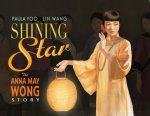 Paula Yoo is the author of the YA novel GOOD ENOUGH (HarperCollins ’08) and the children’s award-winning non-fiction picture book SHINING STAR: THE ANNA MAY WONG STORY (Lee & Low ’09) and IRA Notable SIXTEEN YEARS IN SIXTEEN SECONDS: THE SAMMY LEE STORY (Lee & Low ’08). She is also a TV writer, whose credits include THE WEST WING, TRU CALLING, and SIDE ORDER OF LIFE. She is currently a producer on The SyFy Channel’s series, EUREKA.





 Writing for Kids (While Raising Them)