You are currently browsing the category archive for the ‘Author Interview’ category.
 Ever have one of those light-bulb moments when your manuscript finally gels? Your plot falls into place and you wonder why you didn’t think of something so simple and perfect before.
Sitting in on Sudipta Bardhan Quallen’s picture book workshop last month, I had a dozen lightbulb moments. She dissected picture book structure like a biology teacher dissecting a frog–she split it wide open and showed us its heart. (OK, maybe that analogy wasn’t good for the squeamish, but she has a science background, so I think it works.)
For example, she suggested inserting a “ticking clock” into our manuscript. A deadline makes the story urgent and exciting. (Eureka!) If you’ve never heard her speak, you’re missing out on one of the finest picture book tutorials anywhere.
Besides being wicked sharp, Sudipta has a nervous energy that’s endearing. Get her engaged in conversation, and she’ll talk non-stop about her love of children’s literature. (And high heels and shopping on Bluefly. Yes, she’s a girly-girl like me.)
Surprisingly, she never dreamed of becoming a kidlit writer. She’d thought of being a doctor (but she’s afraid of blood), a model (but she likes to eat), and the President (but she had a dissolute youth). So much for childhood dreams.
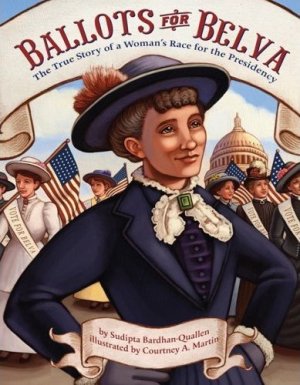 But now she’s the author of 11 picture books and 16 non-fiction books for children including The Hog Prince (Dutton), Ballots for Belva (Abrams) and Tightrope Poppy the High-Wire Pig (Sterling).
So Sudipta, if you didn’t want to be a writer, how did you get into the kidlit business?
I got pregnant twice in the span of 15 months and had to move from California (where I’d been going to grad school) to New Jersey (where a little piece of me dies every day). Like every other new mom in the world, I decided I had stories that I just had to tell my kids and so I started writing. I also had this idea that writing was totally a job I could do with two babies in the house, which was just stupid because you can’t do anything with two babies in the house.
Amen to that! I can’t do anything with two babies out of the house, either. (And by the way, I’ll let that NJ crack slide.)
When I started writing, everything was really bad. Some day, when I am super-famous, I will pull out my Alphabet book, and my going-to-the-zoo book, and all the other requisite bad stories we all write when we start. But eventually, I figured out to go to conferences and read up on the craft of writing, and I started to get things published.
How did you get your first big break?
About two months after I started writing, I wrote up a short story for Highlights. It was something that had actually happened to a friend of mine, with a bit of fictional dramatization. Highlights bought it and it was the first $200 I made writing.
 I also randomly got a foot in the door of children’s publishing by mentioning my science background in a cover letter. I’d sent a picture book manuscript to Sterling, which they rejected, but in the rejection the editor asked if I’d consider writing a science experiment book for them. That became Championship Science Fair Projects, which still sells really well for me, and a few years later, my first picture book, Tightrope Poppy, was published by the same editor.
New writers are often told not to mention irrelevant information in queries, but your science background landed you a contract. What exactly is your science background?
I graduated Caltech in 1998 with a BS in Biology (by the way, with the passage of years and my gradual failure to remember even the most basic biology concepts, BS is becoming more and more appropriate). I spent a year at Harvard, but it really wasn’t for me, and then headed back to Caltech as a PhD candidate in developmental neurobiology. But those plans went off the rails when I had two babies. I had this crazy idea that I could write with two kids in the house—which you totally cannot do—but that’s how I got into the writing-for-kids business.
Normally, I recommend that you don’t mention anything other than kidlit in your cover/query letters, but if you keep it short and sweet, you can throw some things in there. I think the line I wrote was something like: “I have a Master’s degree in Biology from the California Institute of Technology and have published several scientific articles.” That doesn’t take up so much space that it is annoying.
What has surprised you most about being a published author?
So many things have surprised me about being a published author. Hard to pick just one. So I wrote a Top Ten list. I love Top Ten Lists. Except after I start writing and realize that I only have six interesting things to say. But who’s ever heard of a Top Six list?
Top Ten surprising things about being a published author:
- That the advances are so small that after everyone has had their cut and you’ve paid all your expenses (whether it’s permissions, or research costs, or just the cost of babysitting that allowed you to write the book) you have just enough money left over to take your family out to dinner. But only if they agree to go Dutch.
- That you can’t just show up at a book store and expect them to have your book. Or believe that you are a real author.
- That there’s a 50-50 chance that the number of kids that are biologically related to you who show up for a book signing will outnumber the number of kids that are NOT biologically related to you.
- That no matter how much market research you’ve done, there’s a good possibility that there is a really similar book out there that no one has ever heard of – except the person writing the review.
- That even though the publisher picks up the tab for producing the book, all of the marketing responsibility is on you. So if you want anyone beyond your mother and your best friend to know about it, you need to get your butt in gear.
- That you know no more about writing or publishing after the contract than you did before. Even though everyone expects that you do.
- That the more successful you get and the more books you publish, the less of your writing time will actually be devoted to writing.
- That when you and a group of writing colleagues meet certain editors (who may now be agents…), no matter how many books you’ve done, the first comment he will make is, “So… you all are *moms*, huh?”
- That it is a long time before you move “real author” into the list of things you consider yourself. I still haven’t really gotten there.
- That going to a school for an author visit is as close to being Angelina Jolie as you will ever get. And it’s a pretty cool feeling.
How did you begin to bill yourself as a speaker?
I started to volunteer to speak at conferences because I wanted to teach what I had learned about the craft of writing picture books to other aspiring writers. I got a lot out of SCBWI events in New Jersey, and I wanted to give back. Also, teaching helps you learn in ways that doing does not. For example, at this year’s NJ-SCBWI annual conference, I gave a workshop about rhythm, rhyme, and repetition. I talked about using a refrain in your picture book manuscript to give it narrative structure—and it was the first time I had consciously realized that that was something I do a lot in my own writing. Having to teach it, however, was what made me conscious of it.
 Some authors say they learn something about themselves with each new book. What did writing The Hog Prince teach you?
In my workshops, I emphasize the importance of the market over and over again. I’m constantly saying that I only write what I know I can sell. But as I review my own body of work, which has finally grown large enough that I feel comfortable calling it a body of work, I notice that, within the confines of what I feel the market can bear, there are themes that I subconsciously explore time and again. And these are the themes that resonate most strongly for me.
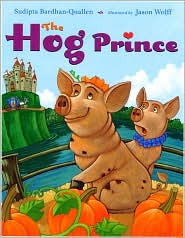
In The Hog Prince, Eldon dreams of being something he is not. He believes that if he were to change by magic, his life would be better, that everything would be shiny and pretty and luxurious and grand. And while I run the risk of coming off as having no self-esteem at all (which is not true, I have an itty-bitty bit), I can say that there have been plenty of times in my life that I have felt this way. In fact, I don’t think it is just a childhood thing–I’m not sure that we ever completely grow out of feeling like everything about our lives would be improved if only we could change ONE little thing. Except that it is never a little thing, nor is it one thing, nor will your life actually get better.
What’s nice about the story is that Eldon figures out that he is worthy and precious just the way he is, and that the folks who really matter (in his case, Petunia) don’t want him to change one muddy little thing. I struggle with this lesson, and I think a lot of kids do, too. Hopefully, that’s what makes the story timeless.
So, here is what I learned about myself:
- I sometimes wish I could change into royalty;
- I use my books to sort out emotional issues;
- I think that every story is better is you replace the main character with a pig.
You may be right there. Who doesn’t love pigs? I mean pigs in literature. Real pigs, not so much.
Thanks for the interview, Sudipta! I think I know what the blog market can bear, and although I’d love to talk to you for another thousand words, something’s telling me to wrap it up here.
More of Sudipta’s serious-yet-sassy picture book philosophies can be found on her new blog, including a picture book writer’s Ten Commandments. Thou shalt not submit a manuscript before its time…
 Ruth Spiro is my hero. She’s the only children’s book author I know who invented her own holiday. And what could be more fun than Bubble Gum Day? Celebrations are “popping up” all over the place!
Bubble Gum Day participants raise money to support schools by blowing bubbles. And, of course, they read Ruth’s hilarious picture book Lester Fizz, Bubble-Gum Artist.
Never heard of a bubble gum artist? Lester comes from a long line of artsy ancestors, but he hasn’t inherited traditional talent. One day Lester visits his Uncle Edgar, whose inspiration has waned. When Lester’s bubble bursts, Edgar’s statue gets covered in pink, donning her with a lovely tutu. Hmmm, where have I seen that ballerina before? Sure, Lester helps his uncle out, but he still hasn’t found his fine art calling.
Lester might create drab doodles and pitiful paintings, but he soon discovers his unique talent for blowing beautiful bubble art. Spiro’s clever tale offers tons of fun for kids, but it also winks at parents with spoofs of Picasso, Seurat and other masters sprinkled on its pages. Lester‘s theme is about finding your place in the world, despite what others think. In fact, it serves as a wonderful lesson for aspiring authors.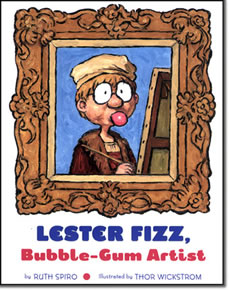 Write from the heart. Find your voice. Keep writing no matter what anyone else says.
Ruth Spiro’s journey to publication was a pretty sweet ride. Lester was her first picture book manuscript and her first sale. The story was also a winner in the 72nd Annual Writer’s Digest competition. But how did she start writing?
Ahh, glad you asked. I knew I liked Ruth’s work for a reason. In 2000, she took a class from one of my favorite picture book authors, Carolyn Crimi (The Louds Move In, Henry and the Buccaneer Bunnies). She gained a firm writing foundation and then found inspiration from her family.
One day her daughter said, “What if I could blow bubbles like that guy at the birthday party who made animals out of balloons? Wouldn’t it be cool if I could blow a bubble shaped like a dog?” With that, Lester’s story was born. And Ruth’s career took another turn.
“Once I sold my book and started selling articles to magazines, I also started receiving calls and emails from ‘friends of friends’ who were looking for advice on breaking into print. It seemed everyone had a drawer full of poems or a children’s book manuscript, but they didn’t know what steps to take next.
“I realized I was spending a lot of time putting together resources and reading other peoples’ work, so why not make it official and get paid for it?”
Ruth created the Writing for Moms program to help other women develop their craft and sell their work. Several of her students are now published authors, too.
And now the burning question: what kind of bubble gum does Ruth prefer?
“I was actually a Bazooka gal until Bubble Yum came out–so soft and sweet! While I don’t like to state a preference for a particular brand, I find Dubble Bubble is a good all-around bubblegum, and I usually have a big pink bowl filled with it at my events and signings!”
As if I needed another reason to attend her signing! Oh Ruth, you had me at “Bazooka.”
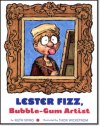 Lester Fizz, Bubble-gum Artist
Story by Ruth Spiro
Illustrations by Thor Wickstrom
Dutton Juvenile, August 2008
 Jonathan Woodward’s an artist, a nomad and a soon-to-be father. The man behind Zero2Illo.com, a blog for aspiring children’s book illustrators, Jon shares his passion for creativity and his good business sense.
Woodward grew up in Nottingham, the home of Robin Hood. (Hmm, no wonder he was drawn to children’s literature.) He was known as the “arty one” in school, the kid who would always be asked to draw the posters for school plays.
After studying Graphic Design in college, Woodward worked as an in-house designer before going freelance in 2006.
To Woodward, freelance means freedom to explore. He and his wife rented out their UK home in 2007 and have been on the road since, living in Panama, Buenos Aires, Grenada, Toronto, South Africa, Thailand, Hong Kong and Dubai. The internet makes running their marketing and design business from anywhere possible.
Jon, how do your travels influence your illustration style?
I wouldn’t say that they have directly influenced it from color or style perspective based on the different cultures that we have seen (although that is an aspect I really love about the travel), but having seen so much beautiful wildlife and nature around the world, it has definitely influenced the subject matter that I illustrate.
Tell us about some of your most recent illustrations.
One for Sorrow, Two for Joy is the piece that led to my current collage style of working. I’d been flicking through magazines and noticed how much the hair on a particular advert looked like tree bark–it was one of those light bulb moments!
The idea for the final illustration came from a song I was listening to at the time that coincidentally tied in with my idea for the tree (and my love of crows!).

The Phoenix is from a recent set of four illustrations based on mythical beasts. Here I was trying to pare down the collage to a bare minimum–to create a bolder, simpler illustration style that might be more suitable for a children’s book.
I enjoy finding textures of a particular surface that are perfect for conveying a totally different texture in the illustration. This happened with the feet of the Phoenix. I found a picture of a model wearing a sparkly bejeweled top and instantly knew that I had to use it for the feet.
This piece was done mostly in traditional collage, with just a bit of detailing, adding the white eye and pumping up the colours a little in Photoshop.
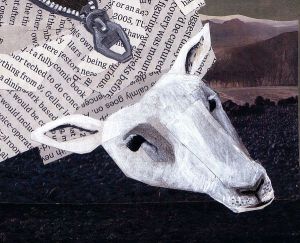

A Wolf In Sheep’s Clothing is where I first started using acrylic paint alongside the collage medium. It’s a technique born out of necessity, as I was struggling to find a magazine clipping to represent the wolf fur, so I started working into the collage with paint. I got a bit carried away in the end and ended up painting the sheep’s head and zipper on top of the collage, too.
This was an interesting piece personally, as I had previously been creating collages digitally using scanned magazine clippings, but I realized that my choice of texture ended up being a lot more interesting if I did the collage traditionally using whatever I could find within the magazines and materials I had. I don’t think I would have chosen the printed text to represent the sheep wool had I been doing the piece digitally.
Who are some of your favorite illustrators?
My illustration inspirations and interests are quite diverse, ranging from artists like Jon Foster, Dave McKean and James Jean all the way to Shaun Tan and J. Otto Seibold.
What is your ultimate goal as a children’s book illustrator?
I initially thought I wanted to go into comics or sci-fi and fantasy illustration for book covers, but the theme and content of my illustrations always seemed to gravitate back to one of my other passions: wildlife and nature. If I was only ever allowed to illustrate creatures great and small for the rest of my illustration career, I’d be a very happy man.
Thanks for sharing your wonderful artwork, Jon!
If you’re interested in learning more about the ilustration and design work of Jonathan Woodward, visit his blog Zero2Illo.com and follow him on Twitter at @jonwoodward.
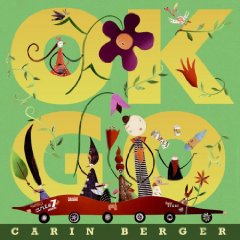 Carin Berger never deliberately set out to become an author/illustrator, but she found her true calling in picture books. She was awarded the Society of Illustrators Founder’s Award in 2006, the NY Times named The Little Yellow Leaf one of the top ten picture books of 2008, and Publishers Weekly called her “one to watch.”
And now’s a great time to watch.
Her latest title OK Go, a playful book about making greener choices, releases in bookstores today.
I had the opportunity to talk with Carin about her journey to publication (somewhat serendipitous) and her plans for the future (deliberately delightful). I shall follow PW’s lead and not only watch her, but predict the Caldecott will soon be calling.
Carin, how did you start on the path to becoming a children’s book illustrator?
I’ve always loved reading, writing, old paper stuff, children’s books, type and making things. I studied graphic design and spent almost 20 years working in the field. I worked my way down the (pay) food chain towards what I really loved: from very high-end annual reports and brochures to eventually designing book jackets for all the major publishers. I did jackets for poetry, fiction and non-fiction. I still do this and love it. I get to read manuscripts and can often use my own illustration or photography.
Anyhow, I had a daughter, and it turned out she was a sleepless wonder. (When she was little. Now she sleeps like a baby!) I spent much of most evenings hanging with her, waiting for her to fall asleep. I wrote the poems for Not So True Stories and Unreasonable Rhymes in those long hours, mostly to amuse myself.
 How did you first get involved in collage?
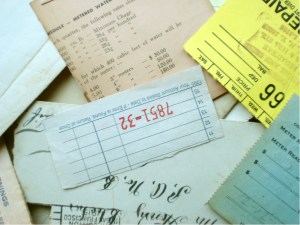
As for collage, that was kind of serendipity. I thought I would do paintings and was experimenting with different painting styles, some which included collage, and then my friend gave me a magic box full of old letters and documents and ephemera that she picked up at a flea market, knowing I had a thing for that kind of stuff. And that was the beginning.
Once I had pulled together some sample illustrations and manuscript, a friend-of-a-friend agreed to rep it; and she, amazingly, ushered it into the world.
And was Not So True Stories and Unreasonable Rhymes your first manuscript?
Yes, it was my first manuscript, though I’d written a bit, for myself, before.
 Wow. That’s a rare accomplishment and speaks volumes about your talent. Where did you go from that first success?
Not So True Stories was a quirky little book that got good reviews but sold…well, like a quirky little book. Chronicle Books graciously published my second book, All Mixed Up, another quirky and very little book. (It can fit in your pocket.)
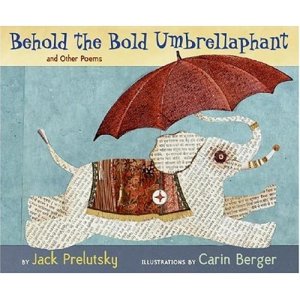
I was then called by Greenwillow Books and asked to illustrate Jack Prelutsky’s book. A real honor. And, because it was the amazing Master Jack’s book, it received lots of nice attention. He was named the first ever Children’s Poet Laureate right when the book came out which meant that there was a shiny golden sticker that went on the front of the book, too. I’ve been working with Greenwillow Books for the last couple of projects.
How has your illustration style evolved from one book to the next?
As for the collage style, it has sort of evolved in a few directions.
 All Mixed Up, a mix and match book where the heads, middles and legs (as well as the alliterative poems) combine in various ways to make new characters, was born out of the idea of collaging the collaged illustration. I had originally conceived it as a game, but Chronicle preferred to do it as a book. The illustrations are similar, yet somewhat simpler than Not so True Stories, so that the mixing worked.
For Behold the Bold Umbrellaphant, I wanted to do a slightly different style than the books that I had authored, and also, because the poems are about a conglomeration of animals and objects (such as Ballpoint Penguins), I thought it would be fun to play that up and make it really obvious.
I collect old dictionaries and army/navy catalogues that have engraved images, and so I used those images and integrated them into the collage. To do this I actually scanned engravings from the book, played with them in Photoshop, printed out pieces and used them to cut and paste with.
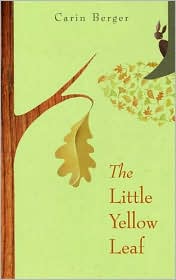 The Little Yellow Leaf felt like a really simple, nostalgic story and I ended up introducing a bit of paint (stenciling) to the collage to add another layer and also, at times, to age the paper.
Ok Go has a zillion funny little characters carousing throughout the book and feels much more like the art in the end papers of Not so True Stories and also in All Mixed Up. It was fun to change things up a bit and to do such playful art.
My next book, due out late next winter, is called Forever Friends and the art is much more similar to the art in The Little Yellow Leaf. I see it as a companion book to The Little Yellow Leaf because the bunny on the front cover and the bird on the back cover of Leaf are the characters in Forever Friends.
Your newest picture book OK Go is a playful book for the wee set, all about making greener choices. How did the concept for this book come together?
As best I can recall, it all sort of came as a whole piece. I liked the idea of introducing taking care of the environment to really young kids. I remember growing up in the 70s when “Give a Hoot, Don’t Pollute” was around and feeling very empowered to help make the world a better place. Here are some early sketches:
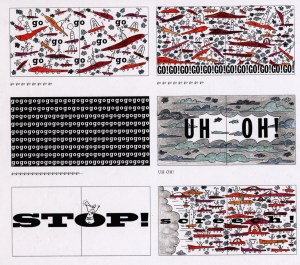
One of the biggest things I needed to figure out was how to emphasize the message in a powerful yet playful way. The gatefold came about because I wanted it to feel like a huge gathering or movement.
How do you choose which paper to cut for certain images? Does the paper speak to you?
 I have files of papers sorted by color—yellows/oranges, reds/pinks, blues/purples—and I also have files for some of my passions: polka dots, plaids, wood grain, buttons…
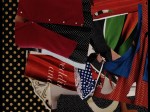 I actually cut a vellum stencil of the shape I need and hold it over the paper to find a good section. Something with good gradations for example, that help the piece, say a car, look more dimensional. Clothing catalogs are great for plaids and buttons. And then I use a variety of old stuff, both really old ephemera like letters and receipts with great calligraphy on them and also bits and pieces that I find around: ticket stubs, laundry tags, etc.
Do the words on the paper hold any significance?
I do think about the paper I use, where it comes from and what it says. Not in a huge way, but in a quiet, just-to-amuse-myself sort of way. And in almost every book I make sure to include, somewhere, my daughter’s name, Thea. In The Little Yellow Leaf it appears on the page with the giant sun, and in OK Go I use her name and the names and initials of lots of friends to decorate the cars.
Speaking of the glorious sun in The Little Yellow Leaf, do you have any idea how many pieces of paper you used? Or how long it took to create that page?

I always knew what I wanted to do with that illustration, but it took a little longer (well, w-a-y longer) than I thought it would. I spent probably close to a week on it. Actually, part of the reason it took so long is that I started from the outside and was working my way towards the center and I got pretty far before I realized that, because the sun is asymmetrical, it wasn’t going to work. I had to add another layer working from the center out. Ugh!
I have absolutely no idea how many pieces there are, and I can’t imagine anyone who would be nuts enough to count (though I’d be curious to know that)!
Circling back to your newest book, what kind of impact do you hope OK Go will have on green thinking among parents and young children?
There are some very simple things that kids can do to be more green and they are listed in the back of the book.
I think if you plant the idea early, children will live more careful, aware lives, and remind their parents to do so as well. Plus, what is more motivating than our kids to get us to take care of this planet and the environment?
But mostly I want kids to have fun with the book, and to be introduced these ideas in a playful, engaging way.
One last thought: all of my art is made with found and recycled materials, so maybe this will prove inspiring and enabling, too.
Indeed it is, Carin! So let’s use that inspiration for a contest!
Kids age 10 and under, create a collage with a green theme–reduce, reuse, recycle or whatever you can dream up! Email your illustration to tarawrites at yahoo (you know the rest, dot com) and include child’s first name and age.
With the help of Random.org, we’ll randomly select three winners.
The grand prize winner gets an autographed copy of OK Go. The second and third winners will receive an All Mixed Up promotional mini-book. And all three illustrations will be featured on Carin Berger’s website and/or blog.
In your email, be sure to grant your permission for sharing the illustration and the child’s first name/age online.
One illustration per child. Enter now through midnight E.S.T., Tuesday, May 12.
Carin, thank you for giving us a glimpse into your beautiful world! I bet everyone is going to GO! GO! GO! get your book today!

Take a peek inside OK Go or
Find OK Go at your local bookstore!
OK Go by Carin Berger
April 2009
Greenwillow Books
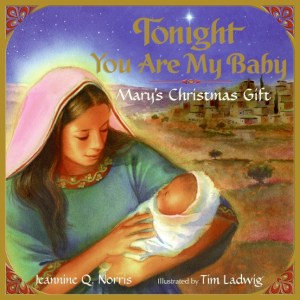 I had the pleasure of meeting author Jeannine Norris at a recent NJ-SCBWI mentoring workshop. One of the organizers, Kathy Temean, held up a copy of Tonight You Are My Baby and pointed to Jeannine, the author, sitting right behind me. Kathy told us that Jeannine had met her editor at a previous NJ-SCBWI event. Amazing! I immediately knew I had to talk to Jeannine about her path to publication.
Jeannine, how long have you been writing?
I have been writing for about four years. I dabbled in writing when our children were babies, as I missed the creative stimulation of my former job. I really started to write when our youngest went to pre-K.
Where did the inspiration for Tonight You Are My Baby come from?
The inspiration came when our daughter, Quinn, who was four years old at the time, was diagnosed with a brain tumor. As a mother, I needed the strength to help our daughter get through this difficult journey. I started to think about Mary, as the mother of Jesus, and her incredible strength. I decided to write about the Nativity, from a mother’s perspective, and, if the book was published, donate part of the proceeds to helping kids with brain tumors. Quinn’s tumor was benign, and next year will be her five-year celebration! We started a foundation, At Least Kids, that contributes to pediatric brain tumor research at Children’s Hospital of Philadelphia and supports families struggling financially. A portion of each book sold is donated directly to At Least Kids.
What a scary time for you as a parent, but what a blessed outcome—a healthy child, a beautiful book and a charitable foundation.
You met your editor at a writer’s event here in New Jersey. Can you tell us how the deal transpired?
I met my lovely editor, Catherine Onder, at a NJ-SCBWI mentoring workshop. Catherine heard Tonight You Are My Baby during the first page session. Another editor asked to see the rest of the manuscript, but it was eventually declined. Several months later, I met Catherine at another NJ-SCBWI workshop (with another manuscript) and she remembered the first page of Tonight You Are My Baby. She asked to see the rest of the manuscript and several months later it was acquired. I couldn’t have been happier! The right time, the right place, a great editor. I’m a huge cheerleader for SCBWI events. Opportunities abound!
I love NJ-SCBWI, too!
After your book was acquired, what was the editing process like?
The editing process was fascinating! I needed to add a few stanzas, when Tim Ladwig, the illustrator, started working on the book. Catherine helped me with the revisions as well. I have to say, I love revising, as my book became so much better! Revisions and rhyme are always a challenge—often it means changing the entire line, instead of just a word. Catherine pointed out that I had used the word “quiet” several times in my manuscript. Not a good idea when you are only dealing with 400-500 words! I hadn’t even noticed. When I do my school visits, I always tell the students about my revisions. A good editor is like a good teacher—encouraging, has a vision, and wants your work to be its best. Kids are always surprised that even authors make many revisions.
Interesting–how many times had you repeated “quiet”?
I think I had repeated “quiet” three times!
I suspect that many writers have a “crutch” word or phrase in a manuscript that we just don’t notice. Yours was “quiet.” Mine is “just.” (See?) It takes a good editor to point that out!
Why the need to add the stanzas? Was it because of the illustration spread count? Or did Tim add a drawing you hadn’t envisioned?
We added three stanzas because when Tim started to draw the story arc, we wanted Mary first traveling to Bethlehem and meeting Jesus several pages in. Naturally, the book is about a mother and her baby, but we needed additional stanzas to add other images: the angels trumpeting, the sheep/cows/donkey in the stable, the wise men bringing gifts. All those stanzas were added during revisions. As it happens, the angels trumpeting is my favorite illustration! It’s not what I imagined, and I love it! Tim was so creative. The rest of the illustrations are what I saw in my mind’s eye when I was writing. Tim really “got it”—Mary is very young, completely accessible and a joyous mother.
What has surprised you most about being a published author?
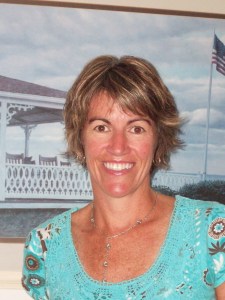 My big surprise was—I didn’t really have any big suprises! The tremendous benefit of using the SCBWI and Verla Kay discussion boards is using the experiences of other authors to make the path easier. I am hugely indebted to those who have traveled this literary path before me! Through the discussion boards and workshops, I felt really well-prepared. Any of my questions were answered: simple questions such as “How do I make postcards?” to more complicated questions dealing with contracts. One pleasant surprise was that all of my school visits were wonderful. Each one was gracious, organized, prepared AND I sold a lot of books! Again, I learned how to prepare pre-order forms, write school contracts and even develop a PowerPoint presentation through the experiences of others. There is much to be learned, but a wealth of information is readily available.
What other advice do you have for aspiring children’s authors?
I would urge writers to join a critique group—or start one of their own! I belong to an online group and a local group. I met both of these groups through SCBWI conferences. Critique groups have so much to add! My groups provide me with valuable, honest comments and help prepare my manuscript for an editor’s eyes. I would also suggest aspiring authors gain writing credits through magazine articles, local publications and online sites. The extra income is nice, too! Attend every SCBWI workshop/conference you can afford. I’ve had an SCBWI workshop on my birthday list for the past several years! If your manuscript is acquired, be prepared to market yourself–heavily. The debut author MUST knock on doors, visit schools, call the bookstores, have a website, ask for interviews. This is your opportunity! Finally, have fun. Write what will bring you to your desk each day with a smile on your face.
That’s excellent advice, thank you, Jeannine.
Although Tonight You Are My Baby is about the birth of baby Jesus, a celebration of Christmas, what makes it a relevant read throughout the entire year?
Tonight You Are My Baby is really a celebration of a mother’s love. It’s about the boundless joy that every new mom experiences. The knowledge that a baby’s birth is truly a miracle—a gift unto itself. Tonight You Are My Baby is a celebration of Christmas, but it’s also a celebration of a mother’s heart. The book is certainly most popular at Christmas, but I find many people buying it for other occasions: new baby presents, baby showers, birthdays, etc. Mothers and little ones snuggle as they read of the love story that took place long ago.
Extra cuddle time: a wonderful reason for everyone to pick up this glorious book. Congratulations and thank you for sharing your journey to publication with us!
 Tonight You Are My Baby
Story by Jeannine Norris
Illustrations by Tim Ladwig
HarperCollins, September 2008
Check it out!
 Publishing a book can be an adventure, and that’s especially true for Christine and Ethan Rose. Authors of Rowan of the Wood, the husband-and-wife team take to the road in their “Geekalicious Gypsy Caravan” to promote their book.
Released with Austin-based Dalton Publishing last November, Rowan of the Wood became a finalist in USA Book News’ National Book Award for Young Adult Fiction. Even with this recognition, Christine and Ethan knew they would have to take on much of the promotion responsibilites for the book to get noticed.
“We knew that promoting both on and offline was essential in getting our book ‘out there.’ First time authors, especially with a small, independent publisher, have a difficult time getting into bookstores. By visiting bookstores for signings, it forces books onto the shelves and creates an interesting event. We get to go out and talk to our readers face-to-face, so it establishes a connection that we hope will last throughout the series.”
Their first tour lasted three weeks as they visited Louisiana, Texas and Florida, appearing at Renaissance Faires and Celtic Festivals on weekends and at bookstores during the week. Their next planned tour, May to July, will feature stops from Mississippi to Missouri with eight weekend events and 20 bookstores on the schedule. They’re also adding libraries to the intinerary and will tell tales in the ancient Bardic Tradition, with a lyre that Ethan crafted. Ambitious? You bet. These folks are passionate about their book–and promoting it.
I asked Christine about the best part of being on tour.
“The best experience is just being on the road! I guess the highlight is when a guy stopped us in a Safeway parking lot (because of the Gypsy Caravan) and bought a book. Another highlight was when we totally sold out of books!”
I was curious about their travels, so Christine offered a tour of the Geekalicious Gypsy Caravan:
Here’s the video on How to Make a Geekalicious Gypsy Caravan with cover artist Ia Layadi. The first coat of green paint peeled right off, and one of the signs printed too short, so lessons were learned along the way.
Indeed, publishing a book can be an adventure. Never were it more true for the Roses. They are a small publisher’s dream come true–artists who are as creative with promotion as they are with their stories.
You can find the Rowan of the Wood intinerary at BookTour.com. Follow Christine on Twitter, or check out her videos from the road by subscribing to her YouTube channel.
 I love picture books with a touch of magic, so I was thrilled to speak with Patricia Storms, illustrator of the whimsical Edward and the Eureka Lucky Wish Company by Barbara Todd. Edward wishes he could fly, and by chance he gets three wishes–but he doesn’t use them wisely.
What a fun challenge to illustrate the Skyhopper 2000, a flying bike! Patricia, how did you land the contract to work on this book?
I’ve been very fortunate when it comes to getting book illustration jobs. Most of the time, publishers have approached me. If memory serves me correctly with the Eureka book, I had sent off a pamphlet of my recent work to various publishers in North America, and as luck would have it, Kids Can Press just happened to be looking for a humorous illustrator for this project. I believe they had been considering my work, since they were already familiar with my art (it’s a small world in Canadian publishing). My portfolio pamphlet just helped to seal the deal.
How did you get started illustrating children’s books?
Well, it was a very slow process for me. I always enjoyed drawing (especially cartoons) and took art all through high school, but for various reason (fear of failure being the big one) I initially took a different path, and studied to work in libraries instead (being a bibliophile and all, and settling for more ‘secure’ work).
But I continued to draw when I could, and slowly started selling art on the side, while working full-time in libraries. I ended up working for the Toronto Public Library cataloguing of all things–children’s books! That’s when I started dreaming about how it would be so much more enjoyable to illustrate the books, rather than catalogue them. Eventually in my mid-30s I went back to school and became a graphic designer, still selling the cartoon/humor work on the side.
About 6 years ago my freelance work really started to increase, mainly because I began putting my work online. My first few picture book illustration jobs were work-for-hire jobs, doing illustrations for the educational kid’s book market. In all those cases, I was approached by the publishers. I enjoyed doing the educational illustration but I really wanted to get into trade book illustration, because I knew I would have a much wider audience.
My first trade illustrated book was 13 Ghosts of Halloween, published by Scholastic Canada. Once again, they approached me. My upcoming illustrated picture book, The Pirate and the Penguin, which is completely my creation, will be my third trade picture book, and I hope I can do more in the future.
This job, more than anything else I have ever done, feels so right for me. Because for me, it’s not just a job. It is who I am. I view myself as a bit of a ‘late bloomer’ in this field. I still feel like a newbie in the kid’s book industry – there are many people my age (45) who have been doing it for 20 years or more. I have so much to learn. I hope I can continue to learn and grow in this industry, if the gods will allow it.
 What is the biggest challenge when translating someone else’s words into pictures? How much input does the editor have? Do you ever speak directly with the author?
I guess finding that perfect balance in which the editor and author are happy, but also where I get to add my own personal flavor without completely taking over the story…yet at the same time, where I’m not just being a “hired hand” doing grunt work.
How much input the editor has in developing the art for the story really depends upon the publisher and editor with whom you are working. Some editors will give some basic guidelines and then just let you fly, while others are much more hands-on, giving lots of direction and feedback. It’s never been the exact same experience for me.
The only time I’ve spoken directly with the author is when I have been illustrating the story written by me. It’s actually kind of hard to get away from myself. 😉
Generally, editors prefer to keep the author and the illustrator apart until the project is done. I’m not entirely sure of the reasons for doing this, but I suspect it is because they fear a) the author and illustrator will conspire together to give the editor and publisher grief or b) the author and illustrator will hate each other with a passion and disagree on everything and kill each other thus giving the editor and publisher grief.
It’s a tough, time-consuming (and expensive!) job creating a picture book so the last thing anyone working on the project needs is any added emotional stress.
The way I understand the process is that once the story has been accepted, the editor will work with the author to fine-tune the words, and then when the story is pretty much polished, that’s when the artist comes in to illustrate said words. By this point, the editor and art director work together to communicate with the illustrator concepts for the vision of the story, and of course the illustrator provides feedback, too. The script may still get edited a bit at this point, because once the pictures come into the equation, one discovers that very often the images can take the place of any extraneous words.
Once rough sketches are satisfactory for the editor and art director, they are shown to the author, just to make sure that the author doesn’t totally hate the artist’s vision. I’m pretty sure that if the author really were upset with the art, that something would have to be done, but once again, it all depends upon the publisher working on the project.
I only met the authors of my first two trade picture books AFTER the books were complete. Thankfully, both authors were happy with the final product. I do find it a stressful, worrisome experience, wondering whether or not the author is happy with my art. But I am a bit of a neurotic worry-wart, so I tend to let these things eat away at me.
 How and when did you make the decision to morph from illustrator to author-illustrator? Can you tell us about The Pirate and the Penguin, your first book as both author and artist?
Well, I’ve always enjoyed writing as well as drawing. As a kid I wrote and illustrated many comic strips, some of which were quite detailed, chock full of numerous characters. English and Art were my two favorite subjects all through school, and well, they still are! I think as soon as I realized that it was possible for me to get work in children’s book illustration, I knew in the back of my mind that I would eventually want to write my own stories. A lot of this stuff has been bouncing around in my head for a long time, and I really needed to let it out! That’s one of the reasons I started a blog a little over 4 years ago.
I became more determined about becoming an author/illustrator about two years ago. I began reading a lot online and in books about writing picture books, and of course, I read lots and lots of picture books that I brought home from the library. Around this time I joined an online critique group which was very helpful. Then about a year ago I took a “writing for children” course, which was also very helpful in teaching me about what worked in my writing, and what didn’t. During this time I would meet up with a wonderful writer friend of mine, Liam O’Donnell, from time to time. He writes pictures books and graphic novels and he’s just a really cool guy.
I was in one of my crabby moods, and I was kvetching to Liam about how tough it is to get published in the kid’s book biz. I made a flippant comment to him, something to the effect of, “If someone really wanted to cash in on two popular icons in kid’s books, they would write a story about a pirate and a penguin!”
Liam, being much smarter than me, actually thought it was a cool idea for a story, and urged me to write this crazy idea. I didn’t follow up on his suggestion right away, but every now and then he’d ask me “how’s that Pirate and Penguin story going?” So I figured I’d better do something.
When I finally thought of the story idea, I thought it was just too silly, but I mentioned it to Liam, and he loved it, and encouraged me to pursue it. So I did. And that’s how my upcoming picture book The Pirate and the Penguin came to be.
Of course it’s a fun story, because pretty much everything I write and draw is somehow touched by my wacky sense of humor. It’s a silly version of the classic The Prince and the Pauper, except that it involved a Penguin who hates the South Pole and a Pirate who can’t stand life on a pirate ship in the Caribbean. When they meet, lots of interesting stuff happens! And that’s all I’m going to say about the story for now, other than to say that I owe so much to Liam O’Donnell, and I’m eternally grateful to him for his guidance and encouragement.
There are many factors that come to play in getting published–knowledge, talent, perseverance, luck and patience. But it sure doesn’t hurt to have friends who are right there behind you, pushing you, rooting for you, and guiding you towards your dream.
That’s terrific advice! Thanks, Stormsy! (You don’t mind if I call you Stormsy, do you? No? Thanks.)
 Patricia is generously giving away an autographed copy of Edward and the Eureka Lucky Wish Company!
Please leave a comment to be entered into the drawing.
Blog or Tweet about the interview and get another two entries–just let me know here or on Twitter. Winner will be picked by Random.org one week from today! Good luck!
 Tammi Sauer is the author of Cowboy Camp, a knee-slappin’, whip-snappin’, giddyup of a picture book.
I predict you’re going to be hearing a lot about Tammi soon. With several gotta-read-’em titles on the way–including Chicken Dance, Mostly Monsterly and Princess-in-Training–we can all say we knew her when!
Tammi is moseyin’ over to my blog today to talk about her trail ride from writer to published author.
Tammi, how did Cowboy Camp gallop from your desk to the bookshelves?
Cowboy Camp didn’t start at my desk, it started on my front porch.
One evening, there was an unexpected knock at the door. I opened it and was greeted by a young boy. He was selling newspaper subscriptions in an effort to go to…COWBOY CAMP. I looked at this kid with his everywhere hair and thick glasses and uncowboy-like everything and knew I had a story.
I wrote the manuscript, revised it, and sent it out in under a week—my fastest ever. Early on, Cowboy Camp made its way to three acquisitions meetings. Oh, the joy. But each time the manuscript was returned to me with regret. Oh, the agony. Many personal rejections rolled in as well. Then I discovered a house that was just starting up a picture book line. I thought, “Maybe this is it!”
I sent Cowboy Camp to Sterling Publishing. Within two weeks, I learned the manuscript was going to acquisitions. Shortly thereafter, the editor emailed and told me the acquisitions team loved the manuscript, but the house wanted to find the perfect illustrator before offering me a contract. Yes, more joy. More agony.
Months went by. I decided to send Cowboy Camp to SmartWriter’s first W.I.N.! (Write It Now!) Competition. Cowboy Camp ended up placing second in the picture book division out of more than 400 entries. I shared the news with my editor contact at Sterling. Within weeks, I had an offer. Yee-haw!
You said Cowboy Camp was your “fastest ever.” How many picture book manuscripts did you write before Cowboy Camp? Are any of those slated for publication?
I’m not sure how many picture book manuscripts came before Cowboy Camp. Maybe four or five? I do know that they were collectively awful. I consider them my “practice manuscripts.” And ha! No, none of those early works are slated for publication.
So how long had you been writing for children when you got the contract for Cowboy Camp?
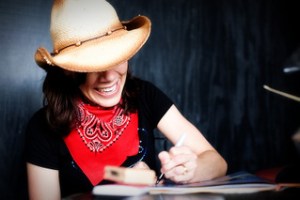 In 2000, I started toying with the idea of writing children’s books (this meant I would write for a couple of hours one day and not write another word for the next, oh, ten months or so). I didn’t get serious about writing children’s books until the spring of 2003 when an illustrator paid a visit to my daughter’s preschool. Seeing a real live person who was involved in the creation of children’s books was the push I needed to make writing a priority in my life. I received Cowboy Camp’s offer the following year.
You have five books slated for release. Do you have an agent now, or are you continuing to submit on your own?
I have an agent. In August of 2005, after much agent research, I sent Laura Rennert at Andrea Brown Literary Agency a query for a humorous, contemporary teen novel. It wasn’t long before she asked for the manuscript. The next thing I knew, she wanted to call me. Eek! Fortunately, a miracle occurred and the phone call went well…so well in fact that I KNEW I found the right match for me and my work.
Around the time that I signed, my PB writing started to take off. And that teen novel of mine? It was getting revision request after revision request after revision request to infinity. I made the decision to put the novel on hold and focus on what I loved and did best–PBs. Laura fully supported me on my decision.
You obviously have the talent to succeed in novels. How did you come to the realization that you were a PB-writer at heart? Do you think you’ll ever go back to that YA novel?
PBs just felt more right.
I don’t think I will ever go back to that novel. There was a lot that I loved in that manuscript (the characters, the humor, the voice). But one day it occurred to me that if I was going to have a novel Out There, I’d want it to be someone’s favorite. I would want others to feel about my book the same way I had felt when I read A Crooked Kind of Perfect by Linda Urban. My manuscript was nice, but it didn’t have that kind of wow factor.
What do you love most about writing picture books? Is there a particularly satisfying challenge? Are you thrilled to see your words come to life through each illustrator’s interpretation?
I can’t think of the one thing I love most. Coming up with a good idea is awesome. So is finding the perfect word, creating just the right story arc, and discovering new ways to build heart and humor into a manuscript.
As for satisfying challenges? I would have to say getting the “Yeah, baby!” from my critique partner Cynthea Liu is one of the hardest things to come by and therefore one of the most satisfying of challenges. The “Yeah, baby!” is what we give one another when a manuscript is decidedly brilliant and ready to be sent agent-ward. Believe me, getting the coveted “Yeah, baby!” is worthy of fanfare.
 It has been a real thrill to see my words come to life through each illustrator’s interpretation. In Chicken Dance, Dan Santat created an Elvis Poultry that absolutely floored me. I recently received Scott Magoon’s sketches for Mostly Monsterly and I was equally amazed. Scott’s take on the main character and her story was better than I had ever imagined. I feel honored to be working with such talented people.
One way for children’s authors to promote their books is with school visits. You just got back from a school visit in Texas. Can you tell us about that? What is a typical Tammi Sauer visit like for the students?
I absolutely love doing school visits–especially when schools work hard to make the day an event. On my web site, I list some tips for a successful school visit and Holliday Elementary certainly made the most of it. The kids–as well as some of the faculty and staff–gussied up in their best cowboy and cowgirl gear. Cowboy grub was served. Stick horse races took place in the gym. Bandana-wrapped trail mix was passed out. A guess-the-number-of-beans contest was held in the library media center… It was truly a cowboy-themed day.
I always strive to make my school visits fun, engaging, and informative. I offer a lot of opportunities for audience participation, perform a couple of magic tricks and/or an impromptu theater experience, and do what I can to really connect with the kids. Creating a memorable and meaningful experience for students is my top goal.
Yee-haw, honey! That sounds like a rootin’-tootin’ good time!
Once your picture book is accepted, the publisher has to find an illustrator. How much input do you give your editor regarding illustrator choice?
Some houses ask for illustrator input. Some don’t. I was thrilled when my editor at Simon & Schuster asked me for an Illustrator Wish List. So fun! One of the names at the very top of my list was Scott Magoon. I was astounded when Scott signed on for Mostly Monsterly. Total writerly dream come true!
I am happy to say I have formed good email relationships with Dan Santat and Scott Magoon. They are both so funny and brilliant and beyond what I had ever hoped for as partners for my books.
How do you stand the wait until your book is released? Most picture books take 1-2 years to hit the shelves!
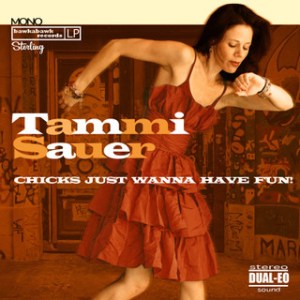 I WISH it only took 1-2 years! Chicken Dance will hit the shelves three years after I received the offer. Mostly Monsterly debuts two and a half years post-offer. The waiting is pretty horrible–especially since I am not a patient person. At all.
But, wow, when little bits of news trickle in—like finding out who will illustrate an upcoming book or receiving preliminary sketches or seeing the final art for the first time–it makes for some really nice moments along the way.
Tammi, thanks for sharing your story. Before you ride off into the sunset, what’s your best piece of advice for aspiring picture book authors?
My best piece of advice for new writers who dream of becoming published picture book authors is to read–and study!–as many picture books as possible. Knowing picture books inside and out–their feel, their rhythm, their language–is the very first step in creating quality picture books of their own.
OK, cowpokes! You heard Tammi! Now get on back on yer saddle! Read and write!
And don’t forget to visit Tammi’s blog! You can order Cowboy Camp or pre-order Chicken Dance via Amazon.
 February is over, but fear not, kidlit lovers!
“Love a KidLit Author Month” will continue through March.
That means more interviews with children’s authors and illustrators, both new and established…
…and more chances to win autographed books…
…and don’t forget that gift certificate when the series is done! So remember to leave a comment to be entered!
While you wait, please go vote in Fuse #8’s Top 100 Picture Books poll! Choose your 10 favorites of all time. Deadline is March 31! Go vote now!
 I met author-illustrator Steve Ouch on Twitter several weeks ago and was immediately impressed by his 5,000 followers. (Which has now topped 10,000.) Just who is this guy? Why had I never heard of his book SteamPotVille?
The easy answer is that Steve wrote, illustrated, and published SteamPotVille himself. And now he’s a one-man marketing juggernaut, making connections with parents, teachers and fellow writers through social media.
Smart? You bet. His book, released in early January, already garnered 19 five-star reviews on Amazon. The word-of-mouth is spreading…and spreading fast.
Fascinated by his approach, I had to learn more about Steve and his creation.
SteamPotVille is a topsy-turvy romp through a fantastical dreamland. The illustrations feature animals in impossible situations–a lion riding a pony, a monkey swinging from a straw–created by photomontage. Steve, one has to wonder, what came first? The pictures or the text?
The text came first. Just as in the development of a movie, I changed some of the script as images came to life. Each page has about 150 hours of illustration time. When you spend that much time on one piece, the characters start their improvisations. Adjusting the text to express this phenomena makes the book a better read. That’s a flexibility that comes with being the author and the illustrator.
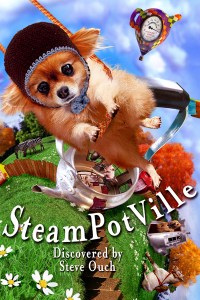 Wow! 150 hours! Truly a labor of love. And that shows not only through your elaborate, whimsical illustrations, but in the way you’re marketing SteamPotVille via social media.
Can you tell us why you decided to release your book as an independent title? Did you have a viral marketing campaign in mind all along?
I did a logic problem and this is what I discovered:
a. I shouldn’t spend all my time looking for an agent and a publisher when I could be trying to make money selling books.
b. By enacting my own campaign and getting the book viewed, I’m doing a service to a publisher by testing how the product will be received on the market.
c. Once SteamPotVille is established then I can meet with publishers for wider/deeper distribution. I like the idea of getting things done. It’s really taxing to forge new paths all the time, but that’s life. As far as a viral campaign: I don’t see it as a campaign but more of an ongoing experiment.
And you’re definitely getting things done. How did you attract so many Twitter followers? What other kind of online promotion have you been involved in?
 Twitter is parallel to human society. All of the general rules of socializing apply to this medium, so I get out there and socialize. The more I do it, the more popular I become.
Online I’m trying to get in the Guinness Book of World Records for the most cousins on FaceBook (add me as a friend and I will make you my cousin). That’s a slow and long term promotion. The other promotions happening at the moment are my inefficiency campaign and sending bottles of the Internet to people who can’t get access.
Ha! And let’s not forget about blog interviews!
Some may call you brilliant and yet others might be cynical about your publisher-come-to-Mohammed approach. What do you have to say to the skeptics?
:chuckle: I wonder if Mohammad had a hard time finding a publisher? That would be a fun story.
I never place judgment on what others choose to do for themselves. Each of us have our own path to go down. I am not saying that mine is the best nor is it right. I am just doing what seems to be right for me for the time. Whether it works to deliver SteamPotVille in the right hands will be like a bad mini-series (to be continued). For now though, I am enjoying the opportunities to chit-chat with people like you and that makes me happy enough.
Thanks, Steve. No wonder you’re so popular!
Can you tell us a little about your photomontage process? How do you start illustrating a spread? Do you make a rough sketch first, or does it all come together on the computer screen?
I spend time breaking apart a scene I have developed in my head, then I rough it out on paper. Next, I take pictures and apply them to the layout on my Mac, over and over, until I feel like the image is strong enough to stand on its own.
Are you working on another book now?
I finished writing my next work. I hope to get started on the montage at the end of the year.
Have you approached traditional booksellers about carrying your title? Will be you making any appearances to promote your book?
I have yet to approach any traditional booksellers, know any buyers? Speaking of, anyone who would like to get my book into any store or chain, I would offer a commission of the sale.
I plan on doing a book tour this summer/fall! If it happens, it will be pretty interactive from a web perspective. 😉
What advice do you have for other authors who are interested in publishing and marketing their own title? Is there anything you know now that you wish you knew when you started?
I would advise anyone who is going to setup their book “indie style” to begin marketing your book before you are done. I wish I knew that one.
I think that’s good advice for any author. Thanks, Steve! Good luck with your books!
Check out SteamPotVille and follow Steve Ouch on Twitter for his book updates.





 Writing for Kids (While Raising Them)