You are currently browsing the category archive for the ‘Author Interview’ category.
Before we talk cumulative tales with guest author Brenda Reeves Sturgis, it’s time for a little blog business. The winner of EXTRAORDINARY WARREN is:
SUSAN CABAEL!
Congratulations…and be on the lookout for an email from me.
Now let’s get to a LOON-y interview with Brenda…

Your newest book, THE LAKE WHERE LOON LIVES, is a cumulative tale (like The Old Woman Who Swallowed a Fly), where each new scene builds upon the previous ones, all repeated in the text. What inspired you to write a cumulative picture book…and what special considerations does a writer have when writing such a story?
I didn’t set out to write a cumulative tale, but just set out to write what I heard in my head and in my heart.
I live on a lovely little lake in Maine and I am always elated when the loons come back to the lake in the spring. Their haunting hoots and wicked wails always leave me breathless wanting to hear more, and so when the story came to me as a gift in the middle of the night (which is my usual writing time). I just began writing, and writing and writing and what appeared was THE LAKE WHERE LOON LIVES.
In a cumulative story, each line builds and stacks on the previous sentence, and loon is written in rhyme so that made it even more challenging because every time I changed a word, the story would start to crumble and I would have to rewrite not only the sentence that I was revising but also all of the sentences before it, so that I would keep the right rhythm and meter.
I wanted to depict what a day in the life of a loon might be like, so I put in chicks, a fly, a fish that would snap at the fly, a boy on a dock that would give fishing a try, a cast, a struggle, and a splash and a swish, and then after a HUGE RUCKUS, the story starts to unwind where Mama Loon finds the SPOT on the lake that she loves best. She tucks her chicks in tight, and just like all loving Mamas do, she reads her babies a goodnight story before she settles in with a nice cup of tea by her campfire.

Little did I know when I wrote it that the illustrator would illustrate LOON so totally different than I had pictured, and I am so very glad that she did. Because in this loon story mama loon LOVES to waterski, she is daubed white and black because her chicks used her as a canvas with Loon White waterproof paint. I think the illustrator, Brooke Carton did a fabulous job with her loose illustrations which compliment the tight text very nicely.
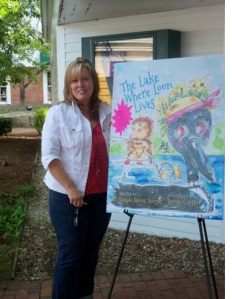 I hope your readers will enjoy reading THE LAKE WHERE LOON LIVES as much as I enjoyed writing it. Islandport Press has been wonderful to work with, and they had a book launch for LOON at The Maine Audubon Society in May, and I’ve been busy with signings and events almost every weekend since.
Why are cumulative tales beneficial for young children?
Cumulative stories teach word repetition and children therefore know what to expect in the story, which then helps them learn languague and pick out familiar words. This enhances their reading abilities, making for a stronger student and a more confident learner. A cumulative story is a perfect tool to teach a reluctant reader.
Tell us about Islandport Press. How did you find them and why was this story such a good fit for their list?
I’d heard about Islandport for years, and when I started researching their books I saw that they were Maine-and-New-England-themed, so on a whim, I submitted to them on my own, then sent an e-mail to my agent Karen Grencik saying, “By the way, I submitted to Islandport!” She answered back, “GREAT, fingers crossed!”
I got the acceptance e-mail while sitting in the Biddeford Library. I went outside, sat on the curb and cried, because up until that point, I didn’t know if I got published on a fluke, or if I had any kind of talent or chance at another book at all. It was a wonderful process, and I am so grateful to Dean Lunt the publisher, and Melissa Kim my editor. They have an amazing marketing staff, they are kind and thoughtful and amazing to their authors!
Also, on the back of LOON, something I am most proud of is a nice blurb by author Chris VanDusen.
What’s next for you, Brenda?
TOUCHDOWN, after 7 years, after winning Smart Writers, after being rejected 50 times (not once because of the writing but because of the marketing “hook”) has become a finalist for the MeeGenius Author Challenge, and whoever wins will be awarded $1500.00.
Good luck, Brenda! And thanks for giving away a copy of LOON to our blog readers.
Comment below by August 29th or a chance to win! And feel free to ask Brenda questions about cumulative stories or her work.
***UPDATE 12/21/13: I’m thrilled to report that CHALKY has been fully funded! Congratulations to the gentlemen of Little Thunder Co., Jordan Henderson and Kyle Steed.***
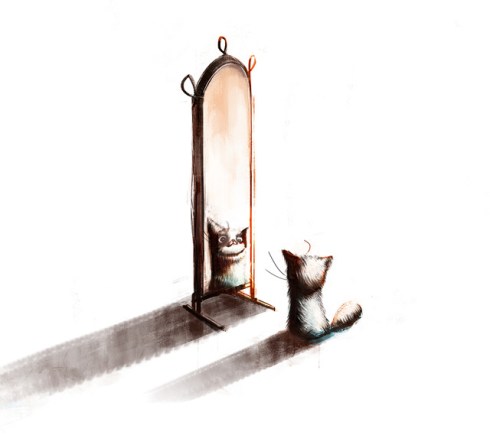
Two weeks ago as I was wrapping up PiBoIdMo (and holiday gifts), this little fella arrived in my inbox:
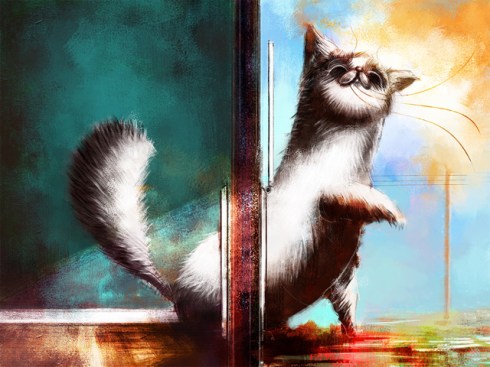
I immediately connected with the illustration—even though I’m allergic to cats. ***AH-CHOO!***
But just look at him! Fluffy and soft, pawing his way into the sunshine for a day of adventure!
Captivated by the texture of the illustration, the color palette, the dapples of light, and the cat’s expressive body language, I wanted to know more.
I learned that his name is Chalky. CHALKY AND THE NEW SPORTS CAR is a picture book venture by Little Thunder Co., a trio of designers from Belfast. Chalky is a character based on a real cat, with illustrations by the talented Jordan Henderson and original typography by Kyle Steed. They’ve got a Kickstarter campaign that ends in FOUR DAYS and they need your help!
So I sat down with Gabriel, Tim and Michael of Little Thunder Co. to talk about the process of creating CHALKY and the behind-the-scenes challenges of launching a Kickstarter project. Mind you, I was sitting in New Jersey while these guys were in Ireland. And they probably weren’t sitting, they’ve been so busy promoting CHALKY! I imagine them floating around like superheroes, as in their photo…

Gabriel Muldoon, Tim Potter and Michael McKeever
Gentlemen, this blog often focuses on ideas and inspiration. Your main character, Chalky, was based on a real cat. Whose cat is Chalky and how did this evolve into a story for children?
TIM: Chalky was a stray cat who was found in a friend’s shed circa 2003. I brought him back home where he has resided ever since as our family cat.
Chalky is a fun, friendly and curious cat. He has a particular passion for cars and enjoys sitting on the warm bonnets (hoods) of vehicles that have recently parked in the neighbourhood—and who could blame him given the Irish climate? He also enjoys peering up the exhaust pipe of cars and, being a white cat, he would often return home with a black ring of soot on his face. Big exhaust pipes are his favourite—the more of his face he can press up it, the better. I don’t know what the fascination is, but it gives us a few laughs when he comes home at night with soot on his face.
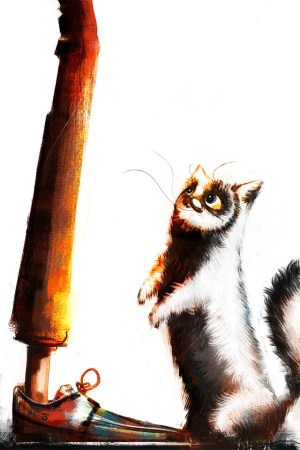
My father and author, Stanley Potter, turned his hand to writing short stories and poetry in his retirement and the things Chalky gets up to are a constant source of material for him. He wanted to write these stories for his grandchildren to enjoy and he sent me over this first story “Chalky and the New Sports Car” and I was so impressed with it that I shared it with the rest of the Little Thunder Co. team.
What kind of work does your production company, Little Thunder Co., typically do, and how do you think your experience translates into creating a children’s picture book?
GABRIEL: We’re primarily a digital design studio that creates high-impact digital products for the big screen, small screen and everything in between. This typically includes websites and apps but our main speciality is humanising the user experience by taking the best practices and principles of design to create an organic experience for the user.
Part of what we do involves storytelling, and apps and websites all have an underlying narrative. Some are good and we don’t even notice them, others are bad and stick out like a sore thumb so we look at transition, pacing, language—all important aspects of how a story unfolds over time—and apply these to our work. These storytelling techniques transcend different disciplines and has helped us in the production of our children’s book. We’ve been able to break the story down, identify key scenes and art direct it in a way that is fitting to the audience, the same way we would had it been a website. We’ve learned a lot of new things along the way about picture books that we can also apply to our craft as designers so there is a great cross-over and sharing of knowledge between both practices.
As designers we also understand layout and typography so we’ve been able to apply these to the design of the book. Typography is a really important ingredient for us and we consider it ‘clothing for words’ so we’ve put a huge emphasis on getting this right which has led us to commision typographer Kyle Steed to hand craft every word in the book. We could have picked a font and there are plenty of great ones out there, but we wanted to create the complete children’s picture book experience and we couldn’t achieve it without giving the words their own unique voice.

So you knew from the beginning that you wanted to take control of this creation and not go the traditional publication route. What led you to Kickstarter? What specific challenges come with launching a Kickstarter campaign?
GABRIEL: Over the past few months there have been a string of successful Kickstarter projects from companies based within a few minutes walk from our office (Brewbot, SeeSense & Patchblocks), so we felt the time was right to give it a go ourselves. Belfast is an exciting place to be right now in regards to design and we have a very supportive community that will get behind your project and support you.
MICHAEL: This is the first Kickstarter project that we have launched and one thing we have learnt is that preparation is first and foremost. There is an enormous amount of content you have to think about and prepare beforehand. The video itself is an important part of your pitch and we were literally filming right up until a few minutes before we needed to go live.
TIM: Once it went live you soon find yourself working around the clock to promote it, responding to questions and comments, thinking of new strategies to help gain pledges, the list is endless. It’s quite the emotional roller coaster as if you don’t make your goal, you don’t get a penny from Kickstarter. It’s all or nothing which adds to the intensity during the funding period.

What are your goals for CHALKY? How do you hope your audience will react to the story?
GABRIEL: Simply, we hope that the book resonates with the audience through the beautiful illustrations, typography and engaging story to create the sort of book parents will enjoy reading their kids and the book that the kids will ask for their parents to read them.
 What will be your definition of success for the book?
MICHAEL: I would say success to us would be getting to the stage where we have physical copies of the book that people can own and can live on their bookshelves. Something that kids and parents will enjoy reading.
GABRIEL: Yeah, and just on that point, I think the greatest moment will be able to read our story to my kids and get to experience what it is all about at the end of the day, a book the family can enjoy.
Do you have a goal for the number of books you hope to sell?
TIM: In all honesty we’re doing this project out of passion to create something beautiful and different from what is already out there on the market. As far as sales go, it is hard for us to project this, because this is our first attempt at entering the children’s book market. All we knew starting this was we wanted this book to exist and every sale after that is a bonus, so we’ve no spreadsheet hidden away with projected sales and targets. To us it’s all about the craft of something great.
What about Chalky do you feel is different from what’s already on the market?
I would say we’ve researched the anatomy of great storytelling and what makes something visually compelling and tried to apply these to the production of CHALKY. An example would be the typography. We could have used an existing typeface for the book but for us to create a richer, immersive experience and to compliment the illustrations, we’ve wanted to get the words hand-crafted. We also have gone for a unique illustrative style, that is totally digital but calls on traditional painting techniques to create them.
If successful with this book, what will you do next? A Chalky sequel or other picture books?
GABRIEL: We actually have another four Chalky stories written and ready to go which will introduce new characters and adventures. If this first book is successful, we’ll start to work on the next one and develop Chalky as a brand. The bigger picture is to become an independent publishing house and work with other story writers, designers, typographers and illustrators to create a rich and varied collection of picture books all created to an exceptional standard.
Thank you so much Gabriel, Tim and Michael, and I wish you much success with CHALKY!
Dear blog readers, ’tis the season of giving. The gentlemen are shy of their Kickstarter goal, so won’t you consider backing them? Remember, when you back them, they give you something back!
Click below to go to the Kickstarter campaign.
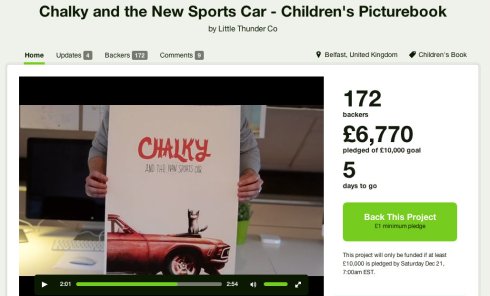
Plus Gabriel, Tim and Michael would love to hear what you think of CHALKY! Do you have any questions about their creative process or Kickstarter? Please leave them a comment below.
P.S. More PiBoIdMo prizes to come, so stay tuned!
You know the Piña Colada song, right? Getting caught in the rain?
Well, imagine that song in a picture book for kids (without the dunes of the cape, of course). Two besties have great times together, but they get stuck in a rut and go off to seek other adventures…only to rediscover each other.
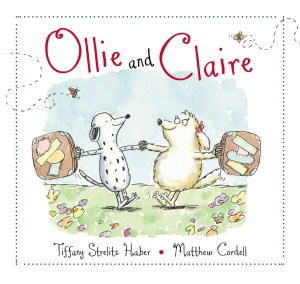 That’s the premise of Tiffany Strelitz Haber‘s charming OLLIE AND CLAIRE. The light and cheery watercolors by Matthew Cordell feature sketchy lines that suggest fun and frolic. A delight to read aloud, your voice just skips along like the two friends do. Tiffany’s a master of rhyme and one of the two ladies behind The Meter Maids.
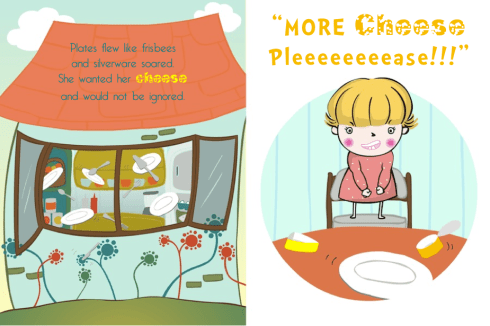
Besides having two successful picture books to her credit (the other is THE MONSTER WHO LOST HIS MEAN), Tiffany has branched out into ebooks. She recently released HUNGRY HARRY with StoryPanda and MORE CHEESE, PLEASE with KiteReaders. I interviewed her to find out about the ebook process and this emerging opportunity for children’s book writers.
Tiffany, what attracted you to ebooks?
To me, ebooks are just another way for kids to experience reading. In some cases there are interactive aspects to the ebook that can really help them learn, and in other cases it might just be a nice opportunity for a more reluctant reader to enjoy stories and story time in general.

 Did you write HARRY and CHEESE specifically for an ebook format, or were these traditional picture book manuscripts first?
I have this sort of arsenal of completed picture books. Some have been subbed out widely. Others to just a couple places, and others have never actually seen the light of day! I picked two stories that I liked a lot and just rolled with those. Not sure CHEESE was ever subbed out anywhere and HARRY went to one place, actually got to editorial, but didn’t make it through. Wait. Does that even answer your question? Kind of, right?!
How did you go about researching ebook publishers and in what format did you submit?
Oh, I googled the bejesus out of ebook publishers and chose to submit to ones that I felt the most comfortable with. There’s a lot of communication available with the actual publishers and marketing directors etc., so you can really get a feel for who you would be working with before you actually work with them.
I hired illustrators (after exhaustive searches on freelance websites) and submitted completed manuscripts (text and art) to the ebook publishers. The illustrators I chose were those willing to accept a flat fee for the work, and OK with the fact that I would retain the rights to the images as well. Hopefully it is some good publicity for them, and also additional work to add to their portfolio when searching for agents, etc. There are so many wonderful artists out there!

How was the ebook editorial process different from a traditional picture book process?
Um…it’s different in that it’s ALL YOU. Period.
Care to expand upon that?
It’s basically self-publishing your picture book online. You need to edit it, and make all the art decisions, and check the spelling and punctuation, etc. There isn’t an editor or an art director to do that with you—although with HARRY I did work with someone at StoryPanda to create the interactive elements of the story.
The sounds all the crazy stuff HARRY eats sure are fun!
What recommendations and cautions do you have for other picture book writers about delving into the world of ebooks?
I think it’s too soon for me to make any cautionary statements OR recommendations about ebooks yet. It’s something I am experimenting with, and really enjoying so far…but definitely too soon to say much more than that!
How have you gone about marketing your ebooks?
Well, again—this is all very new to me, but I’ve started sending them out for reviews and of course there’s social media. And on a larger scale, I am trying to work with schools to get the books on their computers, etc. Definitely a very entrepreneurial endeavor; but I think if you’re up for the challenge, it’s also lots of fun with somewhat limitless possibilities!
So you’ve now published two traditional picture books and two ebooks. What’s next for you?
Hmmm…I’m working on a middle grade novel right now, which is taking up most of my writing time—but still juggling a bunch of picture book works in “progress”, although I use the term “progress” loosely, as they seem to be at a dead stop for the time being!
Well, jump back into it because you’re a perfect rhymer and the world needs more great rhyming books!
Thanks for stopping by to let us in on the ebook process!
Blog readers, don’t go yet. Tiffany has a copy of HUNGRY HARRY and MORE CHEESE, PLEASE to give away. Just leave a comment below to enter the giveaway. Two winners will be chosen one week from today. Good luck!
Hippity, hoppity…
Come meet some new kidlit authors with the Children’s Author Blog Hop!
I was invited to participate by Darlene Beck-Jacobson, an author I know from NJ-SCBWI whose historical middle grade novel WHEELS OF CHANGE releases next year. It’s set in 1909 Washington D.C. and follows a young girl who attempts to save the family carriage business during the proliferation of the automobile. (Really cool premise I cannot wait to read!)
To participate in this hop, you don a pair of your fluffiest Hello Kitty socks and…wait a minute! This isn’t the Children’s Author SOCK HOP? Oh darn. And I was itching to do the mashed potato, too.
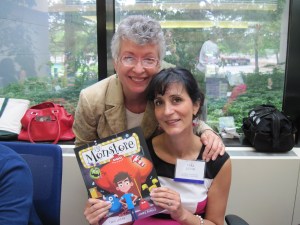
Darlene and me at a NJ-SCBWI book signing
To participate in the BLOG hop, you answer four questions, then pass the torch onto three other authors. One of the great privileges of writing this blog is to promote other talented kidlit professionals. I’m so pleased to introduce you to PiBoIdMo participants and authors you may not know yet—Elaine, Angie & Jacque—but you will!
And now the four questions…
Why is this night different from all other nights?
Whoops. Sorry. That’s the first of the Passover four questions. Maybe my Jewish friends had a chuckle. The rest of you are going HUH?!
1. What are you currently working on?
As you may know, I host Picture Book Idea Month (PiBoIdMo) every November. It’s the picture book writer’s alternative to NaNoWriMo. The challenge is to create one new picture book idea daily.
I caution PiBoIdMo participants NOT to post their ideas anywhere online. Concept is primarily what sells a picture book, and you don’t want someone to snatch your hook-y concept.
So I’m going to follow my own advice and be a little cryptic about what I’m working on. It’s a magical story about someone who’s not happy with magic.
My usual M.O. is to begin with a title, and that’s what I’m doing yet again. It’s got a snazzy, catchy title, something that will make people wanna snag it right off the shelf. The bad news is that I’ve already written this story once before—and revised it at least a dozen times. But it just didn’t work. In fact, I set aside this story for an entire year before I re-read my final draft again just last week.
WHOA! WHAT A STINK! WHAT DIED IN THERE?
In my zealous quest to perfect the manuscript, I darted further and further away from my original intentions. The story didn’t resemble anything I’d like to call my work. And so, it got filed in the circular file.
This week I began again with nothing but the title. I’ve got the opening down and I can already see it’s going far better than it did last year, but I’ve still got a long way to go.
I’m also putting final edits on LITTLE RED GLIDING HOOD, a punny skating adventure coming from Penguin Random House Children’s in October 2015. All your favorite fairytale characters will be along for the glide—Humpty Dumpty, Old MacDonald, even Jack Sprat and his wife.
2. How does it differ from other works in the genre?
The magical story will feature an adult. In fact, it opens with an adult. I know this is typically a no-no, but the adult is not an ordinary grown-up. You’ll see. Know the rules, but know when to break them, too.
3. Why do you write what you do?
I have always had a love affair with the short story. I prefer the brilliance in their brevity. And with picture books, I adore the juxtaposition of words and images. It’s like playing for a living.
4. What is the hardest part about writing?
Not letting the words get away from you. Sometimes the words have a way of writing themselves, pulling you in a direction you didn’t want to go. You have to learn to tame your words, and that’s no easy feat.
And now, ladies and gentleman and children of all ages, I’m pleased to present the three authors I’ve chosen to hop to: Elaine Kiely Kearns, Angie Karcher and Jacque Duffy!
E. Kiely Kearns is an elementary school teacher and a member of the SCBWI. She earned her Masters in Education from Fordham University. She dreams up wild and wonderful stories in New York State where she lives with her husband, two children, and menagerie of animals. She lives on coffee, chocolate and humor. Mostly humor. Get your “Book Smarts” fix at EKielyKearns.com.
Angie Karcher’s first book, WHERE THE RIVER GRINS: THE HISTORY OF EVANSVILLE, ILLINOIS came out in November 2012. It was part of the city’s Bicentennial celebration and is a resource book for local history in all third grade classrooms in Evansville. Her current project, THE LEGENDARY COWBOY JONES, about a 70-year-old jockey who’s still racing, comes out after the first of the year. She is a former Kindergarten teacher and professional storyteller. Read more of her story at AngieKarcher.wordpress.com.
Born in Brisbane, Australia, Jacque Duffy has always been creative and entrepreneurial. She has written, illustrated and self-published seven children’s books in a series. These books were sought and purchased by the Queensland State Government and placed into schools and libraries. In 2014 her first picture book THE BEAR SAID PLEASE will be released by Wombat books. Follow her down under at JacquesArtandBooks.com.
Happy hopping!
 by
by PENGUIN CHA-CHA is my first book as both author and illustrator, so my process was very different than when I’ve illustrated manuscripts written by other authors.
 Usually I receive a manuscript from a publisher, I read it over—that first read tickles the first glimpses of images into my head—and then I decide if that manuscript is one that I want to spend months illustrating.
Illustrating stories by other authors gives me a chance to illustrate ideas that I wouldn’t have had otherwise and brings variety to my work.
For example, in THE GOODBYE CANCER GARDEN, the author Janna Matthies wrote about a family growing a healthy vegetable garden as Mom recovered from cancer. It’s a powerful story of healing. Since I’ve never gone through something like that, I wouldn’t have thought to write that story, but Janna experienced a very similar cancer battle in her own life before writing this hope-filled story. As soon as I read that manuscript, I knew it would be an important book for many families. It was an honor to be able to illustrate it.


Another part of illustrating someone else’s manuscript is to add my own voice to the book through the illustrations. I need to figure out what to add to the story they’re telling, and that may mean showing things in the illustrations that the author never thought of. (That’s why publishers like to keep the authors and illustrators away from each other.)
 In the picture book CORA COOKS PANCIT by Dorina K. Lazo Gilmore, Cora feels ignored at first by her family. To echo her feelings, I drew a little dog that follows Cora around wanting to play, so he brings her more and more toys on each page. Cora ignores him.
Just as Cora gets her happy ending, the dog gets his own happy ending when Cora finally plays with him. The dog wasn’t part of the text by the author. The dog is my own contribution to rounding out the story with the illustrations. Since parents are usually busy reading the words, they may not even notice the dog, but be assured that the kids who are hearing the story and studying the illustrations definitely notice that dog! Kids are master picture readers, so that’s always something I think about as I decide how to draw my half of the story in books written by someone else.
My process for PENGUIN CHA-CHA was different from the start because the illustration came first instead of the manuscript. Way back in 2007, I drew an illustration of penguins dancing. I used to be in a swing and Latin dance group and I liked penguins, so I decided to combine two things I liked to create a fun portfolio piece.

Around the same time I had tried my hand at writing my first picture book manuscripts about other subjects. I had a meeting with an editor and showed her my picture book manuscripts and also my portfolio. She remarked about how much more my face lit up when we got to the dancing penguin illustration than when I talked about my manuscripts!

So I realized I really needed to write about the things that make my face light up. Makes sense, right? So I wrote story after story about dancing penguins. It was much harder to write a wonderfully marketable picture book than I thought it would be! What remained constant were the dancing penguins, but the plots of the stories were all over the place. Those penguins danced for years as I figured out my story. I even licensed them out as wrapping paper at some point. I finally sorted out my story as it played as images in my head. I only wrote down the words that I felt were necessary and not shown in the illustrations. In the end, my editor at Random House asked me to add in a bit more text. I may be the only picture book author that’s happened to—usually they want to cut words!
.
Writing my own books allows me the freedom to draw my favorite subject matter and favorite kinds of characters and things that make my face light up like dancing penguins. And the story usually starts with an image for me. Illustrating someone else’s manuscript brings more variety to my work and new experiences. So I love both!
Speaking of new experiences, I’m currently illustrating a picture book written by Danielle Steel called PRETTY MINNIE IN PARIS. For research, I visited Paris—what a lovely city to experience! The story combines Paris, a fashion runway show, a long-haired teacup Chihuahua, and a stylish little girl. Oh la la! Watch for PRETTY MINNIE in the fall of 2014.
 Thanks, Kristi, for giving us a glimpse into your process!
PENGUIN CHA-CHA releases today! Happy Book Birthday, Kristi!
And lucky readers, Kristi is giving away a PENGUIN CHA-CHA prize pack! You’ll receive a signed book, magnet, bookmark and sticker! Just leave a comment below by September 5th to enter, and if you’d like to ask Kristi a question, you can do so there, too.
You can learn more about the book at PenguinChaCha.com and download a Storytime Activities Kit.
Also follow Kristi’s blog at KristiValiant.blogspot.com.
Lately I’ve been walking around my house saying, “Nose friend! I want to roll in this smell with you!”
I know you thought picture book writers were crazy, but maybe not this insane. My kids certainly think I’ve lost it.
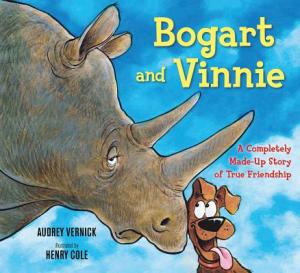 But, once you’ve read BOGART & VINNIE: A Completely Made-Up Story of True Friendship, you might be repeating the same thing.
Vinnie is a lost yet crazy-happy dog, one of those mutt-types with a helicopter tail and an insatiable appetite for canine chatter. It doesn’t seem to bother Vinnie that he’s lost his boy—he’ll just make another bestie. And of course, no other animal has quite the bestial allure of a square-lipped rhinoceros named Bogart. But what’s Vinnie’s moniker for Bogart? What else can a pup call a double-horned behemoth? NOSE FRIEND.
Audrey Vernick’s the name, hilarious picture books are her game. You might know Audrey from IS YOUR BUFFALO READY FOR KINDERGARTEN?, which in my opinion is one of the finest get-ready-for-school stories ever published.
Audrey, how did you capture Vinnie’s doggy dialogue so well? I love his voice! (I do his voice. You might want to tap me for the audio version.)
 Thank you! I have dogs. I realize there are few readers who will say “Oh, how COOL that Audrey Vernick is!” when I reveal that I often talk in my dogs’ voices. I give them words, and I am confident that I give them the right words, and the right tone of voice, too. I do think some readers might nod and say “Well, duh, of course. Me too.”
Once I had the general idea of Vinnie’s voice, I just had to push it a bit so it was more over-the-top enthusiastic.
Bogart and Vinnie is about an unlikely friendship. Did you get your inspiration from one of your unusual associations?
In a bizarre show of life imitating art (or “art”), an unlikely friendship, along the lines of the one Bogart and Vinnie share, came about in our very own house when we brought an excitable, happy puppy, Hootie, into our lives when our soulful dog, Rookie, was 10 years old. They WERE Bogart and Vinnie. But Hootie didn’t enter our lives until after I had written this book. (She must have gotten her paws on an early draft somehow.)
The inspiration for this book was actually born of skepticism, I’m afraid. I had read all those nonfiction interspecies friendship picture books and wondered about the use of that word, friendship. I thought it would be fun to find out what happened if animals photographed in close proximity were mistaken for friends. And Vinnie had been waiting around for a book to appear in. He had been the narrator of a manuscript that never quite worked, A Puppy’s Guide to Training, and apparently what had been missing in his life, all along, was a rhinoceros who wanted nothing more than to be left alone.
Your blog is about literary friendships. What was the most surprising friendship story from your site?
Do you know how there are some authors and illustrators you just never really discovered when you were young? For some reason, I never read a Roald Dahl book as a child. And the biggest surprise for me has been how many authors and illustrators, but especially illustrators, cite him as an inspiration. He was always just a name to me. As an adult, I read his memoir, Boy, a sort of Angela’s Ashes for the younger set.
But maybe that doesn’t answer your question. The biggest blog surprise is that my most read post was not an interview with a brilliant writer or illustrator but a post about my mother and how my writer friends sort of fill part of the hole where she used to be.
I think that doesn’t answer your question either. I think maybe I suck at answering questions. The most surprising friendship story from my site is what I’ve learned from the wisdom of everyone who has visited. There are so many, from Ruth Barshaw, Erica Perl, Bob Shea, Liz Scanlon, but for some reason, this one springs to mind, from Linda Urban:
“(when I was young…) I was waiting for someone to see me and tell me I was responsible and smart and special and worth being the subject of a novel. Of course, these are things that we can’t wait for, can we? We have to tell ourselves those things, and then become them. Which is sort of what the kids in my books do. My characters are much smarter than I ever was.”
Isn’t she smart?
 Well, yeah, but I happen to think you’re darn smart, too, Audrey, my new NOSE FRIEND!
Do you have an unlikely friendship story to share? Leave a comment to enter the giveaway! You might win a copy of BOGART & VINNIE, guaranteed to make you talk like a dog (a crazy-happy one)!
In the meantime, you can visit Audrey’s blog at Literaryfriendships.wordpress.com.
Audrey Vernick writes funny picture books, nonfiction picture books, and middle-grade novels. Her picture book, Brothers at Bat: The True Story of an Amazing All-Brother Baseball Team, was a New York Times Notable Book of 2012. In 2014, two new books will hit the shelves–the funny/tender picture book Edgar’s Second Word, and the middle-grade novel Screaming at the Ump, and her first novel, Water Balloon, will be released in paperback. A two-time recipient of the New Jersey Arts Council’s fiction fellowship, Audrey lives near the ocean with her family.
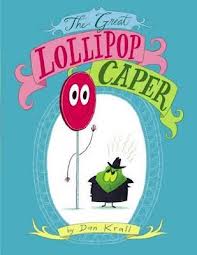 Dan Krall is genius. I mean, he created a book about lollipops! What kid doesn’t love lollipops?!
And there’s something for us adults, too. Capers! Ya know, the salty little fellas that perk up lox and a nice schmear (that’s NY-talk for cream cheese). Delish (more NY-talk). I can’t decide which I like more. And thankfully I don’t have to, because both get equal billing in THE GREAT LOLLIPOP CAPER…which releases today!
In the book, Caper’s a sourpuss. He wants kids to love him as much as they love Lollipop. Caper goes on a great caper to elevate his kid appeal, only to ungracefully fall far from grace. But don’t worry, he cleans up his act. And everyone else cleans their plates.
As you can imagine, Dan is super busy, what with the book release and working on “Chowder” and all. He’s tied up, so he sent Lollipop and Caper over to have a chat with me.
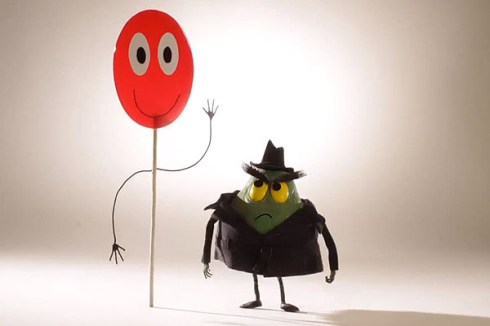
Caper, you’re beloved by adults and chicken piccatas everywhere, so why did you feel the need to convert kids into fans?
Well…no offense to adults, but they’re kind of boring. They’re not gonna see this, are they? I mean they’re fine in their way, sitting quietly in a candlelit restaurant, sipping wine, enjoying me on pasta while having a quiet, serious conversation… “Oh, does this have capers on it? Why, I believe it does…” Blah, blah, blah. I mean, don’t get me wrong, it’s better than just hanging out in my jar all day. But come on, when I see the party Lollipop is having with children? Running around screaming, carnivals, theme parks, birthday parties…I mean, they go nuts for him, so who doesn’t want to get in on that?
Lollipop, you’re such a sweet guy. You wanted to help Caper even though he tried to wiggle in on your likable, lickable territory. Why so generous?
I’m a sweet and tangy lollipop and children love me. [smiles vacantly]
Um, yeah. And to think you spend your day having your brain sucked out. Never woulda known.
So let’s come back to you, Caper. I’m amazed you passed yourself off as a pea to sneak into the lollipop factory. I didn’t know capers were such masters of disguise. What other impressions do you do?
Thanks for noticing that, you know it’s one of my several talents and one of the many reasons everybody would love me if they just got to know me a little better. I have a very wide repertoire of personas I can inhabit—Bogart, Mitchum, McGruff the Crime Dog, The Neighborhood Watch guy, pretty much anybody I set my mind to that’s wearing a trench coat and fedora. I can also do a pretty mean fava bean.
So I suppose after all this, you’re content with being a Caper. Lollipop, are you happy being candy?
I’m really happy being just about anything as long as it’s sweet, and nice, and pleasant, and lovely and…. [drifts off into a vacant stare] Oh…and I always kind of wanted to be a forest ranger. [smiles]
Well, fellas, it’s obvious that Dan captured your personalities perfectly for this book. So let’s show our blog readers by having a little giveaway.
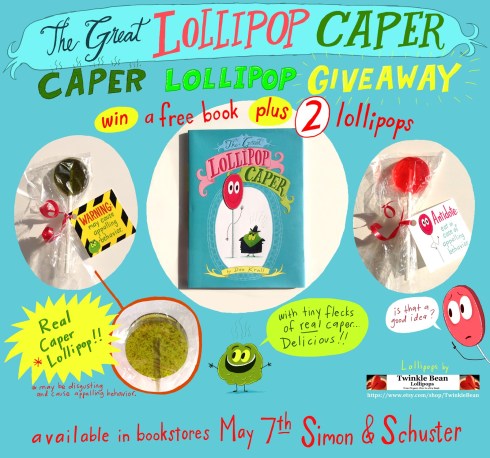
Please leave a comment to enter, letting us know if you prefer Lollipops or Capers.
A winner will be randomly selected in about a week! Good luck!
And be sure to check out THE GREAT LOLLIPOP CAPER by Dan Krall, available today!
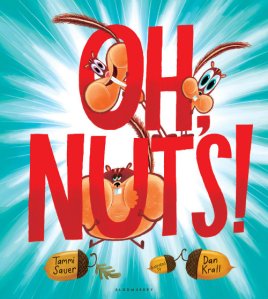
OMG! I’m having a fangirl moment. Somebody fan me and feed me chocolate. (No, not YOU. Get Ryan Gosling.) Because not only is the brilliantly prolific author Tammi Sauer here, but she brought along the stars of her newest picture book, OH NUTS!
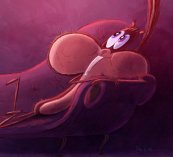
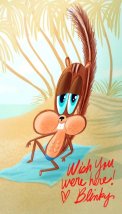
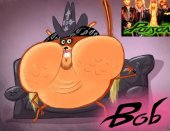
Thankfully I have Billy Bush helping me out (who will do as a Ryan Gosling substitute in a pinch). Billy’s qualified to interview Miss Universe contestants, so he will no doubt pose the tough questions to our guests Cutesy, Blinky and Bob. He caught them on last night’s Emmy’s Red Carpet.
Take it away, Billy.
 Billy: Wow, so great to see you Cutesy, Blinky and Bob, stars of OH NUTS! Thanks for stopping to talk. You look fabulous. Tell us, who are you wearing?
Cutesy: Carolina Herrerra’s “Forest Dwellers” collection.
Blinky: Um, obviously Bob. Will someone please peel him off my back?
Bob: Wait, I was supposed to get DRESSED?
.
Billy: So you guys reached the pinnacle of popularity but then retreated from the limelight. What caused you to give up show business? Was the pressure just too much?
Blinky: Well, dude, we realized we had to be true to our inner chipmunk, you know?
Cutesy: Plus, all those flashing lights kind of wrecked my mascara.
Bob: Huh?
.
Billy: But your fans really want you to get back into the game. We heard that Alvin and his crew rejected an offer to star in “The Hunger Games IV: Acorn Atrocity”. Will you be lobbying for those roles now?
Cutesy: Our agent definitely wants us to consider it.
Blinky: Like whoa. It would be an awesome opportunity to showcase my six-pack.
Bob: I like noodles.
.
Billy: Do you think you’d like to branch out into other forms of entertainment? You know, become a triple-threat with a triple-threat?
Cutesy: We’ll always stick together, but we each have something special to give the world. Soon I’ll be launching my very own line of accessories called Chic Chipmunk.
Blinky: ABC wants me to be the next Bachelor.
Bob: I’m going to…wait…I forget.
.
Billy: How would you like to be remembered and immortalized by your fans?
Cutesy: We just want everyone to remember that chipmunks are people, too.
Blinky: I’d really like a street named after me.
Bob: I’d really like a nap. And a taco.
.
Billy: Oh wow, here comes Brangelina…so…SCRAM!
Cutesy: You know, we have a nickname, too. It’s “Blutesy”.
Blinky: I like it!
Bob: Hey, where’s the “Bob” in that?
.
Well, thanks Billy Bush, Cutesy, Blinky and Bob for the interview. And thanks for leaving behind an autographed copy of OH NUTS!
One lucky US resident will win it, just leave a comment to be entered! A winner will be randomly selected one week from today. Good luck!
And don’t forget to check out the rest of Tammi Sauer’s books. I mean, there must be a million of them now.
My goal on this blog is often to get writers thinking about exciting hooks for picture books.
Robots? YES!
Zombies? ERMMMFFF! (“Yes!” in zombie-talk.)
Frankenstein? AHHHGGGRRROOOOOWWWZZZ! (“You bet your sweet bippy!” in Frankenstein-talk.)
How about all THREE in one book? (Sorry, that one broke my translation tool!)
Well, Annette Simon already beat you to it!
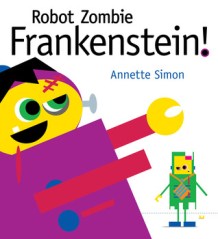 ROBOT ZOMBIE FRANKENSTEIN is the story of two nuts-and-bolts buddies who try to one-up another. So I wanted to see how Anette one-upped a fabulous ROBOT idea to make it a triple-threat.
TL: Annette…umm…HOW?
AS: Robots and zombies may be getting some extra attention now (and for that I’m grateful!), but I think that from a kid’s perspective, they’re pretty standard characters. Like pirates, superheroes, and outer space invaders, they aren’t new subjects, just fun ones, and why not combine? My youngest, who’s now 18 and soon to graduate from high school, came to his fifth birthday party wearing a pirate hat, a tie, and a chef’s apron.
TL: In your book, the robots try desperately to one-up another. This is brilliant, as you’ll often see young children doing this. I remember dance class when I was seven, a girl told the instructor she practiced for an hour every day. Then came shouts of “I practice two hours” until I finally said “well, I practice TEN hours a day”. So funny. At the time I thought I was impressing everyone, but now I realize they knew I was lying. Do you have a childhood one-upmanship experience that gave rise to the ROBOT ZOMBIE FRANKENSTEIN story?
AS: Hmm. Tara, I pinkie-promised my sister I would not divulge details. (Let’s just say I won. All the time.)
I wish I had some fantastic backstory about this book. The truth is not glamorous: Robot and Robot showed up in little snippets as I walked, cleaned my house, grocery-shopped, and waited in car pool. They crept in from the fringes while I was busy querying agents with other stories.
But I do want to share something that may be especially dear to readers of your blog. These two cartoons by Jerry Scott and Jim Borgman have smiled from my fridge for years. (You can tell they’re old by their colors.)


My youngest is about to head off to college, and I’m realizing I will have to find another excuse, er, reason, as to why I’m not more prolific. Or else just get my butt back in chair.
It’s still complicated.
TL: Did you give your robot characters names as you were creating them? What do you think their names really are?
AS: I did kinda play around with names. For awhile, I thought of Robot and Robot as Cy and Borg, then Cy and Henry (Henry = the measuring unit of inductance– sounds smart, huh?) or Hecto (a computer measurement for 100). My fabulous editor, Mary Lee Donovan, sometimes nicknamed them Watson and…Isaac? Asimov? Chip? I can’t remember. In story discussions, we called them Purple and Green. In the end, they each said, “I, Robot.”
I hope one day the robots get a pet; I have a fun long list of pet names.
TL: Is there anything your robots wanted to be, but they didn’t get the chance to transform themselves? Anything cut out of the final version that you wish would have remained?
AS: As far as cutting-room-floor material, here’s a spread that didn’t make it. But, should Robot and Robot one day go trick-or-treating…

Well, folks, you can one-up your friends by not only winning a SIGNED COPY of ROBOT ZOMBIE FRANKENSTEIN (which is a *perfect* Halloween read), but by also winning cool robot chest iron-ons! Impress your friends, neighbors, and local Kindergarten classes!

Just leave a comment to be entered. A winner will be randomly selected one week from today!
 Annette Simon says that when she was in kindergarten, she was named Best Artist in her class. When she was in the third grade, she won her school’s Fire Prevention Week poster contest. After she graduated from the University of Cincinnati’s College of Design, Architecture, Art and Planning, Annette earned awards as an advertising creative director. Now, she writes and draws for young readers. Simon says she could not feel more honored. Learn more about her books at AnnetteSimon.net.
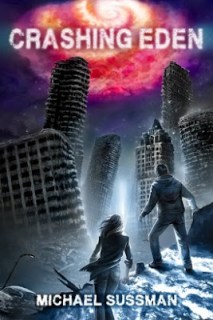 One of my favorite quirky picture books is OTTO GROWS DOWN by Michael Sussman, so you can imagine how thrilled I was to learn that Michael has a new YA novel, CRASHING EDEN. Well, Michael is crashing my blog today and he’s leaving behind a paperback copy just for you.
“Dr. Suss” (as I like to call him) is a prolific, versatile writer who has published books in diverse genres. So I asked him how he shifts gears to different formats and what obstacles he faces in doing so.
TL: Michael, you’ve written medical books, picture books, and now a young adult novel. How did you adjust from writing one genre to another?
MS: The toughest shift was from writing nonfiction professional books on psychotherapy to writing fiction. About 20 years ago I first tried my hand at a novel. Looking back at that manuscript, I cringe at how stiff and wooden my writing was—especially the dialogue. Thanks to practice and critiques from writer’s groups, my next novel was considerably better, although it too went unpublished.
After reading hundreds of picture books to my son, I decided to start writing for children. That transition was a breeze. Writing for kids totally freed my imagination and allowed me to be much more playful and fantasy-based. The result was OTTO GROWS DOWN, a story about a boy who becomes trapped in backwards time.
 In writing for young adults, I benefited from having already spent years honing my novel-writing skills. There were, however, two major differences. It was a stretch to write with the voice of a teenager, and that took a great deal of revising to get right. Secondly, I had to revisit my own adolescence, and that was no picnic!
TL: Which genre is your comfort zone?
MS: When it comes to writing, I’m such a perfectionist that I’m not sure I have a comfort zone.
Writing picture books is probably easiest for me, since the sky’s the limit when it comes to letting your imagination run wild. In terms of novels, I think I feel most comfortable writing thillers and mysteries, especially with a comic edge.
TL: How did you get the idea for CRASHING EDEN? What made you decide to tackle the YA genre?
I started trying my hand at fiction about twenty years ago. I wrote a psychological thriller and a comic mystery novel, neither of which were published. I developed severe writer’s block, which was immediately relieved when I began writing for young children. Looking back, I think I was working out unresolved issues from my own childhood. Next I turned to writing for young adults. Consciously, I chose YA because the market was hot! But unconsciously, I believe I realized that it would give me the chance to work on issues from my mostly miserable adolescence.
The genesis of CRASHING EDEN began with the title, which had floated around in my mind for nearly a decade. I’d been interested in world mythology for many years, and especially intrigued by the widespread myths suggesting that humans have degenerated from an ancient state of grace, symbolized by Paradise or the Golden Age.
I began to wonder what might happen if we were somehow able to recapture the state of mind supposedly experienced by people before the Fall. What if a device could be built that altered our brains in such a way that we felt like we were back in the Garden of Eden?
This led to speculating about how the God of the Old Testament might react to trespassers in his Garden. That’s where the story takes a controversial turn.
TL: What an intriguing premise! So, what YA reads have really stuck with you? To which books would you compare your style?
 MS: My favorite YA novels are Phillip Pullman’s trilogy, FEED by M.T. Anderson, UNWIND by Neal Shusterman, and MARCELO IN THE REAL WORLD by Francis X. Stork.
I’d like to think my style is unique, although I’d say it’s strongly influenced by two of my favorite novelists: Tom Robbins and Christopher Moore.
TL: How do you hope readers will react to your book?
MS: My ideal reader loved OTTO and is curious about the title of my novel. She’s intrigued by the notion that the widespread myths of a Golden Age were based on something real, and by the idea of returning to Edenic consciousness. She feels empathy for my troubled protagonist and gets caught up in his many dilemmas. She enjoys the humor and suspense of the story and finishes the book in one sitting. Then she recommends the novel to all her friends, posts glowing reviews on Amazon and Goodreads, and sends a copy of the book to her uncle, the filmmaker!
TL: Ha, ha! Don’t we all wish! So, with all those genres floating around in your head, do you ever experience writer’s block? If so, how do you overcome it?
Yes, I’ve definitely had periods when I couldn’t write a thing and couldn’t come up with a single idea. It feels awful. With other types of work you can just phone it in, but not with writing.
With mild writer’s block, I can overcome it by exercising, being in nature, taking a hot bath, meditating, or simply taking a break from writing. With more serious cases, it takes some psychological/emotional exploration. The blockage may be due to depression. It may stem from avoiding something that you need to write about. In one case, my writer’s block evaporated when I shifted from writing for adults to writing for children!
TL: I love that. Writing for children definitely frees the imagination and lets you go places adult fiction doesn’t.
Thanks to Dr. Suss for offering a paperback copy for me to give away! Just leave a comment to enter. You get one entry for your comment plus an extra entry for each share on social media, just let me know in a separate comment! A winner will be selected in one week. Good luck!
Want it now? Crashing Eden is available at Amazon, Barnes & Noble and Smashwords.
And visit “Dr. Suss” online because he’s hilarious and talented (and a good friend)!





 Writing for Kids (While Raising Them)