You are currently browsing Tara Lazar’s articles.
You’ve been waiting a long time…but here they finally are: the Mira Reisberg contest winners! I will contact those of you listed here with an exclusive email address to submit to Mira’s Hummmingbird Literary.
Donna Earnhardt
Mary Uhles
Vivian Kirkfield
Laura Renauld
Angie Karcher
There were SO MANY great marketing suggestions, I wanted to pick EVERYONE. You can imagine why it took me so long. Once again I want to thank the lovely and talented Mira Reisberg for sponsoring this contest, and best wishes to all the winners.

Next, the winner of Kristi Valiant’s PENGUIN CHA-CHA Prize Pack! It’s…
Pam Brunskill!
Be on the lookout for my email, Pam. And congrats!
And while I have your attention, NJ-SCBWI just opened registration for a flurry of inspiring and entertaining fall events. I’ll be hosting a PiBoIdMo Kick-Off on October 1st in Manville, plus there’s two other PiBo and NaNoWriMo parties. I’ll also be teaching a picture book workshop at the Fall Craft Weekend on November 10th.
Check it all out at NJSCBWI.com and click “follow blog” so you don’t miss any future event announcements!
Happy writing to everyone! And stay tuned…some PiBoIdMo announcements are coming soon!
 Two years ago at NJ-SCBWI, someone mistook Tory Novikova for my daughter.
Eek! Am I that OLD? No, really, Tory is quite young, so let’s just say that if I were a teenage bride, it could be a possibility. I mean, look at those eyes and hair! Totally plausible.
While Tory’s definitely not my daughter, she does work with her mom, and that’s pretty cool.
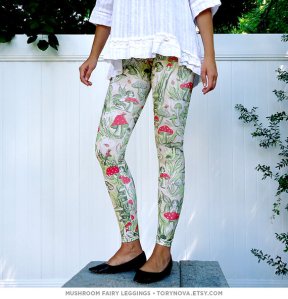
Torynova’s adorbable Mushroom Fairy Print leggings.
Her mom played a heavy role in inspiring the styles for Tory’s own fashion company, Torynova Couture.
“The woman had me drawing as soon as possible, so kudos to that child-rearing dedication. She’s a fashion designer, graduated from Moscow’s Textile Institute and had worked for the top fashion houses there and also made costumes for theater and ballet. Even my great grandparents worked on costume and stage production for the Bolshoi Theater, so one could say appreciation for the classics runs through my blood.”
With Tory’s talent and drive—she also illustrates for video game, comic and apparel companies—I knew picture books couldn’t be far behind for this Pratt Institute 2010 BFA. Flash forward to NOW and her book TUKE THE SPECIALIST TURTLE is swimming your way!

Tory, how did you land the job illustrating TUKE?
I was approached really out of the blue (for me, anyway) by Jim Ritterhoff about illustrating this children’s book he had written and meant to publish through his company, Chowder Inc. Profits were to benefit CCMI, the Central Caribbean Marine Institute and the Central Reef Conservancy, a nonprofit dedicated to sustaining coral reefs in the Caribbean. He seemed really dedicated to the marine ecology of the reefs, being a diver himself. So I came on board and drew him Tuke.
Your illustrations for TUKE are so vibrant and fun. They really bring the ocean and Tuke’s personality to life. Could you give us a little background on your process for creating the art?
I think there is a natural juiciness to my color palette and aesthetic, no matter how far I try to run away from it. It must be a side effect from having my eyes stuck to the TV, growing up watching too many cartoons for it to be healthy. Thankfully, it came in very handy with Tuke because the story takes place in the Caribbean Reef. Though I’ve never seen it in person, I’ve researched enough about it to know that it’s riddled with colors beyond imagination. In fact, the very first spread I finished in full color was the entire reef, which comes in right after the introduction. The reaction I got from Jim, who is an avid diver and knows the reef so well, was pretty much like—YES! This totally works! So after that point, there were no doubts about color constraints. Though, I did get to play around with different depths of blues, which was lovely.
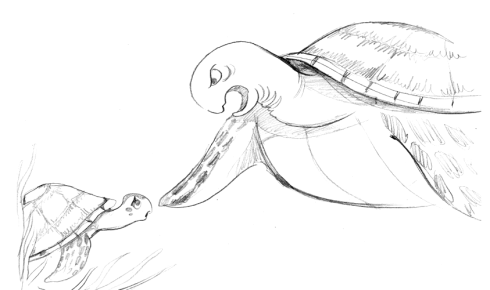
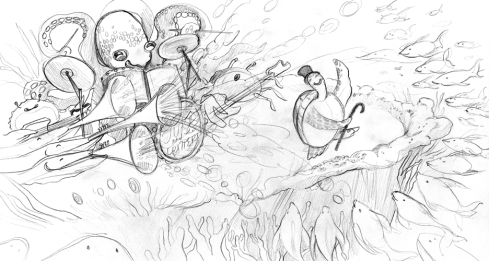
As far as my process goes. The entire book, 60+ pages, was laid out in clean pencil sketches like a storyboard. And for me, clean is a relative term…since my lines are pretty gestural and loose (I really dislike the look of pencil lines that have been traced over lovely loose sketches). Anyway! After each page or spread was drawn, I went over it with an ink brush, picking up and adding textures that I could snap up and use later for the finish. Eventually these were all scanned and saved for later. Then came the flat vector shapes. I really enjoy drawing freehand in Illustrator – is that strange? There is a satisfying gravity about a solid mass that contorts to form the daintiest of details. The expressions of the animals were probably my most favorite parts to draw!
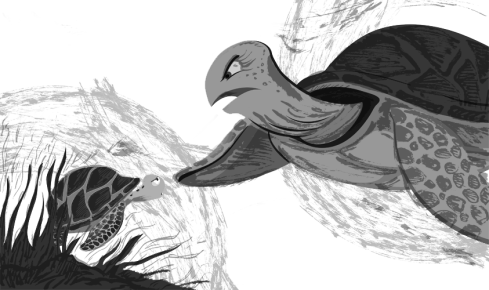

And finally, the image is completed in Photoshop, all the bits are assembled, and the color is fully applied. It may be a little tedious of a process, but it lent itself a lot to the look of the book, and Tuke! And of course there were many moments of going back into inks, rescanning, and altering the finished pages by administering bits of texture for the final polish.

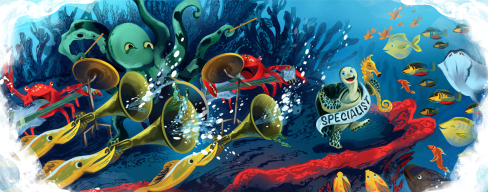
So, what’s next for you, Tory?
Hmmm…what IS next?!?! Well for starters, I’m about as knee-deep into education and new media as I’ll ever be. In fact, I’m currently involved in the creation of an entire educational game world revolving around children’s books and characters due for release in 2014. So I’m definitely still deep in pursuit of creating for kids—video games, books, products, cartoons—you name it! But it’s always been a dream to illustrate picture books. So I’m very much looking forward to the next opportunity that comes my way! 🙂 Any takers?!
Well, I’ll bet there will be plenty of takers for our special TUKE giveaway!
One lucky blog reader will win a custom sketch of Tuke made especially for them! You can even enter twice!
Comment or leave a question for Tory here on the blog for one entry, then Tweet or Instagram an image of the book with hashtag #TuketheSpecialistTurtle and tag @torynova for another entry. Contest ends September 21st and a winner will be announced shortly thereafter.
For more about Tory and her various projects, visit ToryNova.com.
 by
by PENGUIN CHA-CHA is my first book as both author and illustrator, so my process was very different than when I’ve illustrated manuscripts written by other authors.
Usually I receive a manuscript from a publisher, I read it over—that first read tickles the first glimpses of images into my head—and then I decide if that manuscript is one that I want to spend months illustrating.
Illustrating stories by other authors gives me a chance to illustrate ideas that I wouldn’t have had otherwise and brings variety to my work.
For example, in THE GOODBYE CANCER GARDEN, the author Janna Matthies wrote about a family growing a healthy vegetable garden as Mom recovered from cancer. It’s a powerful story of healing. Since I’ve never gone through something like that, I wouldn’t have thought to write that story, but Janna experienced a very similar cancer battle in her own life before writing this hope-filled story. As soon as I read that manuscript, I knew it would be an important book for many families. It was an honor to be able to illustrate it.


Another part of illustrating someone else’s manuscript is to add my own voice to the book through the illustrations. I need to figure out what to add to the story they’re telling, and that may mean showing things in the illustrations that the author never thought of. (That’s why publishers like to keep the authors and illustrators away from each other.)
 In the picture book CORA COOKS PANCIT by Dorina K. Lazo Gilmore, Cora feels ignored at first by her family. To echo her feelings, I drew a little dog that follows Cora around wanting to play, so he brings her more and more toys on each page. Cora ignores him.
Just as Cora gets her happy ending, the dog gets his own happy ending when Cora finally plays with him. The dog wasn’t part of the text by the author. The dog is my own contribution to rounding out the story with the illustrations. Since parents are usually busy reading the words, they may not even notice the dog, but be assured that the kids who are hearing the story and studying the illustrations definitely notice that dog! Kids are master picture readers, so that’s always something I think about as I decide how to draw my half of the story in books written by someone else.
My process for PENGUIN CHA-CHA was different from the start because the illustration came first instead of the manuscript. Way back in 2007, I drew an illustration of penguins dancing. I used to be in a swing and Latin dance group and I liked penguins, so I decided to combine two things I liked to create a fun portfolio piece.

Around the same time I had tried my hand at writing my first picture book manuscripts about other subjects. I had a meeting with an editor and showed her my picture book manuscripts and also my portfolio. She remarked about how much more my face lit up when we got to the dancing penguin illustration than when I talked about my manuscripts!

So I realized I really needed to write about the things that make my face light up. Makes sense, right? So I wrote story after story about dancing penguins. It was much harder to write a wonderfully marketable picture book than I thought it would be! What remained constant were the dancing penguins, but the plots of the stories were all over the place. Those penguins danced for years as I figured out my story. I even licensed them out as wrapping paper at some point. I finally sorted out my story as it played as images in my head. I only wrote down the words that I felt were necessary and not shown in the illustrations. In the end, my editor at Random House asked me to add in a bit more text. I may be the only picture book author that’s happened to—usually they want to cut words!
.
Writing my own books allows me the freedom to draw my favorite subject matter and favorite kinds of characters and things that make my face light up like dancing penguins. And the story usually starts with an image for me. Illustrating someone else’s manuscript brings more variety to my work and new experiences. So I love both!
Speaking of new experiences, I’m currently illustrating a picture book written by Danielle Steel called PRETTY MINNIE IN PARIS. For research, I visited Paris—what a lovely city to experience! The story combines Paris, a fashion runway show, a long-haired teacup Chihuahua, and a stylish little girl. Oh la la! Watch for PRETTY MINNIE in the fall of 2014.
 Thanks, Kristi, for giving us a glimpse into your process!
PENGUIN CHA-CHA releases today! Happy Book Birthday, Kristi!
And lucky readers, Kristi is giving away a PENGUIN CHA-CHA prize pack! You’ll receive a signed book, magnet, bookmark and sticker! Just leave a comment below by September 5th to enter, and if you’d like to ask Kristi a question, you can do so there, too.
You can learn more about the book at PenguinChaCha.com and download a Storytime Activities Kit.
Also follow Kristi’s blog at KristiValiant.blogspot.com.
 by Ryan Sias
I met Tara a few years ago at an SCBWI event; her enthusiasm for books is infectious. What I love about picture books is how they spark children’s imaginations. In between working on books, I do these free weekly creative projects for kids under the name Sias Studios.
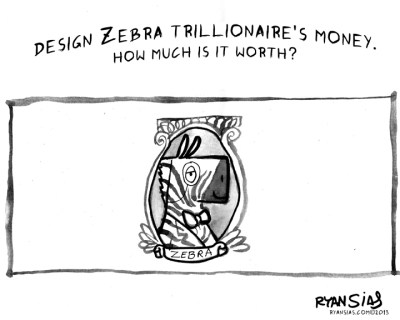
 Sias Studios‘ free weekly emails are designed to promote creative thinking and foster children’s imaginations. Our original art projects encourage kids to invent their own stories and make art without boundaries. We provide a springboard for you child to dive into artistic discovery!
Our silly and fun material engages children to create a positive art experience. Suggested for ages four to eleven—or anyone who is a kid at heart! Just print and color!
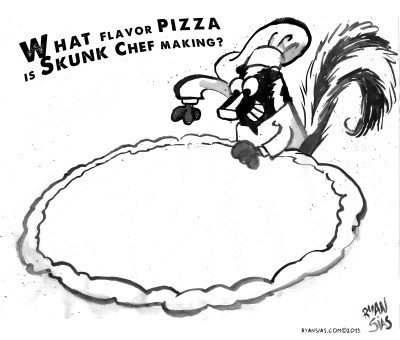
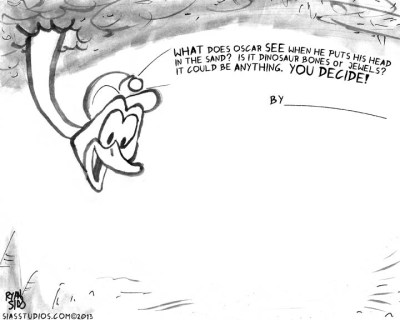

When you sign up to the mailing list at SiasStudios.com, we will email you our free weekly art projects. The emails will contain a downloadable PDF—just hit the button and print from your home computer. It’s easy, creative, and fun!
Click here to see our most recent project.
We suggest you do these activities along with your child. Show them how fun it is to brainstorm and create their own stories, and encourage them to keep asking questions.
Ryan, what gave you the idea to start this fun program?
The concept came from a combination of ideas. First, I love drawing with my nieces and nephews, it’s always silly and crazy. They live in other states so I don’t get to do it as often as I like. Next was the fact schools are always cutting art classes, and I worry that kids are not developing their creativity. I wanted to do something for every kid that was super-wacky fun, something that encourages art brainstorming.
Then while on a walk the idea hit me. I should combine these ideas into one project!
That afternoon I sent some art projects to my nieces and then thought why not open this up to everyone?!
What has been your favorite project thus far?
The newest project is always my favorite because its new. I love creating wacky characters, so the trill of that is exciting. My favorite one is Waffle Dude; the idea just tickles me.
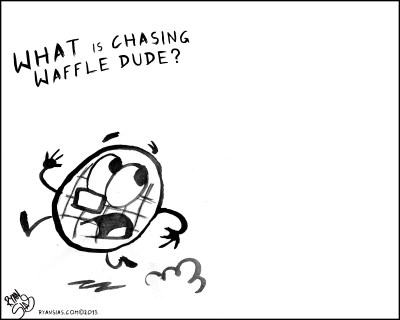
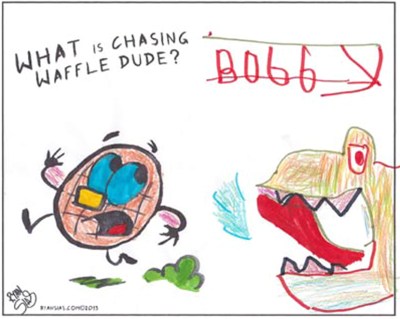
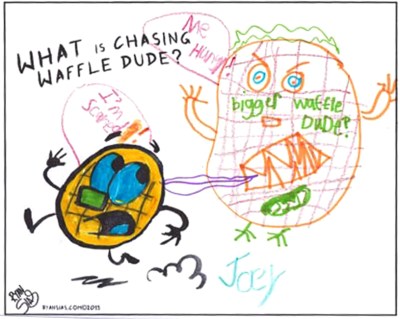
Ryan Sias has been making kids laugh and helping them learn for over two decades. A twenty-year veteran of animation, film, and television, he has directed projects for Barney and Chuck E. Cheese, and created story art for Sesame Street, Pinky Dinky Doo for Nick Jr., and Maya & Miguel for PBS.
Ryan’s illustrated picture book “Are You Eating Something Red?” was selected by the Museum of Modern Art to be included in the MOMA Store’s children’s catalogue. His latest book “Zoe & Robot: Let’s Pretend” is available on Amazon. Ryan’s comics have appeared in Nickelodeon Magazine and Mad Magazine.
Ryan also makes appearances at schools and libraries. His “Story Laboratory” workshop teaches drawing and storytelling in an entertaining and collaborative presentation. Contact Sias Studios for information on booking your own “Story Laboratory“!
This business requires a lot of waiting.

Inspector Clouseau found out that THE MONSTORE, while it will be in Barnes and Noble stores, is actually slated for their Halloween holiday push. So, you might not see it there quite yet.
Therefore I am extending my “in the wild” contest to October 31. That gives you plenty of time to spot it out there!
While I have your attention, that Clouseau gif reminded me of one of my favorite movie jokes from The Pink Panther Strikes Again.
Clouseau (looking at dog): Does your dog bite?
Innkeeper: No.
Clouseau (reaching to pet dog): Nice doggie.
Dog: *snarls and snaps*
Clouseau: I thought you said your dog did not bite.
Innkeeper: That is not my dog.
.
Happy Friday, all!
“With over 3 million books being published every year, competition in the marketplace is enormously stiff. In fact, over 78% of all published books fail, and the average book, today, sells just 250 copies.”
Ouch! A sobering fact from book promotion guru Patricia Fry.
What’s an author to do?
You’ve got to be a book promotion machine.

But you’re not a machine, are you? No, you’re an author.
So that’s why I invited Patricia here today. After reading her book TALK UP YOUR BOOK, I realized even though I’m doing a lot to promote my book, I could be doing more. I SHOULD be doing more.
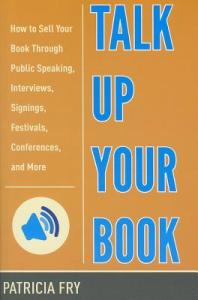 Patricia, that 78% statistic is scary. Can you tell us what you mean by “fail”, and is there a difference in these stats between traditionally published and self-published titles?
By “fail,” they mean the books sell fewer than 100 copies. There are no statistics that I know of that indicates how many self-published authors versus traditionally published authors “fail.” However, I can tell you that around 78 percent of all books published today are produced by pay-to-publish “self-publishing” companies.
Why are so many books failing in the marketplace? Because most new authors neglect to study the publishing industry before getting involved. They don’t know the importance of writing the right book for the right audience and they don’t understand that it is up to the author to promote the book. Many new authors who do take the initiative and time to learn something about book promotion, find themselves in over their heads once they are faced with the huge responsibilities involved with marketing their books. They don’t realize how much time, energy and effort it takes. They become overwhelmed and disillusioned and they either never start a marketing program or they quit before they’ve gone very far with it.
Competition is another reason why some books fail in the marketplace. There are more books than ever before and statistics show there are actually fewer readers. But even in the face of competition, there are some books that do much better than others and the key is always–write a book that is needed/wanted by a segment of people, know who your audience is and write for that audience, have your book edited by a good book editor and, when it comes time to promote that book, it is vital that you know how to promote to your particular audience. No one will buy a book they don’t know about. It is up to the author to reach his/her audience. Something else authors often lose sight of is that once they stop promoting their book, it will die.
OK, so about 22% of all books are with traditional houses. Traditional houses will promote your book (right?), but the author still needs to do as much as they can. What do you say to the authors who think they can just sit back and watch sales roll in? And what do you say to those authors who complain, “But I’m not a natural promoter. I’m an introverted writer!”
I don’t know much about the statistics. That isn’t my strength. But I can tell you that in today’s publishing climate, all authors MUST be prepared to and expect to do the majority of the promoting and marketing for their books. There are hundreds of traditional publishers and they each have different ways of working with authors, but most are more interested in the author’s platform and what the author can and will do to spread the word about their books than almost anything else. Most of them want to work with authors who have a following, a reach—a ready-made audience for promoting their particular book and an understanding of book promotion.
By way of promotion from the publisher’s side—generally, a publisher will put the book in their catalog and on their website. They might send out press releases to their list of reviewers, newspapers, etc. They may give an author 3 months with an on-staff publicist. But, yes, the author is expected to be the main marketing agent for his/her book.
What do I say to authors who do not want to promote? I would hope to talk to them before they ever write that book. I would ask them to study the publishing industry and to learn what is expected of them—what their responsibilities are as a published author. I would urge them to learn what book promotion entails—to gain an understanding of this huge responsibility before ever deciding to write a book for publication. If they don’t want to do the promotion, they should seriously reconsider producing a book.
For those who have already written and published a book, I would recommend that they engage in the same study asap. There are hundreds of ways to promote a book. An author can find his/her level of expertise and comfort among them. They can pick and choose—but they must be realistic about what it’s going to take in order to reach their particular audience.
This means, they must know who their audience is, write the book with that audience in mind, know where their readers are and how to approach them. They must understand that it’s all about exposure. No one will buy a book that they don’t know about. Someone (in this publishing climate it is the author) must get word out to their particular audience.
With so many avenues of promotion available now, it can be overwhelming. And so part of an author’s job is to become familiar with those avenues and determine which ones are best for their book. There is usually no one or two activities that will help an author reach his or her audience. Authors must use a variety of activities, skills, methods, mediums toward getting exposure—getting their books noticed by their readers. And those methods, skills, etc. may differ from author to author and book to book.
Is there any particular promotional tool or event that is easiest for a new author to jump into? Is there anything you recommend doing first and foremost?
 First and foremost, the author must know who his audience is and where they are—what do they read, where do they hang out—on the Internet, around town, throughout the universe? Where do they go for the sort of information you provide in your book or for entertaining reading material? Then the author must find ways to reach his or her readers through these means.
Remembering that it is all about exposure, as an author, you must make sure your book is front and center where your readers are. This might mean having it for sale at specific specialty shops related to the theme or topic of your book. It might mean announcing your book in appropriate newsletters (members of organizations can usually place announcements in organization newsletters, for example), having it reviewed at appropriate blog sites and so forth. So the primary promotional activities might differ from author to author, depending on the genre and theme of the book and the nature and needs of the audience.
However, as for the basics for most authors, I would recommend building a website related to the genre/theme of your book. I can’t tell you how many authors miss out on opportunities because they don’t have a website that can be easily located and accessed. They rely on their publisher—even their self-publishing company—to get word out about their book through the company website. Bad idea!! If someone is looking for a good mystery involving horses, a handbook for beginning surfers, a guide to gardening in the northwest or a children’s book on hygiene, for example, and this is the nature of your book, you want them to find you first. A website is a good place to start making this happen.
The second thing you need to do is to advertise that website. Put it in your email signature, on your promo material, in your bio at the bottom of your articles, and so forth.
A good place to start introducing just about any book is locally. I urge authors to speak locally, reserve booths at local flea markets and book festivals, offer it as an auction item for charity and visit independent bookstores and appropriate specialty stores and other venues where you can sell the book. You’ll get an idea of the reader interest in your book. You’ll learn tips and techniques that will help you with future promotion. You’ll learn whether or not it would be a good idea for you to travel and speak about your book and whether to sign up at larger book festivals, for example. In other words, you can test your market locally without much expense.
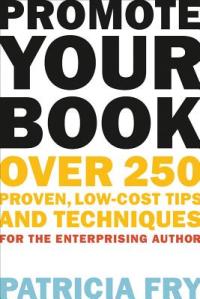
This is a good starting place for many authors. There are hundreds and hundreds of additional promotional tools and ideas–I have over 250 in my book, PROMOTE YOUR BOOK. John Kremer lists 1001 in one of his early books on book marketing.
Thank you, Patricia! I think we’ve got a lot to think about and a lot to do! I can’t thank you enough for your wisdom and your terrific books.
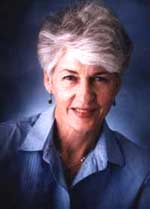 Considered “a maven when it comes to counseling authors in the art of publishing and selling their books” and “one of the most well-known writing gurus,” Patricia Fry has been working with other freelance writers and authors for over two decades. Currently, she has 39 books to her credit, representing an eclectic mix of subjects including several writing/publishing-related books. She is a literary and manuscript consultant, an editor and a teacher. She can help you write a book with more publishing potential, professionally edit your book manuscript, guide you in preparing a more effective book proposal and coach you in more successfully promoting your book. You can find promotional tips and free ebooks at PatriciaFry.com.
Hey troops and peeps! YOU DID IT!
Barnes & Noble has placed an order for THE MONSTORE so it should be spotted in the wild WITHIN DAYS!
And to thank everyone who rallied by my side, I’m holding a contest.
Take a photo of THE MONSTORE at Barnes and Noble and email it to me at tarawrites [at] yahoo [dot] com. (It should be in stores for their Halloween holiday push.)
I’ll pick a random winner who will receive a signed book and SWAG (when it arrives)…plus a picture book critique. Deadline to enter is October 31st!
You made it happen! By reviewing THE MONSTORE on GoodReads and Amazon, by calling and dropping by Barnes and Noble—I am certain that this wouldn’t have happened without YOU.
So I am extremely grateful and I feel blessed. My most heartfelt thanks!
*sniff* *blows nose*
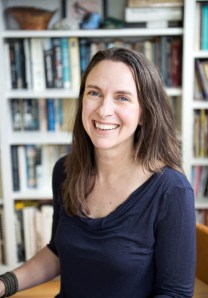
by guest blogger Julie Falatko
 In 2011, after several months of taking picture book writing seriously, I heard about PiBoIdMo and thought, “Sure, why not?”
If I’d realized how much Picture Book Idea Month would change everything, I might not have been so glib about it. But at the time I didn’t realize that the work done during PiBoIdMo would get me an agent and a book deal.
That year, I came up with 48 ideas, one of which was good. I didn’t realize that at the time. At the time I thought they were all good. But as I wrote them up, I learned that sometimes what seems like a good picture book idea…maybe isn’t. Or at least not for me. I thought a story about a stalk of depressed broccoli would be great (spoiler: it wasn’t). A girl who puts on ridiculous clothes every morning? Snore. How about a kid who wants to be a writer? How about I bonk the reader on the head with boring bricks?
But PiBoIdMo 2011 took a wrench to an Idea Faucet that was rusted shut in my head, loosened it up, and oiled it with a big can of Pay Attention.
After that November, the ideas kept coming—drip, drip, drip—slowly, and, in most cases, terribly. But I like my brain. And I trust it enough to listen to it. So when it told me an idea, no matter how ridiculous, I wrote it down.
On November 1, 2012, I started my second year of PiBoIdMo. What I didn’t know was that my brain had gotten a much bigger wrench for the occasion. And instead of opening up the Idea Faucet a little more, my brain clean knocked the whole faucet off—THWACK!—and let the ideas spurt up like a fountain at the park.
November 2012 I got 30 ideas. Four were good. One I wrote up immediately and it was better than anything I’d written before. Something was happening.
And then one night in late November I was making dinner, thinking about how I like books that let kids know we trust them and think they’re smart. And FWOOSH there it was, an idea, but more than an idea, the entire story, not just the plot, but the words, dumped into my head.
I ran. Bolted from the kitchen, so afraid of losing the sentences swimming in my head. I yelled to my husband that he had to finish dinner, and typed up my story as fast as I could. It was exhilarating and maybe a little scary.
When I was done, I had SNAPPSY THE ALLIGATOR (DID NOT ASK TO BE IN THIS BOOK). Snappsy was the story I sent to Danielle Smith at Foreword Literary. She liked it and asked for more—I sent her the story from the one good idea from PiBoIdMo 2011 and the other good one I’d written during PiBoIdMo 2012. She became my agent. And SNAPPSY was my first book deal, on July 16. It’ll be published by Viking Children’s in the summer of 2015.
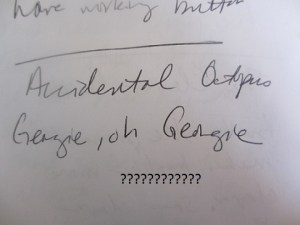
Snippets from Julie’s idea notebook
Since November, the ideas have kept coming. None have come out as quickly as SNAPPSY, but some have been close. I keep notebooks and pencils everywhere. And I still write down everything my brain tells me to in my PiBoIdMo notebook. Because while some may seem like a random string of words (“accidental octopus/Georgie, oh Georgie”), or just my brain having fun (what am I supposed to so with “Mr. Codfish is quite pleased with his new trousers,” exactly?) those ideas pave the way for the ones that become good stories.

Well, Julie, hat stories have been very popular lately
Writing is practice. Preparing for writing takes practice too. PiBoIdMo forces you to play. Thirty ideas is a lot of ideas. Not all of them are going to be brilliant or fully formed. Probably very few of them will be. But you write down what you can, and you teach yourself to look for ideas in the world around you and to listen to your brain when it whispers in your ear. PiBoIdMo is fast, but writing well can take time. Keep at it. Don’t give up. Take yourself seriously, and trust in the process.
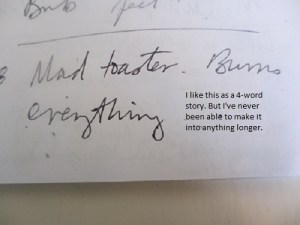
Highlights submission?
Thanks for sharing your success, Julie, and congratulations on SNAPPSY, which I cannot wait to read!
I hope many of you will join us for the 5th Anniversary of PiBoIdMo this November!
Julie Falatko lives in Maine, where she works tirelessly trying to bribe her four children into doing housework so she can spend more time writing. In the end, they just bake cookies and call it a day. She blogs at worldofjulie.com, tweets @JulieFalatko, and reviews picture books for Katie Davis’s Brain Burps About Books podcast. She can often be found transcribing her brain’s random word association games into her PiBoIdMo notebook.
Anticipation, anticipa-yay-tion. It’s making me wait.
Carly Simon sang it, then Heinz stole it: “It’s soooo good.”
.
OK, I’m not waiting for ketchup here. It ain’t all that good.
This is not a job for the impatient. I used to work in high-tech where whole industries sprung up over breakfast, where innovation occurred during a coffee break and tomorrow’s ideas were outdated the day before yesterday.
And now, publishing.
Sure, the industry seems to be transforming rapidly with ebooks, book apps and new social media discovery tools, but manuscripts are pretty much bought the same way they have been for decades (with perhaps the exception of email submissions instead of postal mail). Editors still have to read and evaluate stories, and that requires thoughtful reflection. That takes time. Especially with thousands of them to sort through every week.
Moreover, whole departments must agree upon a manuscript’s merits. It’s not just one editor’s opinion. The entire editorial team, the art department, marketing, sales, publicity, the publisher—all have a say in whether a story fits its list. And besides fitting in—will the book sell? Will it make a profit? Publishing, despite all its artistic ambitions, is a business after all.
You can understand the myriad factors involved in an acquisition, but it doesn’t make waiting on a submission’s fate any easier.
I’m reminded of Schoolhouse Rock’s poor Bill sitting on Capitol Hill. Except his little ditty only lasted as long as a commercial break.
What to do while you wait—weeks, months, maybe even a year? The best remedy is to write something new. Or play Candy Crush.
No, really, write something new. Level 187 is impossible anyway.
For what are we? Are we obsessive email checkers, phone call screeners and mailbox watchers?
Well, yes. Yes we are.
But we are not WAITERS. We are WRITERS.
And writers write.
So get on with it!
And remember, besides “anticipa-yay-tion”, Carly also sang “these are the good old days.” (And she’s the daughter of Simon & Schuster co-founder Richard L. Simon, so maybe she was truly singing about publishing. Not ketchup, Heinz.)
Welcome back, Mira, now where were we? Oh yeah, that exclusive… Cookie and I have been real patient. Animal, well, not so much. Drum roll, please.

First off Tara, I’d like to respond to some of your comments regarding what can happen after you are published.
Oh, the suspense!
Getting a review in any of the top review journals is really tough because they get so many submissions and only have space for a few. Also the publisher’s marketing/publicity folks (often just one person) are so overworked and overwhelmed it really is up to the author and illustrator to get the word out these days. It also helps if you can make personal connections with their marketing/PR peeps to inspire them to help get the word out for you. Have you made a trailer for the movie? If you aren’t video savvy, Katie Davis’s video course, which I’ve taken, is terrific: VideoIdiotBootCamp.com. I’m also hoping that folks share the video of your book that we posted yesterday to help get the word out. It really is an exponential numbers game of people sharing.
I know how much heart and soul and time and sweat goes into writing a good manuscript and then the emotional ups and downs of actually getting it published only to have it fall through the cracks of the biggest retail chain because of negotiation issues that have nothing to do with you. Aaargh. It’s heartbreaking. Also I loved what you had to say about your relationship with your illustrator. You do have to trust and most times what they do far exceeds anyone’s imagination or expectations.
In terms of an exclusive offer… Here’s what I’d like to give your wonderful readers, many of whom I know ☺.
- I’d like to provide the opportunity to register with the early bird special price of only $249 (regular price $289) for the upcoming Craft and Business of Writing Children’s Picture Books e-course starting August 26th, with this link: https://www.e-junkie.com/ecom/gb.php?c=cart&i=1111301&cl=210181&ejc=2.
- …or the Big Bonus Craft and Business of Writing Children’s Picture Books for $279 (regular price $325) with this link: https://www.e-junkie.com/ecom/gb.php?c=cart&i=1156535&cl=210181&ejc=2. The e-course includes over 30 lessons and more goodies than you can shake a stick. The Big Bonus includes interactivity with our Facebook group and live webinars. The offer is time-sensitive, so you need to sign up before July 29th to take advantage of it.
- In addition, I’d like to offer an exclusive opportunity for 5 people to pitch a picture book manuscript to me at Hummingbird Literary. To win the pitch contest all you need to do is suggest some creative marketing strategies in the comments below and help to get the word out for THE MONSTORE (yes I love Tara and her book). And of course Tara gets to choose the winners ☺ (deadline July 29th). The winners will receive a special priority email address from Tara for you to send a manuscript and pitch letter describing your other projects. For ethical reasons, students who take any of my personally taught course have to wait 6 months following a course before submitting to Hummingbird Literary, but I will make an exception if any of my former or near future students win here. Also because I want to give my heart and soul to my new clients, I won’t be teaching many more of the PBA courses myself and they will either be self-paced or have guest instructors. I’ll be sad but my new venture is also VERY exciting.
For more information on the courses, check out http://www.picturebookacademy.com/writing-childrens-picture-books.html.
Mira, that’s a terrific offer, thank you! You are so generous! Thank you so much for helping me get the word out about my book, and for helping other authors polish and sell their work. This really demonstrates what a big-hearted community we have in kidlit.
Before you go, Mira, I think one of the most interesting and telling things about an agent is their list of favorite all-time children’s books. Which PBs really stand out for you and why? What about them makes them special and inspiring?
This is such a hard question to answer. I have tons of video reviews over at the Picture Book Academy in the Blog section of books that I love, but all time favorites… Wow!!
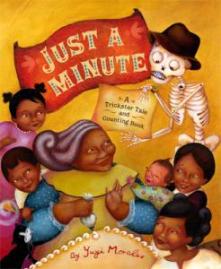 I love Yuyi Morales’s JUST A MINUTE because it’s fun, soulful, and has a fabulously powerful elderly female protagonist who outsmarts Señor Death. Besides being a counting book, it has many other layers of meaning and importance. I also love how despite being repeatedly told that no-one would ever publish a picture book with death as a main character, Yuyi believed in her story, persisted, and eventually went on to win all sorts of awards for it. The book launched her career.
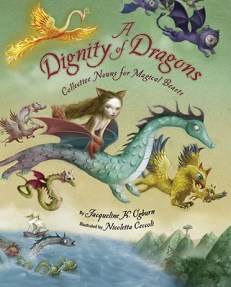
I’m a huge fan of Nicoletta Ceccholi’s art, which is positively luminous in A DIGNITY OF DRAGONS: Plural Nouns for Mythological Beasts, which has minimal, elegant text in a non-fiction format. It also has a multicultural aspect, which I love and is just so exquisitely done.
 Another favorite is VOICES IN THE PARK by Anthony Browne, which I consider a perfect book for way too many reasons to describe, Mo Willems’ LEONARDO THE TERRIBLE MONSTER for its simplicity, cleverness and underlying meaning, I SEE THE RHYTHM, another near perfect book that works on multiple layers.
I think I’m quite promiscuous when it comes to having favorite books as there are so many more that I adore.
And these are some of the many books by my super talented former students!
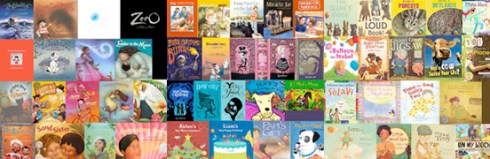
Also, I’m doing a free writing workshop/webinar this Wednesday with Mark Mitchell of Make Your Splashes at 6PM Pacific Standard time here: http://makeyoursplashes.com/a-writing-workshop-with-mira/. I’ll try and include these books and other favorites as part of it. If you are interested, do sign up for it soon as the webinar space can only hold a limited number of people.
Tara, what are some of your faves? I know you have a wicked sense of humor so I imagine there will be some funny ones in there from you.
Yes, I love the quirky picture books. I adore THIS RABBIT BELONGS TO EMILY BROWN by Cressida Cowell, ARNIE THE DOUGHNUT by Laurie Keller and OTTO GROWS DOWN by Michael Sussman. They are all funny, layered stories with smart kid sensibilities that are a bit longer in length than some of the more recent hits. I like more meat in my picture books. One of my favorite non-fiction picture books is by Shana Corey—THE MERMAID QUEEN. Corey, also an editor at Penguin Random House, focuses her stories on little-known but important women in history.
And finally, Mira, how would you describe your ideal client?
My ideal client with be tall and tan and young and lovely, wait, that’s a song. No. I love working with people who are smart, fun, soulful, in touch with the emotional core of their stories or art (i.e. character-driven), able to let go of their egos to work gently and collaboratively doing whatever it takes to make the story or art be the best it can be if needed, playful, culturally sensitive, warm, loving, diverse, interested in all sorts of things including non-fiction, either non-rhyming or a professional poet, a skilled artist open to possibly writing, a skilled writer open to possibly illustrating, and someone who really wants to work with me and has the patience to see the long term goals. Another quality that my ideal client will have is an appreciation for community as Hummingbird Literary will also be a community for its clients with our own group blog, our own secret social media space where folks can critique each others work and support each other with a spirit of camaraderie and celebration of creativity and life!
Before I go, I wanted to share something from my office.

On Saturday I refinished this file cabinet with rice paper to hold Hummingbird Literary files and it’s named “The Karen” after my mentor, Karen Grencik. With time, I’ll be collaging images from our client’s books all over it. It was exciting to make.
Wow, Tara, this post turned out a bit epic. I sure had fun doing it with you and send my love to you and your readers. I look forward to see the practical and creative approaches to promoting THE MONSTORE ☺!
Thank you, thank you, Mira! I know you’re going to have a long and successful career as an agent, and I know so many people who would benefit greatly from your guidance. My best wishes to you in all your endeavors!





 Writing for Kids (While Raising Them)