You are currently browsing Tara Lazar’s articles.
Poor, sad, neglected blog!
I’ve been whisking off to school visits and conferences, but I’ve not been too busy to blog. Too lazy, perhaps. And I have an avalanche of awesome authors and illustrators waiting for me to post about their books. I need a swift kick in the pantaloons.
Remember when Twitter was introduced, “they” dubbed it a micro-blogging platform? (“They” are always busy, have you noticed?)
Well, I’ve been micro-blogging. Here are some recent tidbits of #pubtips…

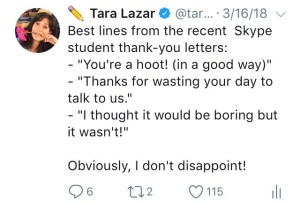
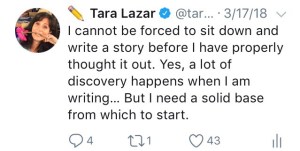
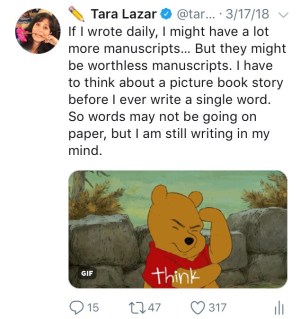


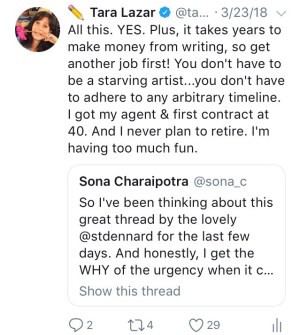

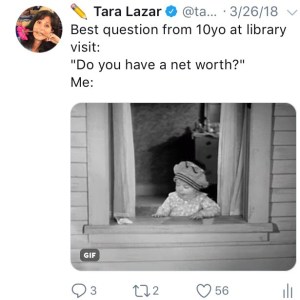
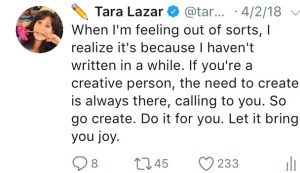

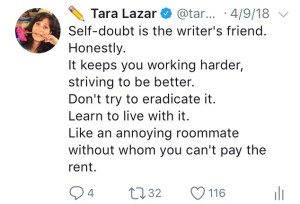
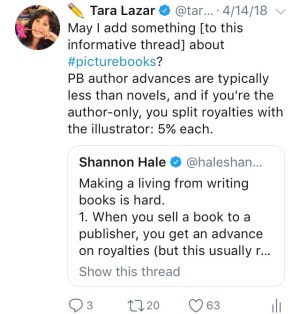
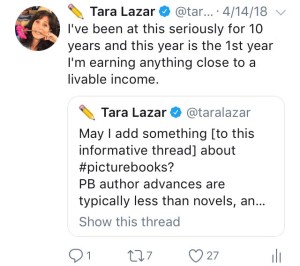
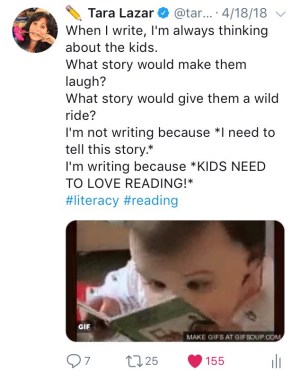

Don’t follow me on Twitter?
Let’s fix that, shall we? (Does that make us a “they”?)
And now, here are “they” who won recent giveaways here:
Cate Berry’s PENGUIN & SHRIMP DON’T DO BEDTIME
Amanda Sincavage
Tracy Marchini’s CHICKEN WANTS A NAP
Carole Calladine
Troy Cummings’ CAN I BE YOUR DOG?
Kara Newhouse
Congratulations, winners! I will email you shortly…
 by Cate Berry
Bedtime. There’s a word. If you’re like me, at the end of the day, you’re spent. I’ll admit, some nights, if I could “do bedtime” via the latest app I’d gladly press my thumbprint into a device. A quick video would help the kids settle down right? Netflix, PBS, Youtube…
But I write books for children.
D’oh!
There’s a special time at the end of the day when grown-ups and kids come together. After the dog-and-pony-show—the getting into pajamas, the getting teeth brushed, the endless hijinks—that’s when we finally connect.
Research shows that reading bedtime books has a palpable effect on early literacy. Magic happens when a child sits on a grown-up’s lap at the end of the day listening to a story, watching the text interact with the pictures on the page. Comparing and contrasting the drawn page with the pictures in their minds helps a child develop critical thinking. And the literacy “residue” from reading aloud helps kids develop a broader vocabulary at an earlier age. As the Times article states, “… every parent who has read a bedtime story knows, this is all happening in the context of face-time, of skin-to-skin contact, of the hard-to-quantify but essential mix of security and comfort and ritual.”
Learning benefits aside, I also believe it’s good for people to laugh with each other. Sharing a giggle can heal the day’s bumps and bruises. My characters, Penguin and Tiny Shrimp, want to share their laughs and smiles. Ultimately, they care about spreading joy and fun—together.
Teamwork.

 That’s what this book is about. My two characters work together—the buddy system!—against a common goal of falling asleep. [Don’t tell them, but much yawning will ensue, almost guaranteed.]
Does bedtime make you wiggly? Grab a buddy—a lovey, a sibling, a book! I was paired with a great “buddy” for the making of this book, illustrator Charles Santoso.
My favorite kind of picture book feels like a duet between the author and the illustrator. On one page the text might drive the story, followed by a wordless spread with just illustrations. It’s give and take. Maybe a graceful dance is a better way to put it.

Charles understood Penguin and Tiny Shrimp so authentically. In our interview for Cynsations he described to me how he listens to an author’s characters, letting them guide his illustrations, which is probably why he’s so versatile. At the same time, his signature warmth and emotion are always threaded throughout his work.
So, books. But there is one video I think you should watch: the one for PENGUIN AND TINY SHRIMP DON’T DO BEDTIME! (Spoiler: look out for Charles’ stealth characters!)
And, watch it with a buddy.
BIG thanks Tara for hosting me today on her wonderful blog!
Up with books, down with bedtime!
Cate Berry is the author of PENGUIN AND TINY SHRIMP DON’T DO BEDTIME! (May 8th, Balzer & Bray/Harper Collins). It was pinned a Junior Library Guild selection and Publisher’s Weekly called it, “A buoyantly subversive antibedtime book. (Picture book. 3-7).” She has forthcoming publications TBA and holds an MFA in Writing for Children and Young Adults from Vermont College of Fine Arts. Cate is a faculty member with the Writing Barn in Texas and an active member in the SCBWI and Writers’ League of Texas. She also speaks at schools, libraries and conferences year round on such topics as “Gender Stereotyping and Poetic Devices” and “From Stand Up to Sit Down: Funneling Surprise and Stand-Up Comedy into Humorous Picture Books.” Visit her at cateberry.com to learn more.
Cate is giving away a copy of PENGUIN AND TINY SHRIMP DON’T DO BEDTIME! upon publication in a few weeks.
Leave one comment below to enter.
A random winner will be selected soon.
Good luck!
 by
by I’ve worn a number of hats in my career—and for the most part I have always had at least two hats on at once.
Now, I’m a children’s author who is celebrating her picture book debut, CHICKEN WANTS NAP, and a Literary Agent at BookEnds Literary representing fiction, non-fiction and illustration for children and teens.
But I’ve also been a newspaper correspondent, a children’s book reviewer, a freelance copywriter, a literary agents assistant, a freelance editor and a communications manager. (Well, and a pharmacy tech—which has nothing to do with this post—and very, very briefly an assistant at a wedding dress preservationist’s—which is the only job I’ve ever been let go from. I was relieved.)
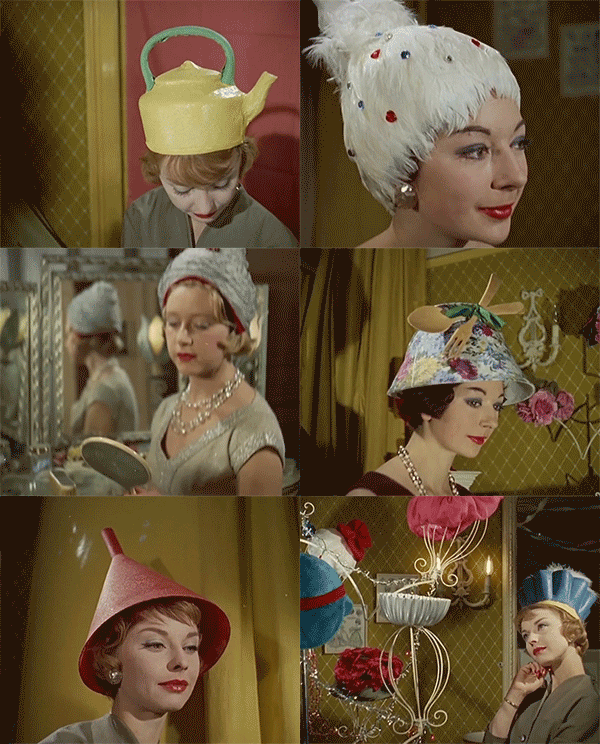
Anyway, so many of these hats forced me to learn to write in a different way. Feature pieces vs. event wrap ups, editorial letters vs. pitch letters, book reviews vs. press releases—everything had a different format or tone, but there was also a lot of overlap. Ultimately, I think all of the above experience helped me with my writing and agenting career, and I hope that some of the below helps you too!
Character
I would get my newspaper assignments on Friday, do interviews and write the story over the weekend, and submit on Sunday so it’d be in my editor’s inbox by the Monday deadline. (Monday I’d be commuting to work as a literary assistant.)
My favorite pieces to write were feature pieces that honored another person’s life. People were generally so happy to talk about this person that they loved or admired, even though we’re all flawed, and I usually left the interviews feeling pretty inspired. I also felt like there was a little more room for creativity in a feature piece. A good features makes the reader feel like they’ve met the person, too.
Looking back on feature writing makes me think about a character exercise that I was once assigned in undergrad. The exercise says to pick a person you know and write about them as they would write about themselves. Then write about them through the eyes of someone that hated them. Then again through the eyes of someone that loved them. You have three different people on the page—or four, right? Because the primary subject is actually probably closer to a culmination of those three pieces than any one particular view—and I think that’s why the exercise can be so helpful when you’re struggling with rounding out your characters. Remember, even antagonists think they’re the hero of the story.
Hook
 Book reviews, newspaper pieces, pitch letters, press releases, copywriting—all of it relied on being able to find a hook that was going to grab a reader and make them want to read more, attend the event, buy the book, click a link, etc.
As an author, particularly as a picture book author, you have to be thinking about what is going to make your story stand out on the shelves or in the submissions pile.
That said, your hook is not the plot summary. For example, I’ve pitched CHICKEN WANTS A NAP as “Remy Charlip’s Fortunately set in the barnyard,” but that’s not the summary.
One exercise I’ve done with friends when they’re having trouble with finding a strong concept for their own WIPs is to go through the bookstore or their own shelves, pull out and read a picture book, then find a hook. For example, DUCKS’S VACATION is THERE’S A MONSTER AT THE END OF THIS BOOK set on the beach. NUT JOB is “Ocean’s 11” with squirrels. Or, if I were to pitch a book without a comparison, I might say something like HOORAY FOR FISH is a fun and heartwarming celebration of a fish’s love for their mom.
Once you’ve had practice with some books on the shelves, tell your friend the hook for your WIP. If it’s a plot summary, your friend should make you try again. And if you can’t find the hook for your WIP—that thing that’s going to make it stand out from all the other queries/manuscripts in an agent or editor’s inbox—then perhaps it’s time to take another look at your WIP’s concept.
In truth, you might not use this hook in your query letter at all, but if you find that a common theme in your rejection letters is “not sure it can compete in the marketplace,” this is an excellent exercise to help punch up your concept!
Word Choice
 Almost everything I wrote had a standard structure and/or expected word count, be it a press release, feature story, book review, pitch letter or pieces for a social media campaign. Just like in a picture book text, EVERY WORD COUNTED. I had to be concise—looking for that one perfect word instead of two to four less precise words.
So take out your picture book WIP. Are you in the sweet spot (300 – 500 words for fiction*)? Does every word convey the exact meaning you intend? If you’re using repetition, is it done in a way that builds tension, humor or otherwise adds to the story? If you’re not sure about a word or line, delete it and then read the story aloud (or bring it to somebody else). Does the story lose anything? If not, then permanently delete that line, phrase or word.
*CHICKEN WANTS A NAP is 165 words, and my current WIP is 600. CHICKEN is a read-aloud for younger picture book readers and the story just did not need another 140 words. My WIP is for older picture book readers who are starting to read by themselves. So I guess I’m saying to use the words you need and not one word more!
Speaking of one word more, I had started a different draft of this post where I went through each job individually and it quickly became a novel. And as I’m hitting that point again, I think it’s best to close here. I hope that these tricks help you in your own writing, and if you have the time or opportunity to do some freelance writing in another format—I say, why not! You’ll exercise a different writing muscle, and I’ll bet it’ll improve your current children’s writing as well!
 Tracy Marchini is a Literary Agent at BookEnds Literary, where she represents fiction, non-fiction and illustration for children and teens. She’s thrilled to represent a list of debut and award-winning authors and illustrators, and is currently open to submissions. To get a sense of what she’s looking for, you can follow her Twitter #MSWL, see her announced client books, and read her submission guidelines.
As an author, her debut picture book, CHICKEN WANTS A NAP, was called “A surprising gem” in a starred review from Kirkus. She’s been accepted for publication in Highlights Magazine and has won grants from the Highlights Foundation, the Puffin Foundation and La Muse Writer’s Retreat in Southern France. She holds an M.F.A. in Writing for Children and a B.A. in English, concentration in Rhetoric.
Tracey is giving away a signed copy of CHICKEN WANTS A NAP.
Leave one comment below to enter and a winner will be chosen next week.
Good luck!
Designing a picture book cover is like housetraining a puppy: it requires lots of patience, there are papers spread all over the house, and it’ll inevitably lead to fits of howling in the middle of the night.
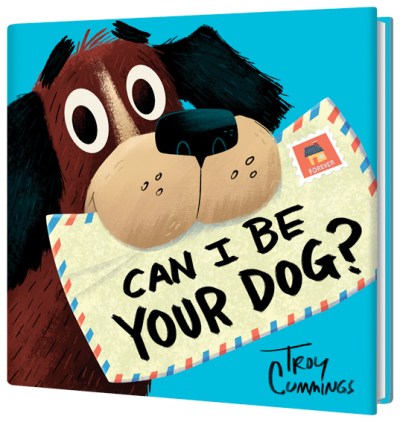
But if you can sniff out the good ideas and clean up your happy accidents, you’ll hopefully wind up with something you’re proud to cuddle up with on the couch.
When I wrangle my picture book covers, I try to explore as many different ideas as possible. I start by sketching a few pages crazy loose brainstormy concepts, and then distill those into half a dozen thumbnail sketches.
I draw my thumbnail sketches at about 1.5″ tall. It forces me to work quickly, make big, bold shapes, and to _not_ get fussy with details. I think it’s best to work in b/w at this point; we can save the color decisions for later.
Here are the cover sketches I submitted to my editor/art director for CAN I BE YOUR DOG? It’s a story about a dog who writes letters to every house on Butternut street, in search of a home–so I knew I’d want the cover to involve DOG + MAIL.
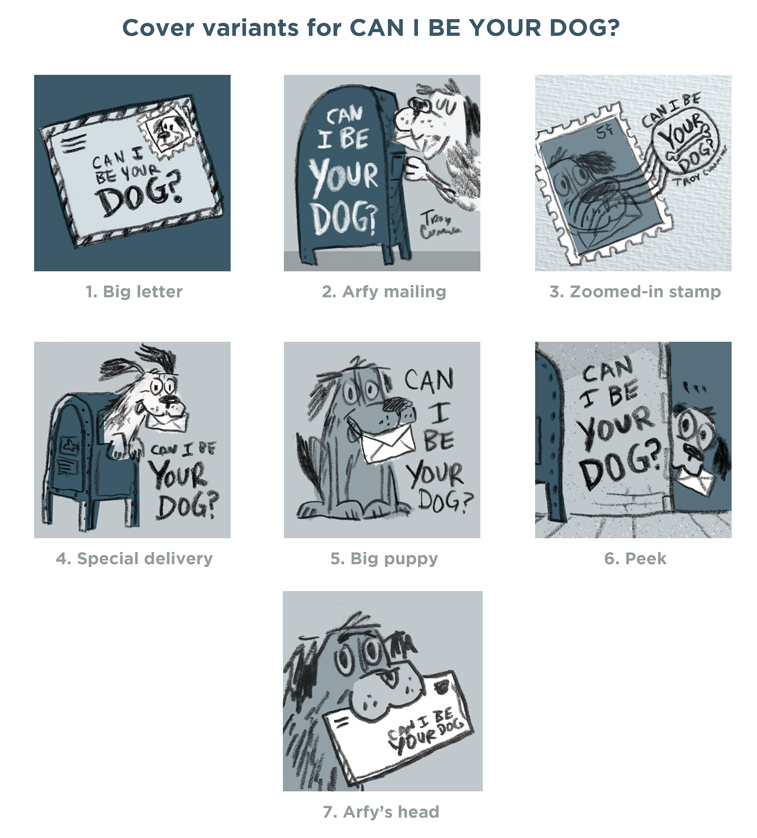
DVD COMMENTARY TRACK ON THE ABOVE IMAGES:
1. Big letter: This would have been a pretty static/boring cover; the puppy is too small! But I kept it here in case it gave us more ideas for another direction to follow.
2. Arfy mailing: I like how this one shows us the dog actually sending a letter. It’s sort of already getting the story started—like a bonus page zero of the book!
3. Zoomed-in stamp: I was trying to show the title in a cancellation stamp, but it’s too hard to read. (I ended up stealing this idea for my ABOUT THE AUTHOR photo on the flap. (With my portrait on a 3RD CLASS STAMP.)
4. Special delivery: I liked this one, especially Arfy’s floppy ears.
5. Big puppy: We ended up using this one as flap art, too.
6. Peek: I liked the timidness of the puppy peeking around the corner; we ended up using a variant of this on the back cover.
7. Arfy’s head: This was everyone’s favorite. The scruffy mutt is prominently featured, and it was nice to work the title into the illustration.
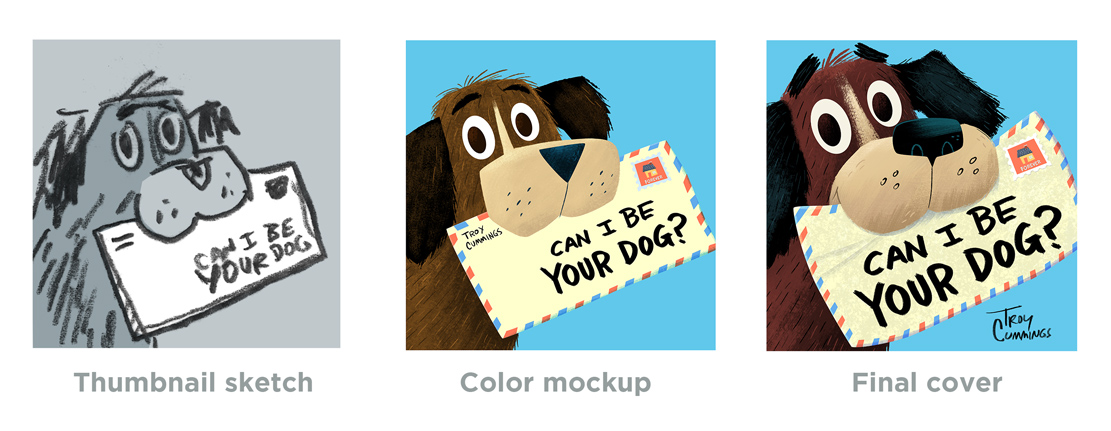
Once we’d agreed on a direction, my art director Liz (who rocks!) was able to take my sketch and improve it like crazy. Liz zoomed in on the image, made the title bolder, suggested to bend the letter, and moved my byline out to the background space. I loved all of her suggestions, and we ended up with a jacket that reads pretty well across the room or as a tiny thumbnail image on the web.
The best part about sketching multiple ideas is that none of that work was wasted. I was able to reuse some of my sketches on the flaps/interiors of the book, or for promotional materials.
Troy Cummings is the author/illustrator of more than 30 books, including CAN I BE YOUR DOG?, THE NOTEBOOK OF DOOM, and LITTLE RED GLIDING HOOD (written by the indefatigable Tara Lazar!) You can follow him on Twitter @troycummings, follow him on Instagram @troxcummings, or follow him to the new ice cream shop that opened next door to his studio. (Shrewd move on their part!)
Troy is giving away a signed copy of CAN I BE YOUR DOG?
Leave one comment below to enter. A winner will be selected next week.
Another drum roll…
Before I announce the daily prizes from Storystorm, I must thank Urania Smith for doing the random selection for me. Urania is my mentee from We Need Diverse Books, which we will be talking about soon….but let me tell you, she is a talent on the rise. Watch out for her!
And so here we go…
Day 1: Kirsten Ealand
Day 2: Patricia Alcaro
Day 3: Jen Arena
Day 4: Judy VanSlyke
Day 5: Frances Tosdevin
Day 6: Wendy Myersart
Day 7: Pat Miller
Day 8: Ryan Roberts
Day 9: Andrea Mack
Day 10: Maryshorgan (Sherry Peace)
Day 11: Tracey Brown
Day 12: Rhonda Whitaker
Day 13: Deb Smith
Day 14: Jennifer Broedel
Day 15: Writersideup
Day 16: Lynne Marie
Day 17: Anna Levin
Day 18: Natasha Garnett
Day 19: Karen Larson
Day 20: Andrew Lefebvre
Day 21: Beth Stilborn
Day 22: Bgonsar
Day 23: Lu Fiskin-Ross
Day 24: Kassy Kepol
Day 25: Kathy Cornell Berman
Day 26: Vasilia Graboski
Day 27: Mary Worley
Day 28: KASteed
Day 29: Lucy Straugler
Day 31: Stephen S. Martin
Post-Storystorm
Adam Lehrhaupt: Susan Schade
Nancy Churnin: Debbie Meyer
I will be emailing you all in the next few days to arrange your prizes.
And so, that’s it. It’s over????

No, silly, it’s never over! It’s time to WRITE!

Good luck and happy creating!
Drum roll please…

The following Storystormers have been randomly selected from the pool of ~800 who registered for the event AND completed the 30-idea challenge!
Each winner has been paired with a picture book literary agent who will provide feedback on FIVE IDEAS that have been fleshed out into pitches.
So winners, go through your idea lists and pick the five ideas that move you, that sing to you. (Like Adele.)

Yes, HELLO IDEAS!
Write up each idea as a pitch, around a paragraph apiece. Write about the crux of the story, the hook, how you might envision it panning out. If you aren’t exactly sure, then say so. But give as much information as you can about the idea so the agent can give you feedback on the idea’s viability in today’s picture book marketplace. This will give you an IDEA of which IDEAS you should pursue as manuscripts.
I will give you three days to work on your idea descriptions, then I will email you on February 10 to introduce you to your agent. I have asked the agents to respond to your ideas by the end of the month, but some asked for a little longer due to pending commitments. So please give them time to review and reply appropriately.
And so, here we go…the GRAND PRIZE WINNERS ARE:

Julia Ugarte (Holly McGhee)
Donna Taylor (Ammi-Joan Paquette)
Bronte Colbert (Tricia Lawrence)
Mary Jane Muir (Rachel Orr)
Johnell DeWitt (Stephen Fraser)
Tiffany Dickinson (Erin Casey)
Cassie Bentley (Kelly Sonnack)
Amanda Davis (Jennifer March Soloway)
Tanya Parrott (Tracy Marchini)
Lauren Soloy (Liza Royce Literary Agency)
Congratulations, everyone! Go celebrate!

Remember there are still prizes to come–all those daily goodies you saw throughout January. So stay tuned!

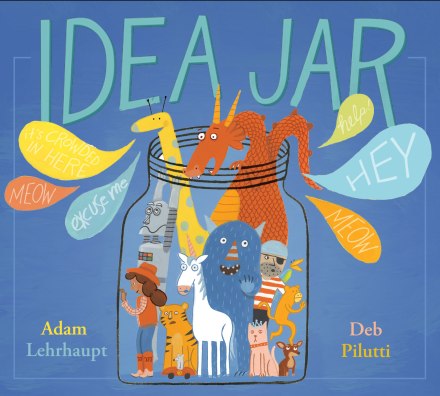
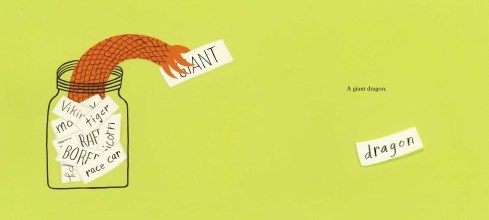
This is my idea jar. I keep all my story ideas in it.
You know the ones.
The same ideas we spend all of Storystorm coming up with.
Our brilliant, wonderful, genius ideas.
The ideas we will turn into fantastic manuscripts. Manuscripts that will, some day, become beautiful books.
So yes. This is my idea jar.
When I need a jumpstart, I reach inside and pull out one of my ideas. Then, it’s time to play.
You need to play with your ideas. You know that, right? If you don’t, they get rowdy. When ideas get rowdy…oh, my! The trouble they can cause…
Anyway, now I get to play with my idea. I can do all kinds of things with it:
- Draw it.
- Talk it out.
- Sculpt it.
- Fancy needle point thing it.
- I can even write it.
Well, I’d probably write it over any of those other ones, but that doesn’t mean you have to. You can play with your ideas however you want. The important thing is that you USE them.
Every. Single. One.
They might not all turn into that beautiful book, but we can learn from them all:
- What made this idea work?
- Why did this one fail?
- Can I revise it so that it’s better?
- Is there a different approach that I haven’t considered?
So, take out those ideas. Play with them. Don’t be afraid to make mistakes. If you do, learn from them.
Take what you learn and turn it into successes.
And then…
Reach back into that idea jar and do it again.
As a special treat, in honor of my newest book, I’m giving away my #1 thing to help you write picture books that will sell absolutely FREE, along with 35 tips and tricks to help you do it. Just stop over to writepicturebooksthatsell.com.
 Adam Lehrhaupt is an award-winning children’s author and writing coach.
He has written 14 picture books, including his newest, IDEA JAR (S&S, available TODAY) illustrated by Deb Pilutti.
Don’t turn out the lights, the Storystorm party is not over!
Yes, now that your notepads and brains are bubbling like cauldrons with ideas, the question Tara has asked me to answer in this post-Storystorm post is WHAT NEXT? In the 11 months between the end of Storystorm 2018 and the start of Storystorm 2019, what should you do with your ideas? How do you know which ones to work on first and which, if any, you may want to toss?
This is an answer you can make with your heart or your head. My advice? Use both.
What does it mean to choose from the heart? There are some ideas that just grab you and won’t let you go until you put them on paper. I keep long, growing lists of ideas, but I circle and focus on the ones that haunt me. I prioritize according to the ideas that demand a chance at life.
THE WILLIAM HOY STORY, HOW A DEAF BASEBALL PLAYER CHANGED THE GAME sprang from a promise I made to a Deaf man, Steve Sandy, to tell the story of this Deaf hero. It was my first book and I had no idea at first how to tell the story.
At the same time, my head knew there was a classic hero’s journey here to tell if I could just break down the steps. With the help of online classes and fearless critique partners, my head was able to figure out how to turn this idea into a story about a boy who grows into a man with a goal that he achieves by learning his challenge—his deafness—is actually his gift.

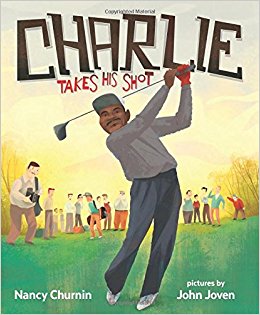
Three of my other books, while driven by my heart, made equal sense to my head. CHARLIE TAKES HIS SHOT, HOW CHARLIE SIFFORD BROKE THE COLOR BARRIER IN GOLF; IRVING BERLIN, THE IMMIGRANT BOY WHO MADE AMERICA SING (coming out in June) and THE QUEEN AND THE FIRST CHRISTMAS TREE (coming out in September) also required a lot of writing and revising, but ultimately fit into a hero’s journey with a clear beginning, middle and end.
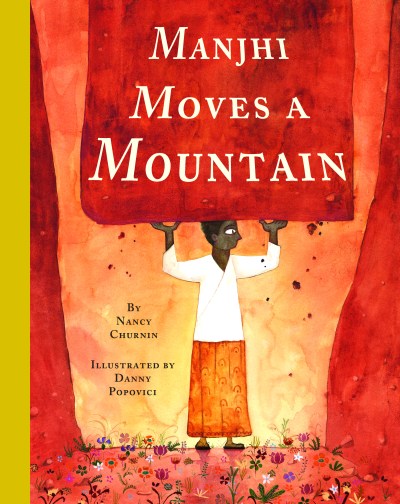
But MANJHI MOVES A MOUNTAIN ran the risk of being heart over head. It defied the classic structure with the story of a young man, not a boy, whose challenge is to find an easier way to navigate across a 300-foot mountain so people in his village can get access to schools and doctors. But I loved this idea and couldn’t let go until I found the way to tell his true story. It was a deeply rewarding experience as I slowly stumbled and felt my way to a narrative with a folk tale feel.
Ultimately, all ideas require you to put your head to work, as you have to solve the problem of creating page-turning suspense that leads to a satisfying conclusion in a story of roughly 800 words or less, preferably one that kids will want to read again and again. While some ideas contain a clear journey, others will prove elusive. Some you may want to toss or postpone. But you may not necessarily want to abandon them. Whether you let them guide you into a story should be a question of how much you love them.
We often talk about books as our babies. Like human or fur babies, they’re living, breathing pieces of you – funny, passionate, silly, kind, wise, a mix of some or all of these qualities or others that you never anticipated. So as we approach Valentine’s Day, sort through your ideas for the ones you love most passionately and give them everything you’ve got. Then when they grow up and move to bookstores far away, they’ll still feel close, beating in rhythm with your heart.
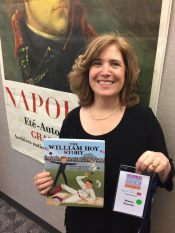 Nancy Churnin is the theater critic for The Dallas Morning News and the author of six picture books: THE WILLIAM HOY STORY, HOW A DEAF BASEBALL PLAYER CHANGED THE GAME (Albert Whitman); MANJHI MOVES A MOUNTAIN (Creston Books); CHARLIE TAKES HIS SHOT, HOW CHARLIE SIFFORD BROKE THE COLOR LINE IN GOLF (Albert Whitman) and the forthcoming IRVING BERLIN, THE IMMIGRANT BOY WHO MADE AMERICA SING (Creston Books, Spring 2018); THE QUEEN AND THE FIRST CHRISTMAS TREE (Albert Whitman, Fall 2018) and MARTIN & ANNE (Creston Books, 2019). Free Teachers Guides and projects for kids are available for all her books. You can learn more at nancychurnin.com, join her on Facebook at Nancy Churnin Children’s Books and find her on Twitter @nchurnin.

Nancy is giving away a copy of her most recent book, CHARLIE TAKES HIS SHOT: HOW CHARLIE SIFFORD BROKE THE COLOR BARRIER IN GOLF.
Leave ONE COMMENT on this blog post to enter. You are eligible to win if you are a registered Storystorm participant and you have commented once below. Prizes will be given away at the conclusion of the event.
Good luck!
HOORAY, YOU MADE IT!
It may have been a little bit crazy, but here you are.
If you have 30 ideas, you can qualify for one of our AMAZING Storysttorm prizes (the daily giveaways and the Grand Prizes) just by taking the following pledge. Put your right hand on a picture book and repeat after me:
I do solemnly swear that I have faithfully executed
the Storystorm 30-ideas-in-30-days challenge,
and will, to the best of my ability,
parlay my ideas into picture book manuscripts.
Now I’m not saying all 30 ideas have to be good. Some may just be titles, some may be character quirks. Some may be problems and some may create problems when you sit down to write. Some may be high-concept and some barely a concept. But…they’re yours, all yours! Give them a big, fat, juicy smacker! SMOOCH!
You have until February 4th at 11:59:59PM EST to sign the pledge by leaving a comment on this post. PLEASE COMMENT ONLY ONCE.
The name or email you left on the registration post and the name or email you leave on this winner’s pledge SHOULD MATCH. If you want to check the registration post, it is here.
Again, please COMMENT ONLY ONCE. If you made a mistake, contact me instead of leaving a second comment.
Remember, this is an honor system pledge. You don’t have to send in your ideas to prove you’ve got 30 of them. If you say so, I’ll believe you! Honestly, it’s that simple. (Wouldn’t it be nice if real life were that straightforward.)
If your name appears on both the registration post AND this winner’s pledge, you’ll be entered into the drawings for the daily giveaways and the Grand Prizes: feedback on your best 5 ideas from a literary agent.
So what should you do now? Start fleshing out your best ideas! Write them as elevator pitches. Get ready because YOU might be a CHOSEN ONE.
The daily giveaway prizes include picture books, manuscript critiques, art prints—all the stuff you saw during the month. All winners will be randomly selected by Random.org and announced next week.
So, sign away and pick up your winner’s badge to proudly display anywhere you choose:
CONGRATULATIONS! YOU’VE EARNED IT, STORYSTORMER!
 Inspiration is a slippery thing, impossible to catch when you’re trying and ironically, easiest to catch when you’re really, really busy doing something else. About a year after CLICK CLACK MOO was published, I decided it was time to take a leap of faith. I was an attorney at the time working long days and plenty of weekends to boot. I wanted to pursue writing as my career, so I finally quit my day job and shortly thereafter, we moved out of the city and out (well, up, actually) to the suburbs. I was going to write all day. All night if I wanted to! I had my own office in the house, I had plenty of writing time. No day job to get in my way! I sat and I sat and I sat—and I thought and I thought and I thought and I waited and waited and waited. You know what never showed up? INSPIRATION. I didn’t write a thing for almost a year. DIDN’T WRITE A THING. I had written so much more when I was working long hours and always pressed for time. Oddly, inspiration struck when I had no time for it back then. WHAT? NOW? A story about a worm?? It’s 1:00 a.m. and I have a brief due tomorrow! But when your brain is working, its working overtime. The harder I worked at my day job, the more my brain was spinning with ideas.
 What I learned in The Year of Not Writing (besides that we really should move back to the city), was that more often than not, inspiration shows up in the work. I write every single day. I absolutely do not write well every single day. In fact, I rarely do. Ninety percent of what I write is unusable. Horrible. Hideous. Embarrassingly bad. Boring. Unoriginal. Most of it will never see the light of day. But if I wait for inspiration, they will find my rotting corpse hunched over my desk and a blank screen on my computer. Which came first—the inspiration or the work? Very rarely, for me at least, it’s the inspiration. Usually, the uninspired work comes first and somewhere in the first draft or third draft or 18th draft, something from that work stands out, pops out, screams for attention. That’s the inspiration. Only you have to write it first. So frustrating!!
Where to start? Anywhere. I’m an introvert—so I’m listening way more than I’m talking—which is helpful. If you are chatting on your cell phone, or sitting near me on the F train, or at the next table in a restaurant… I’m eavesdropping. Bits of things, pieces of things are the best. Almost anything taken out of context can be a great story starter, title, or dialogue. I’m also partially deaf, so I mishear things all the time —which also makes for strange word pairings in my brain (and plenty of awkward conversations, which is okay, because of the introvert thing—I’m used to it.). Mistakes are great inspirations. Embarrassment is great inspiration. Fear excels at the art of inspiration. If you are not lucky enough to be a hard-of-hearing introvert, re-write an old idea. Write about a time you were deeply embarrassed or scared to death. Write about what you wished you had said in a recent awkward conversation, instead of what actually came out of your mouth (maybe that’s just me).
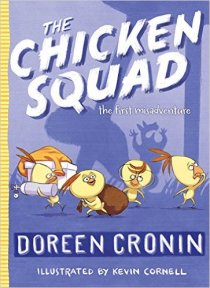 In the heart of every story is conflict—or a problem. Find yours. Use yours. Give your problems away to your characters. See what they do with them. If you can’t come up with a character, use a stand-in. Here, squirrel, here’s my problem. I’m afraid of ________. Just start writing the story about the squirrel afraid of public speaking—even though this would seem to fall into the category of a problem with little consequence for a squirrel. Just write it. Ninety percent of it will be unusable, hideous, boring, nonsensical. But it will start you down a path where you don’t know what’s coming. That’s where you want to be. That’s where inspiration likes to hang out.
When I die, some poor soul will come along and have to dig through my office. If I was alive, I’d be mortified at how many bad ideas, bad writing, and manuscripts completely lacking in originality will be unearthed. That’s the work. Maybe it will inspire somebody…
 Doreen Cronin grew up in Merrick, New York, with her parents, two brothers and a sister. They lived in a red house with a big backyard and a neighborhood full of kids. Her dad was a police officer and he was very, very funny! Doreen decided that she wanted to be a police officer when she grew up, too. Or maybe even an FBI agent! When she actually did grow up, she realized she wasn’t actually brave enough to do those jobs!
It was her first-grade teacher, Mrs. Cooper, who first told Doreen that she was a writer. Mrs. Cooper gave her extra writing assignments to encourage Doreen. It was extra homework, but she loved it! She also loved the library—it was one of her favorite places to spend time.
Doreen graduated from Pennsylvania State University in 1988 and St. John’s Law School in 1998. After practicing law for a few years in downtown Manhattan, she left my job and decided to write full time. She’s been writing ever since!
Visit her online at DoreenCronin.com.
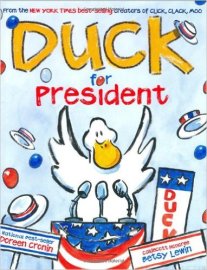
Doreen is giving away a set of signed CLICK, CLACK, MOO books (Click Clack Moo, Giggle Giggle Quack, Duck for President, Click Clack Boo)!
Leave ONE COMMENT on this blog post to enter. You are eligible to win if you are a registered Storystorm participant and you have commented once below. Prizes will be given away at the conclusion of the event.
Good luck!