You are currently browsing Tara Lazar’s articles.
You may know April is National Poetry Month, but to dig a little deeper, I asked Shannon Anderson—author, poet and teacher—to the blog to explain why poetry is important for children to read and write. She also shares tips for teaching poetry to young writers.
Shannon, what is National Poetry Month and when was it created?
I’ll admit, I had to look up the history behind this special month! Here you go: National Poetry Month was first started in April of 1996 by the Academy of American Poets to increase awareness and appreciation of poetry.
Many schools celebrate reading and writing poetry with creative activities and celebrations. As a teacher, I LOVE the “excuse” to encourage kids to read and write more poems during this time. As an author, I have been to many schools this month to share the joy of poetry and write poems with kids in writing workshops. My creative writing clubs have also had a blast this month, focusing solely on poetry creation.
Why is poetry important for children?
That is a big question! I can answer first as a mom, remembering back to my girls loving the sing-song rhythms of stories written in rhyme. The sounds and plays on words were pure enjoyment! Poetry helped them develop a love for books and reading.
As a teacher, I can tell you that poetry does SO much for language development. Reading rhyming poetry can help kids with predicting, an important comprehension skill. Reading aloud helps kids build their reading fluency. Poetry is the perfect genre for introducing interesting vocabulary words and figurative language. And, in my opinion, it is one of the best ways to inspire creativity and self-expression with students’ writing skills.
How did you kick off National Poetry Month with your classroom?
By the time April has rolled around, my class has already been introduced to all kinds of writing. I actually start out my first week of school with a narrative rhyming story from our reading series. I pair this, When Charlie McButton Lost Power, with Penelope Perfect, to show the kids the magic of different rhyming schemes. Many students don’t even realize authors intentionally plan which lines rhyme!
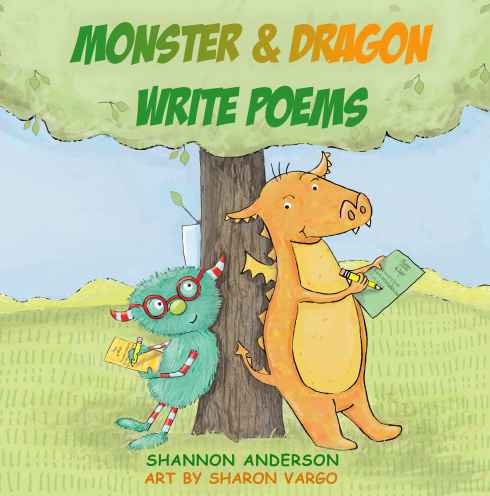
The first week of Poetry Month, I used my book MONSTER & DRAGON WRITE POEMS to show the kids other types of poetry that do not rhyme. Examples include acrostics, cinquain, haiku, and others. Through this mentor text, they see a fun story about a Monster & Dragon writing poems and want to try them out themselves.
Where can teachers, parents, and other writers go to find more information about poetry…and where can they find your book?
Being the poetry geek that I am, I wrote a big blog post about this, pulling together many great resources I have found. You can read the post here: Preparing for Poetry Month. MONSTER & DRAGON WRITE POEMS is available here.
Shannon, thanks for sharing your love of poetry. April poem showers bring May writing powers! (Um, maybe you can tell I’m not much of a poet.)
What are you working on now?
 I have a busy summer of writing ahead! I’m working on three books for teachers and have two more books for kids coming out next year. I’m sure it’s no surprise that one of the books for teachers is about writing. I’ll be sharing my lesson ideas, motivators, and tips for inspiring and teaching young writers. You can visit my website for updates and my newest releases: shannonisteaching.com. I have a link there to sign up for my monthly newsletter as well. I gather and post all of my favorite new finds for the month in these. (For teachers and writers.)
Shannon is giving away a free Skype poetry visit to the classroom of your choice.
Leave one comment to enter and a random winner will be chosen next week!
Good luck!
It’s almost Passover, and that means it’s time for young children to brush up on their reading skills. Why? So they can ask the four questions at the family seder!
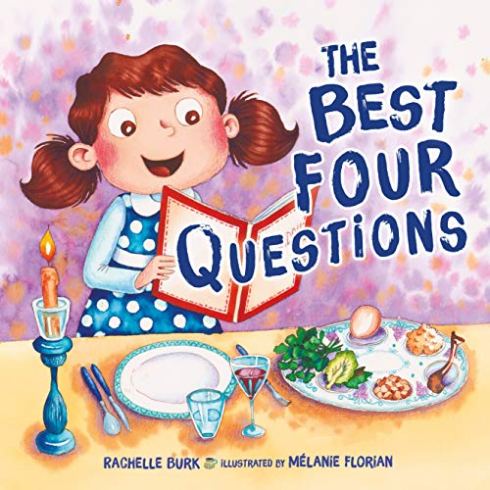
But right now, I have to ask Rachelle Burk four questions about her new book, THE BEST FOUR QUESTIONS! *ba-da-bum*
Rachelle, for those who aren’t familiar with the Passover Seder, what are the “Four Questions”?
The focal point of the Passover Seder is the telling of the story of the Hebrew Exodus from Egypt. This storytelling begins with the youngest person at the Seder asking the Four Questions, which are actually four parts of a single question: “Why is this night different from all other nights?” This leads into the story of the days of slavery and the Exodus.
Why is the youngest at the Seder supposed to ask them?
The youngest asks the Four Questions so that they will be an active participant in the Seder. In fact, many of the activities done at the Seder are intended to keep the children involved. The reason that the Seder is geared around the children is to pass on responsibility of the Passover message and tradition to the next generation.
What is your favorite part of the Passover Seder?
Most people might say “the food.” For me, I’d have to say that I enjoy the thoughtful discussions our family has. Okay, that, and the matzo ball soup.

What is the best fourth question to end this interview with?
How about, “what inspired this story?”
I grew up in a small but active Jewish community in New Orleans, and our family Passover Seders were large, boisterous events. They were full of the laughter of children—my four brothers, sister, and two cousins. The grown-ups sometimes got annoyed, feeling that there was a bit too much goofing around and not quite enough paying attention.
Not much changed as we grew up. Then my wise father had an idea: he put the responsibility for running the Seder on us, then-grown, kids. He said we could lead the Seder anyway we wished, as long as we fulfilled all the required parts of the service. This included the reciting of The Four Questions by the youngest child (by now, we had little kids of our own), and the telling of the Passover story.
So my brother and I wrote funny skits: A ‘talk show” interview with Moses. The Passover News. A restaurant review of McManna’s Desert Café. The Egyptian weather report (100% chance of locusts and frogs; the Nile’s inexplicable “red tide”…). We still got to have fun, but now the older generation laughed along with us.
Laughter remains an important part of our family Seders—and so does asking questions. Questioning is highly encouraged in Judaism. It facilitates learning, understanding, and discovery. And so, in keeping with our creative Seders, I wrote a story about a child determined to come up with the BEST questions ever.
Ha! They are the BEST. So funny!
My personal brisket with Jewish picture books is that there are not enough funny ones! This one hits the spot! Publisher’s Weekly agrees, saying “Passover is a celebration of freedom, and that includes the liberty to take a small detour into shared silliness.”
Actually, many Jewish holidays celebrate religious freedom. As my family says, “They tried to kill us. We survived. Let’s eat!”
You can get THE BEST FOUR QUESTIONS by Rachelle Burk and Melanie Florian anywhere books are sold.
Happy Passover!
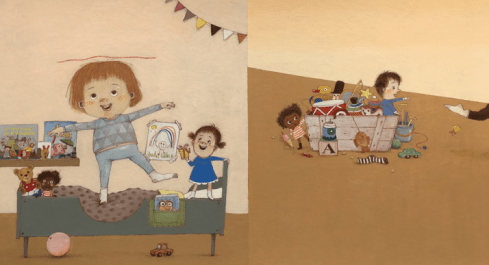
It was my daughter Daisy’s kindergarten graduation, and I had bought a lovely dress for the occasion. At least I thought so. However, that morning she took one glance at the sparkly frock and said, “That’s for babies!” From that moment on, those words became her mantra. All that Daisy had loved and treasured was dropped in a box of cast-off toys.

I never imagined that day would come so soon. I was used to Daisy saying, “I can do it myself!” She had claimed her badge of independence from the day she was born. But this felt different. It was as if she had grabbed the keys to the car without telling me where she was going. In my mind, all I heard was, “See you, Mom. I got places to go and people to meet.”
And what a journey it’s been! They call it “raising” a child, but I feel my kids “raised” me, too. I am not the same person or mother today. I’ve grown, evolved and changed right alongside my children. Here’s what–change doesn’t come easy. Letting go can be scary and sometimes hurts. But love, kindness and understanding has been my North Star.
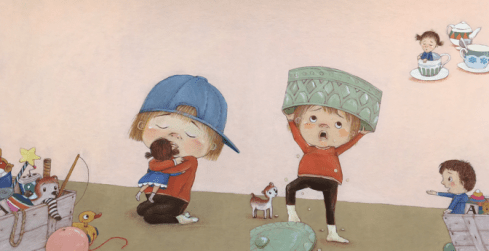
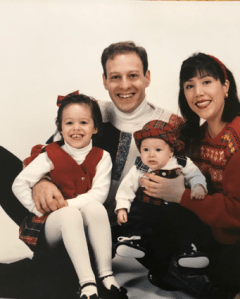
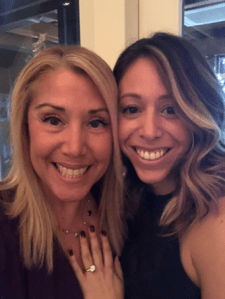
This June is Daisy’s wedding! Goodness, did I just say that?! And with any luck, one day soon, some little person will look up to her and say, “That’s for babies!”
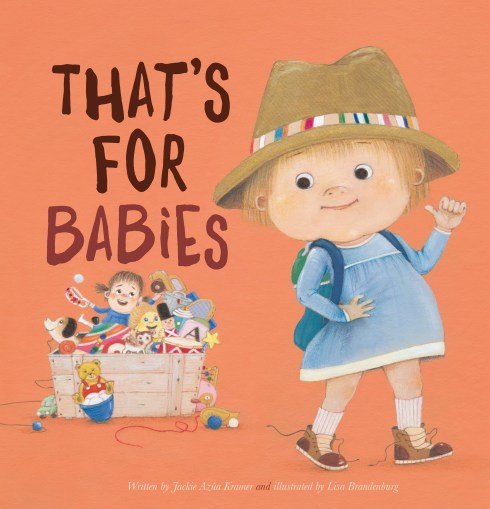
In THAT’S FOR BABIES!, on the morning of little Prunella’s birthday, she announces she’s a big girl, and ready for adventure. But one dark and stormy night, she discovers that growing up is a series of small milestones…two steps forward and one step back.
And here’s the book trailer premiere!
THAT’S FOR BABIES! releases June 25th…but you can win a copy right here!
Leave one comment below. A winner will be randomly chosen at the end of the month!
Good luck!
 Jackie Azúa Kramer studied acting and voice at NYU and earned her MA, Queens College, Counseling in Education. Jackie has worked as an actor, singer, and school counselor. Her work with children presented her an opportunity to address their concerns, secrets and hopes through storytelling. Now she spends her time writing children’s picture books. Her picture books include, the award-winning The Green Umbrella (2017 Bank Street College Best Children’s Books of the Year), If You Want to Fall Asleep and That’s for Babies. Upcoming books- The Boy and the Eight Hundred Pound Gorilla (Candlewick, 2020); I Wish You Knew (Roaring Brook, 2021); We Are One (Two Lions, TBD); Miles Won’t Smile (Clavis, TBD).
Jackie lives with her family in Long Island, NY. When not writing, you’ll find Jackie reading, watching old movies and globe trekking.
Visit her at JackieAzuaKramer.com, Twitter @jackiekramer422, Facebook Jackie Azúa Kramer & Instagram JackieAzuaKramer.
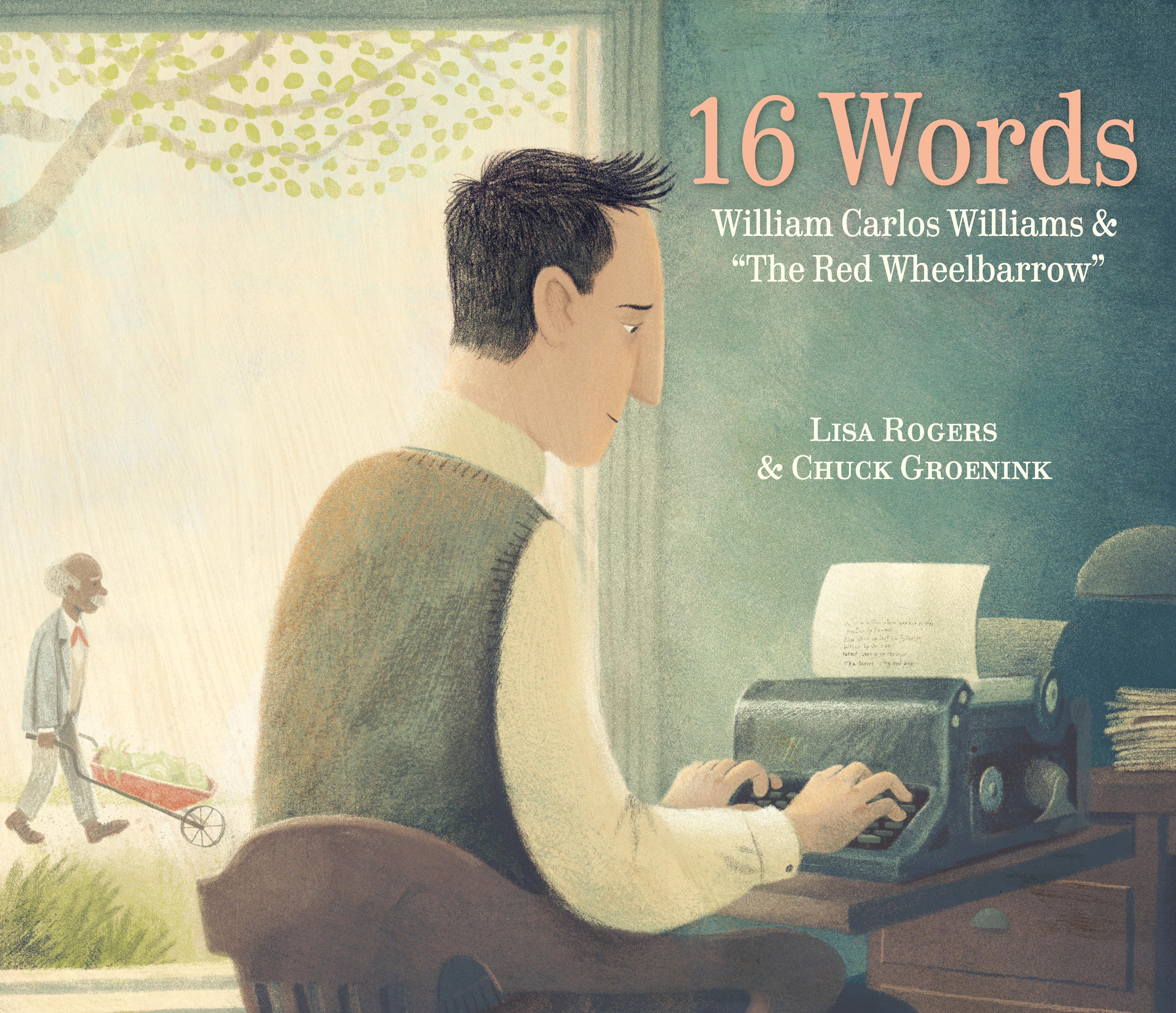
In honor of National Poetry Month, today we’re revealing the cover for Lisa Rogers’ debut picture book 16 WORDS: WILLIAM CARLOS WILLIAMS AND THE RED WHEELBARROW, illustrated by Chuck Groenink. The story is a behind-the-scenes look at the creation of that famous poem and releases on September 24, 2019. Find out more here.
Lisa, When did you first get the idea to write 16 Words, and what inspired you?
One summer morning, just before my family was to embark on a dream Italian vacation, I was sipping coffee and reading The New York Times. A photo of a mustachioed man standing proud beside towering sunflowers caught my eye. Thaddeus Marshall, ramrod-straight in a suit jacket, had been identified as the owner of a red wheelbarrow—the red wheelbarrow of William Carlos Williams’ famous poem.
Marshall was a street vendor who raised chickens and grew vegetables in his Rutherford, N.J., garden. And, he was a patient of Williams, who was a medical doctor as well as a poet.
I told my husband that there needed to be a book about Mr. Marshall—and that I was going to write it. But not immediately. I wanted it to be just right. I carefully cut out Jennifer Schuessler’s story, folded into a tiny Moleskine notebook that my oldest friend had given me, and packed it with my sundresses and sandals. I thought about the story, thought about the relationship between Marshall and Williams, but I didn’t write down a word.
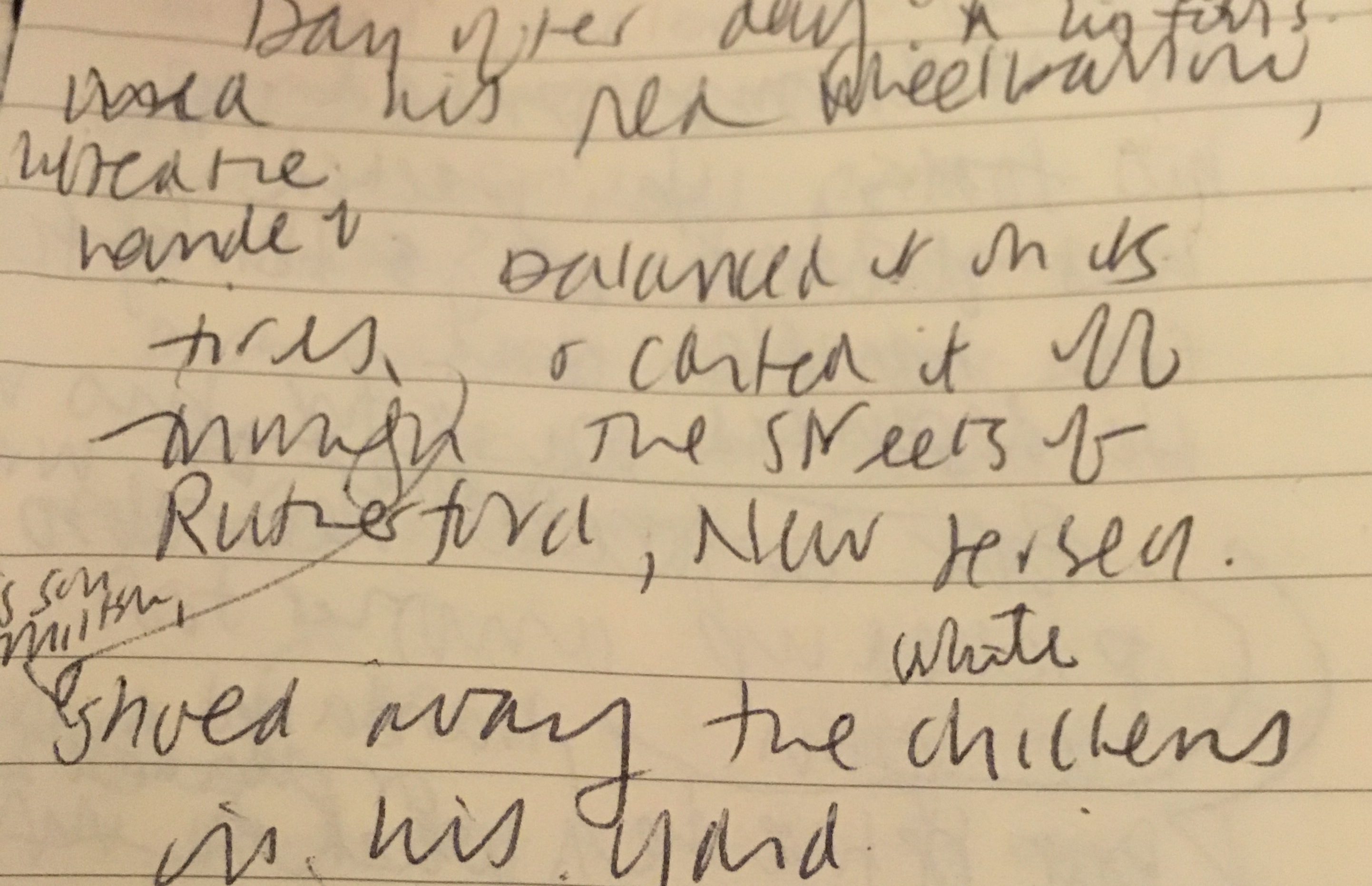
Then, on a train from Venice to the Italian Riviera, I took out my little notebook and began to write.
What kind of challenges did you face while writing the manuscript?
Ever since it was published, that seemingly simple 16-word poem has got people wondering just what depended upon that wheelbarrow. Williams had said he was inspired by a scene out of a window—and it turns out that window was Marshall’s. That conclusion was reached by the scholar William Logan, through an amazing amount of dogged research that turned up details like the wheelbarrow’s shade of red and the kind of chickens Marshall most likely raised.
But in telling the story of how Williams came to write the poem, I had to put together my own research so I could see what Williams saw. I combed census records and military records, walked the short distance between Marshall’s and Williams’ homes in Rutherford, and more. Teresa Marshall Hale, Mr. Marshall’s great-granddaughter, had grown up in the family home and told me the bedrooms faced the garden. Then, I distilled all that I had learned and tried to create the emotional story behind the poem’s creation.
What was your favorite part of the writing process for this story?
I loved creating the spare frame of the story. To me it felt like painting. When I paint, I like to layer color over color. I keep going back in and adding a little more. That’s how I worked on this story—slowly, carefully, layering in something else. Like a watercolor, it was important to know when to stop. I enjoyed working with my editor, Anne Schwartz, who gently guided me through this process.
The most incredible part of this process was viewing the illustrations. Chuck Groenink, through his own careful research and prodigious talent, has created a tender and beautiful work of art.
Lisa Rogers is an elementary school librarian and former newspaper reporter and editor. A native of the New Jersey shore, she lives outside Boston with her family and hound dog and is a three-time (soon to be four!) runner of the Boston Marathon. Visit her online at lisarogerswrites.com and on Twitter @Lisa LJRogers.
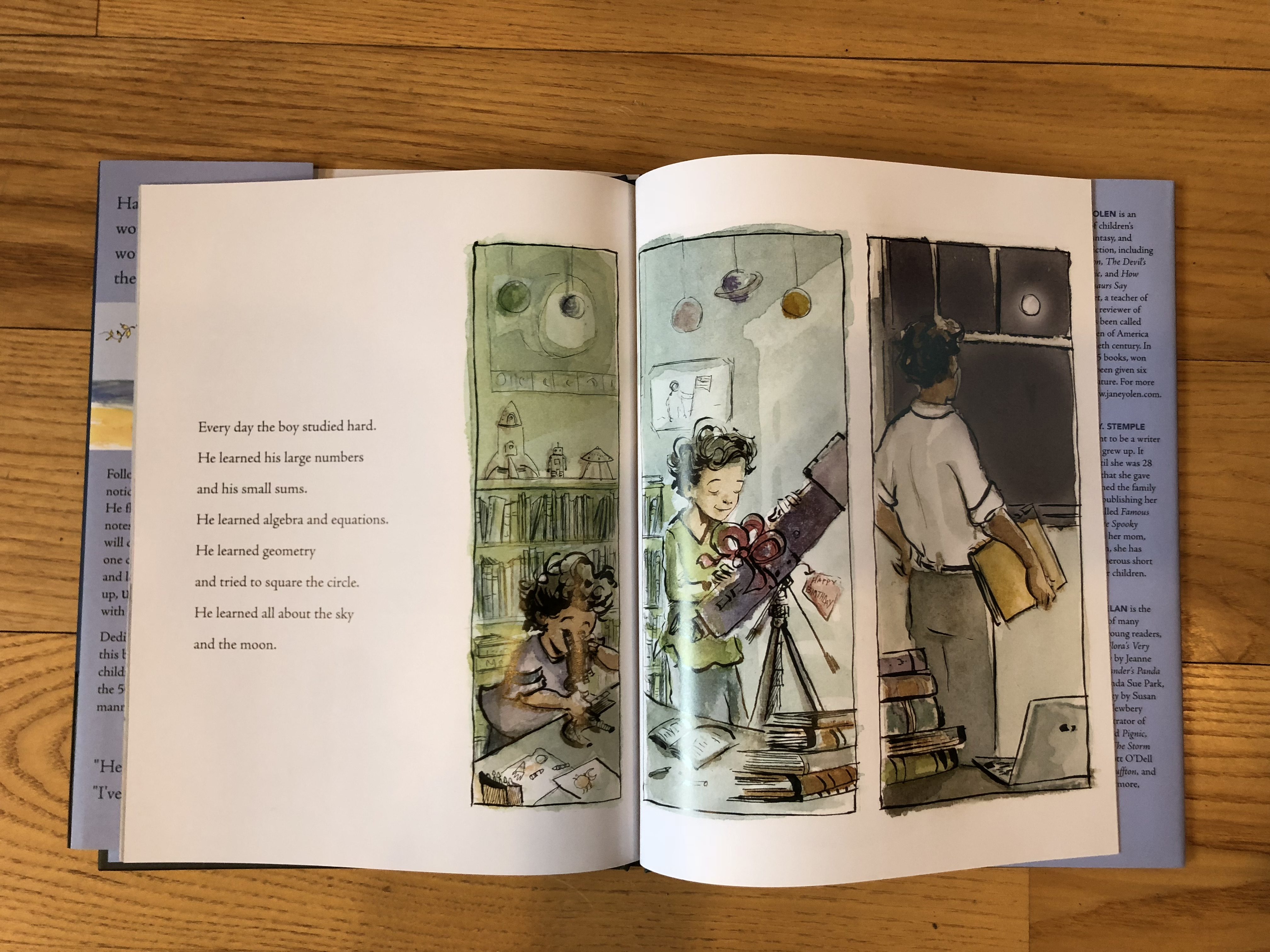
Get ready for a new classic flying into bookstores next week: A KITE FOR MOON.

Late last year I had the pleasure of hearing Jane Yolen and Heidi E.Y. Stemple speak about the genesis of KITE and the long, winding journey it took. I’ll let Jane and Heidi take it from here…
Heidi: My mother and I have written about 22 books together and every one has it’s own process. KITE FOR MOON began in a completely different way.
Jane: Initially, it was my picture book. A combination of remembering the moon walk (Heidi was only about 2 and a half at the time, which we watched on our very small TV) and the fact that all through my growing up, my father was a kite flier. In fact he was the International Kite Flying Champion and president of the of the International Kite Fliers Assn. My card said, “May design own costume.”
Both my agent and I liked the manuscript, and so she sent it off. It kept getting rejected.
Heidi: Eventually, everyone gave up on that manuscript and it wound up collecting dust in a drawer. At some point, at least a couple years later (but, likely close to 5) I was asked to find it and send it on to an agent friend of ours who was looking for a project for one of his illustrators. But, before I sent it, I read it. It was not good. It was too sentimental and too long—too wordy, wordy, wordy. I’m pretty bossy, so I told her. And asked if I could take a whack at it.
The bones were good. But, it promised an ending it didn’t deliver. It needed serious pruning and a ton of focus. So I did that.
And sent it back to JY. (Yes, that’s how Heidi refers to her mom.)
Jane: I saw immediately that while Heidi had seen this as an editing job, and while she kept a great deal of my prose, what she added made it her book as well. And I insisted that her name be on the manuscript as well. There was a bit more back-and-forthing till we were both satisfied. Then the book went out with both our names attached. And lo! Zonderkidz (an arm of Harper Collins) bought it. And they started looking for an artist.
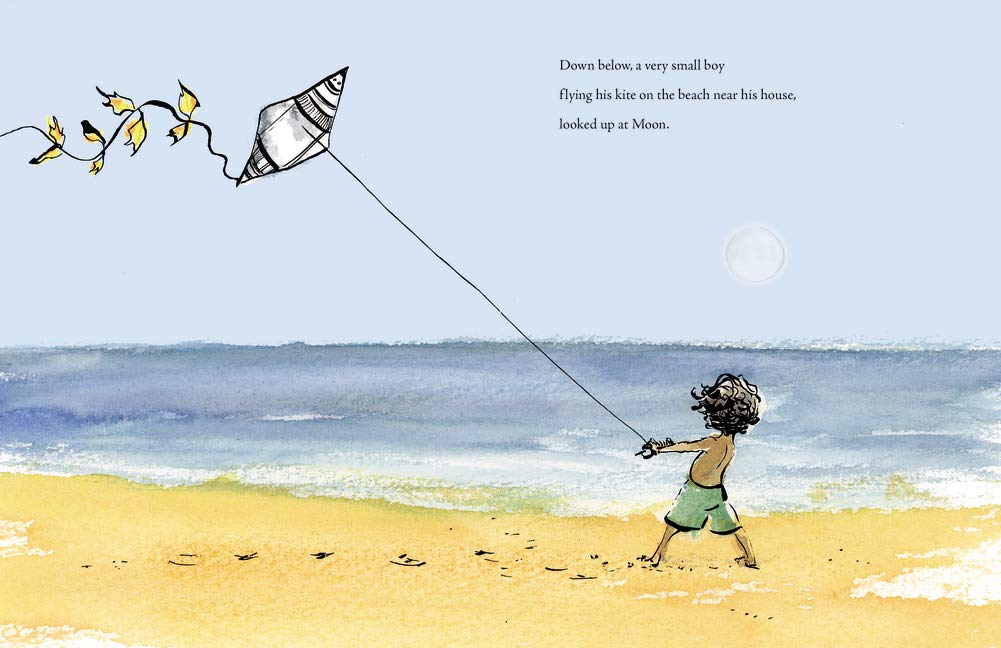
Heidi: We were sitting at a conference listening to lectures when Matt Phelan got up to speak. His art was being shown and, there was a piece he had with kids in a classroom and my head exploded. THAT was our kid! I poked JY in the side (she didn’t appreciate that) and whispered “Kite! Kite!”
Once I explained what I meant, we both went to work on Zonderkidz to approach Matt to illustrate. He said yes. The only thing we changed after that was the last page originally said ‘listened’ and we changed it to “watched” based on Matt’s amazing last page. I don’t want to give anything away, but when I read the last 2 pages, I still get choked up.
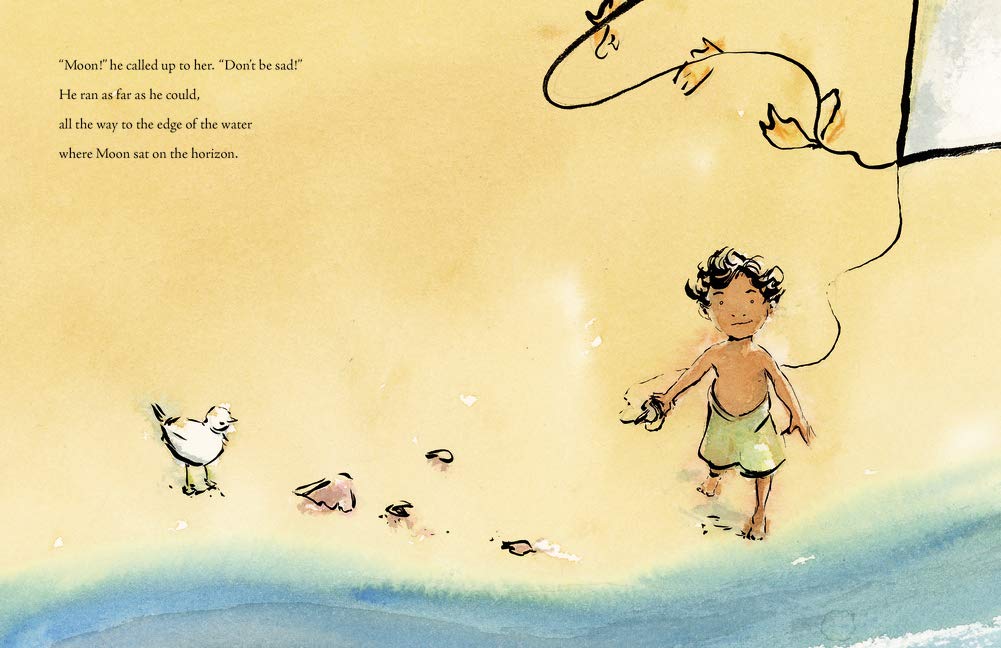
Jane: We’ve read the book to a number of audiences so far, mostly adults, mostly writers, and when we get to the last two pages, everyone chokes up or gasps. I am not sure that was what we were going for. But my husband and I had given that same sort of gasp when Neil Armstrong walked down the ladder and stepped on the moon. I hope all our readers, young and old, feel the moment. Though this is not the story of Armstrong and Buzz Aldrin first on the moon, it is the story of something monumental about how one small child becomes an adult who does something truly out of this world.
I listened to Jane and Heidi read the book, and I gasped, too.
If you want to gasp at your own copy signed by this amazing mother-daughter duo, please leave a comment below.
A winner will be randomly selected in a couple of weeks!
Good luck!
Can you believe it? I finally have the opportunity to announce and congratulate all the daily Storystorm winners! And I could not have done it without the assistance of Urania Smith from KidLitNation.com. So please check her out!

Now, it’s time for my favorite GIF!

No, wait. I think this is my fave…

And away we go!
Storystorm 2019 Winners
Day 1: Cathy Breisacher
Winner: Jennifer Phillips
Winner: Elizabeth Saba
Day 3: Tammi Sauer
Winner: Nancy Kotkin
Winner: Jen Bagan
Day 5: Mike Allegra
Winner: Nancy Rimar
Winner: Gretchen Brandenburg McLellan
Day 7: Jen Betton
Winner: Kellie Nissen
Day 9: Nancy Churnin
Winner: Marty Lapointe Malchik
Winner: Kelly Conroy
Day 11: Shutta Crum
Winner: Carlie Cornell
Winner: Aileen Stewart
Day 13: Ashley Franklin
Winner: Becky Hamilton
Winner:Tina Cho
Day 15: Andria W. Rosenbaum
Winner: Janie Reinart
Day 17: Nina Victor Crittenden
Winner: Carole Calladine
Winner: Kim Pfennigwerth
Day 19: Trisha Speed Shaskan and Stephen Shaskan
Winner: Kim Pfennigwerth
Winner: Marsha Elyn Wright
Day 21: Chana Stiefel
Winner: Johnell DeWitt
Day 23: Julie Segal Walters
Winner: Supermario6 (Dayann9)
Day 25: Alli Brydon
Winner: Katie B
Day 27: Juliet Clare Bell
Winner: Heather Stigall
Day 29: Diana Murray
Winner: Jen Fier Jasinksi
Day 30: Linsay Bonilla
Winner: Laurie Bouck
Winner: Katy Tanis
Five Winners from the Posts of Storystorm Past:
(You will receive books, glorious books, from Tundra and other publishers.)
Tanya Konerman
Janet Al Junaidi
Genevieve Petrillo
Natalie Lynn Tanner
Debra K Shumaker
Post-Storystorm: Laurie Keller
Winner: Donna Marie (Writersideup)
Congratulations! You’re all winners! (But sorry, no chicken dinners to give away.)
I will be emailing you over the next week to arrange delivery of your prizes!
And that officially concludes Storystorm 2019. I hope you’re still brainstorming ideas, though! You can always come back here to taralazar.com to read the posts and get a little extra oomph for your imagination.
See you back here for Storystorm 2020!
Recently, I was sharing with students how writers rewrite and rewrite more, trying to get our books perfect for our readers. A first grader raised her hand and sweetly commented, “Everything doesn’t have to be perfect.” What wisdom from one so young. This is exactly what Badger learned in Badger’s Perfect Garden.
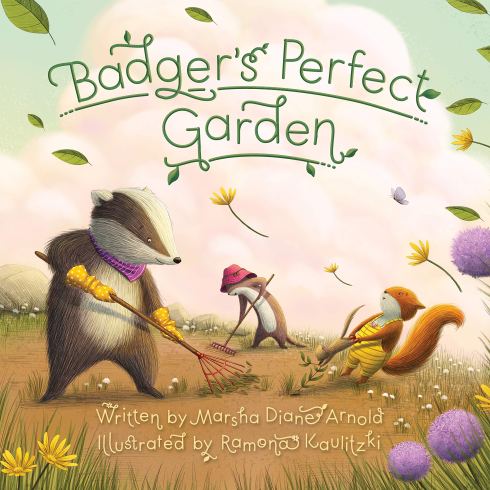
As readers will discover, Badger’s garden might not have turned out as perfectly as his original vision, but it is spectacularly beautiful, thanks to serendipity, Mother Nature, and Badger’s initial work.
Badger is a perfectionist. He had planned long and worked hard for his perfect garden. He had a plan—a garden plan. But sometimes when we hold too tightly to an outcome, things take a course of their own, or in this case Mother Nature takes a course of her own.
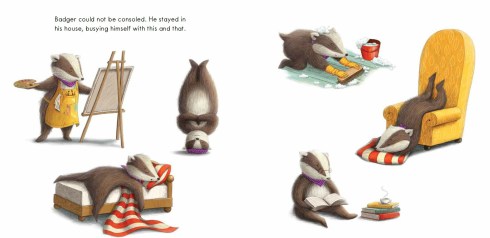
Of course, Badger is devastated when his vision is destroyed. He does what many of us do or would like to do. He stays inside, “busying himself with this and that,” so he doesn’t have to think about his perfect garden ever again!
When Badger’s friends show him a garden surprise, Badger realizes the truth that “letting go” can be a celebration, full of jubilation. Once he lets go of the outcome of a perfect garden, he is also free to let go of worry and to enjoy “a hodgepodge of garden games, jumbly-tumbly dancing, and muffins and mulberry juice.”
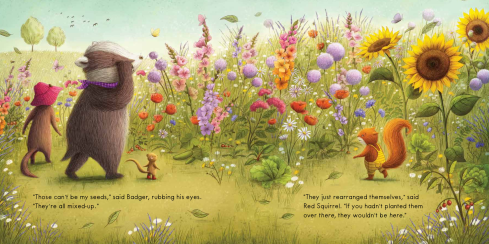
Ramona Kaulitzki’s illustration of Badger as he embraces his mixed-up garden shows him caught in a swirl of flowers and vegetables. His expression is one of serene happiness. Indeed, Ramona’s art beautifully captures Badger’s feelings from beginning to end—from hopeful, studious, and excited, to dejected, to that tranquil contentment.

Writers must also learn to “let go” when a publisher purchases their story. They must surrender their story to an editor, an art director, and an artist who bring their vision to the story as well.
I sometimes use art notes in my manuscripts, but Sleeping Bear Press removes all art notes before giving a manuscript to an artist. This is part of the “letting go” and the trusting that authors need to accept. Ramona Kaulitzki understood so much of what I wanted to show. For example, I had written, “Red Squirrel helped Dormouse gather string,” with this art note: Red Squirrel and Dormouse tangle the string. With the art note gone, I prayed Ramona had a similar sense of humor to mine. She did. When the sketches arrived, I saw Red Squirrel and Dormouse tangled in string on the page and the following spread.

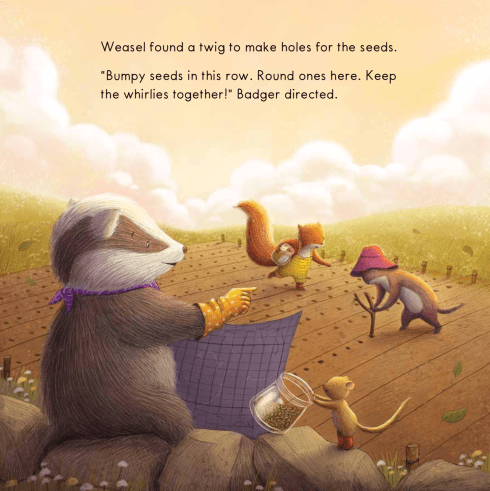
There are also times when the artist’s vision is slightly different from the author’s. I had written, “Weasel found twigs to make holes for the seeds,” as my original vision was for a couple of the animals to make holes. But the art only showed Weasel making holes and previously walking just one twig. When I received the art, I simply asked my editor to change the wording from “twigs” to “twig.” Ramona’s art was perfect and it was a simple thing to let go of my illustration vision and an “s.”
I did a lot of research on seeds for this book; I wasn’t sure how much information I’d use. In case the editor wanted to name specific plants, I kept a list of possible plants for Badger’s garden and images of seeds. In all my research I learned a lot, like the names of five edible burrs. We didn’t use this research in Badger’s Perfect Garden, but who knows in what future manuscript my gathered “seeds” will ‘rearrange themselves,’ just as Badger’s did.
“They just rearranged themselves,” said Red Squirrel.
“If you hadn’t planted them over there, they wouldn’t be here.”
Thank you, Tara Lazar, for inviting me to visit your wonderful website and blog. May all your plantings produce beautiful gardens!
Thank you, Marsha, for blogging today and also giving away a copy of your new book BADGER’S PERFECT GARDEN!
To enter, please leave one comment below. A random winner will be chosen in “April showers bring May flowers.”
Good luck!
 Marsha Diane Arnold’s award-winning picture books have sold over one million copies and been called, “whimsical” and “uplifting.” Described as a “born storyteller” by the media, her books have garnered such honors as Best First Book by a New Author, Smithsonian Notable, Dolly Parton’s Imagination Library and state Children’s Choice awards. Recent books include Galápagos Girl, a bilingual book about a young girl growing up on the Galápagos Islands and Lost. Found., a Junior Library Guild book illustrated by Caldecott winner Matthew Cordell.
Marsha was raised on a Kansas farm, lived most of her life in Sonoma County, California, a place Luther Burbank called “the chosen spot of all this earth as far as Nature is concerned,” and now lives with her husband, near her family, in Alva, Florida. You can often find her standing in her backyard in the midst of dragonflies or purple martins swooping for insects. She can also be found at marshadianearnold.com.
I love picture book biographies. They’re right up there with chewy, chunky chocolate chip cookies. With those first delicious lines, I’m drawn into someone else’s world that reveals what shaped them and why their story is important. Unlike biographies for adults that pack in everything but the kitchen sink, I love picture book biographies because there’s only room for the good stuff. The best stuff. Stuff that allows readers to sidle up to remarkable people, past and present, and wonder what they might do with their own lives. Short as picture book biographies are, writing them can be challenging. Here are my tips for writing picture book biographies:
Who
Deciding who to write about is BIG. If they’re well-known like Benjamin Franklin or Abraham Lincoln, there’s a million books about them already. If you’re determined to write about them, you need to find an intriguing episode of their life that hasn’t been told before. The other option is to write about someone who isn’t well-known, but still has a great story to tell. Whatever it is, it needs to connect with young readers.
How Much
Although you may be tempted to tell someone’s story from the moment they’re born to their last breath—reconsider. Most trade picture book biographies either highlight the time of the accomplishment, or the formative years which led to their accomplishment. Not always. But mostly. The point is, there are options. One great example of highlighting the important moment in someone’s life is Ruth Law Thrills a Nation by Don Brown, one of my favorite picture book biographers. He opened Ruth’s story with these lines:

On November 19, 1916, Ruth Law tried to fly
from Chicago to New York City in one day.
It had never been done before.
There’s no growing up. No wanting to fly. No wondering whether to do it or not. Ruth Law was ready. Making the flight was the story. Page by page, Brown lets us see what happened the day she flew to New York City and the challenges she faced.
A great example of the second approach is also written by Don Brown in his book, Odd Boy Out, Young Albert Einstein. He opened the story with these lines:
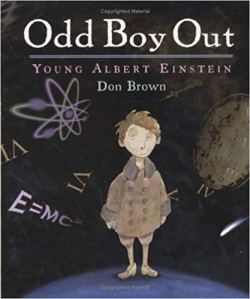
On a sunny, cold Friday in the old city of Ulm, Germany,
a baby named Albert Einstein is born.
It is March 14, 1879.
Why the difference? By starting from childhood, Brown showed readers how Einstein’s brilliant mind worked even at a young age, and how it led to his Theory of Relativity.
Beyond the Facts
Lastly, when you start writing picture book biographies, it’s tempting to stick close to the facts as if you’re on the ledge of a tall building. Stray too far and you won’t be safe. Stray too far, and you can’t cling to the pillar of facts. However, the only way to succeed is to step off into the literary void and find your voice. How do you want to tell the story? Let yourself go and find out. It’s okay. That’s what editors and readers want.
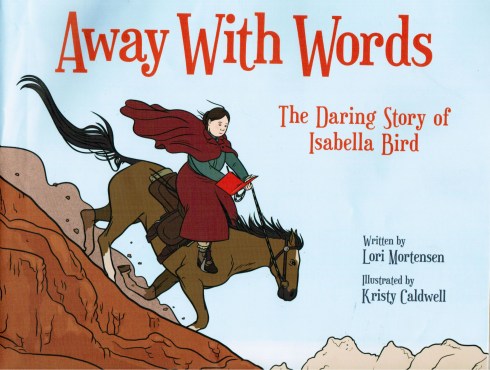
This idea was a turning point when I sold my latest release, Away with Words, The Daring Story of Isabella Bird, about the first female member of the Royal Geographical Society. My first versions were lyrical, but very conservative and I revised the manuscript so many times for my agent, I lost count. Each version was lovely and dramatic, but something was missing. More revisions and rejections followed. In time, I parted ways with my agent and put the manuscript away.
Then, a few months later, I got it out again. I loved Isabella’s story too much to give up on it completely. At that moment, without an editor or an agent waiting for results, I felt a certain freedom to change things up. How did I want to tell her story? When I looked at it again, a metaphor sprang to mind that became the opening heart of the story.
Isabella was like a wild vine
stuck in a too small pot.
She needed more room.
She had to get out.
She had to explore.
You won’t find these words in the research. That’s me, letting go, telling Isabella’s story my way. It made all the difference.
So, the next time you’re writing a picture book biography, remember the good stuff. The best stuff. And treat yourself to a chewy, chunky chocolate chip cookie.
We are giving away a copy of Lori’s new book AWAY WITH WORDS: THE DARING STORY OF ISABELLA BIRD!
Leave one comment to enter.
A winner will be selected at the end of the month.
Good luck!
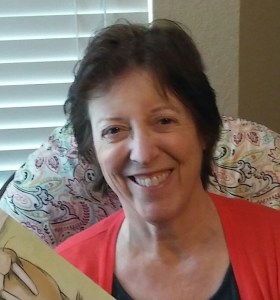 Lori Mortensen is an award-winning children’s book author of more than 100 books and over 500 stories and articles. Recent releases include her picture book biography, Away with Words, the Daring Story of Isabella Bird (Peachtree), about the first woman inducted into the Royal Geographical Society, If Wendell Had a Walrus (Henry Holt), Chicken Lily, (Henry Holt), Mousequerade Ball (Bloomsbury) illustrated by New York Times bestselling illustrator Betsy Lewin, and Cowpoke Clyde Rides the Range (Clarion, 2016) a sequel to Cowpoke Clyde & Dirty Dawg, one of Amazon’s best picture books of 2013. When she’s not letting her cat in, or out, or in, she’s tapping away at her computer, conjuring, coaxing, and prodding her latest stories to life.
For more information about her books, events, critique service, and upcoming releases, visit her website at lorimortensen.com.
Thank you for your patience, Storystormers!

Let’s not waste any time! Here are your Grand Prize winners and the agents with whom they have been paired:
Brenda Miller → Holly McGhee
Tanya Shock → Ammi-Joan Paquette
Krista Harrington → Ammi-Joan Paquette (Joan is taking two winners)
Amy Bradshaw → Tricia Lawrence
Stephen Cravak → Erin Murphy
Debra Katz → Liza Royce Agency
Sarah Hoppe → Linda Epstein
Helen Ishmurzin → Victoria Selvaggio
Congratulations! I will be contacting you via email shortly.
Many thanks to Urania Smith of KidLitNation who helped pull the winner’s names.
If you’re a writer of color, please check out KidLitNation for support and resources!
More daily prize winners to come soon!
One of my favorite picture books of all time is ARNIE THE DOUGHNUT, cooked up by the inimitable Laurie Keller. (Why hasn’t it become a major motion picture? I sniff the heavenly aroma of sugary fried dough and box office smash potential!)
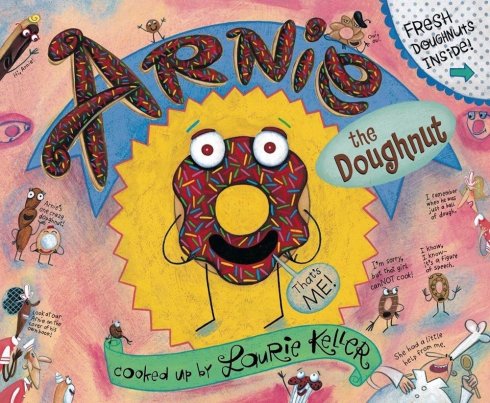
So while you wait for the selection of Storystorm prizes, I invited Arnie to the blog to interview Laurie’s latest character, Potato, about his quest for the perfect pair of pants. Take it away, boys!

Hey Potato! Thanks for meeting me at the bakery. Did you have any trouble finding it?
No trouble at all! I just took a Tuber Uber.

I see you have your new Potato Pants on! I was hoping you’d wear them.
Oh, yeah––I never leave home without ‘em! Pretty snazzy, aren’t they? Yep, when it comes to designing flattering pants for potatoes, Tuberto is your go-to tater!

I heard you almost didn’t get your Potato Pants––something to do with an eggplant. What was the problem?
He was waiting for me in Lance Vance’s Fancy Pants Store on the ONE day they were selling Potato Pants and I didn’t want to go in there because I was afraid he’d push me like he did the day before and ruin my brand new Potato Pants!
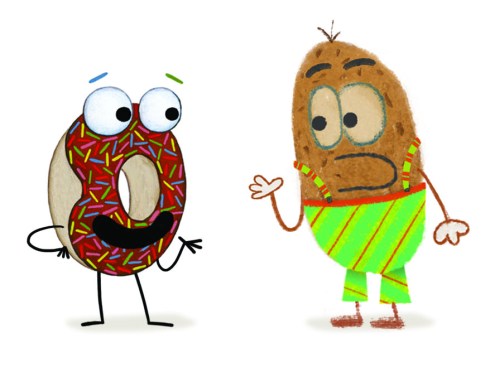
So, he’s a pretty pushy eggplant, huh?
Well, I thought so but it all turned out to be a silly misunderstanding. I’m a big enough spud to admit that. We’re actually friends now!
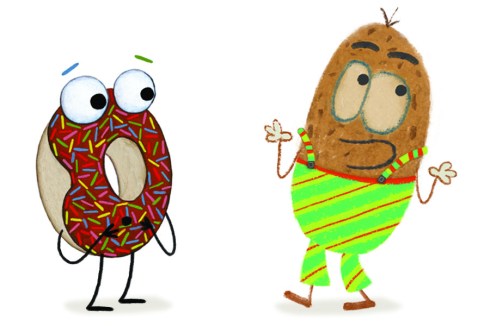
That’s cool! So, you really wanted this stripey pair with the stripey suspenders. Why do you like stripes so much?
I can’t explain it, Arnie. They just make me happy!

I feel the same way about my frosting and sprinkles!

I see you’re doing the Robot––I mean the PO-bot! Can you teach me how to do it?
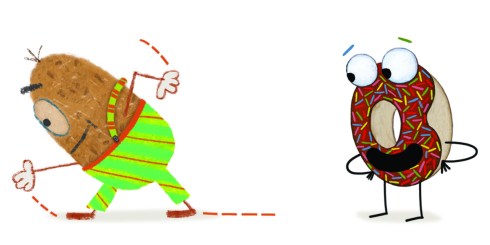
No.
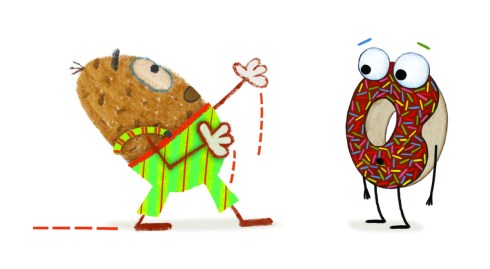
But I can teach you how to do the DOUGH-bot!


Oh, no! I laughed so hard I ripped my Potato Pants!

I’ll call for help! Oh, YOO-HOO, MAKEUP!

No, I’ll just scooch right over to the Tater Trouser Tailor. Thanks for everything, Arnie!
Thanks, Potato!
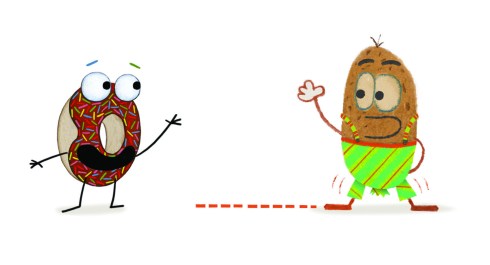
What is it now, Arnie?
Oops, sorry, Makeup––problem solved. But as long as you’re here…do you mind arranging my sprinkles into stripes? Diagonally? By color? Pretty please with frosting on top? Thanks!
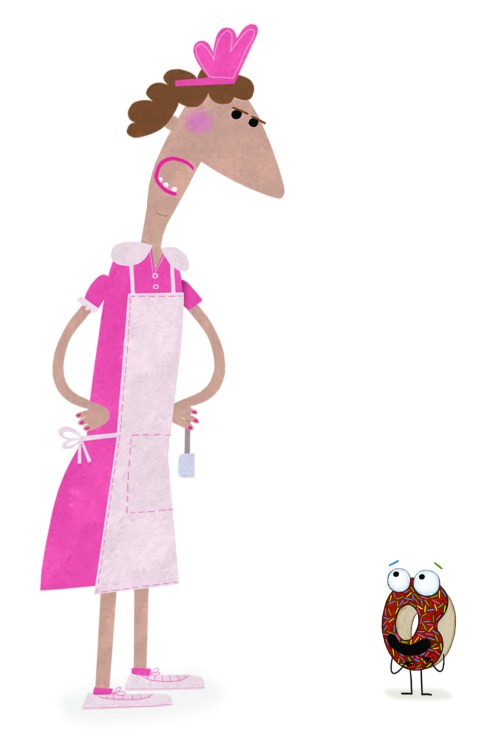
I LOVE ‘EM!

But I wonder if vertical stripes might be better on me?

Oh, YOO-HOO, MAKEUP!
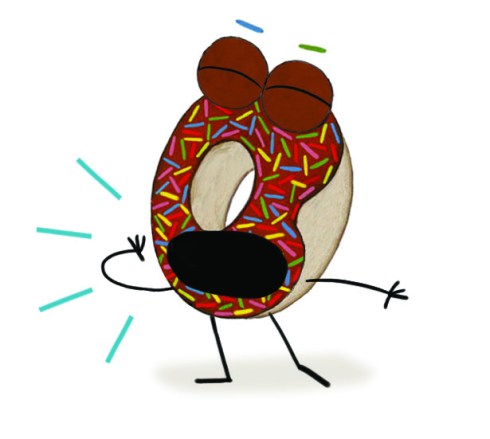
Well, we all know that Arnie is a diva doughnut (just like Mariah Creamy).
Thanks for stepping in to interview Potato, Arnie!
Since I am such a ginormous Laurie Keller fan, I am so mashed today to offer a copy of POTATO PANTS!

Just leave a comment below to enter! A random winner will be selected after the Storystorm prizes!
Good luck!





 Writing for Kids (While Raising Them)