by Shana Keller

Not all ideas arrive fully formed. Sometimes inspiration strikes like lightning—sudden, intense, and impossible to ignore. Other times it comes quietly, like a feeling that lingers long after the moment has passed.

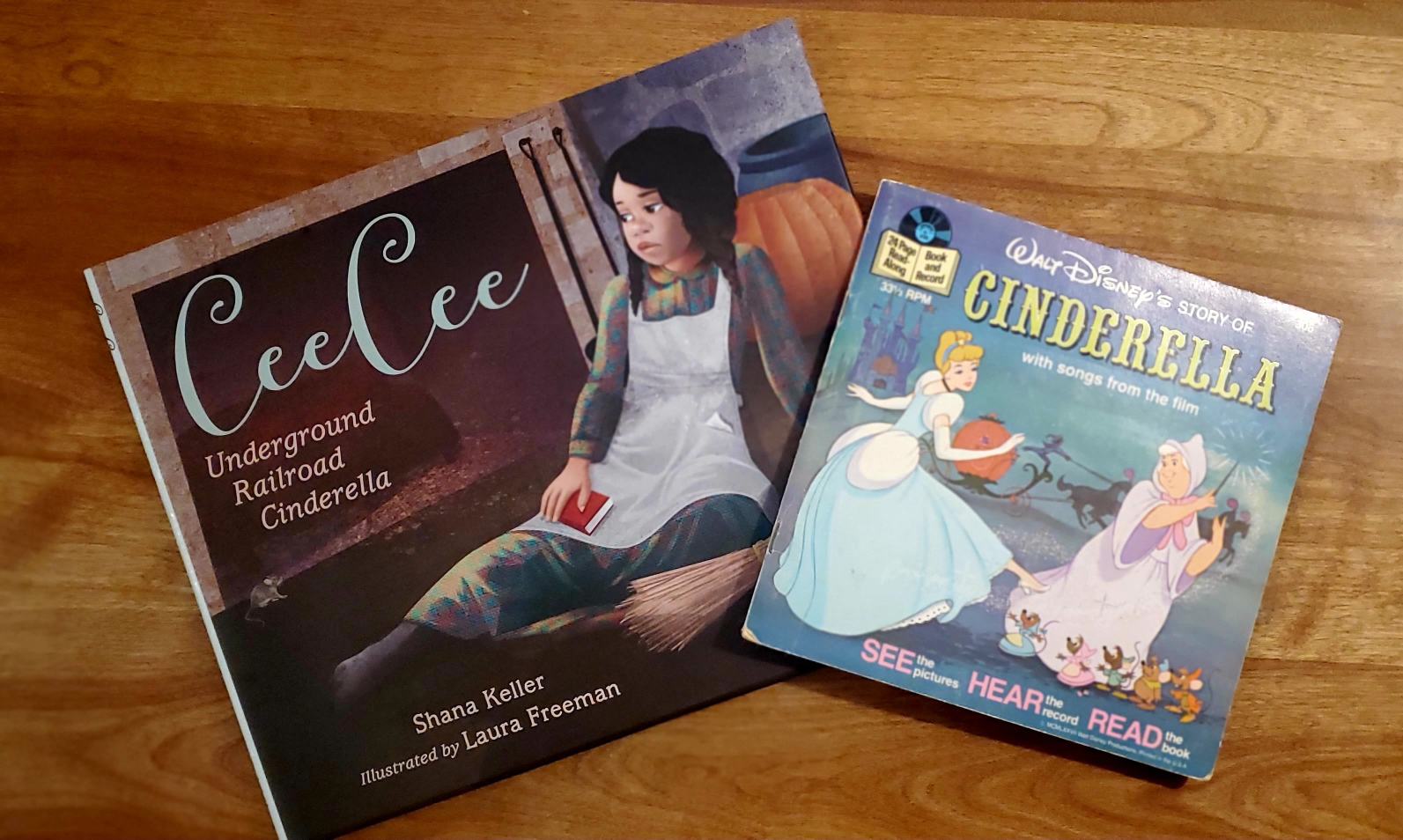
CEECEE, UNDERGROUND RAILROAD CINDERELLA was one of those quieter ideas.
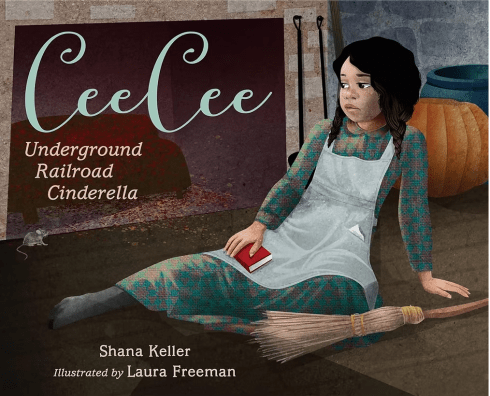
After rearranging my bookshelves for the millionth time (it’s an obsessive hobby), I fixated on an old Disney copy of Cinderella. I kept the book on my desk for a while, knowing I wanted to write a Cinderella story that featured someone who looked like me. And how could I honor the story I loved, while making it my own?

The Disney version had left a strong imprint on me as a child, and I couldn’t quite imagine what a new angle would even be.

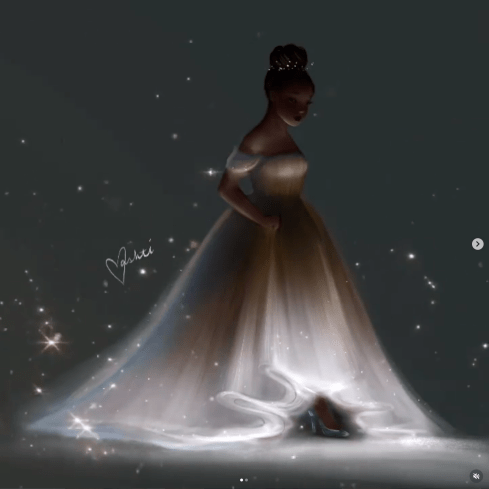
A few months later, I scrolled across Vashti Harrison’s gorgeous illustration of a young Black girl in what looked, to me, like a Cinderella dress. Yes! I thought, feeling closer to the idea. The image stayed with me, but the story still eluded me. Yet the need to write it—whatever it was—wouldn’t go away. Frustrated, I put it on the back burner. Again.
Then, several months later, I read a story that changed everything.

It was an imagined conversation between Harriet Tubman and Susan B. Anthony. In it, Harriet described rescuing a young girl from a life of bondage. Suddenly, all the pieces clicked.

That’s the thing about ideas: they don’t always arrive with a clear purpose. Sometimes they come to you as questions you don’t yet know how to answer.

The Cinderella story I thought I knew wasn’t about waiting for rescue at all. It was about the courage to escape. It was about a girl who refused to accept a life that was forced on her. It was about self-determination, resilience, and the fierce truth that you can rescue yourself—if you’re willing to step into the unknown.

That’s how my retelling was born: a Cinderella who was enslaved, who didn’t wait for a prince, and who didn’t need anyone to grant her freedom. She didn’t need a glass slipper to prove her worth. She only needed a plan, a fierce heart, and the belief that she could become her own hero.
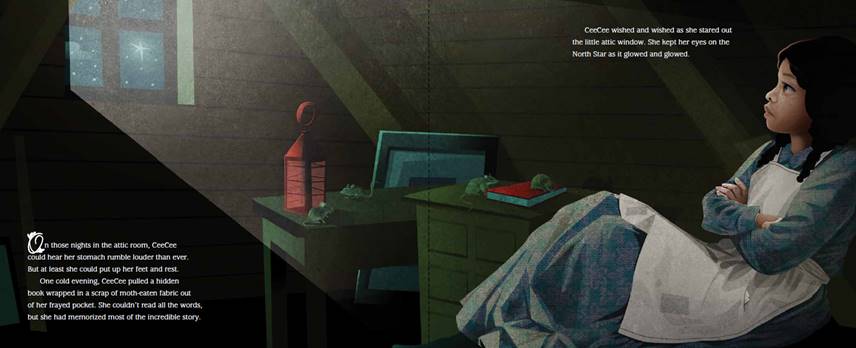
If there’s one thing I’ve learned from this journey, it’s this: when something catches your eye—when an image or a line or a character’s face sticks with you—don’t dismiss it just because you don’t know what it means yet. And don’t force it into a story before it’s ready. Hold onto it. Keep it close. Let it sit in the back of your mind.

Because ideas have their own timing.

Some will arrive like lightning, demanding immediate attention. Others will whisper, then wait patiently for you to be ready. The quiet ones often take longer—but they tend to stay. And when the pieces finally fall into place, you’ll realize the story was inside you all along.
Shana Keller grew up a middle child in Middle America wondering exactly how clouds stayed in the air. She’s traveled all over the country and some parts of Europe with her family, and moved too many times to count. She is the author of multiple picture books including the Irma Black Honor, BREAD FOR WORDS, A Frederick Douglass Story and TICKTOCK BANNEKER’S CLOCK, rated a Best STEM book by the Children’s Book Council. You can visit her at ShanaKeller.com and on Instagram @shanakellerwrites.
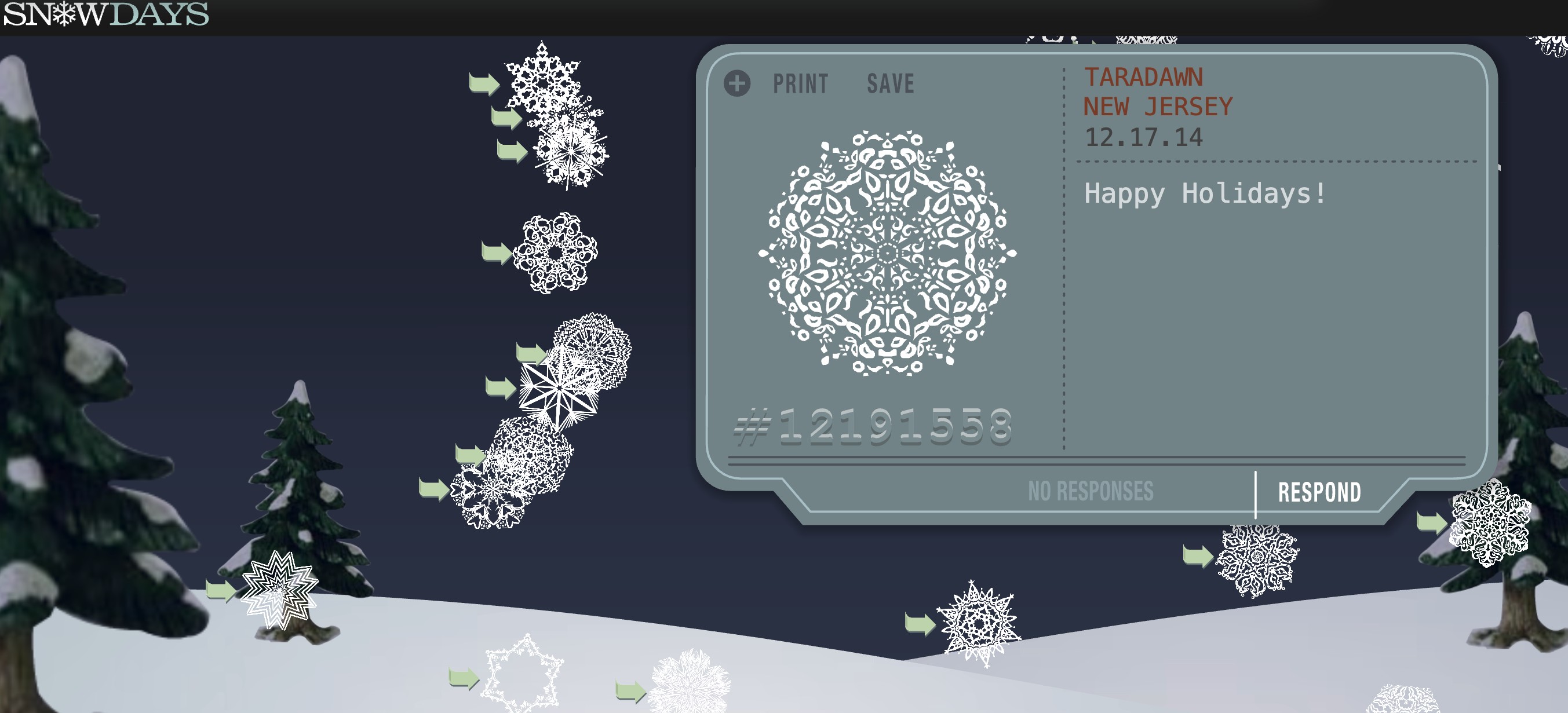
Don’t worry kids, there’s no remote learning today! It’s a true snow day to play.

Go to Snowdays.me and create a snowflake!

When posting your flurry flake, write “Storystorm” in the “What’s Your Message?” box. Then everyone can do a search to find and view the Storystorm snowflakes!

As you can see, I’ve been doing this for many years!

In the meantime…

…remember the feeling of anticipation, waiting for the phone to ring at 5:30AM on a winter morning? And when it did, you knew you could turn off your alarm and dive deeper into the blankets. School is closed! Sledding, snowmen and hot cocoa await!

Can you recapture that combination of euphoria and freedom in a story?

by Linda Ravin Lodding

Some days, the world feels like it’s shouting in ALL CAPS.

You open the news and there it is again: another story that makes your shoulders creep toward your ears like they’re trying to become earrings. Another big, complicated grown-up problem. Another reason to refresh your coffee.

And if you write for children, there’s an extra layer—because while adults read the news, kids absorb it.

  • Through snippets of conversation.
  • Through the temperature of a room.
  • Through the way we say, “It’s fine,” while our eyebrows disagree.

Children don’t need us to hand them the whole scary world, fully assembled, with all the sharp corners sticking out.

But they do deserve stories that help them name what they sense—stories that don’t slam the door on hard topics, but crack a window open just enough to let in air.

And maybe… a little laughter.

Because picture books—small as they are—are mighty.

  • They are portable courage.
  • They are a hand to hold.
  • They are a way of saying: Yes, the world can be a lot. But you are not alone inside it.

Over the years, I’ve found myself drawn to stories that matter—stories that let children practice compassion, curiosity, and courage.

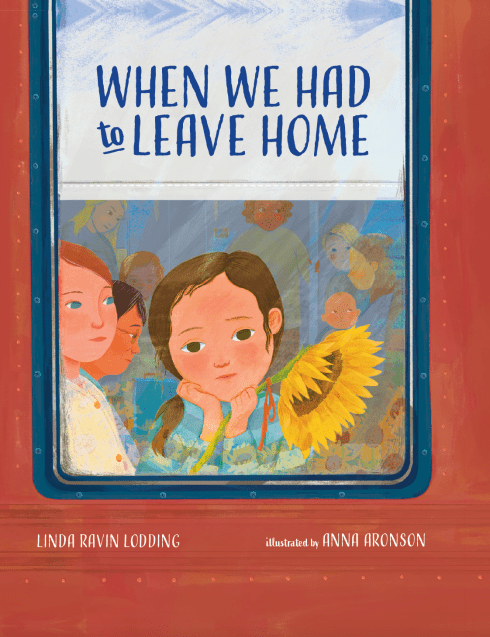
Stories like WHEN WE HAD TO LEAVE HOME, about the refugee experience of leaving a place you love and trying to carry “home” inside you when everything has changed.

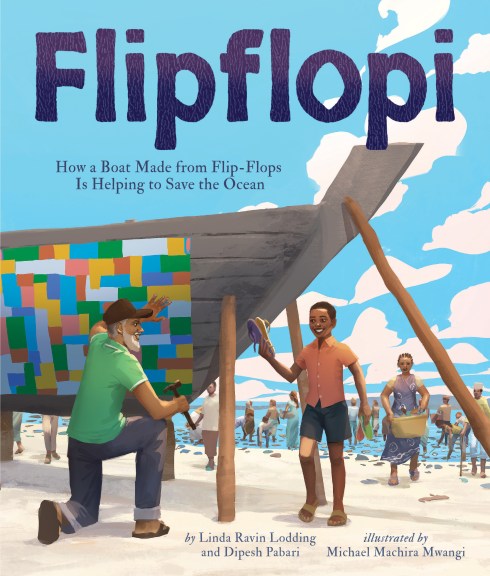
Or FLIPFLOPI: How a Boat Made from Plastic Is Helping to Save the World’s Oceans, which takes a huge issue (plastic waste, the ocean, the future!) and turns it into something tangible: a real-life boat made from flip-flops, a problem turned into possibility.

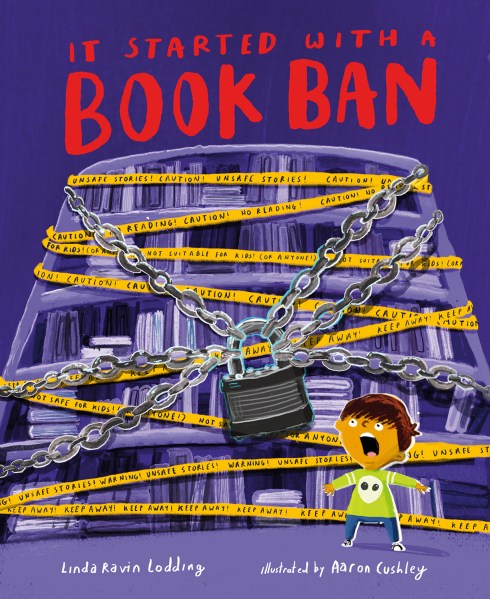
And now, with my upcoming picture book IT STARTED WITH A BOOK BAN (Albert Whitman, April 9, 2026), I’m stepping into another headline-sized topic—book banning—through a very kid-sized door.

So how do you take something huge…and make it holdable?

When I look back over my shoulder, I realize I return to the same technique again and again when I’m trying to transform a headline into a hopeful story idea. This is my headline-to-heart structure:

Step 1: The World Problem (a.k.a. the grown-up thundercloud)

Start with the big issue—the “headline.” Not the whole tangled mess of it. Just the core.

  • Books are being challenged.
  • Families have to move.
  • The ocean is filling with plastic.
  • A new kid arrives and no one knows what to do with different.

At this stage, it’s too big. Too abstract. Too… adults yelling on the internet.

So we shrink it.

Step 2: The Kid Goal (a.k.a. one small mission with a big heartbeat)

Now translate the world problem into one child’s clear mission.

  • Not a message. Not a lesson.
  • A mission.
  • Because stories don’t begin with themes.
  • They begin with a character who wants something.

And for picture books, I love giving kids one simple action word:

save / find / fix / keep / share

In IT STARTED WITH A BOOK BAN, the world problem might be “banned books,” but the story lives at kid-level: a child trying to protect stories the way kids protect treasures. The tone I aimed for wasn’t “lecture in disguise.” It was humor and absurdity as the flashlight—the kind that makes a difficult topic feel safe enough to explore.

  • Because kids understand unfair.
  • They understand someone took my thing
  • They understand why does that grown-up get to decide?

And they also understand the delightfully ridiculous “logic” of bans that spiral until the town is banning the color green, birdsong, and even the satisfying pop of bubble wrap.

In WHEN WE HAD TO LEAVE HOME, the headline is displacement—but the kid-goal becomes intimate and specific: hold on to one familiar thing… a sunflower. That’s how kids survive big change: one small anchor at a time.

And in FLIPFLOPI, the world problem is enormous (the ocean!), but the kid mission is wonderfully concrete: make something new from what was thrown away. It’s a story of action, ingenuity, and that thrilling moment when kids realize:

Wait… we can DO something?

(And the joy here is that it’s based on the real-life Flipflopi Project in Lamu, Kenya. In virtual school visits, children from around the world get to “visit” the boatyard and watch flip-flops transform into a boat—trash into treasure, problem into possibility.)

  • When you give a child character a clear mission, the story shifts from doom to motion.
  • And motion is hope.

Step 3: The Warm Twist Ending (a.k.a. hope with muddy shoes)

Finally, look for an ending that offers a warm turn—one that feels earned.

  • Not a tidy bow.
  • A real shift.

Maybe the twist is:

  • Community (someone joins in)
  • Laughter (a misunderstanding turns sweet)
  • Imagination (the kid re-frames the problem)
  • A small win (that matters because it’s theirs)

The child doesn’t fix the whole world.

But the child proves something essential:

I am not powerless inside it.

And that—quietly—is what we’re doing as children’s writers. We’re offering young readers practice in empathy. In courage. In the ability to look at a complicated world and still say:

  • I can be kind.
  • I can be curious.
  • I can do something small.

And that small thing counts.

Try It Today: Your StorySpark

Pick a headline theme:

  • books
  • moving
  • ocean plastic
  • new kid

Give your character ONE mission:

  • save
  • find
  • fix
  • share

Add one emotional obstacle (the real engine of story!):

  • fear
  • embarrassment
  • jealousy
  • loneliness
  • the desperate wish to be “normal”

Because the best picture books aren’t actually about the issue.

They’re about the heart inside the issue.


Linda Ravin Lodding is an award-winning children’s author who believes picture books can be a warm hug, a bright flashlight, and a good giggle—especially when the world feels a little too loud. She’s has eleven published picture books, including The Busy Life of Ernestine Buckmeister, A Gift for Mama, Painting Pepette, and Babies Are Not Bears. Originally from New York and now based in Stockholm, Sweden, Linda is also a writing coach who has helped over 100 picture book writers find their storytelling voice, and she founded the Stockholm Children’s Writers and Illustrators Network (a Facebook community open to all!). By day, she serves as Head of Communications at Global Child Forum, championing children’s rights worldwide. Her newest picture book, IT STARTED WITH A BOOK BAN (Albert Whitman & Co.), releases April 9, 2026. Follow her on Instagram @lindaravinlodding_author.
 

by Kaz Windness

If you’re like me you have LOTS of book ideas. Too many at times. My ideas almost always start with a doodle in my sketchbook. But how do I decide which ideas are worth writing stories for? Which characters have the best chance of becoming a published book?

That’s where “high concept” comes in. I define high concept as “a striking and easily communicable idea.”

What if a child is afraid of the water? That could be a good story, but it’s expected. It doesn’t hook you in the way a crocodile who’s afraid of the water might.

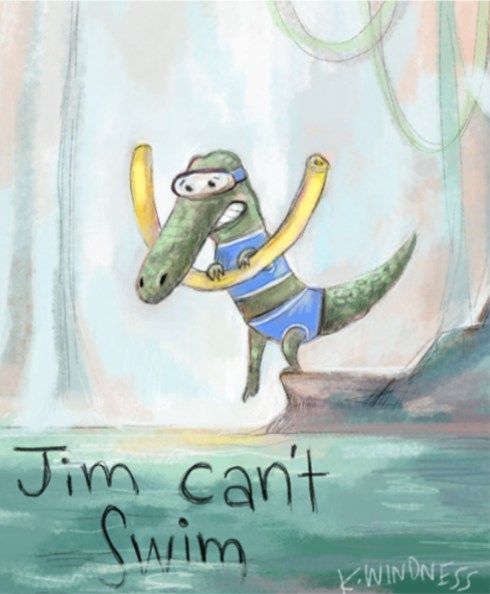
This is the doodle that later became “Swim, Jim!” I got the idea from a news article about a real crocodile using a pool noodle to cross a canal in Florida.

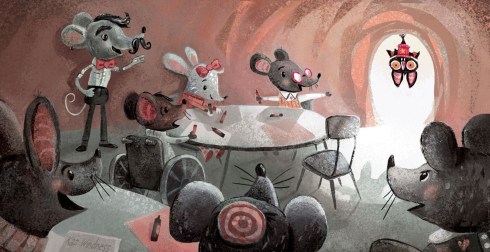
Being a neurodivergent child in a classroom has become a more commonplace story, but what if that experience is explained by a bat in a classroom for mice? That was how “Bitsy Bat, School Star” began.

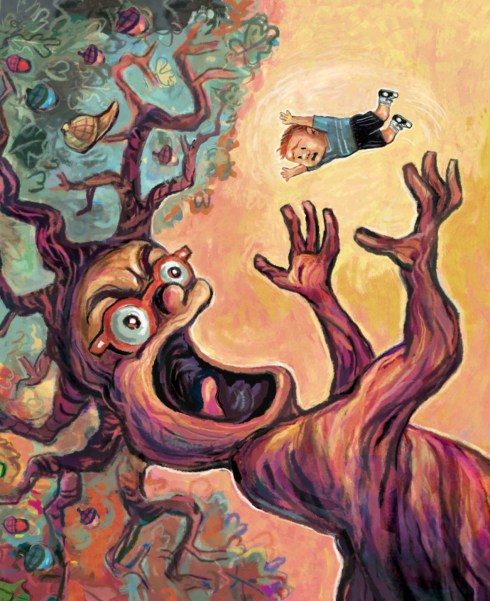
Dealing with bullies? Expected. Turning into a tree monster and eating your bully? That’s the hook in “Ollie, the Acorn, and the Mighty Idea,” written by Andrew Hacket, illustrated by me.

An easy way to come up with a “high concept” idea is to mash two popular or funny topics together in an unexpected way. I got series deals for both of these mashups:

  • Cat + Spy = TUX GUY, CAT SPY
  • Chickens + Time Travel = TIME TRAVELING CHICKENS: BAWK TO THE FUTURE

This hook hunt is easily turned into a writing game. Let’s play!

First, write down ten characters. Then, write down ten professions. There will be crossover, but the idea is to get some ideas flowing.

Here’s what I came up with:

Characters

  • A Smelly Sock
  • A Sentient Rutabaga
  • Lost Stick of ChapStick
  • An Extremely Small Alien
  • A Gigantic Cat
  • A Cowboy
  • A Sleepy Jack-O-Lantern
  • A Lost Aardvark
  • A Barnyard Peacock

Professions

  • Professional Wrestler
  • A Garbage Truck Driver
  • Super Hero
  • Dog-Catcher
  • A Farmer
  • Milkman
  • Weightlifter
  • Astronaut
  • Underpants Connoisseur
  • Chef

Now, mash some of these together. Some examples:

  • A ChapStick Wrestler: Battling a big pair of chapped lips maybe?
  • A Cowboy Astronaut: Wrangling the stars atop a space ship named Horse?
  • A Gigantic Cat Milkman: What happens when they drink the world out of milk?

Next, pick a mashup that’s piquing your curiosity and identify the problem. What will the character lose if they don’t solve their problem? A character without a problem or a desire isn’t very fun to read.

Example based on Cowboy Astronaut:

Why would a cowboy astronaut need to wrangle the stars? Have the stars lost their [milky] way?

Here’s a premise (logline) formula I use to figure out what the story and stakes might be:

Formula:
In a (SETTING)
a (PROTAGONIST)
has a (PROBLEM)
(caused by an ANTAGONIST)
and (faces CONFLICT)
as they try to (achieve a GOAL).

In deep space (SETTING), a cowboy astronaut (PROTAGONIST) must return a posse of stars (PROBLEM) scattered by a space storm (ANTAGONIST) back to their constellations so he can find his home planet before supper (GOAL).

This is obviously not the best story idea ever, but if you do enough of these, you’ll eventually hit gold.

What did you come up with? Happy writing!


Kaz Windness is the award-winning, genre-crossing illustrator and author of funny and heart-warming books for young readers. Proudly neurodivergent (ASD/ADHD), Kaz specializes in character-driven books celebrating inclusivity, grit, and kindness. Her many books include the Geisel Honor recipient, “Worm and Caterpillar are Friends,” the Dolly Parton Imagination Library selection, “When You Love a Book,” and the acclaimed autism acceptance Bitsy Bat series. Kaz taught illustration at the Rocky Mountain College of Art + Design for 12+ years and is the founder of The Cuddlefish Academy, where she inspires students to tell stories with pictures. Kaz lives in Colorado with her English-teacher husband, two teenage children, and a bunny-obsessed Boston Terrier named Remy. Kaz loves making deep-dish pizza from scratch and sketching animals at the zoo.


by Laura Zarrin

I’ve been an artist all of my life, but even though I liked writing, I never considered myself an author. That changed thanks to Storystorm, but making time to write without distractions has been a huge problem for me.

I have all kinds of tricks to keep my butt in the chair while illustrating. I binge TV shows or listen to audio books while I draw and paint. It’s the perfect job! I can’t listen to music, because I start choreographing dances in my head (former dancer here). I have had some luck listening to Bridgerton music. Writing requires silence. I dread the silence and find myself avoiding writing. Whole days go by while I avoid writing. Not a sustainable way to build a writing career.

Things I’ve tried to get the writing done with some success:

  • Light a scented candle during writing sessions.
  • Writing in a room away from my studio.
  • Co-working with friends.
  • Writing at a coffee shop or library.
  • Telling friends I’m committed to writing for a set period, then check in with them after.
  • Formal Accountability Groups.
  • Leave my desk with a plan for the next day’s writing, or start the next part so it’s easy to jump in to the work.
  • Ignore the cooking and cleaning until after the writing is finished. (I like to ignore those anyway. Shhh.)
  • Draw my way into the story with scribbly pen drawings.
  • I’ve also heard of other authors using Tarot cards to help jumpstart ideas when you’re stuck.
  • A friend of mine listens to cafe sounds on YouTube while writing.
  • Set a timer. 20 minute segments works well.
  • Writing by hand in a notebook away from devices.

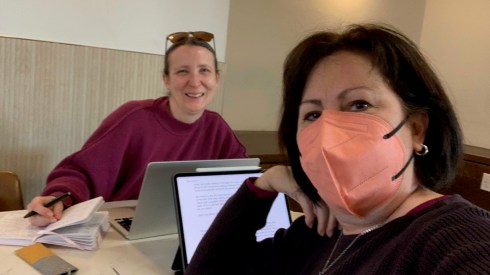
Last year, I started co-working with local Kidlit friends. We work in a library or coffee shop so the ‘carrot’ is seeing friends and fancy coffee and snacks. I don’t doomscroll or watch TV due to peer pressure. It works really well. I can quiet my mind, write and enjoy the process! So far, that’s what’s working best for me.

I hope some of these hacks help you with your writing. Let me know if you have any others!


Laura Zarrin has illustrated over 30 books for children including board books, picture books, and chapter books, Highlights Hidden Pictures, and various educational projects. She’s the illustrator of the Wallace and Grace Series by Heather Alexander and the Katie Woo’s Neighborhood series by Fran Manushkin. She’s currently writing and submitting her own stories. Laura is happiest writing and illustrating characters with subtle and not so subtle humor, bonus points for slapstick comedy.

Visit her at LauraZarrin.com or on Instagram @LauraZarrin and Bluesky @LauraZarrin.

by Mel Rosenberg

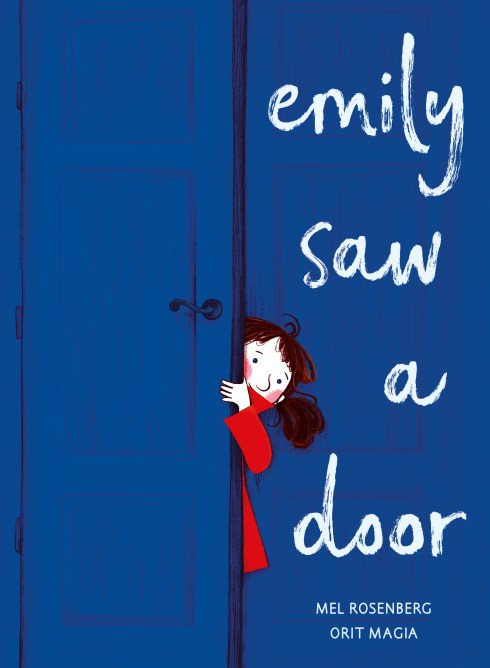
As an aspiring children’s author, I’ve worked on hundreds of ideas for stories, but so far only one has broken through. EMILY SAW A DOOR (magnificently illustrated by Orit Magia) will launch with Random House Studio on February 24th. The original version (in Hebrew) has been extremely successful, and the book will soon be published in multiple languages (including Arabic!). How in the world did that happen?

Similarly, in my previous career as a researcher, I had hundreds of ideas for experiments and inventions, but only a couple led to noteworthy papers and inventions.

Where do those rare, successful ideas come from?

This question weighed on my mind as I prepared to teach an academic course on multidisciplinary creative thinking some twenty years ago. What I learned is that successful ideas across various disciplines often share a common characteristic—they appear, at least initially, to be silly and childish. Perhaps that’s because they often come from the meeting of two minds—both of them ours.

Norman Podhoretz put it best:

 “Creativity represents a miraculous coming together of the uninhibited energy of the child with its apparent opposite and enemy, the sense of order imposed on the disciplined adult intelligence.”

Great ideas can sprout from the connection between our adult mind and our playful, inner child mind. When this happens, we can come up with unanticipated, wacky, weird and whimsical ideas (you may recognize most or all of these), such as…

  • A squash becoming a girl’s pet.
  • School, worrying about its first day at school.
  • A bear who is attached to a small hat.
  • A crack on the ceiling with the habit, of sometimes looking like a rabbit.
  • NOT eating one’s classmates, even though they are yummy.
  • A rather large animal going unnoticed in the house.
  • A careful bull in a china shop.
  • Seven eating nine.

Has your adult mind been cultivating your relationship with your child mind?

Here are a few ways to invite it to “come out to play.” Please feel free to create your own versions and variations.

  1. Just before you sit down to write, do something ridiculous.  Bark. Dance a silly jig. Put on a funny hat. If you have a couple of youngsters around the house, invite them to join in! After all, they are the ones who invented silliness.
  2. Warm up by inventing silly nonsense words. You can check out some of mine here.
  3. Doodle, if you are so inclined.
  4. Make up a ‘Silly Mary’ rhyme. Here is one of myme: Mary has an autograph/Of someone rich and famous/but it is difficult to read/exactly what the name is.
  5. Make a list of ten things you can do with porridge. THEN make a list of ten things you CAN’T do with it. Oh, and it could be chocolate. Or a very ripe banana. Or practically anything.
  6. Write ten things that are ridiculously and hilariously untrue about an object, such as a fish. Not as easy at sounds.
  7. Do routine stuff, thinking about nothing in particular. Great, silly  ideas can pop out when we are washing dishes or taking a shower. Be sure to keep a waterproof notebook handy.
  8. Try to disregard serious adult thoughts, such as “Who will be interested in reading/buying/selling my story,” “What if people think I’m silly (“You should be so lucky),” or “Shouldn’t I be doing something more constructive now like answering emails?”

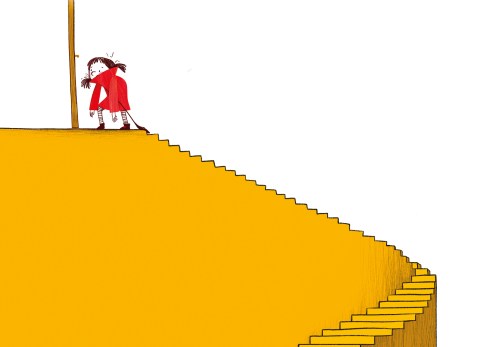
In writing “Emily Saw a Door,” I was lucky to have my child mind on board. It’s the story of a young girl who shows up out of nowhere and traverses a strange landscape of strange doors in her search for a place that is right. One door has endless stairs. Another is only for liars. A third for those who are blue “through and through.” Does that sound silly and implausible? If it does, then I only have my child mind to thank for it. And I do.


Mel Rosenberg is a Canadian-born author, scientist and inventor. He hosts the Children’s Literature channel of the New Books Network [Host, Children’s Literature Channel, NBN ], and is co-founder of Ourboox.
EMILY SAW A DOOR is his first North American picture book release. He is represented by Liza Royce Associates.

by Emiko Rainbow

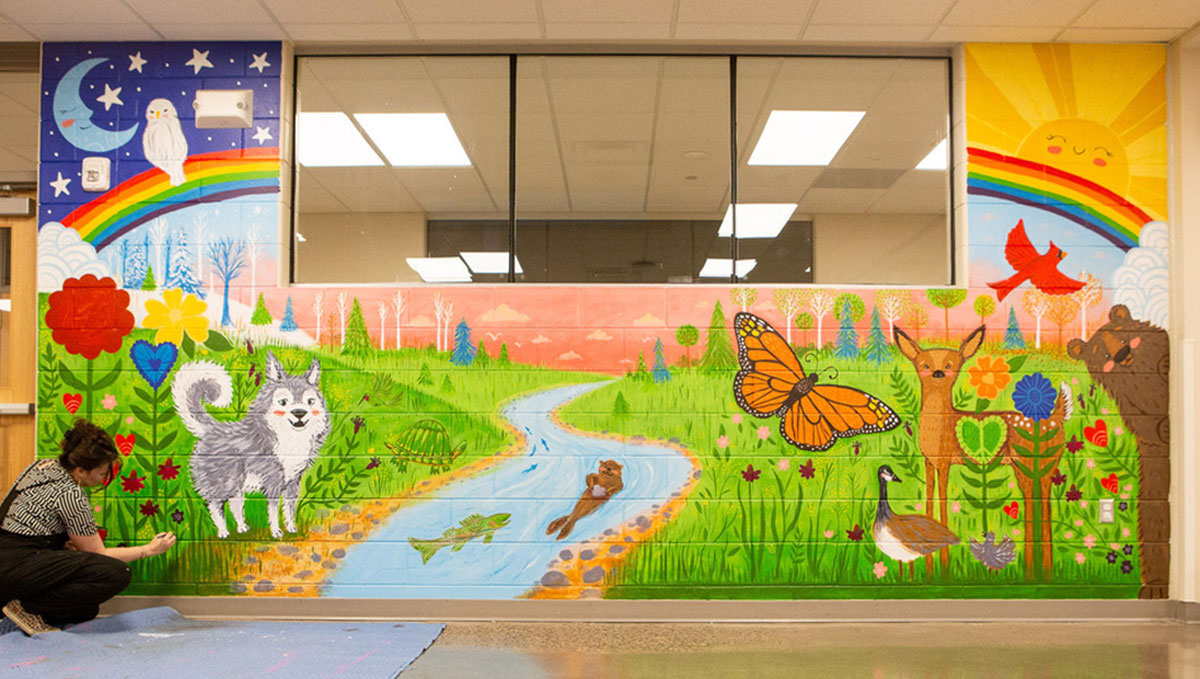
Inspiration, for me, is not just a lightning bolt that strikes from time to time. It’s a constant current I tune into, again and again, whether I’m illustrating a picture book, designing a coffee cup, painting large wall murals, or creating artwork for a stadium of fans. The illustrations I create may be on different surfaces, but they all run on the same pulse: visual storytelling that feels bold, inclusive, colorful and inspiring.

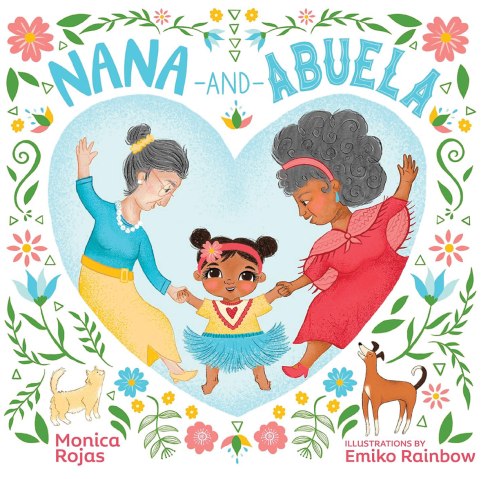
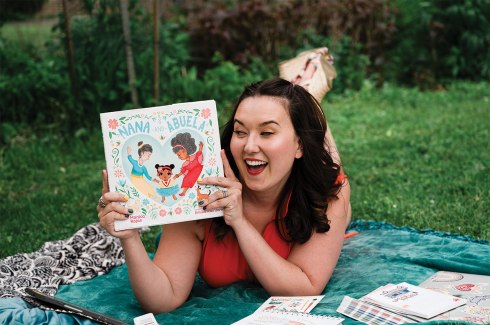
My work in children’s books has recently become a main character in my creative business. The manuscript NANA AND ABUELA spoke to me personally, rooted in love and listening. With a multiracial family like my own, and the experience of living between cultures in the midwest. I wasn’t chasing a trend or market. I tapped into my own childhood and let it guide me. Inspiration grows when you trust what already belongs within you. The color palette I love and gravitate to, the tools, brushes, textures I picked up along the way traveling around the world felt nostalgic or from my own heritage. It’s soulful, the warmth I want a reader to feel. These choices weren’t accidental, they are a visual language that comes from my own story and tastes. I’m writing and illustrating my debut picture now, and I will for sure tap into my own history to create the most authentic and fun experience for the audience.

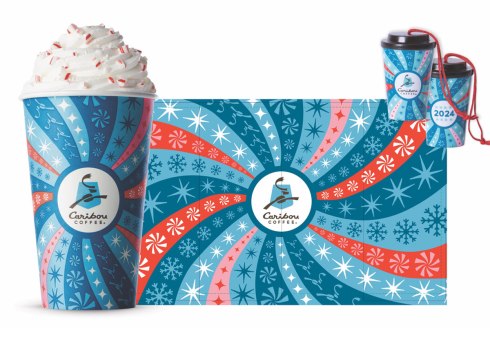
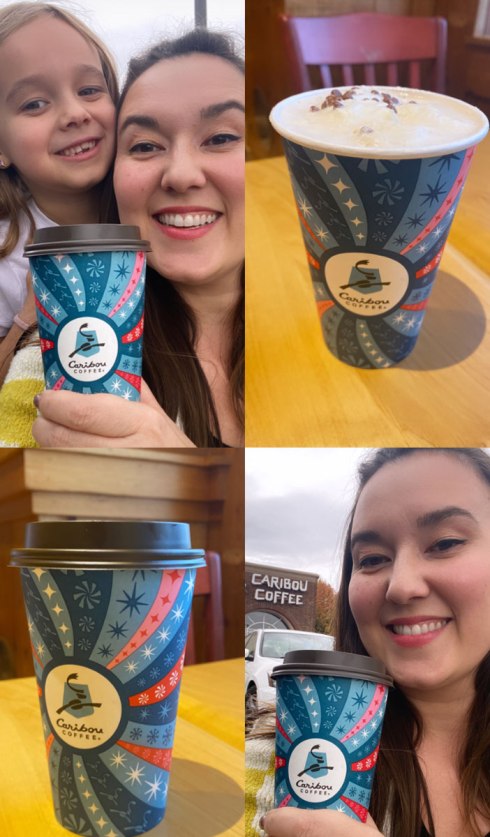
When my illustration work expands beyond picture books, I know that inspiration doesn’t need to reinvent itself every time. When I designed the Holiday Caribou Coffee Cup, I brought the same instincts with me. I wanted people to buy not just a cup of coffee… I wanted them to buy a cup of bold, colorful festive inspiration! Swirling with the same zest and cozy I grew up with when stopping at Caribou after school with my girl friends or helping me survive art college on late nights. Like an injection of a hug and reassurance I needed at the time.

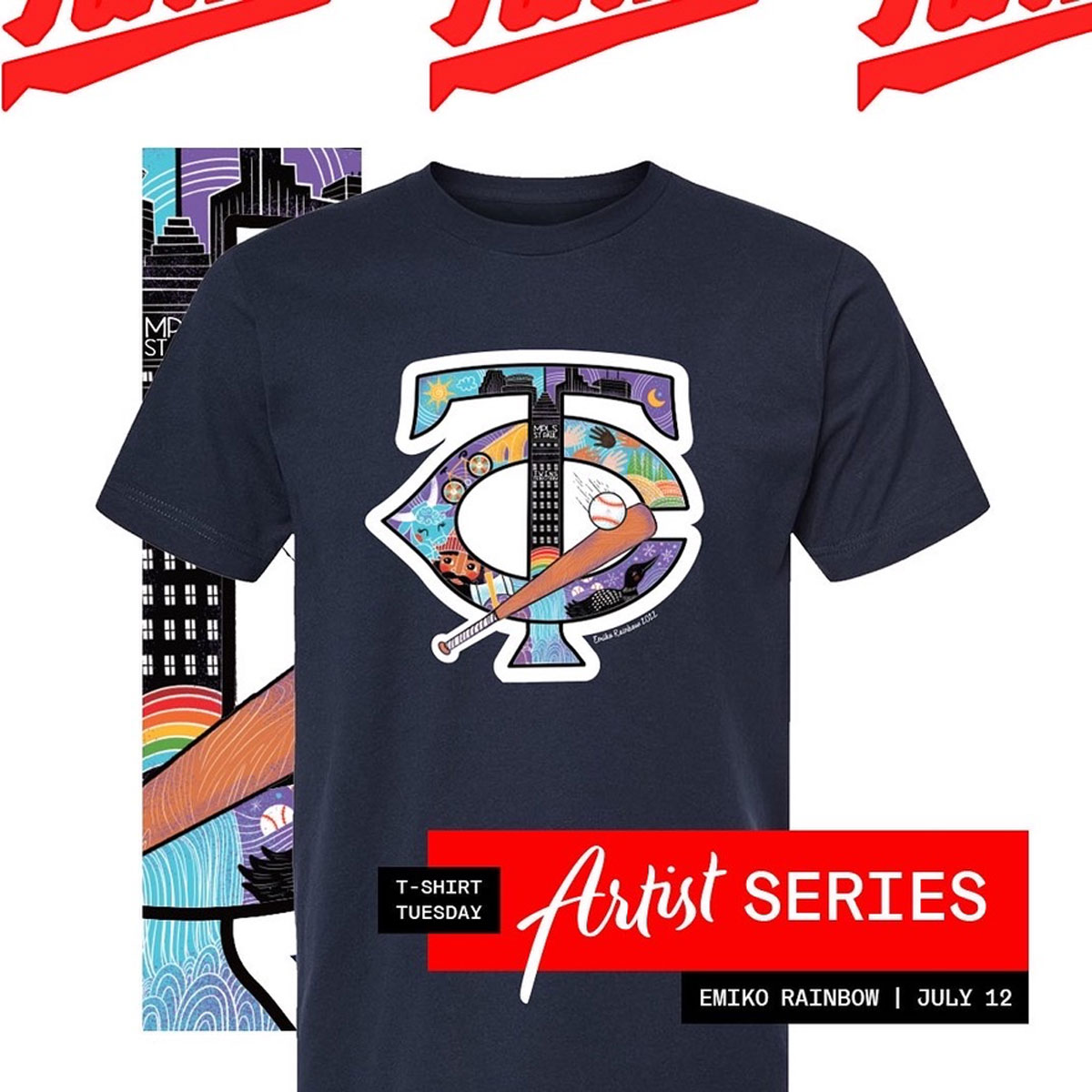
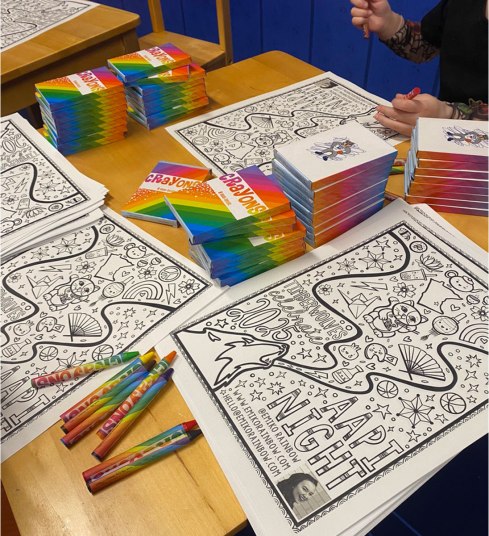
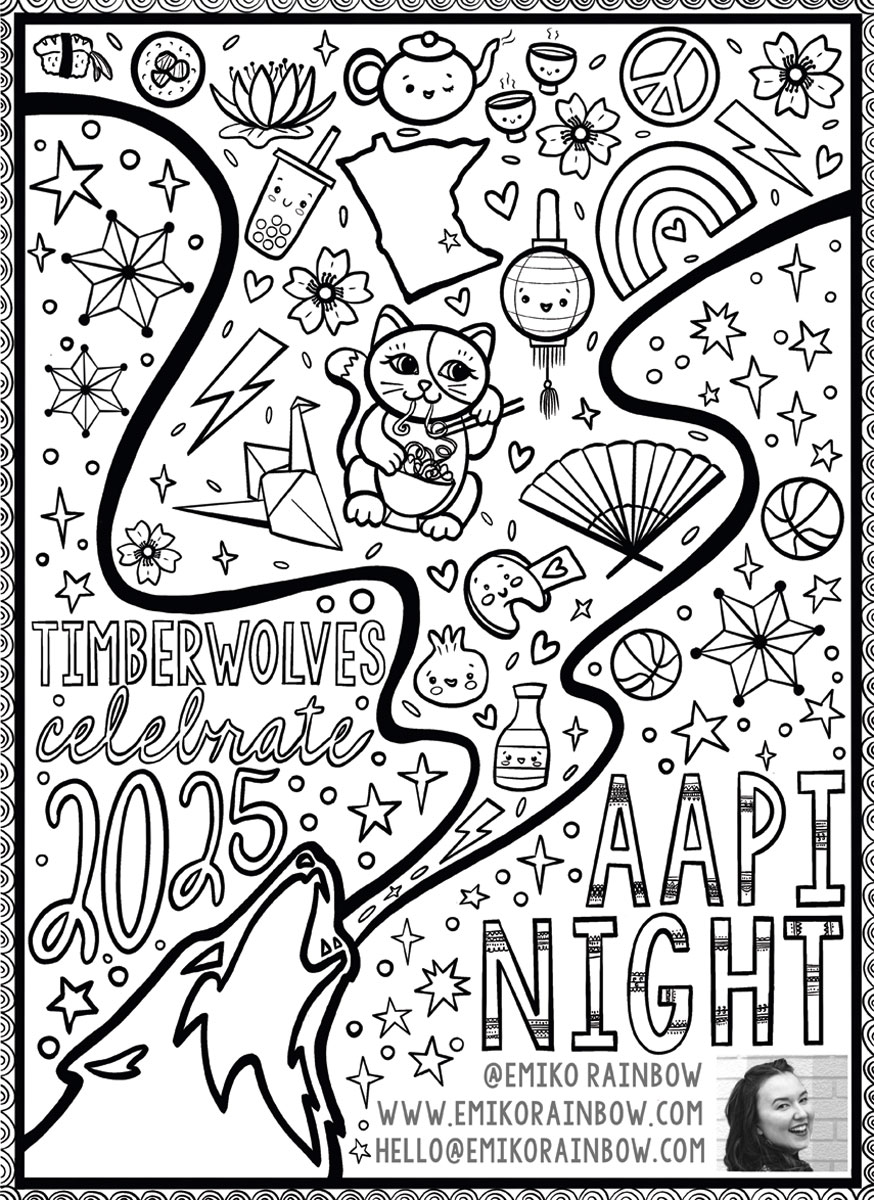
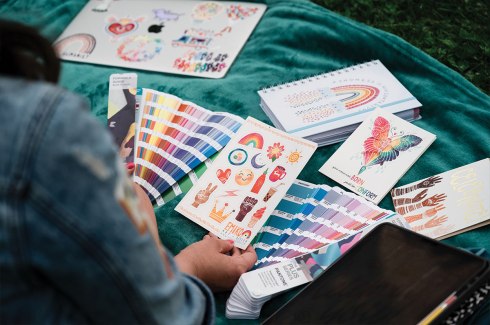
Tapping into inspiration from my own style guide (some call it Style ID or voice or taste) has carried me through illustrating the MN Twins Artist Series T-shirt and a AAPI Night Coloring page for the MN Timberwolves. I’m not much of a big national sports fan but I knew I had some tools in my pocket that could inspire me to collaborate in an authentic way, to merge our styles together in a bold innovative mix. Freelance or client collabs often ask you to adapt, to respond to a brief, to serve a brand and a specific audience. What a fun challenge to sprinkle my razzle-dazzle into that narrative! But within that, I look to my style guide inspiration and see there is lots room for authorship still. Inspiration thrives when I bring my full visionary self to the table. Not diluted, not hidden, not people pleasing, or from a place of fear or scarcity. Inspiration comes from a place of abundance, for us all, we just have to have a few tools in our tool box to pull out when the time calls. You carry inspiration with you all the time!

I’ve come to terms that I am a visionary. It sounds pretentious, but I have to create something out of literally nothing. I can’t “see it to believe it”. I have to dig in, dig deep within me and excavate the authentic stories out. Written or illustrated. When I honor that and look at the blank canvas, wall, cup, t-shirt, or page… Let my life experiences, my tastes, love of color and boldness shine all over it. Let my voice be loud and proud, it can live across many forms. Inspiration is not fragile, it is generous. When you honor it, it will meet you wherever you create!

My questions for you are:

  • What parts of your own story do you find yourself returning to time and time again in your creative work?
  • When you think about your childhood, what colors, textures, or memories feel “nostalgic” or creatively alive for you?
  • Do you have your own Style Guide too? What does it include?

Emiko Rainbow is a Minneapolis-based professional freelance illustrator, muralist, and product designer who makes art and stories for diverse people to be seen and celebrated. Her first illustrated picture book Nana and Abuela, written by Monica Rojas, was published in 2023. She has been a creator and art brand for over 16 years, collaborating with brands like Trader Joe’s, Barnes & Noble, Caribou Coffee, the Minnesota Twins, and the Timberwolves. Her work has been featured on everything from cups and t-shirts to murals and children’s books. As a multiracial woman and mom, her art and stories are deeply rooted in themes of identity, belonging, and empowerment—always sprinkled with a sense of magic, humor, and lots of color. You can find her at EmikoRainbow.com and @emikorainbow on Instagram and Substack.


by Dana Wulfekotte

A brief look into how I come up with my story ideas:

A lot of my ideas come from my own childhood in some way. My upcoming book, MABEL’S MUSEUM OF WONDERS, was inspired by the “museum” my best friend and I created in my basement. We took all of the things we had amassed over the years and put them on display (Happy Meal toys, Play-doh sculptures, mostly a lot of weird junk). I remember my mom indulging us by walking through the museum, pretending it was all very interesting, and then buying something at the gift shop for a dollar.

I’ve been a collector since I was a kid. My aunt has been giving me rocks and crystals since I was a kid. If we went to the beach, my pockets would be weighed down with shells by the end of the day. When my husband and I bought our house from my father-in-law, he left behind his jars of marbles for us (which also make an appearance in the book).

So I used these memories as a starting point for my story. But I needed some kind of conflict. What if Mabel didn’t have a best friend yet, and creating this museum was her way of trying to connect with others? And what if most of the kids thought she was kind of strange, but maybe one of them understood her? The rest of the story came together quickly from there.

I drew this sketch back in 2019 before I had started working on this story. Since then, Mabel’s friend has changed from a girl to a boy to a badger, but the heart of the story was still captured in this image. Keeping a sketchbook has been tremendously helpful for me when it comes to  developing ideas. My sketchbooks are not made for Instagram. They’re full of drawings I’d be embarrassed to show other people, but I think that’s kind of the point. Most of the characters and ideas in them will never grow into full stories, but that doesn’t mean that it’s wasted effort.

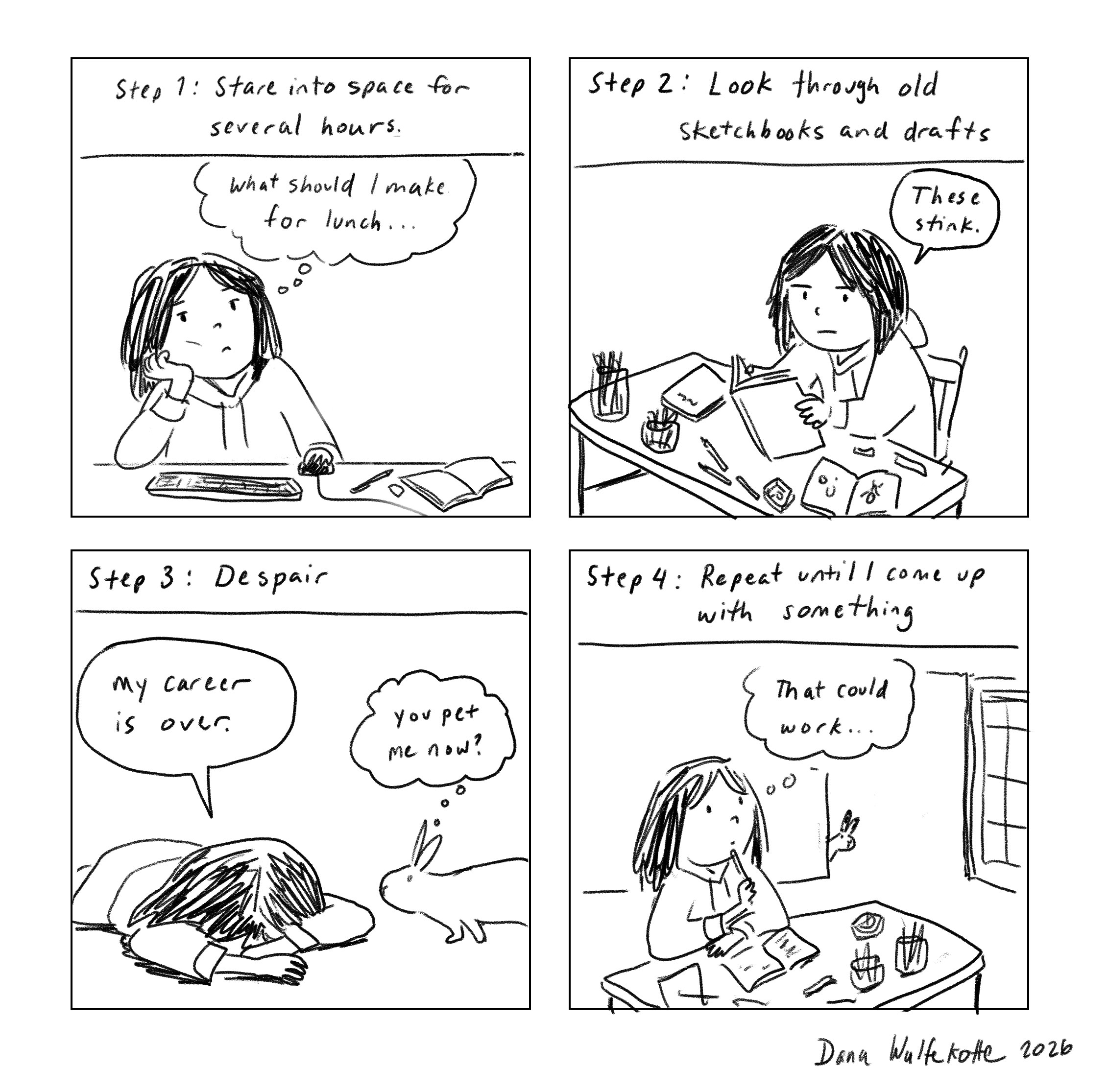
As I wrap up revisions on my current project, I’m starting to think about what my next one will be. Maybe it’ll be something that’s been sitting in my sketchbook for years, or maybe I’ll come up with something entirely new. Either way, I’m going to embrace the process and try to skip Step 3 this time around. Hopefully you all will do the same!


Dana Wulfekotte is an author-illustrator and animator. She was born in South Korea, grew up in New Jersey, and currently lives in New York with her husband and two rabbits. She illustrated the Schneider Family Honor book THE REMEMBER BALLOONS (written by Jessie Oliveros). Her new book, MABEL’S MUSEUM OF WONDERS, is coming out on June 30, 2026. You can find her online at DanaWulfekotte.com and on Instagram and BlueSky @danawulf.
by Sara Weingartner

Before we dive into creative inspiration, I want to take a moment to check in with you all. How are you, emotionally? I’m in Minneapolis. The weight of the world is overwhelming—with fear, anger and sadness for what is happening to Minnesotans, my neighbors, the businesses, our schools, our whole community.

If even a little bit of this resonates with you, take a moment. And breathe. In times like this, the act of writing and art making can be our place for peace or meditation. What we create can also become a moment of calm, or hope, or joy for anyone who sees it.

(Thanks for letting me be real for a moment. Now onto the inspiration part…)

As an artist, I’ve always loved brainstorming and creating characters and imaginary worlds. So, when I discovered Storystorm back in 2013 (when it was PiBoIdMo) even though I hadn’t declared myself a writer yet, my journey as a PB writer began.

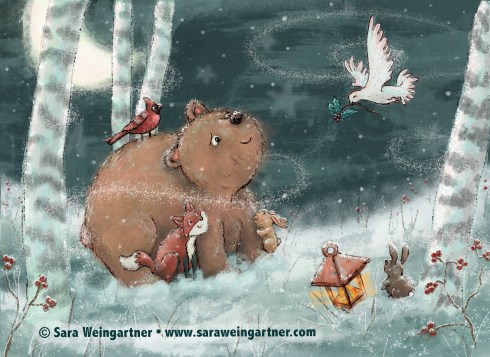
For me, PB ideas often begin with a character that I’ve drawn or one that is stuck in my head, pleading to come out on paper. As I play around with animal vs. human, body shape, clothes and accessories, it slowly reveals its personality.

It’s wonderful to be able to draw out my first impressions of a character. But I often don’t have a clear picture or direction of whom this character is, its hobbies, friends or setting.

That’s when “branching” ideas can be super helpful.

Here’s how it works:

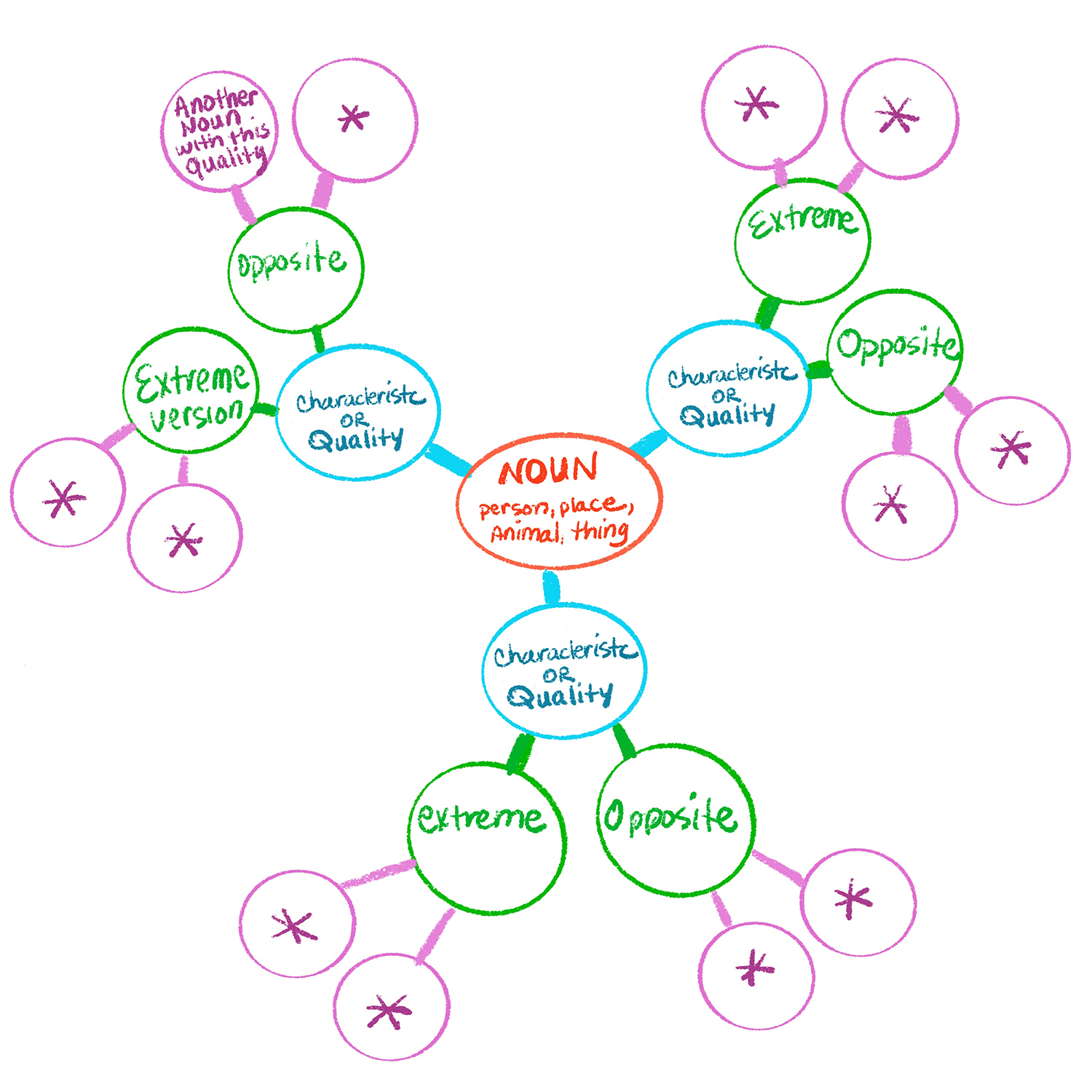
  1. (RED) Draw a circle in the middle of your paper and choose a character you’re interested in (animal, person, object, place),
  2. (BLUE) Branch out and draw three (or more) circles. Think up characteristics or qualities (realistic or imaginary) about this character.
  3. (GREEN) From those three words, branch out again, but this time, with two circles each. Fill with 1) the opposite, and 2) the extreme versions of each quality/characteristic.
  4. (PURPLE) Last branching, add two more circles each, and fill with nouns that also possess this quality or characteristic.

I hope I didn’t lose you. (Download Sara’s Branching Template here.)

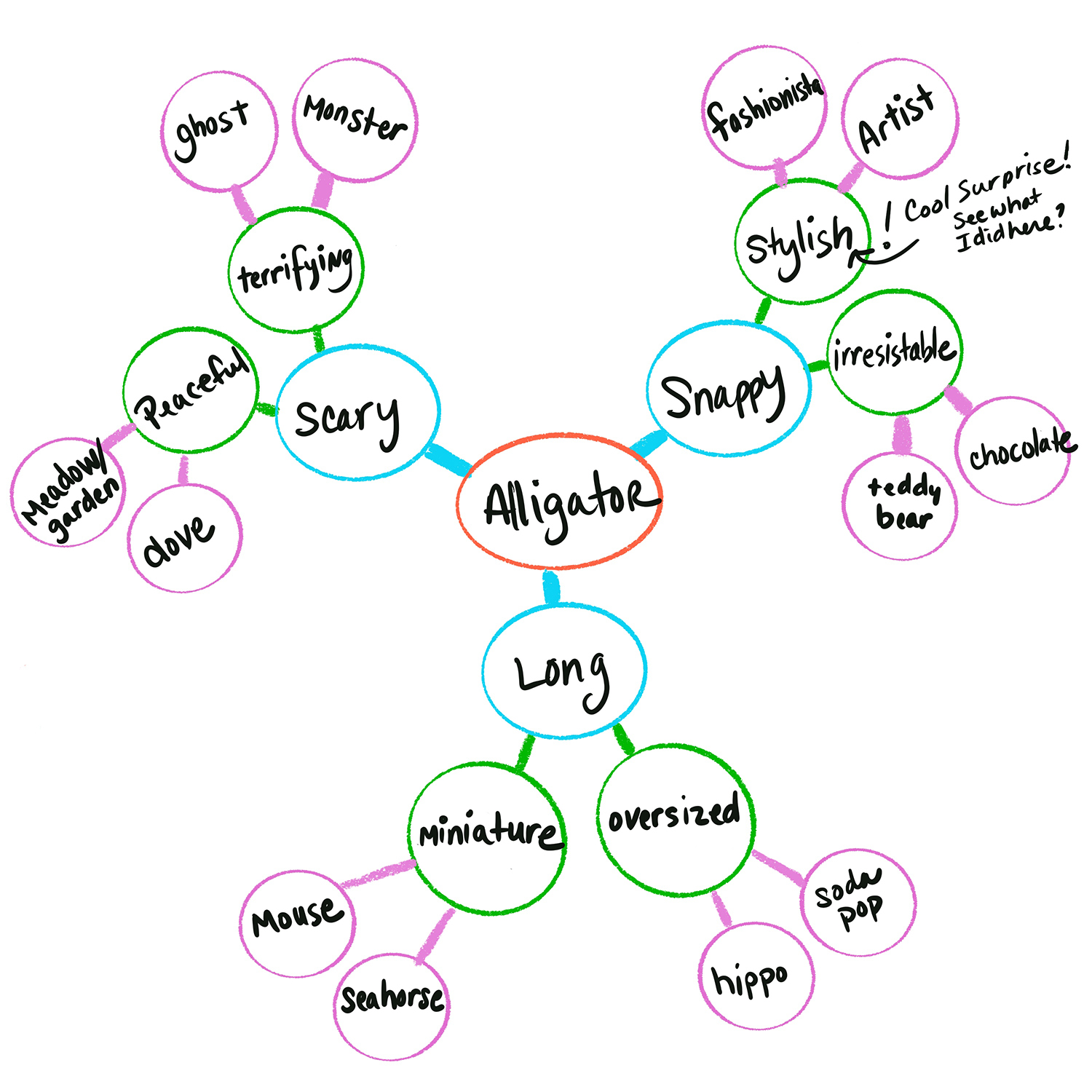
Here’s my quick branching example of an alligator for clarity:

Now comes the fun, brainstorming part! Combine these words to create new character(s), a possible setting, even a friend. So, instead of my initial idea of a (boring) long, snappy, scary alligator, I’ve just imagined a mini alligator fashionista who goes everywhere with her teddy bear, who might be best friends with a confident mouse artist, and maybe this story takes place in a peaceful meadow.

You’re welcome! Now you give it a try!

But first, a few tips:

  • TIP 1: Set a timer. Maybe 5-10 mins. Because with a tick-tocking clock, we tend to think quicker and avoid self-editing.
  • TIP 2: Use a thesaurus! Choosing words from a list, speeds up your process, and offers multiple meanings of a word. (Note my “stylish” word choice above.)
  • TIP 3: I’ve attached a blank branching template PDF if you think it’s more fun to fill in circles.

After you come up with a potential character with weight, dive deeper:

  • WHO are they?
  • WHAT do they really want?
  • HOW are they going to get it?
  • WHAT is at stake if they don’t?
  • WHERE does this story take place?
  • and ask WHAT IF? (if you get stuck along the way).

As an added BONUS, challenge yourself to draw your character! And I already don’t believe you if you say, “But I can’t even draw a stick figure.” YES YOU CAN! Just try.

But most of all, enjoy the creative flow because this is what we are made to do! Thank you, Tara, for this opportunity to share, and for all of you for choosing to be on this journey, too.


Sara Weingartner has illustrated nine books (PBs and an early chapter) and is currently submitting her author-illustrator dummies to agents. She works in mixed media (traditional  and digital) and is a graphic designer who has designed tons of PBs for a local publisher. Sara is happiest when she’s creating things, being active, and filling her world with color. She also loves throwing pottery (on a wheel!), pickleball, baking and running. She dreams of an inclusive world, believes in magic, and wishes animals could talk. Living in Minnesota, Sara and her husband have two kids (an adult art teacher and teen) and a very spoiled pooch.
Visit her at SaraWeingartner.com or on Instagram @sarajweingartner and Bluesky @saraweingartner.

by Ann Diament Koffsky

“Write what you know,” is a classic piece of advice given to writers.

Hogwash!

If I only wrote what I know? I would be writing very little!

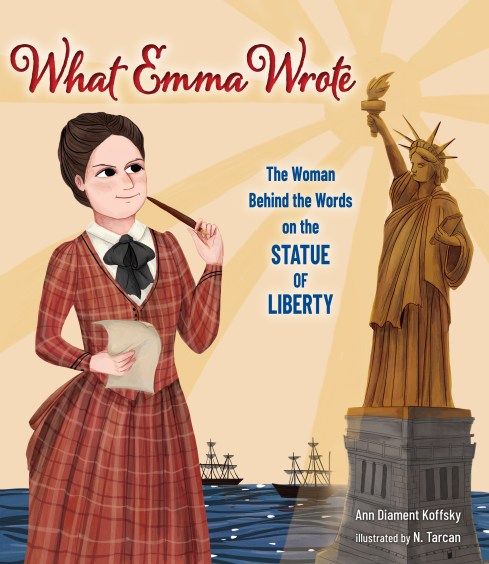
For example, I didn’t know much about Emma Lazarus. Just that she had written the poem about the Statue of Liberty. That’s it.

But because I was compelled by that poem, I was driven to research and discover a lot more about her: her compassion for immigrants, her advocacy work, and her kindness (I especially loved learning how she once wrote a passionate response to an antisemitic screed—go Emma!)  And thus, my love and admiration for Emma led to my book WHAT EMMA WROTE, (Apples and Honey press, March 2026).

I propose that we transform the advice of “Write what you know,” into what I think is a far more useful mantra, “Write what you CARE ABOUT.”  Caring, otherwise known as feelings, can be a supercharged, flammable, writing fuel!

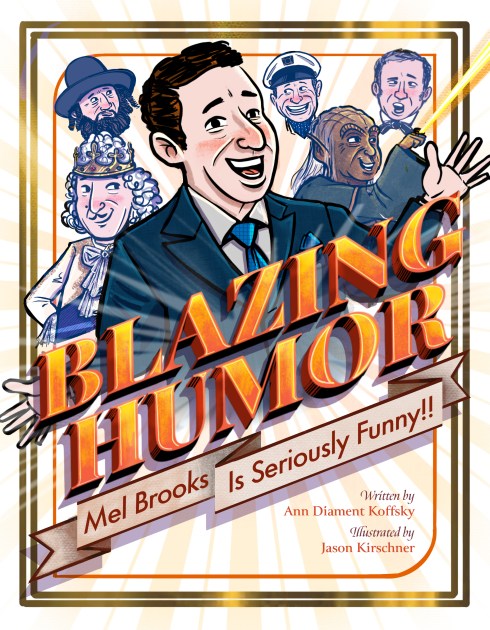
For example, you wouldn’t think feelings of grief would lead to a book about comedian Mel Brooks. But when my family and I suffered a terrible loss a couple of years ago, humor was one of our life rafts—or as Brooks said, “Once you find laughter, no matter how painful your situation might be, you can survive it,” This inspired me to write BLAZING HUMOR: MEL BROOKS IS SERIOUSLY FUNNY. (Intergalactic Afikoman, April 2026).

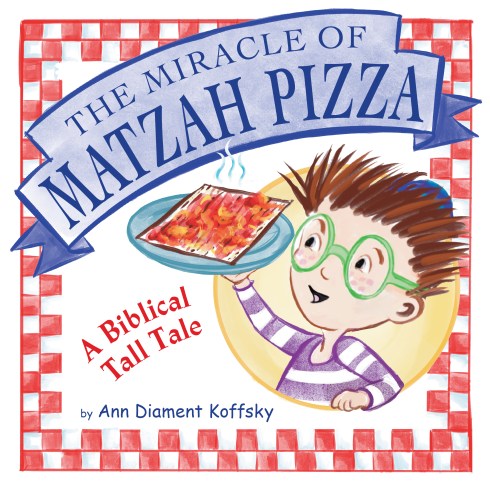
BOREDOM inspired another of my new books.  Passover lasts eight long days, and if you’re one of those who celebrates the holiday by eating matzah (a flat, cracker-like unleavened bread) each day, it can start to taste pretty bland by day three! Matzah with melted cheese and tomato sauce smeared on top has always given me a welcome break from the boring, and so it is for the main character of my book THE MIRACLE OF MATZAH PIZZA (Intergalactic Afikoman, February 2026)

Other writer friends of mine report that their caring, and emotions have inspired them, too.

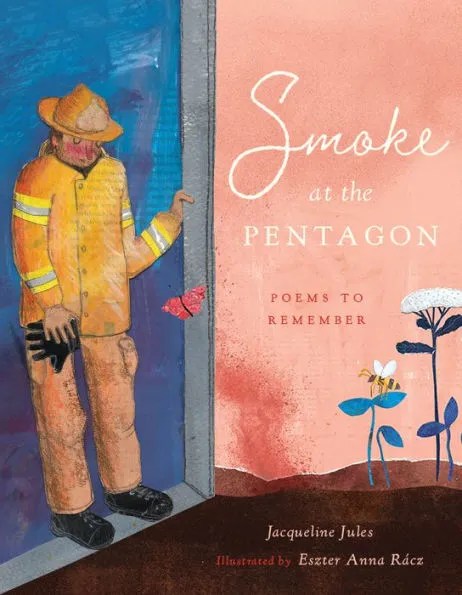
A feeling of SHOCK inspired educator and author Jacqueline Jules, “I was very surprised to learn that my students didn’t know that the Pentagon had been attacked on September 11, 2001.” How could her students, who lived just miles from the Pentagon, not know what their neighbors had suffered that terrible day? This led her to write SMOKE AT THE PENTAGON (Bushel & Peck, 2023).

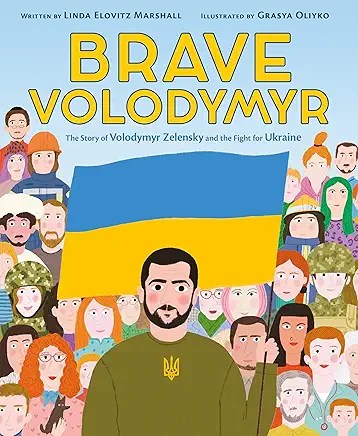
ANGER can be a motivator too, according to author Linda Elovitz Marshall, “Furious that Russia invaded Ukraine, the former home of my great grandparents, I wrote BRAVE VOLODYMYR: The Story of Volodymyr Zelensky and the Fight for Ukraine (HarperCollins, 2023).

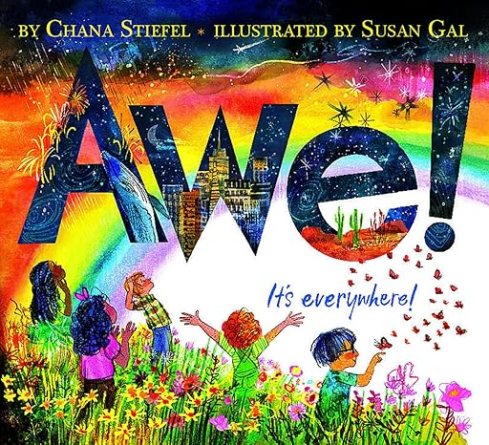
And, lest I leave you with the impression that only negative emotions can inspire, let me add that positive ones can be effective too, “I’ve always loved encounters with nature—seeing the ocean, watching sunsets, climbing mountains, exploring wildlife,” author Chana Stiefel says. Those feelings led her to write AWE! (Scholastic, March 2026).

So, the next time you feel bored, shocked, frustrated, awestruck, furious—take note!

Feelings are a compass—they can point you precisely to what you care about and what’s important to you; to what’s meaningful to you and your unique soul.

Feel the feelings.

And get out your notebook.


Ann Diament Koffsky is the award-winning author and illustrator of more than 50 books for children.

Ann’s artwork has also been featured on products by Hallmark, Costco, Great Arrow Graphics, Rite Lite Judaica, as well as in publications like The Philadelphia Inquirer, The Washington Times, Jewish Action Magazine and Hadassah Magazine.

Previously she was an editor and art director at Behrman House Publishers, and an illustration Professor at Stern College, Yeshiva University. 

Ann lives with her family in West Hempstead, NY. Visit her online at AnnKoffsky.com.

Like this site? Please order one of my books! It supports me & my work.

FLAT CAT is the winner of multiple state book awards, selected by kids!

Enter your address to receive this blog via email.

Join 14.6K other subscribers

My Books

Blog Topics

Archives