You are currently browsing Tara Lazar’s articles.
Yes, it’s almost time for the 30-picture-book-ideas-in-30-days challenge, otherwise known as PiBoIdMo! The picture book writer’s alternative to NaNoWriMo will kick off the last week in October and continue through the month of November.
In late October you’ll be able to sign up, grab a badge for your blog and social networks, and get ready for some awesome prizes! There will be critiques from published authors, feedback from literary agents, original illustrations by picture book arists, signed books, jewelry, journals, and who knows what else! You’ll also be able to purchase PiBoIdMo merchandise with the proceeds benefitting book charities. So get those notebooks ready!
In the meantime, here’s a Halloween greeting. I hope to see you for PiBoIdMo soon!
 Thanks for everyone’s patience while I reviewed the Picture Book Premise entries. There were some wonderful ideas and I had a difficult time choosing my favorite. In the end, it boiled down to my gut reaction.
And thus, I got a feeling of what it’s like to be an editor, inundated with multiple pitches, trying to decide which stories sounded the most appealing.
Most of my regular blog friends know that I’m a quirky, humorous writer, so it will surprise you to know the winning premise was NOT quirky or funny! (Hey, it surprised me, too!) I now understand why agents and writers don’t typically tell aspiring authors what they’re looking for. Instead they say, “I’ll know it when I see it.” If I advertised that I only wanted laugh-out-loud premises, I would have missed out on some unique ideas.
Before I tell you the winner (I know, I’m like an awards show cutting to commercial), I’d like to give everyone a few tips on how to write their premises.
Your premise is your pitch. If you have to write a query letter, it’s the whiz-bang-pow paragraph that gets the editor begging to see more. It’s also your 60-second elevator pitch. When you meet an editor or agent and they ask, “What do you write?”, it’s your chance to dazzle them and entice them to request the manuscript.
Your premise should read like jacket copy. Here’s the jacket copy from Sudipta Bardhan-Quallen’s THE HOG PRINCE:
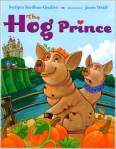 “Eldon Hog is fed up with mud-swallowing and slop-gobbling. He and his friend, Petunia, watch the royal carriage pass by every morning, and Eldon dreams of becoming a princely passenger.
“So it seems that all of Eldon’s dreams have come true when Miranda, a somewhat frazzled fairy, tells him that if he can break the Hog Prince spell put upon him, he will transform into a prince. SMOOOOCHES abound as Eldon searches far and wide for that magical, spell-breaking kiss. He tricks the Cinder girl, Ella (Smoooch! Eek!); Lady Aurora, spinning gold (Smoooch! Yecchhh!); and all the ladies he can find. But is it possible that true love has been sitting under his snout all along?”
Now, that may be a tad big longish for jacket copy, but see how it ends in a question that begs for an answer? You’re left hanging until you open that book and read on.
Not everyone sent a premise that sounded like jacket copy. Some only gave me one sentence, which wasn’t enough to understand what the entire story was about. I couldn’t envision the character or their predicament fully.
Others wrote a little too much detail. Remember you’re pitching a picture book, so if your premise is wordy, an editor may assume that your manuscript is full of unnecessary words. Trim down your pitch; trim down your story’s word count.
Others sent me snippets from their story, but I wanted to see that you could tell me about the story without sending the manuscript. That’s what editors and agents will ask for in a query. If they ask for a query letter but you send the manuscript instead, it may be discarded for not following instructions. (To be fair, I didn’t say DON’T send the manuscript, but you get my gist.)
And now onto the winners!
First, the person who referred the most people to my blog was MONA PEASE! You have won a picture book critique, redeemable at any time, as long as I’m still alive! LOL!
Next, I’ll tell you a little about the premise I choose without giving away the farm. Actually, the two top finalists were what you would call “multicultural” stories. They both struck me as very unique, although the winner’s premise is based on an actual event with a Latin-American folklore feel. Without further ado, the winner of the critique is VALARIE GIOGAS for THE RAIN OF FISH!
Mona and Valarie, please email me at tarawrites dot yahoo dot you-know-the-rest to discuss the details of your prizes.
Thank you to everyone who entered. There were 33 entries, out of which I had “starred” 7 premises, which I think is a pretty darn good percentage of darn good ideas. Y’all are smart and talented writers! Keep writing! Keep dreaming! Keep inspiring! (And keep reading this blog! LOL!)
 It’s summer, so let’s have some fun, shall we?
How about a contest?
Good. I thought you’d like that.
And this one is easy. You don’t have to send a manuscript. All you need to enter is a premise.
That’s right! A picture book premise.
Make it unique, make it funny, make it touching. In less than 100 words tell me your story’s premise. What’s the problem? What crazy situation has got your character all flummoxed? Imagine it’s your book’s jacket copy. What would you say to sell the audience on your book? You’ve only got a few seconds to capture someone’s attention, so make it snappy.
The best premise will win a free critique–and get this, you don’t even have to have the book written yet! Think of a great premise now, claim your critique later. I’ll honor the free critique for as long as you need (although it’s non-transferable and its cash value is 1/100th of a cent.)
There are three steps to enter:
- Subscribe to my blog via email if you haven’t already. (See handy button in the top left column of my blog.)
- Send your premise in the body of an email with the subject line “PB Premise Contest” to tarawrites at yahoo dot you-know-what. All entries must be received by Sunday, August 14th. (One entry per person, please. So make it your best.)
- Tell your friends. The person who refers the most people to my blog will also win a critique! (Just let me know in a comment below who you referred. I’m working on the honor system here.)
That’s all! So easy-peasy! I’ll announce the winners the week of August 15th.
One last thing–if your premise is anything like one of my current projects, I will notify you, just to let you know, I’m not taking anyone’s premise. I’ve got enough of my own begging me to write them!
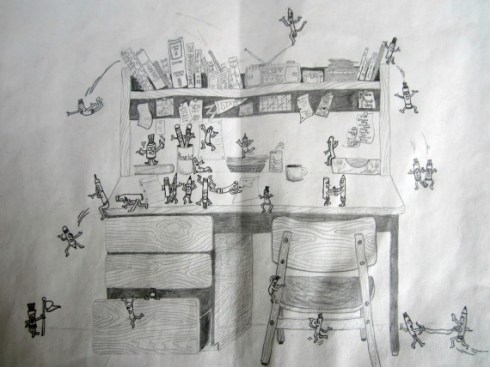
I drew this illustration to accompany an old story I wrote about my pencils and pens–who felt used and abused by my ceaseless creating, so they up and staged a revolt and escape! I never told my agent I could draw. I don’t think it’s good enough to be in books, but I thought I’d share it here. Maybe a coloring contest is in order?
Copyright 2011 Tara Lazar
THE MONSTORE is still two years away from release, but today I have the OK to share with you initial character sketches by the brilliant illustrator James Burks!
The main character of the story is Zack, who wants to buy a monster to scare his pesky little sister Gracie. (Isn’t she sweet? How could she possibly be pesky?) Three of the main monsters are Manfred, Mookie and Mojo…and of course, there’s the proprietor of the shop–the Monstore Manager. I wonder if Danny DeVito would like to play him in the movie version? (Yes, one can dream.)
I hope you enjoy these illustrations!
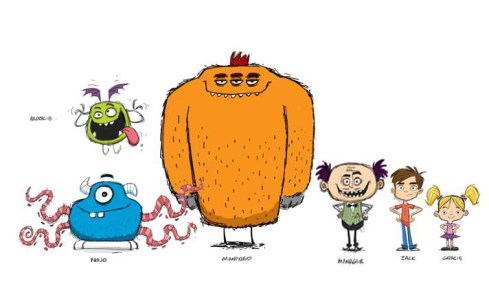
Copyright 2011, James Burks
Ah, how I love spending a warm, sunny Saturday afternoon in suburban mecca: Best Buy. We went in for a digital camera, but stopped at every department, drooling over the latest gas ranges with dual ovens and french-door refrigerators (a thrill you’ll only understand once you’re married with kids).
We were also oogling over the QR codes. Yes, we were two geeks in paradise.
What are QR codes? You’ve probably seen them—pixelated bar-code-like squares that link your smart phone or iWhatever to additional information about a product. Want to see a video of the range in action? Learn about the warranty? View an extended list of features? Call the manufacturer’s customer service? Just scan the QR code and it will lead you to a website, video or other crucial piece of marketing magic that doesn’t fit on the price tag.
So what does the QR code mean for authors?
Glad you asked. Author/illustrator Katie Davis recently explored the possibilities. Just click on the graphic below to read her post:
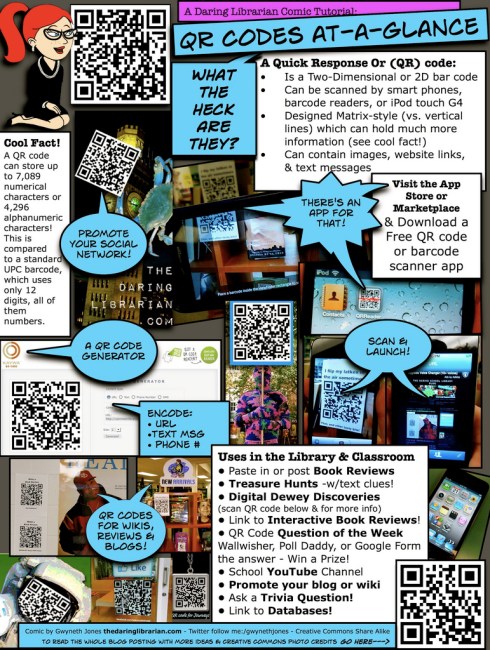
Wouldn’t it be great if publishers started putting them on book jackets? Link to the book trailer! The author’s own book club! Her Formspring fan page! (Gee, the customer could even call you at home. But I digress.) The QR code delivers more whiz-pow-bang to help sell the buyer on the book.
Are QR codes the next big thing? Maybe. They’ve been used in Japan for about 10 years now and I’ve personally seen them more and more over the past few months.
Read Katie’s post about how to generate your own QR code and start examining the possibilities!
Thanks to The Daring Librarian for the graphic.
OK, the cat is out of the bag. I’m not the most organized person in the world. My daughter’s closet looks like Justice for Girls exploded and I store soda bottles and juice boxes on my kitchen floor. There. So now you know, when you visit my house, you must tiptoe around the towers of books because I never get them back on the shelves.
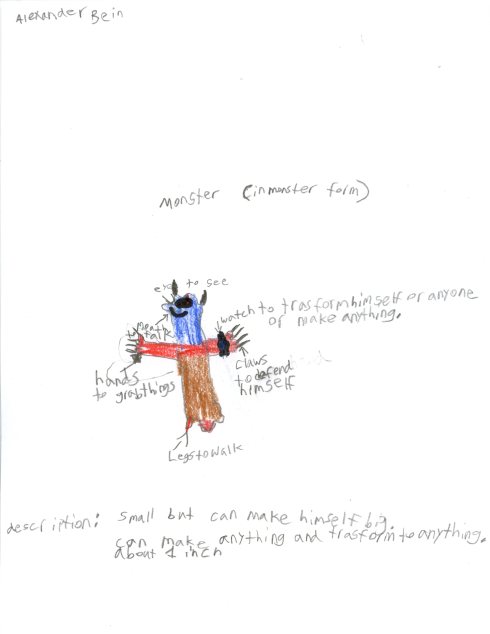
Mrs. Mozer brought to my attention that I featured every single one of her 3rd grade class’s monsters for The Monstore—except one. Alexander’s. I’m sorry, buddy! So without further ado, here is Alexander’s creation!
I’ve got just one question for Alexander—can I borrow your monster’s watch? I really need that thing.
Kids love when they think they’re smarter than adults, don’t they? Try putting your shirt on as pants or wearing your shoe as a hat and they’ll double-over with laughter at your stupidity.
Similarly, in writing, having a clueless narrator produces sure-fire giggles. Knowing more than the protagonist is like being in on a secret joke with the author. It’s one of the keys to writing humor for children.
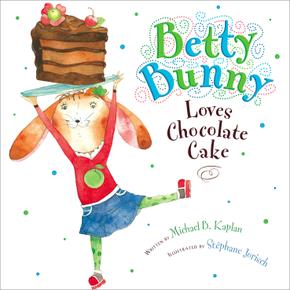 But one of the biggest mistakes in writing humor, according to Executive Editor Steve Meltzer, is random humor—humor that doesn’t serve to drive the story forward but exists merely as a gag. “Even the absurd needs to make sense and be believable,” said Meltzer. He then read BETTY BUNNY LOVES CHOCOLATE CAKE as an example of humor that feels effortless and works within the context of the story. When Betty Bunny’s parents tell her she’s a “handful” so often, she thinks it’s a term of endearment and tells her mommy she’s a “handful” right back. (Of course, I’m rushing out to buy the book right now! I know, I’m a handful!)
Remember when writing picture books for kids, your audience includes parents, too. Some humor should be for their benefit. Think of the old Bugs Bunny cartoons—watch them now and there are jokes that certainly went over your head as a child. Pixar films also have a unique way of delivering entertainment that parents enjoy. (Like in “Finding Nemo” when Nemo is waiting to sabotage the filter. The dentist goes to the bathroom and Peach says, “Potty break! He grabbed the Reader’s Digest! You’ve got 4.2 minutes!”)
Mr. Meltzer also reminded us to take advantage of page turns because “they’re the writer’s rimshot.” Page turns should be surprising and fun. They create suspense: “And then…” [page turn] “BAM!” Hit them with your best [rim]shot.
 Audrey Vernick and Olugbemisola Rhuday-Perkovich also examined humor in picture books and suggested “take something we all know and insert something absurd that doesn’t belong…the unfamiliar in the familiar.” Audrey did just this in her debut IS YOUR BUFFALO READY FOR KINDERGARTEN?. The humor in the book happens when the buffalo goes to school, helping to ease readers’ fears about the first day of Kindergarten.
Other ways to add humor to your stories include having a funny sidekick, inserting a running gag, and taking the joke beyond the typical expectation of three. When the joke happens a fourth time, it’s hilarious because we already thought it was over after the third instance.
Misunderstandings, like those literal translations in Amelia Bedelia are also humor winners. Comic wordplay is another technique to try. Combine words, create new words, use funny sounds (onomatopoeia). My debut picture book is THE MONSTORE—a store where you buy monsters. The mashed-up title signals that this will be a funny book. (At least I hope you’ll think it’s hilarious!)
So, are there other humorous devices you like to use in your writing?
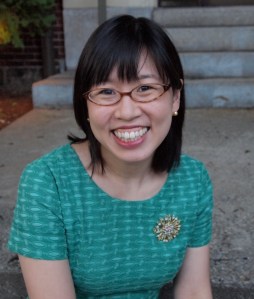
Photo Credit: Alexandre Ferron
Did you know that author/illustrator Grace Lin was Chinese? Well, she didn’t.
As a child, she was the only Asian in her elementary school, so she saw herself as an ordinary white, middle-class kid living in upstate New York. She pretended she wasn’t Asian. None of the books she read had characters that looked like her. It wasn’t until her school librarian pulled out “The Five Chinese Brothers”, the sole ethnic title, that Grace was reminded she was different.
At the NJ-SCBWI conference in Princeton this past weekend, Grace Lin gave the keynote presentation and told us about her identity crisis as an illustrator. In art school she imitated styles and she made art to impress other people. She wanted to hear, “You’re such a great artist, Grace! How do you draw so well?”
But she soon realized she was copying others, wanting to be like Michaelangelo, and making art for the wrong reasons. “Be an artist because you have something to share with the world,” she told us. So Grace began to draw things that made her happy.
She found that Chinese folk art, with its bright colors, patterns and lack of perspective appealed to her. Every inch of the illustration was utilized–there were no blank spaces. This folk art resembled Matisse, and she began to see an East-West commonality in the art she preferred, which became an East-West identity that she embraced.
If Grace was to make art that was important to her, she had to think of what was most important in her life: her family. So she created a family portrait that was uniquely her own–colorful, vibrant and in a style that was not seeking to impress, but merely being who she was.
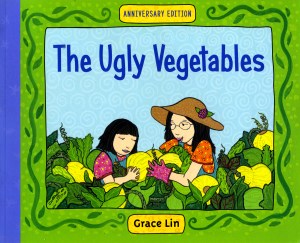 Grace explained to us that our art should have a personal connection. “If it’s not important to me, why do it?” Her first book was very personal, reflecting on the time she spent with her mother in the garden, tending to Chinese vegetables. She used to be embarrassed by the strange plants that grew outside her home, but she now realized the importance of her heritage. She remembered how she never saw herself in books, and she wanted to give other Asian children the chance to see themselves represented.
Instead of being pigeon-holed as an ethnic author, Grace Lin has seen her books melt away race and culture and appeal to every child. “Pre-conceived notions of the market don’t really matter,” she said. She reminded us that if we create what we love, what’s important, our passion will always shine through and find an audience.
Up Next from the Conference: Humor in Picture Books
‘Twas the night before Conference and all through the hotel,
Authors were dreaming of merchandise deals with Mattel.
The manuscripts were printed with name and website,
In the hopes that an agent would find love at first sight.
The editors were snoring tucked into their rooms,
Knowing before them a day of pitching looms.
And while I am too warm, and Corey Rosen Schwartz too cold,
We share a king bed because the queen rooms are all sold.
Out in the hallway, there arose such a noise,
Wouldn’t you know it, it’s the conference’s only two boys.
The place is packed with slinky stiletto-heel wearers,
‘Cause style in books means style in fashion is fairer.
A kidlit conference is full of women who are hot,
Who sell tons of stories while you just want one shot.
But we authors are friendly, we certainly don’t bite,
We’re not filled with envy, we’re not filled with spite.
We will welcome you to our world that’s so crazy,
So will editors and film agents who’ve worked with Scorcese.
Get out there and network! Polish your pitch to a shine!
Relax in the lounge with a smooth glass of wine.
A kidlit conference is the place to make a friend,
It’s where deals happen ’cause deal-makers attend!
But don’t drone for hours about your book’s premise,
Talk about your life, your hobbies. Do you play tennis?
And don’t just stand there, go mix and go mingle.
Don’t stare at the editors like they’re all Kris Kringle.
Be yourself and you’ll find that you’ll be an attraction,
Don’t croon like Jagger about not gettin’ no satisfaction.
Be happy, be cheerful, take crits with salt if need be,
Remember we’re here to help you succeed, see?
(Excuse the bad meter, I’m not really a poet.
Ask Corey the rhyme genius, she really does know it.)
And with that I bid you a hearty good luck.
Break a leg, do your best, get that writer’s block unstuck.
Enjoy yourself for three days and two nights.
Happy Conference to all, and to all a good write!





 Writing for Kids (While Raising Them)