by Tara Lazar
When I first began writing picture books, I’d get hit with an idea—BAM! KAPOW!—and then immediately sit down and start banging it out.

NO. Just NO.
I didn’t stop to think—is this a good idea? Will it make a worthwhile story? I thought the idea would be my only flash and I had to grab it while it was glowing.
Now, I write the idea down. And then I PAUSE.
I let the idea sit in my brain for a while. I might not be actively thinking about it, but I know it’s in there, jiggling around. Bouncing off brain cells, colliding with other unused ideas.
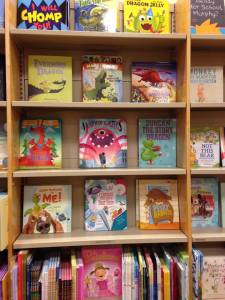
Competition on the shelf.
After the initial incubation period, the first thing I consciously imagine is what might go on the cover. Will that cover stand out in the book store? Will a child make a beeline to my book? I think about the OTHER covers that are also calling to that kid—with race cars and ballerinas and pandas and monsters. Is what I’ve chosen strong enough to compete? If the images that come to mind aren’t appealing enough, I let the idea jiggle ‘round some more. I know I need to add something else.
Eventually, something tells me it’s time to sit down to write. It may be a few days, weeks or even months after the initial strike of lightning. But there’s a gut instinct that kicks in—you can do it now. You’re ready.
I know I already have one piece of the ginormous puzzle that is a picture book.
And what I do is put that puzzle together. Where do I start? Not necessarily at the beginning.
When you’re putting a jigsaw puzzle together, you start where you recognize the image. You find a couple pieces that together make up the balloon in the puzzle. Or the elephant’s trunk. Or the birthday cake. You see something you know is SOMETHING and you work outwards from there.

I do this with my story idea. I begin writing where I recognize that I have SOMETHING SPECIAL.
I may begin jotting down a repetitive refrain that I want to be after certain page turns. I may go straight to the climactic scene. Sometimes, I even begin at the end. I don’t necessarily write chronologically, from opening line to “the end”.
For instance, with LITTLE RED GLIDING HOOD, the primary puzzle piece was the title. The next piece? I wanted the story to include multiple fairy tales and nursery rhymes. I envisioned the mashiest of mash-ups.
Then a scene came to mind. I imagined RED uttering the wolf’s line from The Three Little Pigs: “Little pigs, little pigs, let me in!” Then I saw the wolf tapping her on the shoulder with, “Excuse me, I think that’s my line.” I thought that was hilarious.

So I worked from there.
I had to get RED to the pigs’ brick house. But how? And why? These were the puzzle pieces I had yet to find.
But as the few pieces I did have clicked together, the full vision of the story began taking shape.
This is just something that often works for me. My real advice is not everything you read above but rather this: find what works for you. You can only discover it by seeking out ideas, examining them and, finally, writing. It may take months and years to find what grooves for you. It’s not going to be what necessarily works for me or for anyone else. Your voice is uniquely you and so is the method you employ to get that voice out there.
So you’ve sought your ideas. Now it’s time to examine. And then, write. Like a bottle of shampoo, rinse and repeat (even though you don’t know anyone who washes their hair twice in one shower).
Hopefully the idea-generating will continue beyond this month to become a regular habit. You need the ideas to flow like a bottomless shampoo bottle in order to have something to write, in order to discover who you are as a writer.
Thank you for participating in PiBoIdMo 2015!
The PiBo-Pledge is now closed and next week I will begin picking winners. In the meantime, we’ll have a post from the participating agents and a writer’s holiday gift guide as well. Stay tuned!
Until then, if you enjoyed PiBoIdMo, would you please consider nominating this blog for WritetoDone.com’s annual list of the best blogs for writers? Please be aware that you must nominate an actual blog POST written this year for the nomination to count. Go to writetodone.com/top-10-blogs-for-writers-2016 for instructions on how to nominate. And THANK YOU!

 You’ve heard this one before: be “original.” I know…it’s really, really hard to be entirely original. So throw in a twist or two or three to surprise the editor and, we hope, the eventual reader. The importance of originality extends to your “voice.” An original voice can make an editor see beyond a story’s flaws, envisioning the rewrites that you most certainly will have to do that could bring you closer to a contract! Think of your “voice” as your “special sauce.”


 by
by 


 To prioritize and organize, it can help us to be disciplined *she says, shuffling madly through all the writing tips in search of the shiny ones* and apply some ‘litmus tests’ to see which of these ideas might actually fly. This is not to say that some of our golden ideas that don’t pass these tests won’t eventually spark other ideas, or that they can’t be reworked into something else, but to save time (and agony!), it can help us (our mileage may vary) to concentrate on three or four out of the thirty ideas just to begin with.
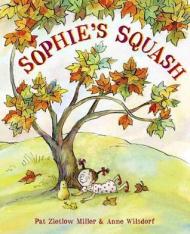 Test #2: The next litmus test, if we’re writing a story, not a concept book, is thanks to David Mamet, he of playwriting (Glengarry Glenross, etc.) and screenwriting fame. ‘Who wants what, and why? Why now? What happens if her [sic] don’t [sic] get it?’ To give substance to that framework, a good example would be what Pat Z. Miller, author of the wonderful SOPHIE’S SQUASH said: “Sonia’s love for her squash gave me the initial idea for the book. But by itself it wasn’t enough. If I had written the book exactly the way things happened in real life, it would have been an amusing anecdote, at best. And that’s kind of what my first draft was. It took me a while to build out a full story and figure out the problem (the rotting squash, a long winter apart) and the resolution (baby squash).”
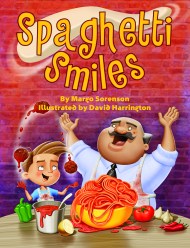 This step of plotting in our prioritizing takes more time, but the fun begins here. The metamorphosis from one of our daughters’ make-your-own pizza birthday parties (the amusing anecdote) to my most recent picture book
 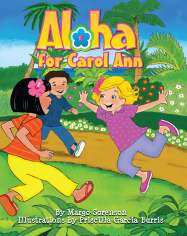 National Milken Educator Award recipient and author of twenty-nine books, Margo Sorenson’s most recent picture books are



 Carrie Charley Brown juggles ideas and words every day as a children’s writer. She is the 2016 Regional Advisor for SCBWI North Texas and a


 Two of my books coming out next year benefited from rhymes that popped into my head. I don’t know exactly what sparked Still a Gorilla, (Orchard, 2016) except I remember scribbling the words on a scrap of paper while wandering around an elementary school library. The paper stayed in my wallet for weeks. After I discovered it during another school visit, I mulled over the idea during a long drive. By the time I got home, I’d outlined the basics of the book in my head, as well as a few of the rhyming stanzas.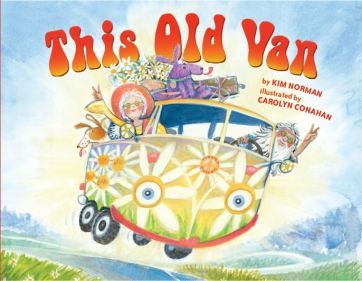



 by
by 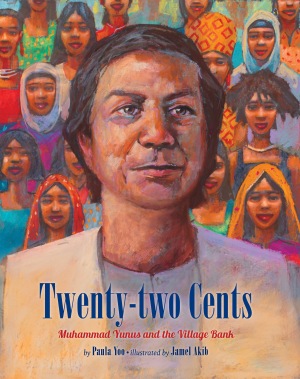


 I’d be sure to invite Matt De La Pena’s character CJ and his Nana because I know I could count on Nana to find something kind to say about my cooking. I’d send a telepathic invitation to Tammi Sauer’s little green alien because who wouldn’t want to hear what life is like on his planet? No doubt Ame Dyckman’s spunky Dot with her strong opinions and big appetite would be a lot fun to sit next to at a dinner party. I’d definitely invite Drew Daywalt’s crayons for a splash of color and Pat Zietlow Miller’s sweet Sophie just to see which vegetable she might befriend at the dinner table.
 When you’re contemplating your new picture book ideas, take a close look at your lead actors. Would they be characters you’d remember meeting the day after a dinner party? What about weeks or years later? Would they be the kind of characters you’d love to have as a friend because they’re thoughtful and kind like Amos McGee or imaginative and smart like Rosie Revere?