The title of this blog post is a misnomer because no one has a crystal iPhone to see into the future. All I can report upon is what I heard at the NJ-SCBWI conference this past weekend. But I can say with certainty there is good news, not portents of doomsday.
 In fact, according to Steven Meltzer, Associate Publisher/ Executive Managing Editor at Penguin Group USA, with every new technology, from the gramophone to the radio to the TV, came a prediction of the book’s demise. But the book continued to thrive and grow despite innovative forms of electronic entertainment. And today, Americans purchase 8 million physical books daily. In the 4th quarter of 2011, Amazon’s sales of physical books rose by double digits. It surprised them, too. But you cannot give an ebook as a holiday gift. Well, you can, but there’s nothing to wrap—and more importantly—unwrap. So physical books won out in the season of giving. Plus e-book sales remain a relatively small percentage of book purchases: 26% of adult fiction and 11% of children’s books.
Moreover, 74% of today’s readers have never even read an e-book, and 14% of those who own an e-reader have never read a book on it. The digital book market, despite what seems to be the e-reader’s ubiquity, is in a nascent stage.
Stacey Williams-Ng, author of the digital book ASTROJAMMIES and founder of Little Bahalia, a book app developer, also demonstrated how poorly imagined some digital books currently are. A swipe of the finger on an iPad screen blew the wind in one book, but the same motion also turned the page. This meant a child playing with the app could be easily frustrated with the next page when they really wanted to manipulate a tornado.
Also problematic, the vertical orientation of most e-readers creates double the page turns of traditional picture books, throwing off the timing of a story. Creating digital horizontal spreads is preferred, but then you’re also dealing with a much smaller version of the original. Sometimes the solution is to make digital books (that do not have a hardcopy counterpart) shorter than the traditional 32-page picture book.
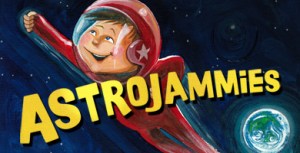 But Williams-Ng learned the hard way it’s difficult to do traditional promotion with a digital book. She has a great relationship with her local bookseller, but when it came time to do an ASTROJAMMIES appearance, she realized she had no physical book for the store to sell. Moreover, there was nothing to sign. Williams-Ng warned, “You need a hardcopy book to sell the digital book.” She self-published the hardcopy version of her digital creation so she didn’t have to wait years to find a traditional publisher.
Right now there are three main forms of e-books: e-pubs, which are similar to PDF files and have re-flowing text (which means you can change text format and size); enhanced e-books, which are e-pub with embedded features like audio and video; and book apps, which can be anything that can be programmed, from a movie to a game and beyond. “The sky’s the limit with book apps,” said Williams-Ng.
However, the Big 6 are picking and choosing which picture books to digitize; one publisher is no longer making e-pubs of their entire list because most e-books do not sell. The ones that are popular now are the classics like Dr. Seuss—books everyone knows. A new picture book has to lend itself to interactivity for a publisher to consider the book app investment, which can run approximately $25,000, according to Williams-Ng. So if you, as an author, WANT to have a digital book, you should think about interactivity at the very start of your creative process.
Digital publishing is about five years behind the music business in terms of figuring out new distribution and pricing models. In 2011, digital music sales surpassed physical music sales for the first time. Album sales were up for the first time since 2004. The industry is adapting. Publishing will adapt as well.
Steven Meltzer believes picture book sales will escalate because parents will buy a hardcopy book for the home, and if their child enjoys it, they’ll purchase the digital version for their mobile device. “Bundling is coming, too,” he said, referring to the practice of selling a hardcopy and digital book together at a discounted price. “It’s good news for picture book authors.” (Insert Snoopy dance.)
 So what’s next for digital books? The future could be digital readers with foldable layers, multi-screened with high definition graphics. The future might even be Xenotext: “encoding textual information into genetic nucleotides, thereby creating ‘messages’ made from DNA—messages that we can then implant, like genes, inside cells, where such messages persist, undamaged and unaltered, through myriad cycles of mitosis, all the while preserved for later recovery and decoding.”
“Remember M.T. Anderson’s FEED?” Meltzer asked. “Wouldn’t it be ironic to be fed FEED?”
No matter what the future holds, “people are still writing and reading…ain’t nothing ever going to change that.”
Thanks, Mr. Meltzer, I needed that reassurance.
 KS: One of my favorite childhood memories about books is the small library at the church we went to when I was a kid. It was nestled under a creaky staircase and chock-full of fabulous picture books. We were allowed to check out a book each, each week. But the choosing was the hardest part! I probably read 10 books before I picked which one I could take home with me.
 My mother took me to the library like she took me to church—regularly, once a week, no excuses. The library was our haunt. But she could never understand why I would check out the same book over and over again, signing my name on the little card slipped into the slot attached to the back cover (remember when we did that?). My signature would be beneath my own signature, which was beneath my own again, and maybe four more times above that. My mother would look at the card containing mostly my name and say, “Okay. We’ll buy it.”
 I have a quote hanging over my desk by Anton Ego from Ratatouille: “The world is often unkind to new talent, new creations, the new needs friends.”
 I think there’s something magical about walking into a bookstore and discovering a new book. A book that I’ve never seen or heard of before but I see the cover and it intrigues me. I pick it up, I look inside and I know that I have to own this book.





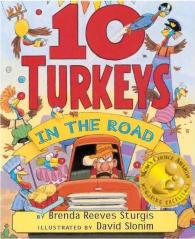
 ED: When Brenda first contacted me, she explained her situation—she was a new writer with one book under contract; she’d been with an agent and was currently seeking a new agent; she was “trying to do everything right,” but it didn’t seem to be paying off and she was starting to question how she could keep her dream of being a children’s book author alive. There’s nothing that concerns and upsets me more than to hear an author or artist is questioning their dream. Coming up with a strategy to find an agent would be the easy part; helping a distressed author regain their confidence and adjust their outlook was something completely different—and that’s what our consultation was really all about.
 KG: First of all, a great big “thank you” to you for taking the time to tell our story. It is a bit unusual, the manner in which we all came together, and I hope your readers will find it to be inspiring!