You are currently browsing the category archive for the ‘Publishing’ category.
 You’re a lovely person. Simply charming. I mean that, I really do. You read my blog and leave nice comments and buy my books and write like you can’t go wrong. But I have to tell you:
“It’s not you. It’s me.”
In short, that’s what a literary rejection means. It’s not about YOU. Remember, YOU are lovely! It’s about the editor and whether the proposed project fits with her taste and imprint list.
Subjective, it’s all subjective! One editor’s rejection is another editor’s next book!
But editors and agents often provide writers with rejection statements that we want to understand. We feel the need to analyze, to determine what we can do better. But don’t over-analyze. Sometimes a rejection is just a way of saying “no, it’s not for me.”
Here is a list of common rejections heard by picture book writers (and other writers), plus an interpretation of what they mean. (Note that I said “interpretation”! Your mileage may vary.)
“It feels familiar.”
The editor is reminded of another book (or books) while reading your manuscript, but he can’t quite put his finger on it. Maybe it’s the character, the theme or the structure, but it’s impossible to pinpoint. In short, the story doesn’t feel unique enough. The editor doesn’t think it will stand out in the marketplace. There’s too much similar competition. If you wrote about a common theme (new sibling, moving to a new house, first day of school, etc.) without a fresh new twist, this could be the problem.
“It’s too slight.” or “It’s too one-note.”
The editor feels your story doesn’t have enough meat to it. It may be lacking a universal emotional theme (friendship, being yourself, perseverance, etc.) or a clear story arc. The editor may feel there isn’t enough going on to encourage re-readings. The story feels more like a one-line joke than a fully fleshed-out tale. The main character may not have struggled enough before finding the resolution, which is sometimes why an ending can “fall flat”. Also rejected as “needs more layers.”
“It’s not right for our list.”
Every imprint within each publisher has a specific “style”. Some are commercial, some are literary, some are message-driven, some are wacky and humorous. Know which imprint publishes what.
“It’s too similar to…”
Your story competes too closely with a book on the editor’s list or a wildly popular book by another publisher that’s already in the marketplace.
“It’s not right for us at this time.”
See above. They might have projects in the hopper that compete too closely with what you submitted. (You submitted a story about a bowling ball. They just signed a bowling ball book! What are the odds???) They may have recently contracted multiple projects and no longer have room on their list. They may be moving away from “older” picture books into the younger set (ages 2-5 vs. 4-8). Unfortunately, this rejection is also used as a polite catch-all or a form rejection.
“It’s too quiet.”
The imprint you submitted to might not publish literary fiction. The editor feels your manuscript doesn’t have a strong hook, something that will make your book marketable. They don’t feel it will stand out in the marketplace. It cannot be easily summarized into an elevator pitch, which is what their salespeople will use to market the book to stores, schools and libraries. It’s not a commercial or high-concept story.
“It’s too commercial.”
The imprint you submitted to might not publish commercial fiction. Commercial books have a strong marketing hook, are often high-concept (can be boiled down to an immediately understood, succinct statement), have a clear plot struggle and appeal to a wide range of readers. Literary fiction features artistic prose and often contains an internal conflict and more meandering plot.

“It doesn’t resonate with me.”
This is really a case of “It’s not you. It’s me.” The editor may think the story is well-written and even enjoy it, but it isn’t tugging at her heartstrings. Being an editor is like dating, like finding a potential mate—the story has to light something within her to want to devote passion and commitment to it. Remember, the editor has to spend two or more years with your story, bringing it to life. They need to feel sincerely attached to it. You want them to LOVE it, you want them to be EXCITED so they can create the best book possible. Examine your emotional theme—is it strong enough?
“I didn’t quite connect with this in the way I’d hoped.”
See above. The editor may have liked your concept and pitch, but not the execution of the story. Again, the story isn’t tugging at his heartstrings. Examine the POV, voice and the emotional theme (often referred to as a “layer”). A revision might be necessary…or not. Another editor may connect. Also rejected as, “It doesn’t have that WOW factor” or “I’m not getting that YES! feeling.”
“This needs a stronger voice.”
Voice is the unique way an author combines words and strings together sentences. It is your story’s personality, its manner of expression. It’s the difference between “Oh, shucks!” and “Oh, slippery slush!” (Little Red Gliding Hood) It’s the difference between “Charmaine’s showing off” and “Charmaine’s strutting hard enough to shame a rooster.” (The Quickest Kid in Clarksville) It’s the difference between “Pancake raced away” and “Pancake rappelled down a rope of linguini.” (Lady Pancake and Sir French Toast)
Go ahead and play with your words—use stronger verbs, alter the sentence structure, use alliteration, internal rhyme, onomatopoeia and uncommon words. Heck, make up a word every once in a while! Think of voice the way a poet thinks about meter—there’s a certain beat that the reader can dance to.
Pretend YOU are the main character. How would he or she TALK? Does the way you’ve written the story—the cadence of the words—match the character, the setting, the situation?
“There’s no current market for this.”
Your story’s subject matter and/or theme is either too popular or too obscure.
Remember when vampires were all the rage in YA? Same thing with pirates in picture books. There were a slew of well-received books featuring gangplanks that sold gangbusters. (Hey, there’s “voice” again!) But then that ship sailed. The market got soaked with pirates. So guess what? Editors didn’t necessarily buy a lot of pirate titles because there was too much existing, well-established competition. But everything is cyclical. I spot new pirate books on the horizon, captain! Land, ho!
Also, your manuscript might not be a picture book because it’s too long or too descriptive, yet it doesn’t fall neatly into another kidlit category, either.
Form Rejection vs. Personal Rejection
Most will send a form rejection. There’s just not enough time in the universe—or even in the flux capacitor—to personally respond to every manuscript. But if you receive a personal rejection, the editor or agent sees something promising. You haven’t hooked him, but he sees potential. Think of it as encouraging. You’re on the right wave. Just keep swimming; just keep swimming.
On the other hand, getting only form rejections doesn’t mean you DON’T have potential. It just means the editor or agent is crunched for time.
I mean, imagine this is what gets dumped on your desk every day!

One thing you should know: if an agent or editor wants to see more of your work, they will ask. No need for interpretation; it will be there in black and white. If they complimented your story but did not ask for a revision, DO NOT send one anyway thinking they just forgot to ask. If they want it, they WON’T FORGET. And if you send something they didn’t ask for, THEY WILL REMEMBER.
Let’s face it, the fact that you’re even receiving rejections is good. Yes, GOOD! You’re putting your work out there. And the sting of each rejection will lessen with every new one you receive. So let them pile up. Read ‘em. Move on. You WILL get rejections for the rest of your life if you’re a writer. Bottom line: learn to live with them, their brevity and their occasional ambiguity. Ever onward.
And, in case you forgot, you’re a lovely person.
As one of the top kidlit writing websites, one that appears first in numerous Google searches, with thousands of followers, thousands of daily hits…
…I’m here to tell you that this platform doesn’t necessarily yield book sales. It yields emails from writers asking how to self-publish.
(Speaking of my books, I THOUGHT THIS WAS A BEAR BOOK was just released and LITTLE RED GLIDING HOOD comes out next month. Did you get yours yet?)
Listen, I’m not bashing those who want to be their own children’s publisher. Everyone dreams of being an author, don’t they? There are some projects that are close to people’s hearts. Stories they want to share, to inspire others. And everyone has to start somewhere. A lot of people seem to start with me.
But why me? I have no experience in self-publishing. Zero. I don’t know the first thing about it and I’d be lost if I tried to do it myself!
Here are my top 5 reasons for choosing NOT to self-publish picture books:
- You prefer the professional backing of a traditional publisher, from production to distribution to promotion.
- You aren’t an illustrator. You want a publisher who can attract top-notch illustrative talent.
- You realize how difficult it is to sell a book to the public, to bookstores, to libraries, to schools…and could not do it alone.
- You welcome input from the creative team and find it invaluable for making your book the best it can possibly be.
- You prefer advances over expenses.
These are my personal reasons. Your mileage may vary, but I’m guessing that many traditionally-published authors feel similarly.
Here are my top 5 reasons to choose self-publishing:
- The story you want to tell—you MUST tell—isn’t commercial enough to secure a traditional publisher, or it is in an experimental or non-standard format.
- You prefer artistic autonomy.
- You have capital available to invest in quality contractors to help you with the entire process, from production to distribution to promotion.
- You have an established platform/audience via which to promote and sell the book.
- You enjoy taking risks. You thrive on it!
If you really want the low-down on self-publishing children’s books, Kidlit411 has put together a marvelous resource list. Also read Chuck Wendig (stop calling it “self-publishing” and get your boomcake on). Check out Will Terry and Dar Hosta, two successful independent author-illustrators.
Me, I’m probably the worst source of information on self-publishing. Unless you’re reading this post. Then I’m okay.
And maybe I’m a better source when it comes to giving advice to on-a-whim-don’t-wanna-do-this-for-a-living writers. Here’s a conversation I tend to have once a week:
“You know, I wrote a little story like Goodnight Moon last year. Now I need to find an agent, right?”
“Oh, that’s great, but I’m going to be completely and brutally honest with you here: it’s not something you’ll want to do unless your heart is set on it as a career.”
“Oh, really?”
“Yes, really. It takes years to land an agent. And then, sometimes, years to find a publisher, if you even find one at all.”
“Oh, really?”
“Yes, really.”
“Well, I just wanted to have a hard copy for the kids. Maybe I should try Snapfish?”
“Yes, absolutely. Snapfish is wonderful.”

P.S. I also recommend Storybird, Bueller.
Oh, rejection!
We all face it. Even published authors. Even Jane Yolen!
This is how I consider rejections now, after seven years in the business:
But when you’re still unpublished, rejections somehow hurt more.
Besides applying a baking-powder-and-vinegar salve three times daily, how do you ease the sting?
Welcome author Emma Walton Hamilton. She will teach you what those rejections really mean and how you can use them to your advantage.
 by
by Manuscripts are like children–we birth them, nurture them, pour our heart and soul into helping them be the best they can be. Then we send them into the world, praying they have what it takes to succeed. If we’re lucky, and we’ve done our job right (we hope), they’ll fly. But inevitably, we–and they–must muddle through setbacks and tests of resolve before they can claim their place in the world.
One of those setbacks is rejection. Manuscript rejections are an unavoidable part of the writing life…but that doesn’t mean they aren’t painful. It also doesn’t mean they can’t be converted into learning opportunities. This is such an important distinction that Julie Hedlund and I devote an entire module to “Interpreting Rejections and Dealing with Feedback” in our new Complete Picture Book Submissions System, which we created to support picture book authors through every step of the submissions process, since we know firsthand how challenging that process can be. (Check out Julie’s recent blog post exposing one of her earliest query letters.)
Converting the experience of rejection from personally devastating to professionally useful begins with bearing a few important things in mind:
- Manuscripts get rejected, not writers themselves. Meaning, this is not about you–it’s about the manuscript not being a right fit with that agent or publisher.
- It’s business–not personal. The reasons for the rejection may in fact have less to do with the quality of your writing and more to do with the focus of the agent or publisher at this time, or the limitations of their current resources.
- Hundreds of famous children’s authors received rejection letters on what later became their most successful manuscripts, including Dr. Seuss, J.K Rowling, Madeline L’Engle, Stephanie Meyer, Meg Cabot, C.S. Lewis and many, many more. (Check out Literary Rejections if you don’t believe me, or could use a little company for that misery.)
- The wrong fit at one place can be the right fit somewhere else. Moreover, that somewhere else will serve you and your manuscript better than the first place would have, because they “got it.”
- There may be a gift accompanying the rejection at best, insight into how to improve your manuscript or query, and maximize your chances of nailing the next submission; and at least, the opportunity to strengthen your commitment and resolve. (An old acting teacher of mine used to say, “Never mind the talent, do you have the tenacity?” This is just as relevant for writers.)
Maybe the rejection includes some feedback worth considering (although it’s important to distinguish between meaningful feedback and form letter feedback, which is something else we focus on in the Complete Picture Book Submissions System… it’s easy to confuse the two.) But even without feedback, every rejection is an opportunity to revisit your query and/or your manuscript. Is it really submission-ready? Is it structurally sound, formatted correctly, typo-free? Is every word essential?
Finally, it’s important to take care of yourself during this time. Sending your creative work into the world can make you highly vulnerable, and it’s easy to lose perspective. Do whatever you do to nurture and reinvigorate yourself: take walks, meditate, see a movie, go shopping, get a massage. Seek the company and communion of fellow writers for support, learning and perspective. Most of all, keep writing–generate new material to keep building your portfolio, stay in the flow, and avoid having all your eggs in one basket. That is, after all, the real work of being a writer.

Emma Walton Hamilton is a best-selling children’s book author, editor and writing coach. With her mother, actress/author Julie Andrews, Emma has co-authored over thirty children’s books, seven of which have been on the NY Times Bestseller list, including The Very Fairy Princess series (#1 Bestseller), Julie Andrews Collection of Poems, Songs and Lullabies, the Dumpy the Dump Truck series, Simeon’s Gift, The Great American Mousical, and Thanks to You–Wisdom from Mother and Child. Emma’s own book, RAISING BOOKWORMS: Getting Kids Reading for Pleasure and Empowerment, premiered as a #1 best-seller on Amazon in the literacy category and won a Parent’s Choice Gold Medal.
 by Dev Petty
I wrote a whole post for this very blog some time ago about NOT writing and just thinking. I wrote about getting to the heart of your story idea in your head before you ever write a word. I believe in that process…big time. But it’s not how I wrote I DON’T WANT TO BE A FROG. That’s a different story. That’s the story of how a sort of basic story idea turned into one with legs…frog legs! In fact, it was the writing of FROG that taught me to slow down and think, to find the story thread before I started writing.

I knew I wanted to write a story all in dialogue. I wanted it to be funny. And I wanted it to be about a frog. I like frogs, it was that simple. Not much to go on, eh? Believe me, my first efforts on frog reflected just how thin the idea was. Frog went from animal to animal saying “I want to be like you…because…you’re furry (or you can fly or you can hop).” It was repetitive and a little hollow and NOTHING REALLY AT ALL HAPPENED. These are the sort of problems I usually suss out when I’m just thinking instead of writing, so I don’t usually have this situation. But there was something about the first draft I liked enough to keep at it.

This is when I stopped and realized I needed to answer my own critical, favorite story writing question.
“What is this about?”
The answer, as written, was “A frog who wants to be a rabbit or a cat or an owl.” And after a ton of rewrites and rearranging, it wasn’t getting any better on the page. So I stopped revising. I stopped writing. As I closed the laptop and started thinking, I realized it was a little deeper. The answer really was, “This is a story about a frog who doesn’t want to be a frog.” It’s about wanting to be something other than what you are. Now THAT’S a little more interesting. When I started thinking about it that way, the story opened up and it wasn’t anymore about cats or owls, it was about nature, it was about accepting your nature.
That answer allowed me to start thinking about the frog, the good parts, the bad parts, the way we all sometimes envy things about others that we can never, and probably should never have. The story was getting deeper, but still…nothing really happened. The frog went from animal to animal saying he wanted to be them and then the book ended. You’re a frog. Get over it.

Confession. I’ve tried to write novels. A bunch of em. I am a Viking at writing three awesome chapters and then running out of steam, throwing the laptop across the room and eating ice cream for a while. But I do it often enough that I’ve learned a few things. Newsflash Dev, your story has to have a PLOT and not just be a rambling treatise on frog existentialism. So I decided to bring a new character in…a wolf…who would act as a bit of a therapist, a reality checker who would point out the good parts of being a frog through his own nature. Once something happened, the wolf, my story had a turn and a direction and something, albeit small, happened. I hope kids will read frog and realize that everyone has things they want to change about themselves, and that’s a totally okay, natural thing to explore. But you also sort of have to accept who you are, find the bright parts about who you are and work with what you have.
I guess the truth is, I sort of violated most of my own rules of picture book writing in the writing of the one picture book I have out there. I kind of teased a good story out of a pretty mediocre one. But that’s ok too, it taught me a lot about finding that thread. It helped me develop a process…find the thread FIRST! Remember to TELL a story and not just muse.
Since we’re talking story threads, I thought I’d put down a few tools I use to try to figure out what I’m getting at when I’m developing a story idea in my head, before I start writing.
- I write a poem. It’s not the kind of poem anyone would ever, ever, ever want to read. But the lack of rules in poetry allow me to explore an idea without limitations. I usually write pretty long, stream of consciousness poems about my story idea and most of it will be total garbage. But usually, when I read it through, somewhere in there is a thread I can hold onto and start crafting a story around.
- Imagine your story as a trailer. I’d never thought of this one until I started watching a lot of picture book trailers and working on my own, for Frog. But when you have to introduce your character, a story problem, a plot twist and a possible solution- you’ve covered a lot of story elements and it’s pretty easy to find where you need to go a little deeper.
- Ask yourself what your story is about. Sounds obvious, I know, but I forget to do it ALL THE TIME. And, while you’re busy talking to yourself, why not have a whole conversation?
“Dev, what is this story about?”
“Well, it’s about a frog who wants to be a cat or an owl or something else.”
“Gosh, Dev, that’s not very interesting.”
“It’s not? Crap. OK, it’s about not wanting to be a frog.”
“Getting there.”
“You’re bossy. Fine. It’s about not wanting to be what you are.”
“That’s sad.”
“Okee…it’s about accepting who you are.”
“Bingo!”
“I don’t like you.”
“I don’t like you either.”
Finally, Never throw anything away. Whether you save one giant list of picture books in Scrivener or text files or email drafts (I’m partial to that one), never give up on a story. Put it aside, let it steep, even put it in total cold storage, but don’t throw anything away. SO many of my stories come from little breadcrumbs of ideas I left myself along the way.
Dev Petty is the author of I DON’T WANT TO BE A FROG (Doubleday 2015, Illustrated by Mike Boldt) and CLAYMATES (Little Brown, 2017). A former film effects artist, she lives in Albany, California and writes funny books for kids and immature adults. Visit her at DevPetty.com.
Do you want to be a frog? No? Do you want to own a frog? Not really? How about own a SIGNED COPY of Dev’s I DON’T WANT TO BE A FROG? Plus bookmarks? Yes? OK then, leave one comment below and a winner will be randomly selected in two weeks! Good luck!
 by
by Greetings!
My name is David Michael Slater. As an author of 20+ books (for children, teens, and adults) I am always interested in new ways of reaching readers. Self-publishing has never appealed to me. I have nothing whatsoever against it, but the sky-high pile of self-published titles one must compete with is simply too daunting, especially when so many people report not wanting to take the time to sift through that pile for the gems. The traditional route is as daunting as ever, but I do not bash it either. But it is a rough go, especially with a project that seems risky in any way.
Enter Inkshares.

My newest picture book, Hanukkah Howie vs. Santa Claus, recently launched with this newfangled “crowd-directed” publisher. Inkshares makes final decisions about projects based on pre-sales. This is a fascinating new approach that, thus far, I find extremely reasonable.

Why?
First, I can understand Inkshare’s desire to minimize their risk by taking on properties with proven market appeal (via pre-sales). What publisher wouldn’t? The result has been my working my tail off trying to secure these pre-sales, and I must admit it’s fairly exhausting.
What’s the payoff?
How about 50% of gross revenues and a non-exclusive contract?
Hard to argue that both sides don’t benefit from such an arrangement.
 The process is simple, you approach Inkshares with your project. In my case, I came to them with the finished text and an illustrator (the awesome UK artist Andy Catling) already on board. The Inkshares team evaluates your project, and if they deem it’s potentially viable, they will guide you through the steps of setting up a project page and then a launch.
They do help with social media marketing during the funding period, but mostly it’s up to you. So far so good. We’re a week in and funding at 23%.
You can learn much more at Inkshares.com. If you are interested in my project, you can read the entire (500 word) text, see the hilarious art, and note the exceptional blurbs (like the ones below) coming in from popular and bestselling authors at HowievsSanta.com.
Good luck on your on publishing paths, wherever they may take you!
“A new holiday tradition deserves a new holiday classic read aloud, and David Michael Slater has delivered just that, right to our door, by sleigh and by Hanukkopter.”
–David Lubar, Author of Hidden Talents and Sleeping Freshmen Never Lie
Hanukkah Howie vs. Santa Claus “could bring about world peace, but only if you do your part.”
–Heeb Magazine
I rarely talk about my disability here, because really, who wants to talk about that ugly word? It suggests that we CANNOT. Others have decided to label me “disabled,” not me. From the parking spaces I gladly pull into (who doesn’t want to be right by the front door?), to the forms I fill out, I’m reminded of this label constantly. I accept this label but this label doesn’t define me. It’s the last ingredient in the complex recipe that is me. It’s there, but it’s not important. My cake will rise without it. (Oh boy, that’s corny. But hey, that’s me.)

Me and my cane with the “Good Luck Cow” in Brandon, Vermont, May 2014.
Multiple Sclerosis hit me in late 2009, just as my career was catching fire (excuse the blatant allusion to Suzanne Collins). In fact, when I was being interviewed by literary agents, I was on an anti-anxiety medication that made my anxiety WORSE, although it took my doctors and me a few weeks to realize this. I took the medication before bed and then couldn’t even speak in the morning until it wore off, around 11am or so. That’s right, I was so full of worry that I could barely force my voice into a whisper. Yet an agent, excited about my submission, called me 90 minutes earlier than our agreed-upon noon conference call. I had to suck it up and somehow appear brilliant and enthusiastic. I don’t know how I made it through that call.
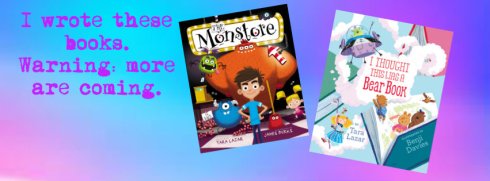
The year 2010 was a blur. I don’t remember most of it. I know I signed with my agent and received my first book deal for THE MONSTORE, but it barely registered. All I could think about was that I would never walk properly again, that I would never figure skate again, never play tennis again, never take family hiking vacations. I couldn’t even drive a car. I couldn’t pick my children up from school, which was only 2/10 of a mile from my home. I focused on the COULDN’Ts. There seemed to be an avalanche of them.
What finally pulled me out of my funk? Was it reaching the elusive goal of publication?
Sure, that helped. But this lifelong goal realized had little to do with my recovery.
Time did. And so often, this is not what people in crisis want to hear. They think there is some magical solution to get through the hard stuff. And sorry, but I don’t have one. I just had time. And the great thing about time is that EVERYONE has it. It’s available to anyone who’s going through a rough patch.
I had time to process what had happened to me. Time to understand how my body had changed. Time to make adjustments in my daily life. Time to realize that the inner core of ME hadn’t been altered. I was the same goofy, bookish, creative, foodie, writer and loving wife and mother. Albeit with a cane and a mobility scooter. Big freakin’ deal!
Time also made me realize how much time I had missed. I never wanted another “lost year” in my life. All that worrying didn’t solve anything. Worrying rarely does. It makes you miss out on the here and now. The present is so precious. I didn’t want to miss another second of it.
So I got back to being ME. I started writing again. I sold more manuscripts. I began teaching and speaking at conferences. The word “adapt” became my mantra. I learned that I COULD do all that I intended, just with preparation and adjustment.
I’m here to tell you all that you can indeed reach your goals. You’re in charge. If you encounter a roadblock, it is only a temporary one. You will find a way around it. It may take time, but try to see time as a gift rather than a burden. We authors know that it takes years to get published and years to see our books in print. We eventually learn to accept time, as time brings great things.
The only way you won’t reach your goals is by quitting. (Or by excessive worrying.) Envision success, not failure. Focus on the elements within your control, not those beyond it.
Go ahead, make a list. What can you control? What can you NOT control? Then rip the paper in half and throw away the “beyond” section. (There’s a reason I made that section black.)

Today I’m happier than I’ve ever been, even though I can only walk the length of my driveway before needing to sit.
So guess what? I sit.
And then I get up—time and time again.
.
Tara speaks to audiences big and small about overcoming disabilities big and small. Contact her at tarakidlit (at) gmail (dot) com for more information.
Today we’re lucky to have Peggy Robbins Janousky visiting to share highlights from SCBWI FL’s Picture Book Intensive. Take it away, Peggy!
 I have attended many picture book intensives over the years, but this one topped them all. Participants were treated to an all-star panel that included: agent Deborah Warren of East West Literary, editor Laura Whitaker of Bloomsbury, author and editor Andrea Davis Pinkney and author Toni Buzzeo.
The presentations were practical, but powerful:
- Always bring your “A” game.
- Rhyme is not taboo, but bad rhyme is.
- Picture books are getting shorter and are being targeted for younger audiences.
- Show, don’t tell.
- Hook me and keep me hooked.
- Be passionate about your book and be able to pitch in just a few sentences.
One of the best things that was presented was the HOT list. These are the topics that editors and Barnes and Noble want now:
- Moments of the day
- School stories
- Learning concepts
- Holidays (MLK, Valentine’s Day, 4th of July, St. Patrick’s Day)
- Friends and family
- Biographies
- Character-driven stories
- Original stories that every kid will love
- Interactive picture books
- Finding the new in the old
If you haven’t taken an intensive before, I strongly urge you to consider it. Intensives are exactly that, intense. They give you the opportunity to delve in deeper and they also give you the opportunity to get to know the presenters on a more intimate level. I came away from this intensive with a new sense of purpose and drive. I also came away with a few good friends. All in all, it was money worth spending.
I have to admit, I almost did not attend the Miami conference. I was having a pity party and I wasn’t really up for the company. I had broken my leg in three places. Needless to say, getting around was a wee bit difficult. I was ready to bail. I am glad I didn’t. The first page of my manuscript was read during “first page reads”. Much to my surprise, the panel loved it. One editor wanted to know who wrote it, an agent wanted to read more, and another editor wanted to acquire it. I have to admit, I was in shock. By the end of the weekend, thanks to the help of a good friend, I had signed with that agent. Just one month later… My bio and picture are up on the East West Literary website. The editor that I mentioned is considering three of my manuscripts. And I am still pinching myself.
I will tell you that this was not an overnight success. I have attended many conferences and taken copious notes. I have revised, cut, and revised some more. I have also had moments where I was so rejected that I thought I would never put myself through another critique again. So what’s the moral of the story? Never give up. Never let pity or self-doubt get the upper hand. Believe with all your heart that your day will come. Then get off your butt and get to that conference. Your happily ever after is waiting for you to show up!
Peggy Robbins Janousky uses her offbeat sense of humor to write offbeat picture books. When she is not writing, Peggy uses her time to rescue stray animals. Much to her family’s dismay, she keeps them all.
 And thanks to Kristen Fulton for adding this summary of Andrea Pinkney’s workshop: The Write Stuff.
- Writers write every day, whether it be a holiday or vacation.
- Find your “twinkle”—what makes you sparkle around others?
- Establish immediacy—using voice, characterization, mystery and drama.
- Ask yourself, “Why does the reader want to come on this journey and what makes the reader stay on this journey?”
- Writing is fun—and hard work.
- Writing is re-writing at least 10 times.
- Just get started and keep going.
- Read every day, whether it be a holiday or vacation.
Kristen Fulton writes non-fiction picture books and is running an amazing non-fiction picture book retreat with loads of agents, editors, and authors on July 7-12. Check out her website for details!
 by guest blogger Dr. Mira Reisberg
You’ve been pounding the keys for months or years, you’ve finally finished your manuscript and you’re ready to submit. You go to a publisher and they are only accepting agented submissions. You go to some agents and they are closed to submissions. You start pulling out the hair now that you didn’t pull out while writing your manuscript in utter frustration!! I want to explain a little about how this came to pass and what you can do about it.
A Little Publishing History
Back when I first started working in this industry, in the good old days of early 1988, first as an illustrator and then as just about everything else, it was a very different world. There were many publishing houses with many editors and art directors and many smaller independent publishers as well. It was fascinating to visit and editors had assistants and support staff that are rarely found these days. Publishing was wide-open and thriving.
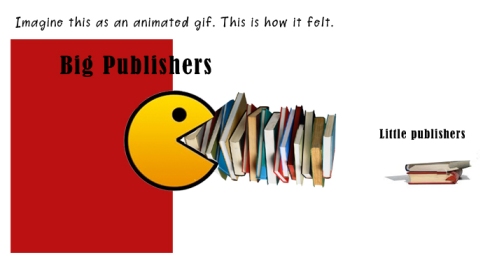
But then over time, the corporatization of America started taking hold and larger publishing houses started buying smaller publishers, becoming larger corporations. Using economies of scale, they needed fewer editors, fewer art directors, and fewer assistants. Things started automating more with newer technologies stretching editors and ADs to do more. Many editors, ADs, and their assistants were let go, increasing the workload tremendously for those who remained or those who were newly hired. Big corporations started taking over or merging with other big companies increasing this economy of scale.
Enter September 11th and the Anthrax Scare
Following the 2001 September 11th attacks, there were numerous anthrax scares, as one NBC employee tested positive and a New York Times reporter received a suspicious envelope with white powder. An increase in submissions, partly enabled by changes in attitudes to self-expression, creativity, and access to education—plus access to improved writing technologies, fewer resources of staff to deal with the increase, combined with the anthrax scare—caused many New York children’s book publishers to close their doors to submissions and only accept new submissions from agents.
Then came Amazon with its deep discounts and the recession killing off more independent publishers, further narrowing the field. Fortunately, many smaller publishers did keep their doors open to what’s known as unsolicited submissions and quite a few wonderful independent publishers like Chronicle Books and Lee and Low remain.
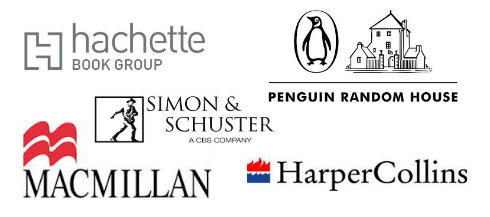
Today there are 5 major publishers as well as a bunch of independent or semi-independent publishers. This is not to say that the major pubs aren’t producing wonderful work or that big publishers = bad, or small publishers = good (though most smaller publishers do need extra support). That’s overly simplistic and there are truly wonderful people working at all houses and imprints, big and small making equally wonderful children’s books. I’m just talking about the narrowing of the field for submissions. Some of the major publishers’ imprints still accept unsolicited manuscripts, but for many publishers, due to the overwhelming number of submissions and reasons explained earlier, they prefer the system of having an agent act as a kind of quality screener and gatekeeper.
Now It’s the Agents’ Time to Be Overwhelmed
These days we have a big problem with supply and demand where there are many more writers than there are agents, editors, or publishing opportunities. Also, many writers don’t do the work of learning the skills and techniques of being a professional writer, honing their craft over time, taking courses and learning the specific requirements of contemporary publishing and their specific genre. They submit their work and overwhelm agents who then close their submissions except through conferences, referrals and special circumstances.
So Back to You. You Ask Yourself, “What Can I Do Now?”
We understand that this is frustrating. Here’s a little information about what you can do to get past these restrictions. One of the best ways to get access is by making personal connections with agents and editors at conferences or through courses. There is nothing like a personal connection in any aspect of life. But remember that editors and agents are mostly overworked and underpaid. They do this work because they love books and helping others. As society changes with events in the world, we have to change with it. The thing that doesn’t change is that first impressions make lasting impressions. If you meet an editor or agent make a great impression by being warm, helpful, kind, and positive. As the saying goes, “Your attitude determines your altitude.” Of course before you submit, make sure your work is wonderful, brilliant, original, professional and publishable. But this is a given. If you make meaningful connections, chances are they’ll want to help you if they can, and besides the possibility of publishing, you might just make a wonderful friend.
To learn more about Mira Reisberg and her agency, visit HummingbirdLiterary.com. To learn about her upcoming writing course, visit ChildrensBookAcademy.com/writing-childrens-picture-books.html.
You know the Piña Colada song, right? Getting caught in the rain?
Well, imagine that song in a picture book for kids (without the dunes of the cape, of course). Two besties have great times together, but they get stuck in a rut and go off to seek other adventures…only to rediscover each other.
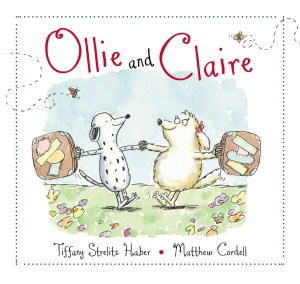 That’s the premise of Tiffany Strelitz Haber‘s charming OLLIE AND CLAIRE. The light and cheery watercolors by Matthew Cordell feature sketchy lines that suggest fun and frolic. A delight to read aloud, your voice just skips along like the two friends do. Tiffany’s a master of rhyme and one of the two ladies behind The Meter Maids.
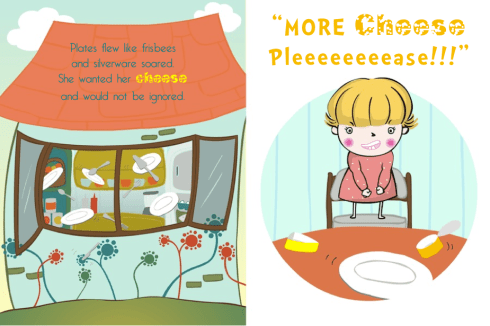
Besides having two successful picture books to her credit (the other is THE MONSTER WHO LOST HIS MEAN), Tiffany has branched out into ebooks. She recently released HUNGRY HARRY with StoryPanda and MORE CHEESE, PLEASE with KiteReaders. I interviewed her to find out about the ebook process and this emerging opportunity for children’s book writers.
Tiffany, what attracted you to ebooks?
To me, ebooks are just another way for kids to experience reading. In some cases there are interactive aspects to the ebook that can really help them learn, and in other cases it might just be a nice opportunity for a more reluctant reader to enjoy stories and story time in general.

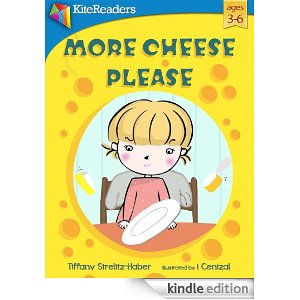 Did you write HARRY and CHEESE specifically for an ebook format, or were these traditional picture book manuscripts first?
I have this sort of arsenal of completed picture books. Some have been subbed out widely. Others to just a couple places, and others have never actually seen the light of day! I picked two stories that I liked a lot and just rolled with those. Not sure CHEESE was ever subbed out anywhere and HARRY went to one place, actually got to editorial, but didn’t make it through. Wait. Does that even answer your question? Kind of, right?!
How did you go about researching ebook publishers and in what format did you submit?
Oh, I googled the bejesus out of ebook publishers and chose to submit to ones that I felt the most comfortable with. There’s a lot of communication available with the actual publishers and marketing directors etc., so you can really get a feel for who you would be working with before you actually work with them.
I hired illustrators (after exhaustive searches on freelance websites) and submitted completed manuscripts (text and art) to the ebook publishers. The illustrators I chose were those willing to accept a flat fee for the work, and OK with the fact that I would retain the rights to the images as well. Hopefully it is some good publicity for them, and also additional work to add to their portfolio when searching for agents, etc. There are so many wonderful artists out there!

How was the ebook editorial process different from a traditional picture book process?
Um…it’s different in that it’s ALL YOU. Period.
Care to expand upon that?
It’s basically self-publishing your picture book online. You need to edit it, and make all the art decisions, and check the spelling and punctuation, etc. There isn’t an editor or an art director to do that with you—although with HARRY I did work with someone at StoryPanda to create the interactive elements of the story.
The sounds all the crazy stuff HARRY eats sure are fun!
What recommendations and cautions do you have for other picture book writers about delving into the world of ebooks?
I think it’s too soon for me to make any cautionary statements OR recommendations about ebooks yet. It’s something I am experimenting with, and really enjoying so far…but definitely too soon to say much more than that!
How have you gone about marketing your ebooks?
Well, again—this is all very new to me, but I’ve started sending them out for reviews and of course there’s social media. And on a larger scale, I am trying to work with schools to get the books on their computers, etc. Definitely a very entrepreneurial endeavor; but I think if you’re up for the challenge, it’s also lots of fun with somewhat limitless possibilities!
So you’ve now published two traditional picture books and two ebooks. What’s next for you?
Hmmm…I’m working on a middle grade novel right now, which is taking up most of my writing time—but still juggling a bunch of picture book works in “progress”, although I use the term “progress” loosely, as they seem to be at a dead stop for the time being!
Well, jump back into it because you’re a perfect rhymer and the world needs more great rhyming books!
Thanks for stopping by to let us in on the ebook process!
Blog readers, don’t go yet. Tiffany has a copy of HUNGRY HARRY and MORE CHEESE, PLEASE to give away. Just leave a comment below to enter the giveaway. Two winners will be chosen one week from today. Good luck!
I seriously debated posting this, since it’s a subject not often discussed. But heck, I’m known for my honestly, so let’s giddy-up…
How do authors handle being asked to donate individual book(s) to worthy causes? Honestly, they’re all worthy, but let’s shed some light on an aspect of publishing most people don’t realize: authors DO NOT get their books for free.
Oh yes, we receive author copies, but a very limited number which are for our own collection or have already been promised to family and close friends. My author copies for THE MONSTORE were gone the week they arrived. I don’t have any more. If I want my book, I have to buy it. This holds true for all authors. While we did write the book, the publisher edited it, printed it, warehoused it, marketed it and distributed it. And that costs money. Someone has to pay for it!
Authors do receive a discount off the retail price, but it’s not a staggering discount. And, the copies we order this way are recorded as “author copies” and don’t count toward our sales figures. And if you ask any author, if the Publishing Fairy could grant their most favoritest wish, it would be for higher sales figures.
So if we’re going to buy our own books, we tend to buy them like any other consumer would—online or at a book store, wherever we might get the best price.
Now let’s circle back to donations. When someone asks an author to donate their book to a school fundraiser, church tricky-tray or Elk’s basket auction, it’s not free to that author. True, the author might ask their publisher to donate the book on their behalf if it’s a really well-known cause, but otherwise, a small, local organization’s fundraiser is not going to sway the publisher. So then the author must decide if they can spend about $15 to donate their book to the cause (the cost of a picture book, plus shipping, plus any SWAG).
 Imagine an author gets about five of these requests a month. That’s not an unreasonable number, especially if they have multiple books in print. If the author generously says “yes” to all requests, that’s $75 a month. Multiply by 12 months and it’s $900. That’s not an insignificant amount of money. In fact, that’s more than some book advances!
Now, if an author says “no” to a donation request, this does not make them a bad person who does not understand the worthiness of the cause. It simply means they cannot afford to do so. They cannot honor every request. While they probably *want* to donate to someone’s school or house of worship, they do have their own schools and houses of worship to support as well. So it’s more likely that they’ll donate to their local organizations than to a stranger’s cause.

Please know that the last thing authors want to do is hurt anyone’s feelings. Authors write books to make people feel good, to entertain, to bring smiles to faces. We love our readers. We don’t want to disappoint them. It’s difficult for us to say “no”. But sometimes our own wallets force the decision.
I haven’t been asked to donate much, so I’ve tried to oblige when I can. But the simple fact is that I have not logged any income as a writer this year, only expenses. Shocking? Not really. My first book was just released and I haven’t made a new book sale in 2013 yet—and even if I do, it’s so close to the end of the year, by the time the contracts are signed and a check is cut, it will probably be 2014. I’m not the only author spending this year in the red.
If you really LOVE an author’s work and want to share it with others, why not ask your local bookseller for a donation of that author’s book(s) instead? They may donate if they’re a neighbor who supports the same school, the same church, the same Rotary Club. They’ll receive advertising out of the donation and can probably expect locals to visit the store as a result, especially if they include a coupon or gift card to redeem. And if they unfortunately say “no”, it probably means they can’t afford to do so, either. (See comment thread about why I don’t mention “advertising” for authors. Good points made on both sides.)
But it never hurts to ask, right? We can all ask, but we can also understand the reasons behind the answer.
Do you have any thoughts on this? It’s a subject that ‘s tricky to discuss…





 Writing for Kids (While Raising Them)