You are currently browsing the category archive for the ‘Picture Books’ category.
Random comments on the children’s book industry from editors and agents attending the NJ-SCBWI mentoring workshop on February 22:
On THE ECONOMY:
“Things are getting tighter with budgets. As hard as it was to get published, it’s even harder now.”
“Bookstores are cutting down on their inventory. We can’t get as many books in, so we’re not buying as many books.”
“This is not just a correction of the marketplace, it’s a correction of the mind.”
“We’re going to be seeing far fewer advances for mediocre books.”
“But if you’re a new author, you don’t have a poor track record to hurt you.”
“We may see a return to house authors. Authors and publishers will enter a partnership. They’ll help nuture one another and careers will have a steady progression. If you find a house that loves you, they will love you long time!”
On MARKETING & PROMOTION:
“Learn how to market your books. Do school visits. Use social networking tools. Talk to other writers about your book. Talk to everyone about your book.”
“Get to know your publicist and marketing director. They are your friends. But don’t overwhelm them with 17 email messages a day. Let them know you’re their partner.”
“Realize that the books you see up front in the stores are paid for by the publishers through co-op marketing. If they have a talking slip? Paid for. If they’re on an end-cap? Paid for.”
“Become friends with your local librarian and your local bookstores. But always keep your publicist informed about what you’re doing. Don’t go over their head. Don’t go over your editor’s head, either. That’s bad business for everyone involved.”
“Don’t waste people’s time. Don’t send chocolate to all the Borders buyers in the country.”
“With school visits, you’re a celebrity to those kids. Get yourself out there. Build word-of-mouth.”
“Temper your expectations. If you wrote a teen non-fiction book, the big retailers aren’t going to carry it. That’s not their market.”
“Don’t follow today’s trends. Writing for the market in general is a terrible idea.”
“If you’re a picture book writer, don’t start writing a YA about vampires just because it’s popular.”
On EDITORS:
“Editors are always in the market for a well-written book. But I can’t define for you what that is. I know it when I see it.”
“Know what your editor likes. Know who you’re submitting to. I don’t like gross stories.”
“But I do! Send them to me!”
“We like authors who are agented because the work comes in polished.”
Editorial Anonymous provided a great explanation of basic picture book construction a few months ago.
At that time, I skimmed the info. Today, I’m studying it.
Why? An editor asked me to make page breaks on my current manuscript. And know what? I had more page breaks than a 32-page picture book would allow! Whoops. I knew that my manuscript had to fall within the 500- to 800-word length, but I had neglected to pay attention to logical page breaks.
The editor said, “Page turns can make or break a book, and it can be helpful to an editor to see how you envision the text.”
In a 32-page picture book, you don’t actually have 32 pages for your story. You only have 24 pages since 8 are used for the book ends, copyright and title. And 24 pages translates to 12 spreads (an illustration that spans the two opened pages in a book).
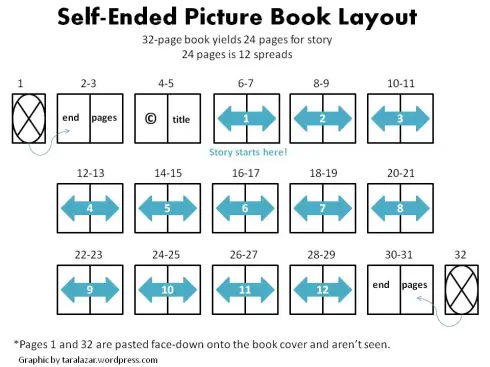
Self-ended means that the printed book block serves not only for the story, but also for the end pages. No additional paper is used to form the book. The printed book block is pasted directly onto the cover.
Another common format is colored ends. This means colored paper (different from the printed book block) is used for the end pages. With colored ends, you’ll gain an additional 2 1/2 spreads since more of the printed book block is available for story.
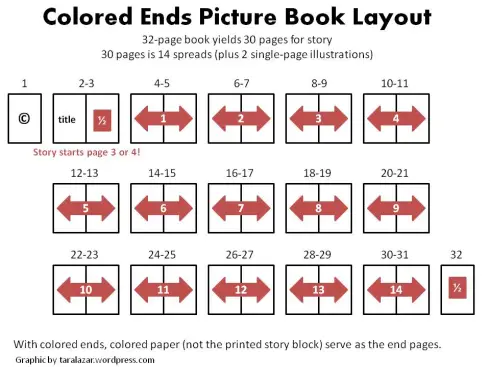
Some picture books have single-page illustrations instead of spreads. One of my favorite devices is when a group of three things are illustrated on one page. But this isn’t done on every page. A debut author’s work might be laid out only in spreads to save on costs (it’s less illustrations to produce), so you may want to think mostly in spreads. As always, publishing is a subjective industry, so this will vary by editor.
You may be asking, why do I need to know this? Won’t the editor and illustrator figure out the page breaks? Sure, they will. Some may not even ask for your page-break input. However, you can write a more appealing picture book if you understand the format for which you’re writing. Knowing the page turns will improve your story’s pacing. You’ll realize which scenes may have too much text. You can make page turns surprising and fun.
So give it a try. Take your current PB and plug it into the format. Does it fit?
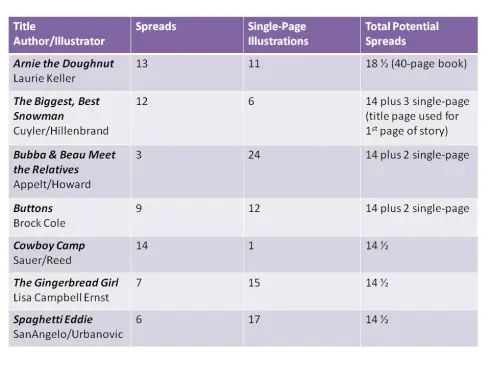
I just took a random sampling of 7 picture books from my collection. Interestingly, none had self-ended construction. They all had colored ends. Here’s how they broke down:
I don’t think I’ll ever look at a picture book the same way again. My kids are going to be frustrated if I count spreads while I read to them!
It’s interesting to note that Cowboy Camp and Spaghetti Eddie are both by debut authors. Cowboy Camp is illustrated in spreads, whereas Spaghetti Eddie is told with mostly single-page illustrations. This “illustrates” that publisher preferences vary (as do manuscripts)!
Keep in mind that when you submit your manuscript, you should do so in the standard format, unless the submission guidelines specifically request that you mark page breaks.
Some editors will never ask you for page breaks, some will insist upon them. Remember that this is a subjective industry where there are many rules to follow but many places to break them, too.
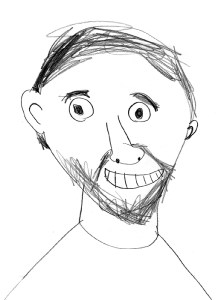
Dad Portrait by Gracie
If you enjoyed Aaron Zenz’s interview last week…wait…there’s more!
But first, the winner of the Howie I Can Read four-book giveaway is Cari from BookScoops! (Winner was chosen by Random.org.) Congratulations! Thanks to everyone who entered. Be sure to visit frequently through March–there’s more giveaways to come!
Aaron and his eldest three children, Issac, Gracie and Lily, review books and share their fan art on the Bookie Woogie blog.
I have to say, it’s brilliant. I mean, kids reviewing kids’ books! It’s a blogging breakthrough!
Aaron, it’s obvious your artistic talent has been inherited. So has your love of kidlit. What can you tell other parents about sharing a good book together?
For our family, books have always been a great way of bonding. My oldest son is 10 now, and from the time he was 3 or so, I’ve read aloud to him before bedtime. And I didn’t always pick traditional kiddie fare. Pretty early on we read Treasure Island, all the Chronicles of Narnia, The Hobbit, A Wrinkle in Time… things of that nature. And although he may not have been able to comprehend every word of what we were reading, I think a love of story has been instilled, and also a sense of what makes for a good story. And I have to imagine it’s good for him just to hear his dad’s voice for an hour or so.
After Gracie got older, I began reading a different book to each of them every night, but now that the kids’ numbers are multiplying, I read to all of them together. It loses some of the parent-child intimacy, but the alternative is leaving someone out. Or reading for hours and hours!
There’s some selfish motive as well. With as busy as I am, I find it hard to justify taking time out to read things for my own pleasure. So I read them books I want to hear too, and it makes it seem more okay. Fortunately my taste still lies in kids’ books and YA, so everyone’s happy. The same goes for the Bookie Woogie blog… I would find it hard to justify spending time working on a blog where I rattle on about myself and my own interests. Devoting time on a blog for my kids seems happy all around.
Since we’ve started the Bookie Woogie blog, the kids’ own story writing has taken off miraculously! They have begun writing such rich, descriptive tales of their own. Taking a little extra time to discuss what we’ve read, how stories are constructed, how pictures are made, has really fueled their own imaginations.
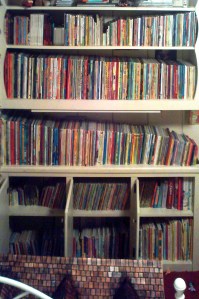 In our home, we’ve surrounded ourselves with books. We have six book cases in our living room, a wall of shelves in the girls’ room, a case full of magazines and non-fiction in the boys’ room, three full bookcases in my studio including one stuffed in a closet due to the lack of room. On top of that, we usually have 30-40 books checked out from the library at any given time. The kids have always been surrounded by books, and they just think it’s natural and normal.
We homeschool as well, and have started noticing how this even influences our younger kids. Lily taught herself how to read at four years old. She just silently listened in on her older siblings’ lessons and surprised us all. She’s reading Judy Moody right now — she just picked up a book I had gotten for Gracie and started reading it. My wife and I always said Lily did it on her own and we couldn’t take any credit for it, but the more I thought about it, I realized that’s not entirely true. We’ve made conscious and deliberate choices (and sacrifices) to create and environment of learning in the home. So why wouldn’t that have impacted her? Three-year-old Elijah seems to be following suit. He’s already beginning to sound out and spell words. And one-year-old Evie is penning her first graphic novel (just kidding!!!).
All this, of course, has impacted my own writing. Articulating to the kids what goes into a good book, makes me more aware of those principles when I create. And when listening to them talk about books, I can see what elements kids are drawn to — and how much they catch! Since starting the Bookie Woogie blog, I’ve been amazed at all the things they grasp, things that I had figured would go unnoticed by a child.
Thanks for sharing your bookie good times with us, Aaron! We wish you much success!
Readers, please leave a comment about reading with your child. How do you instill a love of reading in your home?
Thanks to everyone who entered the Toni De Palma Under the Banyan Tree giveaway and the Corey Rosen Schwartz Hop! Plop! giveaway!
 The winner of a signed copy of Under the Banyan Tree is Susan (The Book Chook)!
 The winner of an autographed Hop! Plop! is Kristi Valiant!
Congratulations! I’ll be contacting you shortly!
 And just a reminder, we have another book giveaway–technically, a four-book giveaway–going on now with author/illustrator Aaron Zenz.
 Aaron Zenz is the author/illustrator of Hiccupotamus and he’s the hip, groovy dad behind Bookie Woogie, a blog where he and his eldest three children review books and share their fan art. It’s obvious the Z-Family loves kidlit.
Aaron, have you always wanted to be an author/illustrator?
Hip and groovy! Lands sakes alive, I’ve never been called either of those before… I’m going to have to look up their definitions.
I’ve been writing and illustrating my own stories ever since I was a wee bitty guy. In fact the last time we were over at my folks’ house, the kids and I were looking at the little books my mom has saved that I made when I was as young as three. The creative drive has always been in me, but it wasn’t until later on in life that I thought about it vocationally. Storytelling was just so fun, I think I never really associated it with the “work” world.
It wasn’t even until part way through college that it dawned on me that I wanted a career in art. Later my attention became even more focused when I realized how much I loved the narrative aspect of illustration. I had already begun collecting picture books, long before I dreamed I’d have a chance to participate in that world.
Writing has been interesting. All through life I’d received more comments and recognition for my writing than for my art. I think people simply already knew me as the “art guy,” so my writing came as a surprise. But for me, writing and illustrating are very comparable. They’re both forms of storytelling, and the process for both seems very similar to me.
Speaking of collecting picture books, you’ve amassed nearly 3,000 of them. Who are some of your favorite author/illustrators? Whose work has inspired you?
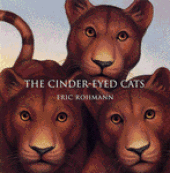 The picture book that changed everything for me was Eric Rohmann‘s The Cinder-Eyed Cats. From the moment I saw those golden felines staring out at me from the cover, I knew — “I want to do that.” Something inside me leapt from mere interest to passionate longing. I wanted to make images that had the power to summon emotions, be it a sense of mystery… or a belly laugh… or tears. Pictures are powerful. So I’ll always have a soft spot for Eric Rohmann’s work, particularly that book.
Another person whose work I find consistently engaging is Adam Rex. Whenever I catch wind of his next new project, I find myself waiting with the kind of anticipation people usually reserve for Hollywood’s summer blockbusters.
Many apologies for slipping into name-listing mode, but I’m also greatly inspired by the work of animator Glen Keane and the art of folks like PJ Lynch, Scott Gustafson, and Peter deSeve. Winsor McCay is amazing. And so is NC Wyeth…but for illustrators, loving Wyeth is a requirement.
On the writing side, I read a lot of Beverly Cleary growing up. I also loved HG Wells and Sir AC Doyle. But I think it was Lloyd Alexander who influenced me the most. I lived in his Chronicles of Prydain as a kid.
Your website features two picture book dummies for Hiccupotamus, one from 1996 and another from 2000. Your book was published in 2005. What kept you driving toward the goal of publication year after year?
In 1996 I took a college class on Children’s Literature. It was actually geared toward teachers — how to use books in the classroom kind of stuff. At the end of the course the teacher had everyone try their hand at writing a picture book. That’s where the first dummy came from — worked up over a weekend for that class.
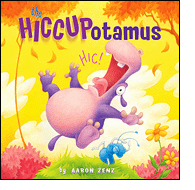 Over the years I continued to write and draw. I came up with scores of picture book ideas that I personally found way more exciting than Hiccupotamus. But when I shared things with people, they tended to gravitate to that first story. In fact people would randomly ask me years after seeing it — “Did you ever do anything with that hippo book?” I dinked around with it off and on over the years, pulling it out, working on the tricky rhyme, developing the characters further.
Eventually (and you’re not going to want to hear this…) out of the blue, it was a publisher who approached me. A friend of mine was participating in building a new publishing company. He had seen that first dummy years earlier when we worked together and wondered if I would “let” them publish it as their debut trade book. I had to think about that for all of three seconds!
So sadly, I don’t have a story about thousands of rejection letters and years of knocking on doors. I invested lots of time into it over those years, but had never yet tried submitting it anywhere.
The sad part of my story comes later when, after the book’s astonishing sales and whirlwind success, the company folded shortly after the release of Hiccupotamus due to the underhanded dealings of my friend’s partner. But from my understanding, it sold 17,000 copies in its first 4 months, and it continues to do well via a version in Scholastic’s book clubs.
And Marshall Cavendish plans to put it back in print this fall. Woo hoo! Hopefully sales pick up for them just as strong as where they left off. Be watching for it!
I will! And why wouldn’t I want to hear that? It’s an amazing story.
You’ve also illustrated the work of other writers. Can you tell us about the process of interpreting someone else’s words into pictures? How do you get started?
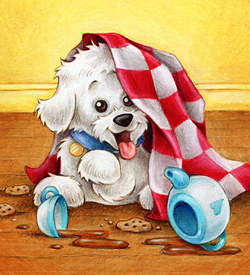
 For stories that are character-based, like with Howie, I’ll spend my first energies doing character development. This is my very favorite part of the whole process. I love all the pre-production work… designing the people and critters, trying to infuse them with life and personality. Sara Henderson had described such an energetic ball of fun when writing about Howie. I set two personal goals for myself on the visual side: attempt to make him the cutest little dog you ever saw, and to fill him bursting with life. Hopefully I came close. So before even thinking about the stories themselves, I spent a few days with a tottering stack of library reference books, filling a sketchbook with page after page of Bichon Frise doodles.
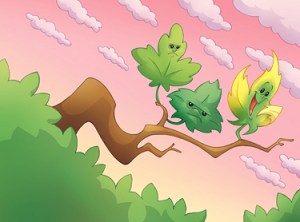 After all the doodling, I make model sheets of the characters with different poses and expressions. Then I’ll finally turn my attention to the actual story and create quick thumbnail sketches of the story, trying to achieve good variety in the compositions. Sometimes this is a challenge. I recently illustrated a story about three leaves, fastened into place on their branch throughout the entire 32 pages. Lots of work went into finding ways to make each page a fun surprise – through coloring and vantage point and framing devices.
The last step, actually making the final art, is the least fun for me — then it becomes work. The subject matter and timetable often dictate the medium. I like working in colored pencil and do it whenever I can, but sometimes I’ll create everything on the computer. For example, with my two Nascar books, it was so much better for me to create mechanical objects digitally – cars and trucks and racetracks. Other times when deadlines are tight, I work on the computer because it’s much faster. The way I use colored pencil is a very timely process.
What is your best advice for new author/illustrators just starting in the business? What do you know now that you wish you knew then?
Well, I’m still among those just starting out, so I myself am listening for anyone who’s got advice!

 I suggest making sure that you keep your creative endeavors fun. Don’t get caught up in checking off x-number of items on a list in order to obtain a successful career. Create what you love because you love it.
I also know that networking is just as important as what we produce. So try to find creative ways to cross paths with lots of other people. Blogging can be a great way to grow a circle of influence. Like hosting a month long “Love a Kidlit Author” celebration — perfect example of a creative way to strengthen contacts and increase a presence! Good thinkin’! Eventually, the right person will make an offer at the right time, so have a stack of things ready to go when that happens.
Aaron, it’s been a pleasure learning about your creative process. One last question…what’s your favorite kind of chocolate?
I’ll never be a coffee drinker, but I Love a big mug of hot chocolate. Oooo… I’m going to need one now.
 Me, too!
Aaron is generously giving away a signed four-book set of the Howie I Can Read series. Leave a comment to enter the drawing!
Blog or Twitter about Aaron’s interview and receive another two entries.
I’ll announce the winner one week from today!
And stop by again soon…Aaron will share his thoughts on sharing books as a family.
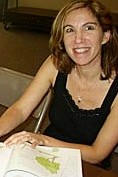 Corey Rosen Schwartz is a picture book author and mother of two preschoolers. Her debut title Hop! Plop! was named an Eric Carle Museum “Picture Book of Distinction” in 2006. She joins me today to talk about collaborative writing.
Corey, some say writing is a solitary profession, but you co-authored Hop! Plop! with Tali Klein and now your writing partner is Rebecca J. Gomez. What do you prefer about the collaborative writing process?
Well, there is a great quote by E.M. Forster: “How will I know what I think until I see what I say?” That pretty much sums it up. I am an ENFP on the Myers-Briggs scale (despite what the Typealyzer claims!). As an extrovert I need to think out loud. In fact, I kind of have Joe Biden syndrome. I just blurt stuff out. If I had no partner to blurt to, I might not have any thoughts.
So how does the process usually begin? Blurting ideas to one another? Then do you write separately and compare notes, are or you writing and chatting the whole way through?
It depends. With Tali, we would brainstorm together in person. Then I’d go home and write the entire story, and she’d tell me it was good :). With Becky, it’s totally different. We’ve never met or spoken by phone. We do all of our writing through IM. We discuss and debate line by line and drive each other crazy. We can argue for two hours over one detail… but we keep exploring options until we’re both satisfied.
What is the best part of having a writing partner?
Even though collaborating can be very frustrating at times, I always feel that our final product is better than anything either of us could have produced alone. Becky and I really push each other. I insist we revise and revise until every syllable is perfect. She gets me to leave my comfort zone and try new styles and genres. Plus, my commitment to her helps me keep to a schedule and stay motivated.
What would your words of caution be to others interested in taking on a collaborator?
I don’t really have any. I have words of caution for parents thinking of having their kids fifteen months apart! But I don’t think authors have anything to lose by giving collaboration a try. Every writer brings something different to the table. I am very good with rhythm and rhyme and language, but I find plot development more challenging. I’ve written manuscripts with lots of people including my husband, and I’m always willing to try a story with a new partner. (Just holler if you want to take me up on this.)
How did you and Becky find each other?
Becky and I met in an online critique group about four years ago. She is from Omaha, Nebraska. I was a native New Yorker living in Manhattan. I liked both her writing and her critique comments and thought we might make a good team. We’ve finished a half a dozen PBs together and even sort of “shared” an agent. (Don’t ask! Our agent saga is whole other story.)
Uh, sorry, but I have to ask. How do you go about submitting to agents and editors as a team?
Submitting to editors is easy. We each sub to the editors that we have established relationships with. For example, Becky has gotten personal notes from FSG. So she would be the one to write the cover for that house. With an agent, it is a bit trickier. My former agent had submitted PB manuscripts that Becky and I co-wrote. (But she would not sub anything that Becky wrote alone.)
Are you both actively looking for agents now? Do you sell yourselves separately or as a pair?
I’m not actively looking at the moment, but if I got a good lead, I would follow it! This industry is all about contacts. You don’t pass up an opportunity if it lands in your lap! With agents, we kind of have to sell ourselves separately because we both have manuscripts that we have not done together. I would actually love it if she got representation this time. That would be the best of both worlds. Becky’s agent could sub “our” manuscripts, and I’d still be free to shop my other ones around myself!
What was it like to collaborate on a manuscript with your husband? Did you get into arguments? Did anyone spend the night on the couch?
Well, it was a lot better than having him as a Bridge partner! We actually had a blast. We left the kids with my mom one day and just sat at the pool with a notebook. We completed a draft of Never Ask a Dog to Watch Your Lunch, which we thought was hilarious (unfortunately not everyone gets our humor in that one, so we need to work on it some more).
David’s philosophy is to just get a draft down. Doesn’t matter if every line is great. You can fix it later. It was liberating for a perfectionist like me to work with someone with such a practical attitude.
And finally, what’s your favorite kind of chocolate candy?
Reese’s Peanut Butter Cups!
Thanks, Corey! It was interesting to learn about writing with a partner (without killing them). Ha!
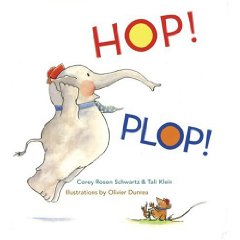 Corey is generously giving away an autographed copy of Hop! Plop!
Just leave a comment to be entered into the drawing.
Blog or Twitter about the interview and you’ll receive another two entries.
I’ll draw a winner one week from today.
Good luck!
…let it be Jarrett Krosoczka’s hilarious writer’s block adventure.
Starring Tomie dePaola, Jeanne Birdsall, Mo Willems, Jane Yolen, Grace Lin, John Scieszka, Adam Rex, and many others!
BOOK BY BOOK: the making of a monkey man from Jarrett Krosoczka on Vimeo.

You might already know that Charlie and the Chocolate Factory is my favorite children’s book. So I went in search of The Golden Ticket today.
But does anyone see something wrong with this Golden Ticket?
While you ponder that question, let me kick off Love a Kidlit Author Month with a few golden words from Dutton Executive Managing Editor Steve Meltzer.
Mr. Meltzer penned an article in the latest edition of Sprouts, the magazine of the NJ-SCBWI. The title says it all: “Market Your Book Without the Book.”
Common sense tells us not to market a book until you actually have a book to publish. I say that is no longer true. When you are selling a book these days you have to sell yourself as well. It is up to you to do the job. Publishers like people who know how to market…
…Web video technology and social networking are the author’s friend. There is so much you can do these days for so very little. So get out and market yourself.
If you don’t subscribe to Sprouts, I highly suggest it! Each issue contains useful industry tips from editors and agents.
Figured out the mistake on the Golden Ticket yet?
Remember, every comment you make this month counts towards an entry for the gift certificate (but only one comment per blog post). If you blog or Twitter about Love a KidLit Author month and link here, it counts as an extra entry, just let me know about it!
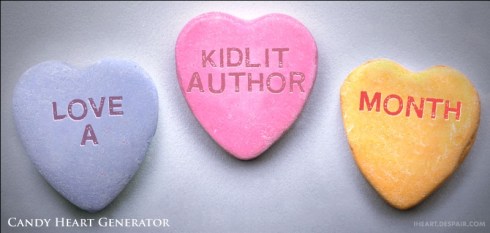
Yeah, I changed the name of my February blogfest. Mostly because “Children’s” didn’t fit on the candy heart generator. Oh, the sacrifices we make for our art.
Here’s a sneak peek at the upcoming author interviews…
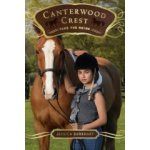
Jessica Burkart, author of the brand new tween series Canterwood Crest, billed as “The Clique” meets “The Saddle Club.”
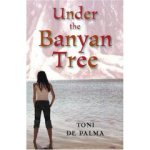
Toni De Palma, author of Under the Banyan Tree, an Association of Booksellers for Children Best New Voices pick.
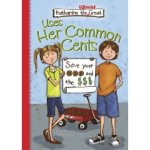 Lisa Mullarkey, author of the new Katharine the Almost Great chapter book series from Magic Wagon.
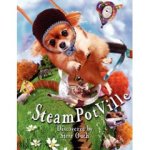 Steve Ouch, author/illustrator of SteamPotVille, a little independent title making big Tweets.
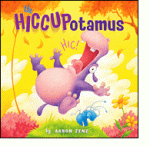
Aaron Zenz, author/illustrator of HICCUPotamus and the groovy dad behind Bookie Woogie book reviews.
Plus authors Jennifer Brown, Brenda Reeves Sturgis, Mary Ann Scott, Corey Rosen Schwartz…and I’m working on a few more.
And now the prize announcements!
Each comment you leave in February counts as an entry to win a $25 gift certificate to the bookstore of your choice. (Be sure I can reach you via your comment link. Comment as many times as you wish, but only one comment will count per blog post.) If your choice is your local independent bookseller like The Bookworm in Bernardsville, NJ, you’ll win a $35 gift certificate. 
The winner will be chosen out of a hat, which may or may not be an actual hat. Probably a melamine mixing bowl like one of these:
Plus, some of our featured authors will be giving away autographed copies of their books! Woo-hoo!
I’m having a blast putting this together, learning a lot from these new authors and getting inspired. I hope you will be, too!
 Ah, February. The month of love.
I love that December’s bills have been paid off. I love that I don’t have to worry about fitting into a bathing suit quite yet. I love dreaming of ways to spend my tax refund (which has already been spent). And I love gettin’ cozy in front of the fire with my daughters and a good book.
So this February I’m hosting a celebration of children’s authors, new and old. (Well, maybe not old. Established.) It will be 28 days of author interviews, book reviews and giveaways beginning on February 1st.
And what would February be without chocolates? Besides the quintessential heart-shaped box, February 1st was the day Willy Wonka invited five kids to tour his chocolate factory for the very first time…
Do you have a new book coming out? Recently snagged your dream agent? I’m still looking for writers to feature, so please get in touch by leaving a comment!





 Writing for Kids (While Raising Them)