You are currently browsing the category archive for the ‘Picture Books’ category.
More PiBoIdMo success stories! Many thanks to Mindy Alyse Weiss for pulling these stories together.
I hope when YOU have a success to share, you’ll contact me. I love to hear how your ideas went from pencil-scribble to published! And I don’t define “success” just as being pubbed. Win a grant, a contest, secure an agent–anything goes. So here goes…
1. Amy Dixon
Being married to a relentless distance runner means that every November, there is a marathon on the schedule. Lucky for me, November is also Picture Book Idea Month, and I had long been lamenting the lack of picture books about running. Looking back at my spreadsheet for 2010, the entry for November 5th says, “Marathon Mouse. Story of a mouse who lives in NYC right under the start line (Verrazano bridge) and decides that it is his life’s dream to particpate in the NYC marathon.” That’s it. The beginnings of a story. Flash forward to August 2011, where I received one of the best e-mails of my life. A lovely editor at Sky Pony Press likes Marathon Mouse and wants to publish it! The story could end there, and would still be a dream-come-true. But I decided to contact an agent I had recently queried with a different story and tell her of my offer. After a flurry of e-mails and phone calls, I signed with Karen Grencik of Red Fox Literary. In the course of one day, I had gone from struggling picture book writer, to agented and soon-to-be-published! So keep your eyes peeled in Fall 2012 for a picture book titled, MARATHON MOUSE. It’s by me. And it happened in part because I took on the challenge of coming up with 30 ideas in 30 days!
I also have a longer version of the story on my blog, but it doesn’t mention PiBoIdMo:
http://writingamillion.tumblr.com/post/10441985218/on-editors-agents-and-contracts-oh-my
2. Diana Murray
Diana Murray was thrilled to receive the 2010 SCBWI Barbara Karlin Grant for her rhyming picture book manuscript about a witch. She came up with a few different versions of the idea during the first PiBoIdMo. You can read more about her experience here:https://taralazar.wordpress.com/2010/07/06/piboidmo-success-story/. Diana will always be grateful to Tara for starting an event that helped her streamline her writing process. And now, she’s ready for another month of fun and inspiration!
Diana’s website: http://www.dianamurray.com
3. Rebecca Colby
This year, Rebecca participated in her third PiBoIdMo. Following a picture book workshop last year that challenged her to alter a well-known fairytale, she decided to generate a few ideas for fractured fairy tales. She found the inspiration she needed from Sudipta Bardhan-Quallen’s guest post on Day 29 that recommended participants do just that–transform “something old into something new.”
The result was an idea for a Cinderella story with monsters entitled MONSTERELLA.
Rebecca says, “I fell in love with the idea of a fairy godmonster who magics a spider into a monster truck.” Rebecca wrote the manuscript soon after and it went on to win the 2011 SCBWI Barbara Karlin grant.
Before writing for children, Rebecca inspected pantyhose,worked for a Russian comedian, taught English in Taiwan, and traveled the world as a tour director. She currently works as a librarian. Born in America, Rebecca now lives in England with her husband and two daughters. More information about Rebecca and her writing can be found at her website: www.rebeccacolbybooks.com.
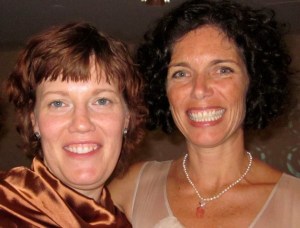
Erin Murphy (l.) and Liz Garton Scanlon at the 2010 Newbery-Caldecott Award Banquet, where Marla Frazee, illustrator of Liz's All the World (Beach Lane/S&S), was awarded a Caldecott Honor.
by Erin Murphy
So, you’ve got 30 picture book ideas. Now what do you do?
FILE.
Keep them. All of them. Do you have an idea file of some kind? You should. It’s obvious that you might turn to the idea file when you’re casting about for something new to write, but it also can do wonders for unlocking writers block. You never know when some seemingly unrelated idea will be just the thing to add the missing layer to another piece. Sometimes it’s less direct than that; just reading through ideas is a way of getting you out of a stuck place, much like taking a walk or strolling through a gallery can knock you out of a creative rut.
CHOOSE.
Sort through them to find the most promising ideas to spend more time with. Laura Purdie Salas had some great suggestions about how to evaluate your ideas last week.
WORK.
Budget time to work on each of those most promising ideas. Not just once, but two or three times per idea before you decide if they’re worth pursuing further. Even if you schedule 20 minutes of writing time a day, you can spend 10 on a new idea, 10 on an idea you’ve already worked on some, and by the new year, you’ll most likely have a couple of solid ideas that are coming together into a real picture book manuscript.
GIVE SPACE.
Some ideas seem to have promise, but they resist any time and attention you give them. This is a sign that they need to sit in your subconscious for awhile. They will most likely kick and scream when they’re ready.
OBSERVE.
After a concentrated creative period like PiBoIdMo, you’ve got a great opportunity to take stock of where and when you do your most creative thinking. Did you get your best ideas in the car while waiting for your kid to come out of her piano lesson? Well then, perhaps a copy of your promising idea list needs to stay in the car so you can keep using that time for best results.
SORT AND EVALUATE.
I’m not talking about evaluating the idea; you’ve already done that. I’m talking about general trends. Try putting all 30 ideas into categories (character-driven, concept-driven, voice-driven, plot-driven; lyrical, funny, quiet; spontaneous-feeling or intellectual…). Are you heavily weighted towards one type of story? Is that your strength? (Or, conversely, are you limiting yourself unnecessarily?) What research can you do about that type of story to help you grow in your picture book writing craft?
REVISIT.
Don’t forget to go back to that full list of ideas now and then. Who knows what discarded idea ends up turning out to have legs! Kathy Duval’s I Think I See a UFO, forthcoming from Disney-Hyperion, to be illustrated by the wonderful Adam McCauley, was a nearly discarded idea that found a home at the first publisher we sent it to!
Erin Murphy was born and raised in Arizona, and founded EMLA in Flagstaff in 1999. She works with publishers of all sizes all over the U.S., and has placed clients’ books with every major children’s house in New York and Boston, but she cut her teeth in regional publishing. She began her career at Northland Publishing/Rising Moon Books for Young Readers (a beloved decades-old Flagstaff company that was bought out in 2007), eventually becoming editor-in-chief, and was a member of the board of directors of PubWest, a professional development organization for small and mid-sized publishers in the West.
Erin represents writers and writer-illustrators of picture books, novels for middle-graders and young adults, and select nonfiction. She is especially drawn to strong characters and heart-centered stories. In her spare time she loves walking, baking, kayaking, knitting, traveling, reading (often audiobooks), and powering through her Netflix queue. You can read more about Erin’s tastes and background in interviews here and here. She now blogs at http://emliterary.com/blog/ and tweets @AgentErinMurphy.
 Generating ideas comes easily for me. I am participating in my own private PiBoIdMo every day of the year. I jot down ideas on napkins; I write them on my hand; I email them to myself; I leave myself idea voice mails. I’ve got no problem with ideas.
It’s getting those ideas out of my head and onto paper I struggle with.
You’ve probably met people who get an idea on Monday and by Wednesday, have a polished, publishable, picture book manuscript ready to send, right? I’m in a critique group with those people.
I am not one of them.
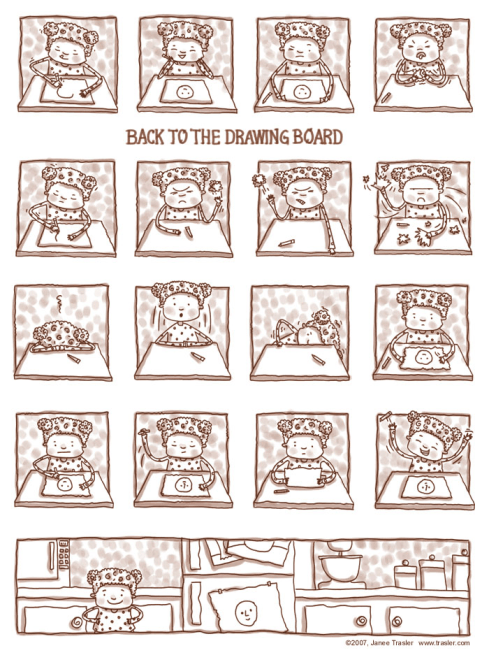
My process looks something like this.
- Get brilliant idea.
- Decide that I am a genius.
- Jot down a few notes.
- Let idea brew.
- Critique way too early in process.
- Decide that I am not a genius.
- Decide, in fact, that I suck.
- Stuff notes in deepest, darkest corner of drawer.
- Get sudden inspiration while washing dishes.
- Pull notes out of drawer.
- Reread notes.
- Decide that I am genius after all.
- Jot down new inspiration.
- Let brew.
- Make storyboard.
- Revise storyboard 42 times.
- Write first draft.
- Send to critique group.
- Wait for them to confirm genius.
- Get feedback from critique group.
- Decide that critique group doesn’t know what they’re talking about.
- Stew.
- Decide that critique group is genius after all.
- Revise.
- Send to agent.
- Wait for her to confirm genius.
I could probably trim a lot of self bashing and praising from my process, but the other parts, the brewing, story boarding, and revising are really important for me. I get an idea and actively brainstorm it for a bit, but then I need to put it away and let my subconscious work on it.
It gives my idea time to grow. It allows me to make connections I might not have otherwise made.
I used to think of this as a bad thing. I compared myself to the idea-on-Monday-polished-draft-on-Wednesday people and felt lesser, but then realized it’s just the way I work. The time I spend brewing my idea, they often spend looking for one.
The other part of my process that I’d be loath to lose is the storyboarding phase. I get a lot of the kinks worked out here before it ever goes to draft form. I number a piece of paper 1 through 15 to represent picture book spreads. I tentatively write the exposition on the first line and the resolution on line 14. I pace out the major plot points on lines 2 through 13 and the wrap up on line 15.
As I’m playing with the storyboard, I know I’ve got the half-title spread to steal if I really need an extra spread to complete my arc.
I find it so much easier to revise the storyboard than a draft, that I will try things here that I might not try if I went straight from notes to writing. There’s a lot less risk to trying something at this stage.
I congratulate you all for participating in PiBoIdMo, and whether it’s ready next Wednesday or three years from now, I look forward to adding your picture books to my collection!
 Janee Trasler has illustrated 19 books and written/illustrated four of her own. Her latest book, CAVEMAN, A B.C. STORY (which by the way, sat in a drawer for six months “brewing”) was published August, 2011 by Sterling. You can catch the book trailer here:
and see Janee’s illustration portfolio on her website http://www.trasler.com.
by Kat Yeh
 I have just finished my second year of PiBoIdMo and I can’t stop thinking about how much I love what I do. I love the blank page that is suddenly no longer blank. I love that for a living, I get to be a picture book author. Because when you write picture books, you get to Make Things Up. You get to take something that never existed in real life and make it real. And if you’re lucky, one day it becomes a book you can hold in your hands.
In 2003, I took a class at Columbia’s Teachers College. Let me clarify. I took an amazing class entirely devoted to the Art of the Picture Book. Taught by Professor Barbara Kiefer, former chair of the Caldecott Committee. The previous years between 1999 and 2003 had been a blur. In a short span of time, my first child was getting ready to go to school, I had a second child, and my father passed away. I had always wanted to write children’s books and had a pretty big stack of manuscripts and scribbled ideas piled up in my office. In the midst of everything that was going on, I somehow decided that it was time to take a chance.
The class was wonderful. We held a Mock Caldecott Award and pitched our personal nominees. We experimented with making hand-bound books. We were given lists of museums and galleries to visit for inspiration. And one day, the list included an exhibition of Chinese Calligraphy.
I went early one morning. I remember how still the rooms were. I remember standing alone before a wall of parchment paper and stunning brushwork and being overwhelmed with memories of my father. How he loved spending time with my daughter. How he shouted with joy when he heard I was pregnant with my son. How along with his many artistic pursuits, he loved working with his brush and ink. That day, I began to write the story of how my father introduced my children to the art of Chinese Calligraphy.
Flash forward 5 years. The kids were a little older. There was a little more breathing room. I now had a somewhat daunting stack of manuscripts and scribbled ideas and I decided it was time to take another chance and actually try to get published.
My first picture book, YOU’RE LOVABLE TO ME (Random House, December, 2009) came out shortly after that. Through the SCBWI, I was introduced to the amazing New Jersey chapter, run by Kathy Temean. One of my first events was a Mentor Workshop with the opportunity to have a manuscript critique. I brushed off my Chinese calligraphy story. Looked at it with fresh eyes and made changes. Then took a deep breath and brought it to my meeting with editor Stacy Cantor from Walker Books.
It was a good meeting.
Stacy teamed me up with illustrator Huy Voun Lee and two years later, THE MAGIC BRUSH: A story of love, family, and Chinese characters (Walker Books, January, 2011) was on the shelves.
I will never forget the first time I sat with my children to read it. How my daughter looked at the pages showing the first Chinese characters my father ever taught her. How my son reached out to touch the opening spread—a beautiful illustration of him and his sister, laughing with my father in a garden. How they listened to the story of that special time they were lucky enough to share with my father.
Time that only ever existed in that book.
Because only few weeks after I had told my father that I was expecting another child, he had a stroke. He lay in a coma when my son was born and never opened his eyes again. He never got the chance to meet my son or teach my daughter calligraphy or laugh with the three of them together in the garden.
But when you write picture books, you get to Make Thing Up. You get to take something that never existed in real life and make it real. If you’re lucky, one day it becomes a book you can hold in your hands. And that is real enough for me.
 Kat Yeh lives on Long Island, NY where she can see water everyday and explore all the bay and harbor beaches with her family. She is the author of YOU’RE LOVABLE TO ME, Random House Books for Young Readers (2009) and THE MAGIC BRUSH: A STORY OF LOVE, FAMILY, AND CHINESE CHARACTERS, Walker Books for Young Readers (2011). One of these days, her website katyeh.com will be up.
 by Tara Lazar
I have a daughter who recently turned five and her favorite saying is “Why come?” (She mixes up “how come” and “why”.)
You may have children like this. They want to know about EVERYTHING, even the most mundane.
“Why come we have to take a bath?”
“Why come we sleep with pillows?”
“Why come we eat breakfast first?”
And the perennial favorite, “Why come we have feet and not wheels?”
I dunno, kid, I dunno. Sure would make life easier.
Kids are curious. They want to know WHY. Like WHY they can’t stay up past 8:30. And then WHY they can’t get up for school. WHY they can’t have a banana split for all three squares (“hey ma, it’s got FRUIT in it!”). And then WHY their stomach aches.
Just as Karma Wilson asks herself WHAT IF? as she writes picture books, I constantly ask myself WHY.
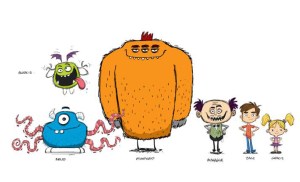
Every character reacts to a situation in their own unique, quirky way. If I create a store called THE MONSTORE where you can buy monsters, I have to ask myself WHY a kid would spend his hard-earned leaf-raking cash on one. There has to be a reason other than the monsters just being cool.
(Oh, and if you know a kid who actually rakes leaves for money these days, send them to my house, please. There are no fifth-grade entrepreneurs in this neighborhood.)
Kids cannot be fooled. If you don’t have a good reason behind a character’s actions, or even the entire story’s being, kids will see right through it. You don’t want “Why come?” to be the first thing they ask after closing the book. You haven’t succeeded if you haven’t immersed your reader in a fully believable set of events.
When I create a new picture book premise, I sit in a comfy chair with a notebook and scribble potential answers to WHY. I develop a long list of reasons for the character’s actions.
And my next secret? Those actions are usually tied to an EMOTION.
I can’t tell you how many picture book manuscripts I read which are devoid of emotion. A character MUST be emotionally changed. The way they start the story is not the way they finish the story. They have grown. They have learned. They have been emotionally altered.
It’s important to include an emotion that is universally understood by children.
What it FEELS LIKE to be picked last for the kickball team.
What it FEELS LIKE to have an annoying sibling.
What if FEELS LIKE to lose your favorite stuffed animal.
Heck, I’m an old lady and I still haven’t gotten over the 1979 disappearance of “Yellow Puff.” She was so yellow. So puffy. So stolen by my little brother if you ask me. (Hey, I got TWO emotions in there.)
So if your picture book manuscript doesn’t feel satisfying, ask yourself, “WHY COME?” It might just give you the answer.
 Tara Lazar is the creator of PiBoIdMo, the picture book writer’s alternative to NaNoWriMo. Her first two picture books will be released by the Aladdin imprint of Simon & Schuster. THE MONSTORE, illustrated by James Burks, opens in 2013 and I THOUGHT THIS WAS A BEAR BOOK rolls into stores in 2014. She is represented by Ammi-Joan Paquette of the Erin Murphy Literary Agency. She prefers cheese over chocolate and chai over coffee. Visit her website for children’s book reviews, writing tips and other fun kidlit diversions. Oh wait, you’re already there!!!
by Tammi Sauer
 When Tara asked me to contribute a post to PiBoIdMo 2009 I was honored. And, truth be told, scared. For me, getting a Really Good Idea is hard. Crazy hard. How could I possibly offer idea-getting strategies to others when I felt this was the toughest of all the writing challenges?
Well, that November I wrote the blog post. I also pushed myself to come up with 30 ideas. Whew. Wasn’t easy. It took me every bit of that entire month to get those 30 possibilities on paper. Most of those ideas were tiny snippits. A character. A title. A phrase.
One of those snippits, however, seemed as if it might have potential. Nugget and Fang. I thought the unlikely best friendship between a minnow and a shark might have the makings for a story. I brainstormed. I jotted down a first draft. And a second draft. And a third draft. With each draft the story got a little tighter, the word choice got a little better, and the humor got a little stronger. But I never really got that YES feeling from the manuscript. So…I put it away for a few months. Then I wrote a fourth draft. And a fifth draft. And I put it away for a year.
Then, in March 2011, my week to submit something to my critique group came around. I had recently finished my latest manuscript and I needed SOMETHING to send the oh-so-awesome PBJeebies. So I dug through my files. And found two old friends. Nugget and Fang. I read the most recent version. Then I revised. And revised. And revised some more. I started to get excited.
I sent the manuscript to the PBJeebies, and they pushed me to revise the manuscript a little more. That YES feeling came around. I shared the manuscript with my agent.
These are my favorite three sentences from her response:
“I absolutely love this manuscript! It’s hilarious, original, and wonderfully paced—with totally fun illustration possibilities. Yay!”
Oh, happiness! Oh, time-to-print-out-that-message-and-tape-it-to-my-computer!
The manuscript went Out There.
Months went by. Then I got the call. And I got ANOTHER call.
Two fabulous houses were interested.
After much careful consideration, I decided Nugget and Fang belonged at Houghton Mifflin Harcourt.
Nugget and Fang is scheduled for a Summer 2013 release. I’m hoping it makes a really big splash.
Tammi Sauer, who owes an ocean-sized thanks to Tara Lazar.
Tara’s Note: Aww, shucks. I owe big thanks to you for being such a great role model!
by Erik A.K.A. This Kid Reviews Books
 Hi there! My name is Erik. I am nine years old (but this month I will be the big 10)! I have a blog (thiskidreviewsbooks.com) where I review books, talk about reading and other book-related things. First of all, I’d like to thank Ms. Lazar for inviting me to be a guest blogger (she said she wanted a kid’s perspective, so HERE I AM) for PiBoIdMo 2011 and to write what I have learned this month by reading the posts each day. It has been a great month, hasn’t it? I have learned so much from not just the awesome guest bloggers but also by reading the comments of everyone that left one!
I don’t think I will ever see a picture book the same way! Picture books look like they are easy to write, but I now can see how much work and time it takes to put just ONE idea together into a book. One of the coolest things I learned was that adult writers really want to think like kids and want to know how kids see the world. I wonder how old we are when we stop thinking like kids? I actually think a lot of adults still think like kids but won’t admit it!
I like how the guest bloggers say how they get inspirations from the world around them. Things as simple as listening to kids talk (PiBoIdMo Day 23: Laura Murray Goes for the Giggle) or seeing things like kids see them (PiBoIdMo Day 15: Liz Garton Scanlon Sees Things Differently). I really liked the quote Wendy Martin used in the Day 19 post -“Everybody walks past a thousand story ideas every day. The good writers are the ones who see five or six of them. Most people don’t see any.” ~ Orson Scott Card
The quote really made me think. When my mom was driving me home from school today I looked out my window looking for what might be a good idea for a book and I think I noticed things that maybe I wouldn’t have before; like the kids riding skateboards on the sidewalk, a family going into a pizza place or a mom driving a mini-van full of kids. Have you noticed something in the world around you that you haven’t before this month?
I really liked the posts by illustrators that appeared this month too! It was really neat to see how illustrators get inspired by something like a doodle (PiBoIdMo Day 7: Doodle with Abandon Like Debbie Ridpath Ohi) or a kids drawing (PiBoIdMo Day 28: Aaron Zenz and “Friends”) for examples.
It’s really cool how all the authors participating in PiBoIdMo really work with each other, support each other and help each other discover new ideas or new ways of looking at things. My September 27th, 2011 post on my blog was titled “Children’s Book Authors are the Nicest People on Earth (and maybe other planets too)!” I really think that. I could tell that everyone here is super nice!
I really learned a lot about the “business” of writing books. Agents, marketing, editors, publishers, submissions, rejections…I’ve heard these words before but I never really knew how they fit into writing a book. It seems like a very complicated process!
I did come up with 30 ideas this month but I don’t think that all of them are really great—like my idea of “The Friendly Tornado” where a tornado helps people build houses rather than knock them down but my mom pointed out to me that small children won’t see tornados as so friendly and will probably be terrified of it. I see now that she has a point ☺.
I do think I came up with some good ideas too. Like “When the Lights Go Out.” It will be a story of how a family starts to talk, play games and read with each other when the lights go out in a storm and they can’t watch TV or go on the computer (this actually happened to us, HEY I WAS INSIPRED).
I really learned a lot this month and I thank all of you for letting me be part of this. Mostly I am really thankful that all you authors and illustrators that take your time and hard work and try to make books for kids like me. I love stories. I will always read the stories you tell and I hope to read your book when it is published!
 by
by Congratulations on completing PiBoIdMo!
This activity generates such a feeling of abundance. Ideas everywhere! Some of these ideas have great promise, and some of them…don’t.
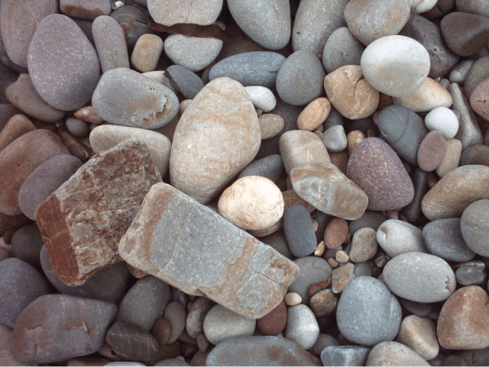
Photo: Daniel Plazanet (Daplaza)
I characterize ideas as pebbles or seeds. Pebbles are hard and immutable. They might be shiny, or pretty, or just dusty. But whatever they are, they’re rocks. They aren’t going to grow into something different.
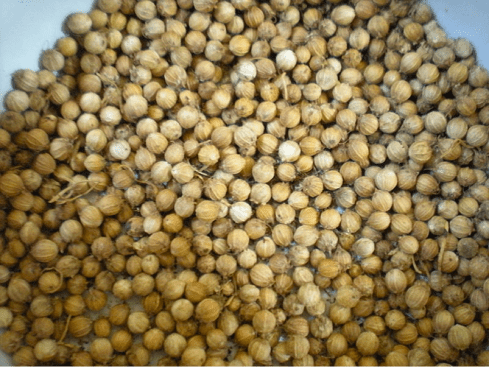
Photo: Mrmariokartguy
But seeds…oh, seeds! Some look like pebbles. They seem hard and small and nondescript at first. But if you nurture them with questions, and time, and creativity, the seed ideas can grow into more—like a picture book.
So, how do I sort them out? I ask questions. I play around with answers. I try to be honest, even when I don’t want to. Here are some of the things I ask:
One premise from my PiBoIdMo list this year is: “I Won’t Come Down: Rhyming pb from pov of a kitten stuck in a tree. With a refrain? Who tries to get me down? Kid climbs up, but I climb higher. Fire truck? Where’s the fire? Need a personality for the kitten. Is she witty and clever? Scared to death? Sassy?”
1) Who is my main character?
Does my idea or premise suggest a particular character? Does she fit the situation perfectly? Or totally clash with it? In this case, as I re-read the idea, I know my main character kitten HAS to be a witty, clever girl. She appears to be stuck in the tree, but she’s really perfectly happy up there.
2) What is the conflict?
Easy-peasy. Everybody assumes she wants to get down, but she doesn’t. Sometimes the conflict isn’t obvious. Another of my ideas is about a pet cloud. Just an idea—but I don’t have a clue what the conflict would be (yet).
3) Does it make me ask more questions?
A good idea expands. It makes me want to explore possibilities. My treed kitten does that for me.
4) Has it been done a million times?
Uniqueness is key in publishing picture books. I’ve had manuscripts turned down recently that editors said they loved but that were “too similar” to books already published—even though the similarity is broad at most. In this tight market, publishers don’t want two “pet books” or whatever. I start on Amazon. I find 27 picture books including the words “kitten” and “tree” published over the past 25 years. Dang. That doesn’t mean any of them have the same premise, but I’ll need to do further research.
5) Can I see the book in my mind?
Picture books, of course, need pictures. Does my idea make me immediately visualize tons of images?
6) Is it a seed that will grow a short story instead of a picture book?
It can take years of reading to absorb the intrinsic difference between the two forms. Illo potential is part of it, but there’s more. If your idea depends on a twist/joke ending, it’s likely to be a short story. (The ending of a picture book should be surprising and satisfying, but not a joke/punchline.) If you can picture one great illo for it, but not 14, it’s a short story. If it involves complex plot points and many details, it’s a short story.
7) Does it stand up to repetition?
Will kids want to listen to this over and over? Will adults be happy to read it over and over? That’s a picture book.
As I play around with these questions, a seed idea will grow into the bare bones outline of a picture book. It will feel simple and essential enough to get a draft down in a single swoop. The manuscripts I’ve tweaked and tortured to death have just not cut it as picture books.
I’m not saying I don’t spend a ton of time revising! I do. I change points of view, try different main characters, etc. But if the essence of the conflict and character don’t fall into place quickly, I’ve come to accept that it’s probably just not a fantastic picture book idea for me to pursue.
So, read through your list of ideas. Play with them. Ask questions. Brainstorm conflicts and storylines.
Then, mark the ones that are ready to plant. They won’t all grow. But at least some of them are seeds, ready to bloom in the soil of your creativity, under the sunshine of your words.
As for the pebbles, don’t sweat it! They’ll make a nice little border around your garden of picture books!
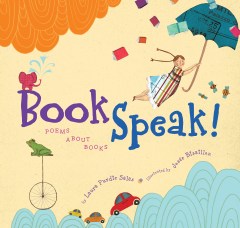 Laura Purdie Salas is the author of many nonfiction picture books, but her first love is poetry and verse. Her newest book is BOOKSPEAK! POEMS ABOUT BOOKS (Clarion, 2011), and coming soon is a rhyming nonfiction book: A LEAF CAN BE… (Millbrook, 2012). She is also the author of STAMPEDE! POEMS TO CELEBRATE THE WILD SIDE OF SCHOOL (Clarion, 2009). You can learn more about Laura at her website (www.laurasalas.com), her blog (http://laurasalas.wordpress.com), and her mentoring service for writers site (www.MentorsForRent.com).
I bet you feel like a winner just because you have a journal full of ideas!
But hey, you get some swell SWAG, too. (Well, it’s not stuff WE ALL get, it’s stuff WE SOME get, but SWSG is too hard to say.)
All winners will be randomly selected on DECEMBER 8TH from the WINNER’S PLEDGE post. You must have SIGNED IN at the beginning of PiBoIdMo and SIGNED THE WINNER’S PLEDGE by DECEMBER 7th to be eligible. Your name must be in both places. (Sorry, there’s gotta be rules sometimes.)
Enough legalese; onto the prizes!
First, there’s THREE GRAND PRIZES:
Feedback on your best 5 ideas from three literary agents: Ammi-Joan Paquette, Jennifer Rofé and Kelly Sonnack.



Each grand prize winner will be paired with an agent. The winners will send their 5 best ideas (written as pitches) to their agent and the agent will respond with brief feedback suggesting which ideas are the best to pursue as manuscripts.
But that’s not all!
There’s MORE!
FOUR FIRST PRIZES!
Picture book critiques from Tara Lazar (who the heck is that?), Brenda Reeves Sturgis, Corey Rosen-Schwartz and Sudipta Bardhan-Quallen!



The following prizes have been generously donated, so please, if you like what you see, visit the shops and browse. If you don’t win on December 8th, consider making a holiday purchase from these lovely literary-savvy vendors!
MANY, MANY SECOND, THIRD, AND ELEVENTH PRIZES!
- An original painting by MONSTORE illustrator James Burks

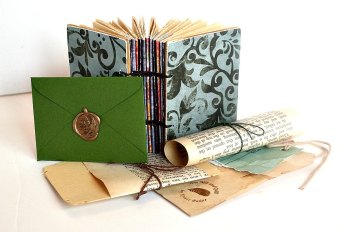
- Beautiful coptic stitch journal and accessories from The Nib and Quill
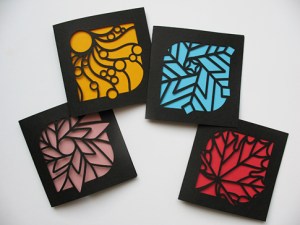
- Gorgeous die-cut greeting cards from Christina Peressini at Nib & Tuck
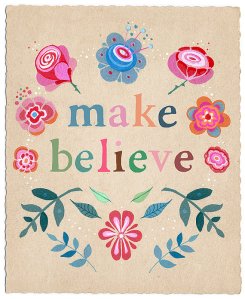
- Colorful “Make Believe” print by Lily Moon
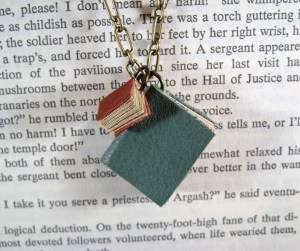
- Two practical and pretty book necklaces from JanDa Jewelry

- Two whimsical book photos of your choice from The Maple Tea House

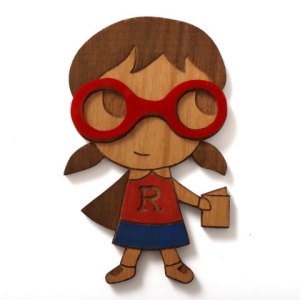
- Super-Duper Reading Girl Hero brooch from Jam Fancy
- Lovely vintage Picture Books from La Brocante Magique


- A pile of picture books from my publisher, Simon & Schuster
Apples and Pumpkins
The Snow Angel
Fairly Fairy Tales
Catch that Baby
Aliens Love Panta Claus
Dinosaurs Love Underpants
Four Friends at Christmas
The Christmas Sweater
The Monster Princess
The Little Girl with the Big, Big Voice
Hootenannny! A Festive Counting Book
PHEW! I think that’s it. I might find more stuff under my bed, though. Speaking of bed, goodnight PiBoIdMo’ers! And thanks once again for making this event a huge success. Give yourselves a nice pat on the back—and speaking of bed again—a good night’s sleep! You deserve it!
OK, time’s up, PiBoIdMo’ers! (PiBoIdMo’ites? PiBoIdMo’igans?)
Do you have 30 new picture book ideas?
You do? Excellent!
Time to take the PiBoIdMo winner’s pledge to qualify for one of our amazing-Ringling prizes! (Sorry, there are no circus animals to give away. I just felt like rhyming. I know, I shouldn’t rhyme.)
I do solemnly swear that I have faithfully executed
the PiBoIdMo 30-ideas-in-30-days challenge,
and will, to the best of my ability,
parlay my ideas into picture book manuscripts.
Now I’m not saying all 30 ideas have to be good. Some may just be titles, some may be character quirks. Some may be problems and some may create problems when you sit down to write. Some may be high-concept and some barely a concept. But…they’re yours, all yours!
You have until December 7th at 11:59:59PM EST to sign the pledge by leaving a comment on this post.
Remember, this is an honor system pledge.You don’t have to send in your ideas to prove you’ve got 30 of them. If you say so, I’ll believe you! (But for the record, I have no interest in purchasing a bridge at this time.)
Those whose name appears on both the kick-off post AND this winner’s pledge will be entered into the grand prize drawing: feedback on your best 5 ideas by a literary agent. There are three grand prizes! Thanks to Ammi-Joan Paquette of Erin Murphy Literary Agency plus Jen Rofe and Kelly Sonnack of Andrea Brown Literary Agency, Inc. for volunteering their time and talent to PiBoIdMo.
Other prizes include picture books, manuscript critiques, jewelry, journals, greeting cards and MUCH MORE! (Prize announcement post coming tonight!) All winners will be randomly selected by Random.org and announced on December 8th. And from now until the 7th, more guest bloggers will inspire you to develop your manuscripts.
But lucky you, you get your first prize now! This winner badge for your website, blog or social media site, designed by Bonnie Adamson. (If you display the badge, please link back to the PiBoIdMo page. You can make the badge larger or smaller…size it to fit anywhere.)
So what are you waiting for? Start signing…
…and start writing!
Thousands of children are depending on you!





 Writing for Kids (While Raising Them)