You are currently browsing the category archive for the ‘Picture Books’ category.

I have something that’s so real.
Reality is your friend. That’s the best piece of advice I can give anyone about anything. Really.
Of course, it strikes even me that someone who makes a living distorting reality (i.e., writing fiction) would be so high on reality. Yet, here I am, with my message to other writers about elevating their fiction by keeping it real…
Now, let me take a step back and tell you that I wasn’t sure what this post was going to be about when I came up with this reality idea. (It was really only based on Tara’s brilliant Vogue cover.) Should I talk about the business of publishing, or the craft of writing? Should I talk about balancing life and art, or about using literature to explore life through art? I could see the positives in each of those approaches, and it made it really difficult to get started. So then I thought, maybe I could touch upon a few of these topics? Not all in one post, obviously, but maybe Tara would let me guest blog a few more times?
That’s my plan, at least. Shhh. Don’t tell her.
I’ve decided in this round, I’m going to focus on how we can use the reality of life to create meaningful art. So, to get back to where we started:
Reality is your friend. That’s the best piece of advice I can give anyone about anything. Really. But especially when it comes to writing fiction, reality is your best friend. It’s reality that makes your fiction come to life.
 Whenever I’m at a school to talk about writing with kids, I spend a lot of time telling kids that every book is an autobiography. Obviously, that doesn’t mean that in my private moments I am a vampire pig (à la HAMPIRE) or a chicken in pajamas (à la CHICKS RUN WILD). But every book I write is informed by my own reality. In some way or another, I am every one of my main characters. My kids are my main characters, too, sometimes individually or sometimes as a blended product, but there’s always a piece of me. Because, at the end of the day, if the only way to be a successful storyteller is to write what you know, well, is there anyone we know better than ourselves?
The temptation when we start writing is to create something grander, bigger, more than ourselves. After all, my life is fairly boring—I barely want to hear about it!—so why would anyone else want to read about my reality? So we start out creating characters that are better than everyone else, smarter, prettier, more talented, more perfect. Their adventures are epic. Their adversaries are the embodiment of evil.
And the result is often—not always, but often—unbelievable. In the “no one would believe this and therefore this story rings false” way.
As much as readers turn to literature to escape, to experience things that they cannot do, the reality is (and, remember, reality is your friend) that no reader likes to read about someone better than him for too long. The main character has to be relatable to keep a reader’s interest. And how do you craft a relatable character?
By making sure he is just a regular guy (who finds himself in extraordinary circumstances.) Basically, by keeping him real.
(This is hardly new advice. In fact, I’ve given this advice myself in a different form in my picture book workshops – that you should always make sure your main character is interesting, but well and truly flawed. Because it’s the flaws that keep him real.)
So, how do we use reality to craft fictional characters? Obviously, we can’t just write about ourselves or our kids exactly as we are. (Trust me, I’ve tried that. That’s a little too much reality.) The trick, I’ve found, is to choose interesting traits (perhaps from several different sources) and blend them together to create a new, fictional character grounded in reality.
Here are some examples:
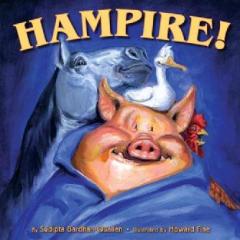 In HAMPIRE, Duck desperately wants a midnight snack, but is worried about running into the dreaded Hampire. The reality: every night, I want a midnight snack, and every night, I am convinced that if I step foot off my bed, the monsters will get me. The fiction: I am not a duck.
In PIRATE PRINCESS (available in May 2012 from HarperCollins), Princess Bea dreams of the pirate life, but when she boards the pirate ship, she realizes she’s awful at deck-swabbing (she has no housekeeping skills), she can’t be their galley cook (no culinary talents), and she is an ineffective lookout in the crow’s nest (she get’s seasick). The reality: I have no housekeeping skills, I have no culinary talents, I get seasick, and I think I’d look dashing in a pirate hat. The fiction: while Princess Bea doesn’t like to dress in silk, brocade, or chintz, and can’t stand the idea of being married to a prince, I love dressing up and look forward to a life with my Prince Charming (yes, Daniel Craig, I’m talking to you!).
In my forthcoming chapter book series, THE SPECTACLES OF DESTINY, the main character, Destiny, discovers she needs glasses. She’s worried about what she will look like (especially about whether they will make her nose look big) and what others will think of her glasses, from her friends on her soccer team to her classmates in the fifth grade. This one is complicated, because I drew from a lot of different sources of reality, so here’s a little chart of some of the sources:
| Something about Destiny | The inspiration |
| She wears glasses | My daughter Brooklyn and I both wear glasses, and we both initially worried about what other people would think of them. |
| She’s concerned about the size of her nose. | I’m concerned about the massive size of my nose. |
| She’s in the 5th grade. | My daughter Bella is in the 5th grade. |
| She loves soccer. | Bella and Brooklyn both love soccer. |
| She plays goalie. | Brooklyn plays goalie. |
| She’s super smart. | Bella and Brooklyn are both super smart. |
| She’s afraid of spiders. | I’m afraid of spiders. |
| She’s Indian American. | My whole family is Indian American. |
| She lives in New Jersey, outside Philadelphia. | We live in New Jersey, outside Philadelphia. |
| Her first pair of glasses are dark tortoiseshell. | Brooklyn’s first pair of glasses are dark tortoiseshell. |
| Her second pair of glasses are black with zebra-printed sides. | Brooklyn’s new pair of glasses are black with zebra-printed sides. |
| Her glasses let her see bits of the future clearly. | Brooklyn’s glasses let her see the present clearly. |
Obviously, I could go on and on with more examples of traits that I drew from my life or from my children’s lives. But you’re getting the idea. Here’s something I would add, though: in every place in the revision process where my editor asked for more detail, the things I added were inevitably true things about someone in my house.
So, one more time, let’s go back to the beginning: reality is your friend.
Do you believe me yet?
Sudipta Bardhan-Quallen is the award-winning author of many, many books for children, including picture books, nonfiction for young readers, and a forthcoming chapter book series called THE SPECTACLES OF DESTINY (due out in 2014). Her picture book QUACKENSTEIN HATCHES A FAMILY was selected for the California Readers 2011 Book Collections for School Libraries. BALLOTS FOR BELVA was named to the 2009 Amelia Bloomer List and received an Oppenheim Toy Portfolio Gold Award in 2008 and FLYING EAGLE was a National Science Teachers Association Outstanding Science Trade Book selection for Students K–12 in 2010. Her science book, NATURE SCIENCE EXPERIMENTS, was named a finalist for the 2011 AAAS/Subaru Science Books & Films Prize for Excellence in Science Books. And her books CHICKS RUN WILD (named one of Bank Street’s Best Children’s Books of the Year in 2012) and HAMPIRE! (nominated for a Maryland Black-Eyed Susan Award) are her personal favorites, and just fabulous.
Sudipta speaks at conferences, educator events, and schools across the country, teaching the craft of writing to children and adults. She lives outside Philadelphia with her three children and an imaginary pony named Penny. Learn more about her and her books at www.sudipta.com.
P.S. If you love Sudipta’s author headshot above, her photographer LifeArt Imaging is currently running a Groupon. Click here!
 What a busy April over here! So many creative new picture books to celebrate!
Sarah Frances Hardy certainly has reason to party—even tea party. Her debut picture book releases today!
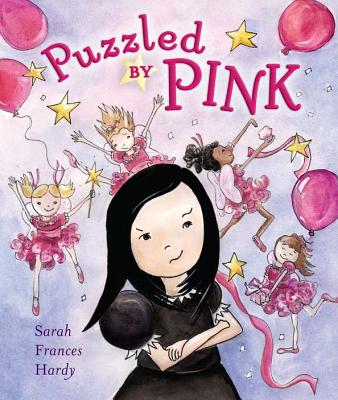
PUZZLED BY PINK is the story of what happens when Wednesday Addams meets Fancy Nancy, with whimsical watercolor illustrations that will delight little girls on both sides of the fence, whether they LOVE pink or just don’t get what the big fuss is all about.
Please welcome Sarah to the blog today! *throws confetti* *serves tea and orange-cranberry scones*
TD: Sarah, on this blog we like to talk about story ideas. Tell us, where did the inspiration for Izzie and her sister Rose come from?
SFH: The inspiration for Izzie came from my oldest daughter. When she was little, it seems like every book geared toward little girls was pink, pink, pink…and she just wasn’t into it. I wanted to write a book for girls who wanted to be girls, but they wanted to do it without having to wear pink-glittered fairy wings.
Rose, Izzie’s little sister, is inspired by my middle daughter who has always loved everything about being a girly-girl—from ballet to pink to tutus.
TD: So is your youngest daughter represented in the book?
SFH: Ha! She’s asked me that too, and I tell her that she is Jinx, the pet cat, who is actually the most fun character in the book. She’s thrilled.
TD: I’d love to be Jinx, too! Izzie a strong character who does her own thing even though it’s not popular. How do you hope young readers will relate to her?
SFH: Well, I think we’ve all had the experience of being excluded because we’re a little different or we’re not wearing the right thing. I hope kids will take away the message that you can be yourself, dress the way you want to, and still go to the party.
It takes courage to say you’re going to do your own thing and stick to your guns! But it’s always best to be true to yourself .
TD: So tell us a little about your journey to publication as an author-illustrator. We authors say it must be “easier” for an author-illustrator to break into the business, while author-illustrators may say it’s easier to wear just one hat. (I tend to think no matter how many hats you wear, it’s never easy! Especially if they’re sombreros and you can’t fit thru the doorway.) What do you think?
SFH: It is a sombrero! And the door feels like it’s tiny!
But I will say that it’s a little easier to get an agent if you are both an author/illustrator because you don’t have to split royalties, and there are more agents out there who are willing to represent you.
The downside is that you are giving editors TWO reasons to reject you, so I always tell people to be sure that their illustrations and text are equally strong.
My journey is fairly typical in that I spent years going to conferences and learning everything I could about the craft of writing and illustrating for children. I wrote some pretty terrible books, submitted them, and amassed a small mountain of rejection letters,
Finally, I came up with this character and concept, and I started getting a little interest. I signed with my amazing agent and worked on revisions for several months with her. In the summer of 2010, I sold my book to Viking Children’s Books.

TD: PUZZLED BY PINK is a great title many little girls (like my green-and-blue-loving one) can relate to. Was this your title from the start of the project?
SFH: No. It actually had the very boring title TEA PARTY at first. PUZZLED BY PINK actually emerged from a brainstorming session that I had when I was sending my manuscript out to agents. In earlier versions of the manuscript, my main character Izzie was an angry little girl—kind of a curmudgeon. I was talking about the book with a friend and I said “Izzie shouldn’t HATE pink…she just doesn’t get what the big deal is. She’s puzzled by pink.”
That phrase not only became the title but it helped me craft Izzie into a more likable character.
TD: Oh, I love that story! And I love how the title is all glittery pink on the cover, with Izzie giving a cute little smirk.
Your book has been described as “Wednesday Addams meets Fancy Nancy”. Wednesday is one of my all-time favorite TV characters. If she were to endorse your book, what do you think she’d say?
SFH: If she were to blurb my book, she’d probably say something like: “Finally! Someone who knows how to throw a decent party. I’ve found a kindred spirit in Izzie.”
 TD: And we’ve found a kindred spirit in you, Sarah! Thanks for sharing the behind-the-tea-party scenes with us.
And now…someone please pass the cucumber sandwiches!
Whoops, sorry…I mean, please comment to win a copy of PUZZLED BY PINK!
You get one entry for commenting and then one entry for every share on Twitter, Facebook, Pinterest, etc. Just mention it when you comment!
Comments will close at the end of April 25 with a winner announced on April 26.
Good luck!
Sarah Frances Hardy is an author-illustrator and fine artist living in Mississippi with her husband and three daughters (who are not named Izzie, Rose and Jinx). Visit her at sfhardy.com and connect with her “Picture This” blog…which features photos of a cool local window display (well, TWO displays) dedicated to her book!
 I am so absolutely thrilled that BOY + BOT releases today because I’ve been waiting for it for a long, long time.
It’s the debut picture book by my good friend, Ame Dyckman—and get this—it’s illustrated by the hugely talented Dan Yaccarino! I mean, this has got to be the best picture book EVER with an author-illustrator team just as lovable as Boy and Bot themselves.
And for this very special day, I’ve got prizes to give away! One AFFIRMATIVELY AWESOME prize pack including BOY + BOT, stickers, bookmarks, and an *exclusive* BOT keychain clip made by author-zoologist-educator-sculptor Jess Keating!
So let’s get on with the fun!
TL: Ame, you and I have been friends for a few years now, after meeting at NJ-SCBWI first page sessions. (I knew I had to get to know you, with your spiky pink hair and Lego bracelet.) Is that how you began your kidlit career, attending SCBWI events?
AD: *laughing* Was my hair pink back then? I don’t remember my hair color at the time (it’s blue, now), but I remember thinking, “Wow! This Tara person is funny and nice and she really knows her kidlit! I like her!” BAM! Friends!
And yes, attending SCBWI events–YAY, NJ-SCBWI!–started everything for me! When I first joined, I knew I wanted to write picture books, but I didn’t know how. My first manuscripts were REALLY bad, but nobody made fun of me. Everybody was helpful. (YOU taught me how to page a PB, remember? I still have your diagram!) I went to as many events as I could—First Page Sessions, Mentoring Workshops, Networking Dinners, Annual Conferences, etc. I learned tons—still do!—and met lots of amazing industry professionals and made lots of wonderful friends. At the 2009 NJ SCBWI Annual Conference, I pitched BOY + BOT to Super Agent Scott Treimel, and he said, “I love it! Let’s work together!”
TL: I distinctly remember the 2009 conference and a certain editor making goo-goo eyes at you during lunch…but he had read your manuscript and was bonkers over BOY + BOT. I thought to myself, GO AME! You could feel the buzz about that manuscript at the event. You were in deep conversation with several agents.
So we want to know—how did this beep-worthy book idea come about?
AD: The short answer: I love robots! (I used to doodle robots instead of doing my math homework. Even in college!) The long answer: I love robots and unusual friendship stories and mirror stories always make me laugh, so I hoped mine would make other people laugh, too.
TL: So BOY + BOT is your debut and it has something like 347 starred industry reviews! Are you thrilled or what?
AD: I’m SO happy, and really grateful for all the reviewer love. Here’s hoping the little Boys (and Girls!) and Bots that Dan and I made the book for love it, too!
TL: We’re chatting on the eve of your book’s release. Will you be able to sleep tonight? It’s a little like Christmas Eve, isn’t it?
AD: It feels like Christmas Eve and Birthday Eve and Leaving-for-Disney-World-Tomorrow Eve all smooshed together! I was up until 3:45 this morning because I was so excited already! (But, I think I’d better try to nap later today—I just searched the fridge and then the entire house looking for the bag of baby carrots, only to find I’d put them in the clothes dryer!)
 TL: How awesome was it to see Dan Yaccarino’s vision of your characters? Were they anything like you imagined?
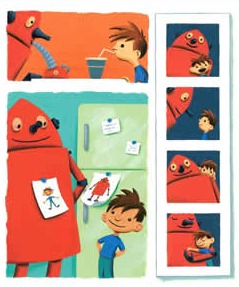
AD: Seeing Dan’s first sketches was the greatest! My family gathered around, we clicked “Open,” and then we all shouted, “Look! Bot’s… BIG! That’s BRILLIANT!” (Up until then, we’d envisioned Boy and Bot being the same small size! I dunno why!) But a small Boy and a big Bot is GENIUS! We could already see all the wonderful humor and affection Dan was putting into the characters, and knew his final artwork would be amazing. When it came in, I loved it SO MUCH, I hugged my computer!
TL: *insert clever segue to Dan here*
Howdy Dan, Mr. Keeno Yaccarino! Tell me, when you read Ame’s manuscript, it was love at first sight, right? Kind of like BOY + BOT themselves, right? RIGHT?! (Say “affirmative,” Dan.)
DY: AFFIRMATIVE.
TL: Ame said said when the illustrations came in, she was surprised to see BOT was a big bot and not a small one, like Boy. Why did you make the friends different sizes?
DY: Hmmm. I’m not sure. I guess it was the vision that formed in my mind when I read the manuscript.
There is rarely a logical reason why I do things visually. I listen to my impulse and trust my vision. If it feels right and is right for the book, then I do it.
Then perhaps I’ll rationalize it later.
TL: OK, would you care to rationalize why the inventor is bald?
DY: All inventors should be bald!
TL: *spittake* You’ve got a point there. Plus he reminds me of a lightbulb, so that’s very clever.
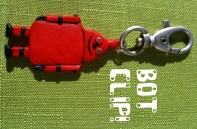 And here’s something else that’s clever—our contest to win the AFFIRMATIVELY AWESOME prize pack (book, Bot clip, stickers & bookmarks) PLUS there’s also TWO MORE copies of BOY + BOT to give away!
WOWZA!
Enter by telling us what you think Boy’s real name is. Ame says she’s always wondered about it. So let her know!
You get one entry for commenting and then one entry for every share on Twitter, Facebook, Pinterest, etc. Just mention it when you comment!
Have fun and good luck! Comments will close the end of April 20 and winners will be announced on April 21.
Some of you are probably hoping this is a post about tracking Ammi-Joan Paquette, the [amazing] agent with Erin Murphy Literary Agency. But it’s not. It’s about tracking Ammi-Joan Paquette, the author!
Yes, Joan (as she prefers to be called) made her kidlit debut with THE TIPTOE GUIDE TO TRACKING FAIRIES from Tanglewood Press. She has since released NOWHERE GIRL, a middle grade novel, and now, another TIPTOE GUIDE!
And what’s it about?
MERMAIDS!
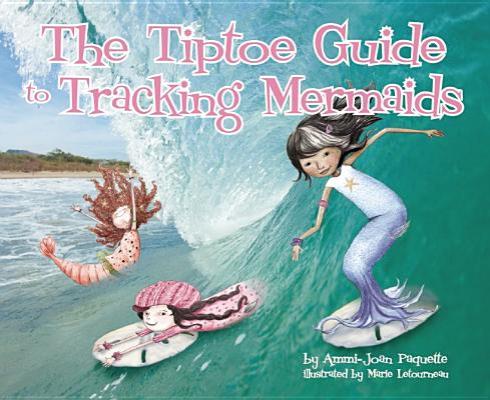
Who doesn’t love mermaids? They’re pretty, they have flowing manes of hair, they can breathe underwater, and they start name crazes like “Madison”. (OK, anyone under 30 isn’t going to understand that reference.)
TL: Joan, first fairies and now mermaids. Why do you think children are so fascinated with these creatures?
AJP: I think fairies and mermaids are two of the creatures which most fire the imagination—I was going to say “of the very young,” but actually, the appeal is open-ended! Perhaps because they feel just one step removed from reality, it’s easy to visualize them lurking just out of sight, right around the edges of perception. Who knows what might be possible, if you truly believe? For this reason, I don’t think our collective love for fairies or mermaids will ever wane—they’re just too likely.
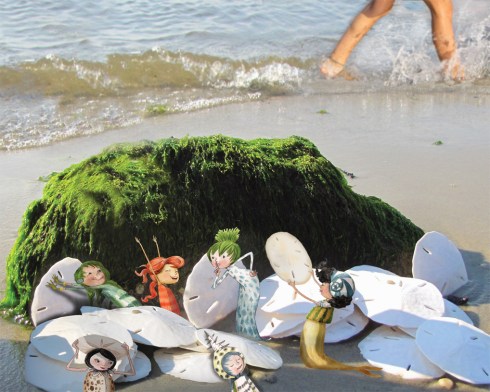
TL: Your TIPTOE GUIDES combine photographs with whimsical illustrations. Whose idea was it to combine these two styles?
AJP: The first book in this series was inspired by a nature walk/fairy tracking adventure I took with my daughters when they were young. As we walked, I took photos of our discoveries and wrote down a lot of ideas and notes, many of which (the notes, not the photos!) were incorporated into the final manuscript. So early on there were definitely photos in my head. As I polished the story into an actual manuscript and eventually sent it on submission, though, I really put the illustration side out of my mind—and once it was acquired as a picture book, I just assumed it would probably be illustrated with art. My wonderful editor, Peggy Tierney of Tanglewood Press, was the one who conceived of this combined artwork/photography medium. I couldn’t be more thrilled with Marie Letourneau’s finished products—they are even more gorgeous than I could ever have imagined!
TL: So your TIPTOE GUIDES are about finding a little more magic in the world. Why is this an important message?
AJP: I think a hopeful outlook is like a cherry on top of life’s sundae. There’s a childlike quality to expectancy, to being open to the possibility of more that can open some of the most amazing doors. Message? I don’t know. I just like the way it feels to me.
TL: Is there a third tiptoe guide in the works?
AJP: Not yet! But who knows what may lie ahead?
TL: Well, maybe our blog readers know!
So let’s have a contest to give away a signed copy of THE TIPTOE GUIDE TO TRACKING MERMAIDS! Our last drawing contest was such fun; let’s do another.
Parents, have your children draw the cover to what they think should be the NEXT TIPTOE GUIDE!
It can be a guide to anything. Tracking bonobos? Tracking robots? Tracking mud? OK, these are bad. But I just know YOU have an idea for something GREAT.
Send your illustration (one per child) to tarawrites (at) yahoo [dot] com by the close of April 15. I’ll pick a winner on April 16!
Have fun and good luck!
Yes, I’m from Jersey where “lotsa” is a word.
But enough formalities, let’s get on with the prizes!


The new blog subscriber winner of the three-picture-book prize pack is: ORTHODOXMOM3!
Congratulations! I’ll be sending you an email shortly!
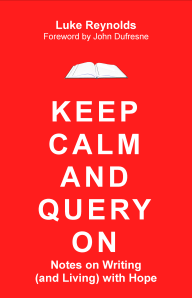 And now onto the KEEP CALM AND QUERY ON goodies from Ryan Gosling (aka Luke Reynolds)!
First, the winner of the signed book is: MARY ZISK!
Next, the winner of the query critique from Luke is: REBECCA COLBY!
Finally, the lucky person who gets a phone call pep publishing talk with Luke is: SUSAN G. CLARK!
Okay, ladies, try to KEEP CALM!
I’ll send you an email later today!
Congratulations to all! And remember…there’s more giveaways coming in April!
It’s Picture Book Palooza month!
(And obviously exclamation mark month, too.)
Thanks to everyone who visited Salina Yoon’s post about her newest and most challenging novelty book, KALEIDOSCOPE. The winner of the signed copy is:
 DONNA SHEPHERD!
Congratulations, Donna! Be on the lookout for an email from me…
Didn’t win? No worries. There’s more giveaways coming in the next two weeks. Yes, it’s a busy Spring over here! Here’s a sneaky peekie (what my five-year-old calls it):
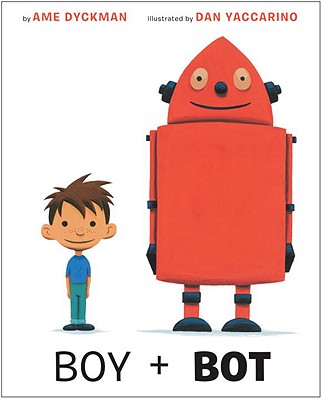
Ame Dyckman and Dan Yaccarino’s BOY + BOT
Sarah Frances Hardy’s PUZZLED BY PINK
Carolyn Crimi and Stephanie Buscema’s PUGS IN A BUG

Ammi-Joan Paquette & Marie Letourneau’s THE TIPTOE GUIDE TO TRACKING MERMAIDS

It’s a Picture Book Palooza!
Plus, don’t forget, if you’re not already subscribed to my blog via email, join today to be entered into a SEPARATE “new follower” three-picture-book-prize-pack giveaway on April 1st (EXTRA YARN, BOY + BOT, ARNIE THE DOUGHNUT). I’m not foolin’! Just enter your email address in the left column.
Me announce winner of ME WANT PET contest.
But first, if you a parent/caregiver/teacher with picture book kids, subscribe to blog (see left column). Me have more book contest soon. Comment on this post if you new subscriber and you can win THREE PICTURE BOOK PRIZE PACK (BOY + BOT, EXTRA YARN, ARNIE THE DOUGHNUT)! Me pick winner APRIL 1. THIS NO APRIL FOOL’S!
Now ME WANT PET winner.
It be Anna, age 9! ConBATulations!
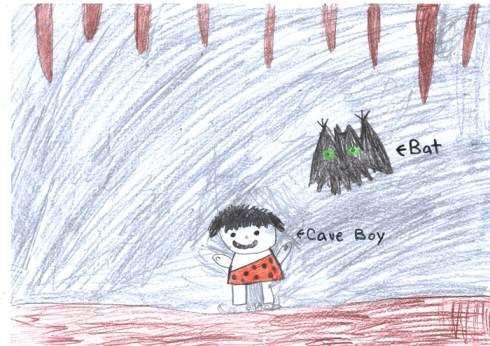
Now me show you more great pets!
Isaac, age 6:

This Kid Erik, age 10:

Josie, age 8:
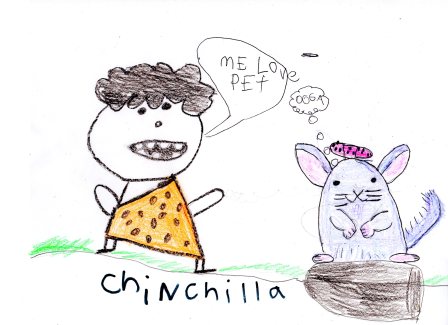
Jordan, age 6:

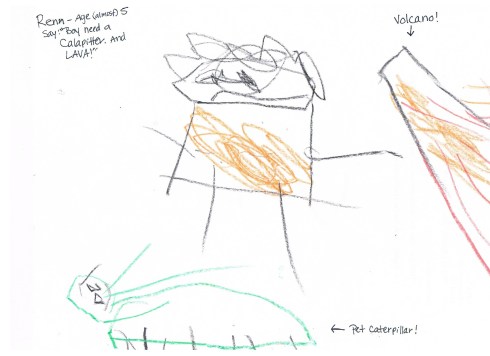
Renn, age 5:
Me and Tammi Sauer thank all kids who draw pets!
Maybe Tammi write SEQUEL!
OOGA!
One of the most frequently asked questions by new kidlit writers is “why do editors say not to write in rhyme?” There’s plenty of picture books written in rhyme, right? They get published somehow!
Well, the answer is a bit complicated. It’s not that editors don’t necessarily LIKE rhyme. It’s just that it is very difficult to do well. Here’s why:
- Rhyme scheme can dictate story–but shouldn’t. Tales should unfold organically, not be forced into the confines of the rhyme. Often it’s suggested to write in prose first—so you don’t get locked into a plot that doesn’t work—then translate it to rhyme.
- Common rhyme schemes can be stale. Editors see them again and again. Avoid overly simple, one-syllable rhyme schemes like go/show/know, to/you, me/be/she/he/see, run/fun/sun, day/may/way/say. If your reader can guess the word at the end of the line before they get there, your rhyme scheme may be too common. Editors want to read rhyme that surprises them.
- Forced rhyme or near-rhyme can ruin a story. This is when words don’t exactly rhyme unless you mispronounce them. Once in a while this is acceptable, but more than a few times in a manuscript and it distracts.
- The meter (or beat) must be spot-on. That doesn’t just mean the number of syllables in each line, but the emphasis on those syllables. Meter shouldn’t be so sing-songy and constant that it lulls the reader to sleep (unless maybe it’s a bedtime book) or so rough that it tongue-ties the reader and forces them to speak unnaturally. Some good rhyming books offer a break in the rhyme scheme for variety—not unlike a bridge in a song.
- Rhyming books are difficult to translate into other languages. An editor may not want to lose out on foreign book sales, so they’ll pass on a rhyming project.
However, if your heart is set on rhyme and if you have a talent for it, you should go for it. At first, Karma Wilson listened to the “don’t rhyme” advice.
“When I first started submitting some 15 years ago all the guidelines said, ‘No rhyme and no talking animals!’ For THREE years I avoided rhyme and talking animals. But guess what my first book sale was? BEAR SNORES ON! And guess what the guidelines said for McElderry books? NO RHYME AND NO TALKING ANIMALS! My passion is rhyme, and talking animals are great as long as they have something interesting to say.”
Yes, you can break the rules like Karma. But get your rhyme critiqued and know whether or not you can nail it.
Me, I’m terrible at rhyme and I know it. I cannot “hear” meter. I’ve tried and failed. My friends have coached me, but I still don’t get the right beat. I can’t dance to it. (I can’t dance anyway. Think Elaine from Seinfeld. Sweet fancy Moses!)
So what is successful rhyme? I’m glad you asked! I’ve got a few examples for you.
In HUSH, LITTLE DRAGON, Boni Ashburn spoofs the lullaby “Hush, Little Baby”. Instead of buying her baby a mockingbird, the mama dragon in the story brings her darling son various villagers to eat. It’s delightfully tongue-in-cheek. Some of the best lines:

Here she comes with a fresh magician.
Don’t mind the taste—he’s good nutrition.
…and later on…
If Mama finds a mean old queen,
Honey, you are lucky—that’s good cuisine!
Notice how these rhymes are out of the ordinary. They’re surprising and fun, plus the words have multiple syllables. She also rhymes “flee” with “fiery” and “bolt” with “revolt”. I challenge you to find these rhymes in another book! You won’t—and that is what makes this story so special.
Jean Reidy’s LIGHT UP THE NIGHT is an example of rhyme that elicits glorious illustrations. Remember that in picture books the art tells half the tale, and these lines create an expansive view of our world (click on image for larger version)…
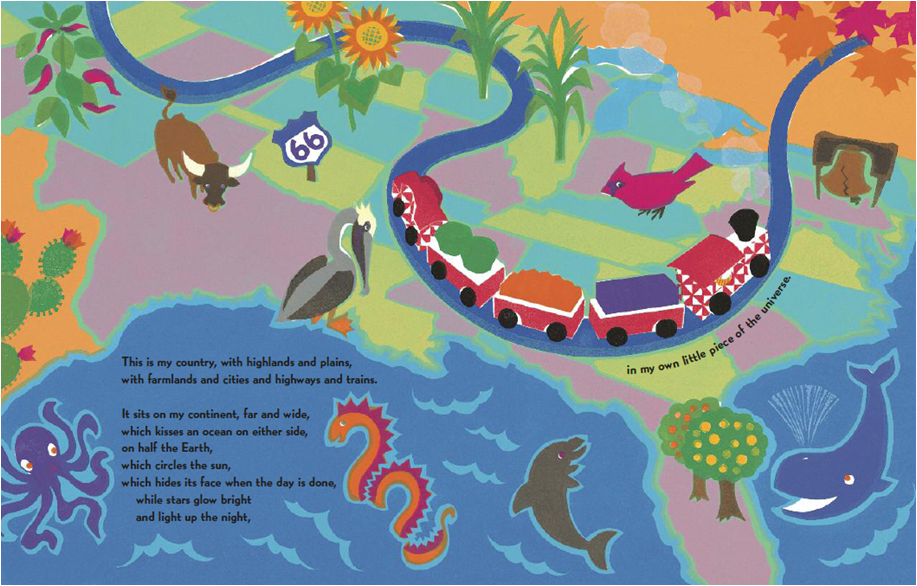
This is my country, with highlands and plains,
with farmlands and cities and highways and trains…
Notice how there is a break in the rhyme scheme at the end of the stanza—and that line is set apart in the illustration for emphasis. Coincidentally, Jean blogged today about her decision to write in rhyme. Go check it out!
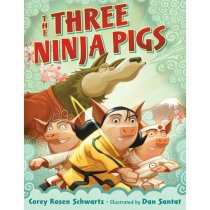 In Corey Rosen Schwartz’s THE THREE NINJA PIGS, the rhyme is infused with porcine puns. Kids and adults alike will appreciate the humor:
She then gave a swift demonstration
With backflips and butterfly kicks
The wolf looked quite shaken
but hollered, “Yo, Bacon!
I’m not at all scared of your tricks.”
There’s more great piggish laughs (like my favorite “pork-chop” line) but you’ll just have to wait until it’s released in September!
So I hope I’ve provided you with some background on why rhyming picture book manuscripts are a hard sell…but that if they’re done well, they can be spectacular.
What are some of your favorite rhyming picture books? Please share in the comments!
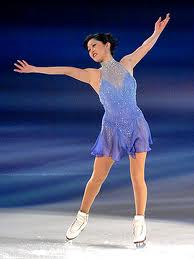 Before Michelle Kwan, before the whole Tonya Harding-Nancy Kerrigan scandal, there was a figure skater who exhibited that perfect balance of power and grace: Kristi Yamaguchi. She had the high jumps and fast spins, but she also had a style and effortless elegance no one else could match.
OK, so why am I gushing? I used to be a competitive figure skater, but no where near the level of Kristi Yamaguchi. She was a role model to me. So today I’m very pleased to share with you her new picture book, IT’S A BIG WORLD, LITTLE PIG! And yes, it’s about figure skating!
 First, let me introduce the main character, Poppy. Isn’t she cute? In her first book, she had the courage to DREAM BIG and chase after her goals.
Now, in the sequel, Poppy receives an invitation to Paris to compete in the International Games. She musters up her porcine prowess to travel far from home–with encouragement from her friends and family, of course.
When Poppy arrives in Paris, she’s overwhelmed. She doesn’t know anyone and doesn’t know where to go. But Poppy is great at making friends. She bumps into Li, a panda snowboarder. And Poppy finds out that even though they are from different countries, they “both smile in the same language.”
 According to John Sellers, children’s reviews editor for Publishers Weekly, “There’s certainly a need for books that portray, mirror and show the value in all kinds of families: same-sex families, mixed-race families, stepfamilies, families with grandparents as guardians.” I also believe that books should reflect the diversity in the world around children. In my own neighborhood, there are families from Brazil, India, the Czech Republic, Spain, Portugal, China, Taiwan, Denmark, and Mexico. So I was pleased to see that Yamaguchi’s book introduces readers to animal competitors from all over the world.
Tim Bowers illustrates with such adorableness (is that a word???), bright colors and a jovial quality. You can’t help but smile at the wonderful world he’s created.
IT’S A BIG WORLD, LITTLE PIG brings together many cool themes (besides ice): following your dreams, making friends, diversity, independence, and doing your best. And it’s all rolled up in a figure-skating package! What could be more perfect?
Well, I’ll tell you! One hundred percent of Kristi’s profits from IT’S A BIG WORLD, LITTLE PIG will benefit early childhood literacy programs supported by her Always Dream Foundation.
 Ooga!
Ooga!
Know Tammi Sauer? She write new book. She write good book. Bob Shea draw picture. It ME WANT PET!
(Me read to five-year-old class. They giggle. They snort. They LOVE!)
Cave Boy star. Cave Boy want pet.
He find pet. Mama say no. Gah!
He find new pet. Papa say no. Gah, ug!
He get new new pet. Gran say no.
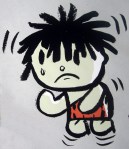 Cave Boy sad. Me sad. You sad!
What Cave Boy do?
Me no tell.
You read book. Ooga!
So…
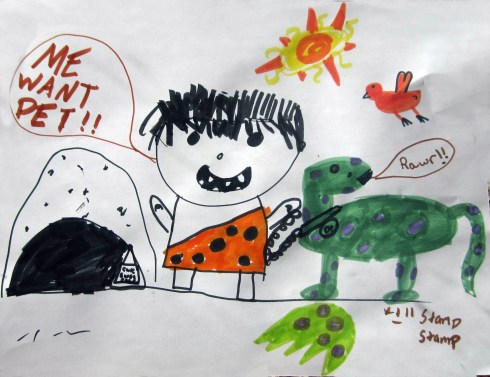
Daughters want draw. I ask, “What pet you want Cave Boy have?”
Daughter Eight draw dinosaur. Me say no. Too stompy.
Daughter Five draw giraffe. Me say no. Too tall. No fit cave.
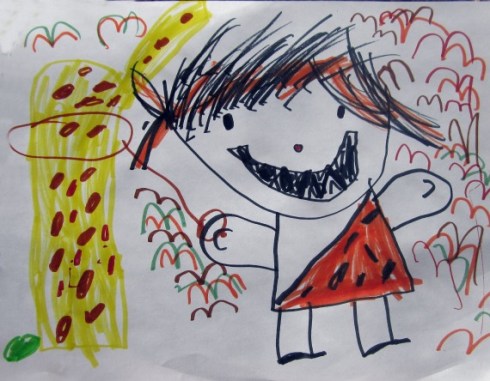
You have kid? Kid draw Cave Boy and new pet. Send to tarawrites (at) yahoo (dot) com by March 13. Me post here. Me pick pet. Kid win book.
OOGA!
Tammi Sauer author. She write many, many kid book. Book like CHICKEN DANCE and MOSTLY MONSTERLY and MR. DUCK MEANS BUSINESS. You visit her: TammiSauer.com. OOGA! (Ooga not book. Me like say OOGA!)





 Writing for Kids (While Raising Them)