You are currently browsing the category archive for the ‘PiBoIdMo 2014’ category.
 by
by “What process do you follow to write your stories?” I’ve heard that question more frequently as I’ve sold more picture books, and I never know how to answer.
The people asking usually look as if they’re waiting for a golden ticket to inspiration. Like maybe I’ll say that I always walk three times around my living room, stand on one foot, hum the “Star-Spangled Banner” and then run to the computer to start writing before the muse I’ve conjured flies away. Then, they can do the same thing and wait for their own inspiration to strike.
When I tell the truth—that I don’t have a specific writing process—they seem disappointed. But, trust me. I’m doing them a favor. If they knew how things really go down, they might give up writing altogether. I’m a little haphazard.
But, just for you, in honor of PiBoWriMo, I am pulling back the curtain and sharing my process, such as it is. Here’s how I wrote WIDE-AWAKE BEAR, which is coming from HarperCollins in 2017:
Step One:
Have a cranky child.
Three years ago, my youngest daughter was happily napping on the couch. When I woke her to take her to volleyball practice, she had a world-class meltdown. There was wailing, tears and shouting. I tossed her into the car and took her anyway. Afterward, when she was calm, I said, “What was THAT all about?” Her response? “I was a hibernating bear. You woke me up, and I went into a bear frenzy.” (Author’s note: Is that not the best response ever? I love this kid.)
Step Two:
Forget about that adorable incident.
I filed that wonderful remark under the category of “Cool Stuff My Kid Has Said” and went about my business. For several years.
Step Three:
Be bored on a plane.
On a plane ride home from Yellowstone Park, where I was disappointed I hadn’t seen a bear, I thought I should use the flying time to do something productive. So I grabbed a notepad and pen and wrote a story about a bear cub who wakes up in the middle of winter and goes into a bear frenzy.
Step Four:
Listen to your critique group say, “Meh.”
I shared this story with my critique group and got a lukewarm response. They thought the bear cub got too cranky and deserved a timeout. They also didn’t understand why he got so angry. So I adjusted and reworked the story over several weeks. The title changed, and the storyline morphed into a bear cub who woke up midwinter, got scared and couldn’t fall back asleep. I shared it with some more writing friends and adjusted it even more. Then, I stopped, because I didn’t know what else to do.
Step Five:
Let it sit on your desktop for a while.
I wasn’t sure the story was ready. So I worked on other things and didn’t think much about it.
Step Six:
Send it to your agent on a whim.
Then one day, I opened the file and thought, “This isn’t so bad.” (See how I just glow with self-confidence?) I sent it to my agent, hoping she might give me a few ideas so I could work on it some more. But she thought it was ready to go, sent it out and it sold in about three weeks. That’s my quickest sale ever.
So, there you have it. How to write and sell a picture book in six simple steps. You know just what to do now, right?
I told another writer about my lack of a process, and she said, “You do have a process. It’s organic!” And she is absolutely right, because I’ve never once used pesticides in any of my books.
If there’s anything to learn from my post, it’s that everyone’s process is different. As long as you find something that works for you, you’ll be fine. If you’re not seeing the results you want and feel like your process may be fault, try a few different things.
- Be haphazard—I mean organic—like me.
- Be super-organized like another writer I know who sets her timer for 45-minute chunks and logs her writing time on a chart posted on her office door.
- Try writing mornings or evenings to see if something works better. Try different locations, too.
- Try standing on one foot in your living room and humming the national anthem. (It could work.)
Chances are something will seem more appealing to you and you’ll be well on your way to finding your own inspiration.
To learn more about me, visit PatZietlowMiller.com or follow me on Twitter at @PatZMiller.
If you leave a comment on this post you could be one of two people to win one of two prizes—a signed copy of SOPHIE’S SQUASH (Schwartz & Wade, 2013) to be sent immediately or a signed copy of WHEREVER YOU GO to be sent once it’s released from Little, Brown on May 5, 2015. Each of these books followed a totally different process than WIDE-AWAKE BEAR. I meant it when I said my process was haphazard.


This prize will be given away at the conclusion of PiBoIdMo. You are eligible for this prize if:
- You have registered for PiBoIdMo.
- You have commented ONCE ONLY on today’s post.
- You have completed the PiBoIdMo challenge. (You will have to sign the PiBoIdMo Pledge at the end of the event.)
Good luck, everyone!
 by
by PiBoIdMo readers arrived today with packed suitcases, believing I had the inspirational ticket for guaranteed passage on the gleaming picture book express.
This is not that train.
Once upon a time I thought I had the golden ticket, but it turned out to be a day pass. Here’s the story.
By the time I was four, I wanted three things: a husband, a daughter, and a book that I wrote myself. I was sketchy about how to accomplish the first two, so I tackled the book. In purple crayon, a popcorn ball rolled through perilous adventures across our living room walls. My mother patiently explained that books belonged on paper, and my father wrote my story on a notepad as I recited it.
I kept writing (on paper) and eventually received a master’s degree in English. I had official jobs, but secretly I wrote picture books.
Then I found my husband, an elementary teacher who believed my stories were wonderful. He read them to his classes and asked students to draw their favorite part. He believed I had promise.
In a twist of fate, I met Florence Parry Heide, a successful children’s author who told me to join SCBW, long before they had added the I to their name. Early newsletters had pages of editors and addresses. I submitted manuscripts for almost seven years. When I complained about my rejections, Florence said, “Do you want to see mine? I have boxes of them.” So I kept trying. An editor finally called because she loved my story, but the project ended when a new publisher was hired. The editor told me not to stop writing, but I did. It seemed pointless.
Then we adopted our daughter Maggie from China. Her government document said: Baby found forsaking. I realized eleven months of her life would always be a blank page. When her first English word was moon, I imagined it had been the magic in her orphanage nights. Perhaps her favorite toys represented animals she had seen in China. I invented nap time tales about her adventures with them.
When Maggie was five, she asked what I had wanted to be when I grew up. I read her the manuscript that had come close to publication. She liked it and said, “You should write more, Mama.” How could I expect her to believe in dreams if I gave up on mine? So I put her on my lap and began to type a story called Sweet Moon Baby.
Rejections arrived, but Maggie’s faith in me never wavered. In second grade, she wrote to me as Editor at Clark House Printing and Loving Company. Not only did she love Sweet Moon Baby, she asked if I had others as “wonderful and enchanting.”

Then one day I received the long-awaited yes I had waited for almost my entire life. Sweet Moon Baby: An Adoption Tale, illustrated by Patrice Barton, was published by Knopf in 2010.
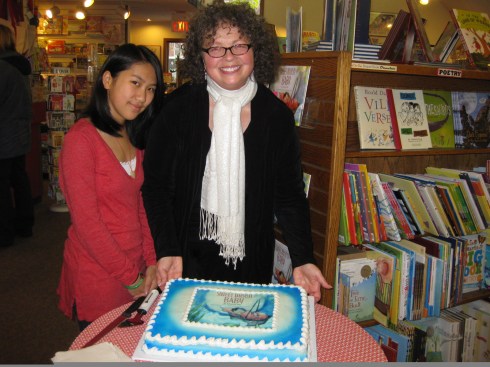
The three-point dream of my four-year-old self came true. Entering the Random House Lobby to visit my editor was my Homecoming Queen moment. At author events when parents announced: “This is our Sweet Moon Baby,” I was proud to have given a lovely name to adopted Chinese children.
But things change. Now my book is out of print. None of my other manuscripts have worked for an editor. My agent search is unsuccessful. I’ve derailed at the station. My engine flew over the edge, crashed at the bottom of the canyon, and someone spray-painted loser on my caboose.
Still, I can’t quit. And for that I thank my mother and the picture books she read to me constantly. Because she grew up on a farm with no electricity or running water, she favored stories about hard work. Wispy princesses and their vain wishes did not interest her. The Little Engine that Could was her favorite. Through chores, we chanted: “I think I can. I think I can. I think I can.”
My mother (and Watty Piper) gave me the metaphor for my life.
Determined little engine that I was, my first story was about a journey.
Sweet Moon Baby was about a journey.
What I’ve come to understand is that success requires more than writing a great story. You have to understand your writing journey. Whether you’re published or not, your writing can derail. Sometimes you land in the canyon, but you can write down there, too. I am.
My adventure is mine, stop by stop. And that’s not failure. It’s just my track.
Karen Henry Clark has been a high school teacher, college administrator, advertising copywriter, newspaper essayist, and book reviewer. Earning ISBN 978-0-375-95709-3 for Sweet Moon Baby: An Adoption Tale was her proudest professional achievement. She chugs on, hoping to earn another one. Meanwhile, she blogs erratically (but with good intentions) on “For All I Can Tell” at www.karenhenryclark.com.
Karen is generously giving away a signed copy of SWEET MOON BABY.

This prize will be given away at the conclusion of PiBoIdMo. You are eligible for this prize if:
- You have registered for PiBoIdMo.
- You have commented ONCE ONLY on today’s post.
- You have completed the PiBoIdMo challenge. (You will have to sign the PiBoIdMo Pledge at the end of the event.)
Good luck, everyone!
 by
by Hello, everyone!
CONGRATULATIONS on tackling PIBOIDMO. You are awesome!
Doesn’t it feel amazing to know that some of the ideas you cook up this month may become real, solid books in the hands of real kids someday? Yes, that’s going to happen. It WILL. But before that happens, a few steps have to take place. And one of those first steps, for some of us, will be to take a close look at how we manage our time.
Specifically, our writing time.
First off, I would like to encourage everyone to stick with your PIBOIDMO momentum not only this month, but beyond. Maybe you won’t come up with a picture book idea every single day forever, but you know what? When you sit down to write, you will write something. And any “something” has a better chance of becoming a book than a “nothing.”
That being said: This is as good a time as any to evaluate your writing goals for the remainder of the year and for next year. Want to get published? If so, those goals MUST include making time for writing. Consistently.
Think of it this way. If you ever—for some crazy reason—wanted to run a marathon, would you only train a few hours on the weekends? Or the few times a year you find yourself alone in the house with quiet time? No, you would not. You would train and train and train, every day, no matter what, in “Rocky”-like montages of rain and snow and stairs and fists pumping in the air. You can do that. You can channel your inner-Rocky and do your victory dance at the top of the staircase of your public library, because YOU have the power of imagination AND the discipline of a dedicated writer!!
Let’s lace up your sneakers, tape up those knuckles, head to a meat packing plant to punch some sides of beef, and think about a few things, shall we?
- Are you where you want to be?
- Does your family know you are serious about writing?
- Are you wasting time waiting until you have that extra room cleared out and your writer’s desk set up? Are you waiting until the holidays are over or work settles down or the kids grow up? Are you being non-Rocky-ish?
- Do you make time for your craft and guard that time? Or do you feel guilty for taking time to write, as though writing is a secret, indulgent hobby that you should only do from 2 a.m. to 3 a.m. so that you don’t dare deprive anyone else of something THEY might need?\
“No, Kelly, I do not make time for my craft. My family/job/life is too stressed right now. If you knew what a big deal it was for me to commit to ONE MONTH of writing, you’d be awed.”
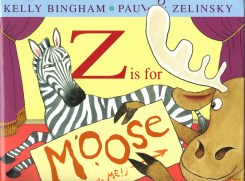
I hear you. I do. I’ve been there, too. I wrote Z IS FOR MOOSE while working full time, raising two babies, and completing a master’s degree. I had excuses a-plenty. But the thing is, I wanted to write, and I wanted to be published, really, really bad.
So: If you feel yourself putting writing last—due to external or internal pressure, guilt, mixed messages, embarrassment, misconceptions, or whatever—then I would encourage you to think about that. Again, it comes back to: Do you want to be published? Yes? Well, then. How do you think that will happen if you are unwilling to inconvenience anyone else in order to write for a few minutes a day?
No one scoffs at a pianist who practices hours a day. No one rolls their eyes when a doctor-in-training goes to yet another conference. Right?
Writing is a job. It’s a profession. It matters. So take it out of the closet, stop worrying about whether or not it’s selfish, silly, private, or whatever, and just DO IT.
Inspiration will only take you so far. Great ideas will sit in your folder if you only look at them every other Thursday. If you have a desire to be a published writer, then make a commitment. It doesn’t have to be huge. Try ten minutes a day to start. Just stick with those ten minutes a day. Take the energy of this month and keep it going. Take your writing time and guard it, protect it, and utilize it. You deserve it. Making time to write—even if it’s ten minutes a day—is the straightest path to writerly growth, skill, and publication.
[cue Rocky music.]
Now, let’s make magic!
I’ve been invited to share a tip on inspiration. I’d like to talk about one of my favorite exercises that I use for working through hard spots. It’s particularly helpful with the “what do I do with this snippet of an amazing idea?” syndrome.
It is the simple act of Brainstorming. It requires you to relax, open yourself to possibilities, and put aside your inner censor. Sound fun?
I don’t need to tell you where to find inspiration. You see it in your family, your pets, your garden, your daily life. You hear it in conversations between strangers. You read it in the news, see it on TV, or hear it in song. Ideas are everywhere, and once you begin collecting them, you’ll find an abundance. The universe provides. All we have to do is listen.
But what do you DO with those ideas? For me, this is the problem. This is where I often lose the flush of inspiration—when faced with the challenge of bringing those ideas to life. This is where brainstorming comes in.
DIRECTIONS:
- Take your exciting snippet of an idea (a girl encounters a magic zebra, for instance) OR your character (a pink polar bear who feels he does not fit in). Write it down.
- What happens next? Now list at least three ideas for what happens next. Nothing is too silly. Nothing is too dumb. Pull crazy solutions out of thin air. (The polar bear meets a purple penguin who invites him to Rainbow Island.) Write it down. You will create a list of possibilities—some of them a bit unexciting, some of them wonderful, and some in-between.
- When you run dry on “what happens next,” then choose one of your strung-together storylines. Ask yourself, “What is the most expected way to finish this off?” (The bear discovers that it’s okay to be pink, and lives happily on Rainbow Island with all the other multi-colored animals.) Go ahead, write that down. Then ask, “What is something surprising that could happen here?” (The bear eats the penguin and turns purple, which he decides is even worse than pink.) Write that down.
- Look at what you have. You have one predictable path that you have thoughtfully laid out for yourself to avoid. No one is looking for predictable endings, after all. But you’ve also paved the way for more creative, surprising, and interesting developments for your story and character.
Take these varied ideas and begin developing one or two of them in simple thoughts, simple sentences. Just a few sentences, that’s all—no pressure to pound out an entire manuscript. In no time, you will have a whole MENU of magical zebra story possibilities. And that’s all you’re looking for during this exercise: Possibilities.
When the right combination hits you, you will know. You will start tacking on one additional thought after the other, after the other. And from there, you can lift your exercise into a whole separate folder and officially begin poking, shaping, and drafting a full-fledged manuscript.
If that particular phrasing doesn’t work for you, try this:
“My main character is___________, and she wants __________ but the problem is, __________.” Fill in the blanks.
Then below that, write: “How can my main character get what she wants?”
Relax. Brainstorm. Fill in those blanks over and over, in whatever way calls to you. Again—nothing is to be censored or dismissed. When you are done, you should have at least one combination of answers that grabs your imagination and has you to jotting down ideas.
Jotting down ideas leads to more ideas, which leads to stringing actual sentences together. And that leads—to a manuscript!
But we aren’t thinking that far ahead in this exercise. We are just playing. Shadow boxing. Jogging. Training day by day. So play, explore, create IDEAS. We can do that, because we’re open to possibilities, this particular month more than ever. Right?
Besides: we are writers.
So naturally, we write.
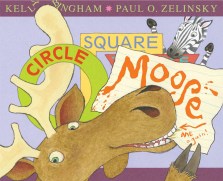
Kelly Bingham was a professional storyboard artist, supervisor, and director for Walt Disney Feature Animation for 12 years. She worked on movies such as The Hunchback of Notre Dame, Hercules, Tarzan, and Atlantis. She earned her MFA at Vermont College and has been writing full time ever since. She is the author of two novels: SHARK GIRL and FORMERLY SHARK GIRL, and two picture books; Z IS FOR MOOSE, and CIRCLE, SQUARE, MOOSE, both of which are illustrated by Caldecott-award-winning Paul O. Zelinsky, who is super nice and wonderful and you should go check out his website and twitter account right NOW. Z IS FOR MOOSE has been nominated for several state book awards, as has SHARK GIRL. Kelly regularly hums the theme song to “Rocky” while huffing along the treadmill at the gym, and also while tackling sticky plot issues. One of her proudest possessions is a recent photo with “The Naked Cowboy” from New York City. She lives in Georgia with her sons and husband and a passle of deer and bears. Visit her at KellyBinghamBooks.com on Twitter @kellybingham1 and @MooseThatsMe and Facebook Author Kelly Bingham.
Kelly is donating one picture book critique, to be used at any time within the next 12 months.
This prize will be given away at the conclusion of PiBoIdMo. You are eligible for this prize if:
- You have registered for PiBoIdMo.
- You have commented ONCE ONLY on today’s post.
- You have completed the PiBoIdMo challenge. (You will have to sign the PiBoIdMo Pledge at the end of the event.)
Good luck, everyone!
 by
by Reclaiming:
Your sister/mother/father/cousin is the artist. Your drawing is terrible. You’re hopeless at art. These are the things that you may have heard. Especially when you were a child. Voices that you’ve carried along allowing an important part of you to be silenced.
In some ways, as children’s book creative, our jobs are about accessing that child-like place of curiosity, wonder, and joy. That part that can spend solid time squatting in dirt watching a worm wiggle around in the earth and then reach out and touch it.
Making art is a bit like that. Mucking around in sometimes yucky materials, seeing what will happen if you add a touch of ochre to that blue with some titan buff instead of titanium white. Suddenly your sea is more sea like. Suddenly the endorphins are flowing and you’re in that place of child-like wonder wandering around in the right side of your brain where emotion and intuition hang out. After a while you consciously or unconsciously remember these experiments and how when you do this that happens and the colors, patterns, shapes, compositions you like, become ingrained as habit and begin to develop into your personal visual vocabulary or style. In many ways, it’s like driving a car. Alien at first then effortless after a while. If you do this, that happens. But unlike driving a car, artists are always evolving, trying new moves, new materials, new styles and new combinations. Playing in the dirt.
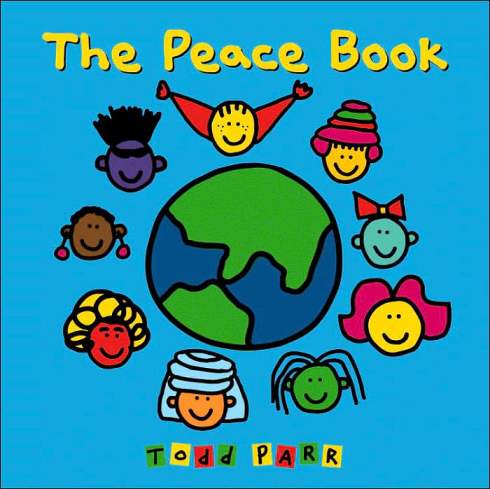
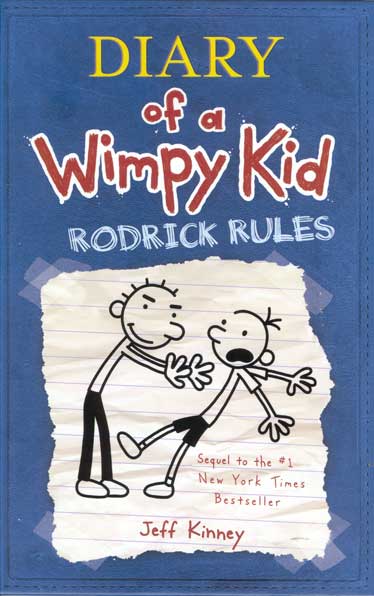
Playful illustrators whose style epitomizes that child-like delight with a more child-like style include the Diary of a Wimpy Kid books by Jeff Kinney, Naked and I’m Bored by Debbie Ohi, Mo Willem’s Pigeon books, Lauren Child’s books, and Todd Parr and Lucy Cousins wildly successful work that kids often look at and go “I could do that!”

These days, like never before, publishers want author/illustrators. These days publishers are also embracing artwork that may not be technically perfect but whose spirit and originality is totally, playfully, perfect!
Revitalizing:
While realism will always be greatly valued in the exquisite works of artists like John Muth, David Weisner, Julie Downing, E.B. Lewis and many others, there is a new embrace and desire for wild, spontaneous, fresh looking art that mixes it up. Try combining different materials with collage, try standing up and using your whole body to draw with freedom, or try creating loose ink or charcoal drawings like Chris Raschka does. Try playing with new materials that you’ve never used before so that you are more willing to be a child learning new things without judgment, experimenting in the dirt. Watch that worm wriggle. Then gently reach out and touch it.
Years ago Pablo Picasso said, “Every child is an artist. The problem is how to remain an artist once we grow up.” In the 1960’s Buckminster Fuller wrote, “Everyone is born a genius, but the process of living de-genius’s them.” Who’s ready to reclaim or revitalize their inner artist, childlike joy and visual genius? Take a walk on the wild side.
Mira Reisberg is the Director and founding instructor of the Children’s Book Academy. She has been involved in the children’s book industry since early 1988 as an illustrator, writer, editor, and art director as well as working as a kid lit university professor. Over the years she has taught many now successful children’s book writers and illustrators.
Starting November 3rd, Mira will be co-teaching the Craft and Business of Illustrating Children’s Books with Chronicle Books’ Design Director and Art Director extraordinaire for fearful beginning artists, multi-published illustrators, and adventurous writers. Find out more here.
 by
by Are you ready to jump in? Do you have a few picture book ideas you’ve been keeping secret so you can write them down today and count them? Now for some more…
Start an ongoing list of things you adore or loathe or laughed out loud at or evoked some kind of emotion that stuck with you. Is there a tradition or memory from childhood that comes to mind? What about that time your friend got in trouble for something silly? Write down that funny thing your grandchild or pet did that you keep telling everyone about. It could even be a ridiculous incident your cousin’s yoga instructor mentioned in a Facebook post that you’re still laughing about.
For example, my adorable 2-year-old girl in pigtails walked up to some older kids on the playground and growled in their faces so they’d move and she could play on the slide by herself. I then explained to her that we don’t growl at people. We aren’t bears or monsters. I wrote that down as a picture book idea. But it’s not really a whole picture book, and having Mommy step in to fix the problem is a big no-no in picture books. I can use that real-life experience as a starting point for a character whose personality doesn’t match her appearance, and then make it a better story.
Don’t be afraid to change the way something happened. Writing fiction is lying in a good way. Sometimes we get so stuck on basing our manuscript on a real-life experience or a sweet person or animal we love, that we’re preventing our manuscript from becoming a fully realized, great book.
I illustrated a picture book written by Danielle Steel that just came out this week called PRETTY MINNIE IN PARIS. (Cue the celebratory chocolate lava cake!) This book is based on Danielle’s own teacup-size Chihuahua named Minnie. Did Danielle write Minnie true-to-life? Nope!
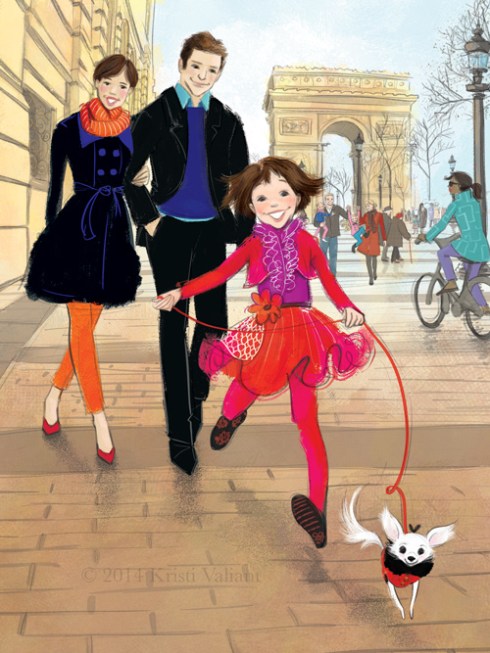
In the book, Minnie loves being out and about in Paris, but Danielle’s real pet Minnie is squeamish about touching sidewalks or even being set down outside. In the book, Minnie is a fashionable pup with an outfit for every occasion, but when I visited Danielle and the real Minnie in Paris last year, Danielle had a blast dressing Minnie up for me, but Minnie was mortified! She is not a fan of doggie clothes. Minnie has even rolled on her back and refused to get up when Danielle dressed her in a snowsuit before. That one tidbit made it into the book, but the rest of the book is mostly made up.
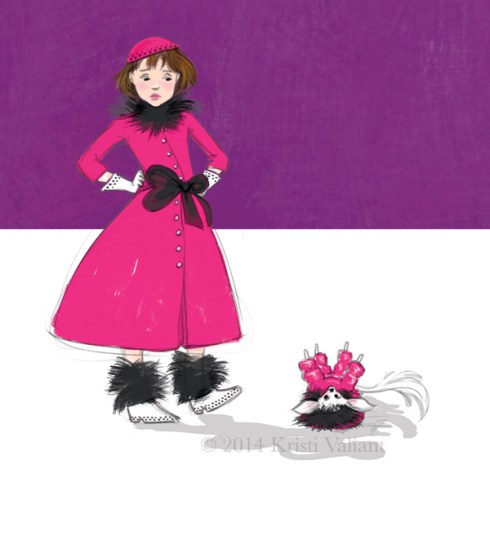
If you’re basing a story on real people or animals in your life, you may have a tendency to try to protect them in your story or to make them too perfect. I have a sketch dummy ready to submit that’s based on my husband and daughters and a chasing game we play. I have to admit it was a bit hard to make my little girl shed tears in that story. I had to keep telling myself it’s not really her. Don’t go easy on your characters. They aren’t your real kids or pets.
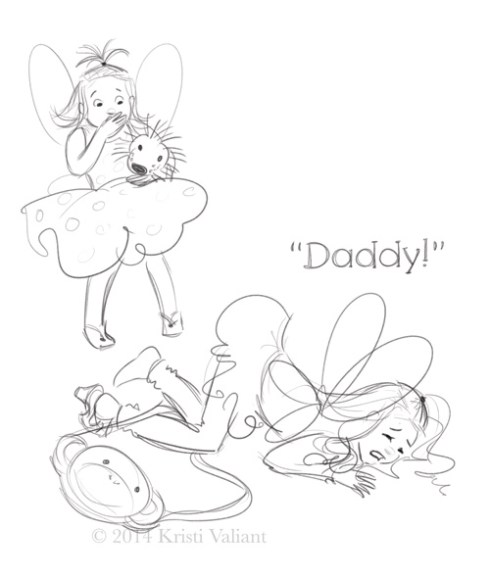
To sum it up, be inspired by real-life incidents, people, and animals, but then ask, “What would make this an even better story?” That’s where the fun starts.
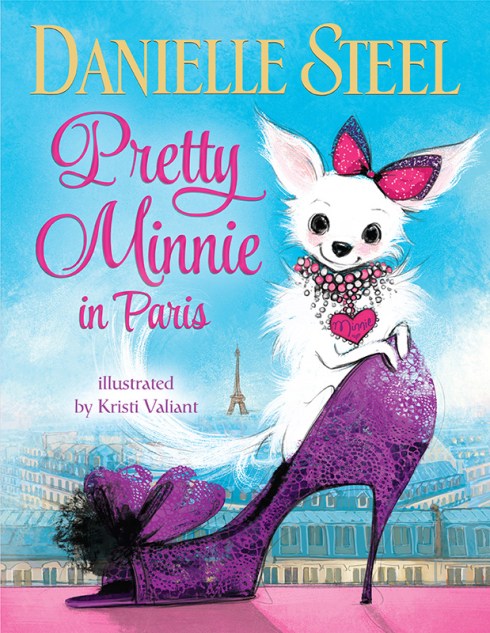
Kristi wrote and illustrated the picture book PENGUIN CHA-CHA and illustrated Danielle Steel’s picture book, PRETTY MINNIE IN PARIS, as well as the Little Wings chapter book series, THE GOODBYE CANCER GARDEN, CORA COOKS PANCIT, and others. Her books received a Starred Review from School Library Journal and won some shiny awards. Kristi graduated magna cum laude from Columbus College of Art & Design with a major in Illustration. She grew up in Wisconsin, studied in Ohio, danced in Texas, taught in China, and now lives in Indiana with her husband, daughters, and a room full of hippos, monkeys and sneaky penguins.
Visit Kristi online at KristiValiant.com or on Facebook at http://www.facebook.com/kvaliant.
PRETTY MINNIE IN PARIS has its own website (http://www.randomhousekids.com/brand/pretty-minnie) with a look inside the book, Minnie’s map of Paris, and a paper dog activity in which you can print out Minnie and dress her up in lovely outfits. Oh la la!
Kristi Valiant will sign a copy of PRETTY MINNIE IN PARIS for a lucky winner!
This prize will be given away at the conclusion of PiBoIdMo. You are eligible for this prize if:
- You have registered for PiBoIdMo.
- You have commented ONCE ONLY on today’s post.
- You have completed the PiBoIdMo challenge. (You will have to sign the PiBoIdMo Pledge at the end of the event.)
Good luck, everyone!
 by
by I am the founder of Picture Book Month and it starts tomorrow, November 1. The website, PictureBookMonth.com, features essays from thought leaders in the children’s literature community. Each day in November, a new essay is posted. This year’s Picture Book Month Champions are: Chris Barton, Aaron Becker, Kelly Bingham , Sophie Blackall, Arree Chung, Anna Dewdney, Johnette Downing, Ame Dyckman, Jill Esbaum, Carolyn Flores, Lupe Ruiz-Flores, Robin Preiss Glasser, Deborah Heiligman, Marla Frazee, Stefan Jolet, Kathleen Krull, Rene Colato Lainez, Loreen Leedy, Betsy Lewin, Ted Lewin, Brian Lies, Kelly J. Light, Debbie Ridpath Ohi, Alexis O’Neill, Sandra Markle, Ann Whitford Paul, Aaron Reynolds, Judy Schachner, Linda Joy Singleton, and David Schwartz. Please join the celebration!

As you prepare for PiBoIdMo, think about the titles of your picture books. In a recent interview for California Kids! magazine, Patricia Newman asked me, “How do you come up with titles for your books?” This started me thinking in depth about picture book titles. What’s in a title? How important is a title to a book? Can a book be centered around its title?
As it turns out, titles are vital to a book’s success. Author Scott Westerfield says, “Titles name a book, and names are important. A good name can make or break you.”
Brandi Reissenweber of Gotham Writers “Ask the Writer” column says, “A title is a story’s first impression. People make a first impression with appearance, wardrobe, and body language. Stories do it with a title.”
Eric Ode says, “Dan, the Taxi Man began as nothing more than a title. And one of the books I have coming out next year began as a title.”
PiBoIdMo founder and picture book author Tara Lazar says, “Most of my books begin as titles. It’s just the way my mind works. I want a BAM! concept, something that really hits you, and I find that people get HIT best with a succinct, powerful title.”
Corey Rosen Schwartz says, “I have written several books around titles! Like Tara [Lazar], most of my books begin that way. Goldi Rocks and the Three Bears, for example, was just a title on my PiBoIdMo 2009 list.”
Character-Based Titles
Many picture books have character-driven titles. The character of the book IS the title. Do you have a book character that is so compelling that the character’s name should be the book’s title? Here are some examples:
- Olivia by Ian Falconer
- Splat the Cat by Rob Scotton
- Flat Stanley by Jeff Brown
- Amelia Bedelia by Peggy Parish
- Biscuit by Alyssa Satin Capucilli
- Fancy Nancy by Jane O’Connor

Clever, Punny Titles
I am a big fan of clever, punny titles. In fact, several of my books have punny titles. Here are some examples that are just too clever for words… almost.
- Crankenstein by Samantha Berger
- The Monstore by Tara Lazar
- Little Red Hot by Eric Kimmel
- Pinkalicious by Victoria Kann
- Epossumondas by Colleen Salley

Verbose Titles
I am generally a fan of the “less is more” title for a book but sometimes, a garrulous title is EXACTLY what the book calls for. Can you imagine these books with a short title?
- Alexander and the Terrible, Horrible, No Good, Very Bad Day by Judith Viorst
- Don’t Let the Pigeon Drive the Bus by Mo Willems
- How Do Dinosaurs Say I Love You? by Jane Yolen
- There Was an Old Lady Who Swallowed a Fly by Simms Taback (a folktale retelling)
- The Fantastic Flying Books of Morris Lessmore by William Joyce

Plot-Based Titles
Some titles beckon you to open the book. These titles are based around the book’s plot. Yes, as short as a picture book is, it can still have a plot. In fact, these picture book plots were so inspiring that they were turned into Hollywood blockbuster movies!
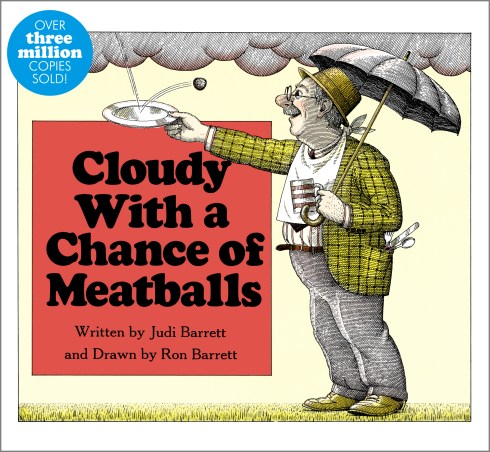
- Cloudy with a Chance of Meatballs by Judi Barrett
- A Night at the Museum by Milan Trenc
- The Story of Ferdinand by Munro Leaf
- We’re Back! A Dinosaur’s Story by Hudson Talbott
- Where the Wild Things Are by Maurice Sendak
Single-Word Titles
A picture book title can also be short and succinct, even one-word. These acclaimed picture books prove that a word is worth a thousand pictures.
- Green by Laura Vaccaro Seeger
- Blackout by John Rocco
- Ninja! by Arree Chung
- Carnivores by Aaron Reynolds
- Hug by Jez Alborough

Aaron Zenz says, “Hiccupotamus started with the title. I really wouldn’t have had any desire to write a book about a bunch of jungle animals chasing around a disruptive hippo if not for the title. In my mind, the pun ‘Hiccupotamus’ is the most important thing about that particular book.”
As you create and engage your imagination this month, think about your picture book’s title. In what way can an engaging title enhance your picture book? How can you use the title to attract readers? Perhaps you can be the Author with the Terrific, Tremendous, Oh-So-Grand, Very Remarkable Title.
As you celebrate PiBoIdMo and Picture Book Month, read LOTS of picture books. Comment below and share with us your favorite picture book titles and why you think they are so splendiferous. Here’s to Picture Books! Read * Share * Celebrate!
Dianne de Las Casas is an award-winning author, storyteller, and founder of Picture Book Month. Her performances, dubbed “revved-up storytelling” are full of energetic audience participation. The author of 24 books, Dianne is the International Reading Association LEADER 2014 Poet Laureate, and the 2014 recipient of the Ann Martin Book Mark award. Her children’s titles include The Cajun Cornbread Boy, There’s a Dragon in the Library, The Little “Read” Hen, The House That Santa Built, and Cinderellaphant. Visit her website at diannedelascasas.com. Visit Picture Book Month at PictureBookMonth.com. Twitter & Instagram: @AuthorDianneDLC Picture Book Month Twitter: @PictureBkMonth Facebook: fanofdianne and PictureBookMonth. Dianne is the proud mom of 14-year-old culinary celebrity, Kid Chef Eliana.
 by
by It’s day [whatever] of PiBoIdMo when it finally happens . . . you run out of ideas.
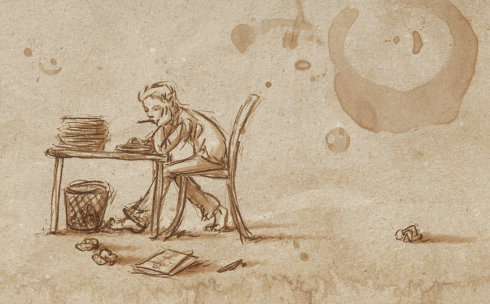
The blank page. It mocks you. And you’re panicked, because you’ve already plundered every cute/amusing thing your kids/pets have ever done, looking for inspiration. You’ve already turned your own experiences into rollicking, rhythmic (but never rhyming!) texts. You’ve perhaps even transformed Buzzfeed videos about unexpected animal friendships into whimsical odes to human emotions.
So now what? Well, now comes inspiration in the form of one of my favorite quotations:
“The real voyage of discovery consists not in seeking new landscapes, but in having new eyes.” —Marcel Proust
Even though this quote is nearly 100 years old, it’s meaningful, especially for a writer. In fact, Proust probably made this observation because as an author himself, he knew well that reaching past one’s initial, obvious, or cliched ideas to a place of true, fresh, personal creativity is among a writer’s greatest challenges—and greatest triumphs, when achieved. So, in Proust’s spirit, here are 5 tips to train your eyes, make new discoveries, and ultimately shape your words as a writer.
- Warm up your vision. Take one of your favorite ideas from a previous day’s writing and spin it into something fresh and new by changing one key element—like the point of view, the setting, or even a character’s identity. Switch the narrative voice from first person to third person, or turn from a contemporary setting to one that’s exotic or faraway or historical or fantastical. You can even turn human characters into animals and vice versa, or swap who the reader will see as the story’s hero/villain. And since the shape of your story was already established in your earlier creation (whether it was a full manuscript or just a simple outline), you’re temporarily free from thinking about plot and can instead play with transformation-enhancing details of voice and language. You may even realize that you enjoy the resulting version of the story more than your original! (An aside—one of my favorite books on writing covers similar ground: exploring how shifts in perspective can spark your creativity: check out 99 Ways to Tell a Story by Matt Madden.)
- Train your new eyes in real life. For one week, outlaw yourself from taking even a single photo. Every time you reach for your phone or other device to take a photo, force yourself instead to capture the moment differently, using only words! At the end of the week, select your favorite of these moments-turned-into-words on Facebook or Instagram and ask your friends and family if they can “see” the moment through your words alone. (If you like, snap a photo of your screen or notepad for more effective/visual social sharing.)
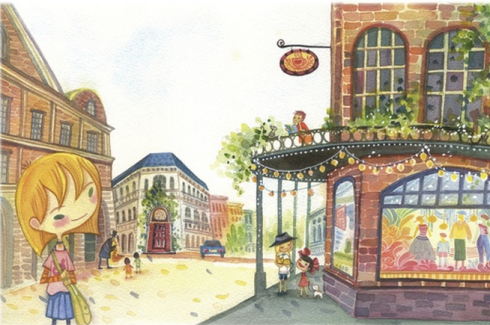
- Watch for details that make you ask “why.” Stories don’t always arrive in your mind, fully-imagined. Often, they start with a simple-but-intriguing image or detail, and the author’s curiosity to explore the story behind it. So study everyday life for places where paradoxes happen and tensions meet—for moments are memorable and yet unexpected at the same time. If you’re writing a humorous story, these details can sometimes add a layer of ridiculousness or absurdity that picture book readers will delight in. But more importantly, they make readers ask “why” enough to keep on turning pages. For example, imagine: Best friends who are suddenly not speaking, and no one knows why. A castle with a doorway that’s too small for any of its inhabitants to walk through. An abandoned home with a gift-wrapped package waiting at the door. With any of these jumping-off points or thousands of others like them, you can often reveal an interesting story to yourself (and your future readers) if you ask enough whys or what-ifs.
- Reverse the story-making process with visual storytelling. Many writers are accustomed to thinking that text always precedes art. But exercises in visual storytelling can engage your creativity in entirely different ways—making art an integral part of your creative process. To try this type of hybrid creativity, explore Storybird, which houses a curated collection of high-quality, original art and offers free and simple creative tools for authors. Simply select an image that catches your eye, and then use the art to enable your writing in one of countless ways—it can help spark or inspires story ideas; help you “unlock” or puzzle your way through a story, offering visual clues and perspective to offset your own imagination and talent with words; or simply enhance a story you’ve already been imagining. You can keep a story private, and share the link only with those you choose (like critique partners or friends/family); or you can add your stories into Storybird’s public library to get swift feedback from millions of young readers worldwide who use the platform.
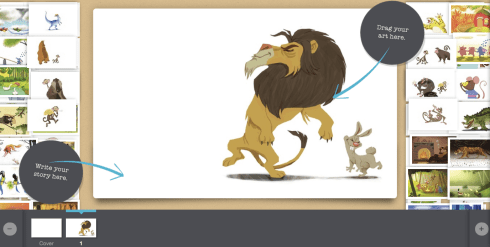
- Remember that less is more. In art or photography, “negative space” is the white space in and around an image’s subject that helps viewers focus. For writers, there is sometimes a temptation to think that more words = better. But just like negative space can enhance artwork, sometimes a few well chosen words will say far more than an endless ramble. Fewer words means that each carries more power, so their precise selection and arrangement matters more. Similarly, remember that what’s not on the page is just as important as what is, and if a detail of your story can be portrayed through artwork, then it rarely needs to be repeated in the text. Your job as an author is to decide what does not belong in a story, as much as what does!
Here’s hoping you arrive at the end of these exercises—and PiBoIdMo—with powerful new eyes that would make Proust proud. Questions? Thoughts? Please share them, and your own suggestions to fellow writers seeking creative vision and unique perspectives, in the comments.
Molly O’Neill is Head of Editorial at Storybird where she works at the intersection of story, art, technology, and new publishing opportunities for authors and artists. Previously she was an editor at HarperCollins, where she launched the careers of talented authors and illustrators including bestselling phenom Veronica Roth (author of Divergent), heartwarming award-winner Bobbie Pyron (author of A Dog’s Way Home), and the distinctive narrative and visual voices of S. J. Kincaid (author of Insignia), Hilary T. Smith (author of Wild Awake), Sarah Jane Wright (illustrator of A Christmas Goodnight), and many others. Follow Storybird on Twitter for daily thoughts on art, writing, and creativity.
 by
by Memories are those things sitting in the back of your mind collecting dust … until something in the present triggers them forward. Some of the best books act as that trigger; they awaken those memories that represent “universal truths”. These truths are what you want to capture in your writing.
So where do you find these universal truths?
They are happening all around you every day! They can be a little tricky to spot especially when you are rushing to pick-up the kids, rushing to meet a deadline, rushing to cook dinner, etc. But if you stop to listen to the singing child at the check-out stand or observe the toddler watching the mall Santa from behind his parent’s legs, you will see the universal truth standing there naked in front of you.
How do you know what experience is worth capturing?
Look for the emotional clues in any situation.
Search for the unusual in the usual. Is a child practicing their handwriting interesting? Probably not, but what if there was a rip in the paper from being erased upon so many times (frustration) or a drawing of a rainbow unicorn in the margins (boredom). These little details can be the key to something bigger.
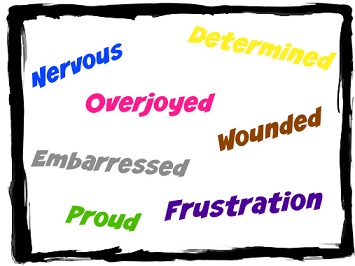
Notice repetitive behaviors. Lately, whenever anything goes wrong for my 6-year-old daughter—stumbles, makes a mistake on her drawing, breaks something, stubs her toe—she blames it on me. I also noticed my daughter spends a lot of time on her penmanship (determination). Or that she worries about not getting a 100% on a test (nervousness). By noting down these observations, I realized that my daughter is a perfectionist who can’t handle making mistakes. Now I have the seeds for developing a strong character. And because I wrote down those incidents, I have a springboard upon which to generate other zany challenges/obstacles for my character.
How best to save the memories?
Journaling
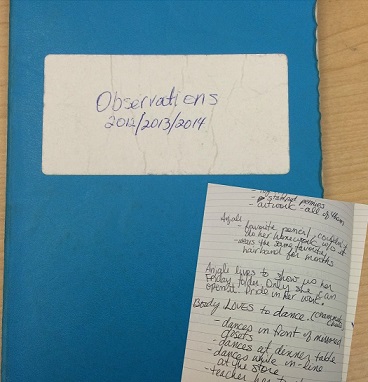
For the past few years, I have kept a journal where I store my observation of kids. I have a terrible memory, and my biggest fear is that once my kids are older I will forget what picture-book aged kids are like. So I write down any tidbit that is interesting, odd, funny, or sad so I can refer to it later. These observations will help make my characters feel alive.
Here are some examples:
- 5-year-old dances in front of mirrored closets, at the dinner table, in-line at the grocery store, teaches her classroom teacher, etc.
- 3-year-old told me to whisper since her Minnie baby doll was sleeping.
- Both girls cried the day the ducks at school left for the farm. The 6-year-old said “I will miss the ducks” while the 4-year-old said “The ducks will miss me.”
Video Clips
With the prevalence of smart camera phones, it’s easy to take a video anytime, anywhere. My husband took a ton of movies when our girls were babies and toddlers. One of my favorite videos, from their pre-school era, is a two-minute rant of “I Want Pizza” for dinner.
Once in a while, I still eavesdrop on my school-aged girls’ conversations with my smartphone or journal. Fodder in case I ever decide to write a chapter book. (Note: Do not take videos of kids other than your own without permission from their parents.)
Don’t have kids? No problem.
If you don’t have kids, no problem! There are plenty around – storytime at the library, afternoons at the playground, babysit for a neighbor. Just observe them.
Also, in this day of the Internet, there is soooo much on-line. You can get ideas from other friends’ Facebook posts, websites such as the Honest Toddler, and YouTube, which has a plethora of silly, quirky, and inspiring videos.
Here is video that went viral. It’s just full of awesomeness.
Hope you find these tips helpful of how to look for ideas, save them, and find the universal truths within. Have a wonderful PiBoIdMo!
Darshana Khiani is constantly journaling about her silly, adorable daughters and the world from her home in California. You can find her on-line at www.flowering-minds.com and on Twitter @darshanakhiani. She is represented by Jodell Sadler of Sadler Children’s Literary.
Darshana is generously giving away a picture book critique! Leave one comment to enter. A random winner will be selected at the conclusion of Pre-PiBo!
Good luck!
 y
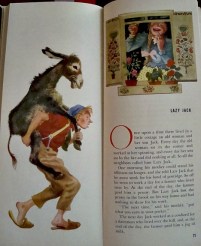
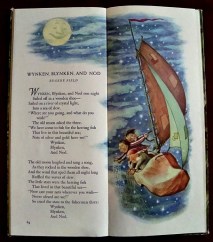
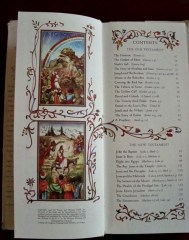
y Some form of picture books have been a part of my life for more than sixty years. We had little extra money for books when I was younger but I still have my copies of The Tall Book of Nursery Tales pictures by F. Rojankovsy, The Tall Book of Make Believe selected by Jane Werner, pictures by Garth Williams, The Tall Book of Christmas selected by Dorothy Hall Smith, pictures by Gertrude Elliott Espenscheid and The Tall Book of Bible Stories retold by Katherine Gibson, illustrated by Ted Chaiko. I took numerous trips to the tiny one room township library in our small community quickly reading through all the books in their children’s section. Our elementary schools had no libraries. In fact when I was in junior high school my mom was the first librarian, library clerk, in the very first library in my elementary school, Sycamore Elementary School, before she moved to Wilcox Elementary School.

She brought in authors and illustrators like Tomie dePaola, Eric Carle and Jose Aruego for her students and staff, staying in touch with them for decades, as well as Pat Hutchins and Dick Gackenbach, who dedicated a book to her. It came as no surprise to me when in college I switched from studying to be an elementary school educator to a K-12 certified librarian. My courses examining picture books increased, as did my affection for this format. Regardless of the level library in which I have served—high, middle or elementary—picture books have always been a part of my collections. I have watched my listeners, no matter their age, sit in total stunned silence. I have seen their eyes fill with tears. I have heard their gasps, giggles and bursts of laughter.
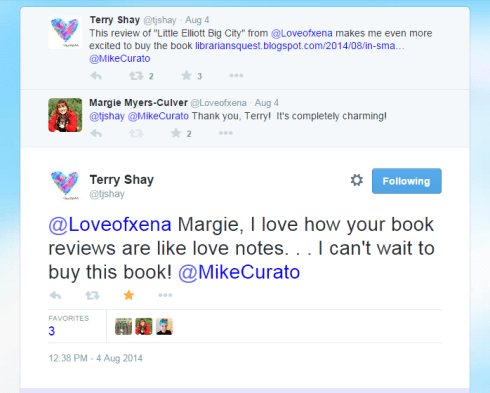
In August a tweet appeared in my feed where another supporter of children’s literature, educator Terry Shay, commented that my blog posts were like love notes. In my way of thinking if an author or illustrator spends years bringing their work to readers, if they are willing to put bits and pieces of themselves on a printed page, the very least I can do is thank them for their marvelous efforts. Your books change lives, book by book, reader by reader. Here are three of many reasons why.
1. Picture books are an entire world you can hold in your hands. 
Whether a picture book is a work of fiction or nonfiction for the minutes it is read, readers step into another place, another time, with characters they may or may not know. Your stories bridge the generation gap, break our hearts and heal them again, make us laugh ourselves silly, empathize with sibling problems, make the smallest everyday things beautiful, enlarge our understanding of other cultures, and acquaint us with specific people and the most intricate phenomenon in our natural world. Your works make us truly feel the wonder of a sunrise, believe we can dance with a flamingo, think we can sneeze so hard the shock will be felt miles away, want to shop in a store filled with monsters, and understand a boy and a robot, a bear and a bee, a duck and a goose, or a zebra and a moose can be friends. We want to be like an intrepid tractor, a chicken with arms, a whale finding serenity, a penguin who knows his heart, a protective mama squirrel, a brave mermaid, a boy who tames Toads, lots of dogs and a very special imaginary friend. Your pages make us want to learn more about artists like Horace Pippin, Henry Matisse or Edward Hopper, religious holidays like Passover, significant events in the Revolutionary War, the changed status of bald eagles, the Japanese internment camps, baseball and prominent figures in the game, songs like Sing, Yankee Doodle, America The Beautiful and The Star-Spangled Banner, miraculous days like the Christmas Truce in World War I, rain forests and chocolate, dinosaurs, frogs, trains, butterflies and bees.
2. Picture books contain power.
Those words you choose, selected with care, connect with readers on an emotional level you may or may not fully understand. We know each reader brings to a book their own personal experiences, but I don’t think we can ever fully predict how they will react to a story. Therein lies the power.
When illustrations become part of the story, or perhaps they tell the entire story, each one, no matter its size, is a piece of art to be enjoyed. I simply marvel at the combined use of color, various techniques and styles, layout and design. How can we not feel sadness when a small dog gets lost, the outrage of cranky crayons, the plight of parrots, the delight of a small girl wearing a red knit cap, the frustration of a days gone wrong, the panic of swallowing a seed, the comedy of a fractured fairy tale, the pure pleasure of discoveries during a nighttime walk, the security of having an alligator, the joy of finding a friend and cupcakes, the fearlessness of a ninja, the promise that comes with wearing a hat, the despair of moving, the love of a grandfather or grandmother, the warmth of family, the purpose of gravity, roots and so many wonders in our world, or the passion of pursuing art.
3. Picture books transcend their intended audience.
The truth of this was never more apparent than the last two months of my ninety-four-year-old mom’s life. Every day I would read her at least one picture book I had recently read or was planning to use for a blog post. On the last evening I spent with her, when I arrived in her room, she was lightly sleeping with her head to the side of her raised bed. When she saw I had three picture books with me, her entire demeanor changed. For the time I spent reading those stories with her, she was lively, filled with smiles and laughter. We chatted about how children would feel about these books. As I was leaving her room with my hand on the door knob, I suddenly stopped. Mom had not told me she loved me like she always did. Her bed was around the corner so I called out to her, “I love you, Mom.” She replied with her favorite phrase, “I love you a bushel and a peck.”
So to all you authors and illustrators who create the magic we will always need, who take “what-if” and boldly go forth: “I love you a bushel and a peck.”
I will champion you and your work for as long as I can to anyone who will listen.
Margaret M. Myers-Culver, Margie Culver, has been a teacher librarian for thirty-four years. She did her major course work at Central Michigan University and Western Michigan University. She is head-over-heels in love with talking about books at Librarian’s Quest. For picture books reviewed in 2013 and 2014 you can follow her Pinterest boards. She maintains two Scoop.it! magazines, All Things Caldecott and Gone To The Dogs. Links to her current Goodreads challenge and Learnist board for this year’s Mock Caldecott can be accessed from her blog. She has read so many books her students frequently ask her if she’s read everything in the library. They really enjoy coming to her house on Halloween when she hands out books instead of candy. When not reading or writing she shares the great landscape surrounding Charlevoix, Michigan with her sweet dog, Xena.
Margie is generously giving away four picture books to four winners: Louise Loves Art by Kelly Light, The Troublemaker by Lauren Castillo, Shooting at the Stars: The Christmas Truce of 1914 by John Hendrix, and The Adventures of Beekle, the Unimaginary Friend by Dan Santat.
Comment below ONCE to enter. Four random winners will be selected at the conclusion of Pre-PiBo!
Good luck!
 by
by I think picture books rock.
Except for the ones that aren’t good and, as a parent, you dread reading even a second night in a row to your kid. And you try to sneak the book from his bedside stack and back into the library bag, but somehow he keeps pulling the book back out because heaven forbid our bedtime routine goes one night without a digger book. Oh, the digger book! With its droning text that stretches on and on without ever really saying a single thing. And is my kid actually paying attention to the words? Of course not! He’s looking at the pictures of the cool diggers. Yet we can’t skip a line of text because if there’s words then he wants to know what they say. Is it wrong for me to change the words on the page? What if I change the words on every single page?
Okay. Maybe I should rephrase that.
I think good picture books rock.

This is a reader who knows what ROCKS!
Except for the ones that are really good and you think to yourself as you read to your kid, “Ya know? I bet the other adults in my book club would really like this book. It’s got historical accuracy. It’s got no less than fifteen SAT words. Why, I feel like my kid should be pre-admitted to Harvard on the grounds alone that he has parents so adept at selecting reading material of such academic merit.” At which point you realize that your kid actually has a different book in his hands. And is sitting on the other side of the room because your reading aloud of the picture book clearly not meant for children is drowning out his ability to concentrate on something he’s interested in…wait a second. Is he reading that diggers book again? Where in the world did he get that book? I thought I put it back in the library bag.
Let’s try this again.
I think good picture books written with children in mind rock.
Except when they’re forgettable. Because nothing is sadder than getting to the end of a beautiful picture book and experiencing the dry, hollow “huh” of a story that has done little more than take up mental shelf space in your brain that you cannot reclaim. And while you read page after endless page, waiting for the story to pay off or for, oh my word, ANYTHING to happen in this book. I thought it was going to be our next favorite book ever. Its cover was so beautiful. The text was simple and poetic. The illustrations were… are you kidding me? The digger book? Again? You know what? I don’t think I can blame you. At least that one sends me to sleep thinking about operating heavy machinery I probably need a permit just to dream over.
Scratch it. Time for a new draft.
I think good, memorable picture books written with children in mind rock.
Oh, who am I kidding!?
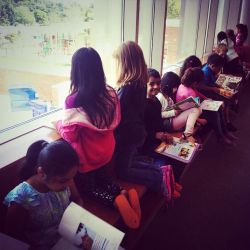
You’re writing for these kiddos. Make it count. Make it AWESOME!
I think a good, memorable picture book written with children in mind that creates a connection with the reader through shared experiences, showing them something new, inviting them to play or interact with the story, entertaining them by making them laugh or think or be in awe or any combination of the three, or by in some way changing the reader through content that is thought-provoking, historically significant, or is just outright awesome ROCKS!
PiBoIdMo 2014 is upon us and whether you walk away from this experience with 30 picture book ideas or 300, it’s up to you to make sure you’re working on something that you think is awesome. Because if you don’t think it’s awesome, what’s the chance that idea has of growing into something more beautiful? I’ll answer that one for you. Zero chance.
To young readers, a picture book is a mirror. Readers see themselves and the people they know in the characters and situations that inhabit the story. In this way, readers expand their experiences by reading about things they may never encounter in their actual lives. They explore worlds they’ll never set foot on. They experience perspectives that build empathy for things they haven’t actually been through. They meet people who help them understand themselves better, and, more often than not, these people are complete works of fiction. It’s important that children of all ages are exposed to these diverse experiences so that they, in turn, can become better grown-up people.
And when you write a picture book, you’re committing an act that is profoundly important. It is an act that inspires awe and wonder to young and not-as-young children alike. And it all comes from a single idea. One that, perhaps fleeting, came to your subconscious.
Over the next month or so, listen to those ideas that tickle the back of your neck. The ones the bring on an audible chuckle. The ones that make your brain feel heavy. The ones that curl the ends of your lips. The ones that just won’t leave (and the ones the appear suddenly and clearly).
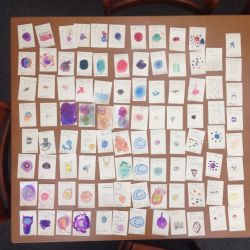
Just like the dots we create for International Dot Day, no idea should be overlooked. There’s a just-right idea for every reader out there. You’ve just gotta make the match.
Write them down. No matter how you feel about them at the time, write them down. Those words are gifts. And they are important. Some will become stories. Some will change and dance about and change some more. Some will lay still on the page, perhaps just to mark a moment in time where those words felt important or necessary.
And even if those words are “Hector was a nasty fartbutt,” you write them down. Because, know it or not, there’s a kid out there who needs to hear that Hector was a nasty fartbutt. Because those words will mean something greater than you may have been able to anticipate.
Picture books are full of moments exactly like that. Ones that the author couldn’t have ever anticipated would be so transformative or powerful or meaningful or poignant.
And that’s why picture books are important.
Matthew Winner is an elementary school teacher librarian in Elkridge, Maryland. He’s the author of the Busy Librarian blog and the host of the Let’s Get Busy podcast, where he interviews authors, illustrators, kidlit notables, and everyone in between. Follow Matthew on Twitter at @MatthewWinner and Like the Busy Librarian on Facebook.
Matthew is giving away two mystery picture books that are AWESOME! Two winners. Two mysteries. Two totally awesome and amazing picture books.
To enter, leave ONE COMMENT below. Two random winners will be selected at the conclusion of Pre-PiBo!
Good luck!





 Writing for Kids (While Raising Them)