You are currently browsing the category archive for the ‘Literary Agents’ category.

Today we’re welcoming Ammi-Joan Paquette, the agent who sold THE MONSTORE, to do a guest post on what originally got her excited about the manuscript, and what makes it a successful debut picture book. Welcome, Joan!
LAT: THE MONSTORE is Tara’s debut book. Was it also the first manuscript you saw from Tara?
AJP: Yes! Tara queried me with this picture book, also mentioning that she had several other projects in the works. I read and loved THE MONSTORE, and asked Tara if any of her other works were complete and available to send me. She did! The more I read, the more I loved Tara’s effusive writing, dynamic characters, and wildly inventive imagination. I was hooked.
LAT: What was it about THE MONSTORE that really made you sit up and take notice?
AJP: I think THE MONSTORE is the definition of high-concept. Right from the title you know…
View original post 528 more words
 I’ve bumped into Susan Hawk a few times lately, which is easy for me, since I walk with a cane and my balance stinks! *rimshot*
Knowing I have blog followers who are eager to snag a picture book agent, I sat down with Susan (after we bumped—yes—right there on the floor) and asked her some questions about picture books, agenting, and the surreal softness of the carpet. Was it Turkish cotton? Or do they only use that for robes and towels? (Um, scratch those last couple questions.)
Susan, what led to your decision to become a kidlit agent? Can you tell us about your professional background?
I’m lucky to have worn a number of hats within the children’s book world. I’ve been a bookseller; I have a degree in Library Science and have worked in an elementary school library as well as the Brooklyn Public Library; I acquired a few book projects for Dutton Children’s Books. But most of my background is in Children’s Book Marketing, gathered at Penguin, Henry Holt and North-South Books. All of that led to my decision to make the jump to agenting three years ago, which feels like the perfect way to put these experiences to work. But, really, I think it all began with this: I’m a reader. I love reading books, I love meeting new characters and going new places in the pages of a book, and that’s always been true for me.
 What are some of your all-time favorite picture books?
Ah, a great question. It’s hard to stop!
- ME, JANE by Patrick McDonnell
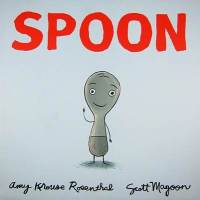
- SPOON by Amy Krouse Rosenthal and Scott Magoon
- I’M NOT by Pam Smallcomb and Robert Weinstock
- THE HELLO, GOODBYE WINDOW by Norton Juster and Chris Raschka
- SO YOU WANT TO BE PRESIDENT by Judith St George and David Small
- OFFICER BUCKLE AND GLORIA by Peggy Rathmann
- “MORE, MORE, MORE,” SAID THE BABY by Vera B Williams
 BLUEBERRIES FOR SAL by Robert McCloskey
- GEORGE AND MARTHA, or anything by James Marshall
- SYLVESTER AND THE MAGIC PEBBLE by William Steig
- MISS RUMPHIUS by Barbara Cooney
- LILLY’S PURPLE PLASTIC PURSE by Kevin Henkes
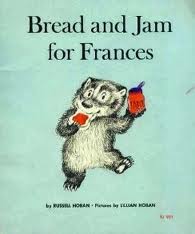
- BREAD AND JAME FOR FRANCES by Russell Hoban
- FREDERICK by Leo Lionni
What about those books make them special?
Three things: character, humor, and each of these is a very satisfying book.
In most of them, the main character is someone I love. Like, obsessively love. ME, JANE—I already think Jane Goodall is amazing, but in the pages of this book, we’re introduced to a real little girl who’s so true to her own interests, that you can’t help but be entirely charmed. Spoon features the most adorable spoon you’d ever want to meet, not to mention his smart, reassuring parents. And it goes on—every one of these books holds a real, textured person, brought to life in just a few words and pages.
Almost all of them are funny. Some of them are more broadly so, in some of them the humor lies more in a clever twist, but with all of them, I find myself smiling. A lot.
You know the feeling when you close a book and think, I can’t wait to read that again? That happens when the author and artist, together, create a perfect symphony of voice, character and plot. When everything works in concert, you finish the story feeling somehow more whole, and will want to come back to that story again. Obviously, which books do this will be different for different people, but for me, these books all give me that sense.
What do you look for in a picture book submission?
Pretty much what I described above!
Also, shorter text (about 500-600 words), and I’m not usually a fan of rhyming text.
What makes you stop reading a submission?
Predictably, longer texts, rhyming texts—I usually stop reading those. There are also quite a few “evergreen” stories, themes or subjects out there—making a new friend is one. (Here’s a list of a few others.) These can be tricky because in the right hands, they can feel fresh and new, so I’d never say that I’d automatically stop reading a story like this. Still, these texts will be competing with quite a few others out there, so I’m cautious with these.
 Is there anything you see too much of in your submission pile?
I see quite a few projects that want to teach kids a lesson. I’m not particularly interested in this, though there are quite a few picture books that want kids to understand some values—fairness, for instance—and do this quite skillfully. I guess that, in terms of message books, I want to see this emerge from the character’s journey, rather than leading the story.
What is the word from picture book editors these days? What are they seeking in picture books?
The main thing editors ask me for is strong, original characters with a compelling, meaty story. If that character has the potential to build a series, all the better. Length should be shorter (see word count above). Most editors will find something funny very appealing and are often looking for something quirky. This is harder to quantify—one gal’s quirky is another gal’s odd—but in general, I think this is about looking for something that feels new and different.
What factors go into your decision to offer a picture book author representation? (Do you offer representation based on only one picture book, or do you prefer that the author have a few ready to submit?)
Two things—I need to love the work, and I need to feel that I can sell it. Easy to explain, hard to find! Mainly that’s because it’s ultimately personal and what I may love is so different than what someone else may love. It’s best if the writer has a few books in the bag, so to speak, but not 100% necessary.
Do your rep author-illustrators? Is it best for them to query with a full dummy, or just a story and a portfolio?
I do! In fact, I’m very eager to take more author-illustrators on. I love seeing a full dummy, but querying either way is fine. My submissions information is here: http://www.thebentagency.com/submission.php.
Could you describe your ideal client?
Someone who loves their work. Writing and illustrating is amazing work, and I feel super lucky to work with children’s book creators, but it requires dedication, patience, flexibility, and some grit. You’re probably going to hear no a few times before you hear yes. Being able to balance all that against a deep love for your work, and a real pleasure in doing it, is key.
Are you open to submissions? How can writers reach you?
Very much so. Please visit The Bent Agency website to learn more about being in touch.
Thank you, Susan! I hope to bump into you again soon! Without dumping us both onto the floor. Although, it sparked a lovely, informative conversation, didn’t it?
Three is a magic number. Not only because it’s the age when tiny toy parts no longer pose a choking hazard to your toddler, but because the universe is full of threebies.
Three square meals a day.
Three strikes and you’re out.
Three ring circus. And three ring government. (Excellent analogy, Schoolhouse Rock.)
Then there’s the “rule of thirds” design principle for composing visual images with tension and interest.
Ever heard of the FOUR LITTLE PIGS? Of course not. There’s just three, like THREE BLIND MICE and THREE BILLY GOATS GRUFF. Heck, there’s even THREE STOOGES.
In picture books, you’ll often find the protagonist struggling to solve their problem three times before finally succeeding. This technique encourages the reader to become invested in the hero’s journey. If the character were to try once and triumph, what fun is that? There’s no time to root for her!
Likewise, you’ll often see groups of three drawings on one picture book page. Three offers a nice balance because two is too few and four is too many. Like Goldilocks and the THREE Bears know, three is “just right”.
So today I’m going to extend “The Rule of Three” to you, the aspiring author. How so? I encourage you to have THREE polished manuscripts ready before submitting to an agent or editor.
Three manuscripts means that you’ve been writing for a while. Not a month or two, but most likely a year or two…or yes, even three. You’ve taken the time to hone your craft. Three manuscripts also means you’ve got a body of work an agent can review. If they don’t like your first story, but they see potential, they will ask for some more. Wouldn’t it be a missed opportunity if you didn’t have more?
In fact, even if they LOVE your first story, they will ask to see more. Picture books are a difficult sell, so if the first manuscript doesn’t find a home, they’ll want something else to submit. Three stories lets the agent know that your body of work, your style, resonates with them. On the flip side, they may LOVE your first book but not see a market for your other stories, or personally dislike them. Their lack of enthusiasm means they are not the right agent for you. You want to know this BEFORE you sign with someone, not AFTER….’cause breaking up? It’s hard to do.
And listen, if you have three manuscripts ready, I’m going to go a bit further and suggest you get FIVE ready. Because five is shiny, like “five golden rings” or “The Jackson Five”.
Yeah, it’s easy as A B C, 1 2 THREE.
If you’re an un-agented writer, you might be thinking—do I even NEED a blog? What content should it contain? How often should I post? What SHOULDN’T I blog about?
Well, relax. Deep, cleansing breaths. I asked a few agents what they thought of writerly blogs. Their responses may surprise you.
 Erin Murphy, Erin Murphy Literary Agency:
“I don’t have any strict rules or do’s and don’ts. I find blogs are perhaps less useful than they used to be, with the exception of those with large followings. Mostly I go to them, when considering signing someone new, to get a sense of their personality and how they present themselves (whether to fellow kidlit folks, gatekeepers or kids).”
 Ammi-Joan Paquette, Erin Murphy Literary Agency:
“A writer’s blog wouldn’t be a deal-breaker for me unless it was wildly unprofessional. First and foremost, when I’m looking at a potential client, it’s all about the writing. But beyond that, a blog or website gives a sense of who that person is, how our tastes and interests might mesh, etc. So make sure your web presence reflects who you are, and that it looks clean and tight and polished. I don’t think they’re essential, but it is nice to put a face and background to the voice I’m reading on the screen.”
 Jennifer Laughran, Andrea Brown Literary Agency:
“I don’t care if an author has a blog or not. But if they DO have a blog, I hope it is lively, interesting, informative, fun to read, and gives a sense of their “voice” and a glimpse into their lives.
Turnoffs: Lots of word-count posts. Constant self-promotion. Complaining about blogging, complaining about the publishing industry, complaining about specific people (your agent or editor, for example)—or “Humblebragging.” Overly political or “sexy” posts (unless you are a political or sexy writer).
If an author HATES blogging and is struggling to find the time or energy…if it is taking away from their work or making them miserable…then they should absolutely not do it. An unused blog, or a blog that is just complaints or self-PR, is so much worse than no blog at all.”
 Teresa Kietlinski, Prospect Agency:
“Blogs are absolutely important in my decision making. When submissions come in, I tend to visit blogs first because they give me a taste of the writer’s (and illustrator’s) personality, voice and interests. It also lets me see how dedicated they are to the craft of writing or illustrating. Do they post frequently? Do they talk about topics of interest in the children’s book world? Are they honing his/her skills? What books is he/she reading? Would I like to join him/her for lunch or tea? (the last question for me is the most important). If I do not instantly connect with a blog, chances are I will not connect with the blog’s writer.
My goal as an agent is to work with clients who I like working with. Clients who are funny, interesting, and interpret the mundane stuff in a surprising way. Blogs can give me insight on these qualities. And while websites are important, especially for seasoned authors, they are not always personal.
I would suggest not limiting your blog to “kids stuff only.” Talk about what interests you—but keep it professional in tone. Readers are looking to connect with your personality. Who are you?
Do remember that anyone can read your posts so keep them professional in tone. Do update your blog regularly.”
So it’s clear: if an agent is interested in your work, they WILL Google you. So avoid posting:
- Samples of works in progress (they might be considered “published”)
- A tally of submissions/rejections
- Complaints about rejections, the industry or specific professionals
- Long, rambling posts
- Overly political, religious or controversial topics (unless that is the focus of your professional writing)
Before you start a blog, realize there’s millions of them out there already. What are you bringing to the table? Do you have a unique perspective? Just like thinking of the hook before you write the book, you might want to think of the hook for your blog before you launch into it. (Relatively-newish blogs with compelling hooks: Literary Friendships by Audrey Vernick and Design of the Picture Book by Carter Higgins.)
Or, you can just go for it and post whatever you like. After a few dozen posts, you might discover your niche. Check your blog stats and determine which posts bring in the most visitors. Work in that direction.
And remember, the story’s the thing. No blog will snag you a book deal if your submission is sub-par. So get the manuscript right first, then worry about blogging later…
Or, maybe, not at all.
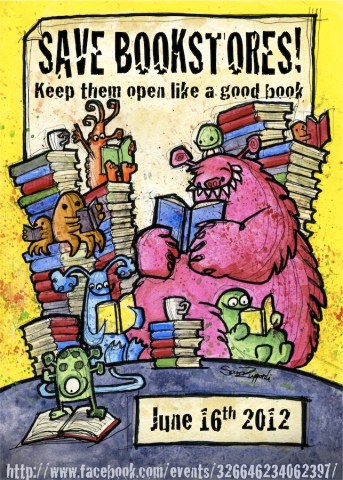 The brainchild of literary agent Kelly Sonnack, Save the Bookstores Day is a way to show our favorite brick & mortar stores that they still matter. That we support them. That we love them! That we CANNOT LIVE WITHOUT THEM!
I spoke with Kelly and three of her clients about this special day and how they plan to celebrate.
TL: Kelly, how did this holiday come to be?
KS: The Save the Bookstores event started one morning when, after reading about the obituaries of several indie bookstores in my publishing industry news, I got on Twitter and said that I was sick of hearing of these great stores closing and that there must be something I/we could do about it. I was met with immediate support when I suggested we pick a day and all go buy books together, across the nation, and the event was born from there.
Last year, we had a great response. The beauty of the event is that everyone can take the event and promote it as they see fit. Last year some book lovers took it upon themselves to print flyers and distribute them outside their favorite bookstore, in anticipation of the day. Others have blogged and emailed, Tweeted and Facebook’d. It’s been a unifying book lovers event so far and has reached to Asia and the UK (and probably more places I don’t even know about!)—it’s a simple way to support the books we love and the stores that sell them.
TL: What is your favorite childhood memory about books?
 KS: One of my favorite childhood memories about books is the small library at the church we went to when I was a kid. It was nestled under a creaky staircase and chock-full of fabulous picture books. We were allowed to check out a book each, each week. But the choosing was the hardest part! I probably read 10 books before I picked which one I could take home with me.
TL: What is your hope for this new holiday? What is your ultimate goal?
KS: My ultimate goal is to save bookstores! I want to stop seeing postings of bookstores that haven’t been able to get high enough revenue to keep their doors open. It would be tragic to lose our brick and mortar stores; I want to remind people that their patronage really does make a difference. That we can keep stores in business by supporting them.
TL: And finally, what books will you be buying? What books do you recommend?
KS: The event is actually on my due date, so there’s a chance I’ll be phoning in my order to my favorite local bookstore instead of being able to browse the shelves for surprises and discoveries (hands down the best part about brick and mortar stores). If I get to browse, I’ll likely be browsing the board book section to see if there’s something I haven’t gotten for Baby Girl. But (aside from Bridget and James’ fabulous books, and Sharon’s which can be preordered), I’m looking forward to getting my hands on a copy of Jennifer Bosworth’s STRUCK, Michelle Hodkin’s THE EVOLUTION OF MARA DYER, Tom Angleberger’s FAKE MUSTACHE and I want to get a copy of HOW TO BABYSIT A GRANDPA by Jean Reagan for my dad, who will soon be a new grandpa! As far as what I’d recommend to others, anyone who hasn’t gotten a copy of Anna Sheehan’s debut YA novel, A LONG, LONG SLEEP will be wisely spending their money on it. And Carolyn Marsden’s THE WHITE ZONE is a powerful read for anyone interested in the conflict in Afghanistan from a middle-grade perspective. For any new parents or friends of new parents, Heather Leigh’s HEY, LITTLE BABY is sure to become a family favorite. You can’t help but getting a little choked up by that one.
Thanks, Kelly! Three of your clients—Sharon, Bridget and James—want to weigh in, too. I asked them why bookstores are important to them. (Besides the obvious reason of selling their titles!)
Sharon Cameron
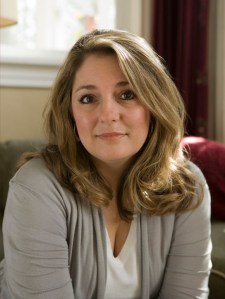 My mother took me to the library like she took me to church—regularly, once a week, no excuses. The library was our haunt. But she could never understand why I would check out the same book over and over again, signing my name on the little card slipped into the slot attached to the back cover (remember when we did that?). My signature would be beneath my own signature, which was beneath my own again, and maybe four more times above that. My mother would look at the card containing mostly my name and say, “Okay. We’ll buy it.”
There was nothing more special. The library was a reading free-for-all, but going to the bookstore was all about picking out a treasure. I got to take my time, pick the book up, feel its weight, know if the cover was bumpy or slick, see the size of the type, hear how much noise a page made when it turned. And then that book was not just a borrowed thing to be returned, but mine, a friend for life. My copy of Johnny Tremain stayed with me for dozens of readings until its unfortunate death from a broken (overused!) spine. My paperback of Pride and Prejudice has worn to bend in any direction, fitting perfectly into my left hand.
That is why children—why all of us—need bookstores, and why I will be celebrating Save the Bookstores Day at Parnassus Books (Nashville, TN). An image on a sales screen is only an image. It cannot show us what is so easily experienced when we hold a book: the heft and feel of an author’s imagination.
Sharon Cameron is the author of THE DARK UNWINDING, coming September 2012 from Scholastic Press. Visit her website at SharonCameronBooks.com.
Bridget Heos
 I have a quote hanging over my desk by Anton Ego from Ratatouille: “The world is often unkind to new talent, new creations, the new needs friends.”
Bookstores are some of the first friends a book has, and that’s one reason I’m excited for my first bookstore book, MUSTACHE BABY, to come out next Spring. The neat thing is that readers want to befriend the new, too, and bookstores help us to do that. Bookstore workers have gotten my sons through many “I’ll never read again” moments that happen when you finish a series you love. They introduced us to Origami Yoda, Max (Bob Graham), The Dinosaurs of Waterhouse Hawkins, and so many books that, in a way, are part of our family.
I’m going to the Reading Reptile and the Plaza Barnes & Noble here in Kansas City, not as an appearance, but just to buy books.
Bridget Heos is the author of the non-fiction picture book series WHAT TO EXPECT WHEN YOU’RE EXPECTING (LARVAE, JOEYS, and other animals). She also writes YA non-fiction. Follow all her insects and antics at AuthorBridgetHeos.com.
James Burks
 I think there’s something magical about walking into a bookstore and discovering a new book. A book that I’ve never seen or heard of before but I see the cover and it intrigues me. I pick it up, I look inside and I know that I have to own this book.
If I didn’t have a bookstore to go to I’d probably just be wondering the streets, lost, searching for that magical connection.
James Burks is the author of GABBY AND GATOR, BEEP AND BAH, and the upcoming BIRD AND SQUIRREL graphic novel. He is the illustrator of Tara Lazar’s THE MONSTORE, too! Check out this character and all his characters at JamesBurks.com.
If you want to help SAVE BOOKSTORES, please join the Facebook Group! Tell us where you’ll be shopping on June 16th and what you’ll be buying!
And please SPREAD THE WORD! Share the adorable poster on your social networks, blog about it, tell your teachers, organize a caravan to your local indie! Do your part to keep bookstores in business and bringing us great reads!
Thank you Kelly, Sharon, Bridget & James!
Writing is a solitary profession. Sitting on our bed, laptop balanced on a pillow, wearing mismatched jammies all day (well, that’s how I work, anyway), we don’t gab at an office water cooler or take swanky lunches with colleagues. We’re alone with our characters—who can drive us nuts! We’re alone with our ideas, our words, and a vat of java.
Most writers I know are hard on themselves. We are our worst critics. We can spend all day writing and feel as though we’ve accomplished nothing. It’s nice to hear someone say what we’ve written has potential, has vision, has made someone spit all over their keyboard in laughter (the highest compliment, I think).
So today I bring you the story of three kidlit friends who came together with one goal in mind—to take an author’s career to the next step. To provide an encouraging, supportive environment in which she can thrive. Folks, you gotta have friends. Luckily, the kidlit community includes some of the best people around.
Please welcome author Brenda Reeves Sturgis, consulting editor Emma Dryden, and agent Karen Grencik!

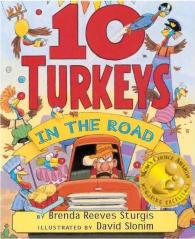 TL: Brenda, your debut picture book TEN TURKEYS IN THE ROAD was released by Marshall Cavendish last year and quickly earned both critical and commercial success. Most people think you publish one book and you’ve got it made. But you felt your career needed a boost. How did you come to this conclusion?
BRS: Thank you for this thoughtful blog post, and for interviewing the three of us.
I sold 10 TURKEYS IN THE ROAD in 2008 and at that time I was represented by another agent, but in 2010 we parted ways and I was left trying to navigate the children’s lit world, alone.
I queried for many months and got personal, kind rejections. After a long period of going it alone, I knew that I needed to find out what was holding me back from finding my perfect-for-me agent. I had heard of Emma Dryden for years, and had great respect for her. She was and is knowledgeable in all aspects of publishing. I was confident that by hiring Emma she would know what needed tweaking, and what I needed to do to progress in my quest. I contacted Emma and she agreed to consult, we set up a phone call, and I sent her my manuscripts.
TL: Emma, what was your reaction when you read Brenda’s work? What did you propose as the next step in her career?
 ED: When Brenda first contacted me, she explained her situation—she was a new writer with one book under contract; she’d been with an agent and was currently seeking a new agent; she was “trying to do everything right,” but it didn’t seem to be paying off and she was starting to question how she could keep her dream of being a children’s book author alive. There’s nothing that concerns and upsets me more than to hear an author or artist is questioning their dream. Coming up with a strategy to find an agent would be the easy part; helping a distressed author regain their confidence and adjust their outlook was something completely different—and that’s what our consultation was really all about.
Brenda’s ideas and writing are strong and smart. Her nervousness about doing everything right was what was holding her back, blurring her vision. We focused not only on figuring out a calm, focused strategy to query agents with her strongest possible manuscript, but we also talked a lot about how best to conduct oneself in a fickle marketplace, the importance of flexibility, the benefits of patience, and the significance of not giving up.
After several hours of email correspondence and phone conversations, I felt confident in encouraging Brenda to query Karen Grencik, an agent whom for various reasons I felt would not only be delighted by Brenda’s work, but who would have a compatible sensibility and outlook to suit Brenda’s own.
TL: Karen, what made you fall in love with Brenda’s work and make an offer of representation?
 KG: First of all, a great big “thank you” to you for taking the time to tell our story. It is a bit unusual, the manner in which we all came together, and I hope your readers will find it to be inspiring!
It is an honor to receive a referral from Emma Dryden, as I know the thought she puts into everything she does. I talked with Emma right away and when she stated that she thought Brenda had an untapped talent similar to two of the best picture book rhymers in today’s children’s book world, I knew I had to look at Brenda’s manuscripts. Brenda and I set up a phone appointment to discuss expectations, as there is always some concern about this when a previously represented author is seeking a new agent. I was worried that I might not be able to meet Brenda’s needs and I knew Brenda was feeling a bit gun-shy to jump back into the fray, but right off the bat we developed a sense of comfort and comraderie that’s made working together quite easy.
Not only did Brenda take proactive steps to jump-start her career again, but she took seriously and applied each and every practice Emma discussed with her, putting aside her considerable worries about what had come before and focusing instead on what she needed to do to accomplish her goals as a picture book author. This laid excellent groundwork for her to secure new representation. Yes, Brenda did need an agent—a strategic partner who shares her goals—but what she needed more was validation and a positive, safe working environment, which I’ve been delighted to be able to help provide. Now it’s my turn to find good homes for her fabulous picture books!
Brenda appeared in my life at just the right time, as Red Fox Literary had recently opened its doors, and I had the kind of time available to service my clients in a way that most agents only dream about. Over the past year that we’ve been working together, Brenda has learned to trust that I will do everything I can as quickly as I can, and that has allowed her to relax during the times that I’m not immediately available. And I’ve learned to trust that Brenda is a very hard worker, a perfectionist about her writing, and will only send me her very best work. Trust is a significant element of the best author/agent relationships, as it is of the best author/editor relationships as well.
For authors out there who feel isolated and alone, we three want to remind you that the universe is preparing for your success. An editor and an agent might be just waiting for you to show up. Be sure to pay attention to the signs. We certainly do!
TL: Karen, thanks! Your story is indeed inspiring!
Now back to Brenda…what are your goals for your career?
BRS: My goal remains the same as it was 8 years ago, and that’s to write the best, most original children’s books that I can. It’s important to me to help and make a difference where doors are opened, I strive to inspire, educate, and work as hard as humanly possible. I feel innately blessed to work with Karen and with Emma, and look forward to all good things coming our way. Thank you for your time with this Tara, I am truly appreciative for this opportunity.
TL: Thank you for sharing your story! I know it will help many writers as they examine their career progress. We should all recognize when it’s time to make a change and be brave enough to take action.
Please visit Brenda Reeves Sturgis, Emma Dryden and Karen Grencik’s websites where you’re sure to receive even more inspiration!
 Among those represented by the Erin Murphy Literary Agency, Luke Reynolds is known as the *real* Ryan Gosling (you had to be there). Although, I happen to think Luke is cuter, don’t you? Just look at that dimple! And I happen to know he’s a heckuva lot funnier.
He’s also smarter than my Ryan Gosling when it comes to publishing, writing and living.
Luke is the author of KEEP CALM AND QUERY ON: NOTES ON WRITING (AND LIVING) WITH HOPE. And he’s here today to give you that: HOPE. (Plus a copy of his book, plus a query critique, plus a personal “pep talk” phone call!)
Half of Luke’s book includes some reflections for writers on perseverance, hope, humor, gratitude, and work ethic, while the other half includes interviews with writers like Daniel Handler (a.k.a. Lemony Snicket), Katherine Erskine, Jane Smiley, and 11 other authors.
Without further Ryan Gosling references, take it away, Ryan! Erm…I mean Luke!
Making a Life
by Luke Reynolds
There are two places where fast, easy manoeuvres and accomplishments are both warranted and worthwhile: 1) In a snowball fight, when your opponents are slinging well-packed cold stuff at you faster than re-runs of Friends episodes appear on TBS; and 2) In getting the kids to bed when they’re already overtired after a long day of snowball fighting.
Most other pursuits in life don’t lend themselves to easy success. And at the top of a very, very long list of Stuff That Takes Forever comes the pursuit of writing. But that’s a good thing—a terribly hard, but fantastically good thing. Because deep down, none of us who love writing want it to be easy anyway. That’s not why we fall in love with something in the first place.
When we were children, people asked us, “What do you want to be when you grow up?” Very few of us, I’m guessing, responded, “I’d really love to find something easy—something that requires little skill, almost no perseverance, and happens fast.” Instead, most of us said we wanted to fly into outer space wearing massive white suits; or we said we wanted to sing on stage in front of a roaring audience; or we wanted to be pilots or race car drivers or scientists who found cures for every kind of disease or explorers who found distant lands.
Or we wanted to be writers.
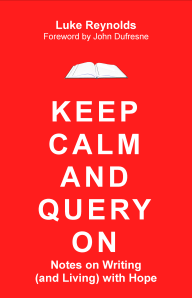 Novelist John Dufresne writes in his Foreword to KEEP CALM AND QUERY ON the following: “Writers want to write, not to have written.” Even though the manuscript of Keep Calm had been finished and proofed and was ready for publication, that line from John’s Foreword hit me hard and fast—much like a well-packed snowball or like a child screaming wildly that he isn’t ready for bed. The line speaks so loudly because it captures the essence of this pursuit we’ve chosen: a creative calling that is about making a life, not a living.
We write because we love the small giddy feeling that rises up like regurgitated food after we’ve eaten too much and then laughed too hard. We write because we like the problems (deep down) that our characters encounter, and we like the fact that there is no easy way out—either for our characters themselves or for us as we make plotting decisions. We write because we know that hearing no enough times and going back to our desks, reworking material, forging new work, and venturing back out into the wild, beautiful possibility of publishing makes our hearts beat fast.
So, deep down, we know it’s not easy. Nor do we want it to be. That’s not why we love it in the first place.
 Why do we love films and stories about underdogs? Why—for instance—does Atticus Finch inspire me to no end? It’s not because he took an easy case that guaranteed a sure-fire victory with no obstacles. I love Atticus because he took an impossible case that guaranteed a loss but his conscience demanded it and his soul echoed the call.
You love the books and characters and films you do, I believe, because you know that triumph is only beautiful when the journey is difficult, that getting the story right is profoundly moving only because you’ve known the story has been so stubbornly wrong—however slightly—in its previous lives.
The MG novel that my agent, the lovely Joan Paquette, signed me on was originally entitled ATTICUS AND ME. It was a story that came down my arteries and out through my fingertips. The first draft, though, would have guaranteed a speedy rejection from Joan. So she didn’t see Atticus until his fourth revision. And then Joan continued to revise Atticus into a character who was more authentic, more real—a character whose story meant more. Joan raised the stakes in the novel. And after quite a few rounds, Atticus is still growing, still changing.
And various picture book manuscripts are in their own worlds of revision, each entering a fifth, ninth, and eleventh or more incantation of their possible lives.
We write because we want to write, not because we want to have written. As writers, we start to accept the fact that—much like us—the characters that people our stories are going to need second-chances, harder obstacles, higher walls, deeper pain—and that all of this, eventually, leads to greater love. In the writing, for the writing, and through the writing.
So, then, the question remains: if we don’t want writing and publishing to be easy, what do we really want? I’d venture a humble guess: we want support. We want somebody—anybody, the mailman, Grandma, our children, our students, and maybe one day an agent and editor—to tell us that we have what it takes. We want support. We want to know that our work is worth it. That ninth draft of an MG novel or our twentieth time through a PB manuscript that has changed completely and become almost an entirely new book are both pursuits for which support is not only helpful, but essential.
 In short, we need someone in our corner, shouting in a voice of accountability, conviction, and faith to keep going. You have what it takes. Get through this draft. Try it from a different POV. Try it from a different character’s perspective. Try the story in present tense. Throw in a cow who believes he is Ryan Gosling. Throw in a turtle who eats books. Throw in a kid who thinks it’s over, until—
Until that voice. Listen it to it clanging inside the damn-near defeated walls of your heart. That voice confirms what you and I already know: we don’t want it to be easy. It’s hard. We know that. What we want is the pluck and the nerve and the faith to keep going—to make a life with our pursuit of writing and the way we embody it, rather than simply a living.
We want more than a contract and some cash. We want to craft the words that get us excited—that get readers excited. Or, as John Dufresne put it, we want to write, not to have written.
So: a toast. (I wish I had wine, but coffee feeds the writer in me more). To the very act of writing—in all its difficulty, stubbornness, painstakingly slow but remarkably beautiful worth. May we all, as writers and as people, keep calm and query on.
Thanks, Luke! Very inspiring. I need a tissue now. *sniff*
And you folks need to comment! Luke is giving away THREE PRIZES!
1. A signed copy of KEEP CALM AND QUERY ON.
2. A query critique.
3. A personal phone call and pep talk to discuss your writing career.
Your comment counts as one entry. You get an extra entry for each mention on social media: Twitter, Facebook, Pinterest, etc. Just mention it in your comment. Comments close the end of April 1 and winners will be randomly selected on April 2.
Now keep calm and comment on!
Luke Reynolds is editor of the forthcoming book for teens and tweens BREAK THESE RULES (Chicago Review Press, 2013). He has also co-edited BURNED IN: FUELING THE FIRE TO TEACH (Teachers College Press 2011) and DEDICATED TO THE PEOPLE OF DARFUR (Rutgers University Press, 2009). His newest books are KEEP CALM AND QUERY ON: NOTES ON WRITING (AND LIVING) WITH HOPE (Divertir Publishing, 2012) and A CALL TO CREATIVITY: WRITING, READING, AND INSPIRING STUDENTS IN AN AGE OF STANDARDIZATION (Teachers College Press, 2012). He loves garlic bread with passion, and loves children just about as much. He has taught grades 7-12 and he’s now a nightschool teacher and home-dad by day. His writing for children is represented by the formidably wise and oft-inspiring Ammi-Joan Paquette of the Erin Murphy Literary Agency. Keep calm and visit on at www.lukewreynolds.com.
EMU’s Debuts is not a flock of oversized flightless birds opening on Broadway. It’s a bunch of new authors represented by the Erin Murphy Literary Agency chatting about their experiences from deal to debut. It’s everything you ever wanted to know about the process of publishing a book from the author’s perspective.

Today on EMU’s I talk about getting “the call”. So pop on over for a quick read and show the debut authors some love by following along. It promises to be a wild ride, not unlike jumping on an emu.
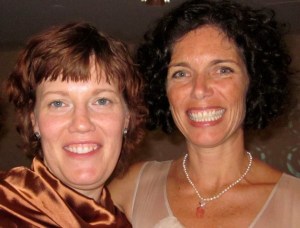
Erin Murphy (l.) and Liz Garton Scanlon at the 2010 Newbery-Caldecott Award Banquet, where Marla Frazee, illustrator of Liz's All the World (Beach Lane/S&S), was awarded a Caldecott Honor.
by Erin Murphy
So, you’ve got 30 picture book ideas. Now what do you do?
FILE.
Keep them. All of them. Do you have an idea file of some kind? You should. It’s obvious that you might turn to the idea file when you’re casting about for something new to write, but it also can do wonders for unlocking writers block. You never know when some seemingly unrelated idea will be just the thing to add the missing layer to another piece. Sometimes it’s less direct than that; just reading through ideas is a way of getting you out of a stuck place, much like taking a walk or strolling through a gallery can knock you out of a creative rut.
CHOOSE.
Sort through them to find the most promising ideas to spend more time with. Laura Purdie Salas had some great suggestions about how to evaluate your ideas last week.
WORK.
Budget time to work on each of those most promising ideas. Not just once, but two or three times per idea before you decide if they’re worth pursuing further. Even if you schedule 20 minutes of writing time a day, you can spend 10 on a new idea, 10 on an idea you’ve already worked on some, and by the new year, you’ll most likely have a couple of solid ideas that are coming together into a real picture book manuscript.
GIVE SPACE.
Some ideas seem to have promise, but they resist any time and attention you give them. This is a sign that they need to sit in your subconscious for awhile. They will most likely kick and scream when they’re ready.
OBSERVE.
After a concentrated creative period like PiBoIdMo, you’ve got a great opportunity to take stock of where and when you do your most creative thinking. Did you get your best ideas in the car while waiting for your kid to come out of her piano lesson? Well then, perhaps a copy of your promising idea list needs to stay in the car so you can keep using that time for best results.
SORT AND EVALUATE.
I’m not talking about evaluating the idea; you’ve already done that. I’m talking about general trends. Try putting all 30 ideas into categories (character-driven, concept-driven, voice-driven, plot-driven; lyrical, funny, quiet; spontaneous-feeling or intellectual…). Are you heavily weighted towards one type of story? Is that your strength? (Or, conversely, are you limiting yourself unnecessarily?) What research can you do about that type of story to help you grow in your picture book writing craft?
REVISIT.
Don’t forget to go back to that full list of ideas now and then. Who knows what discarded idea ends up turning out to have legs! Kathy Duval’s I Think I See a UFO, forthcoming from Disney-Hyperion, to be illustrated by the wonderful Adam McCauley, was a nearly discarded idea that found a home at the first publisher we sent it to!
Erin Murphy was born and raised in Arizona, and founded EMLA in Flagstaff in 1999. She works with publishers of all sizes all over the U.S., and has placed clients’ books with every major children’s house in New York and Boston, but she cut her teeth in regional publishing. She began her career at Northland Publishing/Rising Moon Books for Young Readers (a beloved decades-old Flagstaff company that was bought out in 2007), eventually becoming editor-in-chief, and was a member of the board of directors of PubWest, a professional development organization for small and mid-sized publishers in the West.
Erin represents writers and writer-illustrators of picture books, novels for middle-graders and young adults, and select nonfiction. She is especially drawn to strong characters and heart-centered stories. In her spare time she loves walking, baking, kayaking, knitting, traveling, reading (often audiobooks), and powering through her Netflix queue. You can read more about Erin’s tastes and background in interviews here and here. She now blogs at http://emliterary.com/blog/ and tweets @AgentErinMurphy.
I bet you feel like a winner just because you have a journal full of ideas!
But hey, you get some swell SWAG, too. (Well, it’s not stuff WE ALL get, it’s stuff WE SOME get, but SWSG is too hard to say.)
All winners will be randomly selected on DECEMBER 8TH from the WINNER’S PLEDGE post. You must have SIGNED IN at the beginning of PiBoIdMo and SIGNED THE WINNER’S PLEDGE by DECEMBER 7th to be eligible. Your name must be in both places. (Sorry, there’s gotta be rules sometimes.)
Enough legalese; onto the prizes!
First, there’s THREE GRAND PRIZES:
Feedback on your best 5 ideas from three literary agents: Ammi-Joan Paquette, Jennifer Rofé and Kelly Sonnack.

Each grand prize winner will be paired with an agent. The winners will send their 5 best ideas (written as pitches) to their agent and the agent will respond with brief feedback suggesting which ideas are the best to pursue as manuscripts.
But that’s not all!
There’s MORE!
FOUR FIRST PRIZES!
Picture book critiques from Tara Lazar (who the heck is that?), Brenda Reeves Sturgis, Corey Rosen-Schwartz and Sudipta Bardhan-Quallen!


The following prizes have been generously donated, so please, if you like what you see, visit the shops and browse. If you don’t win on December 8th, consider making a holiday purchase from these lovely literary-savvy vendors!
MANY, MANY SECOND, THIRD, AND ELEVENTH PRIZES!
- An original painting by MONSTORE illustrator James Burks

- Beautiful coptic stitch journal and accessories from The Nib and Quill
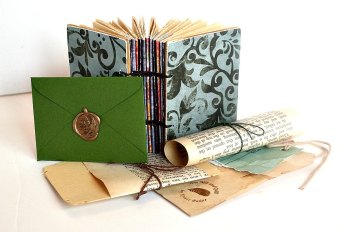
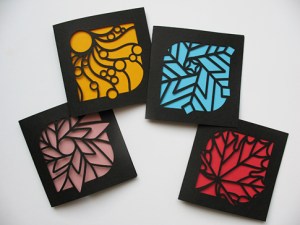
- Gorgeous die-cut greeting cards from Christina Peressini at Nib & Tuck
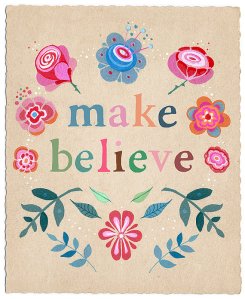
- Colorful “Make Believe” print by Lily Moon
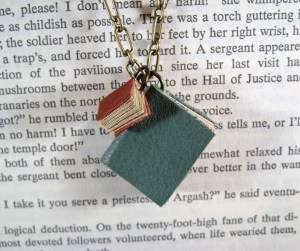
- Two practical and pretty book necklaces from JanDa Jewelry

- Two whimsical book photos of your choice from The Maple Tea House

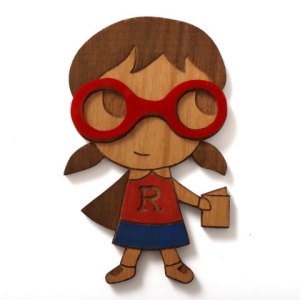
- Super-Duper Reading Girl Hero brooch from Jam Fancy
- Lovely vintage Picture Books from La Brocante Magique


- A pile of picture books from my publisher, Simon & Schuster
Apples and Pumpkins
The Snow Angel
Fairly Fairy Tales
Catch that Baby
Aliens Love Panta Claus
Dinosaurs Love Underpants
Four Friends at Christmas
The Christmas Sweater
The Monster Princess
The Little Girl with the Big, Big Voice
Hootenannny! A Festive Counting Book
PHEW! I think that’s it. I might find more stuff under my bed, though. Speaking of bed, goodnight PiBoIdMo’ers! And thanks once again for making this event a huge success. Give yourselves a nice pat on the back—and speaking of bed again—a good night’s sleep! You deserve it!





 Writing for Kids (While Raising Them)