You are currently browsing the category archive for the ‘Fiction’ category.
Hooray! More notes from the September NJ-SCBWI first page session!
Those familiar with peer critiques know the “sandwich” method: begin with what you liked, then move onto what needs work, and end by pointing out the manuscript’s merits. The editors followed this method well and offered compliments to soften the criticisms. Everyone must have left feeling good about an aspect of their writing. But we still have plenty to work on.
Some common suggestions:
- Rhyme carefully. Rhyme should have a consistent beat and meter. The editors easily picked out when a rhyme stretched to make it work. There was only one rhyming manuscript that worked. The other manuscripts felt limited by rhyme, and one in particular featured subject matter for an older audience, so the rhyme felt out of place. There’s a lot to live up to if you’re going to rhyme, so read many rhyming picture books to get a sense of how it all fits together. It’s not impossible, but great skill is required. They advised rewriting in prose and suggested using alliteration, which can be as fun as rhyming, without the restrictions. But use alliteration in moderation! (Umm, I didn’t mean to rhyme there…)
- Amp up the humor. The editors felt picture book laughs weren’t taken far enough. They wanted the stories to go from simply funny to outrageous. There’s always room for more humor. Make it crazier and more outlandish.
- Avoid common themes. Pets dying. New babies in the family. Monsters. Imaginary friends. First words. Retellings of The Three Little Pigs. These have all been done before, and done well. Stories on these subjects need to dig deep to find something new to say. Stand out, don’t blend in.
The editors also discussed avoiding clichés, clarifying the conflict on the first page, and cutting text to move action along faster. Out of 26 manuscripts, only two or three were considered strong contenders as written, and even so, they still required a little tweaking.
[An interesting tidbit for all you artists: if you’re an author/illustrator, consider yourself at an advantage. An editor is attracted to working with you since they skip the difficult step of matching your PB manuscript with an illustrator. Instead of communicating with two professionals to produce a book, the editor works directly with just one person—you.]
My friends and I thought that for the most part, both editors agreed on the manuscripts. However, one editor thought they didn’t agree very much at all!
But I think we can all agree that we need to work smarter. Some questions to think about as you work on your manuscript:
- Why should a publisher choose your story? What makes it unique and appealing, different from any other book in the marketplace?
- Why should a publisher spend tens of thousands of dollars, work several months (and in the case of PBs, years), and utilize the resources of a dozen or more staff members to produce your book?
- Is this truly the best story you can write? How can you make it even better?
The New Jersey Chapter of SCBWI was treated to an afternoon of professional first page critiques yesterday in Princeton. (Heck, we even felt smarter just being on the campus of Princeton University!)
Editors Connie Hsu and Kate Sullivan from Little, Brown shared their literary insights with 30 aspiring authors. Manuscripts ranged from a whimsical picture book about goldfish to a compelling young adult novel set in a foreign village under siege.
After each first page was read aloud, the editors provided their immediate impressions of the manuscript–what worked, what didn’t.
Some helpful advice included:
- Use first person point-of-view to your advantage. It helps the reader get into your character’s head, so if there’s too much dialogue on the first page and not enough introspection, you’re not using that device to its full potential.
- Make sure the voice fits the genre. This is a common critique I’ve heard repeated at every first-page session. Some picture books were wordy, with long sentences and adult sensibilities. If it takes the entire first manuscript page to set up the story, then you need to cut, cut, cut. Little kids beg their parents to turn the page, so you must get to the story quickly. The first manuscript page needs a clear story arc. Regarding books for ‘tweens and teens, a young adult novel should have longer sentences and be more gritty than middle-grade. In general, the editors said an MG voice can sometimes be classified as “whiney,” whereas a YA voice is angrier and angst-ridden. Yes, let that YA voice curse and swear.
- Make room for illustration in a picture book. You don’t have to describe every detail. Instead of saying, “the girl’s hair was red and wavy like her mother’s red, wavy hair,” try instead, “the girl’s hair was just like her mother’s.” This provides the double benefit of cutting words and leaving the family’s appearance to the illustrator’s interpretation. (Read Linda Urban’s interview with illustrator Marla Frazee regarding The Seven Silly Eaters by Mary Ann Hoberman. Great example of how an illustrator fleshes out the story.)
- Don’t try to surprise your reader on the first page. It can lead to confusion instead. Some stories left important details aside (who/what/why/where) and forced the reader to guess what was happening. You don’t want your reader to guess wrong! If they do, then when the correct information is revealed, they will be confused. You want the reader to move forward, not double-back to re-read.
- Set the scene. The setting provides a clear context for your character’s actions and emotions. Again, don’t make the reader guess where your character is. Show the reader. Immerse the reader in your world.
One of the funnier moments occured when the editors cautioned against using the word “puberty” in a middle-grade work. It guarantees giggles of embarassment among that age group. “It’s a word no ‘tween wants to admit exists,” said Kate Sullivan.
While the insights above were specific to the pages submitted, they can be applied to your own manuscript. Keep in mind that rules can be broken, but it typically takes an experienced, talented author to make the unconventional work.
Want to read more about first pages? Check out these previous posts:
When writing a story, the setting plays a role as important as any character–exuding its own personality and affecting its inhabitants.
Put simply, the setting offers sights and objects to discuss, to throw, or to ignore. The manner in which your characters use these objects can reveal each person’s emotions, purpose, and their personality.
Before writing a scene, I like to do visual research. I want to grasp hold of the objects surrounding my characters before I hand things over to them. I’m currently building a fictitious southern town and I have a general idea of what it should look like, but having never lived south of the Mason-Dixon, I need a little nudge. I punch some select words into the search engines to see what images pop up.
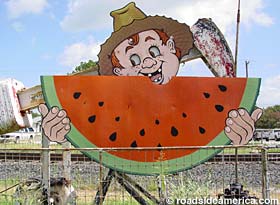
An embellished oil pump courtesy of Roadside America:
A rolling crop field courtesy of the Randall County Agriculture Department:
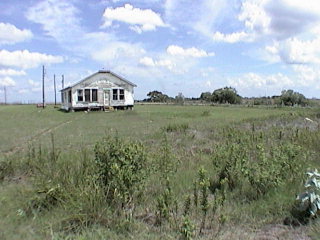
A lonely little house courtesy of Homes.com:
An old service station courtesy of the Fayetteville, TX Chamber of Commerce:

Endless inspiration, y’all!
Soon I’ll be touring a circa 1785 historic house as visual research for another project. A local township’s historical society removed layers of paint during the restoration and revealed a mysterious drawing of a woman. Legend has it that a disgruntled worker drew the image with a spoon in 1837, after an argument with the owner of the home.
Since one of my projects features an 18th-century home undergoing renovations, I thought this would be a worthwhile trip in the name of research. And the woman on the wall may provide additional inspiration. They say everyone sees something different in her face, and perhaps my characters will, too.
How do I choose which manuscript to submit to the next first page session? I’ve been going back and forth, trying to decide which one showcases my best work. And yet, the two manuscripts I am considering are so very different.
One is a clever tale of a boy with an unusual name–a name that creates a lot of confusion. This picture book is in the boy’s voice, told from his point of view. Yet the illustrations will show something very different happening around him. I have repeatedly heard editors say that a PB must leave enough unsaid for the pictures to comprise half the story, and I think this tale accomplishes that.
Then I have a fractured fairy tale. With pizzas. Glorious, cheesy pies! What kid doesn’t like pizza? A familiar story with a unique new twist might take the cake. Err, I mean, pie.
I admit, I’m getting a little too hopped up for a first page session. I shouldn’t expect anything to come from it other than a lot of good advice. I listen carefully to each page and then when the editor or agent gives his thoughts, I take a lot of notes, hoping to learn from all the manuscripts, not just mine.
Unfortunately, I don’t think everyone has this attitude. Last time a woman in front of me drew doodles on her paper throughout the two-hour session. And when it was over, she complained that the professionals didn’t like her story because they didn’t understand or appreciate rhyme. That may be true, as the editors worked in middle-grade and not picture books, but I had an entire page of notes on her story, while she went home with a lot of squiggles and stick figures.
There’s two ways to approach a first-page session: as a way to grab the attention of an editor or agent, or as an opportunity to receive professional feedback. It’s important to remember that if your work doesn’t impress the editors, all is not lost. Be inspired to work harder. Editors and agents volunteer their time to these events, and we should all be grateful. They don’t owe us anything. But we owe them our very best work.
How do you know when your manuscript is ready for submission? For some, it’s a gut feeling. But just how do you learn to trust your writer’s intuition?
The support and encouragement of my writing group has helped. I run a picture book manuscript by them three or four times until there’s not much more to be gussied up. And then I tuck that story in my back pocket and wait, creating distance. Weeks later, I iron out the creases.
Months pass. I flip sentences around. And then I flip over in bed all night, over-analyzing the story. I consult the thesaurus and exhaust the synonyms. I belt out the story in my best character voice and listen to how it flows (and someone please tell me why I always slip into a southern accent?). I love reading aloud. That’s the best way for me to check the authenticity of the kid voice, y’all (there I go again). And then, when all that’s left to edit is interrobangs, just when I think I can play endlessly with it for lack of anything better to do, I think it’s time to let it fly.
Or is it?
I understand when experienced authors suggest new writers to take an apprenticeship of two years. Writing improves with practice, and the children’s market has its own set of rules. Moreover, it’s an extremely competitive field with many successful, established authors. To break in these days, not only does your writing have to be crisp, the idea has to be unique. So much has already been done—and done well.
Now, you may believe you have extraordinary talent (don’t we all), but don’t skimp on those two years. Immerse yourself in writing. Read books on the craft, attend conferences, join a critique group, take classes, read best-sellers in your genre. That will always be time well spent, creating a solid foundation from which to launch a career. Think of it as a sling shot: the further you pull yourself into the craft, the further you’ll fling yourself forward.
I subbed four manuscripts out this summer and the rejections are trickling in. Did I submit too early? I admit, I didn’t complete the full two-year apprenticeship before letting go of my stories. Thankfully, I didn’t submit far and wee (little nod to e.e. cummings since it’s so puddle-wonderful outside). I kept the list very small so I could gauge response. And the response tells me I have to improve my gut.
I’m working on it.
I’ve already revised two PBs with a new critique partner, one who really pushes me. I believe in her talent, and she believes in mine. Maybe two guts are better than one.
As an aspiring author and mother of two young children, the time spent pursuing my career comes mostly at night, when the kids are asleep. I don’t have a lot of time, so I need to prioritize. Should I revise tonight? Or read? Blog? Research? Submit? I have to decide quickly; I only have thirty-three minutes until midnight. That’s when the baby wakes up. She loves ushering the new day in with a solid wail.
I suppose my choice tonight is to blog. I won’t have time for anything else.
I wonder if blogging is doing me any good. The majority of hits on my blog derive from “tattoo” searches, so who really reads this thing? (Which reminds me to tell you: if you want to pump up your site statistics, definitely slip in a word or two about body ink. Personally, I’ve got an inexplicable thing for Ami James, but I digress.)
Then I tell myself, it doesn’t matter if anyone reads this blog. It’s good writing practice. Even if the writing stinks (and it usually does), at least I’m meeting my daily word count quota.
But for the next few weeks, I’ll have my writing time spoken for. I’ll be busy preparing for the Rutgers University Council on Children’s Literature One-on-One Mentoring Conference (phew, that’s a mouthful, huh?). I have writing samples to polish and questions to prepare for my mentor, whomever that may be. I have my eye on a particular editor, but I doubt I’ll be lucky enough to get paired with that person.
And I feel panic bubbling up inside of me. I don’t know enough about the authors working in my genre, I don’t know enough about the mentors, I don’t know enough about the marketplace. I don’t know enough about comma splices. I need to know more so I can mix and mingle without sounding like a total noob.
But hey–maybe I should mingle with you.
Are you going to the RUCCL One-on-One Mentoring event in October? If so, drop me a note and let’s chat. I’ve got exactly twelve minutes left before the baby alarm goes off.
I bumped into an on-again, off-again writer friend today, which was a surprise, since she seemed to be hovering somewhere above the clouds.
“My novel is going really well,” she said. “I’m going to finish it up soon and send it out!”
Yes, she was planning to submit her first draft.
First, I applauded her enthusiasm. “That’s great!” Then I cautioned her. “But you should really have it critiqued first.”
“No, do you really think so? I don’t think it needs it.”
I explained that most writers don’t have enough distance from their work to see problems in their own manuscripts. The fabulous ideas in our heads are not always executed clearly on paper. Because the story is unclouded in our minds, we don’t realize when the paper takes giant leaps (or even small side-steps), losing the reader.
She belonged to my critique organization but quit last year due to her off-again writing status. I encouraged her to return if she was serious about this novel.
“Maybe I’ll just pay someone to critique it.”
A professional critique can indeed be helpful, but a good one can be pricey, so your manuscript should be in a near-submission-ready state. Because you don’t want to have to pay for two (or more) expensive reviews.
“The thing is, I don’t want a lot of people to read it. It’s very personal.”
“But you want to have it published?” I joked and she offered a pseudonym.
“Well, it’s a really great story,” she said. “I’m certain it will get published.”
“I’m sure it is. Everyone thinks their own work is wonderful. Or else we wouldn’t be writing.”
When I suggested some writing books I thought might be helpful, she asked me what a few of the terms meant. That’s when her feet returned to solid ground.
I had to explain that I didn’t want to squash her excitement, I just wanted to prevent her hopes from being squashed. If she sends out a manuscript too soon, before it’s truly ready, she’ll use up her chances with publishers and agents. If they reject something once, they are not going to want to see it again (unless a revision is expressly requested).
It’s terrific to be enthusiastic about your work. Love creating. Love writing. But be realistic, too. The clouds are a fine place hang out once you’ve signed that publishing contract. But keep your feet on the ground until then, pen to paper, writing and revising. And revising some more.
When a character stops talking to me, I have no choice but to ask another to come forward. Like a radio station that goes static across state lines, I must dial the tuner until I find another song worth listening to. And it’s gotta be catchy.
I could force myself to work on a project I’m not feeling, or jump on the current groove. I choose to go where inspiration takes me.
I understand that successful, published authors must learn to multitask. There may be times in the future when several projects will be coming to deadline and I’ll have to channel a myriad of characters. However, being still unpublished, I can follow my fickle desires.
So one middle grade novel that received interest from professionals gets shelved…and a new one begins.
In the meantime, my picture books have been submitted. All three are out looking for homes. Write home soon, won’t you, boys?
For my submissions, I researched publishers to target those with books similar to mine (but not in direct competition) already on their list. Amazon’s “advanced search” function is helpful here, enabling you to search by publisher and age range. If you find a book similar to yours, you may be able to read it on Lookybook immediately instead of running to the library.
If I haven’t blogged recently, you can’t blame a girl who has been writing and submitting her work. Now I must dive into research mode for my current middle grade novel, which includes historic elements that I last studied in grammar school. I need to start getting smarter than a 5th grader!
I have recently learned ’tis a wonderful thing to have an agent request your manuscript, yet the moment becomes bittersweet when you don’t have a completed work to send.
I know a very important rule for writers: don’t attend a pitch session if your manuscript isn’t finished. It’s a waste of time for editors and agents who are attending to find and sign new talent. And it’s just as moot a move for you. No one will take a chance on an unproven fiction writer, no matter how compelling your first page, first chapter or first half of the book is.
The good news is that I did not attend a pitch session. I attended a critique fully expecting to be critiqued. What I got were the words every writer dreams of: “You have to send me your manuscript.” Alas, I cannot send an incomplete work. It’s excellent incentive to keep moving forward with my novel, but disheartening to know that I have every opportunity to louse up a perfectly good half-finished story.





 Writing for Kids (While Raising Them)