You are currently browsing the category archive for the ‘Creative Writing’ category.

Photo credit DOCUMERICA by Patricia D. Duncan
Something strange happens to women once they reach 50, and I’m not talking about hot flashes and sagging skin. I am referring to those female family members who have an overabundance of stuff and feel the sudden need to unload it on me.
I do not need wooden napkin rings circa 1974 nor a pilly afghan in the trendy avocado green of that decade. A framed print seems like a generous offering, until I learn that it sits beneath cracked glass. Sweaters and velvet jackets thick with dust and the odor of mothballs? No thanks. Old dented tins, used shopping bags, vinyl placemats, and assorted ceramic chachkas—does my home look like a flea market?
I have relatives who want to get rid of things. I understand that. But they assume the items are too good to throw away. Yet I suspect they also realize their knick-knacks aren’t desirable enough to sell, not even to the eBay-obsessed, so I’m the solution to their clutter.
So what do I do? Refuse the third PBS tote bag I’ve been offered?
No, I graciously accept it with a “thank you” and watch their eyes light up with pleasure, knowing their treasure has found another home within the family. And then I tuck it away into a dark basement closet, awaiting my 50th birthday when I can hopefully dump the stuff on my nieces.
But a few months ago for Picture Book Idea Month, Susan Taylor Brown told us how she finds inspiration: collecting “junk” in an idea box, and then imagining the story behind the brooch, feather or piece of iridescent ribbon she’s found.
So perhaps collecting chachkas isn’t such a bad experience for a writer. In fact, maybe I’ll start asking neighbors to unload their trash–I mean treasure–on me.
 A typical day as a newbie writer: sit down at the computer, start writing.
At least, that’s what I did two years ago. I got an idea and I didn’t stop to think: is this a good idea? Is it marketable? Has anyone written something like this before? Nope. I just wrote, motivated by my muse.
And perhaps this was good back then. I was honing my skills, finding the right words, crafting sentences, building stories.
But they were looooong stories. At an average 1,500 words my tales were neither picture books nor chapter books. I insisted I was writing picture storybooks, and I used Patricia Polacco’s body of work as an example of how my stories could be published, not realizing, c’mon, she’s PATRICIA POLACCO.
It took me a while to learn to THINK before I write.
An idea begins. I ponder it. I write down the initial concept. What is my topic—what is this story about on its surface? Bulldozers or ballet dancers or dragons? What is at its heart? Is it about friendship or fitting in or family? Who is my character and what does he want? What is my hook? Can I boil the concept down to one line?
Then I research. Is there anything similar already published? If so, I’ve got to change it up a bit. Or let it go.
I ask myself these important questions:
- Is this picture book marketable?
- Will someone pay $16 to buy it?
Granted, these are difficult questions to answer objectively. Of course you want to believe that everyone will buy your book! But as a mother of two picture book age kids, I know this isn’t the case. If we don’t love reading the book over and over again, I won’t buy it. I try to use my motherly instinct to answer these questions and I think of my other parent friends. (And then I stalk parents in the bookstore and ask them what they think. No, just kidding. But I’m tempted.)
If I can’t answer “yes,” the idea gets filed away for the future, when I can perhaps transform it into something more extraordinary.
If I do answer “yes,” (or even “maybe”) then I create a brief outline or I just write. And I keep the proper length in mind: 500 to 700 words.
Some writers may call this process stifling. But I call it smart. Because if you want to be published, you have to examine these elements before you write. Because although picture books are short, they don’t take a short time to write.
Sure, you may pump out a first draft in a few days, or even less, but picture book revisions could go on for weeks, months, even years until you get it right. You whittle down the length so every word packs a punch, while still presenting a compelling page-turner, full of illustrative potential. (Which means you have to leave some things unsaid.) With all that time invested in a product you want to sell, you’re playing Russian roulette if you haven’t researched the story’s potential first.
It took me a while to learn this, to realize this, so I’m just paying it forward. Many of you are probably nodding your head in agreement. And maybe some of you are waving a finger at me for being a creativity killer.
In any case, I’m eager to hear from both sides! Think or write? Or a hybrid of both?
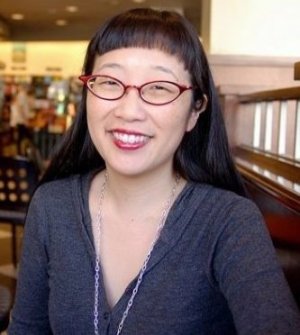
Paula Yoo photo courtesy Jennifer Oyama, Audrey Magazine
30 picture book ideas in 30 days?
Are you CRAZY?
Oh wait. You’re a writer. OF COURSE you’re nuts! 🙂
And I’m a writer, too. Which means we’re both in the same boat.
Tara asked me to give you some words of advice as you hunker down for that final idea for Day 30 of the 2009 PiBoldMo–Picture Book Idea Month!
I thought I’d talk a bit about my “other” job to give you some ideal inspiration! In addition to my YA novels and picture books, I am also a TV writer. I’ve written for NBC’s The West Wing, FOX’s Tru Calling, and currently The SyFy Channel’s Eureka.
As a working TV writer in Hollywood, I have to come up with ideas every single day. In fact, I have to come up with DOZENS of ideas every single hour of every single day when I’m working on a TV show.
Here’s how most scripted TV shows work: several writers are hired to literally sit around in a room called “The Writers’ Room” all day long and come up with ideas for episodes. Each show is run differently, but the basic day usually involves the writing staff discussing what storylines should happen in each episode, along with in-depth dialogue about character development and themes. It’s a really fun job when you think about it–you’re getting paid to make up stuff!
At the same time, it’s also a really TOUGH job. You can get burned out very easily when trying to brainstorm episode storylines and figuring out which character does what and why. It’s often like solving a puzzle–there’s a ton of logic and plausibility that you have to consider when pitching ideas.
I’ve learned a lot from having worked in TV about how to brainstorm effectively when it comes to ideas. Of course the sky’s the limit when it comes to brainstorming–anything from a pebble on the beach to a squirrel running across the street to the cranky lady standing in front of you in line at the bank can lead to an amazing story idea for your picture book.
But a cool image, compelling character, or interesting conflict isn’t enough to create a fully-fleshed out idea. You have to combine all three areas–image, character, conflict–into one idea in order to have a viable story for a potential picture book.
As a TV writer, I was constantly told that story equals intention plus obstacle. Memorize this formula!
INTENTION + OBSTACLE = STORY
In other words, your main character has an INTENTION. But there is an OBSTACLE standing in your character’s way. This creates CONFLICT… which is another way of saying STORY! Ah ha! So STORY EQUALS CONFLICT! And how that character overcomes that obstacle reveals his or her journey towards that end goal.
As long as you can make this equation work, you’ve got yourself a viable story idea! It’s actually a fun formula to apply to published books, movies, and TV shows to break down a completed project to its very essence–the idea. Sometimes working backwards and analyzing published books and figuring out their basic idea can help you as you brainstorm your own ideas.
In other words, try this formula on published books or movies etc. as a “warm up” exercise before you begin your own brainstorming. For example…
In Mo Willem’s Knuffle Bunny, Trixie and her dad go to the laundromat. Trixie accidentally leaves her stuffed toy, Knuffle Bunny, behind. She is unable to speak in full words yet, so complications arise when her father has no idea what she’s talking about when she tries to convince him to take her back to the laundromat to rescue Knuffle Bunny.
So Trixie’s INTENTION is that she wants to return to the laundromat to get her toy!
The OBSTACLE is her inability to speak in words yet to communicate her thoughts!
INTENTION (Trixie wants Knuffle Bunny back) + OBSTACLE (can’t speak inwords yet) = STORY (Trixie must figure out how to communicate to her father that they must return to the laundromat to rescue Knuffle Bunny!)
And how Trixie overcomes this obstacle shows her delightfully feisty personality and inventiveness.
See how that works? Try seeing if you can simplify your favorite picture book down to this formula. It’s a lot of fun and a good warm up exercise to jump start your own imagination!
Then apply this formula to your own original ideas–if you can create a compelling character who has to overcome an obstacle to reach his or her goal, then you’ve got your 30th picture book idea for this year’s PiBoIdMo!
CONGRATULATIONS!!!!
And now that you have your 30 ideas, please join me this May 1-8, 2010 for the second annual NaPiboWriWee event sponsored by my website at http://paulayoo.com!
For more information on NaPiBoWriWee, check out this link:
http://paulayoo.com/content/natl-picture-book-writing-week-may-1-7-2009
NaPiBoWriWee is short for National Picture Book Writing Week where I challenge writers to write an entire picture book every day for a whole week–7 picture books in 7 days!
See, I told you we were crazy! 🙂
Best,
Paula Yoo
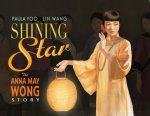 Paula Yoo is the author of the YA novel GOOD ENOUGH (HarperCollins ’08) and the children’s non-fiction picture books SHINING STAR: THE ANNA MAY WONG STORY (Lee & Low ’09) and IRA Notable SIXTEEN YEARS IN SIXTEEN SECONDS: THE SAMMY LEE STORY (Lee & Low ’08). She is also a TV writer, whose credits include THE WEST WING, TRU CALLING, and SIDE ORDER OF LIFE. She is currently a co-producer on The SyFy Channel’s series, EUREKA.
Tara’s Note:
Thanks, Paula! No one could have summed up PiBoIdMo better.
Everyone, stay tuned tomorrow for the PiBoIdMo pledge.
What’s the PiBoIdMo pledge? It’s your word that you have 30 ideas. I’ll ask you to leave a comment letting me know you’ve completed this month’s challenge. (Please note you do not have to submit your 30 ideas. Those are yours to keep!)
You’ll have until December 3rd to take the pledge, then on December 4th I’ll announce the randomly-selected PiBoIdMo prize winners.
Good luck!
Cheaper by the Dozen
by Mark Ury
Ideas are not a dime a dozen. They’re closer to $0.0001. That’s because they’re commodities. Everyone has them, everyone can think of them, and, as a culture, we’re saturated with them. Like most raw materials, ideas are worthless unless you turn them into something else, something of greater value.
How do you add value to ideas? With other ideas.
The concept of wit—one of our most enjoyable forms of ideas—is premised on taking one cliché and combining it with another to make something unexpected and remarkable.

An arrow pointing right is a cliché for a courier company. But burying it between the negative space of the “E” and “x” of FedEx makes it new. It makes the image memorable, if not surprising, and the idea valuable.

“You can’t teach an old dogma new tricks” is the written equivalent of the FedEx logo, as are many of Dorothy Parker’s best quips. “Take care of luxuries and the necessities will take care of themselves” and “It serves me right for keeping all my eggs in one bastard” whip two lazy ideas into shape and keep them marching for decades.
The economics of wit are 1+1=3. When your ideas are competing for a publisher’s or reader’s attention, those are valuable numbers to have on your side.
How do you create wit? The simplest technique is to tinker with clichés since they contain recognizable patterns that your audience can latch onto. For example, the cliché “ideas are a dime a dozen” gives you three things to mess about: ideas, money, and—thanks to the word “dozen”—eggs. If you were drawing, you might play with the notion of ideas as light bulbs and then substitute them for the eggs in a carton. You now have a new image to play with and the shadows of a scene. Who needs ideas? Inventors. But why cheap ones? Well, perhaps this inventor is down on his luck. Can’t you see him there at the register, digging into his empty pockets looking for a dime? Around him are other wealthy inventors, buying cartons of the stuff. But he can only afford one bulb for his last, terrible experiment…
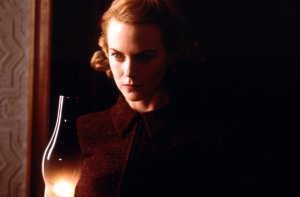 The key to playing with clichés is to think visually AND conceptually. Sometimes the images line themselves up, like the example above. Other times, the concept is unlocked through narrative interplay. For instance, you might start with the visual of ghosts, creeping around in a mansion and scaring people. But then you flip to the narrative pieces and start toying with their DNA: the ghosts aren’t the antagonists. The ghosts don’t know they’re ghosts. The audience doesn’t know they’re ghosts. Before you know it, you’re in Spain with Nicole Kidman filming The Others.
In fact, if you want to study the blending of routine ideas into something fresh, Hollywood has a not unsuccessful record. Alien is the fusion of the shark thriller (Jaws) and outer space (Star Wars). Mad About You was pitched as thirtysomething, but funny. The Sixth Sense, Unbreakable, The Village—many of M. Night Shyamalan’s films—rely on flipping everyday ideas to produce entertaining new ones that “unpack” their meaning as you watch.
That’s the benefit of folding two ideas into one. The audience experiences it in reverse: one idea unfolds into two and the brain has the joy of connecting the dots to find the hidden meaning.
Don’t worry about great ideas. Look for everyday, unbankable ones. If you invest and repackage them, they’ll outperform your reader’s expectations.
That’s my two cents.
 Mark Ury is the co-founder of Storybird.
Come visit a new website that lets kids spread their storytelling wings.
Storybird is “collaborative storytelling for family and friends.” When I first heard the tagline, I scratched my head. What is this all about? Then I got the beta tester invite. And I played on the site for hours. Days. My daughter begged, “Mommy, can we make another Storybird?”
So what is this high-flying new creature?
Storybird helps you create a tale with an intuitive book-like interface and a whimsical selection of artwork. (We’re not talking stick-figures here. These are high-quality images from some of the most talented “undiscovered” children’s illustrators today, like Irisz Agocs and Victoria Usova.)
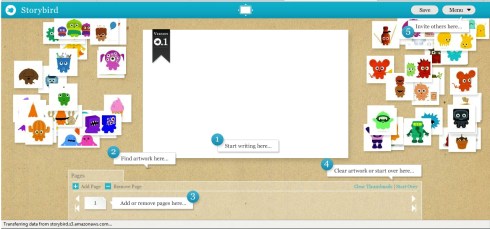
Select an artist’s work to begin. A page appears in the center of the screen, surrounded by thumbnail images. Simply drag and drop an image onto a page, then write text to accompany the picture. Add as many pages as you like and you’ll soon have a bonafide book—one that looks professional, one that can be read online over and over again. You can choose to keep your Storybird private, or you can share it with the Storybird community. And they can read it online over and over again.
But the smartest feature of Storybird brings family and friends together. Is Grandma in Gary, Indiana? Cousin Kate in Kalamazoo? You can invite them to write a page in your story. Or two pages. There’s no limit…and what’s better, there’s no fee to join Storybird. According to CEO Mark Ury, “Making, sharing, and reading Storybirds online will always be free. Printing and premium services—when we introduce them later this year—will have a fee associated with them.”
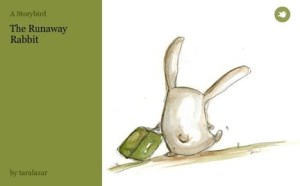
Read this Storybird
(Uhh, Mark, could you please hurry up with that? My daughters want a copy of The Runaway Rabbit in their hands right away.)
Other planned features include the ability to: choose artwork based upon theme, upload your own images, and record your voice to accompany Storybirds. For those on the go, an iPhone app is coming, too.
What’s more, Storybird wants your ideas to improve and enhance the service. The site has only been live for 6 days, but educators in over 100 countries have already asked for a multi-user platform to help teach literacy skills in classrooms. Ury says his company is working on a teacher log-in that would enable students to work under that account without having to submit their information. Storybird be nimble, Storybird be quick.
And Storybird be popular! Some stats from their not-quite-a-week online:
- 1,000 users in 100+ countries
- 8,000 unique visits
- 76,000 page views
- 7-minute average visit
- some Storybirds viewed 325+ times each
Families and teachers will see enormous benefits in Storybird, as will artists. Storybird creates a marketplace to share your work and develop a fan following. If you’re an aspiring children’s illustrator, I encourage you to sign up.
So what are you waiting for? Slide a kid onto your lap and flap your wings on over to Storybird. (Or, if you’re like me, you don’t even need a kid. The child inside you will have plenty of fun on her own!)
Remember Andy from the movie Funny Farm? Chevy Chase in his post-Caddyshack and SNL days, sliding down fame’s slippery slope, but still hilarious as a wanna-be author who moves to rural Vermont to pen The Great American Novel.
Instead of peace and quiet, Andy gets a crazy mailman and an acute case of writer’s block. It’s a fish-out-of-water story, one that inspires his wife Elizabeth to name a squirrel after him in her first children’s book—a book that a publisher accepts with a $5,000 advance. (She asks, “Is that much for a first book?” as he reels.)
Many children’s book editors warn against submitting talking squirrel tales. Seems they’re overdone. Was Elizabeth from Funny Farm to blame for an influx of fluffy rodent submissions? The world may never find out.
Despite the creature caveat, I’m writing about squirrels. But non-fiction, based upon our recent experience.
A violent July storm blew a squirrel’s nest from a tree near our property. A neighbor and I found day-old squirrels on the bike path. Gently, we moved the nest onto the grass. I assured her since the tree was closest to my home, I would contact the proper authorities. I assumed the police or animal control would be the right call.
I was wrong. Had I telephoned those authorities, the squirrels might have been destroyed.
Instead, I found an informative resource in Squirrel-Rehab.org. I learned that if the babies were cold, the mother would not take them back. The nest was covered in hail from the storm. The pups were indeed cold and wet, squirming and chirping, in obvious distress. I followed the instructions to warm the babies and tried to reunite the family, but by 10pm, the mother was still missing as another raging storm began. I brought the babies into my home.
I cared for them for nearly 48 hours and then brought them to licensed wildlife rehabilitators Wild Baby Rescue in Blairstown, NJ. The video below documents our short time with the squirrel pups, the inspiration for a new story. Elizabeth, you ain’t stopping me.
I’m back from vacation.
We unlocked the door and dumped our bags, adding to the stray belongings flung about during our packing tornado. Then big sighs on the couch, surveying our natural disaster.
This stinks. Or maybe I should say the house stinks, being closed up for two weeks with a cucumber rotting in the fridge, mossy and shriveled like a dead pickle.
We’re home and I’m in a funk. There’s no sugar-coating the post-vacation blues. (And since the cupboard is bare, I have no sugar anyway.)
 There was no fiction writing on vacation. I barely even thought about writing. I snapped a photo of the charming Beach Haven Public Library to serve as inspiration for a new story, but that was it. The needle is pointing to “E” on my inspiration gauge.
So how do I jump back in the saddle again, I wonder? From where does the motivation arise? I sent nothing out on submission recently, and my middle grade work in progress has been frozen in mid-chapter ever since I received conflicting feedback at the NJ-SCBWI conference.
I used to be in a hurry to get my work published. I had a timeline for getting stories done and accepted. I’m not making that deadline, and what’s worse, I feel guilty that I’ve let this self-imposed schedule slip. I have friends with new agents, friends with new book deals, exciting happenings that should shove me into gear.
But, no. I’m still sculpting sand mermaids on the beach.
 Perhaps that’s as it should be. I hear you saying, “Everyone needs a break, even writers!” But for the past few years, I didn’t believe this to be true. I write because I must write. I possess a DNA code that compells me to be creative. Shouldn’t I be writing every free moment of the day? And if I’m not, can I still call myself a writer?
An epiphany came yesterday while out to brunch. An elderly woman stopped by our table. With her fingertips brushing the tablecloth she said, “You look like a happy family. That’s so nice to see.”
I nearly teared up at her kindness…and at the realization that my publication woes are stupid, silly. I have a healthy family. A good life. I am a writer. I will write. The stories will come. Someday, they will be published. I will keep working until they’re good enough.
So for now, I’ll ride Western side-saddle. No need to gallop when I can mosey back in.
How about you? Do you have the late-summer blahs? How do you get motivated again after a break? After a rejection?
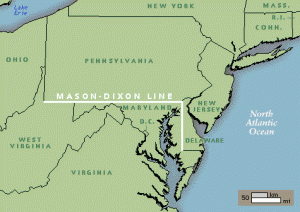 What separates the south from the north? Nope, it ain’t the Mason-Dixon. It’s the road signs.
New Jersey’s exit signs remind us that the road we’re on is not the road we want. Ads for dating websites wilt on the medians. The giant green gecko stares down at our cars, telling us to save on insurance. There’s not much personality there.
But South Carolina? There’s treasures along the roadside. And I’m not talking about boiled peanuts.
Reading the signs along a rural route, I was reminded of how small, specific details in your writing–like a street name or a slogan on a church billboard–can contribute loads to the mood and setting of your story.
Here’s the southern road signs that charmed me.
DAN
THE
MAN’S
Tractor Service
814-DIRT
Christians Like Pianos
Need Frequent Tuning
Minnows Crickets
Worms Sodas
Bee City
Honey Farm
Petting Zoo
Pumpkin Girl Road
Heavy Father Lane
There’s Only One Heaven
and Only One Way
to Get There
Groceries & Hunt’n Stuff
Welding
Organic Produce
Today’s Sons
are Tomorrow’s Fathers
Mars Oldfield Road
Vincent’s Venison
Processing Plant
There are stories buried in these signs.
Do you pet bees at Bee City?
Was Pumpkin Girl related to Heavy Father?
Is the welder married to the organic farmer? Or are they the same person?
Did aliens once land on Mars Oldfield Road?
What stories do your town’s signs tell?
Did you know that words on a page make a sound in your head? Reading expository stretches is like someone whispering in your ear. Too much and it makes you doze off. Page upon page of dialogue can be tiring as well, like listening to a loud, non-stop talker. Blah blah blah. And awkward arrangements will make a reader dizzy and confused. The ears hear what the eyes see.
Words on the page should have a pleasing rhythm or euphony. Words should mix and mingle in our minds to elicit rich imagery. Sure, you might want some words to clash for effect, but overall, clunky language is junky language.
I enjoy writing in first person because I can become my character. I sometimes speak a scene aloud before committing to paper, to test the sound of the words. (And I’ve even been known to speak with an accent, since my current manuscript is set in the south.)
Reading your manuscript aloud differs from scanning it on the page. Your ears will immediately find awkward passages and stilted dialogue. While reading aloud, you’ll be able to examine:
- Repetitive phrases. Many writers have crutch words or phrases that they use repeatedly without noticing. Reading aloud can make those redundancies obvious. Even a word used twice on the same page can sound faulty to the ear, especially if it’s an uncommon word.
- Authenticity of dialogue. While reading, ask yourself, do people talk like this? You might find yourself adding words or skipping some to fit a more natural speech pattern.
- Wordy descriptions and run-on sentences. Too many adjectives can bog a sentence down. And don’t even get me started on adverbs. That requires a separate post!
- Pacing. Do you have long passages of description or introspection? Too much dialogue? Is the piece too slow or too fast?
Your body will also give you cues. Do you need to catch your breath? Are you thirsty? That may sound funny, but it was true with one of my early stories. I stuffed my sentences so full of curlicue words that I needed a big glass of water afterwards.
But be forewarned, like any technique, reading aloud does have its cons. A writer may inject a tone or inflection while reading their own work that doesn’t come across on the page. I learned this recently at a first page session when someone else read my story. The humor and liveliness that I intended fell flat. Was the reader’s performance or my words at fault?
So you might want to consider having a critique partner read your manuscript aloud instead. Even if it’s read in monotone, the meaning should shine through. Are the words doing what you want them to do?
Have a listen; make a revision.
 In early March, several literary agents, organized by Colleen Lindsay and Lauren E. MacLeod, participated in QueryFail on Twitter. They sat at their desks, inboxes open, a pile of envelopes at their side, and then read queries one-by-one, Tweeting examples from undesirable letters: “I know that I have attached a file, but please have a read even though it’s against your policy.”
Lesson #1: follow submission guidelines.
Lesson #2? Even though many writers felt QueryFail was interesting and helpful, there was a considerable backlash from those who felt it was unfair to share query letters meant only for the agents’ eyes. But listen, if you’re an aspiring author, that means you want your words to go into print someday. You have to be ready for the criticism. If you’re not confident about sharing your query letter, perhaps you should try writing another one.
QueryFail2 was all set for yesterday, but it didn’t happen. Instead, we got QueryDay. The guidelines were supposedly the same, but the tone was decidedly different. Agents opened the floor to questions from writers, making QueryDay an interactive event. And because writers became participators, I doubt that anyone who witnessed QueryDay had anything negative to say about it.
Several positive spins emerged. Elana Roth of Caren Johnson Literary Agency announced her first QueryWin of the day early on. She requested “a YA light sci-fi novel. Strong query. Good voice in sample pages.” She was also impressed with a “Smart cookie author/illustrator: did not attach art to email, but pointed me to link of her art online. Win.”
Later on Ms. Roth passed on “a 3,000 word picture book” and a “YA novel set in college. Still on the fence about that. And only 39,000 words.” Writers, you need to know the proper word counts for your genre.
Agents also provided tips. Rachelle Gardner offered, “This may be hard to hear, but I suggest you avoid being in a rush to get published. Take TIME to develop your craft.” Later she confessed, “A query that makes me laugh is a great thing! Whether or not the book is for me, it definitely gets my attention.”
Agent Lauren MacLeod shared information on her preferences: “For the record, I prefer not published to self-published. For me, self-published has to try harder. Others feel differently.” She then explained, “Why my self-pubbed position? 1) I assume it has already been widely rejected by agents, 2) might have already exhausted the market.”
Some themes and suggestions emerged repeatedly, like submitting polished work. Lauren MacLeod announced, “I assume you have edited your work, have a writers group and have shown this to someone who likes it.” Later on, Colleen Lindsay said, “A writer needs to get the manuscript into the best shape possible before querying. An agent’s job is not to handhold or coddle or boost a writer’s self-esteem. An agent’s job is to sell the manuscript.” Editor Kate Sullivan presented this caveat, “Remain open-minded and be ready to revise. You need to be open to changes every step of the way.” Even a polished manuscript can be improved.
The most important thing learned from QueryDay is really quite basic: write a sharp query and follow guidelines.
And just how much time does an agent devote to your query? Lauren MacLeod answered, “A query that is to our guidelines, within normal word count range and my genre? About 5 minutes. These are rare.”
She then summed it up: “More important than anything: WRITE A GOOD BOOK. Good writing, good plot & good voice trump all.” Rachel Gardner agreed, “Fiction writers…it’s ALL about the writing. Nothing’s as important as what’s on the page. If it rocks, nothing else matters.”
Got that? Now if only the word “good” weren’t so subjective…
I collected a number of questions and answers from QueryDay that other writers may find useful. I’ll post separately…coming very soon.





 Writing for Kids (While Raising Them)