You are currently browsing the category archive for the ‘Children’s Writing’ category.
There are many things I wish I had known about writing picture books when I began pursuing my dream of becoming a published author. Word count. Page turns. Linear storytelling. Building tension. The “twist” ending. Instead, I had to learn these things through trial and error, attending industry conferences, reading books and blogs, and networking with professionals.
On November 6 in Madison, NJ, I’ll be sharing all I’ve learned to those who also have a dream of becoming a picture book author. Are you in the area? I’d love to see you!
So You Want To Be a Picture Book Author
November 6, 2011, 2-4pm
Sages Pages, Madison, NJ
Many people believe writing for the young is easy. After all, “they’re just kids!” But writing for children is one of the most difficult genres in publishing to break into.
Picture book author Tara Lazar (“The Monstore”, Aladdin/Simon & Schuster 2013) will teach you all the things she wished she knew when she began her career, from story length to page turns, how to leave room for illustrations and create irresistible, age-appropriate, relatable characters.
You’ll learn the little-known “rules” of kidlit (and that rules are made to be broken!), plus how to fine-tune your ideas into sellable manuscripts. Participants can even submit a first page of their children’s picture book or novel for an anonymous critique. Tara will answer your questions and help you form an action plan for breaking into the kidlit business armed with knowledge, inspiration and encouragement.
Visit The Writer’s Circle to sign up. Only $25 for 2 hours chock full of what took me years to learn!
Yes, it’s almost time for the 30-picture-book-ideas-in-30-days challenge, otherwise known as PiBoIdMo! The picture book writer’s alternative to NaNoWriMo will kick off the last week in October and continue through the month of November.
In late October you’ll be able to sign up, grab a badge for your blog and social networks, and get ready for some awesome prizes! There will be critiques from published authors, feedback from literary agents, original illustrations by picture book arists, signed books, jewelry, journals, and who knows what else! You’ll also be able to purchase PiBoIdMo merchandise with the proceeds benefitting book charities. So get those notebooks ready!
In the meantime, here’s a Halloween greeting. I hope to see you for PiBoIdMo soon!
 It’s summer, so let’s have some fun, shall we?
How about a contest?
Good. I thought you’d like that.
And this one is easy. You don’t have to send a manuscript. All you need to enter is a premise.
That’s right! A picture book premise.
Make it unique, make it funny, make it touching. In less than 100 words tell me your story’s premise. What’s the problem? What crazy situation has got your character all flummoxed? Imagine it’s your book’s jacket copy. What would you say to sell the audience on your book? You’ve only got a few seconds to capture someone’s attention, so make it snappy.
The best premise will win a free critique–and get this, you don’t even have to have the book written yet! Think of a great premise now, claim your critique later. I’ll honor the free critique for as long as you need (although it’s non-transferable and its cash value is 1/100th of a cent.)
There are three steps to enter:
- Subscribe to my blog via email if you haven’t already. (See handy button in the top left column of my blog.)
- Send your premise in the body of an email with the subject line “PB Premise Contest” to tarawrites at yahoo dot you-know-what. All entries must be received by Sunday, August 14th. (One entry per person, please. So make it your best.)
- Tell your friends. The person who refers the most people to my blog will also win a critique! (Just let me know in a comment below who you referred. I’m working on the honor system here.)
That’s all! So easy-peasy! I’ll announce the winners the week of August 15th.
One last thing–if your premise is anything like one of my current projects, I will notify you, just to let you know, I’m not taking anyone’s premise. I’ve got enough of my own begging me to write them!
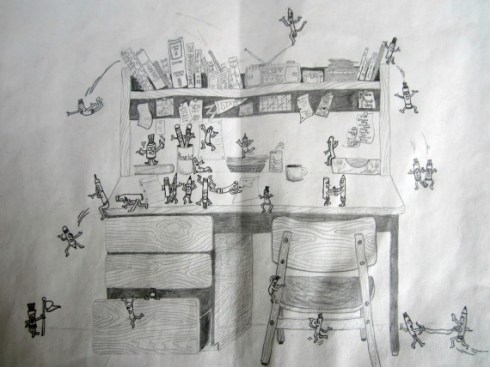
I drew this illustration to accompany an old story I wrote about my pencils and pens–who felt used and abused by my ceaseless creating, so they up and staged a revolt and escape! I never told my agent I could draw. I don’t think it’s good enough to be in books, but I thought I’d share it here. Maybe a coloring contest is in order?
Copyright 2011 Tara Lazar
Kids love when they think they’re smarter than adults, don’t they? Try putting your shirt on as pants or wearing your shoe as a hat and they’ll double-over with laughter at your stupidity.
Similarly, in writing, having a clueless narrator produces sure-fire giggles. Knowing more than the protagonist is like being in on a secret joke with the author. It’s one of the keys to writing humor for children.
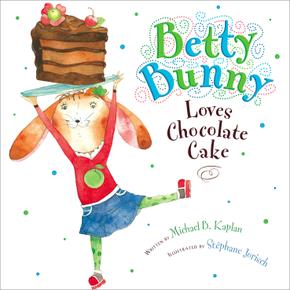 But one of the biggest mistakes in writing humor, according to Executive Editor Steve Meltzer, is random humor—humor that doesn’t serve to drive the story forward but exists merely as a gag. “Even the absurd needs to make sense and be believable,” said Meltzer. He then read BETTY BUNNY LOVES CHOCOLATE CAKE as an example of humor that feels effortless and works within the context of the story. When Betty Bunny’s parents tell her she’s a “handful” so often, she thinks it’s a term of endearment and tells her mommy she’s a “handful” right back. (Of course, I’m rushing out to buy the book right now! I know, I’m a handful!)
Remember when writing picture books for kids, your audience includes parents, too. Some humor should be for their benefit. Think of the old Bugs Bunny cartoons—watch them now and there are jokes that certainly went over your head as a child. Pixar films also have a unique way of delivering entertainment that parents enjoy. (Like in “Finding Nemo” when Nemo is waiting to sabotage the filter. The dentist goes to the bathroom and Peach says, “Potty break! He grabbed the Reader’s Digest! You’ve got 4.2 minutes!”)
Mr. Meltzer also reminded us to take advantage of page turns because “they’re the writer’s rimshot.” Page turns should be surprising and fun. They create suspense: “And then…” [page turn] “BAM!” Hit them with your best [rim]shot.
 Audrey Vernick and Olugbemisola Rhuday-Perkovich also examined humor in picture books and suggested “take something we all know and insert something absurd that doesn’t belong…the unfamiliar in the familiar.” Audrey did just this in her debut IS YOUR BUFFALO READY FOR KINDERGARTEN?. The humor in the book happens when the buffalo goes to school, helping to ease readers’ fears about the first day of Kindergarten.
Other ways to add humor to your stories include having a funny sidekick, inserting a running gag, and taking the joke beyond the typical expectation of three. When the joke happens a fourth time, it’s hilarious because we already thought it was over after the third instance.
Misunderstandings, like those literal translations in Amelia Bedelia are also humor winners. Comic wordplay is another technique to try. Combine words, create new words, use funny sounds (onomatopoeia). My debut picture book is THE MONSTORE—a store where you buy monsters. The mashed-up title signals that this will be a funny book. (At least I hope you’ll think it’s hilarious!)
So, are there other humorous devices you like to use in your writing?
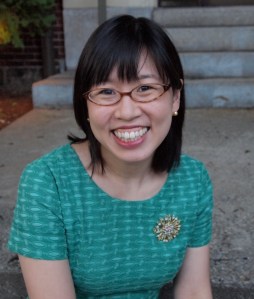
Photo Credit: Alexandre Ferron
Did you know that author/illustrator Grace Lin was Chinese? Well, she didn’t.
As a child, she was the only Asian in her elementary school, so she saw herself as an ordinary white, middle-class kid living in upstate New York. She pretended she wasn’t Asian. None of the books she read had characters that looked like her. It wasn’t until her school librarian pulled out “The Five Chinese Brothers”, the sole ethnic title, that Grace was reminded she was different.
At the NJ-SCBWI conference in Princeton this past weekend, Grace Lin gave the keynote presentation and told us about her identity crisis as an illustrator. In art school she imitated styles and she made art to impress other people. She wanted to hear, “You’re such a great artist, Grace! How do you draw so well?”
But she soon realized she was copying others, wanting to be like Michaelangelo, and making art for the wrong reasons. “Be an artist because you have something to share with the world,” she told us. So Grace began to draw things that made her happy.
She found that Chinese folk art, with its bright colors, patterns and lack of perspective appealed to her. Every inch of the illustration was utilized–there were no blank spaces. This folk art resembled Matisse, and she began to see an East-West commonality in the art she preferred, which became an East-West identity that she embraced.
If Grace was to make art that was important to her, she had to think of what was most important in her life: her family. So she created a family portrait that was uniquely her own–colorful, vibrant and in a style that was not seeking to impress, but merely being who she was.
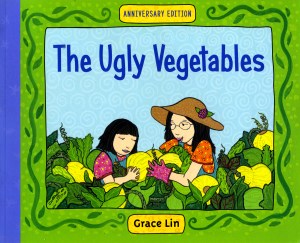 Grace explained to us that our art should have a personal connection. “If it’s not important to me, why do it?” Her first book was very personal, reflecting on the time she spent with her mother in the garden, tending to Chinese vegetables. She used to be embarrassed by the strange plants that grew outside her home, but she now realized the importance of her heritage. She remembered how she never saw herself in books, and she wanted to give other Asian children the chance to see themselves represented.
Instead of being pigeon-holed as an ethnic author, Grace Lin has seen her books melt away race and culture and appeal to every child. “Pre-conceived notions of the market don’t really matter,” she said. She reminded us that if we create what we love, what’s important, our passion will always shine through and find an audience.
Up Next from the Conference: Humor in Picture Books
‘Twas the night before Conference and all through the hotel,
Authors were dreaming of merchandise deals with Mattel.
The manuscripts were printed with name and website,
In the hopes that an agent would find love at first sight.
The editors were snoring tucked into their rooms,
Knowing before them a day of pitching looms.
And while I am too warm, and Corey Rosen Schwartz too cold,
We share a king bed because the queen rooms are all sold.
Out in the hallway, there arose such a noise,
Wouldn’t you know it, it’s the conference’s only two boys.
The place is packed with slinky stiletto-heel wearers,
‘Cause style in books means style in fashion is fairer.
A kidlit conference is full of women who are hot,
Who sell tons of stories while you just want one shot.
But we authors are friendly, we certainly don’t bite,
We’re not filled with envy, we’re not filled with spite.
We will welcome you to our world that’s so crazy,
So will editors and film agents who’ve worked with Scorcese.
Get out there and network! Polish your pitch to a shine!
Relax in the lounge with a smooth glass of wine.
A kidlit conference is the place to make a friend,
It’s where deals happen ’cause deal-makers attend!
But don’t drone for hours about your book’s premise,
Talk about your life, your hobbies. Do you play tennis?
And don’t just stand there, go mix and go mingle.
Don’t stare at the editors like they’re all Kris Kringle.
Be yourself and you’ll find that you’ll be an attraction,
Don’t croon like Jagger about not gettin’ no satisfaction.
Be happy, be cheerful, take crits with salt if need be,
Remember we’re here to help you succeed, see?
(Excuse the bad meter, I’m not really a poet.
Ask Corey the rhyme genius, she really does know it.)
And with that I bid you a hearty good luck.
Break a leg, do your best, get that writer’s block unstuck.
Enjoy yourself for three days and two nights.
Happy Conference to all, and to all a good write!
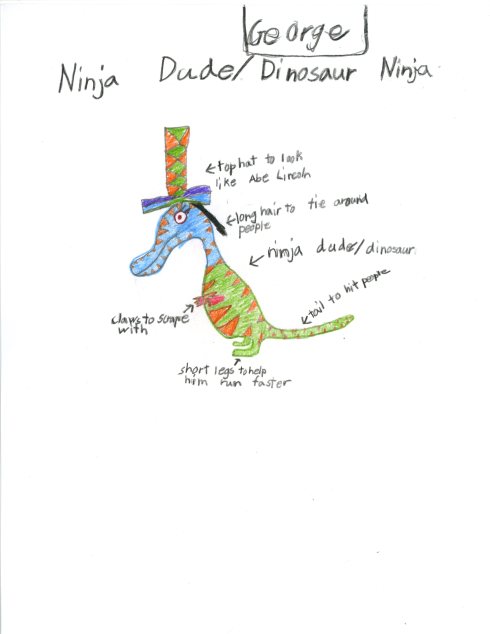
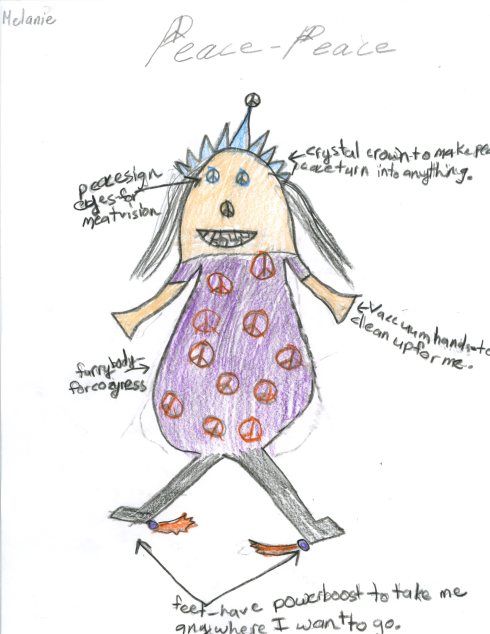
On World Read Aloud Day March 9, I visited Mrs. Mozer’s third grade class via Skype and gave them an advance reading of my debut picture book, THE MONSTORE.
Then I asked the students–if you could buy a monster at The Monstore, what would it look like? What special talents would it have?
The class drew pictures and each Monday for the next few weeks I’ll be sharing them with you.
These kids are very creative! Give them a hand (applause, not an extra monster hand, although that would be very useful).
George:
Henry:

Julia:

Melanie:
Thanks to Mrs. Mozer’s class for sharing their monsters!
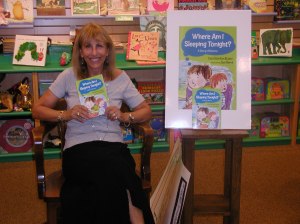 Carol Gordon Ekster is a former teacher, author and writing tutor, and if you live in the Andover, MA area, she will visit your classroom for free!
Sponsored by this blog as part of the KidLit4Japan auctions, the giveaway runs now to May 15, with a visit to be arranged before the end of the school year.
Carol Gordon Ekster will visit for an hour, read her book Where Am I Sleeping Tonight? and lead the class in a writing lesson, focusing on the features of good writing. Sending home a note to parents for possible purchase of her book would be appreciated. And of course she will sign them!
The winning class should be within 25-30 miles of Andover, MA and the visit is most appropriate for 2nd through 5th grade.
To enter, leave a comment telling us why your class would love to win this author visit. The winning class will be chosen on May 15. Good luck!
 by Dana Carey
Everyone knows what a great organization The Society of Children’s Books Writers and Illustrators is—bringing together people who love children’s books for 40 years. Did you know they do it all over the world? SCBWI France was founded in 1995 with a handful of members but it’s grown to a plucky little chapter of about 50. We have our regional conference in the fall that coincides with the French Children’s Book Fair in Paris and another big event in the spring. This May we’re organizing a Seaside Retreat way out here (I’m waving at you from the Breton coast in western France) with Diane Stanley as author/illustrator-in-residence.
 I joined SCBWI in 2004 and started volunteering by cleaning up after a conference. Our tireless Regional Advisor, Tioka Tokedira asked me to explore the idea of a retreat in my area. Next thing you knew, I was an Event Coordinator. Then on the board working on publicity. And now I’m Assistant Regional Advisor. Tioka is great at rounding up the troops and I’m so glad she spotted me. I never really thought of myself as an Event Coordinator never mind ARA but here I am. That’s SCBWI: possibilities abound.
Living far from La Capitale can be isolating but being an active member of SCBWI France has helped. I’ve connected with people who share my interest but more importantly take it as seriously as I do. I’ve learned about children’s literature and the publishing industry but I’ve also done things I didn’t think I was inclined to do. One recent example was the Literary Discussion/Pitch Event in Paris with agent/author John Cusick of Scott Treimel NY on April 1st called “The Hook and Heart of the Story.” The idea of pitching in person made me nervous.
Our homework for this event made me think about my stories differently. While preparing my “hearts” and “hooks” as well as a pitch, I had to take a cold hard look at my work and reduce it to a few sentences. It was a test that revealed the difference between a story for submission and a story that stays in the desk drawer.
We met in a cozy restaurant called Le Patio but weren’t on the patio; instead we were in the basement, like those 1950’s beatniks on poetry night. There was even a jazz duo performing at one point. We sat on sofas and ottomans nestled around John discussing the heart of the story: “it’s the bones of the book.” The heart provokes the emotional response while the hook draws in the reader.
During the second part of the evening we pitched to John one-on-one, as if we bumped into each other in an elevator and he could not escape. It was supposed to be natural but I memorized it and rehearsed with my daughter (she couldn’t escape either) and we both realized why I’m not an actress. Luckily, this did not matter. It was evident during the pitch that John was much more interested in listening and processing my content than in dissecting my delivery. It was great to have the chance to try something new in a nonjudgmental atmosphere. John gave me some solid feedback on the pitch and then we discussed the story. All in 5 minutes.
I left knowing my next steps. And I learned first hand that during a pitch, the “pitcher” isn’t the only one working: the agent is listening hard, processing the information and then delivering a coherent critique full of insight. Not an easy thing to do in 5 minutes. But it’s worth stepping out of your comfort zone for it.
Join me (somewhere outside my comfort zone) at an SCBWI France event (in English): scbwifrance.com. Find us on twitter: @scbwifrance and Facebook: SCBWI France.
Bon courage et à bientôt!
 Before she moved out to the provinces, Dana Carey worked as a graphic designer in Paris then taught English to architecture and art school students. Now she writes and illustrates picture books. She also reads MG/YA books in English and writes reports in French for French publishers as well as doing some translation, painting and child-rearing on the side. Find her on twitter: @danaFR.





 Writing for Kids (While Raising Them)