You are currently browsing Tara Lazar’s articles.
Today literary agents Lauren E. MacLeod and Colleen Lindsay hosted “QueryFail” on Twitter. Several agents and editors joined in by sharing the worst query lines from their slush piles.
The intention wasn’t to mock writers, but to educate them. “I know writing and querying are hard,” wrote Ms. MacLeod. “So my queryfails have been chosen from people who did not follow submission guidelines.”
Originally I had reposted many of the QueryFail examples here. But after hearing from several writers who were upset by the event, I have removed the specific entries. Instead, I’ll focus on what I learned by following QueryFail.
I apologize to those writers who felt disrespected. My intention in reposting was to share what I thought was good information. I still think it’s good information. But if you know me personally, you know I’m an empathetic soul and I don’t wish to cause another writer distress. Frankly, we’re distressed enough.
So onto what I learned, sans examples…
1. Failure to follow directions is an automatic rejection.
Agents receive hundreds of queries a week. Their submission guidelines help them work efficiently. If you don’t follow those guidelines, it takes more time to read and respond to your query. The easiest solution is therefore not to bother.
2. Don’t include anything in your query other than what is requested. (Typically a one-page letter and first page(s) writing sample.)
What sells a book? The writing. The same goes true for your query. The writing sample’s the thing. Don’t include food, photos, scented paper, stickers, alcohol or anything else. This distracts from your writing, the one thing that will win the agent’s attention.
3. An agent makes a living by selling books. If you don’t have a book available to sell, you shouldn’t be querying.
Do not query until your book is finished, polished and ready for sale. Agents do not write for you, so don’t send ideas you want them to complete. Don’t contact an agent if you have something already published but nothing new to sell.
4. Only include relevant, professional publishing credentials in your query.
If you are writing a middle grade novel, your articles for a food packaging trade magazine aren’t relevant. Neither is adult fiction, unfortunately. And if you don’t have any credentials, don’t apologize. Simply list your membership in a writer’s organization, like SCBWI. Remember, your writing is what matters. Experience is good, but not a requirement.
5. Submit a novel with a unique idea, not a bizarre one.
You may write well, but is your book marketable? Remember, an agent’s job is to sell books.
6. Don’t toot your own horn.
Confidence is an attractive quality. Arrogance is not. Know the difference.
7. Remember correct punctuation and grammar.
If your one-page query contains mistakes, the agent can assume that your manuscript is flawed, too.
8. Use the correct salutation.
Call the agent by their name. They want to know that you know who they are! If they are agent #47 in an email blast, they know you haven’t done your research. Don’t call a female agent “sir.” And don’t address your query “to whom it may concern.”
After all those fails you may be wondering, what is a Query Win?
- First sentence hook
- Wordcount/genre
- One- or two-paragraph blurb
- Relevant writing credits/background
- Polite closing
- Solid writing sample
If you want to read more, search TweetGrid.com for #queryfail.
One last tip from Query Fail: “If you must scream about your rejection, do so into a pillow, not on your blog.”
 Tammi Sauer is the author of Cowboy Camp, a knee-slappin’, whip-snappin’, giddyup of a picture book.
I predict you’re going to be hearing a lot about Tammi soon. With several gotta-read-’em titles on the way–including Chicken Dance, Mostly Monsterly and Princess-in-Training–we can all say we knew her when!
Tammi is moseyin’ over to my blog today to talk about her trail ride from writer to published author.
Tammi, how did Cowboy Camp gallop from your desk to the bookshelves?
Cowboy Camp didn’t start at my desk, it started on my front porch.
One evening, there was an unexpected knock at the door. I opened it and was greeted by a young boy. He was selling newspaper subscriptions in an effort to go to…COWBOY CAMP. I looked at this kid with his everywhere hair and thick glasses and uncowboy-like everything and knew I had a story.
I wrote the manuscript, revised it, and sent it out in under a week—my fastest ever. Early on, Cowboy Camp made its way to three acquisitions meetings. Oh, the joy. But each time the manuscript was returned to me with regret. Oh, the agony. Many personal rejections rolled in as well. Then I discovered a house that was just starting up a picture book line. I thought, “Maybe this is it!”
I sent Cowboy Camp to Sterling Publishing. Within two weeks, I learned the manuscript was going to acquisitions. Shortly thereafter, the editor emailed and told me the acquisitions team loved the manuscript, but the house wanted to find the perfect illustrator before offering me a contract. Yes, more joy. More agony.
Months went by. I decided to send Cowboy Camp to SmartWriter’s first W.I.N.! (Write It Now!) Competition. Cowboy Camp ended up placing second in the picture book division out of more than 400 entries. I shared the news with my editor contact at Sterling. Within weeks, I had an offer. Yee-haw!
You said Cowboy Camp was your “fastest ever.” How many picture book manuscripts did you write before Cowboy Camp? Are any of those slated for publication?
I’m not sure how many picture book manuscripts came before Cowboy Camp. Maybe four or five? I do know that they were collectively awful. I consider them my “practice manuscripts.” And ha! No, none of those early works are slated for publication.
So how long had you been writing for children when you got the contract for Cowboy Camp?
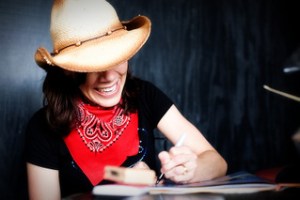 In 2000, I started toying with the idea of writing children’s books (this meant I would write for a couple of hours one day and not write another word for the next, oh, ten months or so). I didn’t get serious about writing children’s books until the spring of 2003 when an illustrator paid a visit to my daughter’s preschool. Seeing a real live person who was involved in the creation of children’s books was the push I needed to make writing a priority in my life. I received Cowboy Camp’s offer the following year.
You have five books slated for release. Do you have an agent now, or are you continuing to submit on your own?
I have an agent. In August of 2005, after much agent research, I sent Laura Rennert at Andrea Brown Literary Agency a query for a humorous, contemporary teen novel. It wasn’t long before she asked for the manuscript. The next thing I knew, she wanted to call me. Eek! Fortunately, a miracle occurred and the phone call went well…so well in fact that I KNEW I found the right match for me and my work.
Around the time that I signed, my PB writing started to take off. And that teen novel of mine? It was getting revision request after revision request after revision request to infinity. I made the decision to put the novel on hold and focus on what I loved and did best–PBs. Laura fully supported me on my decision.
You obviously have the talent to succeed in novels. How did you come to the realization that you were a PB-writer at heart? Do you think you’ll ever go back to that YA novel?
PBs just felt more right.
I don’t think I will ever go back to that novel. There was a lot that I loved in that manuscript (the characters, the humor, the voice). But one day it occurred to me that if I was going to have a novel Out There, I’d want it to be someone’s favorite. I would want others to feel about my book the same way I had felt when I read A Crooked Kind of Perfect by Linda Urban. My manuscript was nice, but it didn’t have that kind of wow factor.
What do you love most about writing picture books? Is there a particularly satisfying challenge? Are you thrilled to see your words come to life through each illustrator’s interpretation?
I can’t think of the one thing I love most. Coming up with a good idea is awesome. So is finding the perfect word, creating just the right story arc, and discovering new ways to build heart and humor into a manuscript.
As for satisfying challenges? I would have to say getting the “Yeah, baby!” from my critique partner Cynthea Liu is one of the hardest things to come by and therefore one of the most satisfying of challenges. The “Yeah, baby!” is what we give one another when a manuscript is decidedly brilliant and ready to be sent agent-ward. Believe me, getting the coveted “Yeah, baby!” is worthy of fanfare.
 It has been a real thrill to see my words come to life through each illustrator’s interpretation. In Chicken Dance, Dan Santat created an Elvis Poultry that absolutely floored me. I recently received Scott Magoon’s sketches for Mostly Monsterly and I was equally amazed. Scott’s take on the main character and her story was better than I had ever imagined. I feel honored to be working with such talented people.
One way for children’s authors to promote their books is with school visits. You just got back from a school visit in Texas. Can you tell us about that? What is a typical Tammi Sauer visit like for the students?
I absolutely love doing school visits–especially when schools work hard to make the day an event. On my web site, I list some tips for a successful school visit and Holliday Elementary certainly made the most of it. The kids–as well as some of the faculty and staff–gussied up in their best cowboy and cowgirl gear. Cowboy grub was served. Stick horse races took place in the gym. Bandana-wrapped trail mix was passed out. A guess-the-number-of-beans contest was held in the library media center… It was truly a cowboy-themed day.
I always strive to make my school visits fun, engaging, and informative. I offer a lot of opportunities for audience participation, perform a couple of magic tricks and/or an impromptu theater experience, and do what I can to really connect with the kids. Creating a memorable and meaningful experience for students is my top goal.
Yee-haw, honey! That sounds like a rootin’-tootin’ good time!
Once your picture book is accepted, the publisher has to find an illustrator. How much input do you give your editor regarding illustrator choice?
Some houses ask for illustrator input. Some don’t. I was thrilled when my editor at Simon & Schuster asked me for an Illustrator Wish List. So fun! One of the names at the very top of my list was Scott Magoon. I was astounded when Scott signed on for Mostly Monsterly. Total writerly dream come true!
I am happy to say I have formed good email relationships with Dan Santat and Scott Magoon. They are both so funny and brilliant and beyond what I had ever hoped for as partners for my books.
How do you stand the wait until your book is released? Most picture books take 1-2 years to hit the shelves!
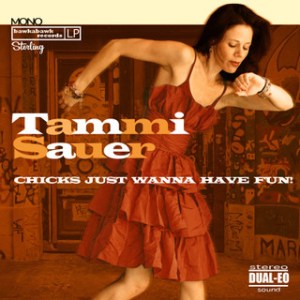 I WISH it only took 1-2 years! Chicken Dance will hit the shelves three years after I received the offer. Mostly Monsterly debuts two and a half years post-offer. The waiting is pretty horrible–especially since I am not a patient person. At all.
But, wow, when little bits of news trickle in—like finding out who will illustrate an upcoming book or receiving preliminary sketches or seeing the final art for the first time–it makes for some really nice moments along the way.
Tammi, thanks for sharing your story. Before you ride off into the sunset, what’s your best piece of advice for aspiring picture book authors?
My best piece of advice for new writers who dream of becoming published picture book authors is to read–and study!–as many picture books as possible. Knowing picture books inside and out–their feel, their rhythm, their language–is the very first step in creating quality picture books of their own.
OK, cowpokes! You heard Tammi! Now get on back on yer saddle! Read and write!
And don’t forget to visit Tammi’s blog! You can order Cowboy Camp or pre-order Chicken Dance via Amazon.
 February is over, but fear not, kidlit lovers!
“Love a KidLit Author Month” will continue through March.
That means more interviews with children’s authors and illustrators, both new and established…
…and more chances to win autographed books…
…and don’t forget that gift certificate when the series is done! So remember to leave a comment to be entered!
While you wait, please go vote in Fuse #8’s Top 100 Picture Books poll! Choose your 10 favorites of all time. Deadline is March 31! Go vote now!
 I met author-illustrator Steve Ouch on Twitter several weeks ago and was immediately impressed by his 5,000 followers. (Which has now topped 10,000.) Just who is this guy? Why had I never heard of his book SteamPotVille?
The easy answer is that Steve wrote, illustrated, and published SteamPotVille himself. And now he’s a one-man marketing juggernaut, making connections with parents, teachers and fellow writers through social media.
Smart? You bet. His book, released in early January, already garnered 19 five-star reviews on Amazon. The word-of-mouth is spreading…and spreading fast.
Fascinated by his approach, I had to learn more about Steve and his creation.
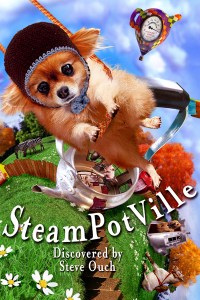
SteamPotVille is a topsy-turvy romp through a fantastical dreamland. The illustrations feature animals in impossible situations–a lion riding a pony, a monkey swinging from a straw–created by photomontage. Steve, one has to wonder, what came first? The pictures or the text?
The text came first. Just as in the development of a movie, I changed some of the script as images came to life. Each page has about 150 hours of illustration time. When you spend that much time on one piece, the characters start their improvisations. Adjusting the text to express this phenomena makes the book a better read. That’s a flexibility that comes with being the author and the illustrator.
 Wow! 150 hours! Truly a labor of love. And that shows not only through your elaborate, whimsical illustrations, but in the way you’re marketing SteamPotVille via social media.
Can you tell us why you decided to release your book as an independent title? Did you have a viral marketing campaign in mind all along?
I did a logic problem and this is what I discovered:
a. I shouldn’t spend all my time looking for an agent and a publisher when I could be trying to make money selling books.
b. By enacting my own campaign and getting the book viewed, I’m doing a service to a publisher by testing how the product will be received on the market.
c. Once SteamPotVille is established then I can meet with publishers for wider/deeper distribution. I like the idea of getting things done. It’s really taxing to forge new paths all the time, but that’s life. As far as a viral campaign: I don’t see it as a campaign but more of an ongoing experiment.
And you’re definitely getting things done. How did you attract so many Twitter followers? What other kind of online promotion have you been involved in?
 Twitter is parallel to human society. All of the general rules of socializing apply to this medium, so I get out there and socialize. The more I do it, the more popular I become.
Online I’m trying to get in the Guinness Book of World Records for the most cousins on FaceBook (add me as a friend and I will make you my cousin). That’s a slow and long term promotion. The other promotions happening at the moment are my inefficiency campaign and sending bottles of the Internet to people who can’t get access.
Ha! And let’s not forget about blog interviews!
Some may call you brilliant and yet others might be cynical about your publisher-come-to-Mohammed approach. What do you have to say to the skeptics?
:chuckle: I wonder if Mohammad had a hard time finding a publisher? That would be a fun story.
I never place judgment on what others choose to do for themselves. Each of us have our own path to go down. I am not saying that mine is the best nor is it right. I am just doing what seems to be right for me for the time. Whether it works to deliver SteamPotVille in the right hands will be like a bad mini-series (to be continued). For now though, I am enjoying the opportunities to chit-chat with people like you and that makes me happy enough.
Thanks, Steve. No wonder you’re so popular!
Can you tell us a little about your photomontage process? How do you start illustrating a spread? Do you make a rough sketch first, or does it all come together on the computer screen?
I spend time breaking apart a scene I have developed in my head, then I rough it out on paper. Next, I take pictures and apply them to the layout on my Mac, over and over, until I feel like the image is strong enough to stand on its own.
Are you working on another book now?
I finished writing my next work. I hope to get started on the montage at the end of the year.
Have you approached traditional booksellers about carrying your title? Will be you making any appearances to promote your book?
I have yet to approach any traditional booksellers, know any buyers? Speaking of, anyone who would like to get my book into any store or chain, I would offer a commission of the sale.
I plan on doing a book tour this summer/fall! If it happens, it will be pretty interactive from a web perspective. 😉
What advice do you have for other authors who are interested in publishing and marketing their own title? Is there anything you know now that you wish you knew when you started?
I would advise anyone who is going to setup their book “indie style” to begin marketing your book before you are done. I wish I knew that one.
I think that’s good advice for any author. Thanks, Steve! Good luck with your books!
Check out SteamPotVille and follow Steve Ouch on Twitter for his book updates.
Random comments on the children’s book industry from editors and agents attending the NJ-SCBWI mentoring workshop on February 22:
On THE ECONOMY:
“Things are getting tighter with budgets. As hard as it was to get published, it’s even harder now.”
“Bookstores are cutting down on their inventory. We can’t get as many books in, so we’re not buying as many books.”
“This is not just a correction of the marketplace, it’s a correction of the mind.”
“We’re going to be seeing far fewer advances for mediocre books.”
“But if you’re a new author, you don’t have a poor track record to hurt you.”
“We may see a return to house authors. Authors and publishers will enter a partnership. They’ll help nuture one another and careers will have a steady progression. If you find a house that loves you, they will love you long time!”
On MARKETING & PROMOTION:
“Learn how to market your books. Do school visits. Use social networking tools. Talk to other writers about your book. Talk to everyone about your book.”
“Get to know your publicist and marketing director. They are your friends. But don’t overwhelm them with 17 email messages a day. Let them know you’re their partner.”
“Realize that the books you see up front in the stores are paid for by the publishers through co-op marketing. If they have a talking slip? Paid for. If they’re on an end-cap? Paid for.”
“Become friends with your local librarian and your local bookstores. But always keep your publicist informed about what you’re doing. Don’t go over their head. Don’t go over your editor’s head, either. That’s bad business for everyone involved.”
“Don’t waste people’s time. Don’t send chocolate to all the Borders buyers in the country.”
“With school visits, you’re a celebrity to those kids. Get yourself out there. Build word-of-mouth.”
“Temper your expectations. If you wrote a teen non-fiction book, the big retailers aren’t going to carry it. That’s not their market.”
“Don’t follow today’s trends. Writing for the market in general is a terrible idea.”
“If you’re a picture book writer, don’t start writing a YA about vampires just because it’s popular.”
On EDITORS:
“Editors are always in the market for a well-written book. But I can’t define for you what that is. I know it when I see it.”
“Know what your editor likes. Know who you’re submitting to. I don’t like gross stories.”
“But I do! Send them to me!”
“We like authors who are agented because the work comes in polished.”
Editorial Anonymous provided a great explanation of basic picture book construction a few months ago.
At that time, I skimmed the info. Today, I’m studying it.
Why? An editor asked me to make page breaks on my current manuscript. And know what? I had more page breaks than a 32-page picture book would allow! Whoops. I knew that my manuscript had to fall within the 500- to 800-word length, but I had neglected to pay attention to logical page breaks.
The editor said, “Page turns can make or break a book, and it can be helpful to an editor to see how you envision the text.”
In a 32-page picture book, you don’t actually have 32 pages for your story. You only have 24 pages since 8 are used for the book ends, copyright and title. And 24 pages translates to 12 spreads (an illustration that spans the two opened pages in a book).
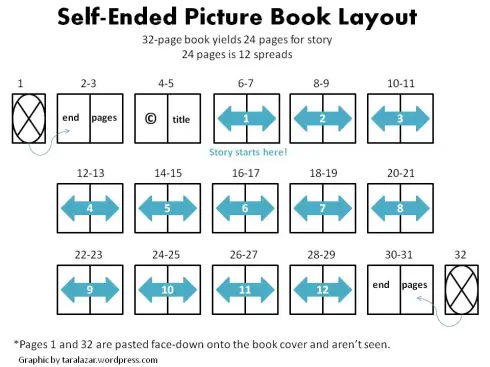
Self-ended means that the printed book block serves not only for the story, but also for the end pages. No additional paper is used to form the book. The printed book block is pasted directly onto the cover.
Another common format is colored ends. This means colored paper (different from the printed book block) is used for the end pages. With colored ends, you’ll gain an additional 2 1/2 spreads since more of the printed book block is available for story.
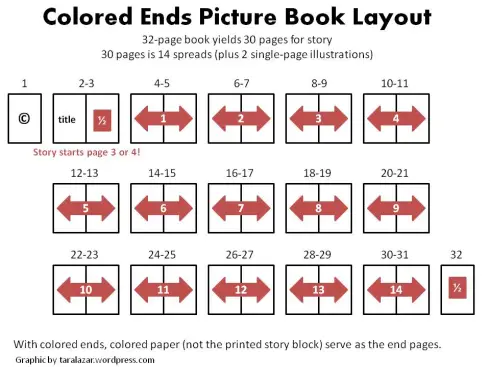
Some picture books have single-page illustrations instead of spreads. One of my favorite devices is when a group of three things are illustrated on one page. But this isn’t done on every page. A debut author’s work might be laid out only in spreads to save on costs (it’s less illustrations to produce), so you may want to think mostly in spreads. As always, publishing is a subjective industry, so this will vary by editor.
You may be asking, why do I need to know this? Won’t the editor and illustrator figure out the page breaks? Sure, they will. Some may not even ask for your page-break input. However, you can write a more appealing picture book if you understand the format for which you’re writing. Knowing the page turns will improve your story’s pacing. You’ll realize which scenes may have too much text. You can make page turns surprising and fun.
So give it a try. Take your current PB and plug it into the format. Does it fit?
I just took a random sampling of 7 picture books from my collection. Interestingly, none had self-ended construction. They all had colored ends. Here’s how they broke down:
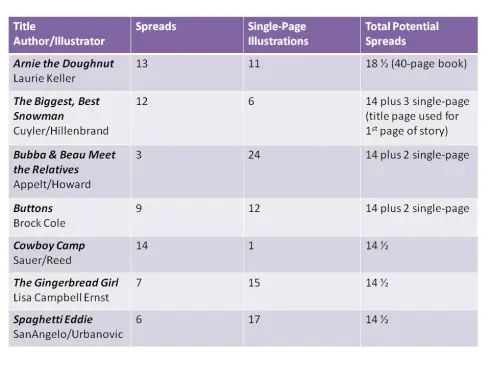
I don’t think I’ll ever look at a picture book the same way again. My kids are going to be frustrated if I count spreads while I read to them!
It’s interesting to note that Cowboy Camp and Spaghetti Eddie are both by debut authors. Cowboy Camp is illustrated in spreads, whereas Spaghetti Eddie is told with mostly single-page illustrations. This “illustrates” that publisher preferences vary (as do manuscripts)!
Keep in mind that when you submit your manuscript, you should do so in the standard format, unless the submission guidelines specifically request that you mark page breaks.
Some editors will never ask you for page breaks, some will insist upon them. Remember that this is a subjective industry where there are many rules to follow but many places to break them, too.
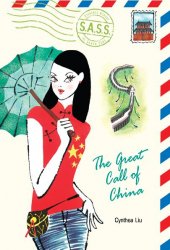
UPDATE! The winner of the autographed copy of The Great Call of China is Karen Kincy! Congratulations, Karen!
Cynthea will be contacting free-tique winners directly.
Thanks to everyone who entered!
Visit CyntheaLiu.com for the AFTER HOURS party!
Today’s the day!
The release of Cynthea Liu’s debut novel
The Great Call of China!
And if you’ve come for the release party…
…you’ve made it to
the right place!
the right place!
We’re celebrating all day long with:
- An exclusive interview with Cynthea, answering writer’s questions
- An autographed book giveaway
- Free-Tique, Teeny-Tique & goody bag giveaways
- An extended party invitation to Cynthea’s website where you can view behind-the-scenes videos, play games and win The Great “Haul” of China!
Yeah, yeah, there’s some rules. But they’re fun! (Snoop’s in charge.) And they’re after the interview. So let’s get right to it…
 If you could describe your writing style in one word, which word would it be?
~ Suzanne Young
Verbose.
I wish it weren’t true! Other adjectives might be commercial or funny. But that all depends on what I’m writing.
What’s your juiciest behind-the-scenes story on the making of The Great Call of China?
~ Jennifer Hubbard
The making of THE GREAT CALL was quite uneventful until the very last round of revisions. The publisher requested I shorten the book by about 15K words, and the deadline was 7 days away. Not long after that announcement, I received my editorial letter for the last round of PARIS PAN revisions, asking for a 20K cut and I had ten days to do that. To top it off, I was a new mother, nursing a six-month-old baby about eight times a day. That’s a lot of numbers, folks!
So you can imagine that I subsequently stroked, then regressed into a six-month-old thumb-sucker myself. In the end, I managed to get an extra week, cut down THE GREAT CALL by about 10K words and PARIS PAN by another 10K. It was the toughest three weeks of my writing career.
Moral of the story? Don’t be verbose if you can help it! J
How do you find the time to write, promote your writing, and be so active in the writing community?
~ Karen Kincy, Jennifer Hubbard, Bettina Restrepo
I have the wonderful help of a college student named Julia who comes in each weekday while I go off to work, build my writing career, and interact with all of you. Though, admittedly, the last couple of months, I’ve been working on just about everything, but the writing.
 Also I can run on less sleep than I ever dreamed possible. Baby Liu has trained me well!
Snoop, of course, also helps out by taking on meals and housecleaning.
Do you ever sleep? How did you get to be so awesome?
~ Jennifer Hubbard
Aw, that’s sweet! Yes, I do sleep (sometimes with my eyes open). And thanks to Baby Liu and Starbucks’s Caramel Macchiatto, I only need about about 5-6 hours a night. I do take days off though, which is great for recooperating.
What has been a rock bottom moment for you as a writer, and how did you climb higher?
~ Karen Kincy
The rock bottom moment came about two years after I started writing. It was February, 2006. I had racked up a lot of rejections, and in that time, I felt like I had been close, but not close enough, you know? I wondered if I would ever sell anything. Sure, I know, many writers go through much more rejection. But that’s all relative. When it’s YOUR dream, when it’s YOUR goal, everything is way worse. It doesn’t matter if it’s two months or 10 years. For me, I had been subbing everything from PB to MG. I thought maybe I should try something else. I put together a YA proposal for a series. What came back? A rejection that stated my writing was “generic” and “lacking pizzazz.” GASP!
That rejection really stung even though the editor had been right about the submission. After that, I promptly made an appointment at get my hair done. I was tired of staring at my rejected-self in the mirror. I was going to dye my hair purple (a tasteful deep shade of purple), and I was confident I would walk out of the salon a better writer.
Of course, the new hairstyle didn’t improve my writing, but a group-scream on the Blue Boards helped. I tried to move on, but the rejections continued. Nine months after that, I confessed to my SCBWI regional advisor that I was ON THE VERGE (… of breaking down!) . I even thought about forming a group called ON THE VERGE so we could all drink together. Then the next month, I turned in another revision for PARIS PAN (the fifth major round of revisions), totally unsure of what I was doing. Seriously, I was thinking I should try something else on as a new career – like becoming an agent, or maybe doing Snoop’s laundry…. Then PARIS PAN sold at auction in a two book deal to Putnam. A couple of weeks later, the same editor who had called my writing generic bought a different series book I had pitched with my agent. That book was THE GREAT CALL OF CHINA.
What was your favorite book as a child? As an adult?
~ Nan Marino
I had sooooo many favorites that I can’t possibly pick just one. But as a kid, I was a huge fan of any book that featured animals. Black Beauty, Trumpet of the Swans, The Mouse and the Motorcycle. The first novel I completed, actually (which is in a metaphorical drawer at the moment) is about a talking dog.
As an adult, I haven’t read anything that has touched me as much as the books I read as a child. But … I did read HARRY POTTER in my mid-twenties. I just had to see what the hoopla was about, and that book got me in touch with the left-side of my brain again, a side I hadn’t used much since junior high. So thank you J.K. Rowling for reminding me that I am very much a kid at heart.
Do you dedicate a certain amount of time to marketing each day, or a certain day or week? AuthorsNow! is an incredible resource. What plans do you have for its future?
~ Bettina Restrepo
I SHOULD be dedicating time each day to marketing, but I am easily distracted! In fact, I think I suck at marketing. Seriously, I don’t really like to pitch my own stuff. The whole idea of walking into an indie bookseller and introducing myself and my books freaks me out. I much prefer to just talk to people online about nothing much. I find Facebook and Twitter—my latest time-sucks–wildly entertaining.
As for AuthorsNow!, I just answered that question on Cynsations. In short, my main hope is that the web site continues to grow as a resource, and that more and more book enthusiasts use it to help them find the books they’re looking for!
 How old is your bunny Snoop, and where did he come from?
~ Karen Kincy
Snoop is about 6 years old now. That makes him a middle-aged bunny, maybe nearing retirement. He was adopted from the House Rabbit Society, an organization that does awesome work for bunnies like Snoop who needed homes. Little known fact: Snoop had actually been adopted by someone else before I came along. Apparently, Snoop had not been getting along with other bunny housemates in his new home. (Can you imagine that?) So he had to be adopted out again.
Now he is happily ruling my roost, and he doesn’t even mind Baby Liu all that much. Another little known fact: Snoop used to have a different name, but I didn’t think it fit his personality. He was much too forward and nosy for his old name. Can anyone guess what his old name was?
Snoop is uncommonly wise for a bunny. Are there special scientific experiments involved?
~ Jennifer Hubbard
Ha! Snoop drinks a powerful shake every morning. Packed with all that leafy-green goodness. Maybe that’s what it is.
How did you and Snoop become a critiquing team?
~ Nan Marino
It started in my first blog entries in 2005. I had just come out to the world publicly as a writer, and I felt incredibly naked with only me blogging in my entries. So scary. Snoop stepped in and helped out. His first spoken word on my blog was … “BURPPPPPPPPPPP!!!!!!!!!!!” He still likes to do that now and then.
Does listening to Snoop chomp on the manuscripts he critiques help you improve your own writing?
~ Roxanne Werner
 Great question. In some ways, it has opened my mind to new ways of writing, but I’m not sure it has influenced my own that much. Writing style is your unique fingerprint. It’s like you can’t do anything to change that unless you perform major surgery or something. My crit partner Tammi has her own fingerprint as does my other crit partner Beverly. I’ve seen many, many prints, but that doesn’t really improve the way I write. If I see something really good, I just feel depressed about it. I promptly proclaim, Why can’t I write like that?!
So no, sadly I can’t absorb genius from other people’s writing. I can only HOPE that I learn to become that good.
Does Snoop feel rejected when you get a rejection? Vannie, aka Pooper Dude (our bunny), absorbs the anxiety of the household, and is skittish for days afterward. How do you both deal?
~ Nancy Viau
Yes, Snoop is very tuned in to my emotions. He has offered his furry shoulder to cry on more than once. We find that TV is also great way to take one’s mind of things, as is an uncommonly good veggie buffet.
When are you going to write a story starring Snoop? Does Snoop (or a bunny) appear in either of your upcoming novels?
~ Stephanie Ruble
Awesome question. Snoop has yet to star in his own show in my manuscripts. He quite likes flaunting his stuff on the Internet without worrying about being rejected by someone else.
Also if you didn’t know, Snoop has written a couple of books about himself already. There’s The Life and Times of Snoop Bunny Bun. And Feed Me about a Chinese girl who starves one helpless bunny into rebellion. He sold that one in a five-book meal, to Rupert Bun-doch at auction!
He is rather talented.
Do you have a big book idea inside you that you know you want to write “someday” but its time has not yet come?
~ Jennifer Hubbard
I have this image in my mind – really it’s just a picture in my head, nothing more – I hope I will write about that picture one day. But no, the time has not come. When it does, you will know!
How do you ensure that your writing appeals to your young audience?
~ Julie M. Prince
I guess I won’t know anything for sure until kids and teens have my books in their hands. While writing the manuscripts though, I focused on putting down stuff that entertained Snoop and me. For younger kids, that usually means something humorous. Bonus, if there’s an element of mystery.
For THE GREAT CALL OF CHINA, a young adult book, I tried to write something that reflected what I might have been thinking or feeling when I was a teen.
 Did you travel to China as part of your writing process for The Great Call of China?
~ Susan Lorene
Yes, I did. I went there twice as a matter of fact. Once during the proposal stage and again before I started writing the rest of the book. My brother lives in Xi’an (where the story is mostly set) and he took me around town. I got to see most of the city’s hotspots. AND I even got to interview a whole class of Chinese teens about relationships, food, school—everything! You should have seen everyone blush when we discussed romance.
Another memorable experience in Xi’an was getting to teach English to a bunch of kindergartners. You should have seen how big the kids’ eyes got when I told them funny stories about Snoop. They couldn’t believe a bunny likes to watch TV!
But it’s true!
When you were a child, what did you want to be when you grew up?
~ Kymberly Pelky
When I was really young, I used to declare to my parents that I wanted to be a movie star or a dancer. Then as I got older, somehow I had ideas like “doctor” and “lawyer” in my head. Could it have been years of lecturing from Mom and Dad? I think so. 😉
I never thought I’d become a writer until I was 28, when I realized I needed to do something wildly different than the job I had. I was a technology consultant who had spent the last six years flying back and forth between cities, 4 days a week. And if I wasn’t flying, I was fighting heavy traffic for hours on end, and I do NOT do well with long commutes.
Now I never have to leave my house unless it’s on fire. YAY!
What are your three top tips on how to succeed in this business?
~ Tammi Sauer
How to SURVIVE? Or how to succeed? Not sure I’ve got “succeed” down yet. Call me when I’ve won the Newbery, and we’ll talk. Okay, it’s not that you have to win a Newbery to succeed, but really, I feel like I’ve only just begun in this biz! There is still a long road ahead.
How to survive though? I think I have that one covered. You need to have plenty of perseverance, a thick skin, and a desire to grow and learn.
What do you want readers to know about The Great Call of China before they delve into Cece’s adventure?
~ Tara Lazar
Nothing actually. Don’t even read the jacket because I think jackets can be terribly misleading. Just read it and enjoy Cece’s story! Oh, and buy more copies for your friends, and their friends, and their dogs, and their bunnies …. (see? That’s me, doing some marketing. YUCK! I feel so sleezy now!)
Cynthea! You’re anything but sleezy!
But hey, I’ll let folks know that The Great Call of China is available online at Amazon, B& N.com, Borders and Indiebound, and in bookstores around the country. Get your copy now before they sell out!
And now…the moment you’ve been waiting for…the prizes!
Here are the rules! Take it away, Snoop!
 To win an autographed copy of The Great Call of China, please leave a comment by 11:59pm (EST) tonight, February 19th. I, Snoop, will draw a winner with the help of Random.org. And if you’d like to guess my original name, and you nail it, you’ll get two extra entries.
To get a Teeny-Tique or win one of three half-page critiques…plus a goody bag…listen to this…
You know how people say you can lose an editor or agent at line one? Well, here’s your chance to test your first line on me, Snoop. I will render a judgment with a special Teeny-Tique round of TRAFFIC COP. This means I will render a judgment of RED (stop!), YELLOW (sketchy, and here’s why) or GREEN (You’re a go!).
So think about your first lines. Don’t think they’re important?
Think again, my friend.
Now, here’s how to enter:
1. Go to CyntheaLiu.com and click on the “Party Favors” tab. You’ll fill out one form to receive the party favor and the Teeny-Tique. Include your name, email and mailing address. (Your contact info will only be used to send your party favor and to reply to your submission.)
2. In the Party Favor Request Form, there is a field labeled “Please leave a comment for the Host!” That is where you will include the book type (PB-picture book, ER-easy reader, CB-chapter book, MG-middle grade, YA-young adult) and the first line of your manuscript. (Example: PB. “This is the first line of my manuscript,” Snoop says.)
3. Click submit and you’re done. Please refrain from saying anything else in that field.
5. Snoop will respond as soon as possible, but it may take a few days or longer. We don’t know how wild this party’s gonna get.
6. To win one of the three half-page tiques, Snoop will close his eyes and chomp at a printed list of people who completed party favor forms. The first three chomped-on names with Snoop’s teethmarks in them win the half-page tiques.
Failure to comply with the rules may result in automatic disqualification by the Snooper! *GASP!*
And that’s a wrap! Before you leave, don’t forget to comment for your chance to win an autographed copy! Guess Snoop’s original name (and get it right) to receive two more entries! Remember, you only have until 11:59 tonight, February 19th!
Thanks to everyone for coming!
Enjoy your party favors!
Enjoy The Great Call of China!
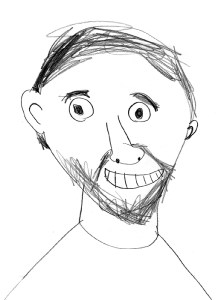
Dad Portrait by Gracie
If you enjoyed Aaron Zenz’s interview last week…wait…there’s more!
But first, the winner of the Howie I Can Read four-book giveaway is Cari from BookScoops! (Winner was chosen by Random.org.) Congratulations! Thanks to everyone who entered. Be sure to visit frequently through March–there’s more giveaways to come!
Aaron and his eldest three children, Issac, Gracie and Lily, review books and share their fan art on the Bookie Woogie blog.
I have to say, it’s brilliant. I mean, kids reviewing kids’ books! It’s a blogging breakthrough!
Aaron, it’s obvious your artistic talent has been inherited. So has your love of kidlit. What can you tell other parents about sharing a good book together?
For our family, books have always been a great way of bonding. My oldest son is 10 now, and from the time he was 3 or so, I’ve read aloud to him before bedtime. And I didn’t always pick traditional kiddie fare. Pretty early on we read Treasure Island, all the Chronicles of Narnia, The Hobbit, A Wrinkle in Time… things of that nature. And although he may not have been able to comprehend every word of what we were reading, I think a love of story has been instilled, and also a sense of what makes for a good story. And I have to imagine it’s good for him just to hear his dad’s voice for an hour or so.
After Gracie got older, I began reading a different book to each of them every night, but now that the kids’ numbers are multiplying, I read to all of them together. It loses some of the parent-child intimacy, but the alternative is leaving someone out. Or reading for hours and hours!
There’s some selfish motive as well. With as busy as I am, I find it hard to justify taking time out to read things for my own pleasure. So I read them books I want to hear too, and it makes it seem more okay. Fortunately my taste still lies in kids’ books and YA, so everyone’s happy. The same goes for the Bookie Woogie blog… I would find it hard to justify spending time working on a blog where I rattle on about myself and my own interests. Devoting time on a blog for my kids seems happy all around.
Since we’ve started the Bookie Woogie blog, the kids’ own story writing has taken off miraculously! They have begun writing such rich, descriptive tales of their own. Taking a little extra time to discuss what we’ve read, how stories are constructed, how pictures are made, has really fueled their own imaginations.
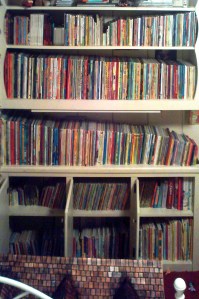 In our home, we’ve surrounded ourselves with books. We have six book cases in our living room, a wall of shelves in the girls’ room, a case full of magazines and non-fiction in the boys’ room, three full bookcases in my studio including one stuffed in a closet due to the lack of room. On top of that, we usually have 30-40 books checked out from the library at any given time. The kids have always been surrounded by books, and they just think it’s natural and normal.
We homeschool as well, and have started noticing how this even influences our younger kids. Lily taught herself how to read at four years old. She just silently listened in on her older siblings’ lessons and surprised us all. She’s reading Judy Moody right now — she just picked up a book I had gotten for Gracie and started reading it. My wife and I always said Lily did it on her own and we couldn’t take any credit for it, but the more I thought about it, I realized that’s not entirely true. We’ve made conscious and deliberate choices (and sacrifices) to create and environment of learning in the home. So why wouldn’t that have impacted her? Three-year-old Elijah seems to be following suit. He’s already beginning to sound out and spell words. And one-year-old Evie is penning her first graphic novel (just kidding!!!).
All this, of course, has impacted my own writing. Articulating to the kids what goes into a good book, makes me more aware of those principles when I create. And when listening to them talk about books, I can see what elements kids are drawn to — and how much they catch! Since starting the Bookie Woogie blog, I’ve been amazed at all the things they grasp, things that I had figured would go unnoticed by a child.
Thanks for sharing your bookie good times with us, Aaron! We wish you much success!
Readers, please leave a comment about reading with your child. How do you instill a love of reading in your home?


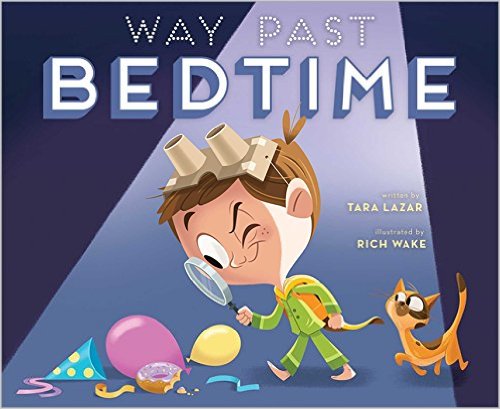



 Writing for Kids (While Raising Them)