You are currently browsing the tag archive for the ‘Caron Levis’ tag.
by Caron Levis
Sometimes I hide from inspiration.

Usually there’s nothing that makes me more present and joyful than collecting fresh drops of ideas. Tinkering with ideas—and working on the ones that trumpet, squawk, neigh, yawn, or cry the loudest—is what grounds and propels me through life. However, at times when mucky emotions overwhelm me, inspiration oddly feels exhausting, and I tend to stick my head in the sand. Once I hid so long, it seemed like my ideas had given up waiting and dried up. Scary. But uncollected inspiration never actually goes away and as Auntie Em says to elephant siblings Ely and Enid in MIGHTY MUDDY US, even during a drought “there is always water somewhere underground to sniff out and dig up.” Here are some ways I search for water on the tougher days.
Play in the Mud: One of the stickiest pieces of advice came from an acting teacher long ago. I had trouble finding my way to acting joyful if I felt sad. My teacher said, “start where you are, not where you want to be.” So, instead of trying to escape my current state, I allow myself to wallow, explore, get curious about it and see how it transforms.
Dig: Use writing prompts such as My Mud Is Made Of… or My Emotional Shape is… These can clear a path for inspiration or even give you some words, phrases, or ideas.
Roll the Ball: hope and ideas will follow. In Ida, Always, after the death of his friend, polar bear Gus hides with his grief in shadows. Eventually he begins to roll Ida’s favorite ball and his grief begins to take a new shape. Sometimes you need to act playful before you can feel playful. This concept of acting first, feeling later is one I turn to and play with a lot in my Act-Like-A-Writer workshops.
Dig: physically do something simple that brought you joy as a child or as an adult—even if you don’t feel like it. Get suggestions from friends too. (Thank you Tara for reminding me to discover new Absurd Words!)
“Be a Spy for Hope”: I have this (slightly abbreviated) quote from Katherine Patterson tacked to my bulletin board alongside the advice from Kate DiCamillo “Do Not Hope, Observe.” Spying and observing are actions we can take to find ideas.
Dig: Your mission is to walk, ride, or sit for twenty to forty minutes and collect one to five juicy images/sounds of hope. I once spied a child in a stroller fighting sleep as an ever-growing yawn took over. This was one of the raindrops for Stop That Yawn! Illustrated by LeUyen Pham.
Follow the Interrupting Ducks! I mean storks! I mean ideas! When I was looking for a new story for the feeling-friends collection with Charles Santoso, I got stuck for months working on one idea. One day my aunt sent me, “a cute video about ducks.” It turned out those ducks were storks with an incredible story. I allowed myself to take a break and follow the storks…all the way to Feathers Together. While we want to commit and be wary of sirens, sometimes the ducks can waddle you in the right direction.
Dig: When a new idea flies in at the “wrong” time, give yourself one hour, day, or week to explore it. If its pieces are coming together (and you aren’t in contract for the other!) keep going, keep it as your on-the-side project, or store for later.

Dedication Inspiration: In MIGHTY MUDDY US, Enid gets lost in a dust storm—and it’s by answering Ely’s call that she finds her way out of it. On dusty days, I think of someone I want to write for. This helps me generate a list of new ideas or find a fresh take on an oldie. The search for ideas that became THIS WAY, CHARLIE, FEATHERS TOGETHER, and MIGHTY MUDDY US was largely inspired by Charles Santoso and his heartfelt art. My niece and nephews are responsible for what I’m revising now.
Dig: Dedicate your daily writing or idea gathering session to someone you care about. Report back on what you came up with for them.
Enjoy your Mighty Muddy Storystorm!
Tooo-Weeee!
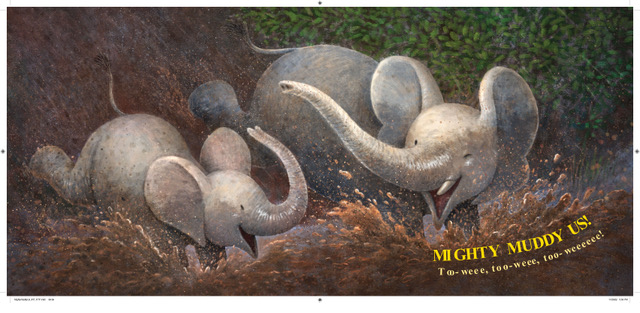


Caron Levis is giving away three limited edition prints of the characters in MIGHTY MUDDY US, created by Charles Santoso, to three separate winners.
You’re eligible to win if you’re a registered Storystorm 2024 participant and you have commented only once on today’s blog post.
Prizes will be distributed at the conclusion of Storystorm.

 Caron Levis (MFA; LMSW) is the author of several picture books including the award winning Feeling-Friends collection illustrated by Charles Santoso: MIGHTY MUDDY US, FEATHERS TOGETHER, THIS WAY, CHARLIE (Abrams) and IDA, ALWAYS (Atheneum/S&S) which the New York Times Book Review calls, “an example of children’s books at their best.” Other titles include Stop That Yawn! (Atheneum/S&S.) Caron is the Coordinator and a Professor for The New School’s Writing for Children/YA MFA program. She has over 20 years as a Creative SEL/Literacy skills educator and uses a blend of drama and writing techniques to create a variety of interactive workshops for children and adults. Caron was born, raised, and currently lives in New York City. One of her favorite adventures was flying in a hot air balloon at sunrise. Writing short things takes her a long time. Visit her at CaronLevis.com.
“The way I see it…Charlie would answer and Jack would listen.”
~ THIS WAY, CHARLIE by Caron Levis, with art by Charles Santoso
Guest post by Caron Levis
I have always been an eavesdropper and collector of things kids say and do. I’ve had a lot of opportunity to gather kid language through both my personal and professional life. I fill notebooks and index cards with verbatim quotes and observations; I re-tell my favorite anecdotes and kid moments over and over to adults or other kids; I’ve kept every anthology of student writing I’ve worked on. In the apartment I lived in during one of my first education jobs, I had the hallway plastered with quotes and writing from the students I was working with. I literally surrounded myself with their words and now, their words help me write books!

Notebook of kids’ words
I have always loved listening to kids and also the challenge of talking with them about their Big Questions and Big Feelings, so this—plus ye ole reading of plenty of wonderful kid’s books—has been where I’ve developed my writing ear and voice.
- LISTENING to kids has given me an internal sense of rhythm, vocabulary, phrase structures of many different children. As I draft, I’m reading aloud constantly to mostly imaginary (sometimes real-life) kids in order to feel how the words land.
- TALKING with real kids has given me practice in finding words that will meet their curiosity honestly while also being mindful of their feelings. These experiences help me imagine potential reader questions and reactions so I can try (it is so hard!) to be accountable to them.
- RECORDING things kids say and do has helped me remember ways kids have answered their own questions or made meaning out of challenging times. Most of my books have specific moments or quotes from children that guided the story in some way. Inspiration for STUCK THE BLOOZ came directly from a conversation with a kindergartener about being sad; IDA, ALWAYS got emotional direction from watching kids enact a funeral for a bug and a quote from a six year old who was grieving a close relative. THIS WAY, CHARLIE has many moments of kid inspiration that guided my writing choices.

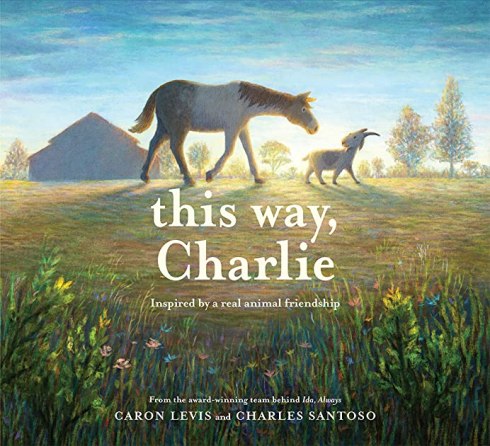
THIS WAY, CHARLIE is about a horse named Charlie who is adjusting to going blind and a wary distrustful goat named Jack who meet at an animal sanctuary. After getting off to a bumpy start, the two navigate their own and each other’s challenges to become the best of buddies.
In one spread, Charlie urges Jack to hang out with some of the other animals but Jack is not ready. Overwhelmed by fear and frustration, Jack snaps something very mean to his beloved best friend.
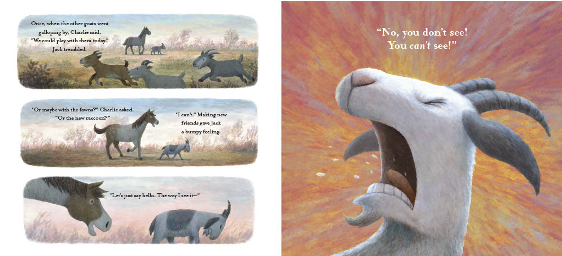
This moment with Jack was guided by many moments I’ve seen with kids (and adults!). I wanted to reflect, validate, and honor that these moments happen and that kids have the ability to unpack them. I found a quote in my notebook from a kindergartener who had had a fight with his best buddy. Like Jack, the goat, this child didn’t usually verbalize his thoughts and feelings, but rather communicated primarily through behaviors. So, when we sat down to unpack the fight with him, I admit I fully expected to have to give him language for his behavior—but instead, he explained it clearly to us. I have already heard young readers explaining Jack’s behavior in a similar way.
“I think part of it was a misunderstanding…then I said things, just because I was so mad, that were mean. But, like, I didn’t really want to say them.”
~ a kindergartener, after a fight with a good frien (2004)
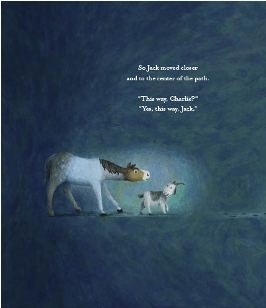
The animals in THIS WAY, CHARLIE come to depend on one another: Charlie depends on Jack for physical guidance to the field, and Jack relies on Charlie for emotional guidance as he begins to take chances on socializing. How do kids (or any of us) decide what makes someone dependable? Honestly, if you asked me in an interview to explain what being dependable means—I’d likely have some long garbled answer with a lot of ums in it. Luckily, my notebook has this gem in it from another kindergarten student who once told her class,
“Depending on someone means you really think they’ll help you.”
~ a kindergarten student
Now did I read these quotes in my book before I wrote THIS WAY, CHARLIE and consciously use them? Nope! But I had read through my blue-notebook a bazillion times and when I found these quotes after the book had gone to print, I recognized the influence. HOW I choose my words doesn’t come from my conscious Thinking brain so much as it comes from all I’ve absorbed from children over many years—and soooooo much nit-picking revision work.
Whenever I am stuck, or in need of inspiration, I turn to my collection of quotes for help—because I’ve learned I can always depend on the kids.
How have kids have inspired you?
Many thanks to Caron for guest blogging today…and for offering a copy of this lovely book.
Leave one comment below to enter the giveaway.
A THIS WAY, CHARLIE winner will be randomly selected in about two weeks.
Good luck!
 Caron Levis (MFA; LMSW) is the author of the award winning children’s picture book, IDA, ALWAYS (Atheneum) illustrated by Charles Santosos, which the New York Times Book Review calls, “an example of children’s books at their best.” Caron’s other picture book titles include: THIS WAY, CHARLIE (Abrams 2020, STOP THAT YAWN! (Atheneum); MAY I HAVE A WORD? (FSG), and MAMA’S WORK SHOES (Abrams.) Her stories for teens and adults have been published in magazines and anthologies; plays have been selected for the Estrogenius Festival and the Samuel French OOB Festival’s Final Forty; the film adaptation of Attendant won Best Short in Sunscreen Film Festival West (2018) and selected for the Garden State Film Festival. Caron is a professor at NYU and The New School’s Creative Writing MFA program where she is the advisor for the Children/YA concentration. Visit her at caronlevis.com.





 Writing for Kids (While Raising Them)