You are currently browsing the tag archive for the ‘Board Books’ tag.
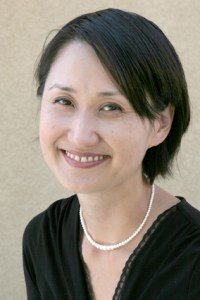 by Salina Yoon
Toys, toys, toys! I love toys! They are often the inspiration to my novelty books—board books with interactive features. They are designed to be touched, pulled, squeezed and played with, so my books and toys are like cousins.
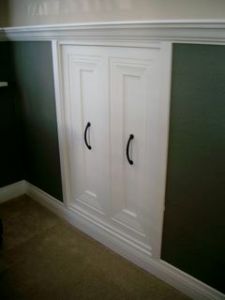 Colored stacking rings, the Connect Four game, wooden puzzles, rubber duckies, and even a football has inspired a book idea! And sometimes, it’s not even a toy at all. Random objects will inspire me. My husband’s toolbox, kitchen utensils, scrap fabric, a greeting card, and even a funny jack-o-lantern on Halloween! I can’t get away from ideas creeping into my head because I’m surrounded by objects. Needless to say, I develop a ton of ideas every year. About a dozen are usually good enough to publish. And the others crawl back into my deep, dark dummy closet of doom. (See photo!)
 My books are concept- and format-driven, so I’m not looking for story ideas. I look for fun concepts that allow a child to interact in a meaningful way from the physical design of the book. Rock & Roll COLORS is an excellent example. The book has a hidden track within each narrow page that allow a shiny disk to roll back and forth when the book is tilted. It makes a nice, satisfying clunking sound when the disk hits the edge. Each side of the page has an image with die-cuts, so the foil comes shining through. Each spread focuses on one color, and both images on the page are that same color. It’s so simple, but effective!
 So how does this help you if you’re not developing novelty books? I say keep an open mind! Even simple objects can inspire, if you let them. For the PiBoIdMo challenge, all you need are concepts.
Surrender to your imagination! I don’t actively try to create ideas as much as allowing ideas to come into my head. Allow your mind to be free! Relax. Smile. Enjoy the process. Like the Chinese finger trap, the harder you pull, the stronger it resists. Don’t stress too much about trying to think up great ideas. When they come a-knockin’, just invite them in!
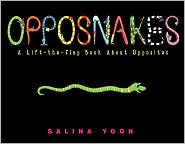 Salina Yoon is the creator of over 150 innovative books for young children. She has been named a finalist for the CBC’s Children’s Choice Book Awards for K-2nd Best Book of the Year, for Opposnakes (S&S/Little Simon), received the Oppenheim Toy Portfolio Gold Seal awards for Little Scholastic TOYS (Scholastic/Cartwheel) and Rock & Roll COLORS (Scholastic/Cartwheel), and the Nick Jr. Family Magazine Best Book of the Year award for My First Menorah (S&S). An author search on B&N, Amazon or IndieBound is the best way to track Salina’s books down. There are lots and lots of new titles releasing soon! (And Salina promises to have an updated website in Spring, 2011.)
Every Monday at 10pm EST children’s writers and illustrators jump on Twitter to chat about picture books. The brainchild of Aussie authors Karen Collum and Kat Apel, #pblitchat churns away for an hour, with topic schedules and transcripts posted on the Picture Books Only blog. Below are highlights from this week’s chat on writing for the very young–children from birth to age 3.
- Unless you’re an author/illustrator, board books are a difficult sell. The word count is low and the stories are less complicated than picture books for 4-8 year-olds, so illustrations become even more crucial to bring life to the story. For example, the visual cues in Sandra Boynton’s Blue Hat, Green Hat allow non-readers to “read” the story themselves. As a new writer, you want to write a story with the broadest possible appeal to maximize your chances of being published, so writing specific to the board book format may limit you.
- A trend in board books is to republish books that have been popular sellers in hardcover/paperback. Board books are expensive to produce, and at the same time, parents want to pay less for them, so publishers may prefer to go with a proven story rather than a new one. Great example: Snowmen at Night by Caralyn and Mark Buehner was first a successful hardcover title, released in 2002. A few years later, the publisher created board books and sold them with a stuffed snowman during the winter holidays. A jigsaw puzzle board book and a pop-up version (a new story) were also created.
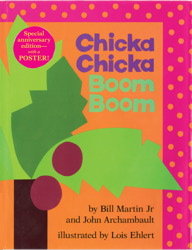 Rhyme (internal and external) and a jaunty meter delights young ears. Great examples: Chicka Chicka Boom Boom by Bill Martin Jr., John Archambault and Lois Ehlert; Hand, Hand, Fingers, Thumb by Al Perkins and Eric Gurney.
- Average word counts for young books are typically less than 500 words and could be fewer than 100 words.
- The market is saturated with ABC concept books, but books with a completely fresh take can be successful, like Shiver Me Letters, A Pirate ABC by June Sobel and Henry Cole.
- Repetition helps young children understand story and recognize words, plus it encourages participation in reading aloud.
- Lift-the-flap books offer peek-a-boo surprises and drive the story forward, but again, they’re a tough sell unless you’re an established author and illustrator.
- Novelty books (pop-ups, foldout pages, liftable flaps, or hidden sound chips) are often published by mass-market publishers and not trade publishers. What does this mean to you? In-house talent or work-for-hires create these books.
- The jury is split on interactive titles for the very young. Do parents want their toddlers drooling on an $800 iPad? Do electronic titles lose the “cuddle factor”? Or does the new interactive medium offer an unprecedented opportunity to unknown author/illustrators? A recent article cited a new 3D book as one of the top 20 ebook apps for the iPad, right up there with Dr. Seuss and Disney titles.
My favorite #pblitchat moment? Board books get gnawed and chewed by babies, so how about an edible board book? (As suggested by @RedStepChild a.k.a. illustrator Lynn Alpert.) I think this is an idea whose time has come, especially if they’re made out of freeze-dried astronaut ice cream. Mama may want to chow down on tasty kidlit, too! (I can see it now–Chicka Chicka Yum Yum.)
What else is important to know about writing and illustrating for the very young?
Rules, Tara? Why are you writing about rules? K.L. Going just urged writers to shake off the rules and “step boldly across the lines.” We are creative souls! We don’t want more restrictions!
Ah, you are right. But remember, Ms. Going also said that writers need to be educated. Know those rules and understand why they are in place. Only then can you decide where to successfully break them. Then you don’t have to call them rules anymore—think of them more as suggestions.
Yesterday I met with Alyssa Eisner Henkin of Trident Media Group, an experienced professional who came to agenting via the editorial track. She knows this business. She knows what sells. So when she gave me five rules for picture books, I took careful notes.
Rule #1: Audience age is 2-6 years old
This one was a little surprising to me. I often see PBs categorized in three ways: baby board books, toddler books, and books for 4-8 year olds. But eight year-olds are not reading picture books. They may be classified that way for teachers who want to read aloud to their class. Unless you’re writing board books, think of your audience as 2-6 years of age. What situations will they relate to?
Rule #2: 500 Words is the Magic Number
Again, another suprise–somewhat. Yes, I’ve heard about that 500-word mark, but I’ve also heard about the 1000-word barrier. Most of the books I read my own children are closer to 1000 and sometimes more. Personally, I don’t often spend $16.99 on a 500-word three-minute experience. My children and I enjoy sharing stories at bedtime and a short one can sometimes leave us feeling short-changed. Ms. Henkin said she’s heard the same thing from many parents, so I asked, “Why is there this disconnect between parents and the industry?” It’s all about perception. The current industry perception is that today’s parents are busier than ever and they want short books to put their children to sleep quickly. OK, that’s not true in my house, but I’m a statistic of one. Publishers are buying 500 words or less. Repeat after me: 500 or less.
Rule #3: Make it Really Sweet or Really Funny
Maybe this isn’t so much a rule as a great suggestion. These kind of books are easier to sell. People get it. Elevate your “awww” factor. Make the laughs side-splitting.
Rule #4: Use Playful, Unique Language
When publishers say they seek a “unique voice” that doesn’t only apply to middle grade and young adult novels. The sounds words make are new and interesting to young children. Play it up.
Rule #5: Create Situations that Inspire Cool Illustrations
PB writers are told to leave enough unwritten so illustrators can tell half the tale. But that’s not enough to be thinking about. Go a step beyond. What story situation will inspire an unusual, unique illustration? Something you’ve never seen before? Don’t just leave room for pictures, leave room for AWESOME pictures. The cooler the art, the better the book.
Another thing that I brought home with me after our PB discussion was concept. Many times, I’ll get a spark of an idea and immediately sit down to write. I will start taking more time to develop that concept, thinking about all the rules above before ever putting pen to paper (or fingertips to keyboard). And then maybe I’ll decide to step over one or two of those lines. I’m a creative soul, after all.





 Writing for Kids (While Raising Them)