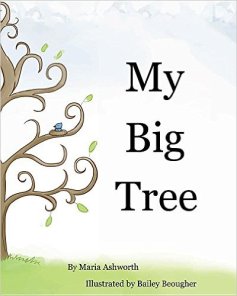
 Maria Ashworth is a dedicated children’s book writer who has just released a big new venture, a picture book entitled MY BIG TREE, illustrated by Bailey Beougher. What makes this book different than the ones I typically feature? It is with a smaller, independent publisher…but it has led to big things for Maria’s career. (You note the theme is BIG here, right?)
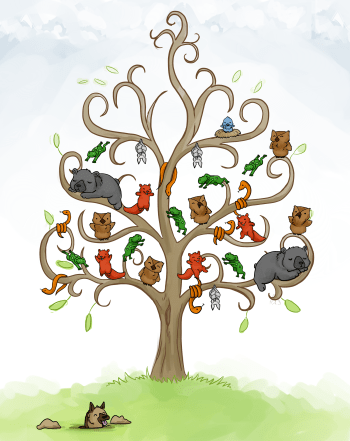
MY BIG TREE features a sweet little blue bird who has found a favorite place to nest in a big, swirling tree. Soon other animals think it’s the ideal place to be, too. The little blue bird isn’t ready to share her space and decides it’s no longer the “best tree to nest in.” She finds a new tree, but something is missing. In the end, the little bluebird realizes there is one thing more valuable than nesting in her favorite tree…
Maria, what inspired you to write this book?
I wanted to challenge myself to write a concept book with a message. An idea came along where what if there was a bird who had something she loved, a big tree. And then what if everyone thought it was their favorite tree too. Would bird be happy sharing…???
The dog in the story doesn’t have a speaking role in this production, so how did he come to be?
At first I had the animals in the tree and was satisfied. The illustrator perfected a dog in her portfolio so I thought, huh, wouldn’t it be neat to add a dog in each page doing his own thing? It would get the reader curious, maybe even make them suspect the dog was up to no good, especially near a big tree. But he is just a dog doing his thing on every page with no real purpose other than to create more curiosity surrounding the big tree.
What do you want kids to take away after reading MY BIG TREE?
The message is about friendship but also that materialistic things are not what is important in life. Building relationships with others, having friends is what matters. Toys and things are just stuff. They are a temporary happy. Relationships are forever and can last a lifetime.
Your book has a classic feel. It’s a friendship book, a counting book and a search-and-find book. How would you describe it?
It has a BROWN BEAR, BROWN BEAR feel with a hint of Handford’s WHERE’S WALDO? books, but aimed at the younger set. I wanted the animals to be placed randomly throughout the book so kids would have fun finding the animals in the tree. Then at the end, the animals join together in their grouping so children can make sure all the animals are accounted for. And I snuck in some chicks so they’d better not miss those!
This book is with the Spork imprint of Clear Fork Publishing in your home state of Texas. Can you tell us how you decided to self-publish at first and then sign with them?
My critique group enticed me into self-publishing. I have a couple of gals who are gurus in the self-publishing market. One of them is Indie and boasted how being an independent author reaps more benefits. I felt I had put in my time into the writing world and was salivating to get myself out there. To date, I’ve accumulated a hundred and seventy-five rejections from my submitted work. I’m a salesperson by nature and knew I could do it myself instead of waiting on rejections.
So I was all ready to self-publish MY BIG TREE–I found the perfect illustrator and had my finger on the “send” button to the printer…but then I went to my first Texas Library Association conference. I met an editor from Clear Fork and we grabbed coffee together. I told the editor about MY BIG TREE, which she loved, and offered to be my publisher. She also asked what else I had stirring in the pot! It’s all a fairy-tale ending after that, with a multi-book deal. IGGY LOO is coming out this winter, with TOMMY JAMES, THE LITTLEST COWBOY IN RECKON’ series following next year. I am blessed.
What are the advantages to working with a small publisher in your own backyard?
I see for ME a BIG advantage and that is I am asked my opinion on everything. Right down to who I see as an illustrator for the book to the vision and look of my characters. I’m not sure it’s this way with all small press editors. Matter of fact I know it’s not, because a writer friend is with a small press and doesn’t have the same relationship I do. I think after seeing the work I put into MY BIG TREE she saw my vision as a writer. The editor and I hit it off like sisters. Joining forces with her felt right. The publisher is only three years old. I want to make them just as much as a success as I hope to be for them.
Congratulations, Maria. Your experience just proves that it pays to keep writing…and always have more than one story ready to go. You never know when someone will ask for MORE! Best wishes with THE BIG TREE and your upcoming titles.
Hey, BIG NEWS! You can win a copy of MY BIG TREE, just leave a comment below. What BIG things are you planning for your writing career? One comment per person. US addresses only, please. A winner will be randomly chosen in early September.
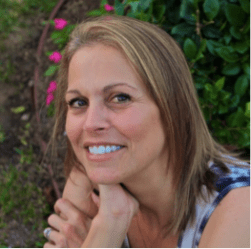 Maria Ashworth volunteers her time when she’s not writing for the Maud Marks Library Friends Board in Katy, Texas where she serves as President, as well as a Member-At-Large for the Friends of the Harris County Library. She’s a member of the Society of Children’s Book Writers and Illustrators. Some of Ms. Ashworth’s picture books and middle grade novel manuscripts have been nominated as finalists in several contests. She’s published a handful of short stories through contests and a women’s anthology. Visit her at MariaAshworth.com.


 I write both fiction and nonfiction. In the beginning, I thought the only place for voice was in fiction, and it’s probably where I feel more comfortable experimenting with it. But it’s totally worth the time to play around and explore unexpected possibilities because when a truly unique voice emerges, oh my! Finding Winnie: The True Story of the World’s Most Famous Bear by Lindsay Mattick wasn’t only beautifully illustrated by Sophie Blackall–what a story! Other examples that come to mind are Phil Bildner’s Marvelous Cornelius, illustrated by John Parra; Swan: The Life and Dance of Anna Pavlova by Laurel Snyder, illustrated by Julie Morstad; and, because I can’t resist a baseball book, The You Never Heard of .. ? books written by Jonah Winter.
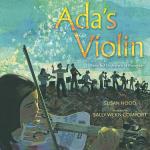 Don’t be afraid to ask for help. In my experience, experts, scholars, curators, producers, reporters, and authors of adult books on your subject are more than happy to consult with you. Your passion is their passion! I offer them acknowledgement in the book, but make sure to ask permission to list their names and/or work. Kate Messner wrote an eye-opening blog about this: “Think Before You Thank.” I wouldn’t have dreamed that a public thank you might compromise someone professionally, but it might. So go ahead, ask for help, but ask for permission to use their names as well.
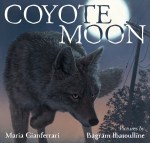 When you’re doing your research and note-taking, keep a list of “cool facts.” You might not have a place for them in your story, but they’ll be perfect for back matter! Think of a creative and engaging way to organize and present the material. For example, you might present the back matter in how-to form. I did this for one of my nonfiction books using How To Swallow A Pig: Step-by-Step Advice From the Animal Kingdom by Steve Jenkins and Robin Page as a mentor text. A cool fact could also be a hook for beginning your story.
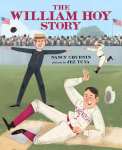 Engage, learn from and share the journey with people who know and care deeply about your subject. I could not have written The William Hoy Story without the help of Steve Sandy, a Deaf man who is a friend of the Hoy family, and was able to answer questions about small details of William’s life while giving context about what it was like to grow up as a Deaf person in the late 19th century. Steve’s help continued after publication as he and his wife, Bonnie, have been amazing supporters of the book. I am also profoundly grateful to National Baseball Hall of Fame announcer Eric Nadel, a Hoy fan, who has written about him for adults. Eric advised me on baseball details, and has also been a fantastic supporter of the book.
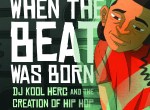 What I’ve learned from writing nonfiction picture books is that the stories are about people and their emotions first and the facts are secondary. That does not mean you can make up facts, but that the motivations and fears and aspirations of the people involved reveal how the facts fit in.
 Thanks for all the non-fiction tips, Karlin!

 Thanks for sharing your success story, Sandra! Congratulations!

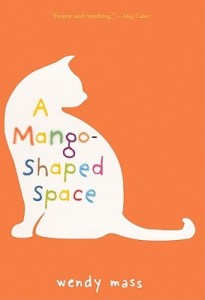









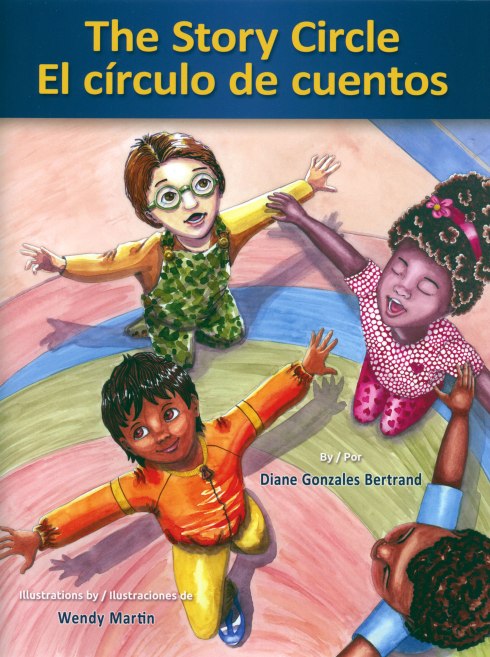

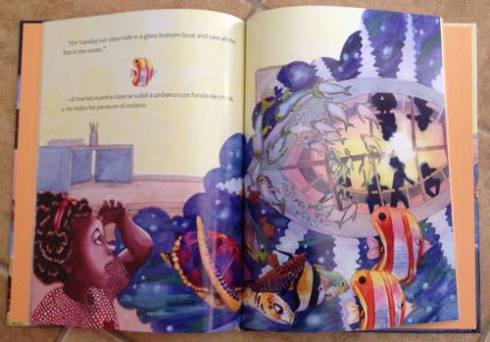
 Thank you, Wendy, for sharing your new book–and for giving away a copy to one of our blog readers!
  guest post by





 Writing for Kids (While Raising Them)