 by Shutta Crum
PiBoIdMo is about beginnings—first ideas, first notes, and then, hopefully, first drafts from the exciting tidbits we’ve jotted down during the month. While thinking about beginnings I remembered one of my first writing classes: high school journalism. I don’t remember much from the class except that a good lede should always include the answers to four important questions: the 4 Ws. These are: who, what, where, and when. After a good lede, we were taught the story could move on into the details of how, or why.
Good ledes are something that the news reader doesn’t really notice, but are crucial to keeping the reader’s attention. They quickly dispense with niggly concerns and important facts so the reader can settle into the story. It is a technique every picture book writer ought to know.
Answering those four questions right up front in any story tucks the reader in. However, as with many aspects of writing the picture book, the writer for the very young has to do it faster, with fewer words, and sometimes in verse!
Better than hearing this from me—and more fun—is studying how some of our best picture book writers, and illustrators, do it. Below are some of my favorite examples, in prose and in verse.
(Prose) Rosemary Wells, from MAX’S CHOCOLATE CHICKEN.

“One morning somebody put a chocolate chicken in the birdbath.”
Let’s parse this opening line. When: one morning. Who: somebody. (We also see a picture of that somebody—Poppa?) What: put a chocolate chicken. Where: in the birdbath. (And what a great hook for a young child! Why would someone do that?)
(Verse) Karma Wilson, from BEAR SNORES ON.

“In a cave in the woods
in his deep, dark lair,
through the long, cold winter
sleeps a great brown bear.”
Where: in a cave in the woods in a deep dark lair. When: through the long cold winter. What: sleeps. Who: a great brown bear. (And she did all this with perfect meter! Note: be sure to read Karma’s earlier post, on Nov. 2nd.)
Of course, we are blessed by the illustrations in our picture books. In addition to everything else they do so well, the art carries a great deal of this initial informational load. If the setting is a farm, we see that and it may not be mentioned at all in the text. If it is nighttime, or winter, or the main character is a bear . . . these may, also, not be directly mentioned. If it is not said in the text, it is then incumbent on the illustrator to add that context. Look at Jane Yolen’s Caldecott-winning book, illustrated by John Schoenherr.
(Free verse) Jane Yolen, from OWL MOON.

“It was late one winter night,
long past my bedtime,
when Pa and I went owling.”
When: late one winter night, long past my bedtime. Who: Pa and I. What: went owling. There is no mention of where . . . that is covered by the beautiful farm scene in the illustration.
Occasionally, leaving out more than one of these details may actually enhance the story by focusing the reader’s attention on another detail that may be of more importance. For example, study Jon Klassen’s new book I WANT MY HAT BACK. There is no where indicated (except for a few rocks and sprigs of grass). Nor, even a when. Who and what are of prime importance. (Who: I. What: Want my hat back.) Against almost completely blank pages readers really notice those eyes on the bear and the rabbit. The facial expressions are subtle, yet so important for understanding the story. In an intensely illustrated background, the significance of those looks might get lost. We assume it is some place where there are bears and rabbits and other animals. And the when is unimportant. As in all things, once you know the rules you also know when it may be best to break them.
(Prose) Jon Klassen. From I WANT MY HAT BACK.

“My hat is gone.
I want it back.”
So study first lines for how good writers quickly dispense with the basic questions any reader has about the world of the story. Then once you’ve tucked your readers in, you can lead them on to discover the answers to those other two important questions: how the story unfolds and why.
 Shutta Crum is the author of twelve picture books, two novels and two forthcoming picture books. Her latest picture book MINE! (Alfred A. Knopf, 2011) was just named an SLJ Best Book of the Year. THUNDER-BOOMER! (Clarion, 2009) was named an ALA and Smithsonian Magazine notable book. For more info, including teaching guides, visit shutta.com.
 by
by 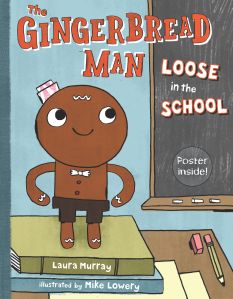 Laura Murray is a children’s author, former teacher, and mom of three mischief makers. Her debut rhyming picture book,
 AV: I want to use phrases like “creative food.” Maybe we could collaborate on a picture book about creative food?
 by
by 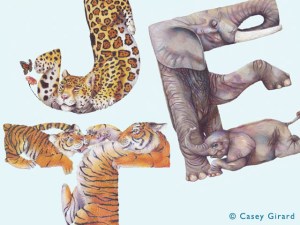 Casey Girard is a freelance illustrator/designer. She has worked with two authors, illustrating their self-published books,
  by
by  Ammi-Joan Paquette writes picture books and young adult novels, plus she’s a literary agent with the
 Wendy Martin is the illustrator of 5 picture books, 3 of which she also wrote. Her first book was chosen as a finalist for the best children’s book of the year during the 2009 Coalition of Visionary Resources annual international COVR awards. Her latest book,
  by
by 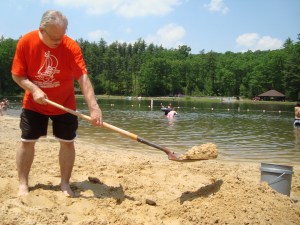 Perhaps it may help to look at this in a different way. Let’s say I want to build a perfect sandcastle. If I only look at a finished product, say, one of my husband’s illustrious creations, and size up the amount of sand comprising the castle itself, I may decide I only need a few large buckets of sand to complete the task.
 And then, he sculpts. He edits. He revises until he can see the more subtle nuances of the castle. Sometimes, a wall will cave or a doorway will be in the wrong place. But that’s okay, because he still has plenty of sand left. He can add. He can rebuild. My husband hasn’t limited himself to a few buckets of sand.
 Jodi Moore is the author of
  by
by 
 But, hang in there, keep at it, work it and most of all,
  by
by 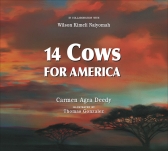 We can all cite other terrific NF PBs. Some of my favorites include
  Language and illustrations, of course, contribute hugely to enlivening books that happen to be accurate. Rasco also commented that what adults want for the children they read and give books to are books that are “eye and mind catching.” Great illustrations catch the eye; lilting, lively, lyrical text captures the mind. Neither of these is quite sufficient, however, if the topic—and we are dealing with ideas during PiBoIdMo here—is lackluster.
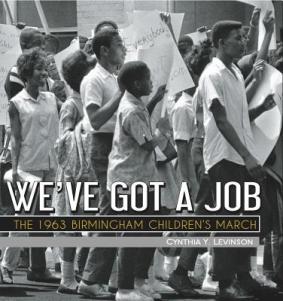 Cynthia Levinson has sold two dozen articles and stories on a wide range of topics to some of the best children’s magazines. Her debut middle-grade book,
  Who can believe the month of November is half over already? Hopefully you’ve already got 15 ideas (or more) in your PiBoIdMo journal. And if you don’t, no worries! There’s plenty of time left to catch up and complete the 30-ideas-in-30-days challenge.