You are currently browsing the category archive for the ‘STORYSTORM 2023’ category.
by CK Malone
Omigosh. Imagine being a middle school teacher and a K-12 literacy coach and being unable to follow directions?
Me. Alllllllllll me. Heck, I don’t even follow the grammatical rules I was taught or teach (most of the time) when writing blog posts and the like. I’m a big fan of informal writing.
In 2019, I wrote the book of my heart. It is how I wish my coming out WOULD HAVE happened in elementary; but, alas, it did not. And guess who still didn’t follow directions when querying the agent of their dreams? Yup, you got it. I queried Dan Cramer, then at Flannery Literary, and forgot to paste my book into the email. *Face Palm* Seriously, double-check everything. That’s the one rule I think is important. Luckily, once he read the query, he was interested enough to ask for CHARLY in March of 2021.
Now, let’s rewind back to January of 2021 and Storystorm.
How did Storystorm play into this? Oh, peeps, let me tell you. I heard about this amazing month through Twitter. I was all like, “Ooooh!!! Writing a story a day sounds amazing!!! I can stop feeling stressed about the writing process and just write.”
Rewind.

See the mistake?
Writing a story a day sounds amazing!!!
And I did. I wrote a freaking story a day for all of January. Some were okay and some were downright atrocious. Some were middling. And some will be going on sub soon. While #Storystorm has no set “rules”, many laughed when I told them this as it wasn’t what this ah-mazing month of creativity meant.
But do you know what doing this taught me aside from the need to follow instructions?
I could persevere. There were days I came home from teaching and I felt I just couldn’t do it. But I did. I eeked out a flipping story. There were days I thought I didn’t even matter. I wrote. There were days I felt I couldn’t do any of the things anymore. I wrote. When I thought the world really flipping hated me for being me. There were days I thought this was the end of humanity because, yanno, COVID.
I wrote.
I wrote.
I wrote.
And YOU have these days because YOUR life is HARD, too. YOU have obstacles—whether emotional, physical, mental or a blend of any–and YOU are still HERE. YOU are writing.
Whatever is in your heart, your stories matter. Whether it takes 31 days in a Storystorm or just one day. Write every day if the stories flow out of you. Or write every now and then. Write once a year. Do you. There are no rules for success or storytelling.
And break the rules with your books! Some of the best authors do this all the time. I was told to edit out some of the rhymes in CHARLY since mash-ups of techniques won’t be “tolerated”, and these same rhymes ended up being my editor’s favorite parts.
So break some rules during your process and blaze your own trail as only YOU can.
Much Love and Light,
CK
 C.K. Malone (they/them) is a bigender educator and literature coach at the secondary level. When not grading essays or helping students, they’re busy helping design culturally and LGBTQIA+ responsive units for the district and working as a climate and culture coach. When they’re not writing, they’re coaching and advising through alignment with the Genders and Sexualities Alliance Network. Their book A COSTUME FOR CHARLY with Illos by Alejandra Barajas (Beaming Books) is out now. Their next book, A SIMPLE SONG, with Illos by Shelly Swann releases with Beaming Books in Fall ‘24. Visit CK at CarlisleMalonebooks.com and follow them on Twitter @CKMalone2.

CK is giving away:
- Ask Me Anything Session with myself and my agent Dan, founder of Page Turner Literary (30 minutes): 1 winner
- Critique of a Fiction PB up to 2,000 words with multiple revisions (just me): 2 winners
- CHARLY Signed Prize bundle of book and LGBTQ+ Items + A surprise book not by me: 3 winners
You’re eligible to win if you’re a registered Storystorm 2023 participant and you have commented only once on today’s blog post. ↓
Prizes will be distributed at the conclusion of Storystorm.
by Marzieh Abbas
I have been kicking off every new year (since the past three years) with awesome Storystorm blog posts! I’m happy to report, at least three of my upcoming picture books began as idea that were sparked from January blog posts! I’m super excited to be a guest blogger today. Let’s get right to it!
You’ve probably heard: “Write what you know” several times, as have I. But when I sit to write what I know, I usually draw a blank. That’s when I dip into my memories, especially photographs from my childhood and my phone’s gallery. Childhood memories are great for recalling important milestones, but everyday clicks of things which seem interesting to me and for pictures of my kids doing fun and silly stuff also bring many story possibilities.
Let’s start with childhood memories: thankfully, I wasn’t the last of four siblings, so my parents took loads of pictures of me as a child (my youngest sister has all of five pictures of her toddler years…lollll). Sometimes I open up those albums and think about all the fun we had and all the lovely memories we made. Sometimes a picture will remind me of a mood or what a specific location made me feel. It’s a springboard for more memories; even those not captured in those albums. There’s fun moments and not-so-fun moments, all great for story ideas!

A picture I came across a few years ago when my mom was cleaning out her storeroom. It had one of us sisters wrapped in a dupatta, an oversized South-Asian scarf, that had been tied like a sari. It was from the time we were visiting Karachi to see my Dadi, my grandma. She always wore saris and loved to dress us girls up in pseudo-saris, using fancy dupattas. She was a quirky grandparent who was married off at 16 and widowed at 28. She, herself, was a treasure trove of stories. A few years ago she passed away. My father, the youngest of three sons, had moved back to Pakistan to be with her in her last years. A few weeks after she passed, we noticed my dad had been sleeping with her dupatta tucked beside his pillow. He had asked my mother never to wash it, as it held her scent and helped hold her memory close.
Not only did this stay with me for a long time, it was the spark of an idea for my debut picture book, A DUPATTA IS… which releases on April 11th this year (published by Feiwel & Friends and illustrated by the super-talented Anu Chouhan).
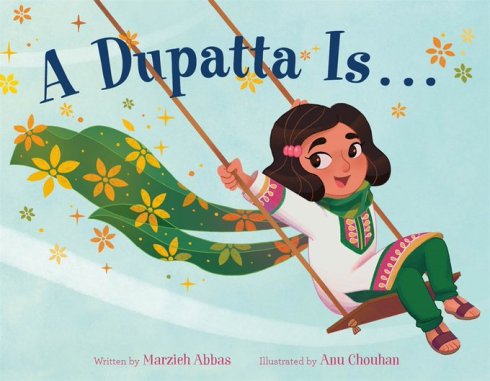
It also made me think of all the memories that I can tap into by using a particular scent as a clue. Sometimes a waft of cinnamon will remind me of the home remedies my mother made for us when we had a flu. And then I’ll think about other connected memories– comforting vibes, or the panic I’d experience about a test I’d miss if I had to stay home due to a flu. Once Anu started sharing the illustrations, her settings, inspired by her own childhood with her grandma, resembled my own Dadi’s home, right down to the bangle stand and wooden cupboard, and subsequently brought in a flood of memories.

I encourage you to flip through your childhood memories. Does a particular picture remind you of a place or setting that evoked a feeling? Could that mood, or feeling possibly take center stage for a story. Maybe a picture in an old house would remind you of a nosy neighbor or a neighborhood friend you’ve long forgotten. Think about the sounds that you heard in that neighborhood, or the secret stash of your candies you hoped your sibling would never find. These may not be ideas in themselves, but it’s always great to jot these down for later; they may inspire a character quirk for a side character, or a specific detail for your current WIP.
Now coming to my phone gallery photos. I usually take pictures of unusual things I spot as I drive through my city, Karachi, or roam the bazaars. I also click a load of food and produce pictures. Sometimes I transfer photos and videos to an album that I’ve labeled “Story Prompts.”

When I had initially gotten married, my mother-in-law taught me lots of her secret recipes. I loved to cook and getting introduced to so many new recipes, while learning of new customs, was great. One of those recipes was a samosa stuffed with coconut shavings, sugar, cardamom, and lots of crushed nuts.
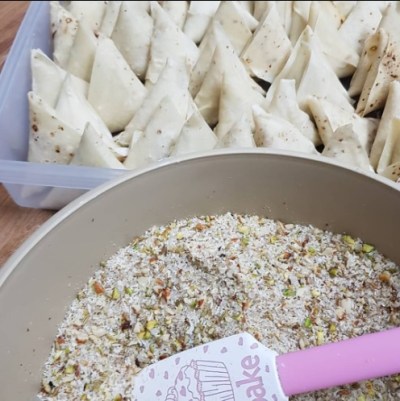
I had only ever eaten savory samosas. I recreated the sweet samosas many times. Many years down the line it was the story spark for my upcoming AWE-SAMOSAS! book that releases in 2024 (published by HarperCollins and illustrated in the most beautiful, warm hues by Bhagya Madanasinghe.)
My memories are a constant source of inspiration, and I’m sure yours are, or will be, too!
 Raised between the bustling cities of Dubai, U.A.E and Karachi, Pakistan, Marzieh Abbas loves traveling, reading and samosas. She is a member of SCBWI, 12×12, and a graduate of the Lyrical Language Lab, Children’s Book Academy, and Storyteller Academy. She is active on Twitter where she continues to form connections with the Writing Community, runs a kidlit review group on Facebook and blogs about her author journey and life in Pakistan on Instagram. You can find out more about her at MarziehAbbas.com and follow her on Twitter @MarziehAbbas and Instagram @marziehabbas_author.
Marzieh is giving away a picture book critique (under 650-word fiction and non-rhyming manuscript).
You’re eligible to win if you’re a registered Storystorm 2023 participant and you have commented only once on today’s blog post. ↓
Prizes will be distributed at the conclusion of Storystorm.
by Louise M. Aamodt
Welcome to Day 24 of Storystorm! If you’re like me, pretty soon your gleeful Storystorm inspired so many fantastic new ideas! will crash headlong into the reality of When can I possibly develop them?
Don’t despair! Instead of squeezing water from a rock, as the saying goes, you must squeeze time from a rock. Here are three tips for fitting more writing into your already-full schedule.
- Tip #1: Writing is about trade-offs. Be at peace with letting some things slide.
‘Time’ is a tricky concept. My so-called “instant success story” of signing with my agent in June 2021 and landing my first picture book contract just four months later doesn’t show how long it took to reach those milestones. (15 years, BTW, but who’s counting?)
What I really want to stress is what ELSE I’ve been doing all this time: Raising two active kids, working a demanding full-time teaching job, volunteering, commuting, carrying out environmental projects, training rescued dogs, and much more.
The key to doing it all is doing some of it badly. My house is messy, I haven’t added to the family scrapbook in years, and bramble is invading my pollinator field. But these are sacrifices I’ve made for the sake of my writing.

- Tip #2: You will not FIND more writing time; you must MAKE it.
The stork won’t flap to your home and deliver a joyful bundle of hours. Nope, not ever. The only time you’ll have to write is that which you actively hunt down, pounce upon, tie up, and claim.
Just as Storystorm trains your brain to draw inspiration from everyday life, you must actively train your brain to utilize every sliver of that hard-earned time. Which brings us to…
- Tip #3: Match each specific writing task to its required concentration.
To fully ‘get’ this, I’m challenging you to a hands-on activity. You’ll need scissors, scratch paper, and your favorite writing tool. Go get ‘em.

Ready? Here we go.
- 1. Prep your paper.
Cut it into about a dozen slips or so, each big enough for a phrase. Stop reading this blog, right now, and cut up that paper before you continue. (Or substitute sticky notes, if that’s your thing.) - 2. Record your writing tasks.
On each slip of paper, record one of your writing-related to-dos. Dig deep, and remember the little administrative tasks, too. Here’s about half of my list:
-
- Catch up on Storystorm (my 7th year!)
- Save files to external drive
- Draft new manuscript
- Study library books for rhyming patterns and layered NF text structure
- Research how the heck to make a website
- Read latest PW Children’s Bookshelf rights report
- Revise something really challenging
- Research for latest manuscript
- Look up SCBWI workshop
- 3. Rank your tasks by level of required concentration.
It’s time to create your own personal Column-o-Concentration. Move your I-must-focus-so-don’t-even-think about talking-to-me task to the top, with the rest in descending order.
Remember, it’s not about priorities. Each of these pieces serves your writing career in some way. It’s about the CONCENTRATION REQUIRED for that particular task. Go ahead and rank your tasks. This hands-on manipulation activates a different part of your brain, so if you skip the process, you’re cheating yourself. Here’s my column:

- 4. Consider the realities of your schedule.
This is the very most important, MUST-NOT-SKIP step. Reflect upon your Column-o-Concentration and think about your time commitments. What’s happening today? What obligations do you anticipate in the next two weeks? Two months? Do you see any writing task you could complete even in a distraction-filled setting?For example, I need my full concentration to write, so that golden, sacred time only happens early in the morning before anybody else stirs. But I’ve requested library books during my son’s screaming karate class, and I’ve looked up SCBWI workshops while sweating poolside through my kids’ swim lessons. Critiquing for my peers happens over lunch when there’s minimal distraction. I listen to Renee LaTulippe’s online rhyming lessons as I cook, and to Picture Book Look podcasts when I weed. Organizing files during the TV’s blaring football game works just fine. I study picture books by veteran writers while waiting in the car at the school pick-up line, and during Covid lockdowns I rewatched webinars while huffing on the treadmill. To prove I practice what I preach, here are snapshots of the actual picture books I hauled around this week in my front seat, and the oh-so-fancy 2x4s across my treadmill that balance my laptop:
- 5. State ALOUD when and where you could realistically accomplish each task.
Stating it aloud is like making a promise to yourself. Don’t worry if folks stare, we writers can claim a certain level of eccentricity.
The trick is to be honest as you match your writing tasks with your realities. It takes practice, but you can do it! Train your brain to squeeze time from a rock as if your writing life depends on it. Your new Storystorm ideas are counting on you!
 Louise M. Aamodt attended her first picture book class in 2006, and has been tackling that beast ever since. Her debut, A FOREST BEGINS ANEW, illustrated by Elly MacKay and published by Astra Young Readers, rolls out in 2025. You can find Lou mumbling rhyming words as she lops thistles in the pasture, studying picture books in the kid section of the dentist’s lobby, or on Twitter @LouiseMAamodt. That last one is definitely the easiest way to connect.
Lou is offering a picture book critique. Her agent, Emily S. Keyes of Keyes Agency LLC, is offering another participant feedback on a picture book manuscript plus its accompanying query. One each of these prizes will go to two winners.
You’re eligible to win if you’re a registered Storystorm 2023 participant and you have commented only once on today’s blog post. ↓
Prizes will be distributed at the conclusion of Storystorm.
by Lauren H. Kerstein
You’ve made it to Day 23 in 2023. That has to be lucky, right?
First, a confession: I look forward to Storystorm every December. After all, Tara Lazar is one of my all-time favorite funny kidlit writers and an all-around generous soul. When the new year begins, I know I can expect 31 insightful and inspiring posts from phenomenal creators.
But…
on January 1st, I ALWAYS find myself derailed from my excellent intentions. Day after day, posts pop into my inbox and remain unread. And then, miraculously, somewhere during week two, I recalibrate, regroup, and read them. And they never disappoint! Someone told me yesterday that the first week of January doesn’t count toward good intentions. I’m going with that! (Or maybe the first few weeks of January don’t count.) So if it has taken you until today to start reading these posts, that is fine! You’re here now and that’s what counts!
Let’s talk about email. I have a love/loathe relationship with email. On the one hand, my inbox helps me stay organized (I use it like a “to do” list). On the other hand, my emails seem to birth emails, and before I can say “I need WAY more tea,” my inbox becomes a growing, growling beast.

But here’s the thing—
The “love” part of my email relationship is that my inbox isn’t all bad. In fact, emails are where I find at least 60% of my new ideas. Yup, you heard me right. Email is full of KIDLIT ideas! Let me explain.
Warning: didactic moment ahead.
Today’s post is all about generating ideas (and clearing out emails) using task bundling and temptation bundling.
A quick lesson digression:
- Task bundling is the process of making similar tasks more manageable. It is often used in project management.
- Temptation bundling (coined by Katherine Milkman, assistant professor at Wharton University) is a way to use things you enjoy as rewards for less enjoyable tasks. For example, I LOVE listening to steamy romance novels while cleaning the house. It sure makes cleaning WAY more fun.

Okay, now bundle, bundle, bundle! Clean out all of those pesky…I mean, important emails…AND find hidden idea gems. At the same time!
Let’s go through my inbox together in real time. (Terrifying, I know.)
First up, an email from Bed, Bath, and Beyond: “Up to $80 off top Ninja appliances that help you eat healthier…”
Action step: tempting, but…delete (one less email in my inbox)
Ideas: can I write a book about a ninja family who is trying to eat healthier? Or ninjas who host a cooking show? Or a ninja character who wants to be in a cooking show/contest, but has an intense and distracting desire to karate chop the vegetables and…UGH…other contestants during the auditions?
I can just see it now! I need to write this story!
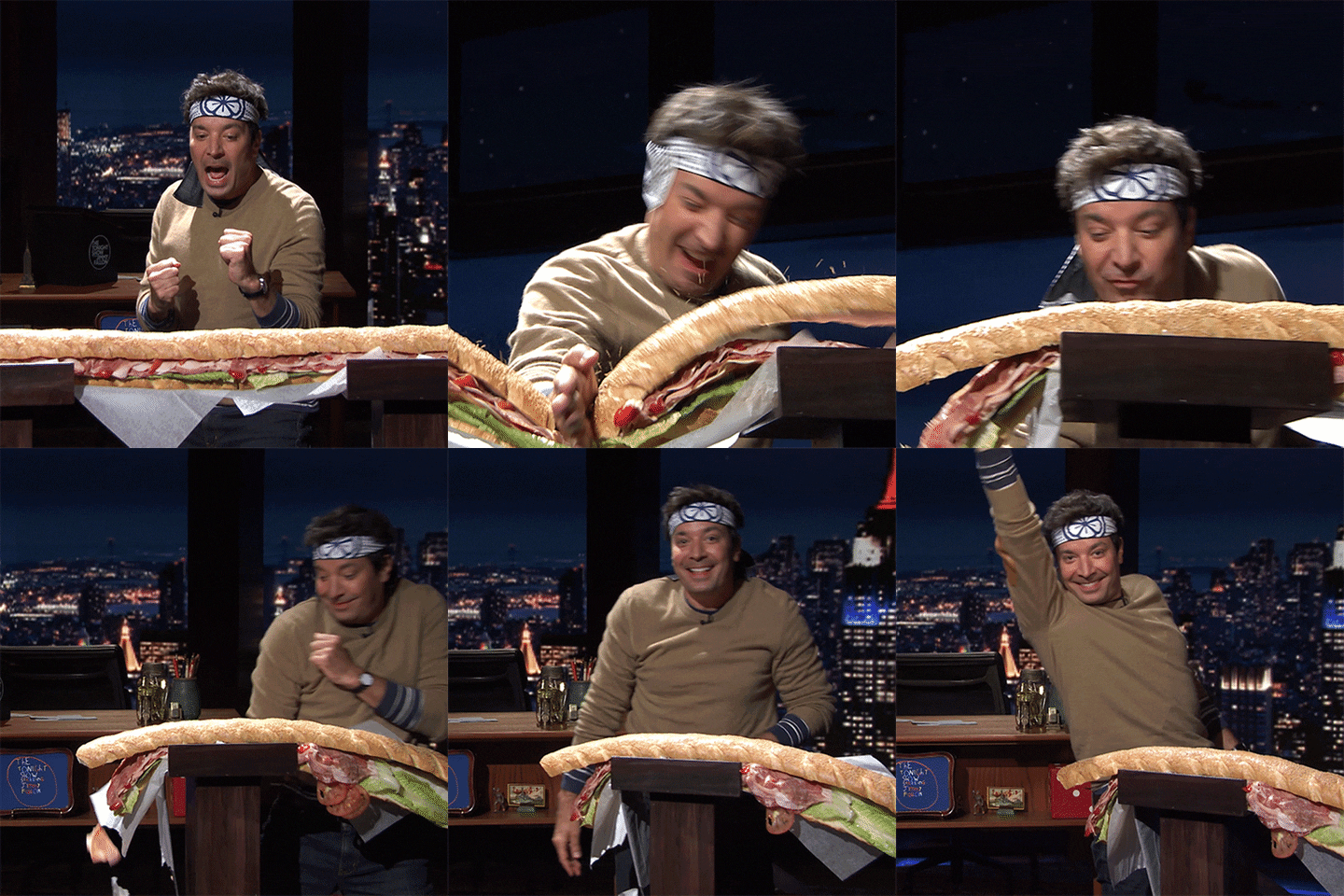
Next: Sage Publishing: “Welcome to the Social & Behavioral Science Monthly Roundup”
Action step: DELETE! No way I’m getting sucked down that rabbit hole right now.
Ideas: Nada!
Next: Amazon smile donation notice
Action step: quick-glance and delete.
Ideas: what if a child saved up their pennies for a donation, but had trouble deciding (from the gazillions of options) to whom to donate the money? Is this a PB? A MG? Does it have a Jewish layer? Can it incorporate concepts like, tzedakah, mitzvah, tikkun olam?

Ooooh, I like this one too! It actually dovetails into a NF PB idea I already had.
Next: Wayfair: wall art we found for you
Action step: delete. Talk about a two-hour side excursion! Note: I often mine tons of ideas from looking at art on websites like Wayfair and Society 6, but that is another post and activity for different day.
Ideas: none.
Next: (YIKES: they are coming in faster than I can type!) A “call for help” from the Animal Rescue of the Rockies.
Action step: hesitantly delete. We currently have our hands full with the puppy we fostered for them and then adopted (in record time).
Ideas: picture book about a dog’s life before she ends up in a shelter or foster home, that highlights the original family, the foster family, and then the new/forever family. Or a picture book about the other dog we adopted, a tripod dog. Maybe the picture book shows what happened to the pup before he ended up in a foster home (after surgery to amputate), and then the resilience and strength of the dog as he finds his way to a three-legged life.
Hooray! I have five fewer emails in my inbox. And I have a few new story ideas that I’m excited to write! I even wrote this post as well. That was some serious task and temptation bundling!

Although none of my “on shelves now and coming soon” books came from this strategy—

I have many manuscripts out on submission and awaiting attention that did.
I challenge you to look your emails in the eye, find idea gems, and then delete, delete, delete. Your task and temptation bundling will pay off as you clean out your inbox each day and unearth shiny kidlit treasures that you can’t wait to craft.
As I always say in my Quick-Read Crafty Tips blog posts—
Feel. Write. Risk.
And remember, you are a creative superhero!

 Lauren H. Kerstein is an author and psychotherapist. She is a Jersey girl at heart who lives in Colorado with her husband, daughters, and rescue dogs. Lauren is the author of the RIE THE DRAGON AND CHARLIE picture book series (Illustrated by Nate Wragg/Two Lions) and HOME FOR A WHILE (Illustrated by Natalia Moore/Magination Press). REMEMBERING SUNDAYS WITH GRANDPA (Illustrated by Nanette Regan/Beaming Books) is expected November 7, 2023, and another soon-to-be announced picture book will gallop to bookshelves in 2024. Lauren also writes books in her field. Lauren’s books include themes of courage, flexible thinking, friendship, social emotional learning, foster care, seeing your strengths, sensory issues, and emotion regulation. Lauren is represented by Deborah Warren with East/West Literary Agency. Her writing goals are simple. Read voraciously. Embrace feedback. Grow each day. Work hard. Be passionate. Write courageously. Touch children’s hearts. You can visit her at LaurenKerstein.net, and connect with her on Twitter and Instagram @LaurenKerstein, and on FB.
Lauren is giving away a 30-minute video-call consultation.
You’re eligible to win if you’re a registered Storystorm 2023 participant and you have commented only once on today’s blog post. ↓
Prizes will be distributed at the conclusion of Storystorm.
- Jackie Azúa Kramer, interviewed by Jonah Kramer
How did MANOLO AND THE UNICORN come to be?
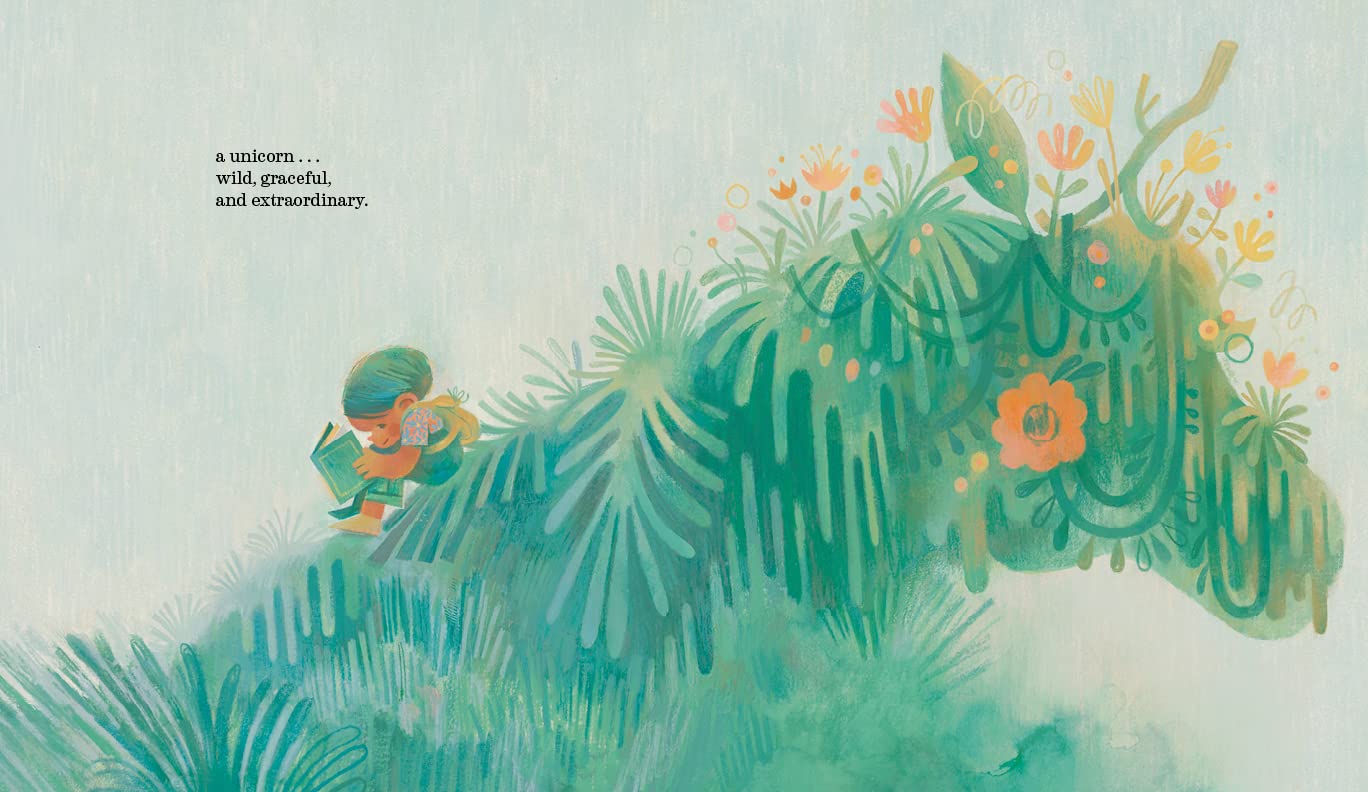
Ah, peeling the onion of inspiration isn’t always straightforward. I believe I was reading mentor texts about odd friendship stories and bouncing around ideas like what if a koala and a kangaroo met. When Jonah shared that as a young boy he was teased for coloring with a purple crayon. I never knew this. It upset me to think that at such a young age, he navigated questions of his identity. I remembered that Jonah, as a child loved mythology, especially unicorns. Keeping in mind the idea of the odd friendship, we started talking about a boy who loved unicorns but was teased about it. And what if, the boy actually encountered a unicorn. In that moment, we envisioned the whole story. Then the hard work began.
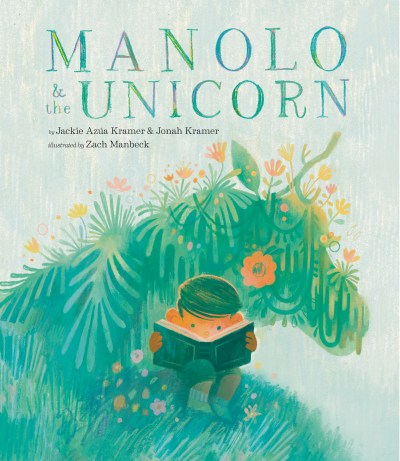
What was it like to collaborate for the first time with another writer?
Covid had just hit and Jonah, an actor, was now home from touring. So, our collaboration was a nice distraction from reality. It was an interesting time for imagination and allowing seeds of ideas to grow and bloom. I thought the mother-son relationship might affect our work together. But writing can be a lonely business, so it was fun having someone to help develop and discuss the story. I would write a section and email it to Jonah. Then Jonah would revise and send his revision back to me. And vice versa, he’d write a section, and I’d revise. Under one roof it was easy to work together. For example, I remember us working late into the night, and it felt perfectly normal sitting around in our pajamas.
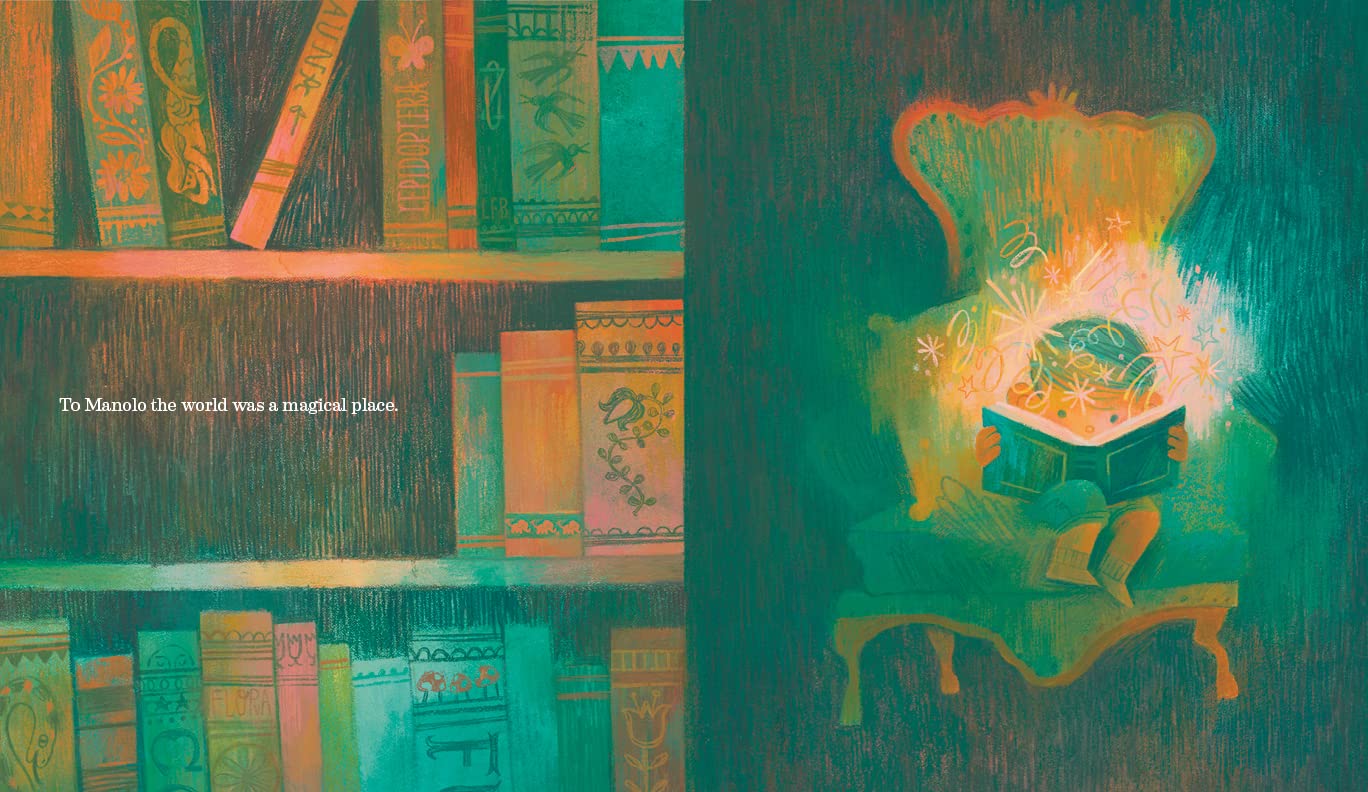
MANOLO AND THE UNICORN touches upon a child’s sense of self and identity. Can you speak to that?
In the story, Manolo believes the world is a magical place. He loves exploring in the natural world and loves unicorns most of all. Manolo is truly and authentically himself until someone tells him otherwise. Jonah and I learned from our research that unicorns only appear to those pure of heart. That element strengthened and weaved well into our theme of identity. Identity encompasses the memories, experiences, relationships, and values that shape one’s sense of self. One’s identity is made up of big and small things – everything from one’s hair, who one prays to, who one loves, the food one eats, to the families and neighborhoods one grows up in.
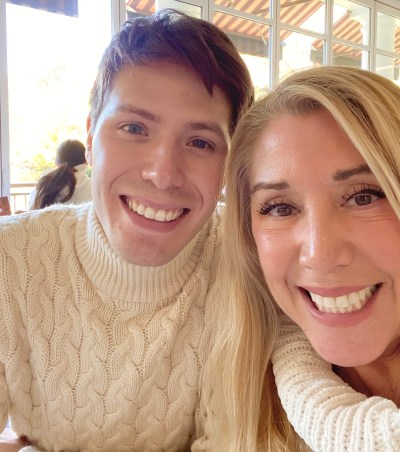
What do you hope will be the takeaway for young readers?
The more a child feels seen, the more they feel valued; the less a child feels seen, the less they feel that they matter. We hope the book lifts children up and supports their positive identity.
- Jonah Kramer, interviewed by Jackie Azúa Kramer
What was it like to write a book for the first time? And what was it like to work with your mom?
Ever since I was a kid we would read children’s books together and we would each take turns giving the characters different voices. I never imagined that one day I would be writing a children’s book with my mom instead of just reading them. The challenge as a first time writer was finding a way to channel and refine my ideas into a story. Many times, one of us would have an idea and we would riff off each other talking about all the different ways we could take the story. Working with my mom I got to see the craftsmanship that goes into writing a children’s book. She knows how to take a concept and think about it both as a writer and through the eyes of a child, which I think is an invaluable skill.
How did negative childhood experiences impact your identity?
For our yearbook, I was asked what I wanted to be when I grew up. Without hesitation, I said, “a Disney princess.” When the yearbook came out it said “actor” and not “Disney princess”, which ironically set me on my path to becoming an actor. But it was not my honest answer and taught me that there are certain things that our culture was not willing to let me express about myself. As I was writing the story, it hit me how damaging it was to have that experience at such a formative age.
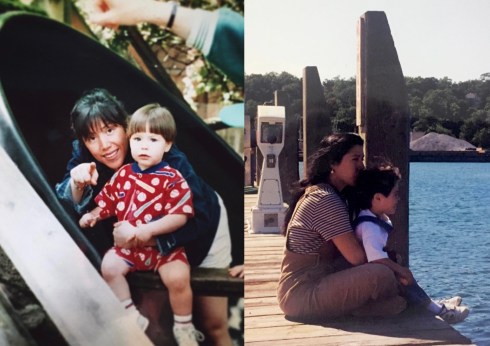
How has your work as an actor effected how you write?
When writing I would often imagine the text in my head as if someone was performing it. It would help me to act out parts of the book as in a script. For example, my mom and I, spent time going over the details of Manolo’s first sighting of the Unicorn and I remember acting out for her what that greeting might look like. My three act play depicting this interaction didn’t entirely make it into the final story, lol. I think part of the reason we worked well together is that we both have theatre backgrounds.
We decided to stick very closely to the mythology about unicorns. How did that become an important theme in the book and how did that shape the characters of both the Unicorn and Manolo?
I would lose myself for hours imagining that I had magical powers, that I had a team of Pokémon, or that I was exploring the distant planets in Star Wars and its creatures. I would even draw my own characters with names and their own magical mythology. So the magical thinking of children was important in the story. However, everything was still rooted in realism. Manolo is a boy with a family that goes to school and has all the experiences that come with that. The sadness and aloneness Manolo feels when he’s teased by classmates for liking and believing in unicorns. Unicorn mythology often describes them as creatures who only show themselves to those who are pure of heart. Manolo sees the magic in everything, and he can find the extraordinary in the ordinary, which makes for the perfect friendship between these two characters.
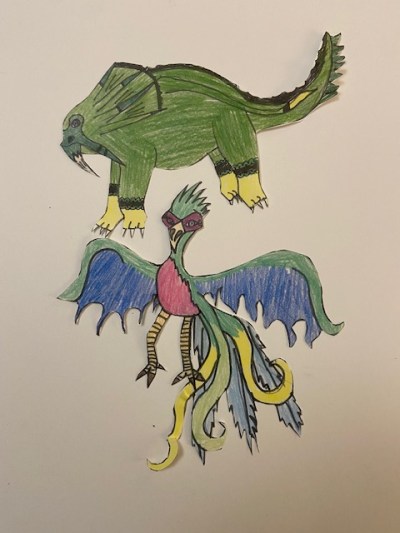
What do you hope the takeaway for young readers will be?
I wish that I had a book like Manolo and the Unicorn when I was a kid. It might have changed the way I thought about myself and given me reassurance that I can use that purple marker, that I can be a Disney princess if I wanted to. Still waiting for the offer from Disney. There aren’t enough books for kids like me to see themselves reflected in. I hope that all creators in all mediums continue to write more stories for kids that reinforce the idea that all parts of us are beautiful.
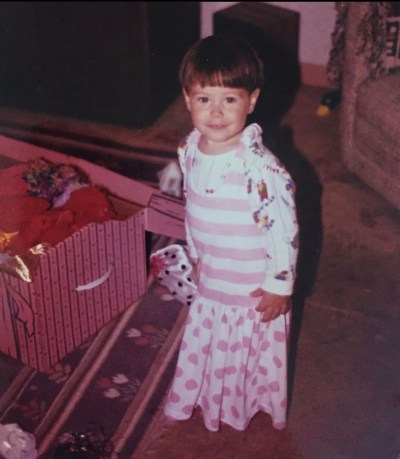
 Jackie Azúa Kramer is an award-winning and internationally translated children’s book author. Her picture books include THE GREEN UMBRELLA, 2017 Bank Street College Best Children’s Books of the Year; IF YOU WANT TO FALL ASLEEP; a 2021 SCBWI Crystal Kite Award winner, THE BOY AND THE GORILLA; I WISH YOU KNEW, Chicago Public Library Best of the Best Books 2021 and 2021. Parents’ Magazine Raising the Future Book Club Pick; MILES WON’T SMILE and Junior Library Guild Gold Selection, DOROTHY AND HERBERT: AN ORDINARY COUPLE AND THEIR EXTRAORDINARY COLLECTION OF ART. Her upcoming picture books releasing in 2023 are WE ARE ONE, EMPANADAS FOR EVERYONE and BOOGIE IN THE BRONX. Visit her online at Jackieazuakramer.com, on Twitter @jackiekramer422 and Instagram @jackie_azua_kramer.
Jonah Kramer is a New York City-based actor, singer, dancer, and now children’s book author. He has traveled as a performer both nationally and internationally. He is delighted to coauthor his first book with his amazing mom. Find him online at JonahKramer.com and follow him on Instagram @jonahekramer.
Jackie and Jonah are giving away two copies of MANOLO AND THE UNICORN (when it releases on April 18), one copy each to two winners.
You’re eligible to win if you’re a registered Storystorm 2023 participant and you have commented only once on today’s blog post. ↓
Prizes will be distributed at the conclusion of Storystorm.
by M.O. Yuksel
I love using writing exercises to generate story ideas. One exercise I find especially useful is trying out different points of view (POV). For example, when I started writing my new picture book RAMADAN KAREEM, about the Muslim holy month of fasting, I wrote it from the fast-breaking meal, iftar’s POV. A story from a meal’s perspective? At first, it seemed crazy. But I went with it anyway. I was trusting the process of creating and giving myself permission to play.
This exercise allowed me to put my creative hat on and think about all kinds of fun possibilities like how iftar might react to a child dreaming about their favorite foods, or how it might respond to a child being impatient waiting for iftar to arrive. After many revisions, I eventually changed the POV of the final story, but the initial kernel was sprinkled throughout the book, RAMADAN KAREEM, coming out in 2024.
I also used this POV exercise when I was stuck while working on my picture book biography, ONE WISH: Fatima al-Fihri and the World’s Oldest University. I couldn’t figure out how to structure this story about this inspiring, trail blazing woman who built the world’s oldest, continually operating university in Fez, Morocco in the 9th century. I was determined to figure it out, but I was stuck and frustrated!
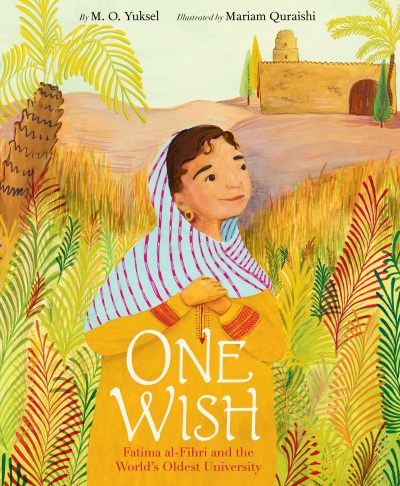
So, I decided to open myself up to play and try writing the story from different perspectives. I wrote the story from the university’s perspective. What? Yes, the university. I thought, what might a university hear, see, smell, taste, touch, if it could? The final version of ONE WISH isn’t written from the school’s perspective, but this exercise did help me come up with a few sensory details including this refrain:
“Fatima imagined her school—feet shuffling from class to class, scholars lecturing at every corner of the building, students debating in various dialects…She could almost touch each brick and stone.”

Writing from multiple POV also came in handy when I was drafting my picture book, IN MY MOSQUE.
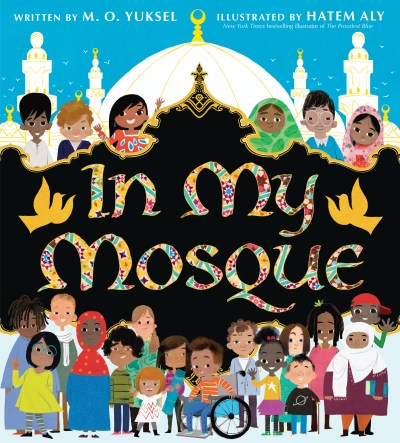
I first wrote it from the community perspective—what, where, why of a place of worship. But it wasn’t very kid relatable. So, I included a second perspective, that of the child. Each spread begins with the community perspective and ends with the child’s, incorporating their feelings and senses.

Now, it’s your turn. Try writing in different POVs. You might try it on a draft you’re working on, or an idea percolating in your head, or if you don’t have an idea, maybe look at the first thing you see and write it from its POV, then write it from other POVs, and see what happens! Most importantly, put your internal editor and critic away, trust the process, and give yourself permission to play!
 M.O. Yuksel is author of the picture books, IN MY MOSQUE, illustrated by Hatem Aly (HarperCollins 2021), and ONE WISH: Fatima al-Fihri and the World’s Oldest University, illustrated by Mariam Quraishi (HarperCollins 2022). Her forthcoming books include RAMADAN KAREEM, illustrated by Hatem Aly (HarperCollins 2024), SAMI’S SPECIAL GIFT: An Eid Al-Adha Story, illustrated by Huseyin Sonmezay (Charlesbridge 2024), and PRINCE OF STARS: The Story of Ulugh Beg, illustrated by Zelma Firdauzia (HarperCollins, 2024). Before becoming a full-time writer, she worked in the education field for over twenty years as an administrator, manager, teacher, and yoga instructor. She lives in New Jersey with her three kids, two cats, and one husband. Visit her online at: MOYuksel.com.
M.O. Yuksel is giving away a copy of her book, ONE WISH: Fatima al-Fihri and the World’s Oldest University.
You’re eligible to win if you’re a registered Storystorm 2023 participant and you have commented only once on today’s blog post. ↓
Prizes will be distributed at the conclusion of Storystorm.
by Jill Davis
I am an editor. I acquire projects from writers and help them shape and mold and yes, snip, their words and art into picture books. I like to work on books in the 32- to 80-page range and I adore every part of the process. Sometimes it’s fun and easy and other times it can feel puzzling and painful and wake me up at 3am—but the good news is that I think I know how to do it now.
A focus in the books I find the most interesting to work on is voice. What is voice? Hard to describe, I know. And why should a voice feel unique or special? I remember asking a writing mentor how to go about exploring the idea of voice in writing. I knew voice was the thing that makes some writing feel close or funny or poignant or difficult. I knew the seductive voice of Death in The Book Thief. The detached, sarcastic voice in the poem, Girl by Jamaica Kincaid. In picture books, I was fanatic about James Marshall and William Steig. When I heard Steig was nearing the end, I wrote him a letter thanking him for teaching me how to write. I don’t even know if he ever saw it.
Writers with strong voices are distinctive and dependable and they make us feel confident that their stories are worth our time. Most important, they make us want to read. When Dr. DeSoto’s wife says, “Let’s risk it!” and they enter the fox’s mouth, I remember feeling like this gal was a real doctor’s wife with a point of view and a history. She probably had kids, too. And a mortgage, too! Of course, she was a mouse.
Or how about this famous first line: “The Pushcart War started on the afternoon of March 15, 2026, when a truck ran down a pushcart belonging to a flower peddler. Daffodils were scattered all over the street. The pushcart was flattened, and the owner of the pushcart was pitched headfirst into a pickle barrel.”
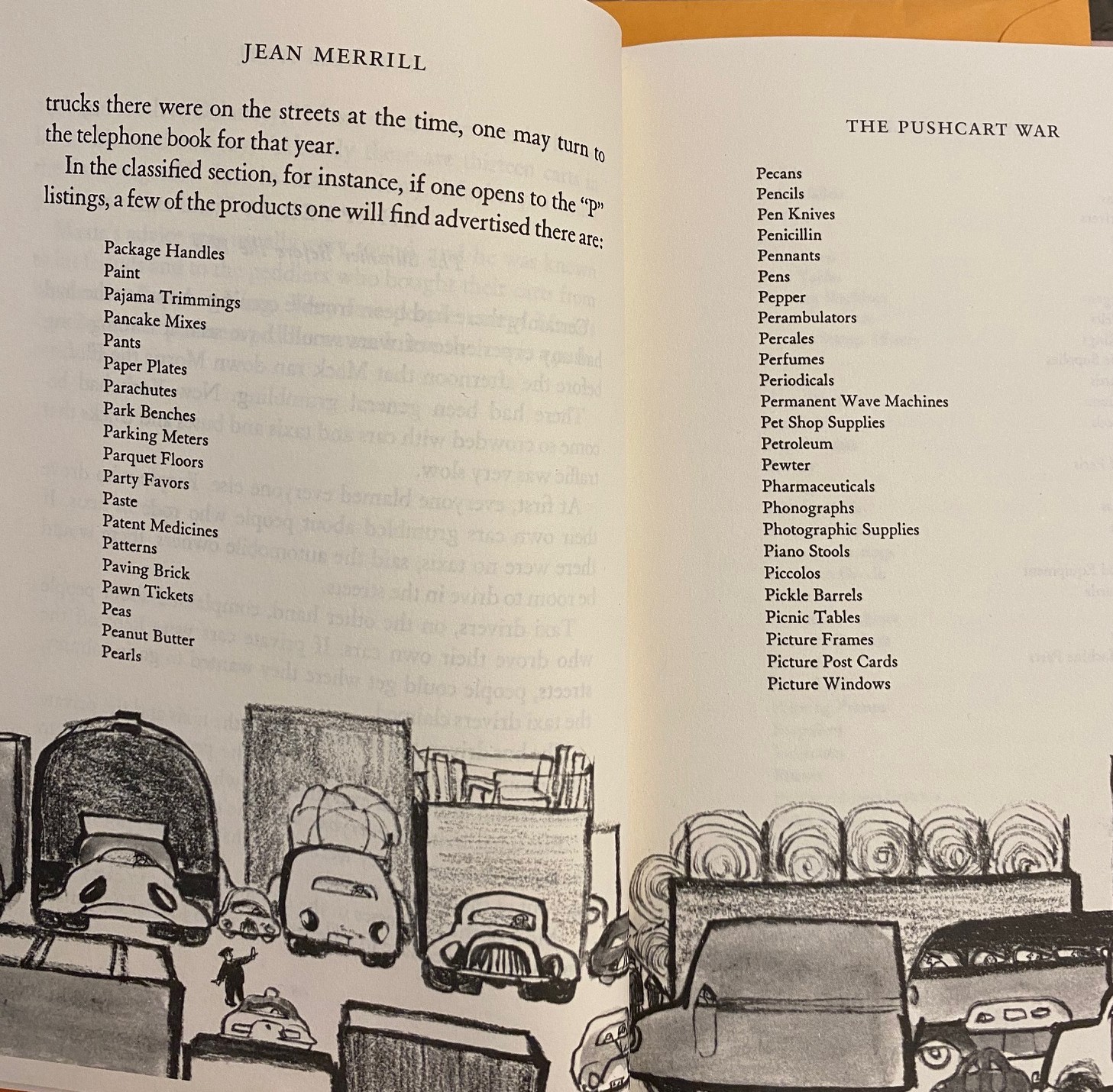
I’d love the opportunity to talk about that sentence with a group of fourth graders and see how they feel when they read that opening. Wouldn’t you?
For new writers, voice is not always easy to pin down or to sustain. It can be easy to find in one piece you’re writing and then impossible in the next. So, when I feel stuck, I try and remember that words are always there to help.
I mention words because just yesterday I was editing a picture book, bulldozing someone else’s text to make it sound like I wanted it to sound, when I found myself at the end of a spread that needed something. In the story, a kid is coming home to see her mom after a long eventful day. When she arrives home, it seemed it would be best if the kid didn’t tell her mom what had just happened at school and how she felt. I think I had suggested finishing the page with: “she didn’t tell her mom about her day.” I thought I was very clever for suggesting that, not realizing that a) it’s pretty boring and 2) that I was stealing the idea directly from another book I had worked on. There is a last scene in a book called On a Magical Do-Nothing Day where a boy comes home from a huge adventure at the end of the day, sits down for hot chocolate with his mom, and doesn’t say anything. They just share the moment. Very pretty, truly.
But the characters in this book are monsters! Having a quiet hot chocolate would be far too calm. So I added another line to my comment: “Or what if they snort milk out their noses?” I cracked up remembering that line from the book One, Day Two Dragons. The line about the dragons snorting milk out their noses is one of so many lines I loved. I remember thinking that if I could ever work on such a funny book, that would mean something.
The point I’m not making very well here is that there is a better chance of having your own terrific voice if you have own terrific words. And that’s where the word LEXICON comes in! A craft book I like a lot about Lexicon (the title escapes me! Sorry!) was helpful to me when I was writing a middle-grade novel about a girl who loves fashion design. The more fashion related words I collected; the more ideas emerged. It just happens!
So here’s my advice: find words, write them down, say them out loud, practice using them. But most of all, find some humdingers, and put them in your books. Listen to how people speak. What are the words that they use that others wouldn’t? Write those words down! Start a lexicon of your own—like Pinterest!
I will leave you with a thought. Picture book writing is different because not only does it require great words, it also requires sounds, rhythm, and hopefully a bit of rhyme. It requires the use of rhetorical devices—perhaps alliteration and many others you might like to discover.
There are always new types of words to learn—and that’s the fun part. Finding a voice is much more fun if you have a big book of words you adore!
 Jill Davis is the Editorial Director of Hippo Park Books, a new imprint of Astra Books for Young Readers. She started the imprint in 2021 and the first list debuted in Fall, 2022. Since jumping into the world of children’s book in 1992, Jill has held editorial positions at Random House, Penguin, Bloomsbury, FSG, and HarperCollins. She took a break from publishing from 2009 until 2013 and did the MFA in Writing for Children and Teens at Hamline University in St. Paul. She is the author of three published picture books and completed a novel during her MFA (which she loved writing but believes no one should ever have to see). She adores funny, poignant picture books, quirky non-fiction, graphic novels and illustrated chapter books. She lives in NYC and Long Island, has two adult sons, two ridiculous dogs, and one lovely husband. Learn more at AstraPublishingHouse.com/imprints/hippo-park and follow them on Instagram @HippoParkBooks.
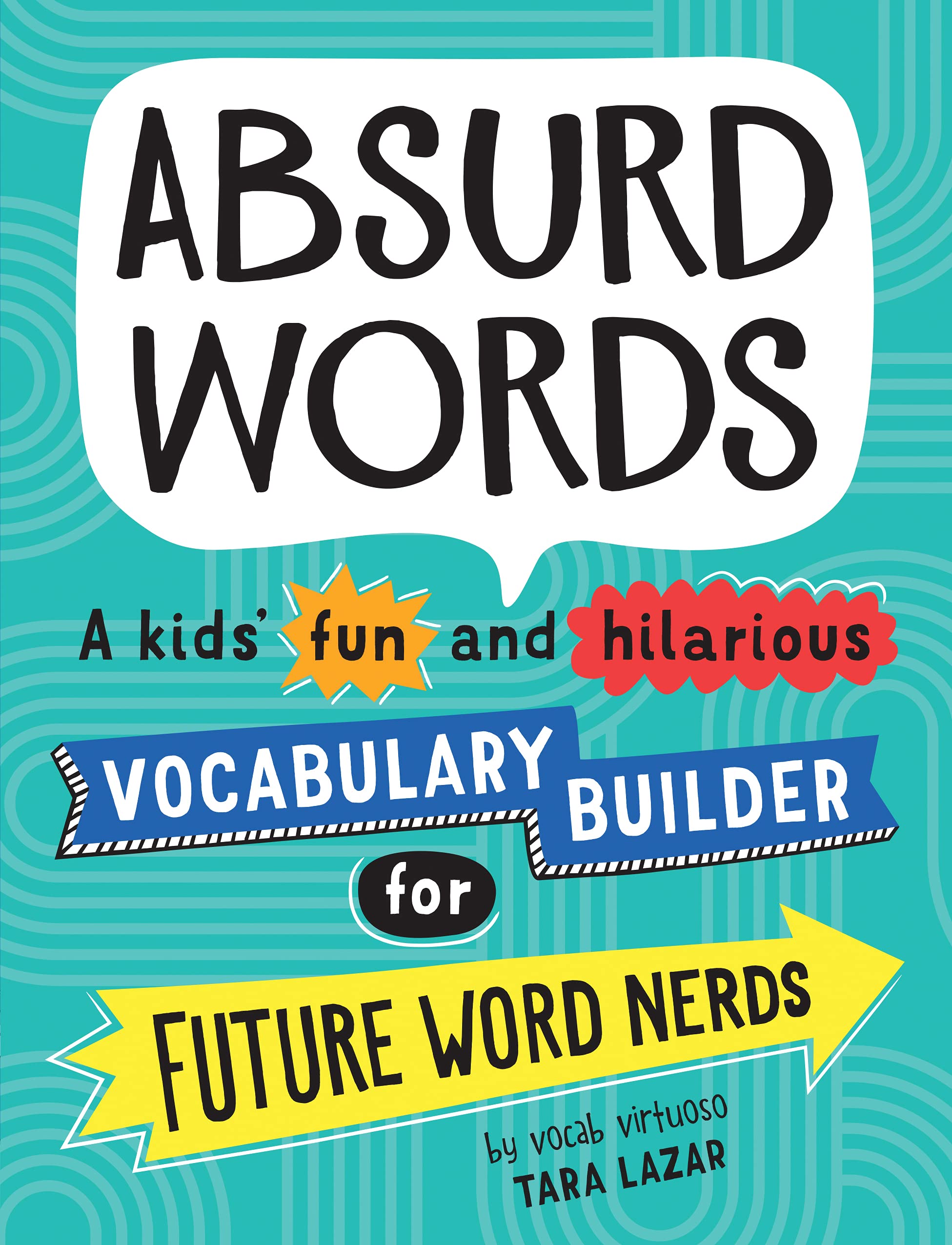
Speaking of words, Tara is giving away a signed copy of ABSURD WORDS.
You’re eligible to win if you’re a registered Storystorm 2023 participant and you have commented only once on today’s blog post. ↓
Prizes will be distributed at the conclusion of Storystorm.
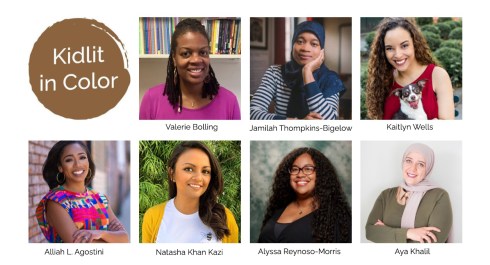
KidLit in Color is a group of traditionally published BIPOC creatives who write picture books, early readers, chapter books, and middle grade novels. We nurture, amplify diverse voices, and advocate for equitable representation in the publishing industry. Some of our members have decided to share the ideas and inspiration that sparked their stories, featuring BIPOC characters. Whether you’re writing about BIPOC characters or not, you’ll gain new story ideas to add to your Storystorm list.
Valerie Bolling: Focus on Family

RAINBOW DAYS: THE GRAY DAY, illustrated by Kai Robinson (Scholastic, May 2, 2023), was inspired by my nieces. The main character’s name is Zoya, which is a combination of my nieces’ names, Zorah and Anyah. Zorah loves to read and write, and Anyah loves art. Zoya is a character who loves to create art with her dog, Coco. I channel Anyah when I think about the art projects that Zoya would enjoy delving into with Coco by her side. Anyah paints beautifully, so in THE GRAY DAY, the first book in this early reader series, readers will get to see Zoya exhibit her painting skills. And similar to Anyah, Zoya loves sparkles, so glitter is a complement to much of her art!
- Storystorm Idea:
Who in your family might provide inspiration for a story? Is it a nephew who always makes you laugh? Is it a quirky aunt who gives gifts that no one really wants? Is it a grandfather who’s so warm and loving that all of the kids want to sit next to him on the couch? Is it a cousin who has a unique hobby that you’d like to know more about? Is there another family you know that has some interesting characters you could write about? Exaggerating is welcome and encouraged!
Alyssa Reynoso-Morris: Family, Food and Love
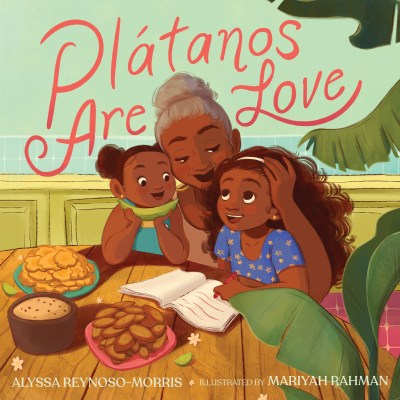
PLATANOS ARE LOVE, illustrated by Mariyah Rahman (Atheneum Books under S&S, April 11, 2023), was inspired by my childhood experiences cooking with my grandmother. It is a delicious picture book about the ways plantains shape Latinx culture, community, and family, told through a young girl’s experiences in the kitchen with her abuela. The main character, Esme, was named after one of my grandmother’s Esmeralda. I also chose this name for her because Esme means love and LOVE is the main theme of this book. Esme learns about her ancestors and how platanos (plantains) are more than just food.
- Storystorm Idea:
Think of the storytellers in your life. Think of fun things you do together. Think about the stories they shared with you. Think of the stories you made up together. For me—my Abuela—is my inspiration. Everyone knew her for her stories and the animated way in which she retold them. As I got older I would often join her in retelling her tales. When she passed away, writing down our stories was my way of keeping her memory alive. When I need inspiration I often think of her and the stories we used to share together.
My grandmother grew up in an impoverished town in the Dominican Republic. She had a second grade education because in her generation girls were meant to be married off and not invested in. She taught herself to read and write by memorizing the Bible. She was not a “writer” in the traditional sense but she was the best storyteller because she could make you laugh and cry and feel so many emotions all at once. She was captivating and to know that two generations later I get to publish my version of our stories brings me immeasurable joy.
Kaitlyn Wells: Mine Your Emotions
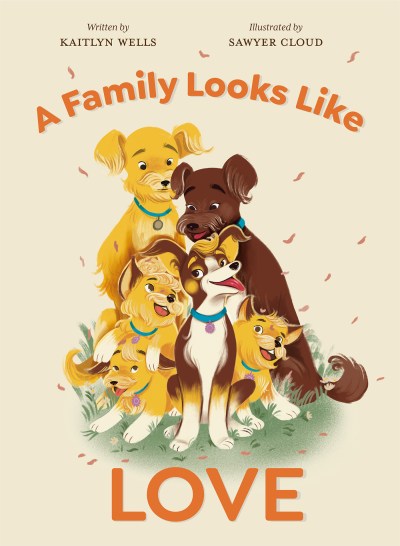
I wrote my first picture book as an exploration of my painful childhood experiences growing up Black biracial in Texas—but from the perspective of my dog. A FAMILY LOOKS LIKE LOVE, illustrated by Sawyer Cloud (Penguin Random House/Flamingo Books, May 2022) also highlights the joy of knowing you’re loved no matter what you look like. To make that connection more accessible to young readers, I remembered that my own dog Sutton looks completely different from her own family, too. She’s also a dog who sees the best in everyone. Telling a difficult story with my pup as the conduit fit perfectly with the premise, and also made the story a bit easier to write.
- Storystorm Idea:
Mine your childhood emotions for the rawest experience you can remember. To help bring those difficult feelings to the forefront, grab a token to root yourself in yesteryear. It can be craft dough, a Ring Pop, a favorite song from the second grade, or anything that’ll help those memories reappear. Sit in the emotions as you draw a mental memory map of what situations, people and places sparked them. Then you can start to build out scenes around them until you have the framework of a story. I like using this “heart mapping method” because it gives my writing a certain level of authenticity that I couldn’t achieve otherwise. It’s not easy to do because our emotions can physically and mentally drain us. But with some practice you’ll learn to welcome the experience rather than run from it.
Natasha Khan Kazi: A Needed Character
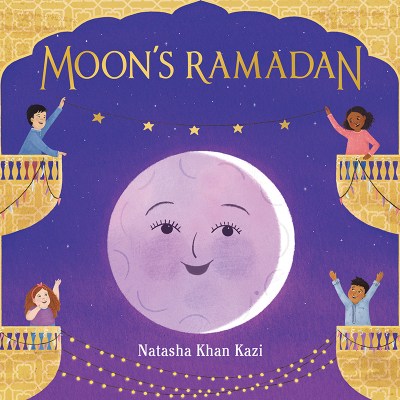
When my children entered preschool, I asked their teachers if we could share Ramadan in the classroom. My then four-year-old wanted to share old and new traditions, and I couldn’t find a book that encompassed everything we were looking for. That’s how MOON’S RAMADAN (Versify / HarperCollins 2023) was first drafted. It began as a first-person POV poem, essentially a love letter to Ramadan. I let the draft sit for weeks as I contemplated what was missing. The answer was holiday magic, what I needed as a Muslim child and what my kids need now. Ramadan doesn’t have the imaginative characters of Christmas or Easter. The story needed to be told from the POV of Moon, my magical main character, as she visited diverse families all over the world.
- Storystorm Idea:
Brainstorm the characters and stories you needed as a child or the children in your life might need now. Don’t forget to mine your memories for the magic you needed, too. Let those real world events plus imaginative elements simmer and see what you cook up!
Aya Khalil: Favorite Family Traditions
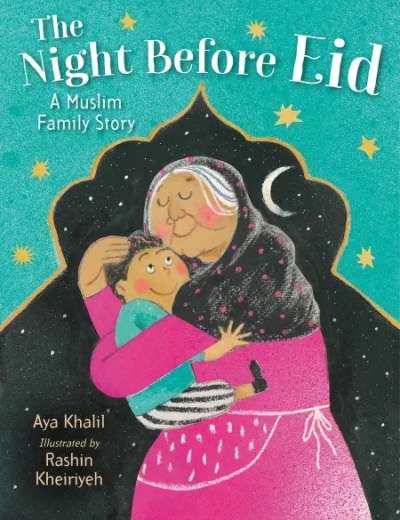
My inspiration for my characters are my grandmothers and mom. In this intergenerational story, Zain, a young boy and his grandma bake Eid cookies, ka’ak. I have memories baking with my grandmother when she used to visit us from Egypt. It wasn’t perfect and it was messy, but there was always love and fun involved. Zain reminds me a lot of my own seven year old son because of his love for his grandma and lack of patience!
- Storystorm Idea:
What are some of your favorite traditions with your families? Especially holiday traditions, are there special treats you baked together with your family and shared with others? How did those traditions make you feel? Try to remember all of the senses involved: smell, texture, sounds around you in the kitchen and home during those moments.
Alliah L. Agostini: Mix Memories with Wonder

The protagonist of BIG TUNE: Rise of the Dancehall Prince, illustrated by Shamar Knight-Justice (FSG, March 2023) was partially inspired by my Jamaican-American husband. I was working on another dance/music-focused manuscript that just wasn’t gelling when a friend/critique partner asked “What if one of the kids was too shy to dance?”. That made me think of my husband, the best dancer I know. But he’d always recollect being too shy to dance at family parties in 80’s/90’s Brooklyn, so his goal-oriented, math-loving side redirected him to lay low and collect cans and bottles to return and earn his own money, instead. This gave birth to BIG TUNE, a story that celebrates quiet yet tenacious kids, while also reflecting our Caribbean heritage.
- Storystorm Idea:
Ask What If?. If you’re working on a fiction manuscript with an essence that you love, but something isn’t working, don’t be afraid to take a variable of the story and start considering other options. Perhaps it’s the setting or the time period, the central conflict, or even an attribute about the main character. Inevitably other parts of the story will have to evolve in order to support this shift, but have fun! Note: if it’s non-fiction, you can do the same. Although facts are facts, there are a number of different approaches to the same story. Asking those ‘what-if’ questions might uncover fascinating, unexpected under shared truths!
Jamilah Thompkins-Bigelow: Write the Story That Heals You
I write for kids but I write for me too.
Whether it’s reclaiming names, undoing harmful single stories about Muslims, or working through Black pain to assert Black joy, I write to heal and that has often produced my most resonant stories.
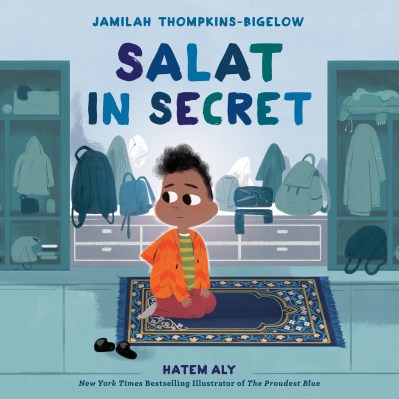
Two weeks after my father’s death, I sat down to write SALAT IN SECRET (illustrated by Hatem Aly, Salaam Reads/Simon & Schuster, June 2023). It also happened to be two weeks before my youngest child’s seventh birthday, a religiously significant year when Muslim children are encouraged to commit to salat or praying five times a day. I thought of my deeply religious Muslim father who performed salat everywhere even on the street as a chauffeur, cab driver, and ice cream man and how excited he would have been for his grandson. My balm was writing Muhammad who is determined to pray all five prayers when his unapologetic Muslim father gifts him a salat rug on his seventh birthday. However, too shy to ask for a place at school, Muhammad tries to find a secret place as many Muslim kids and adults like me do–another wound I needed to heal.
- Storystorm Idea:
What are your wounds? Don’t be afraid to list out your pain. Children experience painful moments and need stories that speak to those too. Lay it out on paper, then write the story your inner child needs to heal.
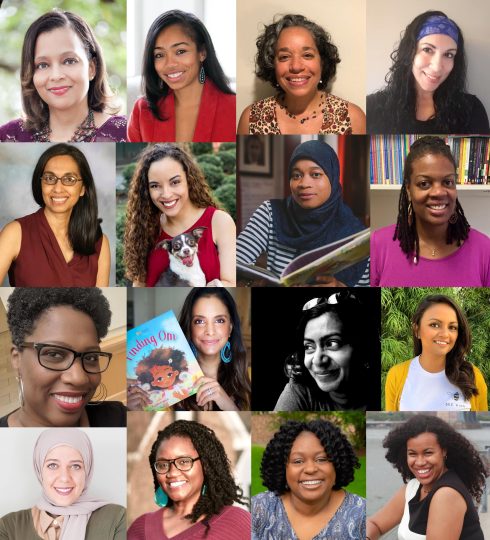
Visit the entire KidLit in Color group online at KidLitinColor.com and follow along on Twitter @KidLitinColor.
KidLit in Color is offering the following prizes (one winner for each):
- Valerie Bolling will offer a 15-minute AMA.
- Kaitlyn Wells will offer a 15-minute AMA or picture book manuscript critique.
- Alyssa Reynoso-Morris will offer a 30-minute AMA or a picture book manuscript critique.
- Natasha Khan Kazi will offer a 15-minute AMA or a PB non-rhyming fiction manuscript critique.
- Aya Khalil will offer a 15-minute AMA or a PB non-rhyming fiction manuscript critique.
- Alliah L. Agostini will offer a 15-minute AMA or a copy of Big Tune or The Juneteenth Story.
- Jamilah Thompkins-Bigelow will offer a 15-minute AMA.
You’re eligible to win if you’re a registered Storystorm 2023 participant and you have commented only once on today’s blog post. ↓
Prizes will be distributed at the conclusion of Storystorm.
by Jessica Shaw
Hello Storystormers!
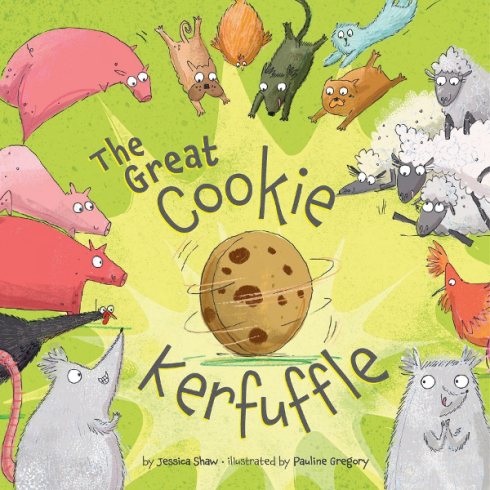
I’m honored to be a guest blogger this year! My debut picture book, THE GREAT COOKIE KERFUFFLE, released on August 9th, 2022 from Amicus Publishing. It’s beautifully, whimsically, and adorably illustrated by Pauline Gregory.
Let’s get to it! We’re all here because we love writing and we love good advice and we love inspirational lists, yes?
But a list like this…
- Be patient
- Be persistent
- Do your research
- Write, write, write
- Read, read, read
…is not super helpful.
Yes, yes, okayyyyyyy. These things are important.
But plenty of writers have been doing all these things for a long, long time and they still haven’t signed a contract. Am I right?
I want to share a better list. One that’s a bit more specific and concrete.
These are things that have helped me advance my writing career. I hope they help you, too!
- I frequently submitted poems and short stories to children’s magazines. I (eventually) wound up with numerous published pieces…and, yes, a few dollars in my pocket!
- I sought out calls for nonfiction material and work-for-hire books for educational publishers. I wound up with numerous NF book contracts and (more) dollars in my pocket! (This was way out of my comfort zone, but gave me a much-needed boost in confidence.)
- I participated in critique groups and exchanged manuscripts with individual critique partners as well. It’s helpful to get feedback at different stages from different people. If you only share our work with one group of writers, try shaking things up! Make some new connections and get some fresh eyes on your story!
- I spend time around kids. (Full disclosure—I teach Pre-K, so this isn’t something I had to go out of my way to do.) If you don’t interact with children in your normal day-to-day, try volunteering at a library, elementary school, or church nursery.
- I joined Twitter and followed other kidlit people: authors, illustrators, publishers, editors, and agents. For a while it seemed I was just tweeting into a void, but over time I grew my follows/followers. Twitter is a great platform for staying abreast of current events in the industry, learning about individual agents’/editors’ personalities and preferences, and supporting other creators. Be yourself, be kind, be approachable, but be professional.
- I participate in Storystorm! Like many of you, I return to Storystorm year after year. Keep your idea lists handy. When I’m stuck, I look back through those lists until something sparks. I re-read old Storystorm blog posts, too! Inspiration at your fingertips!
- I keep evergreen themes in mind. Evergreen books are numerous, but their appeal is broad and timeless. Don’t be afraid to write a tried-and-true story, just be sure to give yours a fresh spin. Take a look at your Storystorm idea list. Would any of your ideas fit with an evergreen topic?
- I analyze picture books. If I love a book, I make a note of the book title and the reason(s) for its appeal. Zany humor? Flawless rhyme? Lovable characters? Clever wordplay? Likewise, when you read a book that falls short of your expectations, ask yourself why.
- I consider adding an educational element. I tend to write the story first…because story should always come first…but if I’m happy with the story and it lends itself to an educational element, I’ll try to work that in. The Great Cookie Kerfuffle is, at its heart, a book about the importance of friends (hello, evergreen topic), but it’s also a counting book (hello, educational element), and that broadens its appeal.
- I storyboard. Page turns are everything. Even if your “illustrations” are stick figures and smiley faces, laying out the pages of a story will show you if the amount of text is balanced throughout the book, and if the text on each page spread lends itself to an exciting page turn. Did I mention page turns are everything?
- I put away stories I love (when necessary). This one took me years to master. I tended to get hung up on that *one*, special manuscript for a loooong time because, come on, how could this thing NOT sell? I mean, if THIS story doesn’t get published should I even be wasting my time writing?! I wanted validation. I wasted precious writing time. I’ve learned to give my manuscripts a reasonable shot out there and then…put them in the drawer. It’s not a “bad story” drawer or a “retirement” drawer. It’s a “wait-here-while-I write-my-next-great-story” drawer.
- I invest in myself. Attending conferences and writing workshops (and paying for the occasional professional critique) elevated my writing, inspired me, opened up submission opportunities, and put me in the company of kind, talented kidlit creators who became friends and critique partners. I only wish I had invested in myself sooner!
Happy New Year and Happy Writing!
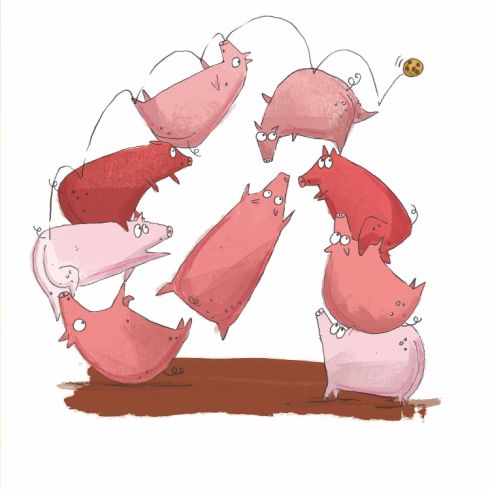
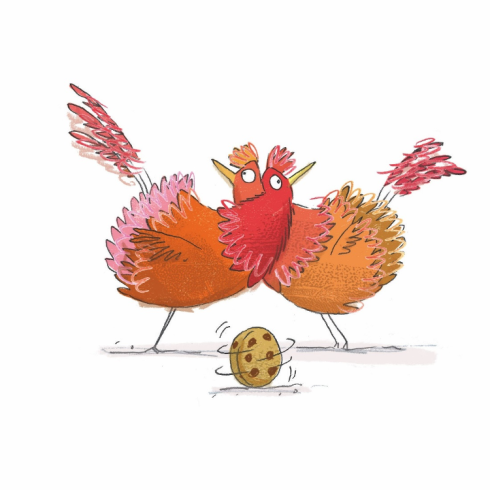
 Jessica Shaw is the author of THE GREAT COOKIE KERFUFFLE (Amicus Publishing, 2022). Her work has appeared in Highlights for Children, Highlights High Five, Ladybug, and Hopscotch for Girls magazines. She is the author of numerous non-fiction titles for Rosen Publishing. Jessica teaches Pre-K and lives in the Texas Hill Country with her family.
Visit her at AuthorJessicaShaw.com or on Twitter at @_Jessica_Shaw.
Jessica is giving away two signed copies of THE GREAT COOKIE KERFUFFLE, one each to two winners.
You’re eligible to win if you’re a registered Storystorm 2023 participant and you have commented only once on today’s blog post. ↓
Prizes will be distributed at the conclusion of Storystorm.
by Patricia Tanumihardja
Write what you know—I’m sure you’ve heard this phrase before. What exactly does it mean? To put it simply, you take something from your life—experiences, relationships, where you live, people you know, even your job!—and use it to build a story.
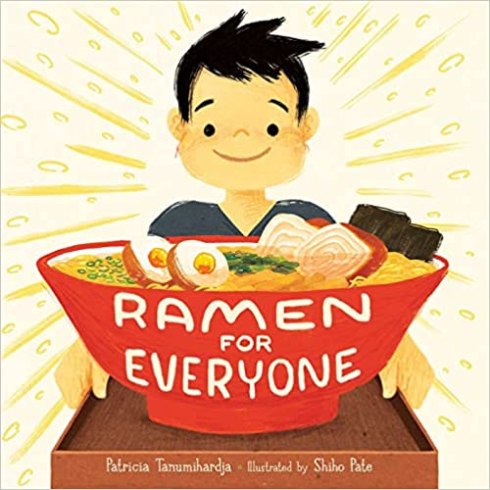
My debut picture book RAMEN FOR EVERYONE (Atheneum Books, March, 2023), illustrated by Shiho Pate, is a great example of how I applied this mantra to my writing process.
Brainstorming Ideas
In my other life, I’m a food writer and cookbook author. Surprise, surprise, that many of my story ideas involve food, eating, and/or cooking!
Over my years of PiBoIdMo-ing and Storystorming, I’ve come up with dozens of story ideas that fit the bill. This is what my list of ideas looked like one year:
- Monster family owns a bakery
- Caveboy learns table manners
- Crazy mashup menu: clam chowder ice cream, spaghetti and meatball sundaes, pickles and cream cheesecake
- Girl wants to be a sushi chef even though it’s against tradition
- Boy loves noodles
In the same vein, you can write what you know regardless of what you do.
If you’re an engineer or science teacher, your brainstorm list could include:
- Girl builds a rocket/see-saw contraption to fly to Mars
If you work in fashion,
- Boy incorporates found objects into his wardrobe to create statement fashion clothing
What about banking?
- Boy picks up pennies he finds to save for …
Big Picture Themes
Of course, an idea is just an idea. The next step is tying your idea to a central theme or thread that will be the unifying element of your story.
If you read several books written by the same author, you’ll notice a pattern. Kelly DiPucchio often writes about friendship (OONA, POE WON’T GO), Ame Dyckman likes writing stories about family (DANDY, WOLFIE THE BUNNY), Pat Zietlow Miller’s books empower children to be their best and truest selves (BE KIND, WHEREVER YOU GO).
Family and culture are two themes that are very close to my heart, so I often brainstorm themes along these lines:
- Boy connects with grandmother while cooking Lunar New Year favorites
- Girl stands up for little sister even though she’s annoying
- Cousins from opposite sides of the globe learn to play together despite their differences
- Boy wants to grow up to be just like his dad
Do you see a trend?
Choosing Which Ideas to Pursue
So you’ve come up with 30 (or more!) ideas, now what do you do? How do you decide which story idea to pursue? Again, think about writing what you know.
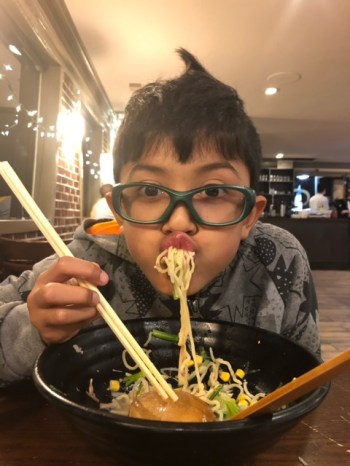
In 2014, I was developing recipes for an upcoming cookbook. One of those recipes was ramen. My son, who was 4 years-old at the time, loved to eat noodles. And he was in awe of his dad and wanted to do everything his dad did. I put two and two together and came up with this storyline: Boy loves ramen and wants to cook the perfect bowl of ramen just like his dad.
Of course, you should also factor in other things, especially that you will be spending a lot of time on your manuscript (it took me 7 years of writing and revising before I finally sold mine!). You must be passionate about your idea.
Conflict
Every story needs a conflict. Conflict gives your characters obstacles they have to overcome before they can reach their goals.
So I wasn’t done yet.
To come up with a situation that kids could relate to, I did some time traveling back to my childhood. One incident stuck out: I loved (and still do!) “Hello Kitty” and other Sanrio characters. I wanted to draw these characters perfectly but I was never satisfied. There were times when I would get so frustrated and rip up my drawing paper. One day, a friend saw one of my drawings and asked if she could keep it. I was thrilled and realized that just because it wasn’t perfect doesn’t mean it couldn’t be appreciated.
Finally, I plugged everything I had into this matrix:
MC wants___ but can’t because of CONFLICT/OBSTACLE. Finally, he discovers___and achieves___.
Hiro loves ramen and wants to cook the perfect bowl of ramen just like his dad. But nothing goes according to plan and dinner is ruined. Finally, he discovers he can use his ingenuity and succeeds in preparing a meal that his family loves.

These were the guideposts I used to write RAMEN FOR EVERYONE which launches March 14, 2023!
It’s your turn now. Go ahead, mine your life and experiences and go forth and write what you know. I’m cheering for you!
 Patricia Tanumihardja was born in Jakarta to Indonesian Chinese parents and raised in Singapore. As an immigrant twice-over, she’s brimming with stories to tell, and hopes that children of every color and creed will see themselves reflected in books, whether hers or other #ownvoices authors. Pat has two more picture books coming out this year: THE SUGAR PLUM BAKERS: AND THE 12 HOLIDAY TREATS (Disney-Hyperion, Fall 2023) and a picture book biography about Malaysian-born shoe designer Jimmy Choo. In addition to being a children’s book author, Pat also writes cookbooks and loves to weave food centric themes into her stories for young people. Don’t be shy to hit her up for some favorite recipes! Pat lives in the Washington D.C. Metro region with her husband and son where she enjoys bubble tea, dumpling-making, yoga and hiking. You can find her on Twitter and Instagram @ediblewords and online at EdibleWords.com.
Patricia is giving away copy of RAMEN FOR EVERYONE (Atheneum Books, when it releases on March 14th)!
You’re eligible to win if you’re a registered Storystorm 2023 participant and you have commented only once on today’s blog post. ↓
Prizes will be distributed at the conclusion of Storystorm.





 Writing for Kids (While Raising Them)