You are currently browsing the category archive for the ‘STORYSTORM 2017’ category.
I’m assuming that you’re all deep into your brainstorming about story ideas at this point and already have a meaty list after all the inspiring posts you’ve been reading during Storystorm. Good for you!
I sometimes equate this stage of story brainstorming to experimenting with a recipe for a cake. Why cake? Because cake is one of my favorite things in the world. And suppose it’s a recipe entry for a baking contest in which you can submit ONE entry.
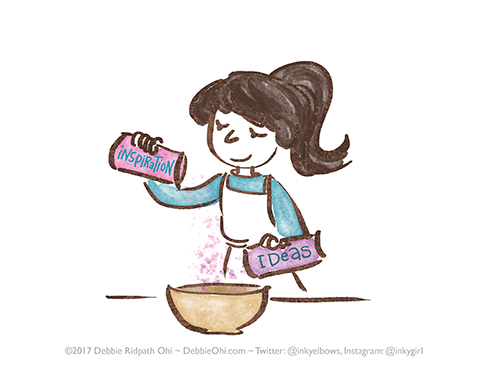
After Storystorm, I advise you to browse your list of ideas and choose the one that appeals to you the most. Maybe you’ll be so excited about this particular idea that you won’t be able to wait. Maybe you’ve already started working on expanding the story, plotting an outline and/or doodling rough sketches. Maybe you’ve just expanded the idea a wee bit, perhaps into a paragraph or a few pages of notes.
Excellent! Now put that story away and DON’T LOOK AT IT for a while. “A while” is up to you. For me, it’s at least two weeks but sometimes several months.
In our baking analogy: it means tweaking your cake recipe and then putting that experimental cake in the oven:
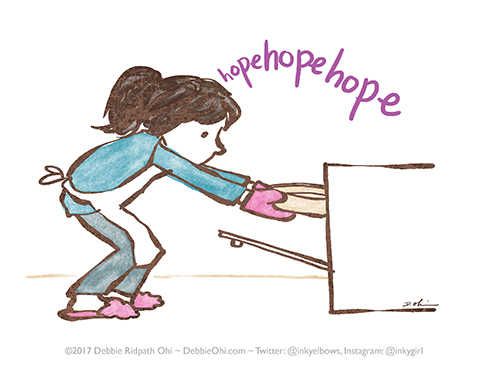
RESIST THE URGE TO TAKE IT OUT OF THE OVEN BEFORE IT’S READY.
Why?
Because if you take it out too soon, it’ll look pretty much the same as when you put it in. What you want: to give it enough time to settle, to bake, to reach a state where you can taste it objectively and see whether it’s really THE cake recipe you want to submit to the contest.
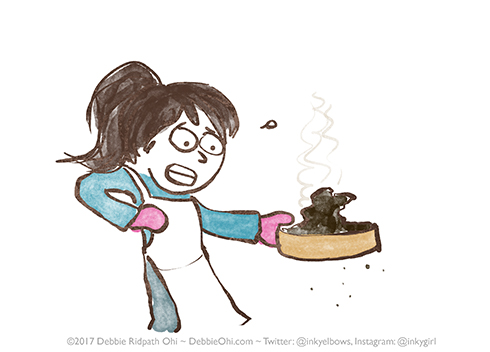
Sometimes when you take it out of the oven, it’ll look like this:
Though of course we all hope for this:
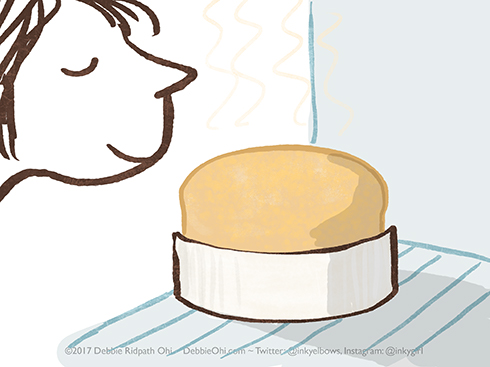
But back to when your cake story looks like this:
At this point, you may realize that it’s not worth salvaging, and you may want to just toss it. Sometimes your instinct will be right.
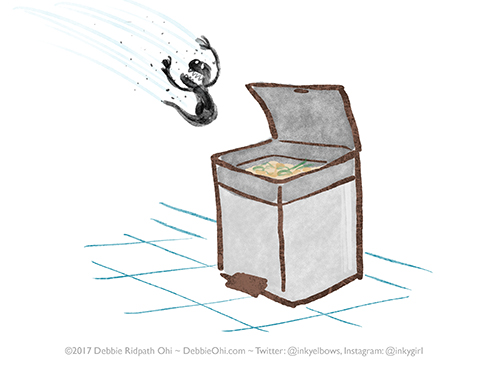
However, there may still be SOMETHING about it that you just can’t let go of:
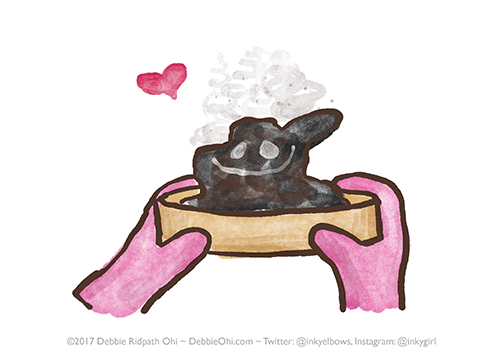
In that case, try experimenting some more. Maybe combine it with another idea, find a different spin, rework it in a different genre or format. Turn it upside down or reverse it, add an unexpected twist. You never know what will happen. Read this Veronica Bartles Storystorm post about how she substitutes story ingredients to familiar recipes to make them uniquely delicious. (Mmm, plus her Cranberry Sage Cookies With Almonds recipe sounds yummy….)
Then put it in the oven again to let it bake:
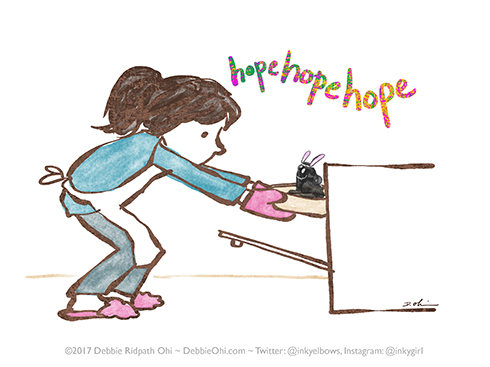
As before, no matter how excited you are, force yourself to work on something else and NOT take your new creation out too soon. While you’re waiting, take a look at your other recipe ideas, start experimenting for another recipe.
And so on. Ok, I’ll drop the baking analogy…you get the message, right?
Sometimes I may feel SUPER excited with a new story idea and have the urge to IMMEDIATELY dive into the writing and editing and revision process. Sometimes the first draft of the story pours out onto the paper; I love when this happens. However, I have learned to let an idea or first draft sit for a while before coming back to it. If I’m still excited about it, then I go to the next stage. After another round of writing or sketching or revising, I let it sit again and then re-evaluate.
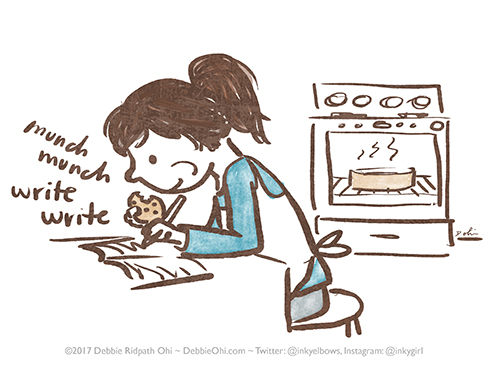
The danger of letting yourself dive into developing a story idea too soon is that you’ll get so caught up with the “ooo shiny toy” honeymoon phase that you won’t be objective. You’re going to be pouring a lot of time and effort into this project, after all, as well as inevitably getting emotionally invested. It’s in your best interest to take your time before you commit.

So stick with the rest of the Storystorm month! Keep reading Storystorm blog posts and coming up with ideas. By the end of the month, you’ll be able to look at your earlier ideas more objectively.
This is pretty much my story brainstorming process, by the way. I currently keep a notebook where I constantly jot down story ideas, fragments, bits of conversations and synopses for picture books, chapter books and middle grade novels. I used to use a digital notebook but I currently prefer a paper notebook where I can doodle as well as scribble ideas PLUS I like being able to physically browse earlier ideas to see if they still excite me.
Whatever the method you use to keep track of your story ideas, I encourage you to GIVE THEM TIME to develop and before sending them out into the world.
Good luck!
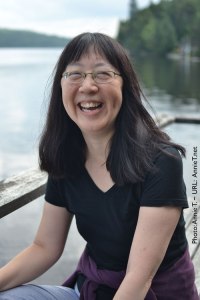 Debbie Ridpath Ohi is the author and illustrator of Where Are My Books? (Simon & Schuster), a book that began as an idea generated during PiBoIdMo (now known as Storystorm). Her illustrations appear in books by Michael Ian Black and Judy Blume, among others. Upcoming books in 2017 include Debbie’s second solo picture book, Sam & Eva (Simon & Schuster), Sea Monkey & Bob (Simon & Schuster, author Aaron Reynolds), Mitzi Tulane, Preschool Detective in The Secret Ingredient (Random House, author Lauren McLaughlin), and Ruby Rose, Big Bravos (HarperCollins, author Rob Sanders). Debbie posts about reading, writing and illustrating children’s books at Inkygirl.com. Twitter: @inkyelbows.
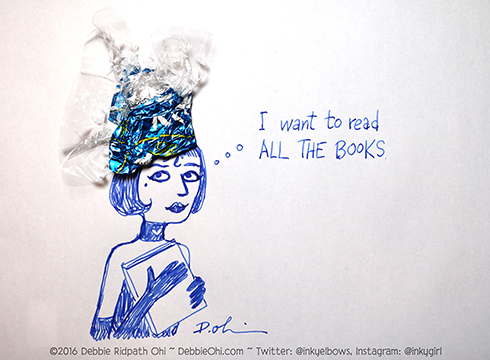
Debbie is giving away one of her original found object doodles, using a crumpled Lindor wrapper and drawn with a fountain pen. It’s about 5.7″ x 7″, and will be mailed in a protective cellophane wrapper with a cardboard backing.
Leave ONE COMMENT below to enter. You are eligible to win if you are a registered Storystorm participant and you have commented once on this blog post. Prizes will be given away at the conclusion of the event.
Good luck!
Back in 2010, Wharton Professor Adam Grant made a financial mistake that he still regrets—failing to invest in billion-dollar eyewear juggernaut Warby Parker when offered a pre-launch opportunity. This tale of optic, myopic oversight begins his book ORIGINALS. Wanting to know if there were signs he missed, details alluding to Warby Parker’s future success, Grant dissects the traits and actions of the company’s founders, his former students.

The results surprise him. He discovers unexpected characteristics associated with highly successful entrepreneurs across all fields, from science to music. Original thinkers aren’t that different from the rest of us. They aren’t fearless risk-takers. They don’t rush to be first to market. They aren’t necessarily members of Mensa.
After reading ORIGINALS, I asked Professor Grant how his research findings could be applied to writing great children’s literature.
 TL: Every writer in children’s publishing is trying to be the next J.K. Rowling, Jeff Kinney or Mo Willems. We all want to create a book that captivates millions of readers. That’s one reason why I run the annual STORYSTORM challenge, for writers to develop one story idea daily for a month. For every thirty ideas, five might be good, but ONE might be the next big thing—NY Times bestseller, movie deal, merchandise galore. So we’ve got the idea generation part covered; we churn out many ideas to get to the good ones. According to your research, what can we do to identify that one GREAT idea and nurture it to fruition?
AG: I love your focus on developing one idea daily for a month. There’s a wealth of evidence that the most creative writers, musicians, artists, scientists, and inventors don’t have better ideas than their peers on average—they just have more of them. The best way to find a great idea is to generate more ideas. But then we have a challenge: it can be hard to judge our own ideas and we often fall in love with the wrong ones. My former student Justin Berg, now a Stanford professor, has some fascinating new research asking people to rank their ideas from best to worst. He finds that the most creative idea is typically the one we rank not first but second. We’re too easily blinded to the flaws of our pet story, and we have just enough distance from our second pick to improve it—while also still bringing a great deal of passion to it.
TL: I’ve always been a procrastinator. I procrastinated sending you these questions. But procrastination is an essential habit of ORIGINALS. How so?
AG: I’ll tell you later.
Actually, it really irked me to find virtues of procrastination, but I eventually came around. I explained why in my TED talk last year.
TL: I cringe when an aspiring author tells me they quit their day job to tackle writing full time. I’ve been at this nine years and this is the first year I made a decent income—and by decent, I mean about as much as my teenage daughter’s part-time babysitting gig. People assume that focusing just on writing will help achieve their goal of publication faster. But why is it beneficial to keep a day job while pursuing your creative goals?
AG: It turns out that entrepreneurs who keep their day jobs are 33% less likely to fail than those who quit their jobs to start their businesses. I think the same is likely to be true for writers—it worked for Stephen King and T.S. Eliot (who held onto his day job as a bank clerk for decades even after achieving eminence as a poet. Note to self: convince more bank clerks to try their hand at iambic pentameter). Why? One: it provides financial security, making it easier to focus on writing without worrying. Two: as Scott Adams of Dilbert fame can attest, a miserable day job can be a fountain of creative inspiration. And three: it keeps us open to tinkering with new ideas, as opposed to feeling pressure to push forward with our idea that’s most developed or most directly aligned with what our audience seems to want.
TL: There seems to be a hive mind in children’s publishing. Suddenly you see umpteen books about narwhals on the shelves—or Yetis, or armadillos—when just a year ago, there were none. Writers who have been working on that amazing armadillo idea may then just give up. But armadillo aspirations don’t have to die! Your research shows that being first to market doesn’t mean being best. Can you elaborate on that?
AG: Being original isn’t about being first—it’s about being different and better. Creating a market from scratch is a lot harder than entering a market that already exists. Imagine if J.K. Rowling had said, “Well, C.S. Lewis already wrote about kids doing magic.”

©2015 George Lange
Adam Grant is Wharton’s top-rated professor and a leading expert on how we can find motivation and meaning, and live more generous and creative lives. He has been recognized as one of the world’s 25 most influential management thinkers and Fortune’s40 under 40.
Adam earned his Ph.D. in organizational psychology from the University of Michigan, completing it in less than three years, and his B.A. from Harvard University, magna cum laude with highest honors and Phi Beta Kappa honors.
He is the author of two New York Times bestselling books translated into 35 languages.
One Storystormer will win a copy of Adam Grant’s ORIGINALS: HOW NON-CONFORMISTS MOVE THE WORLD.
Leave ONE COMMENT below to enter. You are eligible to win if you are a registered Storystorm participant and you have commented once on this blog post. Prizes will be given away at the conclusion of the event.
Good luck!
by Keith Allen
As a kid, I loved building things out of cardboard, whether it was a spaceship for the very first mission to Saturn or a fortified castle to keep out the fire-breathing dragons. That love stayed with me into adulthood and today I find that same sense of wonder when I’m creating new worlds from a flat sheet of paper.
I work as a Senior Designer, Illustrator and Paper-Engineer at a large greeting card company and also own an independent publishing company that specializes in pop-up books. You may ask, “What exactly is a paper-engineer?” Sounds fancy, right? Well, a paper-engineer is simply a title for someone who loves to build things out of paper. And that’s me!
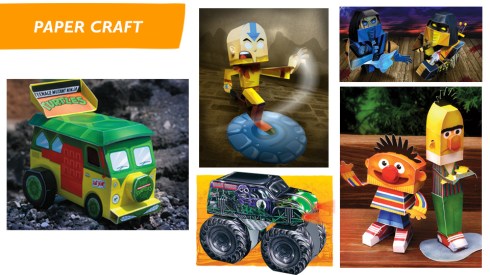
When I first graduated from Art School, I got a job designing party supplies and was immediately drawn to creating paper centerpieces. I loved the challenge of building something very complex, but simple enough for a consumer to assemble. Wanting to branch out, I began making paper toys and sculptures on my own. An art director noticed my work and asked if I would like to work on pop-ups for an upcoming greeting card line. With a very enthusiastic YES!, I took the job and the rest is history.
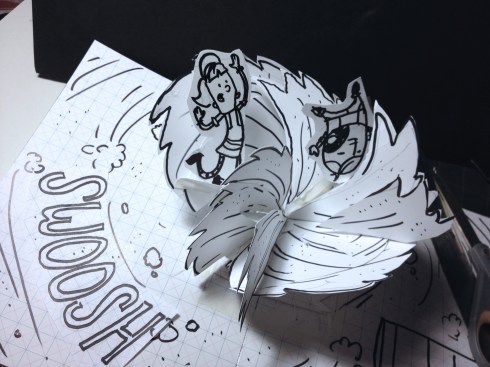
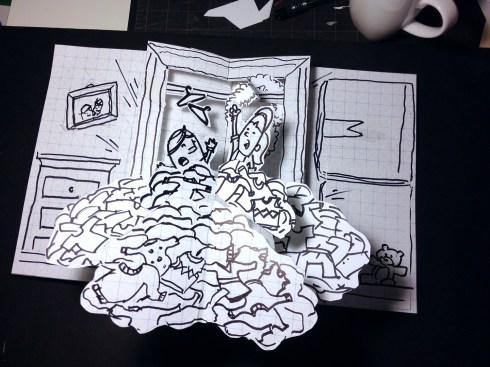
I’m not going to lie, building pop-ups can be time-consuming and challenging at times, but when it all come together perfectly, it is exhilarating! My pop-up development process looks like this:
1. Quickly sketch out your ideas on paper first to find a great layout. This does not need to be pretty.
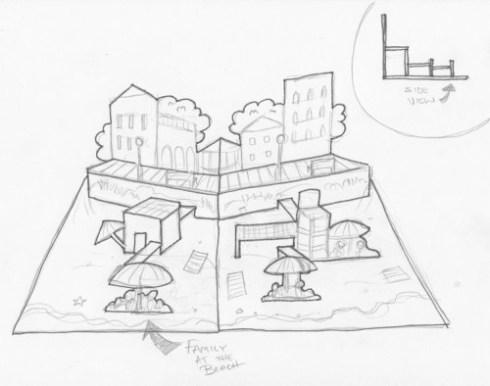
2. Build a rough concept by experimenting with a variety of folds. This step can take a while, but it’s important to get it right in the beginning. Don’t be afraid to make mistakes, some of my best folds can from my mis-measurements.
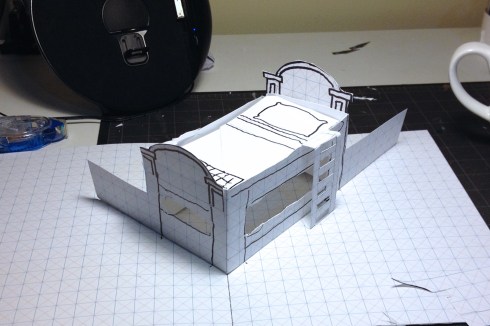
3. When your rough spread is finished, rebuild it over and over and over again. Do this until all the mistakes are corrected and it opens and closes neatly without catching or hanging out of the page.
4. Once it looks good, tear the whole thing apart, but gently. Scan all your pieces into the computer and build your dielines. I like to use Adobe Illustrator for this, but there are many programs that can be used.
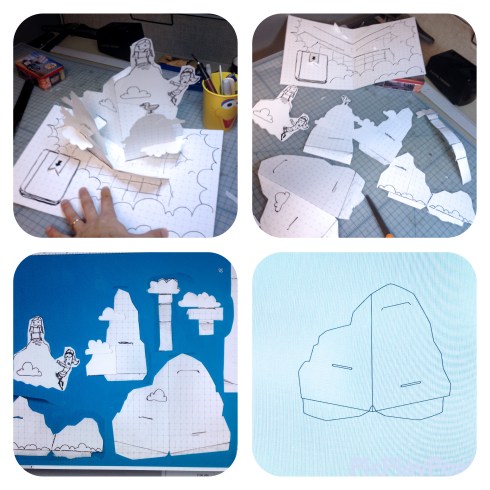
5. Illustrate your artwork onto your refined dielines. When your pencil lines are complete, assemble it again and make sure your art is lining up correctly with your folds and attachments.
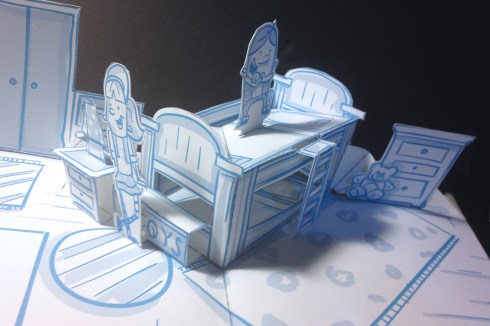
6. Once your pencil lines are corrected and complete, you can color and finalize your Illustrations. Now you have a finished Pop-Up spread!

If you are interested in learning more about paper-engineering, there are so many great resources out there for beginners and experts. My favorite reference book is THE ELEMENTS OF POP-UP by David Carter, which I refer to almost daily. YouTube has so many wonderful tutorials and videos that go into great detail about particular fold types. I have created a few as well on my YouTube Channel.
Keep on Poppin’!
 Keith Allen is a Senior Product Designer for American Greetings in Cleveland Ohio. He is the co-founder of By the Bay Books and owner of the independent publishing company, 5am Press, LLC.
Keith’s most recent pop-up book, “What a Mess! A Pop-Up Misadventure” was successfully funded on KickStarter.com and will be available for sale in the Spring 2017.
Visit him online at allendesigns.blogspot.com, Facebook.com/5ampopup, Twitter @5ambook and Instagram @5am_popup.
by S.britt
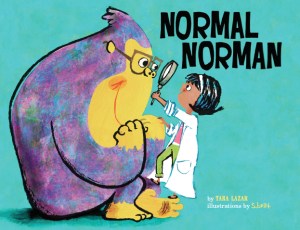
When Tara initially asked me to be a guest writer for Storystorm, I was flattered. When she then suggested I write about how motorcycles influence my artwork (and vice versa), I was intrigued. I suppose I had never really thought about the connection in great detail before, other than the fact that I rather enjoy riding and restoring vintage British motorcycles and working them into my artwork when I can. In fact, a tiny tiger riding a lil’ Triumph motorcycle can be spotted in the jungle jamboree spread in Tara’s NORMAL NORMAN.


I first began doodling shortly after I was able to grasp my first red Crayola. Not long after that, I remember my father plopping me on the gas tank of his gold Honda CB and taking me on long rides throughout the countryside of Louisiana. It wasn’t until my early adolescence that I first set foot on a motorcycle of my very own, an early 70s baby blue and white Honda Super Cub. I clocked a lot of miles on that little scooter ’til the day a crash rendered it far too expensive to fix and it was sent to the great motorcycle scrapheap in the sky.
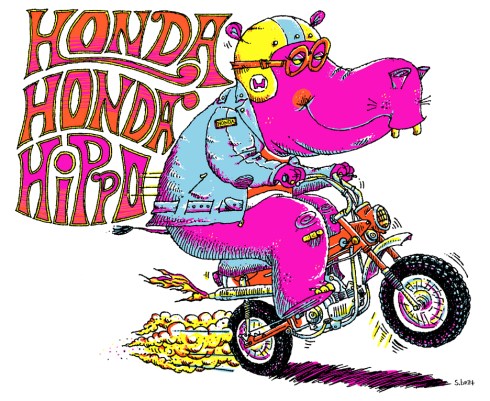
After that, I turned my attention to restoring vintage cars, specifically late 60s and early 70s Volkswagens, many of which began appearing as backdrops in my illustrations. However my lifelong passion for old VWs was cut short with a move to Minnesota in late 2012. After witnessing firsthand what ice and salt does to vintage tin, I wasn’t about to see my beloved 1969 VW Fastback (named Jaunty) dissolve before my eyes, so I sold it to a retired teacher in upstate New York. A short time passed and I once again began to feel that familiar itch for something to wrench on, so I headed down to the local dealership and picked up a brand new red and white Triumph Bonneville motorcycle. Thus rekindling my childhood love affair with two-wheeled transportation and I haven’t looked back since (unless a cop is issuing me a speeding ticket!).
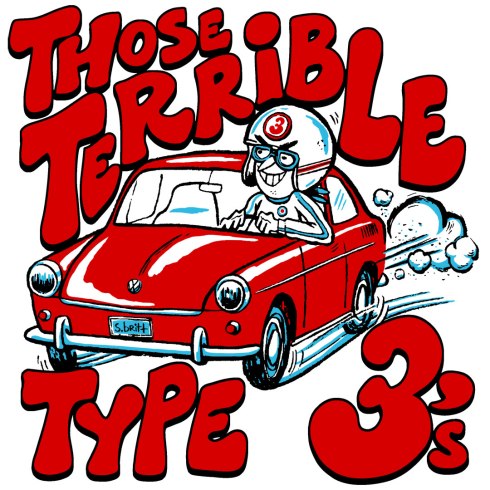
At this point, you may be asking yourself “what does any of this vehicular nonsense have to do with children’s books?!?” Well, I’ll tell you.
Before I start any illustration project, I either like to go for a long ride or drive to clear my head and allow new thoughts and ideas to percolate and germinate; to ping-pong inside my empty brain like a giant popcorn popper on wheels. Right after I get home and scrape the bugs out of my teeth, I jot down as many ideas (good and bad) as I can before they disappear back into the ether. There’s just something about careening through bucolic backroads and twisty tarmac at 70 mph that really gets the creative juices flowing! The same can be said for simply taking a break from painting to put down a brush and pick up a socket wrench. To me there’s nothing more satisfying than restoring a rusted-out, dinged-up, long-neglected piece of machinery back to its former showroom glory. Each one of these old metallic souls has a unique personality and a story to tell. It just takes the right person to come along and to coax it out of them. And there’s as much art to that as any children’s book in your library.
I’m currently illustrating my next book for Clarion Books and restoring a 1964 Triumph Cub Trials motorcycle. And to me, both are of equal artistic merit and personal gratification.
 View S.Britt’s art and find out more about his work at sbritt.com.
Tara and S.Britt are giving away a copy of their book NORMAL NORMAN.
Leave ONE COMMENT below to enter. You are eligible to win if you are a registered Storystorm participant and you have commented once on this blog post. Prizes will be given away at the conclusion of the event.
Good luck!
Most of my picture book ideas have come from my own children. Unfortunately, they are getting older so I am a little short on material lately. I can no longer rely on them to say things like “Mommy, come quick, Josh is in the oven!” or “Today my class is going to a burrito farm!” (Best I can tell, that was a trip to an arboretum?)
Now that eavesdropping isn’t effective anymore, I need other strategies for generating ideas. One method I frequently employ is titlestorming. I sit down with my writing partner, Becky Gomez, and we try to come up with a list of fun titles.
I am a very language-driven writer (as opposed to plot or character-driven) so very often these titles incorporate wordplay.
There are all sorts of ways to play with words.
Clever Combos
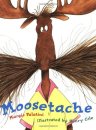
One option is to create a new word by combining two existing words. Tara, the queen of wordplay, did this with her debut title THE MONSTORE. Other fun fusions include ORANGUTANGLED by Sudipta Bardhan-Quallen, THE HICCUPOTAMUS.by Aaron Zenz, and MOOSETACHE by Margie Palatini.

Hokey Homonyms
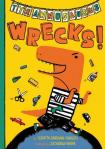
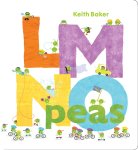
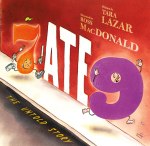
Another way is to replace a word with its homonym. In 2009, I came up with the idea TYRANNOSAURUS WRECKS. But I didn’t move quickly enough. Sudipta beat me to it. Other examples of this include Keith Baker’s LMNO PEAS and Tara’s upcoming 7 ATE 9.
Go for the Rhyme
This, of course, is my favorite technique. In 2010, I came up with GOLDI ROCKS & THE THREE BEARS and TWINDERELLA: A FRACTIONED FAIRY TALE. But it also works with stories that are not fractured fairy tales. Here are just a few that come to mind:
- CRANKENSTEIN
- MICE SKATING
- TRUCK, TRUCK, MOOSE.
- LITTLE RED GLIDING HOOD
- MARY HAD A LITTLE GLAM
- CINDERFELLA
- THE PLOT CHICKENS
Get Crazy Creative
Then there are all sorts of crazy ways to get creative that defy categorization. Invent words. Experiment with spellings. Play with pronunciations. Take a figure of speech and make it literal.
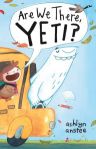
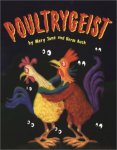
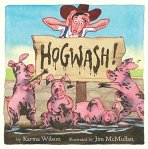

So, give those titles a twist. Let the syllables slip, slap, slide off your tongue and see what sort of fun comes out.
 Corey Rosen Schwartz is the author of several rhyming picture books and fractured fairy tales., HENSEL & GRETEL: NINJA CHICKS, in which two chicken sisters defeat a fox and rescue their parents, is the latest of her punny titles. Corey has no formal ninja training, but she sure can kick-butt in Scrabble. She lives with three Knuckleheads in Warren, NJ.
Visit her online at coreyrosenschwartz.com and follow her on Twitter @CoreyPBNinja.
Corey is giving away a signed copy of HENSEL & GRETEL: NINJA CHICKS.

Leave ONE COMMENT below to enter. You are eligible to win if you are a registered Storystorm participant and you have commented once on this blog post. Prizes will be given away at the conclusion of the event.
Good luck!
Over the years I’ve been approached by illustration and design students who share an internal struggle: that they have other interests—cosplay, metalwork, bookbinding, writing, prop replication, embroidery, cobbling shoes (I kid)—and they feel the need (often encouraged by their instructors) to set aside these other “hobbies” to focus on their illustration and design skills. As if these things that they love are somehow an impediment, that they need to kill them off or they’ll never get better at the “real” discipline.
I do believe that staying on task and zeroing in on the work at hand is an important skill—maybe the most important one. As an illustrator, I always say “Illustration is easy, you just need to stare at a blank sheet of paper till the blood runs out of your ears.” In other words, don’t get up from your drawing board until you’ve finished the job, even if every fiber of your being is imploring you to leap up and see what’s in the fridge.
But speaking as someone who has always done a jillion different things, I’m a firm believer in doing all the things you love. No matter how seemingly unrelated they are, these passions can cross-pollinate. I see it happen all the time! Working hard at one thing doesn’t take away from other things, it adds to them.
Whatever it is that I’m working on, I’m constantly drawing inspiration from other interests, and getting ideas that I can use in other projects. I have one of those multi-hyphenate careers: I’m a graphic designer/illustrator/author/movie prop designer and fabricator/letterpress printer. I might be researching for a period movie prop job, and get a great idea for an illustration. Or doing an illustration might inspire some poster project, or a written humor piece. I don’t know if I could do just one thing at this point—I worry that I’d run out of ideas.
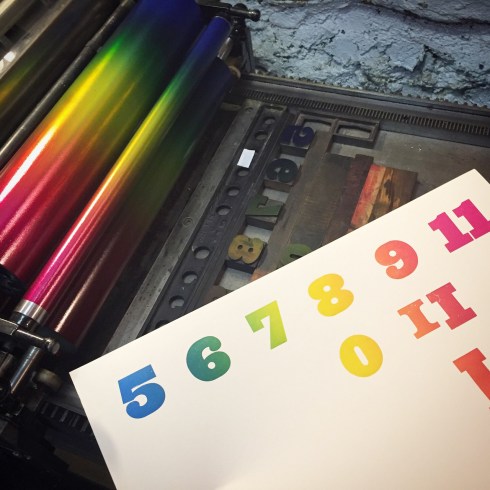
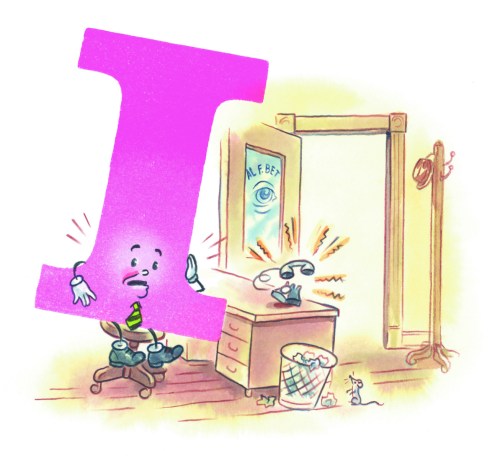
 A good example of this cross-pollination is 7 ATE 9—a picture book written by Tara Lazar that I was lucky enough to illustrate. It’s a hilarious story of a private ‘I’ who is baffled by the age-old mystery of why 6 is afraid of 7 (spoiler alert—it’s because 7 ate 9!!!). When I was reading Tara’s manuscript, a vision popped into my head of 19th century wood type letters and numbers coming alive and sprouting little arms and legs and fedoras and bow ties. Luckily I have a letterpress shop full of 19th century wood type, so I was able to play around with the idea. And whaddaya know—it was just crazy enough to work!

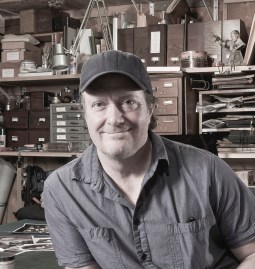 Ross MacDonald’s illustrations have appeared in the New York Times, the New Yorker, Rolling Stone, Harper’s, and Atlantic Monthly, and he is a contributing artist for Vanity Fair. He has written and illustrated several children’s and adult humor books.
His work was the subject of a one man retrospective at the New York Times, and has been honored by American Illustration, 3×3, Print, Communication Arts, the Society of Publication Designers, the AIGA, and the Society of Illustrators, from which he received a gold medal for book illustration in 2011.
He has also worked on many movies and television shows as an illustrator, prop designer and consultant on period design, printing, paper and documents. His work can be seen on 5 seasons of HBO’s Boardwalk Empire, on the Cinemax series The Knick, and in the Tarantino movie Hateful Eight.
Born and raised in Canada, he lives in Connecticut with his wife, 2 kids, 2 dogs, 5 cats and a large collection of 19th century type and printing equipment. View his portfolio online at ross-macdonald.com.
Ross and Tara are giving away a copy of 7 ATE 9 (upon publication in May).
Leave ONE COMMENT below to enter. You are eligible to win if you are a registered Storystorm participant and you have commented once on this blog post. Prizes will be given away at the conclusion of the event.
Good luck!
When Tara asked me to write a blog post for Storystorm about Inspiration, I knew this would be my Finest Achievement Ever. I’m so excited to share with you my brilliant, awe-inspiring Process for Picking the Perfect Ideas.
Prepare to be Astounded!
Astonished!
Amazed!
Because I’m about to share a technique so Overwhelmingly Fabulous that it’s sure to leave you completely speechless!
Are you ready for this??
Creating new story ideas is just like baking cookies!
*sigh*
Okay … You’ve caught me …
I’m a total inspiration cheater.
Shh … Don’t tell Tara. She’s expecting me to share some brilliant tips with you, and I didn’t have the heart to tell her I’m a con-artist.
The truth is, I’ve never had a truly Original Idea. Instead, I spy, snoop, and steal from the things I read and my real-life experiences … Then I twist, combine, substitute, and reconfigure those ideas until I’ve come up with something sweet that I can call my own.
When I’m not writing, I spend a lot of time in the kitchen. I like to create new and delicious cookie recipes with unexpected flavor combinations to impress my friends and neighbors. But I’ve never created a brand-new cookie recipe entirely from scratch.
Yep. I cheat.
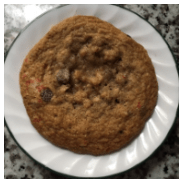 When I want a new cookie flavor, I first find a familiar, tried and tested recipe, like this original recipe for Nestle chocolate chip cookies. Then, I start making changes.
I usually put walnuts in my chocolate chip cookies, but what if I only have almonds? What if I’m making cookies for my friend on a gluten-free diet? Or what if I’m out of chocolate chips? Will craisins work? What if I accidentally spill some sage or basil into the batter? What would happen if I threw all of these changes together at once? Suddenly, I have a brand-new cookie recipe that looks totally original. And no one knows that I cheated. (Remember, this is our little secret. If you promise not to tell Tara, I’ll even share my recipe for Cranberry Sage Cookies with Almonds at the end of this post.)
I cheat the same way with my writing.
I’m constantly snooping, sneaking, and spying on my friends, family, and the total strangers I pass on the street. I keep files of my favorite fairy tales, inspirational quotes, and out-of-context bits of conversation.

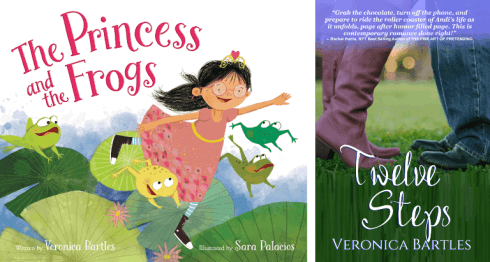
For my debut picture book THE PRINCESS AND THE FROGS (Balzer & Bray, November 15, 2016), I totally cheated.
I started with one of my favorite fairy tales, “The Frog Prince.” In the original story, the princess is rather spoiled and selfish, who only wants to marry the perfect prince and live happily ever after in the lap of luxury. And she nearly misses her Happily Ever After when she resists kissing the frog, who can’t transform into a prince without a proper smooch. But I believe that most people are truly good at heart, so I wanted to rewrite her story.
I remembered tromping through the fields behind my house when I was a little girl, searching for toads to play with. I remember catching dozens of toads, and building little houses for them with my friends. I thought about the little girls I know, who love dressing up in fancy, frilly dresses with sparkly jewels and hair clips or tiaras. Most of these part-time princesses will happily lace up their worn-out sneakers with their fancy dresses, so they can be ready for whatever adventure they may find.
And I couldn’t help but wonder: What if there was a princess who just really, really loved frogs? What if she doesn’t want a prince? What if she’d rather have a frog? But what if she kept kissing them anyway (because she loved them so much, she couldn’t resist a little goodnight smooch), and she ended up with a castle full of princes, all proposing marriage?
Starting with familiar characters and stories is like starting with a familiar recipe in baking. I can bend and twist and substitute ingredients until the story is uniquely delicious, and if it flops (as sometimes happens both in baking and in writing), I can go back to the “reset point” (the original story, recipe, or real-life event) and try again.
Cranberry Sage Cookies with Almonds

1 c. butter
1 c. brown sugar
½ c. sugar
1 ½ tsp. rubbed sage
1 ½ tsp. basil
2 eggs
½ tsp. salt
1 tsp. baking soda
1 ½ tsp. vanilla extract
4 Tbsp. cornstarch
2 1/3 c. Gluten-Free All-Purpose Flour (or omit the cornstarch and use 2 ½ c. plain all-purpose flour, if gluten isn’t a concern)
1 c. craisins
½ c. sliced almonds (opt.)
- Cream together butter and sugars.
- Add eggs, baking soda, salt, sage, basil, vanilla extract, and cornstarch. Beat until light and fluffy.
- Mix in flour.
- Stir in craisins and almonds. Chill dough 1-2 hours.
- Preheat oven to 350 degrees Fahrenheit.
- Portion dough into 1-inch balls, and place on parchment-lined baking sheets. Bake 12-15 minutes until lightly browned. Remove to a wire rack to cool.
 Veronica Bartles, author of THE PRINCESS AND THE FROGS (PB), and TWELVE STEPS (YA), has spent most of her life wondering “What If?” She believes there are many sides to every story, and she’s determined to discover every single one of them. Veronica believes every princess deserves a frog, because princes aren’t pets. And she’s an incurable optimist who loves gray, drizzly days because that’s when rainbows come out to play. Visit her online at vbartles.com, her I Am So Grateful Blog, Facebook, Twitter @vbartles, Pinterest, and GoodReads.
Veronica is giving away one signed copy of THE PRINCESS AND THE FROGS plus a set of 5 custom buttons featuring the original artwork from the book … & a TWELVE STEPS postcard that features the recipe for Giant Brownie Sundaes that Andi and Jarod (aka “Prince Charming”) enjoy.
Leave ONE COMMENT below to enter. You are eligible to win if you are a registered Storystorm participant and you have commented once on this blog post. Prizes will be given away at the conclusion of the event.
Good luck!
This past November, the world shifted. For some, that feels like a good thing—they see things in our world that frighten or disgust them and believe that huge changes are needed to set us back on the right course. For others, it feels just the opposite—this new world looks like a dark, dangerous place that threatens to undo much of the progress that has been made. Whichever side of the political divide you find yourself on, one thing is certain: the times, they are a changin’.
Children are feeling those changes, too. Even prior to the election, Time magazine reported that “anxiety and depression in high school kids have been on the rise since 2012 after several years of stability.” And shortly after the election, the Southern Poverty Law Center’s Teaching Tolerance project conducted an online survey of K-12 educators from across the United States. Of the more than 10,000 respondents, “A full 80 percent describe heightened anxiety and concern on the part of students worried about the impact of the election on themselves and their families.”
As artists, we tend to be even more sensitive to what’s going on around us, and these unsettling times are impacting us as well. I’ve heard many of my colleagues say they don’t know what to write about anymore—that their old ideas feel irrelevant in today’s view. Or they’re worried about how the changing publishing market will value the work they are creating now. Or they wish there was something more important they could contribute to push things in the direction they wish them to go.
via quotesjunk.com
Fortunately, as writers, we have a superpower: the ability to make our readers feel, and it is through the experience of those feelings that hearts and minds—particularly those of young readers—are forever changed. Story can serve as a mirror, after all, helping the reader validate and make sense of their own experiences. Or it can function as a window, allowing readers, in the words of Joyce Carol Oates, to “slip, involuntarily, often helplessly, into another’s skin.” Both can be invaluable in shaping who those readers ultimately become.
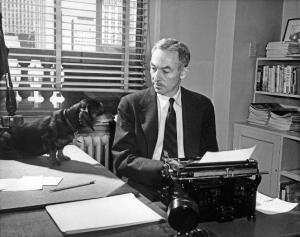 They say, however, that with great power comes great responsibility. Does that mean we all need to start writing about heavy, serious topics, to make kids understand? No, absolutely not! In 1968, E.B. White told The Paris Review, “A writer should concern himself with whatever absorbs his fancy, stirs his heart, and unlimbers his typewriter. I feel no obligation to deal with politics. I do feel a responsibility to society because of going into print: a writer has the duty to be good, not lousy; true, not false; lively, not dull; accurate, not full of error. He should tend to lift people up, not lower them down. Writers do not merely reflect and interpret life, they inform and shape life.”
 Does it mean we have to write happy books with no undue stresses or negativity? Again, no! As Maurice Sendak said, “You must tell the truth about a subject to a child as well as you are able, without any mitigating of that truth. You must allow that children are small, courageous people who deal every day with a multitude of problems, just as adults do, and that they are unprepared for most things. What they yearn for most is a bit of truth somewhere.” (from The Art of Maurice Sendak, by Selma G. Lanes)
What is your role as author, then? To connect with your own deepest emotions and find a way to share them with your readers. You can start by choosing any emotion—happy, sad, scared, angry, excited… you name it (you can even pick a random one from the list here)—then make a list of everything that makes you feel that way and why. Or, simply notice whenever you’re struck by an emotion as you’re going about your day. In either case, ask yourself: Is there a story here?
Once you’ve collected those story ideas, be fearless. Do the work. Grapple with the feeling until you begin to understand it. Write unabashedly from your heart. Be as honest as possible with whatever you are writing, honor the universal humanness of your stories, and make your readers feel the emotions that you feel, whether that’s silly or serious, confident or broken, skeptical or curious, hopeless or optimistic… or the messy reality of experiencing all of those emotions mixed together at the same time. Then leave room for readers to meet you halfway and take whatever they may need from you at the time.
This makes your writing stronger, too. You may be writing about fuzzy bunnies, but your story will only work when you add real human emotion to it. You may be retelling a fairy tale, but readers will only care if they can relate it to their real lives. You may be writing narrative nonfiction, but pieces of why it matters to you–and your reader–must still shine through. The best stories give us something to think about long after we close the book because they gave us something to feel.
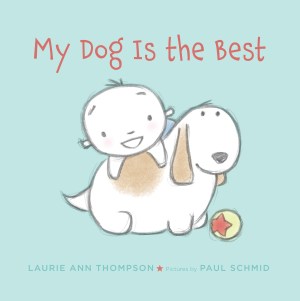 My first two books, EMMANUEL’S DREAM and BE A CHANGEMAKER, are quite serious and earnest. My third book, MY DOG IS THE BEST, is a lighthearted, funny picture book about a boy and a dog with mismatched energy levels. I wrote all of them, and I think they work because they reveal some of my deepest feelings, which happen to be feelings most of us can relate to on some level. It can be terrifying to put ourselves out there in that way, but I’ve come to believe it’s worth it. We write, after all, because we have something to say, whether we realize it or not.
So create boldly, share generously, and connect fearlessly. I think having a child connect with and remember our work is ultimately why we do what we do, and that connection might be just what a young reader needs to see the world in a different light. As Jeanette Winterson said in an interview on CBC Radio, “Art can make a difference because it pulls people up short. It says, don’t accept things for their face value; you don’t have to go along with any of this; you can think for yourself.”
And isn’t that the most important gift you could ever give to anyone?

Photo credit: Mary Balmaceda
Laurie Ann Thompson writes for children and young adults to help her readers–and herself–make better sense of the world we all live in, so we can contribute to making it a better place for all of us. She strives to write nonfiction that gives wings to active imaginations and fiction that taps into our universal human truths, as seen in her books BE A CHANGEMAKER: HOW TO START SOMETHING THAT MATTERS, a teen how-to guide filled with practical advice and inspiration for young social entrepreneurs; EMMANUEL’S DREAM: THE TRUE STORY OF EMMANUEL OFOSU YEBOAH, a picture book biography of a young man who changed Ghana’s perception of people with disabilities; MY DOG IS THE BEST, a fiction picture book about the bond that exists between a child and a beloved family pet; and the upcoming TWO TRUTHS & A LIE: IT’S ALIVE! (co-authored with Ammi-Joan Paquette), which seeks to help readers learn to recognize the difference between hard-to-believe truths and outright lies. Learn more at lauriethompson.com and on Twitter @lauriethompson.
Laurie is giving away two copies of BE A CHANGEMAKER.

Leave ONE COMMENT below to enter. You are eligible to win if you are a registered Storystorm participant and you have commented once on this blog post. Prizes will be given away at the conclusion of the event.
Good luck!
As writers, we must ALL strike while the iron is hot. Every writer tries to get into the castle (the publishing houses) over the drawbridge. The drawbridge however is crowded, heavy laden from the weight of writers that would love a meeting with the Queen or the King, (the editors). It is necessary, and beneficial to keep your eyes wide open for a secret passage that presents itself to you where nobody else is looking.

This is EXACTLY how my newest picture book, STILL A FAMILY, Albert Whitman & Company, illustrated by Jo-Shin Lee, was conceived and transpired. I was trolling on Facebook one day, and there was a conversation that began on the wall of Tracey Adams, co-founder of the esteemed literary agency, Adams Literary. Josh Adams was my first agent, and so we have a wonderful relationship still, and I frequently read their posts as they are the most amazing people and such incredible agents. Tracey was in Maine visiting, and her daughter made a comment wondering why there were so many homeless people in Maine.
Tracey wondered why a book about the homeless, and how to explain homelessness to children, hadn’t been written yet. I was circling the castle and I saw that small light in the window of opportunity open. Nobody else had yet discovered it, and so I sat down and wrote a first draft of Still a Family. In doing so, I struck while the iron was hot.
It was quick writing session, 30-minutes maybe. I originally didn’t write STILL A FAMILY to sell it. I wrote it because I truly wanted to write something for Tracey’s daughter. It was a story written in rhyme, and I posted it on my Facebook wall.
Immediately…within seconds, I got a message from a Facebook friend who works in a homeless shelter saying, “This is GREAT! Can I share it with people at my shelter?”
I was encouraged by this response, and answered with, “Let me run this by my agent, the beautiful-friend-to-all Karen Grencik, of Red Fox Literary to see if there might be a calling for a book like this,” and I took the story off my Facebook wall if there were indeed a need for this story.
I sent Karen a message. “Do you think there is a calling for a book about a child living in a homeless shelter?” She pinged back a response…”No, I don’t really think there is a calling for a book like this, sorry.”
Well, I continued walking around the castle, and I saw another door open that nobody had yet seen, as two editors had responded on Tracey’s Facebook wall post. Their commentaries went like this. “I would LOVE a book like this for OUR house.” “YES, us too, we would like a book like this.” I scribbled down names, and found out what houses the editors worked at. I ping-ponged back another message to Karen. “There are two editors asking for this manuscript, will you send it?”
And just like that, before the day was over, we were out on submission with STILL A FAMILY.
I know this is highly unusual, I know the way this happened was nothing short of a miracle, but in saying this, had I not been open to getting into the castle other then over the drawbridge, had I not been willing to write something on cue, to write to what a specific editor had requested, STILL A FAMILY might never have come to fruition.
 Karen and I received immediate responses (within a day or two) regarding this manuscript. And within 6-weeks, STILL A FAMILY was sold to Albert Whitman & Co, this is record speed in the land of publishing. The manuscript changed a LOT, it was revised and revised, rewritten and tweaked, it went from rhyme, to prose. I had never written in prose before and it was a scary process for me, but I listened intently to my editor, Andrea Hall, and I was able to write the story (which took just about a year of revision) and is now being released on January 31st.
Albert Whitman wanted the story to be about a family, and how a family STAYS a family while living in different homeless shelters. Oftentimes families are separated, the mom lives with the children in one shelter, and the dad lives in a different shelter with men. I researched and wanted to write a story that would speak to the homeless, but also to librarians, educators, parents, grandparents, depicting the story compassionately, and with respect, it is a story of hope but most of all it is a story about LOVE.
I wrote the story to bring the plight of the homeless to light, to humanize this epidemic that is taking over our country and enveloping our world. 2.5 million children are affected by homelessness every single year. Sometimes the ONLY thing that separates the homeless from people with a home is a medical crisis and/or a few paychecks.

One thing led to another, Kirkus and Publisher’s Weekly have given STILL A FAMILY glowing reviews. There is a news anchor in New York that is going to blog about this book and report on it, and I have paired with Schinnell Leake, an Oprah Woman of the Year and founder of Extra-Ordinary Birthdays, an organization that provides birthday parties to children in homeless shelters. This is quickly becoming my life’s work, getting STILL A FAMILY to the children that need it most, to the children in the shelters, to the families to give them hope, to the schools for understanding and educational purposes…this is my new mission.
In closing, I reiterate to you to keep looking, keep searching, keep writing, and keep walking around the castle trying to get an audience with the Queen or the King. Keep your eyes open for trap doors, for a different access, for another way in, because you just never know how wonderful it all might be and how what YOU have to say can make a difference. Not only for people that you didn’t even know needed you, but for your own life, your unique purpose and your individual writing journey as well.
A percentage of every sale of STILL A FAMILY will be donated to homeless shelters across the country.
 Brenda Reeves Sturgis is the author of 10 TURKEYS IN THE ROAD, illustrated by David Slonim, THE LAKE WHERE LOON LIVES, a cumulative rhyming book, illustrated by Brooke Carlton, and TOUCHDOWN, illustrated by Trey Chavez.
Brenda is the winner of the 2007 Smart Writer’s contest and the Grand Prize winner of the 2014 MeeGenius Author Challenge contest. Her latest picture book, STILL A FAMILY, will be released by Albert Whitman & Co on January 31st, 2017. You can visit her at BrendaReevesSturgis.com, or on Facebook, and you can see the trailer of STILL A FAMILY on You Tube.
Brenda is giving away three copies of STILL A FAMILY—one to a winner here, one to a homeless shelter of the winner’s choice and one to a children’s library selected by the winner.
If you can stick with this post all the way to the end, you’ll find my little bio where it is clearly states that “author/illustrator” is not my day job. Most days I get up a little too early for my taste, and head into Manhattan where I work as a set designer for television. Mostly, I work in talk shows, having spent the bulk of my career doing late night shows like Late Night with Conan O’Brien and The Late Show with David Letterman. When the taping wraps, I go home, kiss my wife, pat my kids on the head and head up to my attic studio where I make books for kids.

Sometimes (almost never) I’m asked how the day job informs the night one. What have I learned working in TV that applies to making books?
 Sense of humor is one answer. I think I’m irrevocably scarred … sorry skewed—(either works actually) from years of designing weird sets and goofy props. Late night humor and the way the writers craft their comedy has had a big influence on me.
On the illustration side, I’m heavily influenced by the way the camera is used to shoot a scene. I try to set up scenes in my books using time-honored camera shots like using wide establishing shots to set a scene or close-ups for comedic moments.
 I think the biggest takeaway has to do with pace. I’ve got one book out on the shelves (go get yourself a copy) and more to come but I still can’t get over the difference in pace between writing/illustrating a picture book and making a daily television show. It really messes with me.
At my day job, I get multiple scripts a day that I need to break down, sketch out, draw up, and then source any necessary props or create them from scratch. Every day. We produce a show, sometimes two, every day. And then we come in the next day and do it again. What this all means is that there’s very little time to plan and strategize. When I’m handed a project, I make a plan and I go. It really trains you to problem solve and think on your feet. There’s no rehashing. There’s no switching direction midstream. There’s just a steady march towards getting the set or prop to stage for rehearsal and, later that day, the show. That same afternoon we tape a show and it’s over. My set or prop gets used on air and then…Done. Whole new show tomorrow. You move on.
Having worked this way for so many years might explain why the open-ended, no time-limit, move-at-your-own-pace process of creating a book is difficult for me sometimes. So much time to rethink and revise. Don’t get me wrong. I see the benefit of it all but I sometimes think too much time is… well… too much time.
So, when I find myself going in circles on a manuscript or illustration, or endlessly staring at a blank page, I implement day-job rule:
Do it in one day. Get it done TODAY. Pick a path and move forward. Whether it be an outline, a picture book manuscript, or a chapter of your novel — see it through to it’s conclusion. Get it to stage before showtime.
Ultimately, you might choose incorrectly. You might not love every sentence you write that day and I’m certain there will be details you’d like to change. If you picked the wrong story path, you’ve at least narrowed down the possibilities of where your story goes. You certainly wont be staring at a blank page. That’s progress.
The beauty of this is, unlike my day job, the show is not over and done at the end of the day. You do have tomorrow to edit and revise. For me, the best making-a-book timeline is a mix of the two. Hurry up and get it done and then slow down and take your time to make sure it’s perfect.
If you find yourself stuck on your latest project, give it a try. Set yourself an end-of-day deadline and pretend there’s a national tv audience and a grouchy host waiting for your work. I can almost guarantee some progress by day’s end.
 Here’s the bio I told you about at the beginning. I knew you’d make it.
By day, Jason is a set designer for television, with credits that include Harry, The Meredith Vieira Show, Late Night with Conan O’Brien, and The Late Show with David Letterman. By night, Jason is an author and illustrator of children’s books. You can find his debut picture book, MR. PARTICULAR: The World’s Choosiest Champion on shelves in bookstores everywhere. See Jason’s work, both illustrations and set designs, at jasonkirschner.com. Follow him on twitter @jason_kirschner. You can also read more of his blogs and some of his friends’ at DrawntoPictureBooks.blogspot.com.
Jason is giving away a copy of his debut picture book, MR. PARTICULAR.

Leave ONE COMMENT below to enter. You are eligible to win if you are a registered Storystorm participant and you have commented once on this blog post. Prizes will be given away at the conclusion of the event.
Good luck!





 Writing for Kids (While Raising Them)